
How to Fix Frizzy Hair for Good
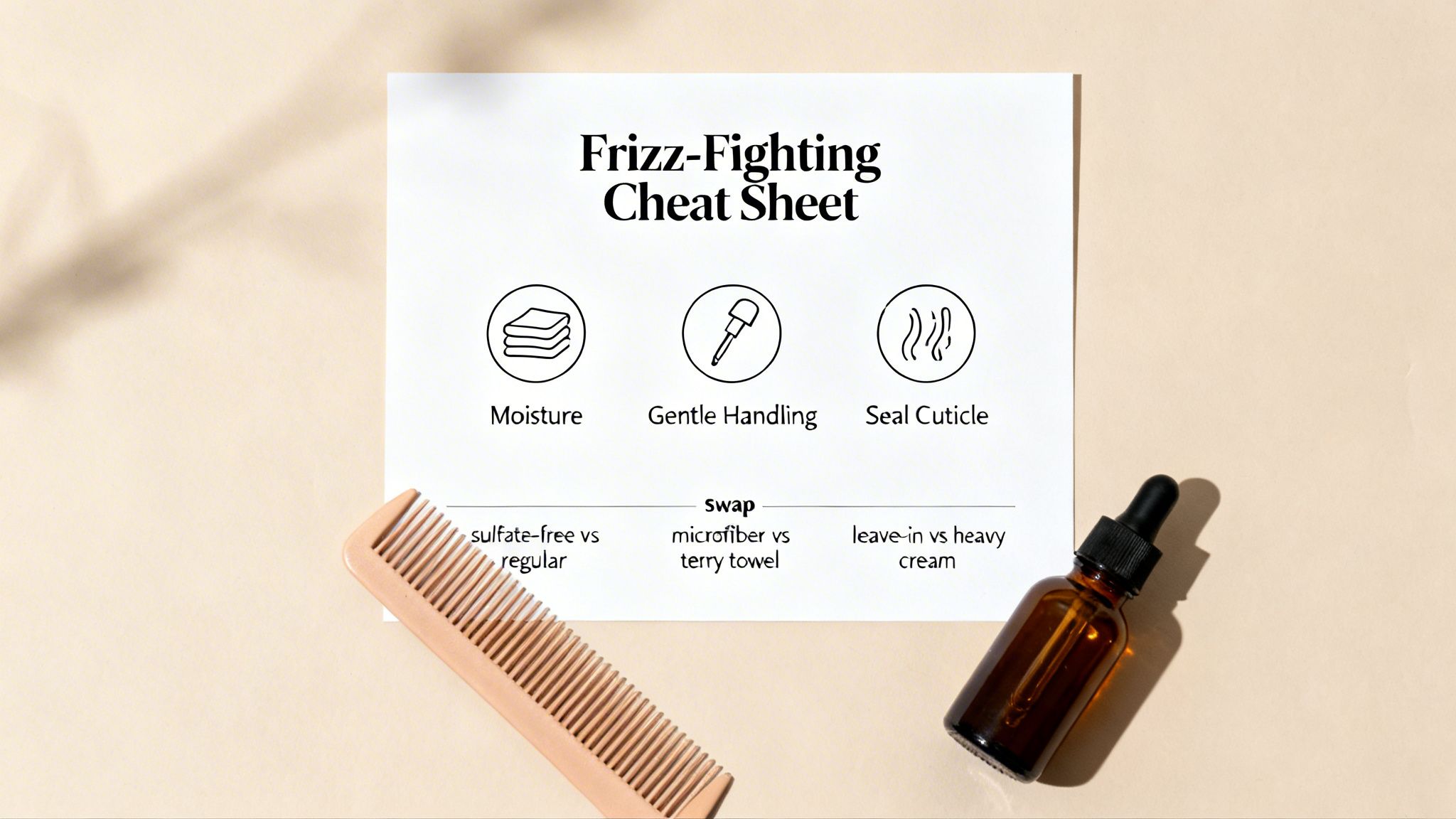
Tackling frizzy hair really comes down to a simple, three-part strategy: boost moisture, be gentle to avoid friction, and seal the hair cuticle to lock out humidity. When you get this right, you're not just fighting frizz—you're addressing its root causes, turning unruly strands into the smooth, manageable hair you want. It isn’t about one miracle product; it's about building a smart, consistent routine that works.
Your Frizz-Fighting Game Plan
At its core, frizzy hair is just thirsty hair. When your hair is dry, its outer layer—the cuticle—lifts up, desperately trying to grab moisture from the air. This causes the hair shaft to swell and poof, creating that halo of frizz we all know.
Humidity is the most famous culprit, but it's not the only one. Damage from heat styling, chemical treatments, and even rubbing your hair with a rough bath towel can rough up that cuticle, making the problem so much worse.
The real fix begins with small, strategic tweaks to your daily habits. Instead of just reacting to frizz after it shows up, the goal is to prevent it from ever starting by keeping your hair hydrated and its cuticle sealed shut.
The Ultimate Frizz-Fighting Cheat Sheet
To get you started, here's a quick cheat sheet comparing the simple swaps you can make today. Think of it as your instant guide to what works versus what might be making your frizz worse. These small adjustments are the foundation for getting that smooth, sleek hair you’re after. For a more detailed walkthrough, you can also check out our guide on how to achieve silky smooth hair in just a few steps.
| Routine Step | What to Do (To Fix Frizz) | What to Avoid (That Causes Frizz) |
|---|---|---|
| Washing | Use lukewarm water and a sulfate-free shampoo to cleanse gently without stripping natural oils. | Washing with hot water, which can dehydrate your hair and scalp, making it more prone to frizz. |
| Drying | Gently squeeze out excess water with a soft microfiber towel or an old cotton t-shirt to minimize friction. | Vigorously rubbing your hair with a rough bath towel, which lifts the cuticle and creates instant frizz. |
| Conditioning | Always follow shampoo with a hydrating conditioner, focusing on the mid-lengths and ends where hair is driest. | Skipping conditioner or only applying a tiny amount, leaving your hair unprotected and thirsty. |
| Styling | Apply anti-frizz serums or leave-in conditioners to damp hair to lock in moisture and create a protective barrier. | Using heat tools on high settings without a heat protectant spray, which leads to damage and frizz. |
Mastering these small changes can make a massive difference in your daily battle with frizz. It's all about working with your hair's needs instead of against them.
Understanding What Causes Frizzy Hair
To really get a handle on frizz, you have to know what you’re up against. Picture each strand of your hair being protected by a layer of tiny, overlapping shingles, kind of like tiles on a roof. This is your hair cuticle. When your hair is happy and healthy, these little shingles lie down flat, creating a smooth surface that seals in moisture and gives you that incredible shine.
Frizz is what happens when that smooth surface gets disrupted. When the cuticles get roughed up and lift, your hair’s texture feels coarse and uneven. More importantly, it creates an open door for humidity to rush into the hair shaft, causing it to swell up and create that frustrating, fuzzy halo we all know too well.
The Three Main Frizz Triggers
So, what makes this protective layer lift in the first place? It almost always boils down to one of three culprits, either on their own or teaming up against you. Figuring out your specific trigger is the first step toward finding a real solution for fixing frizzy hair.
-
Lack of Moisture: This is the big one. When your hair is parched and dehydrated from the inside out, its cuticles will literally stand on end trying to grab any moisture they can from the air. This is exactly why a humid day can turn dry hair into a puffy mess in minutes.
-
Damage: Think about what your hair goes through—coloring, bleaching, daily heat styling, even just aggressively towel-drying. All these things can weaken and chip away at the hair’s cuticle. Damaged hair becomes more porous, meaning it’s full of tiny gaps that make it a perfect target for humidity.
-
Environmental Factors: Humidity is the obvious enemy here. When the moisture in the air is higher than the moisture in your hair, it rushes in and swells the hair strand. But it’s not just humidity; the dry, recycled air from indoor heating in the winter can also zap moisture from your hair, setting it up for frizz later on.
Key Takeaway: Frizz isn't a hair type—it's a hair condition. It's basically your hair sending out an SOS that it's thirsty, damaged, or just struggling with the weather.
How Your Hair Type Plays a Role
While any hair can get frizzy, some textures are definitely more prone to it. Knowing your hair’s natural tendencies can help you get ahead of the frizz before it even starts.
Curly and wavy hair, for instance, is naturally on the drier side. The oils from your scalp have a much harder journey navigating down all those twists and turns, which often leaves the ends feeling dehydrated and ready to frizz up.
Fine hair might frizz because it doesn't have the natural weight to hold the cuticles down, making flyaways much more noticeable. On the other hand, thick or coarse hair can get frizzy if its texture is naturally more porous and loses moisture easily.
Real-World Frizz Scenarios
Let's put this into context. Do any of these sound familiar?
-
The Rainy Day Poof: You step outside on a damp morning, and your sleek style instantly expands. That's a classic case of thirsty hair meeting a humid environment. Your dry strands are literally reaching out to drink the moisture from the air.
-
Post-Color Frizz: For weeks after a color appointment, your hair feels a bit rough and looks puffy. That's because the chemicals in hair dye have to lift the cuticle to do their job, and if it isn't properly sealed and conditioned afterward, it can stay raised.
-
The Towel-Dry Tangle: You hop out of the shower and give your hair a good, vigorous rub with a standard cotton towel. The rough fibers create a ton of friction against your wet, vulnerable hair, instantly roughing up the cuticle and causing both frizz and tangles.
By seeing which of these scenarios hits closest to home, you can start building a routine that targets what your hair actually needs. For a deeper dive, you can learn more about why your hair gets frizzy and how to fight back. Now, let’s turn that knowledge into action.
Building Your Anti-Frizz Hair Care Routine
Knowing what causes frizz is half the battle. Building a consistent routine is how you actually win the war. Transforming frizzy, unpredictable hair into smooth, manageable strands is a step-by-step process, and it starts the moment you turn on the shower. It’s all about layering in moisture and cutting down on friction at every single stage—from washing and conditioning to drying and styling.
This simple flowchart breaks down the three main paths to frizz: lack of moisture, damage, and humidity. It’s a great way to pinpoint what’s really triggering your hair’s unruly behavior.
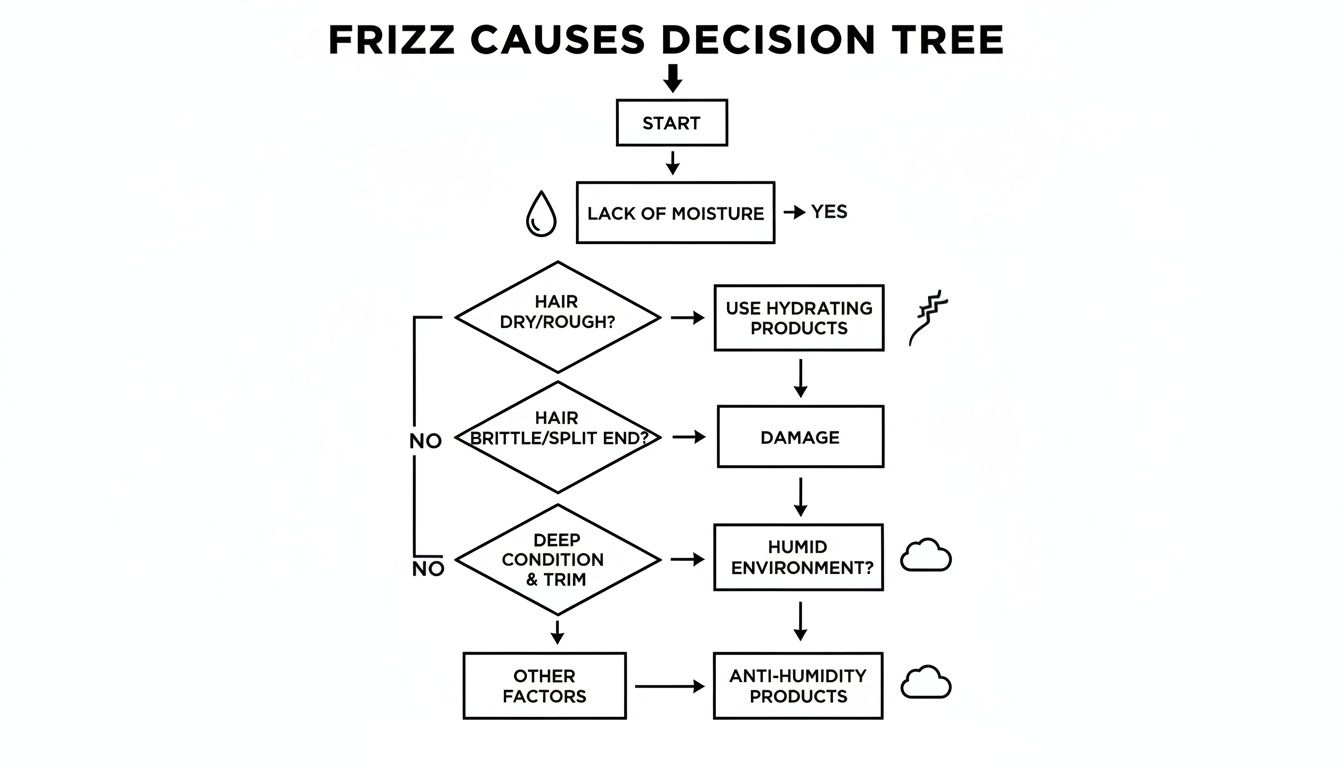
As you can see, whether your hair is naturally dry, roughed up from styling, or just reacting to the weather, the outcome is the same. A raised cuticle lets moisture in and out, creating that dreaded frizz.
Step 1: Rethink Your Washing Strategy
Your fight against frizz kicks off with how you wash your hair. So many common habits unknowingly strip away natural oils, leaving hair dehydrated and practically begging to puff up. The goal here is to cleanse gently while holding on to as much moisture as possible.
First thing's first: turn down the heat. Hot water can strip your hair and scalp of sebum, which is the natural oil that keeps everything healthy and moisturized. Go for lukewarm water instead. It gets the job done without causing that excessive dryness.
Next, take a hard look at your shampoo. A lot of them contain sulfates—harsh detergents that give you that satisfying lather but can be incredibly drying. For frizz-prone hair, a sulfate-free shampoo isn't just a suggestion; it's a necessity. It cleans your hair without stealing the moisture it needs to keep its cuticle smooth.
Pro Tip: Stop piling your hair on top of your head and scrubbing like crazy. That just creates a tangled mess and roughs up the cuticle. Instead, gently massage shampoo into your scalp with your fingertips and just let the suds run down the length of your hair as you rinse.
Step 2: The Critical Role of Conditioning
Conditioner is your single most important weapon against frizz in the shower. It’s designed to smooth down the hair's cuticle, put back moisture lost during washing, and make your hair easier to detangle, which means less breakage.
Never, ever skip this step. After rinsing out your shampoo, gently squeeze the excess water from your hair and apply a generous amount of a hydrating conditioner. Really focus the product on the mid-lengths and ends, since this is where hair is the oldest and driest. Give it a few minutes to really sink in and do its job.
For an even bigger hydration boost, work a weekly hair mask or deep conditioning treatment into your routine. Think of it as a supercharged conditioner that delivers an intense dose of moisture and nutrients to repair and strengthen your strands. To really get the most out of your treatment, check out our guide on how to deep condition your hair for the best results.
And for the final touch? A quick rinse with cool water. Just a blast of cold water at the very end of your shower helps seal the hair cuticle shut. This locks in all that moisture from your conditioner and creates a much shinier, smoother surface.
Step 3: How to Dry Your Hair Without Creating Frizz
How you dry your hair is just as critical as how you wash it. Wet hair is incredibly fragile, and getting too aggressive with your towel is a fast track to instant frizz and long-term damage. The number one rule here is to avoid friction at all costs.
It's time to ditch your rough cotton bath towel. Those coarse fibers create friction that lifts the hair cuticle, creating that halo of frizz before you’ve even started styling. Instead, make the switch to one of these much gentler methods:
- Microfiber Towel: These have a much finer weave that soaks up excess water without roughing up your hair. Gently squeeze or blot your hair with it—no rubbing!
- Cotton T-shirt: Believe it or not, an old, soft cotton t-shirt is a fantastic option. Its smooth surface is much kinder to your hair's cuticles.
- Plopping (for Curls and Waves): This technique involves gathering your curls on top of your head in a t-shirt or microfiber towel to dry. It helps define your natural curl pattern while keeping frizz to a minimum.
The goal is just to get the dripping water out, not to dry your hair completely. Your hair should still be damp when you move on to your styling products.
Step 4: Styling for a Smooth, Sealed Finish
Applying your styling products the right way is the final move in creating a protective shield against frizz. The key is to apply them to damp, not dry, hair. When hair is damp, it can absorb products much more effectively, letting them lock in hydration and seal the cuticle before it has a chance to freak out.
Always start with a foundation of moisture. A good leave-in conditioner is a non-negotiable for all hair types. It provides a continuous layer of hydration throughout the day and makes your hair way more manageable.
Next, pick a styling product based on your hair type and the look you're going for. This could be:
- An anti-frizz serum: Amazing for sealing the cuticle and adding a ton of shine.
- A curl cream: Helps define curls and waves while taming frizz.
- A smoothing cream: Perfect for straight styles to keep them sleek and flyaway-free.
Work the product evenly through your hair using your fingers or a wide-tooth comb. This ensures every single strand gets coated and protected. If you're going to blow-dry, always use a heat protectant spray and aim the dryer's nozzle downward along the hair shaft. This simple trick helps encourage the cuticles to lie flat. This systematic approach—from washing gently to styling strategically—is your blueprint for consistently smooth, frizz-free hair.
Recommended Morfose Solutions for Frizz
A solid routine is your foundation for fixing frizzy hair, but the real magic happens when you bring in products designed to fight its root causes—dryness, damage, and humidity. Think of the right shampoos, treatments, and stylers as a powerful support system. They ensure every step of your regimen is actively working to smooth, hydrate, and protect your strands. This is exactly where Morfose comes in, offering targeted solutions for every single frizz trigger.
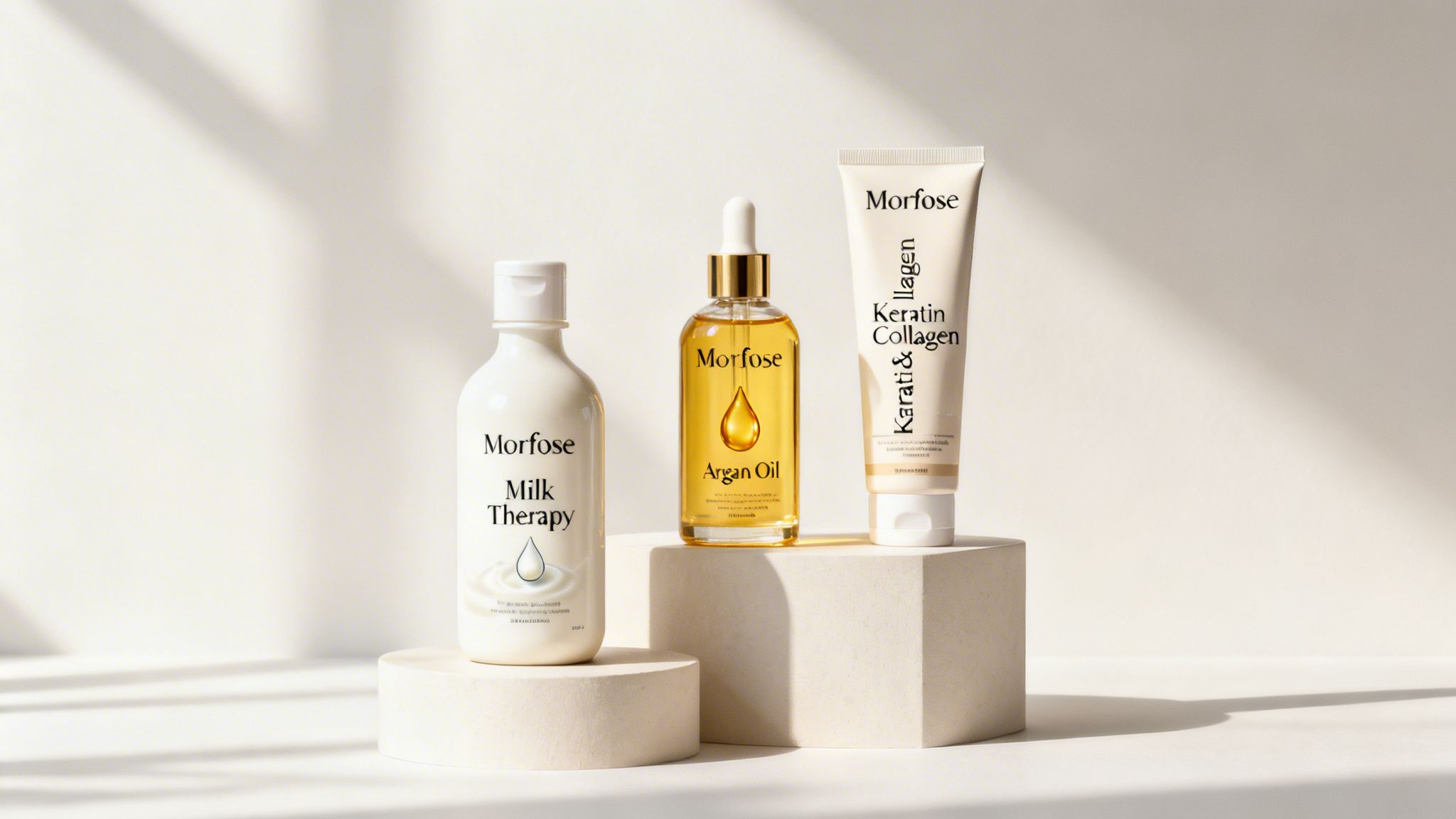
We've designed our product lines to go after the specific problems that lead to frizz, letting you build a customized toolkit. Whether your hair is desperate for moisture, weakened by damage, or just rebelling against the weather, there’s a Morfose solution ready to bring back the calm.
For Thirsty Hair Lacking Moisture
If dryness is your main battle, the goal is simple: infuse your hair with as much lasting hydration as possible. Dry hair has a raised, rough cuticle that desperately searches for moisture in the air, which is why humid days can feel like your worst enemy. You need ingredients that do more than just coat the hair; they need to deeply nourish and replenish what’s missing.
This is precisely what the Morfose Milk Therapy line was created for. Its unique formula is a total game-changer for dehydrated, frizz-prone hair.
- Milk Protein: At its core, this ingredient is incredible at strengthening hair from the inside out, which helps reduce the brittleness that so often comes with dryness.
- 12 Essential Amino Acids: These are literally the building blocks of healthy hair. They help restore moisture and improve elasticity, making your hair far less likely to snap or frizz up.
When you work the Milk Therapy shampoo, conditioner, and two-phase leave-in conditioner into your routine, you’re not just putting a temporary band-aid on frizz—you’re rebuilding your hair’s moisture reserves for long-term strength.
For Sealing the Cuticle Against Humidity
Even perfectly moisturized hair needs a shield. To stop humidity from getting inside the hair shaft and causing it to swell into a frizzy mess, you need products that can seal the cuticle down flat. This creates a smooth, reflective surface that locks good moisture in and keeps bad moisture (humidity) out.
The Morfose Argan Oil series is your go-to for this critical step. Argan oil is famous for its lightweight, non-greasy feel and its amazing ability to create a protective barrier.
A sealed cuticle is the secret to both shine and frizz control. When the hair’s outer layer is smooth, it reflects light better and is less vulnerable to atmospheric moisture, giving you that polished, sleek finish.
Using the Argan Hair Serum on damp hair before you style is a fantastic way to essentially waterproof your strands. It tames any roughed-up cuticles and provides a glossy finish that keeps flyaways from making an appearance all day.
For Repairing Damaged, Porous Hair
When hair is damaged—from heat, color treatments, or chemical processing—it becomes highly porous. This means it has gaps and holes in its structure that absorb and lose moisture erratically, leading to a constant state of frizz. For this kind of frizz, repair is just as important as hydration.
This is where the Morfose Keratin & Collagen formulas come in. They are designed to rebuild and fortify hair that's been compromised.
- Keratin: This is the very protein your hair is made of. Adding it back helps to patch up the weak spots along the hair shaft, making it stronger and much smoother.
- Collagen: Known for improving elasticity, collagen helps make hair more flexible and less prone to breakage and split ends—two major contributors to a frizzy look.
Using these reparative products helps restore your hair’s structural integrity, making it far less reactive to environmental triggers.
For a targeted approach that works on all types of frizz, our Morfose Anti-Frizz Hair Serum is specifically designed to lock in moisture and bring back that healthy shine.
Lifestyle Habits for Long-Term Frizz Control
Winning the war against frizz goes way beyond the products in your shower. If you really want smooth, manageable hair for good, you need to look at the small, consistent habits you practice every single day.
These lifestyle adjustments work behind the scenes to cut down on friction, shield your hair from damage, and build strength from the inside out. Think of it this way: your daily routine is either adding to the problem or actively fighting it. A few simple swaps can completely turn the tide in your favor.
Upgrade Your Sleep Routine
You spend about a third of your life sleeping, and that time can either wreck your hair or protect it. Your standard cotton pillowcase? It’s creating a surprising amount of friction as you toss and turn, roughing up the hair cuticle and leaving you with tangles, breakage, and that dreaded morning frizz.
The fix is surprisingly simple: switch to a silk or satin pillowcase.
- Less Friction: The smooth surface of silk or satin lets your hair glide right over it, which means the cuticle stays flat and happy.
- Moisture Retention: Unlike absorbent cotton that saps moisture, these materials won't strip your hair of its natural oils, helping it stay hydrated overnight.
Making just this one change can lead to a huge reduction in morning frizz and flyaways. Your styling routine will thank you.
Embrace Regular Trims
Holding onto split ends is one of the biggest mistakes you can make when you're trying to get rid of frizz. A split end is a sign of damage, and trust me, it’s not going to heal itself. Instead, that split will just keep traveling up the hair shaft, weakening the whole strand and creating a frayed, frizzy mess.
Getting regular trims every 6-8 weeks isn't about losing length; it's about preserving the health of your hair. When you snip off those damaged ends, you stop frizz in its tracks and keep your hair looking polished and healthy.
Pro Tip: A haircut with blunt lines can be especially great for frizz-prone hair. The solid weight at the ends helps keep the cuticle smooth and weighed down, preventing it from puffing up.
Protect Your Hair From The Elements
Your hair is constantly up against environmental aggressors that cause damage and trigger frizz. Just like you protect your skin from the sun, your hair needs its own defense system.
- Sun Exposure: UV rays are notorious for breaking down the proteins in your hair, leaving it dry, brittle, and frizzy. Throw on a hat during peak sun hours or spritz on a UV protectant hair spray.
- Chlorine and Saltwater: Both are incredibly dehydrating for hair. Before you take a dip, wet your hair and apply a leave-in conditioner to create a protective barrier. As soon as you get out, rinse your hair thoroughly with fresh water.
These small protective measures go a long way in preventing the kind of damage that leads to chronic frizz.
Nourish Your Hair From Within
At the end of the day, healthy hair truly starts from the inside. Proper hydration and a nutrient-rich diet give your body the building blocks it needs to grow strong, resilient hair that’s naturally less susceptible to frizz.
Drinking plenty of water is non-negotiable for hydrating your hair from the inside out. On top of that, focus on a diet packed with proteins, vitamins, and minerals. Foods like salmon (full of omega-3s), eggs (biotin and protein), and leafy greens (iron and vitamin C) are all hair-health superstars. To learn more, check out our guide on the best foods for healthy hair.
There's a reason the global frizz control market is exploding. It was valued at US$2.7 billion in 2023 and is on track to hit US$4.4 billion by 2030. This just shows how many of us are dealing with frizz, especially in humid climates where it feels like a constant battle. Adopting these lifestyle habits gives you a powerful, long-term advantage in that fight. You can find more insights about this growing market on persistencemarketresearch.com.
Got Questions About Frizzy Hair? We've Got Answers
Even when you think you've got your anti-frizz routine down, questions always pop up. Let's get into some of the most common ones we hear, clearing up the confusion so you can get back to having smooth, predictable hair.
Can I Fix My Frizzy Hair Permanently?
The short answer is no, but don't let that discourage you. You can't permanently change your hair's natural DNA, but you can absolutely get frizz under long-term control. Frizz isn't a permanent state—it's more like a signal. It’s your hair's way of screaming that it’s thirsty, damaged, or just not happy with the weather.
Think of it less like a one-and-done fix and more like a wellness routine for your hair. By consistently giving it moisture, handling it gently, and using products that seal that outer cuticle layer, you can keep it smooth day in and day out.
Why Does My Hair Explode Into Frizz After Brushing?
Ah, the classic brush-induced frizz ball. If you have wavy or curly hair, brushing it dry is a guaranteed ticket to Frizz City. Those bristles tear through your natural curl patterns, lifting up the smooth cuticle layer and separating every strand. The result is that puffy, undefined, frizzy halo.
To sidestep this, just follow a few simple rules:
- Only detangle when wet. The perfect time to work through knots is in the shower, when your hair is loaded up with a slippery conditioner.
- Grab the right tools. A wide-tooth comb is your best friend. It’s so much gentler than a brush with a million bristles.
- If you absolutely must detangle dry hair: Use your fingers first. If you need more help, grab a very wide-tooth comb and add a drop of smoothing serum to give it some slip and calm flyaways.
For a deeper dive, especially if you have curls, check out our guide on how to stop curly hair from frizzing.
Does Cutting My Hair Actually Help With Frizz?
Yes, it really does! A good trim is one of the most underrated weapons in the fight against frizz. Frizz loves to hang out at the ends of your hair, where all the damage and split ends have gathered. Those splits don't just stay put—they can travel up the hair shaft, creating even more texture and chaos.
Getting a trim every 6-8 weeks removes those porous, damaged ends that soak up humidity like a sponge. It’s a simple way to maintain the health of your hair, making it look and feel instantly smoother.
Pro Tip: Ask your stylist for a blunt cut. The extra weight at the ends helps hold the hair cuticle down, preventing it from puffing up at the first sign of moisture in the air.
What's The Single Most Important Product for Fighting Frizz?
If we had to recommend just one product to make the biggest difference, it would be a high-quality, silicone-free leave-in conditioner or a dedicated anti-frizz serum. Your shampoo and conditioner set the stage, but it's the leave-in product that works all day to protect your hair.
It does a few critical jobs all at once:
- Seals the hair cuticle to lock in all that good moisture from your shower.
- Blocks out humidity by creating a protective shield around each strand.
- Provides continuous hydration, keeping hair from getting thirsty and reaching out for moisture in the air.
The right leave-in treatment can detangle, moisturize, and defend against frizz without ever feeling heavy or greasy.
The frizz control shampoo market alone hit an incredible USD 2,316.70 million in 2023 and is expected to climb to USD 4,068.20 million by 2034. This just shows how common this struggle is, as more people look for quality formulas to fix damage from styling and coloring. You can discover more insights about these market trends on futuremarketinsights.com.
At Morfose, we're obsessed with creating the tools you need for a great hair day, every day. Our formulas are designed to get to the root cause of frizz, delivering the moisture, repair, and protection your hair is craving. Take a look at our collections and find the perfect routine for your hair type.
