

How to Prevent Split Ends for Good
Split ends can feel like a never-ending battle, but stopping them is simpler than you think. The secret isn't a single miracle product; it's about understanding why your hair frays and building a consistent routine to protect it from daily damage.
The goal is to minimize stress from heat styling, chemical treatments, and physical friction while keeping your hair deeply hydrated and strong. This guide will show you exactly how to prevent split ends with practical, step-by-step advice.
Understanding What Causes Split Ends
Before you can fix the problem, you need to know what you're up against. A split end, known scientifically as trichoptilosis, occurs when the hair's protective outer layer (the cuticle) wears down and peels away, causing the inner fibers to unravel.
Think of it like a rope fraying at the end—that’s what’s happening to your hair on a microscopic level. This damage is the result of cumulative stress that weakens your hair's structure over time. Once the cuticle is compromised, the inner core is left exposed and vulnerable, causing it to split into two or more strands.
Common Culprits Behind Frayed Ends
Pinpointing the cause in your routine is the first step toward healthier hair. Most damage comes from three key areas:
- Mechanical Stress: This is physical wear and tear. It includes aggressive brushing (especially on wet, fragile hair), using tight elastic hair ties that snag and pull, and even the friction from your pillowcase as you sleep.
- Heat Damage: Overusing flat irons, curling wands, and blow dryers without a quality heat protectant is a primary cause of split ends. High temperatures cook the hair's protein, leaving it brittle and prone to splitting.
- Chemical Damage: Salon treatments like coloring, bleaching, perms, and relaxers alter the hair's internal structure. While they create beautiful results, the process inherently weakens the cuticle, making it much more susceptible to other forms of damage.
The Science Behind Hair Damage
If you’re dealing with split ends, you are not alone. A massive Dyson Global Hair Science Study found that split ends are a concern for a whopping 70% of people who feel their hair is damaged. It starts when the hair’s cuticle layers are forced to peel away from stressors like harsh brushing or intense heat.
Once a split begins, it can travel up the hair shaft if left untreated. This is why stylists recommend regular trims every 6-8 weeks—this simple habit can significantly reduce the occurrence of split ends.
External factors aren't the whole story. Internal influences, like how hormones influence hair health, can also play a role in why your hair might be more prone to splitting. It’s also helpful to know the difference between split ends and general breakage. To get the full picture, check out our guide on what causes hair breakage. Once you pinpoint the issues, you can build a smarter defense.
How to Build a Hair Care Routine to Prevent Split Ends
Preventing split ends for good isn't about one magic product—it’s about building consistent habits that protect your hair every day. Moving beyond a basic wash-and-go routine is the first step to fortifying your ends and stopping damage before it starts.
It begins with how you wash your hair. Instead of applying shampoo all over, concentrate it on your scalp where oils and buildup accumulate. As you rinse, the suds will gently cleanse the lengths of your hair. This small tweak prevents you from stripping your fragile ends of essential moisture.
Adopt a Weekly Deep Conditioning Ritual
A weekly deep conditioning treatment is non-negotiable for anyone serious about fighting split ends. These powerful treatments penetrate deep into the hair shaft, infusing it with the moisture and proteins needed to stand up to daily wear and tear.
Prevention starts with hydration. Dry hair is significantly more prone to splitting. A regular deep conditioning session, especially with restorative hair masks containing ingredients like biotin or keratin, can help restore broken protein bonds and reduce split end formation.
Pro Tip: To boost your mask's effectiveness, wrap your hair in a warm towel for 15-20 minutes after application. The gentle heat helps open the hair cuticle, allowing the nourishing ingredients to penetrate more deeply.
The journey from a healthy strand to a frayed end is predictable. Stressors like heat, friction, and chemicals slowly chip away at the hair's protective layer.
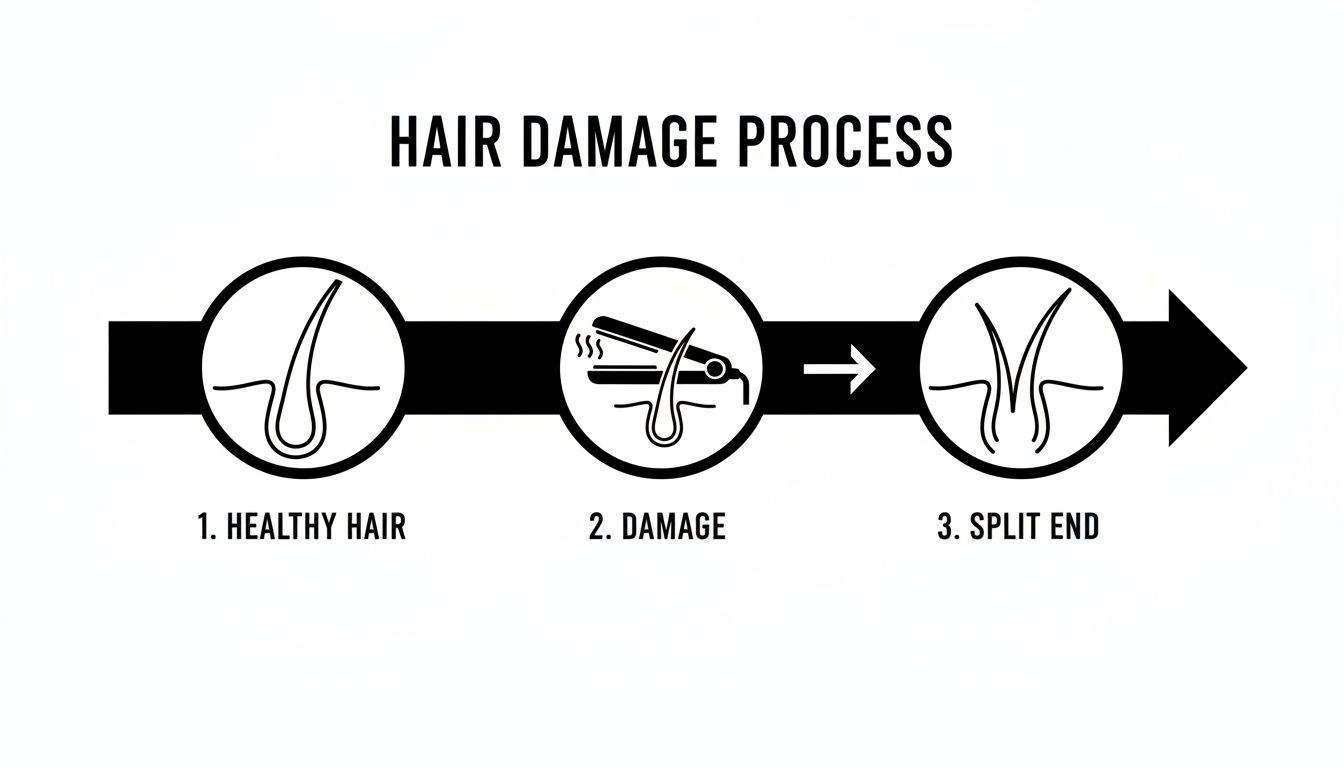
This visual shows how easily a healthy strand can become damaged, which is why every preventative step in your routine matters.
Your Weekly Split End Prevention Schedule
To make things easier, here’s a sample weekly routine. Use it as a blueprint to keep your ends strong and sealed, adapting it to your hair type and lifestyle.
| Day | Morning Routine | Evening Routine |
|---|---|---|
| Monday | Gentle cleanse (scalp only), condition ends. Air dry or use low heat. | Apply a few drops of Morfose Argan Hair Oil to dry ends. |
| Tuesday | Co-wash or rinse with water only. Refresh style with a light leave-in spray. | Braid hair loosely or use a silk scrunchie to protect from friction overnight. |
| Wednesday | Gentle cleanse and condition. | Apply Morfose Milk Therapy Creamy Mousse to damp hair for moisture. |
| Thursday | Refresh style. Avoid heat if possible. | Protect hair in a loose bun or pineapple hairstyle. |
| Friday | Deep Condition Day! Cleanse, then apply a rich hair mask for 15-20 minutes. | Let hair air dry completely. Apply a serum to seal ends. |
| Saturday | Style as desired, but always use a heat protectant spray first. | Gently detangle before bed. |
| Sunday | Rest day for hair. Minimal styling, perhaps a loose, protective style. | Lightly mist ends with water and seal with a touch of hair oil if they feel dry. |
Consistency is key. Sticking to a schedule like this builds a protective barrier against the daily stressors that lead to split ends, ensuring your hair stays resilient.
Master the Art of Gentle Detangling
Your hair is most vulnerable right after you wash it. When wet, the hair shaft swells, making it stretchy and easy to snap. Ripping a brush through tangled, wet hair is one of the fastest ways to create micro-tears that become split ends.
Follow these simple rules for safe detangling:
- Use the Right Tool: Always use a wide-tooth comb or a brush designed specifically for wet hair.
- Start from the Bottom: Begin combing at the very ends of your hair and slowly work your way up to the roots to avoid creating one large knot.
- Add Some Slip: Before combing, spritz on a leave-in conditioner or detangling spray. The added slip helps the comb glide through without friction.
To perfect your conditioning game, our guide on how to deep condition hair breaks down the techniques even further. These small adjustments are the foundation for keeping your ends smooth and strong.
How to Style Your Hair Without Causing Split Ends
Your daily styling choices can either help or hinder your mission to banish split ends. The good news is you don't have to give up your favorite looks to keep your hair healthy. It’s all about making smarter, gentler choices with your tools and techniques.
The biggest offender in styling is heat. Flat irons, curling wands, and blow dryers can cook the delicate proteins in your hair, leaving strands weak and brittle. That's why a high-quality heat protectant isn't a suggestion—it's non-negotiable.
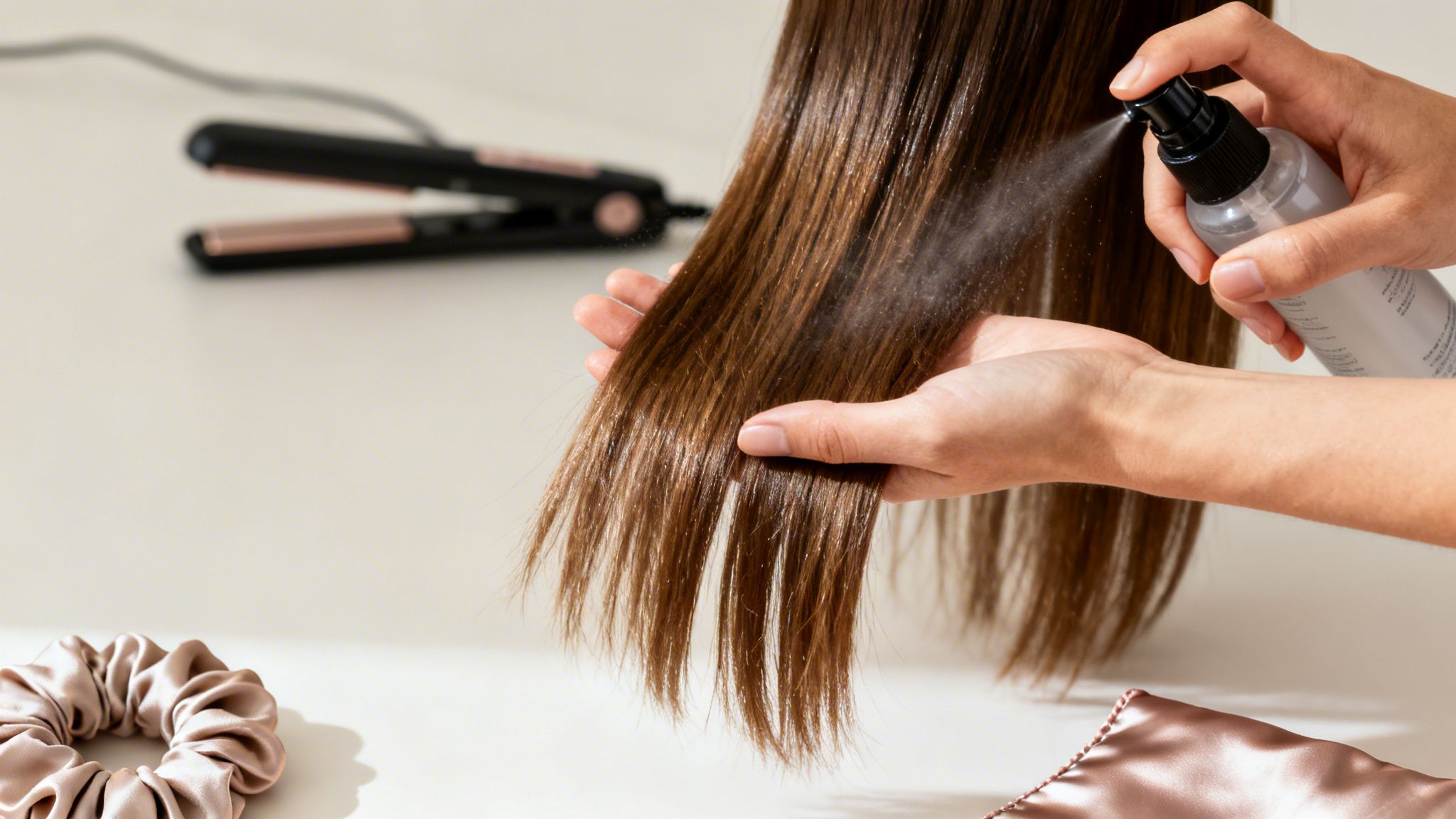
Think of it as sunscreen for your hair. It creates a barrier that distributes heat more evenly, shielding your hair’s cuticle from intense damage.
Master Smarter Heat Styling
Using a heat protectant is the first step, but how you use your hot tools is just as important. Many people crank their styling tools to the highest setting, but this is one of the fastest ways to cause irreversible damage.
A simple rule? Keep your heat tools at or below 350°F. Research shows that damage can spike significantly once you go above that temperature.
Here are a few more tips:
- Never Use Heat on Wet Hair: Ensure your hair is 100% dry before a flat iron or curling wand gets near it. Applying direct heat to damp hair causes the water inside to boil, creating destructive steam bubbles within the hair shaft.
- One Pass is Enough: When straightening, move the iron slowly and steadily down each section. Going over the same piece repeatedly concentrates heat and fries the cuticle.
- Air-Dry First: Whenever possible, let your hair air-dry about 70-80% of the way. Finish the job with a blow dryer on a low heat and speed setting to drastically cut down on heat exposure.
Reduce Mechanical Stress from Daily Habits
Heat isn't the only enemy. Mechanical damage—the physical pulling, tugging, and friction from everyday habits—can be just as destructive. This stress gradually wears down the hair cuticle, leaving you with frayed ends.
For example, constantly pulling your hair into tight ponytails with harsh elastic bands puts immense strain on your strands. Simple swaps can make a huge difference.
Simple Swaps for Healthier Hair:
- Ditch Tight Elastics: Switch to softer options like fabric scrunchies, spiral hair ties, or claw clips. They provide hold without the damaging grip.
- Sleep Smarter: A cotton pillowcase creates friction. Swapping to a silk or satin pillowcase allows your hair to glide smoothly, reducing tangles and breakage.
- Mind Your Accessories: Be mindful of hats, scarves, and purse straps that can snag and pull on your hair throughout the day.
These small, consistent changes make a massive difference. To learn more, check out our guide on 7 common hair styling mistakes that cause split ends.
Why Regular Trims Are Your Best Defense
While the habits we've discussed are fantastic for keeping hair strong, they work on healthy hair. The moment a strand splits, no serum or mask can permanently fuse it back together.
That’s where trims come in. They are your non-negotiable first line of defense. The only real way to get rid of a split end is to cut it off.
Ignoring frayed ends is a recipe for disaster. An untreated split will travel up the hair shaft, weakening the strand and eventually causing it to break off much higher up. This is a primary reason why people feel their hair has stopped growing—it’s actually breaking off at the ends faster than it’s growing from the root.
Finding Your Ideal Trimming Schedule
So, how often do you really need a cut? The classic “every 6-8 weeks” rule is a solid starting point, but your perfect schedule depends on your hair’s condition and goals.
- For Damaged or Color-Treated Hair: Stick to a trim every 6 to 8 weeks to proactively remove damage before it worsens.
- For Healthy Hair Maintenance: If your hair is in great shape, a salon visit every 10 to 12 weeks should be sufficient.
- For Growing Your Hair Long: You still need trims! A light trim every 3 to 4 months keeps ends healthy, prevents major breakage, and ensures the length you gain is strong.
A regular trim isn’t about losing length; it’s a strategic move to invest in the quality and strength of your hair. You give up a little length now to avoid chopping off inches of damaged hair later.
Ask Your Stylist About "Dusting"
If you're fiercely protective of every inch, ask your stylist about a technique called dusting.
In this method, the stylist skims their scissors over the surface of your hair, snipping off only the tiny, frayed tips sticking out. The goal is to remove split ends without touching your overall length. It’s the perfect compromise for cleaning up damage while retaining as much length as possible.
This approach is one of the key techniques we explore in our article on the benefits of regular trims for professionals.
Best Morfose Products to Use for Split End Prevention
Using the right products is a game-changer when fighting split ends. A solid routine with nourishing ingredients gives your hair the support it needs to stay strong, hydrated, and resilient. Morfose offers a complete system designed to nourish from within and protect from the outside—the perfect defense against frayed ends.
By incorporating Morfose into your routine, you shift from simply maintaining your hair to proactively fortifying it. Each product is formulated to tackle a specific weakness that leads to splitting, from moisture loss to a damaged cuticle.
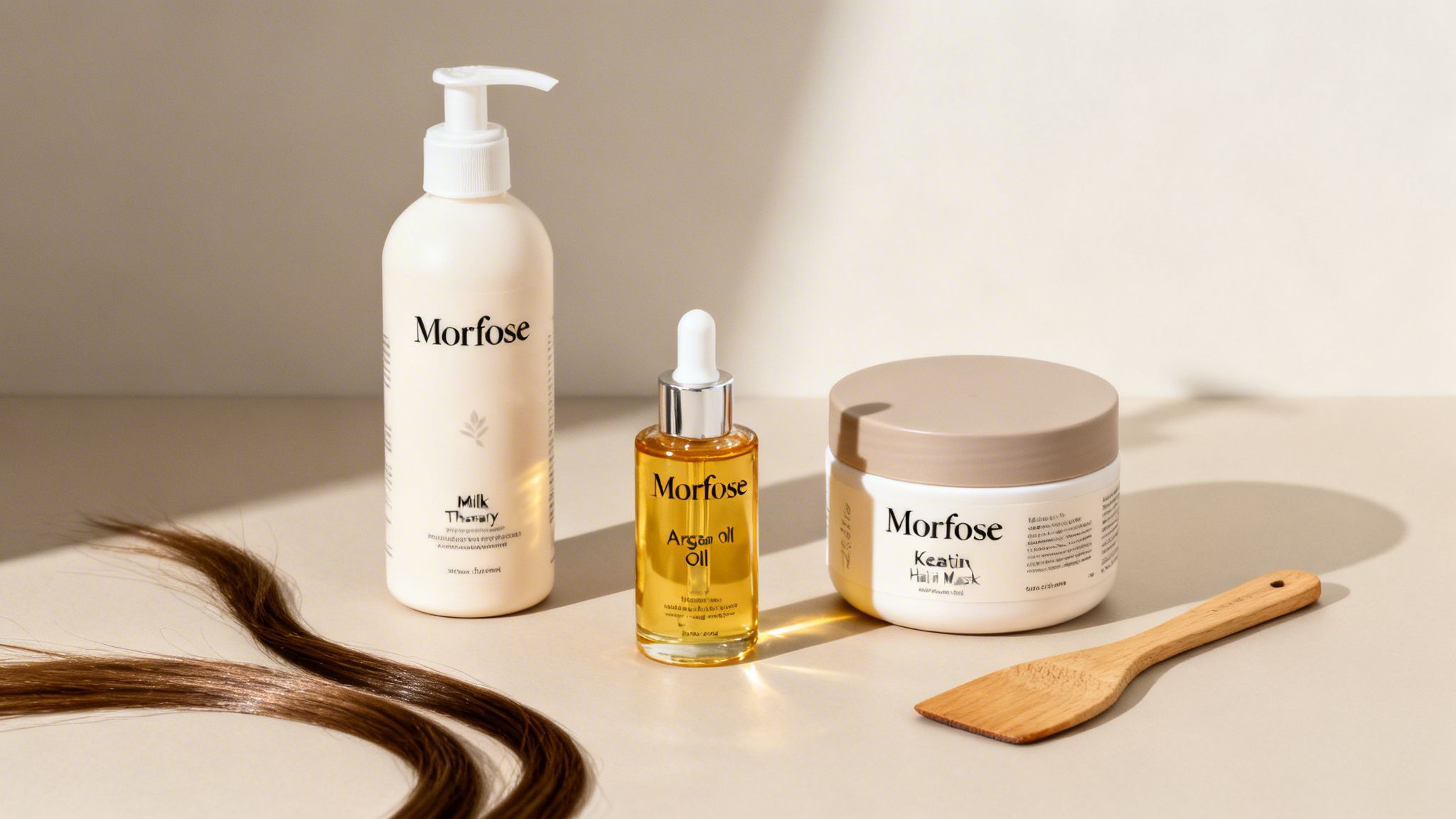
Fortify and Moisturize with Milk Therapy
Dryness is the number one enemy of healthy ends. When your hair lacks moisture, it becomes brittle and fragile. The Morfose Milk Therapy line was created to solve this problem. Packed with milk proteins and a unique blend of 12 essential amino acids, these products deliver deep, lasting hydration. The milk proteins fortify the hair's internal structure, making each strand more flexible and less likely to snap.
Seal and Protect with Argan Oil
Hydrated hair needs an external shield to protect it from friction and heat. A quality hair oil smooths the cuticle, locks in moisture, and creates a barrier against daily damage. Our Morfose Luxury Argan Hair Oil is the perfect daily defense. Just a few drops on your ends will:
- Seal the Cuticle: Creates a sleek, glossy surface that resists snagging.
- Lock in Moisture: Prevents the hydrating benefits of your conditioner from evaporating.
- Add a Protective Barrier: Shields hair from friction caused by styling, clothing, and even your pillowcase.
You can learn more about how our argan oil helps prevent split ends and restores incredible shine.
Rebuild Strength with a Keratin Hair Mask
If your hair already shows signs of weakness from color treatments or heat styling, it's time for an intensive repair treatment. Keratin, the very protein your hair is made of, is the gold standard for rebuilding strength. Using a keratin-based treatment is like giving your hair structural reinforcement, filling in microscopic gaps along the hair shaft.
The Morfose Keratin Hair Mask is designed for this purpose. Using it once a week helps reverse the signs of damage, restoring elasticity and strength to over-processed strands. This makes your hair less porous and better equipped to handle daily stress, stopping split ends before they start.
Your Top Split End Questions, Answered
Hair care can be confusing. Let's clear up some of the most common questions about split ends to help you build a routine that gets real results.
Can You Actually Repair Split Ends?
This is the most common question, and the answer is no, you cannot permanently repair a split end. Once the hair fiber has physically frayed, no product can fuse it back together for good.
What many serums and treatments can do is temporarily seal the split, making hair look and feel smoother. This cosmetic fix can also help prevent the split from traveling further up the hair shaft before your next trim. However, the only real cure for a split end is to cut it off.
Do I Have to Get Trims if I'm Growing My Hair Long?
Yes, absolutely. It feels counterintuitive, but it's one of the biggest mistakes people make when trying to grow out their hair.
An untreated split end doesn't stay at the tip; it continues to travel up the hair shaft, weakening the strand until it breaks off much higher up. You'll lose far more length from this breakage than you would from a small, strategic trim. Getting a tiny trim every 3-4 months keeps your ends healthy and ensures the length you gain is strong.
Key Takeaway: Think of trims as quality control, not a setback. You are preserving the integrity of the hair you already have.
Are Expensive Products Really Better for Preventing Split Ends?
Not necessarily. The price tag is less important than the ingredients inside the bottle. An expensive product is worthless if it doesn't contain what your hair needs.
Instead of focusing on price, read the label. Look for formulas with proven ingredients that strengthen, moisturize, and protect:
- Proteins: Keratin, collagen, and silk proteins help patch weak spots in the cuticle.
- Moisturizers: Amino acids, glycerin, and hyaluronic acid pull moisture into the hair strand.
- Sealing Oils: Argan, jojoba, and coconut oils smooth the outer cuticle and lock in moisture.
A well-formulated, affordable product with these ingredients will always outperform a pricey one filled with marketing fluff.
Do Natural or DIY Remedies Work?
Some can be helpful, but they aren't miracle cures. Applying pure coconut or argan oil to your ends is a fantastic way to seal the cuticle and add moisture, which is a key part of prevention.
However, be cautious with other DIY kitchen concoctions. While ingredients like mayonnaise or raw eggs contain proteins and fats, the molecules are often too large to penetrate the hair shaft. They mostly just coat the outside of your hair. You'll almost always get more reliable results from professionally formulated products where ingredients are designed for optimal absorption.
Ready to stop fighting split ends and start preventing them? Morfose creates expertly formulated solutions packed with the powerhouse ingredients your hair needs to resist damage. Explore our collections and find your perfect defense against split ends today.
