

Your Ultimate Guide on How to Deep Condition Hair
If you want to master how to deep condition hair, you first need to understand what this powerful treatment actually does. It's much more than just a stronger version of your daily conditioner. Think of it as an intensive therapy session, designed to push a concentrated dose of moisture and nutrients deep into the hair shaft—right where they’re needed most.
This isn't just a surface-level fix for shiny hair. It's about restoring your hair's health from the inside out, making it an essential step for achieving that lasting, healthy glow.
What Does Deep Conditioning Actually Do for Your Hair?
Deep conditioning is like hitting the reset button for your hair. Every day, our hair goes through a lot—heat from styling tools, chemicals from hair color, and even damage from the sun and pollution. All these stressors strip away your hair’s natural oils and proteins, leaving it looking dull, feeling brittle, and prone to breakage. A quick rinse-out conditioner just can't undo that kind of daily damage.
That’s where a deep conditioner comes in to save the day. Unlike its daily counterpart that mostly slicks the surface to help with detangling, a deep conditioner is packed with potent ingredients that penetrate the hair's cuticle. We get into all the nitty-gritty details in our guide on the difference between deep conditioner and conditioner if you want to dive deeper.
Rebuilding Hair from the Inside Out
The main job of a deep conditioning treatment is to put back what daily life and styling take out. It accomplishes this by tackling two critical components: moisture and protein.
- Restoring Essential Moisture: Hydrating ingredients like rich butters and oils replenish the internal moisture balance in each strand. This is what transforms hair from feeling like straw to being soft, flexible, and manageable.
- Repairing Structural Damage: Protein-based ingredients, like keratin and collagen, act like spackle, filling in the tiny gaps and cracks along the hair shaft. This process reinforces the hair’s internal structure, giving it a major boost in strength and elasticity.
This one-two punch is why deep conditioners are so crucial in modern hair care. The demand for these treatments has grown alongside the rise in hair damage from our lifestyles. In fact, deep conditioners captured a massive 38.4% of the market, outperforming other treatments because they directly solve the problem of dry, damaged hair—a concern for over 60% of people. The full hair conditioner market report has even more on these trends.
Benefits Beyond Basic Softness
That incredible softness and shine you feel after a treatment? That’s the direct result of all that internal repair work. When your hair's moisture and protein levels are properly balanced, its overall health improves dramatically.
A deep conditioner works on a much deeper level than a standard conditioner. Its purpose is to infuse the hair shaft with nourishing ingredients that repair, strengthen, and hydrate, resulting in improved texture, elasticity, and shine that lasts well beyond your next wash.
For example, after a long summer of sun and chlorine, your hair probably feels crunchy and looks faded. A good deep conditioning session will drench it with the moisture it's craving, bringing back its softness and vibrancy. Or, if you're about to get your hair colored, prepping it with a deep conditioner beforehand can fortify the strands, helping them withstand the chemical process with far less damage.
By making deep conditioning a regular habit, you’re not just fixing past damage; you’re proactively defending your hair against future harm.
How to Choose the Right Deep Conditioner for Your Hair Type
Walking down the hair care aisle can feel overwhelming. With countless deep conditioners promising a miracle in a jar, how do you find the one that’s actually right for your hair? The secret is to stop looking for a magical one-size-fits-all product and start understanding your hair's unique needs.
Choosing the right treatment is about more than just picking your favorite scent. It's about getting real with your hair's specific needs—its texture, its porosity (its ability to absorb moisture), and its damage level. Nailing this choice is the key to strong, vibrant, deeply nourished strands instead of limp, weighed-down hair.
Decode Your Hair's Needs First
Before you can pick the right product, you have to know what problem you're trying to solve. Two of the biggest factors to consider are your hair's texture and porosity.
- Fine Hair: If you have fine hair, you know the struggle. The wrong product can instantly turn your hair into a greasy, flat mess. You’ll want to look for a lightweight formula that packs a nourishing punch without any of the extra weight.
- Coarse or Thick Hair: For those with thicker, coarser strands, the main goal is usually intense hydration and smoothing. Your hair can handle—and often craves—richer, heavier formulas loaded with butters and oils to fight off dryness and frizz.
- Porosity: This is a game-changer. Porosity is all about how well your hair can absorb and hold onto moisture. Low porosity hair has a tightly sealed cuticle that makes it tough for moisture to get in. On the other hand, high porosity hair has gaps in its cuticle, letting moisture in easily but losing it just as fast. Understanding your hair’s porosity is a critical first step. You can learn more in our complete guide on low vs. high porosity hair.
This simple decision tree can help you figure out if your hair needs a deep conditioning session.
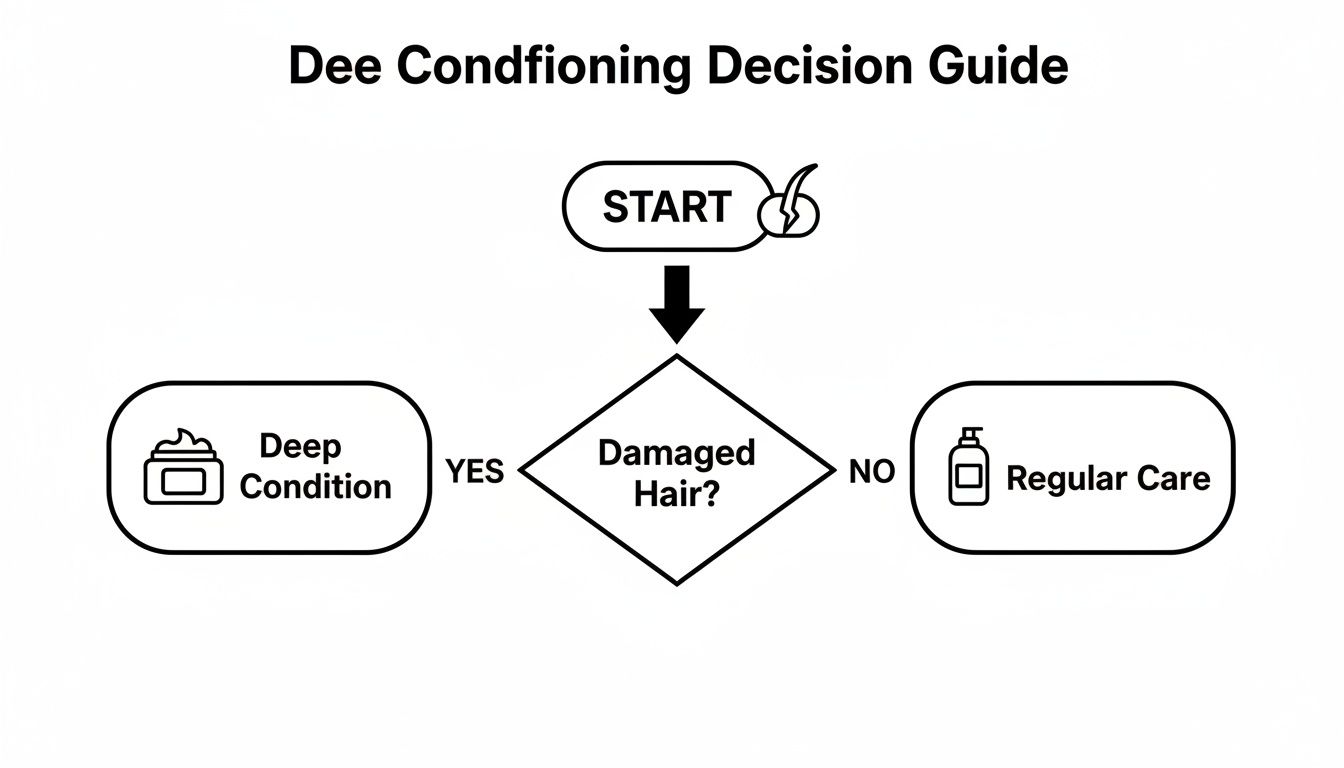
The flowchart visualizes what hair professionals know well: damaged hair benefits from intensive treatments, while healthy hair just needs a solid maintenance routine.
Moisture vs. Protein: What Does Your Hair Need?
Once you’ve identified your hair type, the next question is what it’s really craving: moisture or protein? Your hair needs a healthy balance of both, and giving it the wrong one is a recipe for disappointment.
Moisture-Based Treatments are your go-to when hair feels dry, brittle, rough, or tangles easily. These are packed with hydrating ingredients that restore softness and elasticity.
Protein-Based Treatments are for hair that feels limp, mushy, or overly stretchy when wet. These formulas work to rebuild the hair’s structure, adding strength and reducing breakage. This is especially important for chemically treated or high-porosity hair.
Pay close attention to how your hair feels. If it snaps easily when you pull a dry strand, it’s probably thirsty for moisture. If it feels mushy and stretches forever before breaking when it’s wet, it’s crying out for protein.
This is why alternating between moisture and protein treatments can be so effective. A balanced routine gives your hair the hydration it needs to stay flexible and the protein it needs to stay strong.
How to Read the Ingredient Label
Learning to scan an ingredient list is your superpower in the hair care aisle. You don’t have to be a chemist, but knowing what to look for will make your decision much easier.
This table breaks down the most common ingredients you'll see in a deep conditioner and what they actually do for your hair.
Decoding Deep Conditioner Ingredients
Use this table to find the right ingredients in a deep conditioner based on what your hair needs most.
| Primary Hair Goal | Key Ingredients to Look For | How They Help Your Hair |
|---|---|---|
| Intense Moisture | Shea Butter, Argan Oil, Avocado Oil, Glycerin | These humectants and emollients draw moisture into the hair strand and seal it in. |
| Strength & Repair | Hydrolyzed Keratin, Amino Acids, Collagen, Biotin | These proteins fill in weak spots and gaps in the hair cuticle, reinforcing its structure. |
| Frizz Control | Coconut Oil, Jojoba Oil, Silicones (like Dimethicone) | They create a smooth barrier on the hair shaft that blocks humidity and reduces frizz. |
| Volume & Body | Panthenol (Pro-Vitamin B5), Wheat Protein, Polymers | These ingredients plump the hair shaft, making individual strands appear thicker and fuller. |
| Scalp Health | Tea Tree Oil, Peppermint Oil, Salicylic Acid, Aloe Vera | These can soothe irritation, reduce buildup, and create a healthy environment for hair growth. |
So, when you're looking at a product, a quick scan for these key players will tell you if it's designed to solve your specific hair problem.
For example, if your color-treated blonde hair feels weak and is breaking more often, a deep conditioner with hydrolyzed keratin and amino acids will be your new best friend. But if your curly hair is in a constant battle with frizz and dryness, a formula rich in shea butter and argan oil will bring back its bounce.
By matching the ingredients to your hair’s needs, you can ensure every treatment delivers real, lasting results.
A Practical Guide to Your Deep Conditioning Routine
So you’ve found the perfect deep conditioner for your hair’s needs. Now it's time to put it to work. Mastering the how-to of deep conditioning hair isn't about rigid rules, but about understanding the process and making it work for you.
The goal is to create the perfect environment for the rich, creamy conditioner to sink deep into your hair shaft and deliver all its restorative goodness. Get the technique right, and you can turn a simple hair treatment into a mini spa session that delivers salon-level results every time.
Here’s a step-by-step guide on how to deep condition your hair properly.
Step 1: Start with a Clean Slate
You wouldn’t wax a dirty car, right? The same logic applies here. Slathering a deep conditioner over hair that's coated in styling products, dirt, or oil is like trying to water a plant with a plastic bag over it—it just won’t work. Buildup creates a barrier, stopping the nourishing ingredients from reaching the hair’s cortex.
For the best results, always start by washing your hair. If you use a lot of products or have hard water, a clarifying shampoo is your best friend. It strips away buildup and gives you a clean foundation. This step ensures your hair cuticles are open and ready to absorb the treatment.
After you shampoo, gently squeeze the excess water out. Your hair should be damp, not dripping wet. Waterlogged strands will dilute the conditioner, making it less effective.
Step 2: The Art of Application
How you apply the product matters. Just plopping a dollop on top of your head and hoping for the best won't get you the results you want.
Instead, follow these tips for applying deep conditioner:
- Section Your Hair: This is non-negotiable, especially for thick, curly, or long hair. Divide your damp hair into four or more manageable sections to ensure you don’t miss any spots.
- Apply from the Ends Up: Your ends are the oldest, most fragile part of your hair, so they need the most attention. Start applying the conditioner there and work your way up toward the mid-lengths.
- Comb it Through: Once applied, gently use a wide-tooth comb or your fingers to distribute the product through each section. This helps with detangling and ensures every single strand is evenly coated.
Pro Tip: Unless your scalp is exceptionally dry, avoid applying a lot of deep conditioner directly to your roots. This can weigh down your hair, especially if it’s fine. The mid-lengths and ends are where the treatment is needed most, so focus your efforts there.
Step 3: Turn Up the Heat for Maximum Impact
Want to supercharge your treatment? Add gentle heat. Heat helps lift the hair’s cuticle, allowing the conditioning ingredients to penetrate more deeply. It’s a simple trick that makes a huge difference.
You don’t need any fancy salon equipment to do it.
- The Classic Shower Cap: After applying your conditioner, pile your hair on top of your head and cover it with a plastic shower cap. The heat from your scalp gets trapped inside, creating a warm, steamy environment that helps the product absorb. Leave it on for the recommended time—usually 15 to 30 minutes.
- The Warm Towel Trick: To enhance the effect, wrap a warm, damp towel over your shower cap. The extra moist heat is fantastic for opening up the hair cuticles even more.
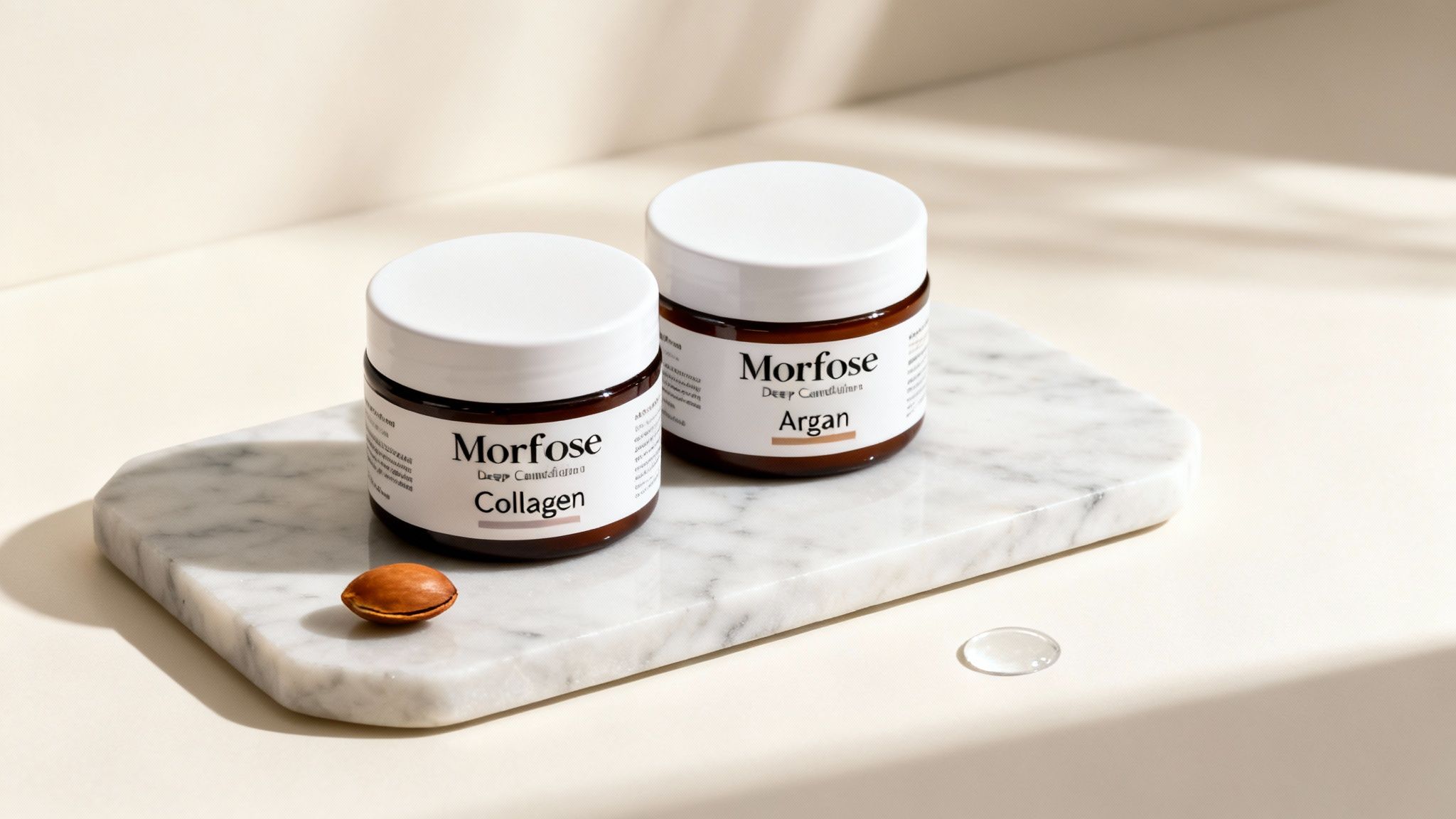
Letting the treatment sit for the right amount of time is crucial. For a truly powerful treatment on brittle strands, something like the Morfose Collagen Hair Mask is designed to fortify and strengthen. When you pair its collagen-infused formula with gentle heat, you’re giving damaged hair a serious dose of TLC.
Step 4: The Final Rinse Seals the Deal
Once your timer goes off, how you rinse is just as important as how you applied the product. A proper rinse removes excess conditioner without undoing all your hard work.
Use cool or lukewarm water—never hot. Hot water can cause the hair cuticle to swell back open, letting some of that precious moisture escape. A cool rinse does the opposite: it helps seal the cuticle shut, locking in hydration and nutrients. This simple change will leave your hair feeling smoother, looking shinier, and less prone to frizz.
Rinse until your hair feels clean and is no longer slippery, but still has that soft, hydrated feeling. This means there's no residue left to weigh your hair down. That’s it—you've officially mastered how to deep condition for unbelievably healthy, vibrant hair.
Recommended Morfose Solutions for Deep Conditioning
Knowing how to deep condition is one thing, but finding the right product is where the real magic happens. When you have the right tools, a simple hair care step can become a powerful, restorative ritual. Morfose offers specialized formulas with professional-grade ingredients that you can use right in your own bathroom.
It’s no surprise that effective hair treatments are in high demand. The global market for conditioning treatments was valued at USD 8.0 billion and is expected to more than double to USD 17.3 billion by 2034. This just shows how essential deep conditioning has become for maintaining healthy hair.
Morfose offers targeted solutions that align with your specific hair goals, whether you’re rebuilding weakened strands or giving thirsty hair a serious dose of moisture. Let’s find your perfect match.
For Weak and Damaged Hair: Morfose Collagen Hair Mask
Is your hair showing signs of distress like increased breakage, split ends, or a "gummy" feeling when wet after coloring or heat styling? Those are all tell-tale signs that your hair's internal protein structure is compromised. A moisture-only mask isn't going to cut it.
You need a product that rebuilds from the inside out.
The Morfose Collagen Hair Mask was made for this exact situation. Collagen is a crucial protein that fortifies the hair shaft, filling in the weak spots and gaps that cause damage.
- Restores Strength: By infusing each strand with collagen, this mask reconstructs your hair's integrity, making it more resilient against daily styling and environmental stress.
- Improves Elasticity: Healthy hair should have a bit of stretch. This mask brings back that bounce and flexibility, which dramatically reduces snapping and breakage.
Think of it as scaffolding for your hair—it provides the reinforcement needed to grow stronger and healthier. With regular use, you can help reverse damage, leaving your hair feeling solid and renewed.
For Dry and Thirsty Hair: Morfose Argan Hair Mask
If your main issue is hair that feels rough, looks dull, and tangles easily, you're dealing with dehydration. Thirsty hair needs a deep infusion of moisture to come back to life. This is common for curly, coarse, or sun-exposed hair that tends to lose moisture fast.
Your best bet is a rich, emollient-packed formula designed for intense hydration.
The goal with dry hair is simple: replenish its moisture reserves and then seal the cuticle to lock it all in. That’s the secret to transforming hair from feeling like straw to silk.
This is where the Morfose Argan Hair Mask comes in. Argan oil is a legend in the hair world because it's packed with fatty acids and vitamin E that nourish hair on a deep level.
This mask works by:
- Delivering Intense Hydration: It drenches dry strands in moisture, instantly making your hair feel softer and look healthier.
- Boosting Shine and Smoothness: By smoothing the hair cuticle, it eliminates frizz and creates a glossy, reflective surface.
- Enhancing Manageability: Hydrated hair is much easier to detangle and style, saving you from frustrating knots and breakage.
When you use the right Morfose product, your deep conditioning routine becomes a targeted, effective treatment. By identifying whether your hair is craving strength or moisture, you can pick the perfect formula to get real, visible results. You can explore our full collection of Morfose deep conditioning masks to find your new favorite.
Finding Your Ideal Deep Conditioning Frequency
So, how often should you really be deep conditioning? If you've ever asked this, you're not alone. The honest answer is: there's no single magic number.
The perfect frequency isn’t a one-size-fits-all rule. It's something you discover by listening to what your hair is telling you. Your ideal schedule depends on your hair type, its condition, and your daily routine. The goal is to create a balanced, sustainable routine that keeps your hair healthy without overdoing it.
How Often to Deep Condition Your Hair
Think about your deep conditioning schedule as a spectrum. On one end, you have seriously stressed and damaged hair. On the other, you have relatively healthy hair that just needs maintenance. Figuring out where you fall on this spectrum is the key.
-
Weekly Treatments: If your hair has been through a lot—chemical treatments like color or bleach, frequent heat styling, or if it's naturally high porosity—a weekly deep conditioning session is ideal. This consistent dose of moisture and nutrients is crucial for repairing existing damage and building strength.
-
Bi-Weekly or Monthly Treatments: For those with fine hair that gets weighed down easily, or hair that’s generally healthy and low porosity, less is more. Treating your hair once every two weeks, or even just once a month, is usually enough to keep it soft and hydrated without risking product buildup.
Remember that your hair’s needs can change with the seasons. You might need to deep condition more often during dry winter months or after a summer of sun and chlorine. A flexible approach is best.
Recognizing the Signs of Over-Conditioning
While deep conditioning is an amazing tool, you can have too much of a good thing. When your hair gets overloaded with moisture without enough protein to balance it out, it can lead to a condition called hygral fatigue.
This happens when the hair cuticle repeatedly swells from taking in too much water and then contracts as it dries, a cycle that weakens the hair strand over time.
Pay close attention to how your hair feels after a treatment. Over-conditioned hair often feels limp, mushy, overly soft, or even gummy when wet. You might notice your natural curl pattern has gone flat or that your hair just won't hold a style.
If you notice these signs, it’s a clear signal to pull back. You'll likely need to deep condition less frequently or start alternating your moisturizing mask with a protein-based treatment to restore balance.
This delicate balance is a core principle of great hair care, a topic we discuss further in our guide on how often you should condition your hair. Ultimately, giving your hair exactly what it needs, when it needs it, is the key to success.
Learning how to deep condition hair properly also means learning when not to. Let your hair be your guide. Its texture, elasticity, and overall look will tell you everything you need to know.
Common Deep Conditioning Mistakes to Avoid
Have you been deep conditioning regularly but still aren't seeing that "wow" factor? It's likely due to a few common mistakes in your technique. Perfecting how you deep condition is just as important as the product you choose.
By sidestepping these frequent errors, you can make sure every treatment delivers its maximum restorative power.
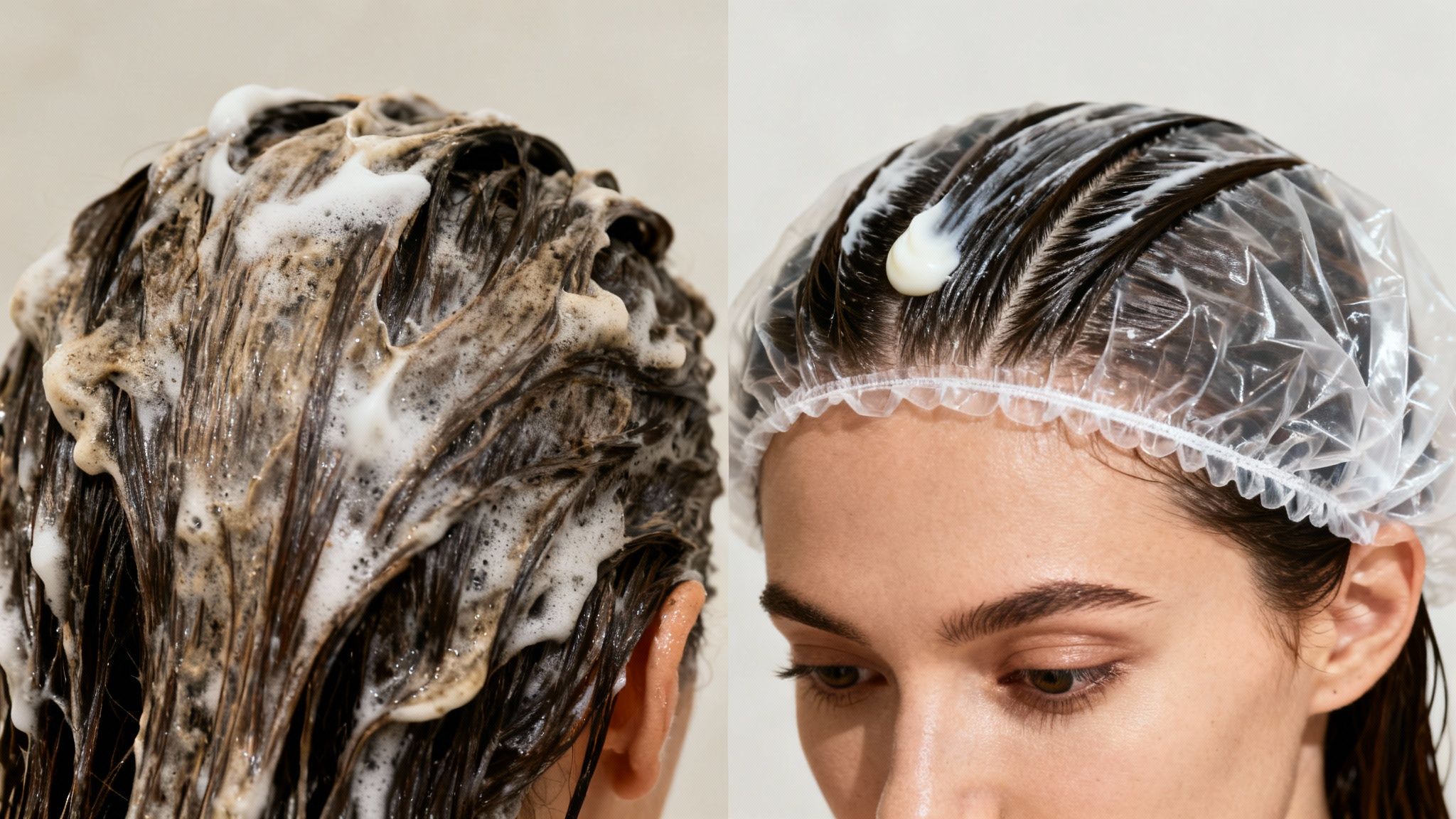
Mistake #1: Applying Conditioner to Dirty Hair
This is the biggest mistake you can make. Applying a deep conditioner to hair that hasn't been properly cleansed is like trying to moisturize your skin without washing it first.
Product buildup, natural oils, and grime create a barrier on your hair shaft. If you layer a treatment over this, the nourishing ingredients are blocked and can't penetrate where they're needed.
The fix is simple: always start with freshly washed hair. Use a good shampoo to get rid of any residue. This helps the hair cuticle open up, making it ready to absorb the conditioner.
Mistake #2: Using Way Too Much Product
It’s tempting to think more is better, but slathering on handfuls of deep conditioner is a fast track to weighed-down hair. Using too much product doesn't improve results—it just causes buildup, leaving your hair feeling heavy, limp, and greasy.
The goal is to apply just enough to evenly saturate your strands, focusing on the mid-lengths and ends where damage is worst. If your hair feels heavy after you rinse, you're likely using too much.
Key Takeaway: You want to coat each strand, not drown your hair in conditioner. A moderate, even application is far more effective and helps you avoid product buildup.
Mistake #3: Not Leaving It On Long Enough
Patience is key with deep conditioning. A quick two-minute application in the shower isn't enough time. Deep conditioners are packed with potent ingredients that need time to penetrate the hair shaft and work their magic.
If you rinse the product out too soon, you're washing all those benefits down the drain.
- Follow the Directions: Always check the product's label for the recommended leave-in time, typically between 15 and 30 minutes.
- Add a Little Heat: To boost absorption, put on a shower cap after applying the conditioner. The trapped heat helps lift the hair cuticle, allowing for deeper penetration.
Mistake #4: Rinsing with Hot Water
The final rinse is just as crucial as the application. Rinsing with hot water might feel nice, but it can reopen the hair cuticle, allowing the moisture you just added to escape.
Instead, always finish with a lukewarm or cool water rinse. This helps seal the hair cuticle, locking in the nourishing ingredients and leaving your hair smoother and shinier.
Fixing these simple slip-ups can completely transform your deep conditioning results. For a deeper dive, check out our guide on other common haircare mistakes you should avoid.
Your Deep Conditioning Questions Answered
Let's wrap up with answers to some of the most common questions about how to deep condition hair.
Can I Leave a Deep Conditioner On Overnight?
While it’s tempting to think more time equals more benefits, leaving a deep conditioner on overnight is not recommended.
Most formulas are designed to work their magic within 20-30 minutes. After that point, your hair has absorbed all it can. Leaving it on longer can lead to hygral fatigue, where the hair shaft swells too much from excess moisture, leaving your hair feeling mushy, limp, or overly soft. Stick to the recommended time for the best results.
Should I Apply Deep Conditioner to My Scalp?
For most people, the answer is no. Your scalp naturally produces oils (sebum) to keep itself moisturized. Applying a rich, heavy conditioner directly to your roots can lead to greasy buildup that weighs your hair down, especially if it’s fine.
The best way to deep condition hair is to focus the product from the mid-lengths down to the ends. Your ends are the oldest, most weathered part of your hair, and that’s where the damage and dryness are most concentrated. That’s where your deep conditioner can do the most good.
Ready to put this knowledge into action and transform your hair? The best routines start with the right products. You can explore the full Morfose collection and find the perfect targeted treatment to bring out the absolute best in your hair at themorfose.com.
