
Why Does My Hair Get Frizzy? A Step-by-Step Guide to Smooth Hair
Let’s get one thing straight: the main reason your hair gets frizzy is surprisingly simple. It’s thirsty.
When your hair is dry and lacks moisture, its outer layer—the cuticle—gets agitated. It lifts up, trying to grab any moisture it can find in the air around it. This desperate attempt to hydrate causes the entire hair shaft to swell up, creating that puffy, frustrating halo of frizz we all want to avoid. Understanding why this happens is the first step to finally getting smooth, manageable hair.
Why Does My Hair Get Frizzy? The Main Causes
Think of frizz as a distress signal from dehydrated hair. A healthy, happy hair strand has a smooth, flat cuticle layer. This tightly sealed layer locks in moisture and reflects light, giving your hair that gorgeous, shiny look.
But when that protective cuticle is compromised, your hair becomes vulnerable. It's like leaving a window open during a rainstorm—all that environmental moisture rushes right in. To help you pinpoint the exact issue, let's break down the most common frizz triggers.
Quick Guide to Frizz Triggers
This table sums up the usual suspects behind frizzy hair. See which one sounds most familiar.
| Cause | What Happens to Your Hair | The Most Common Sign |
|---|---|---|
| Environmental Humidity | Your dry hair absorbs excess moisture from the air, causing the cuticle to swell. | Your hair looks smooth indoors but puffs up the second you step outside on a damp day. |
| Hair Damage | Chemical treatments and heat styling create weak spots in the cuticle, allowing humidity to enter. | You have persistent frizz, split ends, and a rough texture, even on low-humidity days. |
| Lack of Moisture | Your hair is chronically dehydrated due to harsh products or an inadequate conditioning routine. | Your hair feels dry and brittle to the touch and looks dull or lackluster. |
Let's dive a little deeper into what these triggers mean for your hair.
The Usual Suspects Behind Frizz
The journey to smooth hair starts with identifying what's really causing the problem. Most frizz issues can be traced back to one (or more) of these culprits:
-
Environmental Humidity: This is the most famous frizz-inducer. When the air is packed with moisture, your dry hair acts like a sponge. It desperately tries to absorb all those water molecules, which forces the cuticle to swell up and create frizz.
-
Hair Damage: Think of damage from coloring, chemical treatments, or constant heat styling as creating tiny potholes along your hair shaft. These rough, damaged areas compromise the cuticle, leaving it permanently lifted and unable to lie flat. This makes it incredibly easy for moisture to seep in and cause frizz.
-
Lack of Moisture: This is an inside job. If your routine strips your hair of its natural oils or if you're not using products that provide enough hydration, your hair will become chronically dry. Dehydrated hair is naturally more porous and practically invites frizz to the party.
The bottom line is that a raised cuticle is the gateway to frizz. Whether it’s caused by damage, dryness, or your hair’s natural structure, a compromised cuticle will always struggle to fight off humidity.
Fortunately, managing frizz is completely doable once you know what you're up against. By focusing on adding moisture and protecting the cuticle, you can effectively block out the humidity that causes all the trouble. For those struggling with dryness-related frizz, figuring out your hair's unique personality is a game-changer. You can learn more about how your hair absorbs and retains moisture by reading our guide on low vs. high porosity hair.
Understanding the Science of Frizzy Hair
To really get why your hair throws a frizzy fit, we need to look at what’s happening on a microscopic level. The best way to think about it is to picture your hair's outer layer, the cuticle, as a perfectly tiled roof.
When your hair is healthy and hydrated, those tiles—or cuticles—lie flat and smooth. They create a solid barrier that locks in moisture and reflects light, which is what gives your hair that gorgeous, healthy shine.
But when your hair gets dry or damaged, that smooth roof gets messed up. The tiles start to lift, creating a rough, uneven surface. And that's where the real trouble begins. An open cuticle is basically an open invitation for humidity. The dry, thirsty core of your hair strand starts desperately pulling moisture from the air around you, causing the entire hair shaft to swell up unevenly. The result? Frizz.
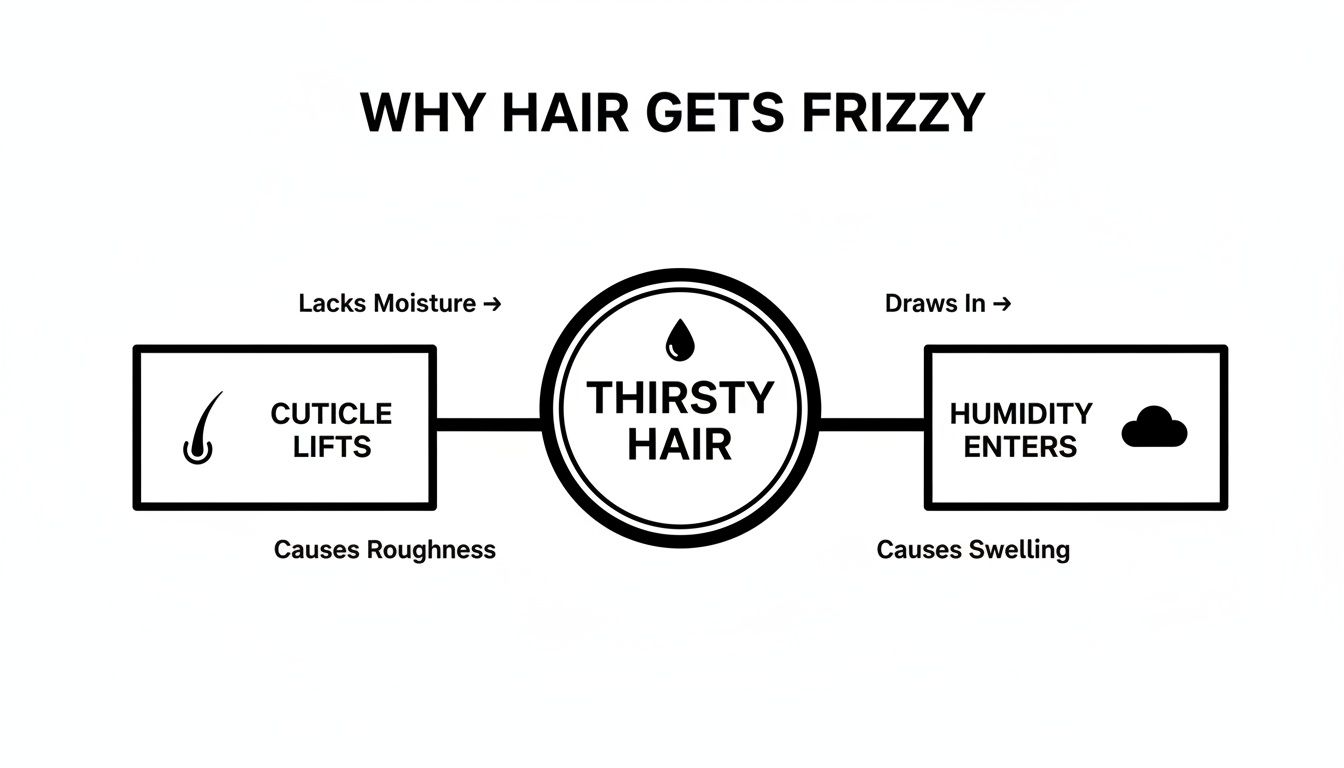
As you can see, it's a chain reaction: thirsty hair leads to a lifted cuticle, which lets humidity rush in and throw your hair’s internal structure into chaos.
What Hydrogen Bonds and Porosity Have to Do With It
What happens next is a quick chemistry lesson. The water molecules floating in the humid air break the temporary hydrogen bonds within your hair's proteins. As new bonds try to form, they do it in a totally disorganized way, pushing individual strands apart and creating that puffy, unruly texture we all know as frizz.
Your hair’s porosity also plays a huge part in this. Porosity is simply your hair’s natural ability to absorb and hold on to moisture. Highly porous hair, often the result of heat damage or chemical treatments, has more gaps in its cuticle layer. This means it soaks up humidity much faster, leading to quicker and more intense frizz. Getting to know your specific hair type and its unique needs is the first real step toward winning the battle.
Why Sealing the Cuticle Is Your Best Defense
Now that you understand the science, the solution becomes crystal clear. The most powerful way to stop frizzy hair is to focus on keeping that cuticle layer sealed down tight and smooth.
Key Takeaway: Frizz isn't just about humidity—it's about a compromised hair structure. A sealed cuticle is your best defense because it locks in the good moisture your hair needs and blocks out the bad moisture from the air.
This is exactly why products designed to smooth the hair shaft work so well. They create a protective barrier that reinforces your hair's natural defenses against the environment. By focusing on hydrating and sealing your hair, you can stop frizz before it even has a chance to start.
Everyday Habits That Make Hair Frizzy
Ever feel like you’re doing everything right, but your hair still insists on throwing a frizzy tantrum? The answer to "why does my hair get frizzy" might actually be hiding in your daily routine. Many of us have common habits that accidentally strip our hair of precious moisture, rough up the cuticle, and roll out the red carpet for frizz.
Pinpointing these habits is the first real step toward getting back to smooth, predictable hair. Let's walk through the seemingly innocent things that could be sabotaging your good hair days, from how you wash to how you dry. Small tweaks here can make a world of difference.
Aggressive Towel Drying
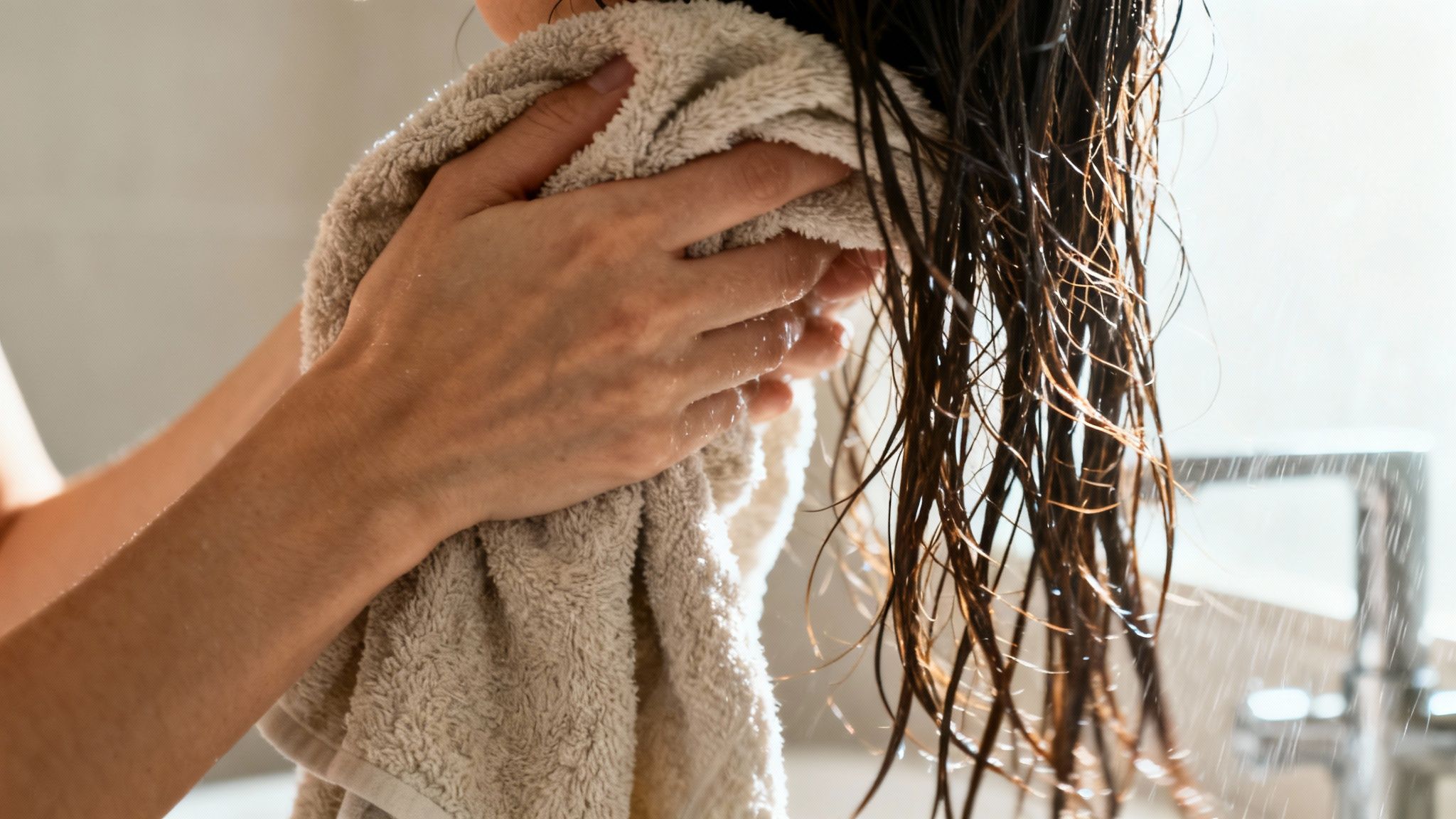
What’s the first thing you do after a shower? If it’s wrapping your hair in a regular cotton towel and rubbing it like you’re trying to start a fire, you’ve found a major frizz culprit. A standard towel creates way too much friction for your delicate hair, especially when it's wet and at its most vulnerable. All that rubbing lifts and shreds the cuticle, creating a rough, uneven surface that’s practically begging for frizz. Instead, try gently squeezing or blotting out the excess water with a soft microfiber towel or an old cotton t-shirt.
Washing with Harsh Shampoos
Many shampoos get that rich, satisfying lather from ingredients called sulfates. They’re powerful detergents that are fantastic at cleaning… maybe a little too fantastic. Along with dirt and product buildup, they strip away all of your hair's natural, protective oils. Think of these oils as your hair’s built-in frizz protection. Once they’re gone, your hair is left dry, vulnerable, and desperate to soak up any moisture it can find in the air—hello, frizz. Switching to a sulfate-free shampoo is a simple but powerful change that helps keep your natural moisture where it belongs.
Skipping Conditioner or Using the Wrong Kind
Conditioner isn’t just an optional add-on; it’s non-negotiable in the fight against frizz. Its main job is to smooth down the hair cuticles that shampooing inevitably lifts up. This process seals in moisture and creates that sleek, shiny surface we’re all after. Skipping it leaves your hair’s cuticle wide open and exposed to the elements. It’s like wearing a raincoat but leaving it completely unzipped in a storm. Using a conditioner that isn’t hydrating enough for your specific hair type can be just as bad, leaving your strands thirsty and ready to frizz up.
Overusing Heat Without Protection
We get it—flat irons, curling wands, and blow dryers can work magic. But that magic comes at a cost. These tools work by zapping moisture from deep within your hair, and high temperatures can actually boil the water inside the hair shaft, creating tiny, destructive cracks in the cuticle. This heat damage creates chronic dryness and makes your hair more porous, turning it into a total frizz magnet. If you can't part with your hot tools, you always need to use a heat protectant first. It creates a shield between the hot plate and your hair, taking the brunt of the damage. For a deeper dive, check out our guide on how to protect hair from heat damage.
How to Build a Powerful Anti-Frizz Routine
Knowing why your hair gets frizzy is one thing, but building a solid routine to stop it is how you actually win the battle. A truly effective anti-frizz strategy isn't about finding a single miracle product; it's about consistency and using the right techniques to keep your hair happy, hydrated, and its cuticle sealed shut. Think of it as a holistic approach, covering everything from how you wash to how you style.
The foundation of any great anti-frizz routine is gentle cleansing. Those harsh, sulfate-heavy shampoos can feel like they're getting your hair squeaky clean, but they're also stripping away its natural oils. This leaves your hair parched and practically begging for humidity to cling to. Making the switch to a hydrating, sulfate-free shampoo is a game-changer—it cleanses without wrecking your hair's first line of defense against frizz.
Following up with a quality conditioner is absolutely non-negotiable. A good conditioner’s main job is to swoop in after shampooing to smooth down the hair cuticle, effectively locking in moisture and creating a sleek, uniform surface. This simple step is critical for preventing those tiny cuticle scales from lifting up and letting environmental moisture sneak in.
Step 1: Add a Weekly Deep Conditioning Treatment
For a more intense dose of hydration, work a weekly deep conditioning mask into your routine. While your daily conditioner is great for maintenance, a mask delivers a concentrated blast of nutrients and repairing ingredients that can penetrate much deeper into the hair shaft. This weekly ritual is like a reset button, helping to repair existing damage and fortify your hair against future stress. Think of it as a spa day for your hair, restoring the elasticity and strength it needs to keep that cuticle lying flat and smooth. You can dive deeper into this topic in our complete guide on how to deep condition hair at home.
Pro Tip: After applying your deep conditioner, pop on a shower cap for 15-20 minutes. The trapped heat from your scalp will gently open the cuticle, allowing the product to absorb more effectively for maximum impact.
Step 2: Master Gentle Drying and Sealing Techniques
What you do after the shower is just as important as what you do in it. Vigorously rubbing your hair with a standard cotton towel is one of the fastest ways to rough up the cuticle and invite a halo of frizz.
Instead, make these simple swaps for much smoother results:
- Swap Your Towel: Ditch that rough bath towel and grab a soft microfiber towel or even an old cotton t-shirt. Instead of rubbing, gently squeeze or blot the excess water from your hair. This simple change drastically reduces friction and keeps the cuticle smooth.
- Apply Products to Damp Hair: Don't wait until your hair is half-dry. Applying a leave-in conditioner or anti-frizz serum to damp—not sopping wet—hair helps lock in all that hydration and creates a protective shield before frizz even has a chance to set in.
Finally, your routine doesn't stop when your head hits the pillow. As you build out your anti-frizz arsenal, remember that even your bedding can make a difference. It's worth learning how to use bamboo pillow slips to fight frizzy hair to cut down on overnight friction. These small, consistent steps really do add up to create a powerful defense against frizz.
Best Morfose Products to Tame Frizzy Hair
Now you know why your hair gets frizzy. But knowing the enemy is only half the battle—the other half is choosing the right weapons to fight back. This is where a targeted routine comes into play, using products specifically designed to restore moisture, seal that troublesome cuticle, and shield your hair from damage.
Fighting frizz is a big deal. The global hair care market was valued at a whopping USD 87.49 billion in 2022 and is expected to climb to USD 147.23 billion by 2030. That growth is driven by people just like us, demanding specialized solutions that actually work.
Restore Moisture with a Deeply Hydrating Mask
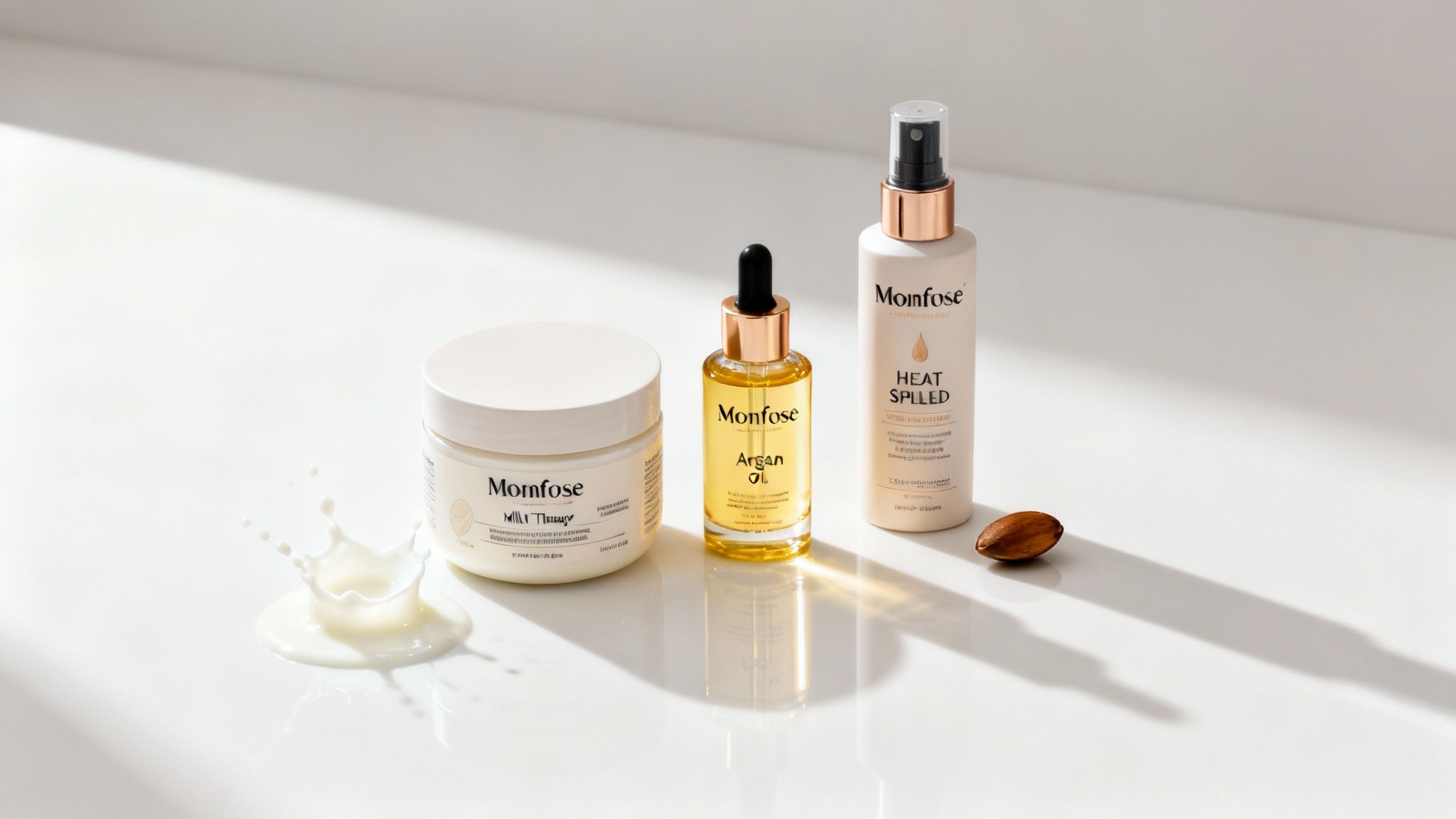
Let's start at the source. Chronically dry, thirsty hair is ground zero for most frizz issues. To give your hair the intense drink of hydration it’s begging for, you need a powerful treatment. The Morfose Milk Therapy Hair Mask is formulated to do exactly that.
This creamy mask uses milk proteins and 12 essential amino acids to go deep into the hair shaft, refilling lost moisture and patching up weak spots from the inside out. When you use it regularly, you’re not just getting a temporary fix; you’re strengthening your hair’s core structure. Stronger hair is way more resilient against humidity and less likely to frizz up at the first sign of moisture in the air.
Seal the Cuticle to Lock Out Humidity
Once your hair is properly hydrated, the next crucial step is to lock it all in by sealing the cuticle. A smooth, closed cuticle is your number one defense against humidity trying to sneak in. For this job, the Morfose Argan Oil line is a fantastic choice.
Argan oil is famous for its ability to coat each strand with a feather-light, non-greasy barrier. This protective layer smooths down those raised, ruffled cuticles, effectively locking in good moisture while physically blocking humidity from getting in. The result? A brilliant, glossy shine and a frizz-free finish that actually lasts. For an extra dose of silky smoothness, you can also check out our Morfose Anti-Frizz Hair Serum.
Prevent Damage with Essential Heat Protection
If there’s one express lane to persistent frizz, it’s heat styling. High temperatures from blow dryers and flat irons strip moisture and blast the cuticle open, leaving your hair porous and completely defenseless.
Before you even think about picking up a blow dryer or flat iron, using a heat protectant is non-negotiable. It creates a vital shield that absorbs the impact of the heat, preventing the structural damage that causes frizz.
The Morfose Heat Shield Spray provides this crucial defense, letting you style your hair without sabotaging its health. Each of these products offers a specific solution, helping you build a complete arsenal for smoother, happier, and much more manageable hair.
Styling Techniques to Keep Frizzy Hair Smooth
Your anti-frizz game doesn't stop once you turn off the water. How you handle your hair after the shower is just as important as the products you use in it, and the right styling techniques are your secret weapon for a smooth, polished look that actually lasts.
Simple shifts in your routine can make a world of difference. For instance, if you have wavy or curly hair, a technique called plopping can be a total game-changer. Instead of roughing up your hair with a towel, you gently scrunch it into a soft cotton t-shirt or microfiber towel and let it sit. This helps your natural curl pattern form beautifully while cutting down on the frizz that harsh towel friction creates.
Gentle Drying for a Sleek Finish
When you do reach for the blow dryer, your technique is everything. If you have curls or waves, a diffuser attachment is non-negotiable. It spreads the heat out evenly and gently, so you’re not just blasting your cuticles open and creating that dreaded halo of frizz.
For every hair type, there’s one golden rule: always point the nozzle of the blow dryer down the hair shaft, from root to tip. It’s a small detail that makes a huge impact. This simple motion encourages your hair's cuticles to lie flat and smooth, which locks in shine and locks out humidity.
The demand for these kinds of solutions is massive. The global frizz control shampoo market was valued at around USD 2.43 billion and is expected to climb to USD 4.07 billion by 2034. It's clear that people everywhere are looking for answers. You can discover more insights about frizz control shampoo market growth and see how consumer demand is shaping the industry.
Overnight Tricks for Morning Smoothness
Believe it or not, the fight against frizz continues while you sleep. Swapping your cotton pillowcase for a silk or satin one is a classic trick for a reason—it dramatically reduces overnight friction, so you don't wake up to a tangled, frizzy mess.
Pro Tip: Always keep a lightweight hair oil or serum on hand. Just a tiny drop warmed between your palms and smoothed over dry ends can instantly tame any surprise frizz that pops up during the day, putting you back in control.
Your Top Frizzy Hair Questions, Answered
When you're dealing with frizz, it feels like the questions never end. We get it. Here are some of the most common questions we hear, with straightforward answers to help you finally get a handle on your hair.
Can I Get Rid of Frizz Forever?
Let's be real: you can't permanently get rid of frizz, because it's a natural part of your hair's structure and its reaction to the world around it. But you can absolutely control it.
Think of it less like a cure and more like a great management plan. A consistent routine built around hydration, sealing the hair cuticle, and preventing damage will make frizz a rare occasion instead of a daily battle. The goal is to have smooth, predictable hair the vast majority of the time.
Why Does My Hair Still Frizz with Anti-Frizz Products?
This is one of the most common frustrations out there, and it usually comes down to one of two things: how you're applying it, or if it's the right product for your hair.
Many serums and creams are designed to be applied to damp—not soaking wet—hair. This is the sweet spot where the hair cuticle is open just enough to absorb the product and seal down smoothly.
But more importantly, not all anti-frizz products have the same horsepower. If your hair is highly porous or has a lot of damage, a lightweight serum might not be enough. You’ll need a stronger, more effective humidity blocker, like our Morfose Argan Oil, to create a serious shield against that moisture in the air.
Key Takeaway: It’s all about consistency and using the right tool for the job. If a product isn't cutting it, your hair might be telling you it needs something with a little more muscle to fight dryness and damage.
Does Getting a Haircut Help Reduce Frizz?
Yes, a thousand times yes! This is one of the easiest and most immediate ways to reduce frizz. Split, frayed, and damaged ends are a huge source of frizz because they create a rough, straw-like texture that can creep up the hair shaft.
Getting a regular trim every 6-8 weeks snips off that damage before it can get worse. It’s a simple maintenance step that keeps your hair’s cuticle intact and healthy, giving you an instantly smoother, more polished look.
Understanding why your hair gets frizzy is the key to conquering it. By adopting a routine focused on hydration, gentle handling, and sealing the hair cuticle, you can finally achieve the smooth, manageable hair you've been looking for. Explore our complete collection of anti-frizz heroes at https://themorfose.com and start your journey to smoother hair today.
