
How Much Does Hair Grow in a Month? A Practical Guide
Shop Morfose scalp & thinning care
You cannot speed the growth cycle up, but you can stop losing length to breakage and give the follicle a cleaner base.


So, you’re asking the million-dollar question: how much does hair grow in a month? Let's cut right to it. The simple answer is about half an inch (or 1.25 cm) per month, which works out to a grand total of roughly six inches per year.
But if you’ve been on a hair growth journey for a while, you know it’s never quite that simple. That number is just an average—a starting point. The real story is much more personal and depends on everything from your DNA to what you had for lunch. This guide will walk you through exactly what to expect and how you can support your hair's natural growth potential.
Your Guide to Hair Growth Rates
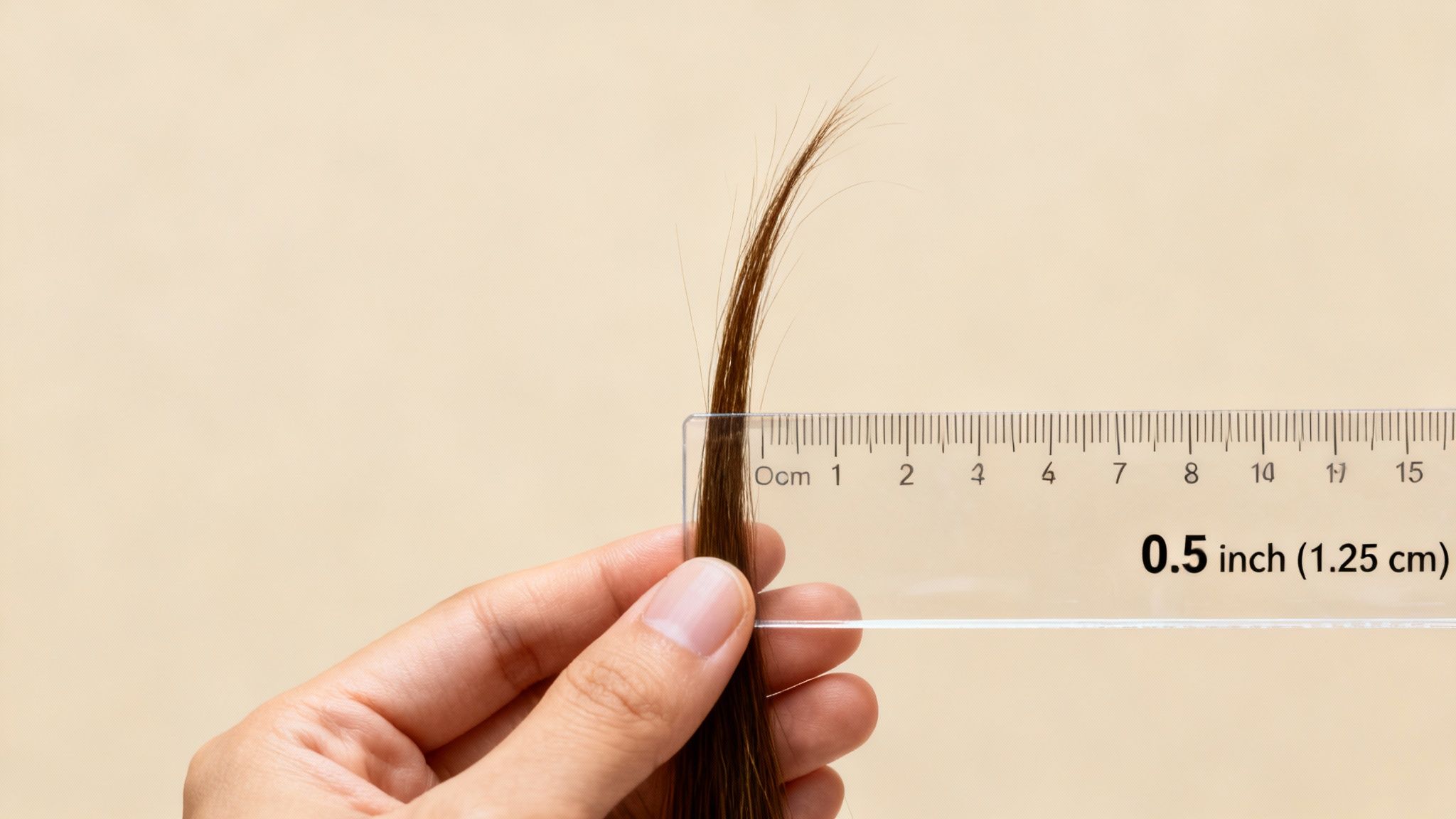
While that half-inch figure is a great rule of thumb, it doesn't capture the whole picture. When you dig into the science, you find a fascinating range of possibilities that can totally change how you approach your hair care.
For instance, scientific studies show that scalp hair growth can swing wildly, from 0.6 all the way up to 3.36 centimeters per month. Why the huge difference? It comes down to a whole host of individual factors. If you want to get into the nitty-gritty, you can explore more details about human hair growth to see just how deep the rabbit hole goes.
Even something as basic as the thickness of your individual hair strands can play a role. It’s been observed that thicker strands sometimes grow a bit faster than finer ones, which just goes to show how unique your own growth process really is.
A Quick Look at the Numbers
To help you visualize what this looks like over time, let's break down those averages. Think of these numbers as a helpful benchmark, not a strict rule. They give you a solid idea of what to expect as you work toward longer, healthier hair.
For a simple snapshot, here’s how the numbers typically stack up.
Average Hair Growth Rates at a Glance
This table summarizes the typical hair growth rates over different time periods for easy reference.
| Time Period | Average Growth (Inches) | Average Growth (Centimeters) |
|---|---|---|
| Per Day | ~0.016 inches | ~0.04 cm |
| Per Month | ~0.5 inches | ~1.25 cm |
| Per Year | ~6 inches | ~15 cm |
Knowing this baseline is step one. But the really exciting part? Realizing you have more control over your hair’s destiny than you think. Things like your diet, scalp health, and the products you choose are huge players in the game.
For example, creating a healthy scalp environment with a nourishing hair mask can make all the difference. Throughout this guide, we’ll dive into exactly what these factors are and how you can tweak your routine to help your hair reach its full, glorious potential.
Understanding Your Hair's Natural Growth Cycle
Two for the scalp end of the problem
To really get a handle on how much does hair grow in a month, you have to look past the measuring tape and peek at the hidden engine running the whole show. Your hair doesn't just grow in one long, continuous strand; it actually follows a pretty sophisticated three-part cycle.
Think of each hair follicle as its own tiny factory, complete with a personal production schedule. This schedule is the hair growth cycle, and it dictates everything from your hair’s potential length to its thickness. Every single strand on your head is in one of three distinct phases at any given time, which is how you maintain a full head of hair even as old strands make way for new ones.
Understanding this process makes it clear why your hair seems to grow like a weed sometimes and why finding a few hairs in your brush is a completely normal part of the process.
The Three Phases of Hair Growth Explained
Your hair’s entire journey is mapped out across three key stages. They might have scientific-sounding names, but the ideas behind them are straightforward. The ultimate length and health of your hair are directly tied to how long each strand gets to spend in that all-important first phase.
Here’s a simple breakdown of what’s happening on your scalp 24/7:
-
Anagen (The Growing Phase): This is the main event. During the anagen phase, cells in the hair bulb are dividing like crazy to create new hair growth. Hair in this phase grows about half an inch a month and can keep it up for anywhere from two to seven years. The length of your personal anagen phase is what determines the maximum length your hair can ever reach.
-
Catagen (The Transition Phase): After all that growing, your hair enters a short transitional stage that lasts only about 10 days. Here, the hair follicle shrinks and cuts itself off from the blood supply, basically signaling that the growth spurt is over.
-
Telogen (The Resting Phase): This is the final stage, where the follicle just chills out and lies dormant for about three months. At the end of this phase, the old hair is shed—pushed out to make room for a new anagen hair starting its own journey. Losing 50 to 100 of these telogen hairs a day is totally normal and expected.
Why the Anagen Phase Matters Most
The anagen phase is the absolute powerhouse of your hair's growth potential. Plain and simple: the longer your hair stays in this phase, the longer it can grow.
Genetics plays the biggest role here, which explains why some people can effortlessly grow hair down to their waist while others feel like their hair hits a "wall" at shoulder-length and just won't budge.
Understanding your growth cycle is the first step, but it’s also connected to your unique hair structure. Gaining a deeper insight into this can help you tailor your care routine for better results. For more on this, check out our guide on the science of understanding your hair type.
While you can't argue with your DNA, you can absolutely create the perfect environment to support a healthy, robust anagen phase. This all comes down to great nutrition, handling your hair gently, and using products that nourish the scalp and fortify the hair you already have. After all, protecting your strands is just as important as encouraging new growth.
The Key Factors That Influence Your Hair Growth
Ever look at a friend’s hair and wonder how it grows at lightning speed while yours seems to take its sweet time? There isn't one magic secret—it's a whole collection of factors that make up your unique hair growth blueprint.
While the average is about half an inch a month, your personal rate comes down to a mix of things you can and can't control. Getting to know these key players is the first step toward unlocking your hair’s full potential. Some things, like your genetics, set the baseline. But others, like your diet and daily habits, are totally in your hands.
Genetics and Age
Your DNA is the primary architect of your hair. It dictates everything, especially the length of your anagen (growing) phase, which usually lasts anywhere from three to five years. This genetic lottery determines the maximum length your hair can reach before it naturally sheds. Some people are just born with a longer anagen phase, letting their hair grow incredibly long.
Age is another big one you can't control. Research has shown that our hair growth typically peaks between the ages of 15 and 30. After that, the rate starts to slow down. In our later years, growth can become as minimal as 0.1 inches per month. You can discover more insights about these growth determinants and how they all work together.
Nutrition and Overall Health
What you eat directly feeds your hair follicles. It’s simple, really: your body sends nutrients to your essential organs first. If you’re running low, your hair is one of the first things to get short-changed. For anyone wondering how much hair can grow in a month when conditions are perfect, a balanced diet is non-negotiable.
Here are a few of the all-stars for supporting strong, healthy hair:
- Biotin: This is crucial for producing keratin, the very protein your hair is made of.
- Iron: An iron deficiency is a well-known cause of hair loss because it messes with the nutrient supply to the follicle.
- Zinc: This mineral plays a huge part in hair tissue growth and repair.
- Vitamin D: Helps create new follicles—the tiny pores in your scalp where new hair can grow from.
Your general health is just as important. Things like chronic illness, hormonal imbalances (think thyroid issues or PCOS), and even certain medications can throw your hair growth cycle off track, pushing more follicles into the resting phase way too soon.
The diagram below breaks down the hair growth cycle that all these factors directly influence.
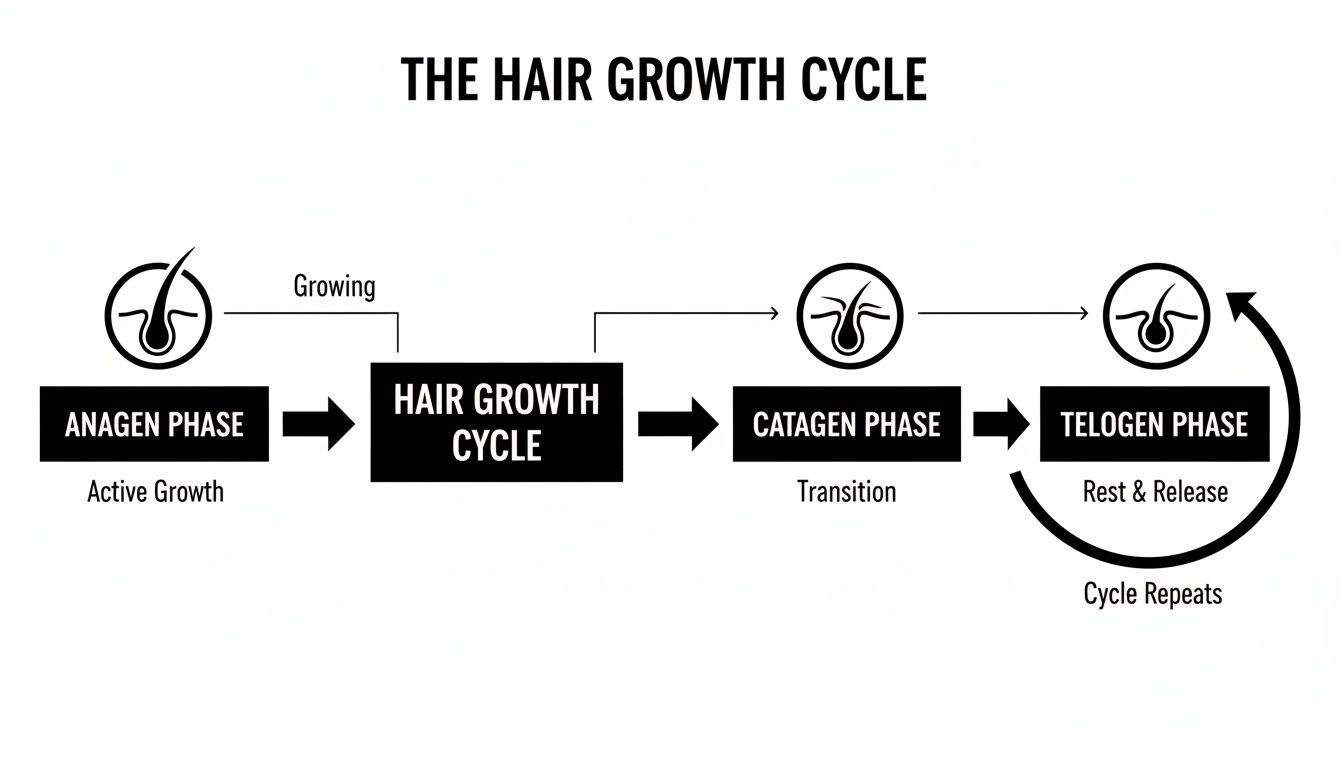
This shows how each strand moves from active growth (Anagen), to a short transitional phase (Catagen), and finally into a resting period (Telogen) before it sheds.
Stress and Hair Care Habits
You should never, ever underestimate what stress can do to your hair. When you're stressed, your body produces more cortisol, and high levels of this hormone can trigger something called telogen effluvium. This is when a huge number of hairs are suddenly pushed into the shedding phase all at once, leading to noticeable thinning.
Finally, your day-to-day habits have a massive impact. Breakage from rough brushing, tight ponytails, and too much heat styling can make it seem like your hair isn't growing, even if it's growing perfectly fine from the root. Gentle handling and protective styles are your best friends for preserving the length you work so hard to achieve.
Key Takeaway: While you can't change your genes, you absolutely can influence your hair's growth rate through a good diet, stress management, and a smart hair care routine. Giving your body the right building blocks is everything. Learn more about the role of nutrition in hair health in our detailed guide.
Practical Ways to Maximize Your Hair Growth Potential
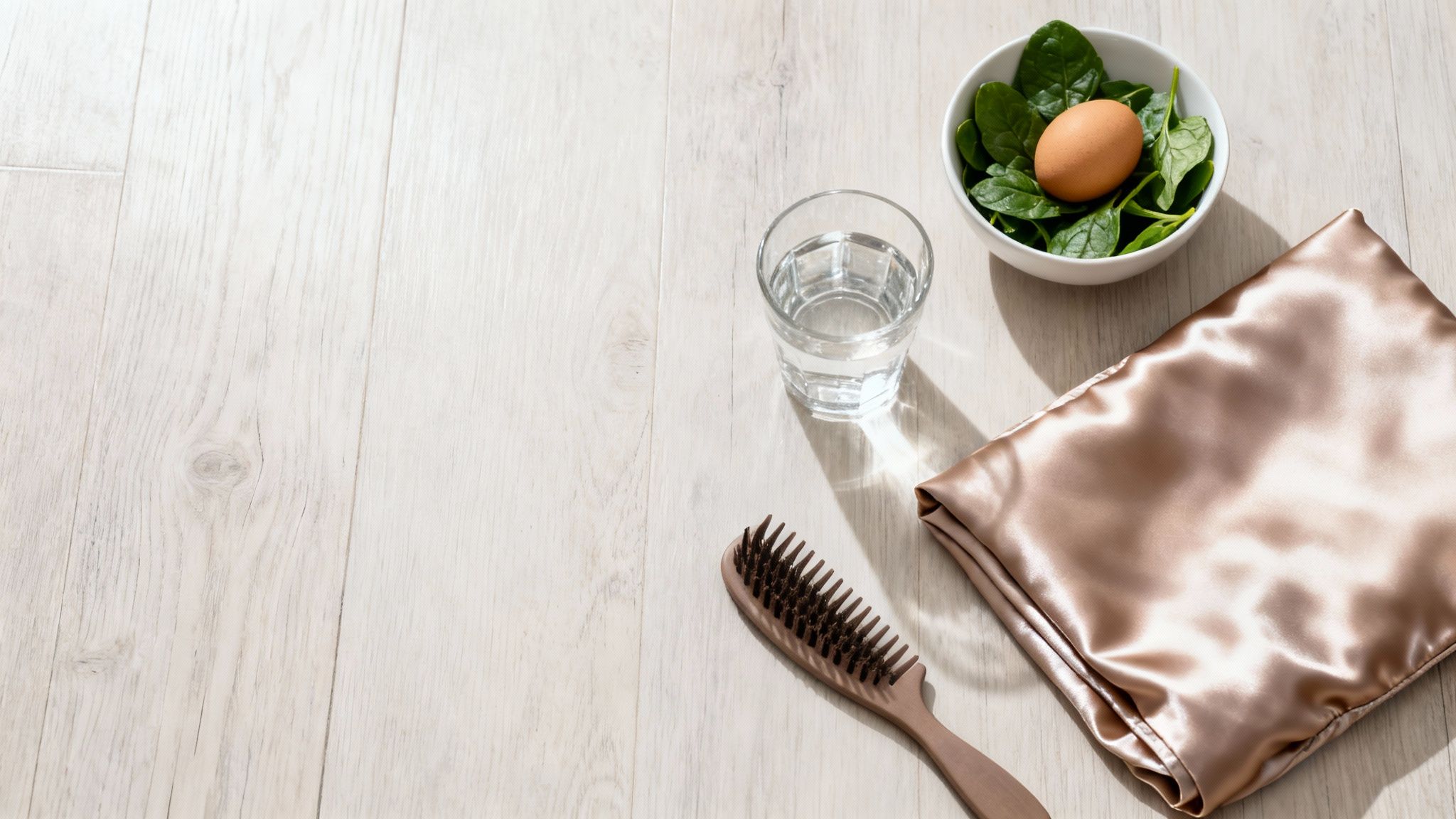
While you can't change your genetic blueprint, you can absolutely create the ideal environment for your hair to thrive. Maximizing your growth potential isn’t about some mythical miracle cure. It’s about building a consistent routine that supports your hair's natural cycle from the inside out and minimizes the damage that erases all your hard-earned progress.
Think of your hair like a garden. You need rich soil (a healthy body and scalp) and gentle care (a smart routine) for it to flourish. By focusing on a few key areas, you can ensure your hair is as strong and resilient as possible, allowing it to reach its maximum length.
Nourish Your Hair from Within
The journey to longer, stronger hair truly begins on your plate. Your hair follicles are built from the nutrients you eat, so a balanced diet is non-negotiable for anyone wondering how much does hair grow in a month under the best possible conditions.
Get started by incorporating these hair-loving nutrients into your meals:
- Protein: Hair is made of keratin, a type of protein. Getting enough is essential. Think lean meats, fish, eggs, and legumes.
- Iron: This mineral helps red blood cells deliver oxygen to your follicles, a process that is absolutely vital for growth. You can find it in spinach, lentils, and red meat.
- Biotin: A famous B-vitamin tied to hair health, biotin is found in everyday foods like eggs, nuts, and whole grains.
- Omega-3 Fatty Acids: These healthy fats, found in salmon and walnuts, support scalp health and give your hair that incredible shine.
Build a Gentle Hair Care Routine
Aggressive handling is the number one enemy of hair length. All the growth you achieve from the root can be undone in an instant by breakage at the ends. A gentle routine preserves the hair you already have, allowing you to actually see the length you’ve gained.
First, take a hard look at how you wash and dry your hair. Use lukewarm water instead of scalding hot, and gently squeeze the excess water out with a soft t-shirt or microfiber towel. Never rub vigorously with a coarse towel.
When you detangle, always start from the ends and patiently work your way up to the roots to prevent snapping knots. For those looking to give their follicles an extra boost, exploring various home remedies to promote hair regrowth can offer some effective, natural solutions.
Key Insight: Preventing breakage is just as important as encouraging new growth. You won't see an increase in length if your ends are constantly splitting and breaking off.
Protect Your Hair from Damage
Daily stressors can take a major toll on your strands, leaving them weak and prone to snapping. The two biggest culprits? Heat styling and environmental factors.
If you can't live without your heat tools, always apply a heat protectant spray first. This simple step creates a barrier between your hair and the high temperatures, minimizing the damage. It’s also wise to turn down the heat setting and try to limit usage to just a few times a week.
Finally, protect your hair while you sleep. A silk or satin pillowcase reduces friction, preventing the tangles and breakage that can happen overnight on a standard cotton pillowcase. These small, consistent habits add up to create a powerful defense system for your hair. For a deeper dive, check out our comprehensive tips for healthy hair growth in our dedicated guide.
How Morfose Helps With Hair Growth
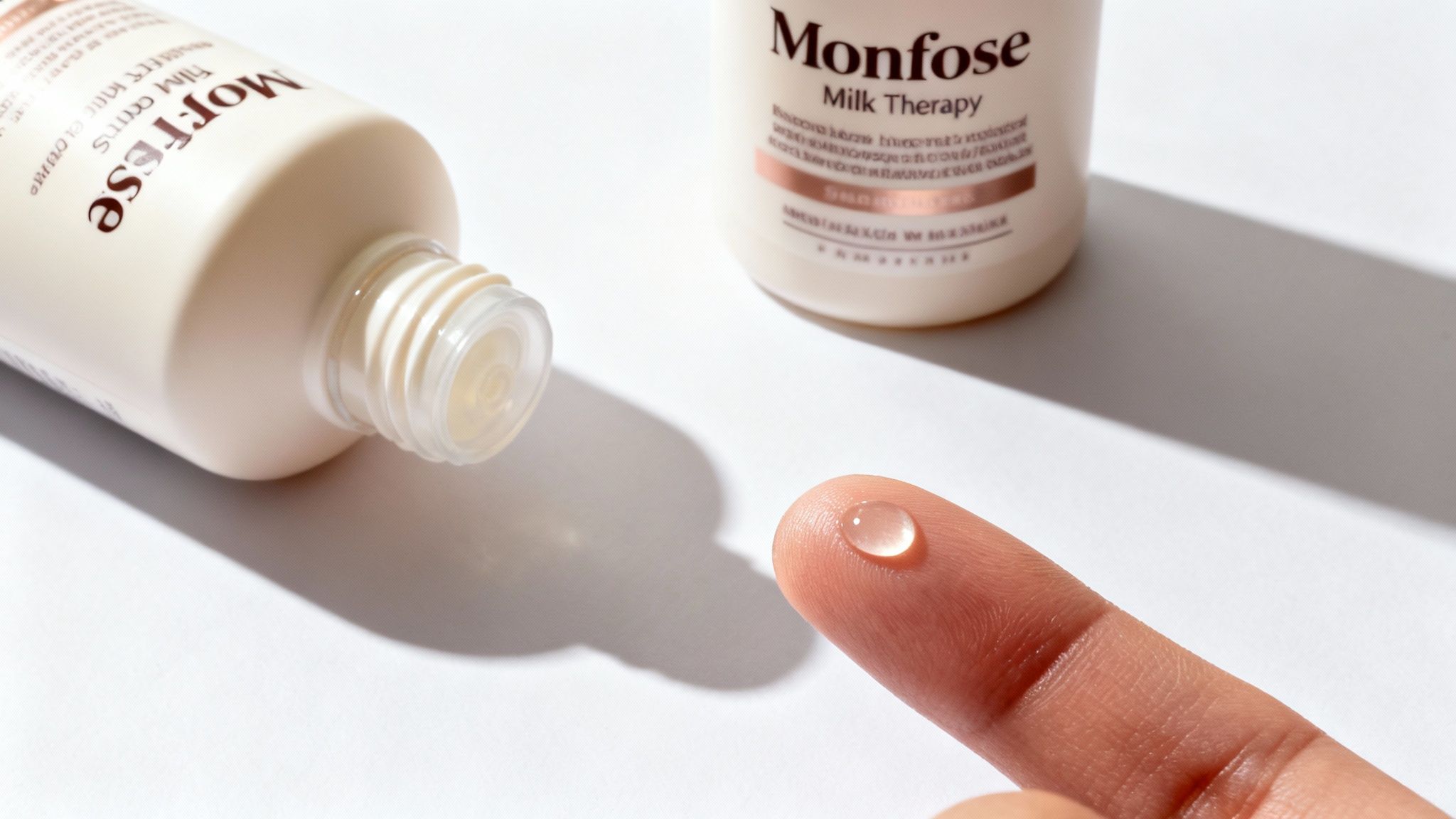
While your daily habits and nutrition build the foundation for healthy hair, the right products are the essential support system that helps you see real results. Creating a nourishing environment for your follicles and protecting your strands from damage is crucial, and this is exactly where Morfose comes in. The goal is to fortify your hair, making it resilient enough to reach its full potential.
Think of it this way: what you do in the shower and during styling directly impacts how much length you actually keep. Using targeted formulas helps ensure the hair growing from your scalp stays strong, healthy, and attached. This is how you bridge the gap between potential growth and the actual length you see in the mirror. For brands offering these solutions, understanding effective influencer marketing strategies for beauty brands is key to reaching people who need them.
Fortify and Nourish with Targeted Ingredients
The secret to maximizing how much your hair grows in a month lies in feeding your follicles and strengthening the hair shaft. Morfose products are packed with powerful ingredients that do both.
The Morfose Milk Therapy line is a perfect example. It's enriched with milk protein and 12 essential amino acids that deliver vital nutrients directly to your hair. Amino acids are literally the building blocks of protein, which your body needs to construct strong hair during the anagen (growth) phase. By nourishing the hair from the outside in, you’re supporting a healthier growth cycle.
Another key to seeing more length is preventing breakage. When your hair is weak, it snaps off at the ends, making it seem like it isn't growing at all. Formulas infused with ingredients like Biotin and Keratin are designed to tackle this problem head-on.
- Keratin: This is the structural protein that makes up over 90% of your hair. Products with keratin help patch up weak spots along the hair shaft, making it smoother and far less prone to snapping.
- Biotin: Famous for its role in hair health, biotin helps improve your hair's internal infrastructure. When used in products like shampoos and serums, it supports hair strength and resilience from the inside out.
Key Takeaway: Using products rich in amino acids, keratin, and biotin is like giving your hair a daily multivitamin. It strengthens existing strands to minimize breakage, allowing your hair’s natural growth to become visible length.
Best Morfose Products to Use
To get the most out of your routine, you need products that work together to protect and nourish your hair. Here are two essentials from the Morfose collection to help you on your journey.
First, the Morfose Biotin Hair Mask provides an intensive dose of fortification. This treatment deeply conditions and strengthens strands, reducing the split ends and breakage that sabotage your length goals. Regular use leaves your hair feeling more robust and prepared to grow long.
Next, incorporating Morfose Biotin Hair Drops can offer a concentrated boost. These drops are designed to support scalp health and fortify hair from the root, creating the best possible environment for new growth. You can learn more about how to boost your hair health naturally with Morfose Biotin Hair Drops in our detailed article.
Together, these products offer a powerful one-two punch for achieving your healthiest hair ever.
Common Hair Growth Myths You Should Ignore
The internet is swimming with so-called "miracle" cures and quick fixes for growing longer hair. If you really want to understand how much does hair grow in a month, you have to learn how to separate the facts from the fiction. Let's bust some of the most common myths so you can stop wasting time and focus on what actually works.
One of the most stubborn myths out there is that getting regular trims will magically make your hair grow faster from the scalp. That’s just not how it works.
Hair growth is a biological process that starts deep inside the follicle at your root. What you do with scissors at the ends has absolutely no effect on what’s happening under your skin. The bit of truth in this advice is that trimming gets rid of split ends. By snipping off that damage, you stop the splits from traveling up the hair shaft, which prevents breakage and makes your hair look healthier and feel longer over time.
Key Insight: Trimming doesn't speed up growth; it preserves the length you already have. Getting a light trim every 8-12 weeks is a smart way to keep your ends healthy so you can actually see and enjoy the results of your growth.
Miracle Oils and Faster Growth
Another claim you'll see everywhere is that certain "special" oils or serums can double your growth rate overnight. While ingredients like castor oil or rosemary oil are great for improving scalp health by boosting circulation and calming inflammation, they can’t change your genetic growth cycle.
Think of it this way: a healthy scalp is like fertile soil for a plant. Good soil helps the plant grow strong, but it can't fundamentally change the plant's DNA to make it grow twice as fast. These oils are fantastic for conditioning your scalp and creating a better environment for growth, but they won't push your hair beyond its natural average of about a half-inch a month.
To get a better handle on what's real and what's not, it helps to explore the most common hair care myths and the science that debunks them. Knowing the difference helps you invest your time and money into strategies that deliver genuine results.
By tuning out these myths, you can focus on the things that are proven to work: eating a nutrient-rich diet, handling your hair gently, and protecting it from breakage. That’s the real secret to achieving your longest, healthiest hair.
Your Top Hair Growth Questions, Answered
Let's dig into some of the questions we hear all the time on the journey to longer, healthier hair. Getting clear on these common curiosities can make all the difference in managing your expectations and feeling empowered.
Does Ethnicity Affect How Fast Hair Grows?
Yes, genetics definitely play a role, but maybe not as much as you think. While everyone's hair grows right around that half-inch-per-month average, some studies have noticed subtle differences across ethnic groups.
Research has pointed to Asian hair having the fastest growth rate on average, with African hair types growing slightly slower. But here's the thing: these are just broad averages. Your individual health, diet, and how you care for your hair will always be the biggest factors in how well your hair grows.
How Much Hair Loss Is Normal?
Seeing hair in your brush or the shower drain can be alarming, but shedding is a totally normal—and necessary—part of the hair growth cycle. Think of it as your scalp making way for new, healthy strands to come in.
The average person has around 120,000 hair follicles and naturally sheds between 50 and 100 hairs every single day. As long as you're not seeing sudden thinning or noticeable bald patches, this daily loss is a sign of a healthy, functioning scalp. You can explore more hair growth statistics to get a better sense of these numbers.
Why Does My Hair Stop Growing at a Certain Length?
This is one of the most common frustrations out there! The good news is, your hair hasn't actually stopped growing. It has simply reached the end of its personal growth phase, also known as the anagen phase.
Your genetics determine how long this growing phase lasts, which can be anywhere from two to seven years. Once a strand hits the end of its cycle, it rests and eventually sheds. If you have a shorter anagen phase, your hair will seem to hit a "terminal length" because the strands fall out before they have a chance to get any longer.
Understanding how much hair grows in a month is the first step toward achieving your length goals. By combining a healthy lifestyle with a gentle care routine and nourishing products, you create the best possible conditions for your hair to thrive. It's not about miracle cures, but about consistently supporting your hair's natural cycle.
Ready to support every single phase of your hair's journey? Give your strands the expert care they need to thrive by exploring the nourishing and strengthening solutions from Morfose. Shop our collections today at https://themorfose.com.
Growth is slow — breakage is not
Hair grows about a centimetre a month whatever you do. What you control is how much of it survives to the ends.

