
How Stress Causes Hair Loss: A Guide to Understanding and Reversing It
Seeing more hair in your shower drain or tangled in your brush can be alarming, and you're right to wonder if stress is the culprit. The connection between high stress and hair loss isn't just a myth; it's a proven biological reaction. When your body is under significant emotional or physical pressure, it can disrupt your hair's natural growth cycle, shocking many follicles into a resting phase at once. This often leads to noticeable shedding a few months later.
This guide will walk you through exactly how stress causes hair loss, what the signs are, and most importantly, the actionable steps you can take to stop the shedding and encourage healthy regrowth. Understanding the "why" is the first step toward finding the right solution.
Understanding the Link Between Stress and Your Hair
When you’re under pressure, your body goes into survival mode. Think of it like a business redirecting funds during a crisis. Hair growth, from a biological standpoint, is considered a non-essential function. Your body prioritizes resources to manage the perceived threat, putting processes like creating strong, healthy hair on the back burner.
This shift triggers a chain reaction that can lead to thinning hair. But understanding the specific mechanism is key to fixing it. Stress is linked to three distinct types of hair loss, each with its own symptoms. Identifying which one you might be dealing with helps you choose the most effective path to recovery.
The Three Main Types of Stress-Related Hair Loss
While everyone’s experience is unique, stress-related hair loss typically falls into one of three categories. The pattern of shedding is often the biggest clue to what’s happening beneath the surface.
Here’s a quick breakdown of what to look for to help you tell them apart.
Three Types of Stress-Related Hair Loss at a Glance
| Type of Hair Loss | Primary Mechanism | Common Symptoms |
|---|---|---|
| Telogen Effluvium (TE) | A significant stressor pushes a large number of follicles into the resting (telogen) phase simultaneously. | Widespread, diffuse thinning all over the scalp, often noticed 2-3 months after the stressful event. |
| Alopecia Areata | Severe stress triggers an autoimmune reaction where the body’s immune cells attack its own hair follicles. | Distinct, round, and smooth bald patches appearing suddenly on the scalp or elsewhere on the body. |
| Trichotillomania | A stress-related impulse control disorder that creates an irresistible urge to pull out one's own hair. | Patchy hair loss with broken hairs of varying lengths; often seen on the scalp, eyebrows, or eyelashes. |
Let's break down what each of these really means.
-
Telogen Effluvium (TE): This is the most common form of stress-induced hair loss. It occurs when a significant physical or emotional shock—like surgery, a major illness, or intense emotional distress—pushes a large number of hair follicles into the "telogen," or resting, phase. The shedding isn't immediate. It typically appears 2-3 months after the event, leading to sudden, all-over thinning that can feel quite alarming.
-
Alopecia Areata: In this case, severe stress can trigger the immune system to mistakenly attack healthy hair follicles. This usually results in distinct, round, smooth bald spots on the scalp, although it can also affect facial hair or other body parts.
-
Trichotillomania: This condition is different as it's an impulse-control disorder. It involves a recurring, irresistible urge to pull out one's own hair, often as a coping mechanism for stress, anxiety, tension, or boredom.
Seeing more shedding than usual can be unsettling. To get a better sense of what's normal, check out our detailed guide on how much hair loss is normal.
How Stress Hormones Disrupt Your Hair Growth Cycle
To understand how stress causes hair loss, we need to discuss a key hormone: cortisol. Known as the "stress hormone," your body releases a flood of it when you're in "fight or flight" mode. In short bursts, cortisol is helpful. But when stress becomes chronic, persistently high cortisol levels disrupt many bodily functions, with your hair follicles being a prime target.
Your hair's growth cycle has three main phases: growth (anagen), transition (catagen), and rest (telogen). Chronic high cortisol acts like an emergency brake, bringing the entire production line to a halt.
Cortisol and the Hair Follicle Shutdown
On a typical day, about 90% of your hair is in the anagen (growth) phase, which can last for two to eight years. During this time, your hair grows steadily. However, prolonged stress and the resulting cortisol surge send a powerful signal to these growing follicles, telling them to stop working ahead of schedule.
They are prematurely forced into the telogen (resting) phase. This is why the most common type of stress-related hair loss is called Telogen Effluvium—it’s a scientific term for a mass exodus of hair into the resting state, preparing to shed.
This simple visual breaks it down: stress triggers a reaction in the follicle, which leads directly to shedding.
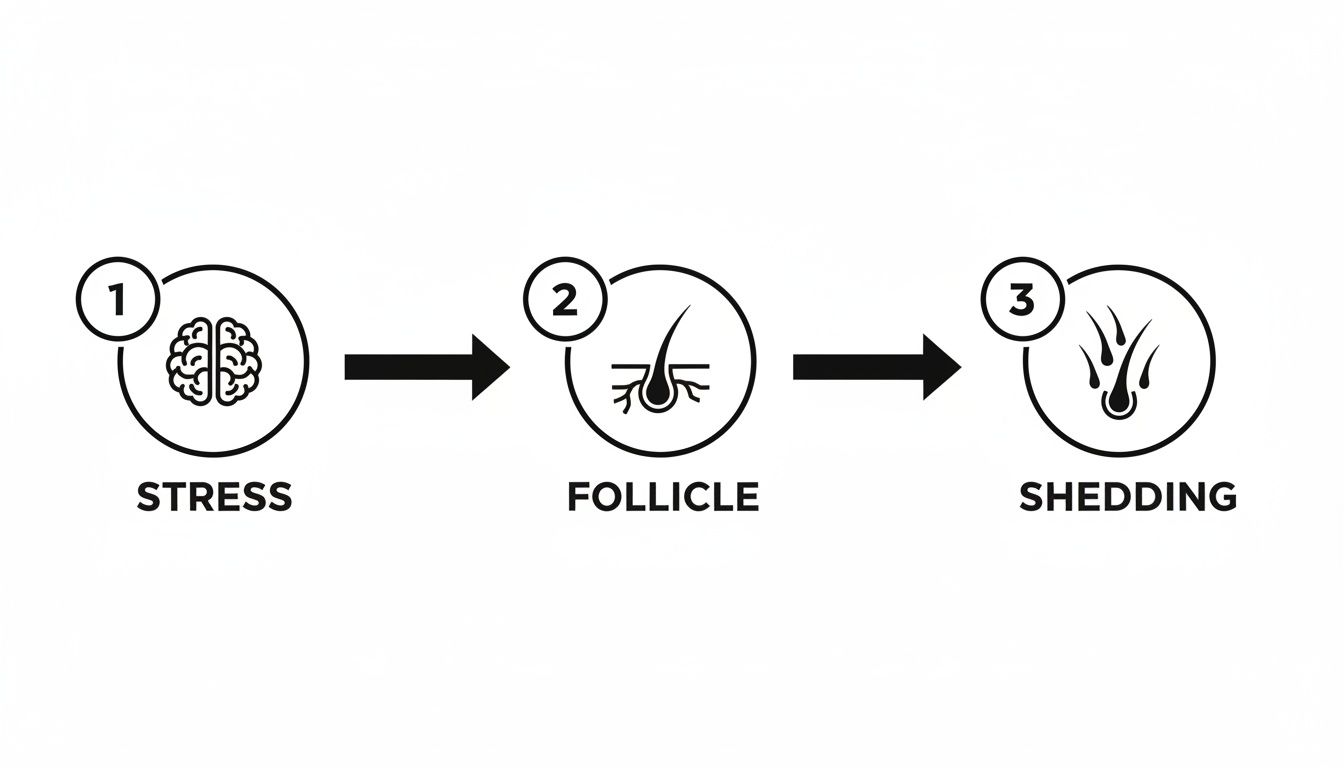
It’s a clear cause-and-effect relationship. The stress signal hits the follicle, and the end result is seeing more hair in your brush or on your pillow.
The Science of Paused Production
So, how exactly does cortisol hit the "off" switch? Each hair follicle contains a control center called the dermal papilla, which tells the follicle when to grow, rest, and shed. High levels of cortisol override these commands.
This stress hormone instructs the dermal papilla to halt all growth signals. This disruption also freezes the hair follicle stem cells—the very cells responsible for creating new hairs—in a prolonged resting state. Research from the Harvard Stem Cell Institute has confirmed this direct link, showing that chronic stress essentially locks these crucial stem cells, putting new hair growth on hold.
Cortisol doesn't just make existing hair fall out; it prevents new hair from even starting its journey. This is what creates that frustrating cycle of thinning hair—shedding happens, but the replacement process is completely stalled.
Creating an Unfriendly Environment for Growth
In addition to disrupting the growth cycle, chronic stress promotes inflammation throughout your body, including your scalp. An inflamed scalp is not a healthy environment for hair. It can restrict blood flow to the follicles, starving them of the oxygen and nutrients needed to build strong hair.
This inflammation can damage the follicle itself, making recovery even harder. That's why restoring your hair's health requires tackling both the hormonal signals and the inflammation they cause. For a deeper look at this connection, our guide on scalp health and hair growth is a great resource.
Learning how to lower cortisol levels naturally is one of the most powerful steps you can take. Managing stress isn't just for your mental health; it's a direct intervention to save your hair.
Identifying the Signs and Understanding the Timeline
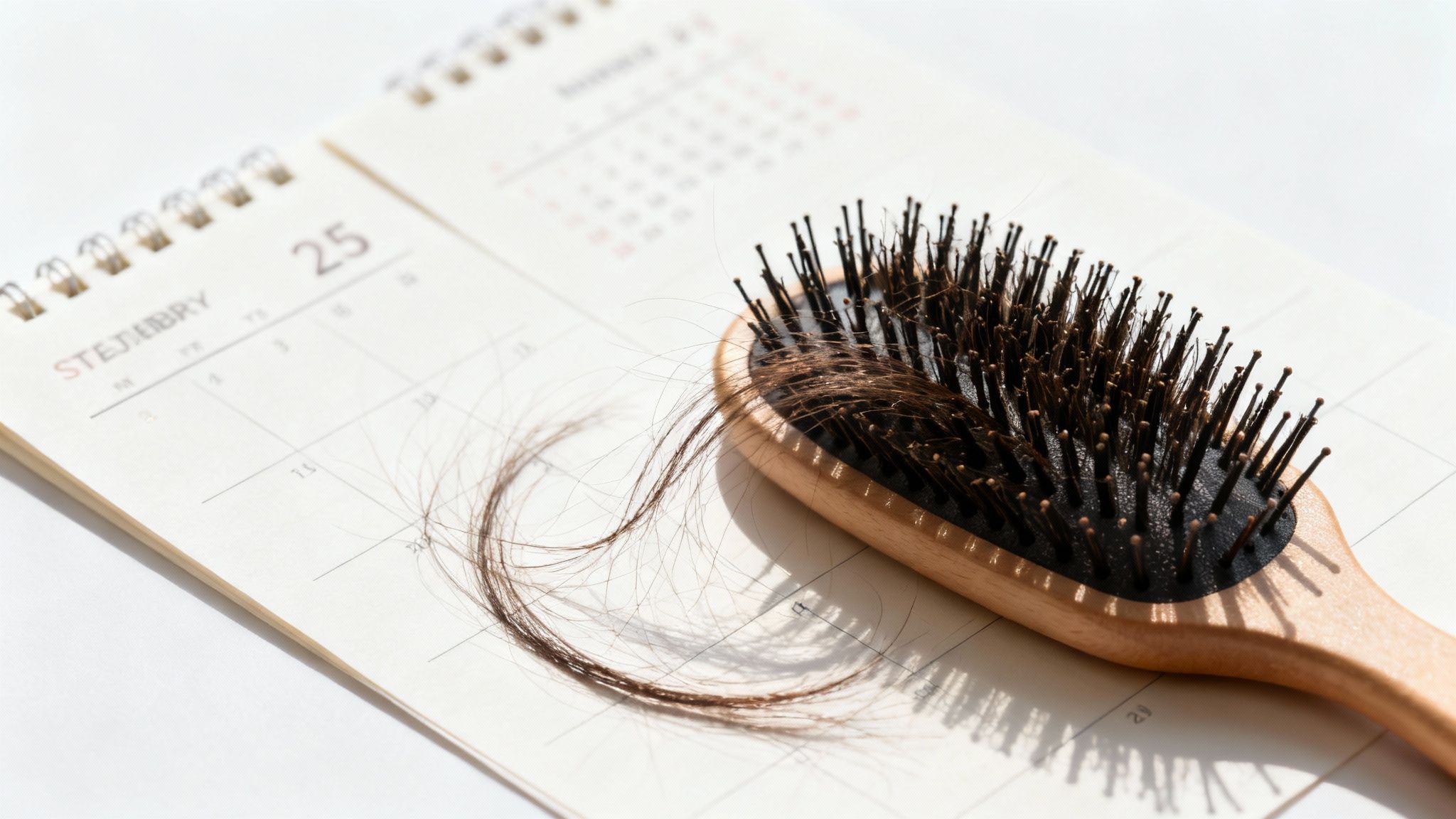
One of the most confusing aspects of stress-related hair loss is the delay. You might go through a difficult period, feel like you're past it, and then months later, you start noticing your hair is thinning. This delay makes it hard to connect the dots.
Understanding the typical signs and timeline is key to confirming if stress is the root cause of your shedding. The clues are often in the pattern of the loss and when it started.
The Two to Three Month Delay
Telogen Effluvium, the most common form of stress-related hair loss, has a signature delay. After a major physical or emotional event, your body pushes a large number of hair follicles into the telogen (resting) phase.
However, those hairs don't fall out immediately. They remain in the follicle for about two to three months before they finally shed to make way for new growth. This is why you notice a sudden increase in shedding long after the stressful period has passed.
What Stress-Related Shedding Looks Like
Unlike some types of hair loss that cause distinct bald patches, stress-induced shedding is usually widespread and more subtle. Here are the classic signs to look for:
- Diffuse Thinning: Instead of a receding hairline or a bald spot, you’ll likely notice an overall decrease in volume. Your ponytail might feel thinner, or you may see more of your scalp when you part your hair.
- Increased Hair Fall: This is the most obvious sign. You'll find significantly more hair than usual in your brush, on your pillow, or in the shower drain. It can be alarming, but remember this is a delayed reaction.
- No Bald Patches: With Telogen Effluvium, you generally won't see smooth, completely bald spots. The thinning is distributed evenly across your scalp.
Think of it like a tree in autumn. The leaves don't all drop from a single branch; they fall from all over the tree. In the same way, stress-related shedding affects your whole scalp, leading to a general feeling of less density.
This diffuse pattern helps distinguish it from genetic hair loss, which typically follows a more predictable path, such as thinning at the temples or crown.
How Prevalent is This Issue
If this is happening to you, you are far from alone. The connection between life's pressures and hair is well-documented. A comprehensive 2023 study found that a staggering 71.3% of its 1,080 participants reported experiencing hair loss, with psychosocial factors like relationship and financial problems identified as significant triggers. You can explore the full research published on PubMed.
Setting Realistic Expectations for Recovery
The good news is that hair loss caused by stress is almost always temporary. Once the source of stress is managed, your hair follicles can return to their normal growth cycle.
However, recovery requires patience. Just as the shedding was delayed, regrowth has its own timeline. It can take another three to six months after the shedding stops for new hair to become noticeable. Our guide on how long it takes for hair to grow provides a detailed look at what to expect, helping you track your progress and stay positive.
Strategies to Lower Stress and Promote Hair Regrowth
The most important step in reversing stress-related hair loss is to address the stress itself. By taking a holistic approach—focusing on both your mental well-being and physical health—you can lower stress hormones and create an ideal environment for your hair to grow back strong.
This process is about building consistent, healthy habits that tackle the problem from the inside out. When you calm your nervous system and nourish your body, you send a signal to your hair follicles that it’s safe to start growing again.

Embrace Powerful Stress Management Techniques
The most direct way to combat stress-related hair loss is to manage the stress itself. Integrating a few simple, consistent practices into your daily routine can significantly lower cortisol levels.
- Mindfulness and Meditation: Just 10-15 minutes of meditation daily can help regulate your body's stress response. Apps like Calm or Headspace offer guided sessions that make it easy to start.
- Consistent Exercise: Physical activity is one of the best ways to burn off excess cortisol. Aim for at least 30 minutes of moderate exercise—like a brisk walk, jog, or yoga—most days of the week to reduce stress and boost blood flow to your scalp.
- Prioritize Sleep: Your body repairs itself during sleep, and that includes your hair follicles. Aim for 7-9 hours of quality sleep per night to allow your hormones to regulate and your cells to regenerate.
If you're dealing with ongoing pressure, this practical guide on how to deal with chronic stress offers excellent methods for managing its impact on your body.
Fuel Your Hair Growth with a Nutrient-Rich Diet
Your hair follicles are like tiny factories that need the right raw materials to produce healthy hair. Stress can deplete essential nutrients, making a healthy diet crucial for regrowth.
Focus on whole foods packed with vitamins and minerals known to support the hair growth cycle.
A well-balanced diet is a non-negotiable part of any hair recovery plan. You can’t expect your follicles to perform at their best if they are starved of the building blocks they need to thrive.
Here are the key nutrients to focus on:
- Iron: Essential for producing hemoglobin, which carries oxygen to your cells, including those that kickstart hair growth. Find it in spinach, lentils, and red meat.
- Biotin (Vitamin B7): Known as the "hair growth vitamin," biotin is crucial for producing keratin, the protein your hair is made of. Load up on eggs, nuts, and avocados.
- Zinc: Plays a key role in hair tissue growth and repair. It also helps the oil glands around your follicles function properly. Oysters, beef, and pumpkin seeds are great sources.
- Protein: Since your hair is made of protein, getting enough in your diet is critical. Lean meats, fish, beans, and Greek yogurt provide the building blocks for strong strands.
For more tips, check out our guide on strategies for healthy hair and hair growth.
How Morfose Products Help With Stress-Related Hair Loss
While managing stress internally is the top priority, supporting your hair externally can significantly aid its recovery. The right products can fortify weakened strands, reduce breakage, and create a healthier scalp environment for new growth. Morfose offers targeted solutions that act as a dedicated support system for your hair follicles.
Fortify and Strengthen with Biotin and Keratin
When hair is shedding due to stress, the remaining strands are often fragile. Rebuilding their internal structure is key. This is where powerhouse ingredients like biotin and keratin come in, reinforcing each strand from the inside out.
- Morfose Biotin Hair Mask: Biotin (Vitamin B7) is essential for producing keratin, the protein that makes up your hair. The Morfose Biotin Hair Mask delivers a concentrated dose of this nutrient to improve elasticity and reduce breakage that can make thinning appear worse.
- Morfose Keratin Hair Serum: Stress can damage the hair's cuticle layer, leading to frizz and dullness. The Morfose Keratin Hair Serum smooths this outer layer, creating a protective shield that locks in moisture and restores a healthy shine, making it perfect for protecting vulnerable hair.
Nourish the Scalp for Optimal Regrowth
A healthy scalp is the foundation for healthy hair. Stress can cause scalp inflammation, creating a difficult environment for new hair to grow.
Your hair follicles are the factories, but your scalp is the land they're built on. If the land isn't fertile and well-cared-for, the factories can't operate at full capacity.
The Morfose Scalp Treatment Anti-Hair Loss Serum is specifically formulated to address this. It invigorates the scalp, improves circulation to the follicles, and delivers potent ingredients that foster a healthy growth environment, encouraging dormant follicles to return to their active growth phase.
Replenish Moisture with Milk Therapy
Stress can also strip your hair of moisture, leaving it dry and brittle. Restoring hydration is crucial for improving resilience and preventing further damage.
The Morfose Milk Therapy line is designed to do just that. Here’s how its key ingredients can rescue stressed-out hair:
| Ingredient Feature | Benefit for Thinning Hair | Recommended Product |
|---|---|---|
| Milk Protein | Strengthens the hair shaft and helps repair surface damage, making hair less susceptible to snapping. | Morfose Milk Therapy Creamy Mousse Conditioner |
| 12 Essential Amino Acids | These are the literal building blocks of your hair. They help replenish lost protein, improving hair’s texture, elasticity, and strength from within. | Morfose Milk Therapy Two Phase Conditioner |
By incorporating these targeted Morfose products into your routine, you provide your hair with the dedicated care it needs to recover from the inside out.
Frequently Asked Questions About Stress and Hair Loss
Experiencing stress-related hair loss can be isolating and raise many questions. Getting clear, straightforward answers is the first step toward feeling back in control. Here are some of the most common concerns.
Will My Hair Grow Back After Stress-Induced Hair Loss?
Yes, in the vast majority of cases. For those with Telogen Effluvium—the technical term for stress-related shedding—the hair loss is completely reversible.
Your hair follicles aren't damaged; they've just been temporarily pushed into a resting phase by stress hormones. Once the stressor is managed or removed, your body gets the "all-clear" signal, allowing your follicles to wake up and re-enter the active growth (anagen) phase. Regrowth is a natural part of this cycle; it just requires some patience.
How Long Does It Take for Hair to Recover from Stress?
Patience is key. The recovery process happens in stages, and knowing what to expect can make the wait easier.
-
The Shedding Stops (1-3 Months): Once you manage the initial stressor, you should notice the excessive shedding slowing down within one to three months. This is the first sign that your hair growth cycle is returning to normal.
-
Visible Regrowth (3-6 Months and Beyond): New growth starts almost immediately after the shedding phase ends, but it takes time to become visible. At first, you may notice fine, fuzzy baby hairs around your hairline. It typically takes a solid three to six months to see a real difference in thickness and volume as those new strands grow longer.
Full recovery can take up to a year for some, as hair only grows about half an inch per month.
Why Do Women Seem to Experience More Stress-Related Hair Loss?
This is not just a perception. A woman’s hormonal landscape fluctuates throughout her life due to menstrual cycles, pregnancy, and menopause, making the hair growth cycle more sensitive to stress hormones like cortisol.
Additionally, societal pressures and major life events often contribute to higher reported stress levels in women. One study found that 28% of women aged 18-65 reported a spike in stress and burnout over the past five years, compared to just 19.5% of men. In that same group, nearly 23% of women noticed their hair had thinned, versus 18% of men. You can dive deeper into these findings on stress and hair loss at TheHairyPill.com.au.
Can Certain Hairstyles Make Stress-Related Hair Loss Worse?
Yes, absolutely. When your hair is already fragile from internal stress, adding physical strain can worsen shedding. Tight hairstyles can cause a separate condition called traction alopecia.
To aid recovery, try to avoid:
- Tight Ponytails or Buns: These create constant tension on follicles.
- Heavy Hair Extensions: The weight can strain hair roots.
- Tight Braids or Cornrows: These can weaken the hair shaft by pulling on the follicle.
Opt for loose, gentle styles instead. Let your hair down, use soft scrunchies, or try loose braids to give your scalp room to breathe.
What Is the Best Way to Support Hair Regrowth at Home?
The best approach combines calming your internal state with providing external support and nourishment.
The most effective at-home strategy combines calming your nervous system with a targeted, gentle hair care routine. One cannot work effectively without the other.
Here’s a simple but powerful game plan:
- Make Stress Reduction Non-Negotiable: Find what works for you—daily walks, meditation, yoga—and stick with it to lower cortisol.
- Practice Gentle Scalp Care: Switch to a sulfate-free shampoo and avoid harsh chemical treatments. Gently massage your scalp with your fingertips when you wash to boost circulation.
- Eat for Your Hair: Focus on whole foods rich in iron, biotin, zinc, and protein, such as leafy greens, eggs, nuts, and lean meats.
- Add Targeted Product Support: A fortifying treatment like the Morfose Scalp Treatment Anti-Hair Loss Serum can help create the ideal scalp environment for new hair, invigorating follicles to get back to growing.
Take Control of Stress and Your Hair Health
Understanding that stress can directly cause hair loss is the first step toward reversing it. By managing your stress levels, nourishing your body from the inside, and using a supportive hair care routine, you can effectively stop the shedding and create the perfect conditions for healthy, strong regrowth. Remember that this process takes time, but with patience and consistency, you can restore your hair’s vitality.
At Morfose, we believe that understanding the science behind your hair concerns is the first step toward finding a real solution. Our scientifically formulated products are designed to support your hair’s natural recovery process, providing the strength and nourishment needed to thrive. Explore our full range of solutions to build a routine that restores your hair and your confidence. Discover your perfect hair care regimen at https://themorfose.com.
