
How Much Hair Loss Is Normal? Your Complete Guide to Hair Shedding
Finding stray hairs on your brush or in the shower drain can be alarming, but it's almost always a sign that your hair's natural renewal process is working perfectly. Losing between 50 and 150 hairs per day is completely normal for most people. This isn't a flaw; it's a fundamental feature of a healthy hair growth cycle. This guide will walk you through exactly how much hair loss is normal, what causes it, and how you can support a healthy scalp for stronger, fuller hair.
Understanding Normal Daily Hair Shedding
Seeing hair fall out might feel like a problem, but it’s actually proof that your body's renewal cycle is right on track. Think of your scalp like a garden—old leaves have to fall away to make room for new growth. Each hair follicle follows its own unique timeline, which is why you don’t lose all your hair at once.
This slow, steady shedding is a critical part of a healthy hair growth cycle. On any given day, a small fraction of your hair is in the "shedding" phase, having reached the end of its journey. It’s a beautifully balanced system designed to keep a full, healthy head of hair over the long haul.
Why You Don't Notice Normal Hair Loss
So, why doesn't this daily loss leave you with bald patches? It comes down to simple math. The average adult has somewhere between 80,000 to 120,000 hair strands. Losing about 100 of them a day means you’re shedding less than 0.1% of your total hair. The number is so small compared to the sheer volume on your head that it doesn't make a dent in your overall density or appearance.
Of course, what "normal" looks like is also personal. A few factors can change how much shedding you notice:
- Hair Length: Longer strands are just plain more visible. A single long hair coiled up in the drain can easily look like a whole clump, making shedding seem more dramatic than it really is.
- Hair Texture and Type: If you have coarse or curly hair, you might find that it sheds less often but releases more strands at once when you wash or detangle it. That can make it look like a lot of hair is coming out all at once. To get a better handle on your hair’s unique needs, check out our guide on how to know what hair type you have.
- Washing Frequency: Don't wash your hair every day? You’ll probably see more hair come out on wash days. This isn't a sign of increased hair loss—it's just a few days' worth of normal shedding being released at the same time.
For a quick reference, here’s a simple breakdown of what to expect from daily shedding.
Normal Daily Hair Shedding At a Glance
This table offers a quick summary of what's considered a normal amount of daily hair loss and the key factors that influence it.
| Metric | Guideline | Key Takeaway |
|---|---|---|
| Daily Shed Count | 50-150 hairs | This is the standard range for a healthy adult. Don't panic if you see hairs on your brush. |
| Percentage of Total Hair | Less than 0.1% | The amount shed is tiny compared to the total number of follicles on your scalp. |
| Influencing Factors | Length, texture, wash cycle | What you perceive as loss can be affected by your hair type and routine. |
Ultimately, a bit of daily shedding is nothing to worry about. It's a sign that your hair follicles are active and making way for fresh, healthy growth.
The bottom line is that daily shedding is not just normal—it is essential for hair regeneration. It signifies that new, healthy hairs are preparing to grow in and replace the old ones, keeping your hair full and vibrant.
Decoding the Four Phases of Your Hair's Lifecycle
To really get why seeing some hair in your brush is a good thing, you need to understand the journey every single strand takes. Think of it like a four-season cycle—each follicle on your head is always in one of four distinct phases. This natural rhythm is what keeps your hair looking full; while some hairs are making their exit, plenty more are just starting to grow.
This constant cycle is exactly why shedding is not only normal but absolutely necessary for healthy hair renewal. Each phase has a job, from active growing to resting and finally letting go. Once you understand this flow, you'll see why finding hairs in the shower is just part of the process and can better gauge how much hair loss is normal for you.
The Anagen Phase: The Growing Season
First up is the longest stage, the Anagen phase. This is the active growth period where cells in your hair bulb are dividing like crazy to build new hair. For the hair on your head, this productive season can last anywhere from two to seven years.
On any given day, about 85-90% of your hair is in this growth phase. The length of your anagen phase is what dictates how long your hair can ultimately get. It’s the reason the hair on your head can grow so much longer than, say, your eyebrows, which have a much shorter growing season.
The Catagen Phase: The Transitional Season
After years of growth, the hair enters the Catagen phase. This is a very brief transitional stage that marks the end of the active growth period, typically lasting only about 10 days.
During this quick handoff, the hair follicle starts to shrink and cuts itself off from the blood supply, which officially stops the hair from growing any further. Only a tiny fraction of your hair, about 1-2%, is in this phase at any one time.
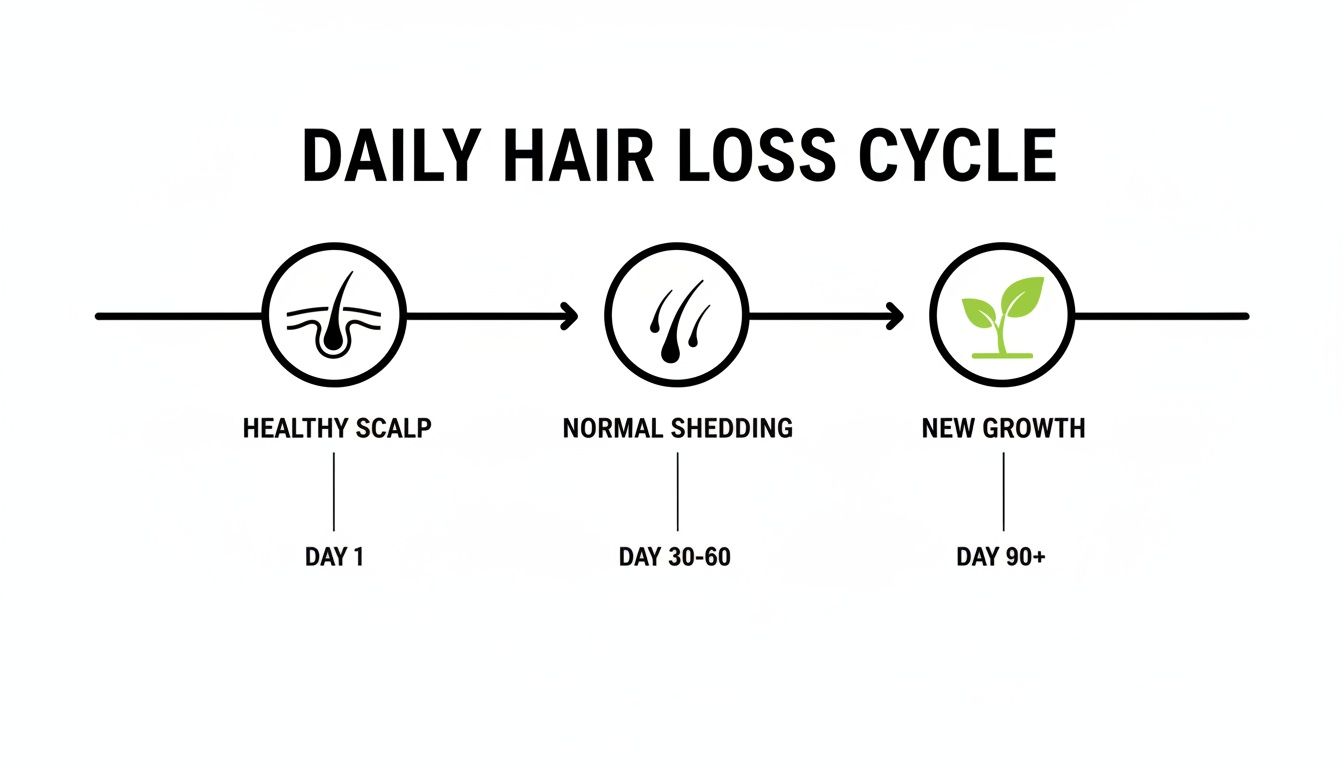
This image perfectly shows that shedding isn't the end of the line. It's just one part of a healthy, continuous process where new growth is always queued up and ready to go.
The Telogen Phase: The Resting Season
Next is the Telogen phase, or the resting period. This stage lasts for about three months. The hair strand, now called a "club hair," is no longer growing but is still sitting in the follicle while a brand-new hair starts to form beneath it.
Around 10-15% of all your hair is in this resting state at any moment. These are the hairs you see on your brush or in the shower drain. They're not being lost prematurely; they're just ready to be shed.
It's so important to remember that these "resting" hairs aren't falling out too soon. They've simply lived out their full life cycle and are now making room for the next generation. This is the very definition of normal shedding.
The Exogen Phase: The Shedding Season
Finally, we have the Exogen phase, which is simply the active shedding part of the cycle. It’s an extension of the telogen phase where the old, resting hair is finally pushed out by the new anagen hair growing in right behind it.
Losing 50 to 150 of these exogen hairs every day is the result of this perfectly timed system. And because each follicle runs on its own independent schedule, your hair sheds gradually instead of all at once. To dive deeper into how your own hair behaves, check out our guide on the science of hair and understanding your hair type.
Everyday Factors That Can Increase Hair Shedding
Have you ever noticed more hair in your brush during certain times of the year or after a particularly stressful week? It's a common experience. While the normal range for hair loss is somewhere between 50 to 150 strands a day, some everyday factors can temporarily nudge that number toward the higher end.
Think of it as your body's natural response to what's happening internally or externally. Understanding these common triggers can bring some peace of mind, helping you see that a temporary increase in shedding is often just that—temporary. It’s not always a sign of a bigger problem, but more of an indicator that your body is busy adapting.
Stress and Its Impact on Hair
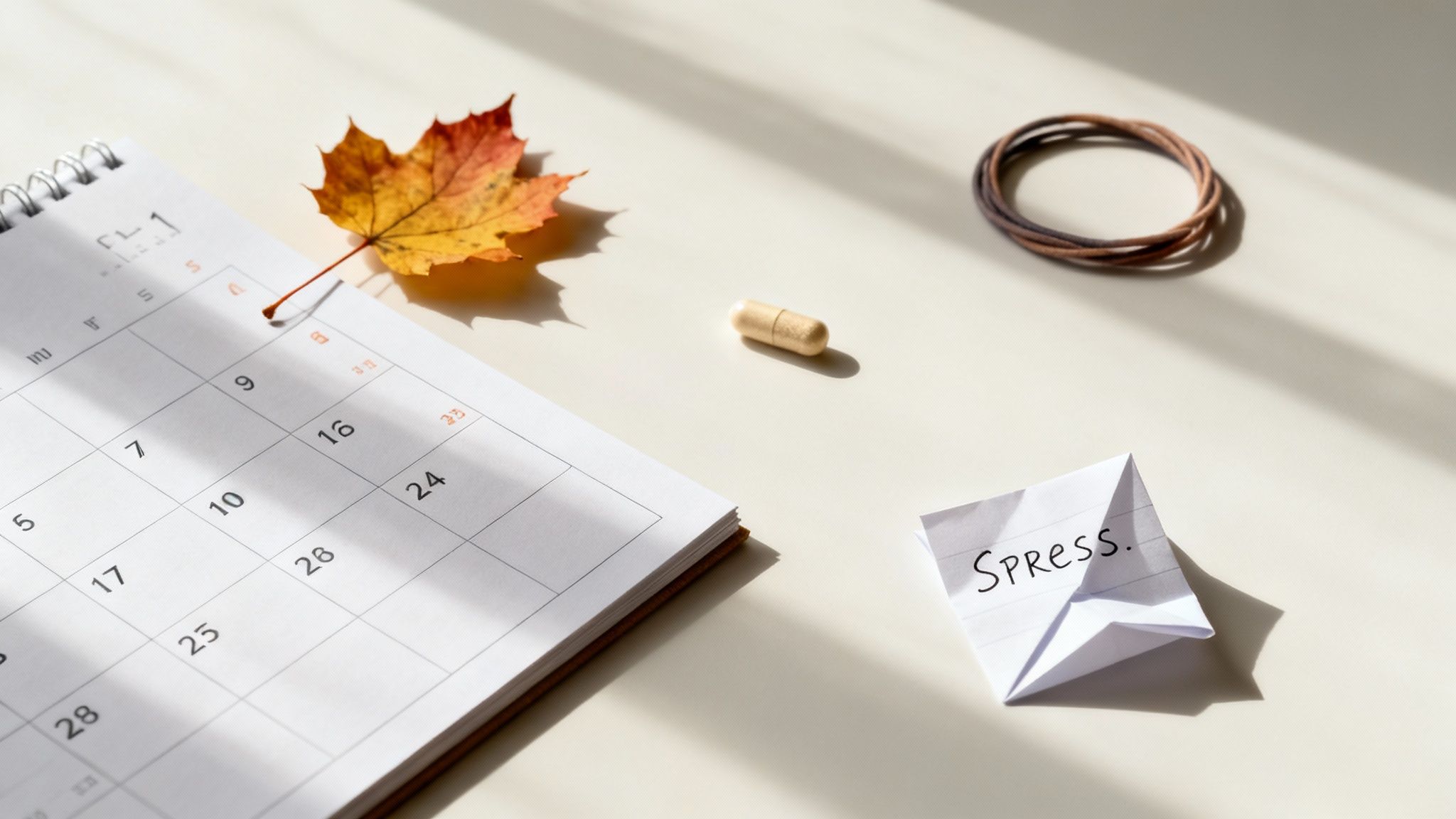
Stress, both the physical and emotional kind, is one of the most well-known culprits behind extra shedding. When your body is dealing with a lot—whether it's from a demanding job, a personal crisis, or even a physical illness—it can push a larger number of hair follicles into the telogen (resting) phase all at once.
This condition is known as telogen effluvium, and it doesn't cause immediate hair loss. Instead, you'll likely notice the shedding about two to three months after the stressful event. The good news? Once the stressor is gone, the hair cycle usually gets back on track within a few months.
Seasonal Shifts and Shedding
Just like trees shed their leaves in the fall, people can experience a little something called seasonal shedding. Some research suggests that we tend to shed a bit more hair in the late fall, and sometimes to a lesser extent in the spring.
The leading theory is that our bodies might hold onto more hair during the summer to protect our scalps from the sun, and then let go of this extra hair once the seasons change. So, if you see a slight uptick in shedding around October or November, it could just be your body's natural rhythm.
Hormonal Fluctuations
Hormones are the master regulators of the hair growth cycle, so any big shifts can lead to noticeable changes in your shedding patterns.
Common hormonal triggers include:
- Postpartum: Many new moms experience a ton of shedding a few months after giving birth. During pregnancy, high estrogen levels keep hair in the anagen (growth) phase longer, making it feel thicker. After delivery, estrogen plummets, and all that extra hair enters the shedding phase at once.
- Menopause: The hormonal rollercoaster of menopause can also lead to hair thinning and increased shedding for some women.
- Thyroid Imbalances: Both an overactive (hyperthyroidism) and underactive (hypothyroidism) thyroid can throw the hair cycle out of whack and cause diffuse hair loss all over the scalp.
Remember that hormonal hair shedding is often a symptom of a broader change within your body. Once hormones stabilize, whether naturally or with medical support, the hair growth cycle typically rebalances itself.
Nutritional Gaps and Your Diet
Your hair follicles are like tiny factories that need a steady supply of vitamins and minerals to produce strong, healthy strands. When your diet is missing key nutrients, your body smartly prioritizes sending resources to your essential organs, leaving your hair to fend for itself.
Deficiencies like low iron levels are a very common reason for increased shedding. Other crucial nutrients for hair health include zinc, biotin, and protein. Making sure your diet is balanced is one of the most fundamental steps you can take to keep your shedding rate normal.
Styling Habits and Physical Stress
Finally, how you treat your hair every day can contribute to shedding—or, more accurately, breakage that looks like shedding. Tight hairstyles like high ponytails, braids, or buns put constant tension on the follicles, which can lead to a condition called traction alopecia.
Likewise, overdoing it with heat styling and chemical treatments can weaken the hair shaft itself, making it much more likely to snap off. To learn more about common damaging practices, you can explore our detailed guide on the top culprits of hair damage. Simply opting for looser styles and giving your hair regular breaks from the flat iron can make a huge difference.
How to Spot the Signs of Excessive Hair Loss
So, we know that losing some hair every day is totally normal—it's a sign your hair is going through its natural cycles. But how do you know when that daily shedding crosses the line into something you need to pay attention to?
Forget trying to count every single hair in your shower drain. Let's talk about the real, tangible signs you can see and feel. These are the clues that offer a much clearer picture of what's happening on your scalp.
Key Visual Cues to Watch For
Instead of getting hung up on daily hair counts, start paying attention to gradual changes over a few weeks or months. These slow-developing signs are often the first signal that something is amiss.
- A Widening Part Line: This is one of the classic early signs, especially for women. If you glance in the mirror and notice a little more scalp peeking through your part, it’s worth keeping an eye on.
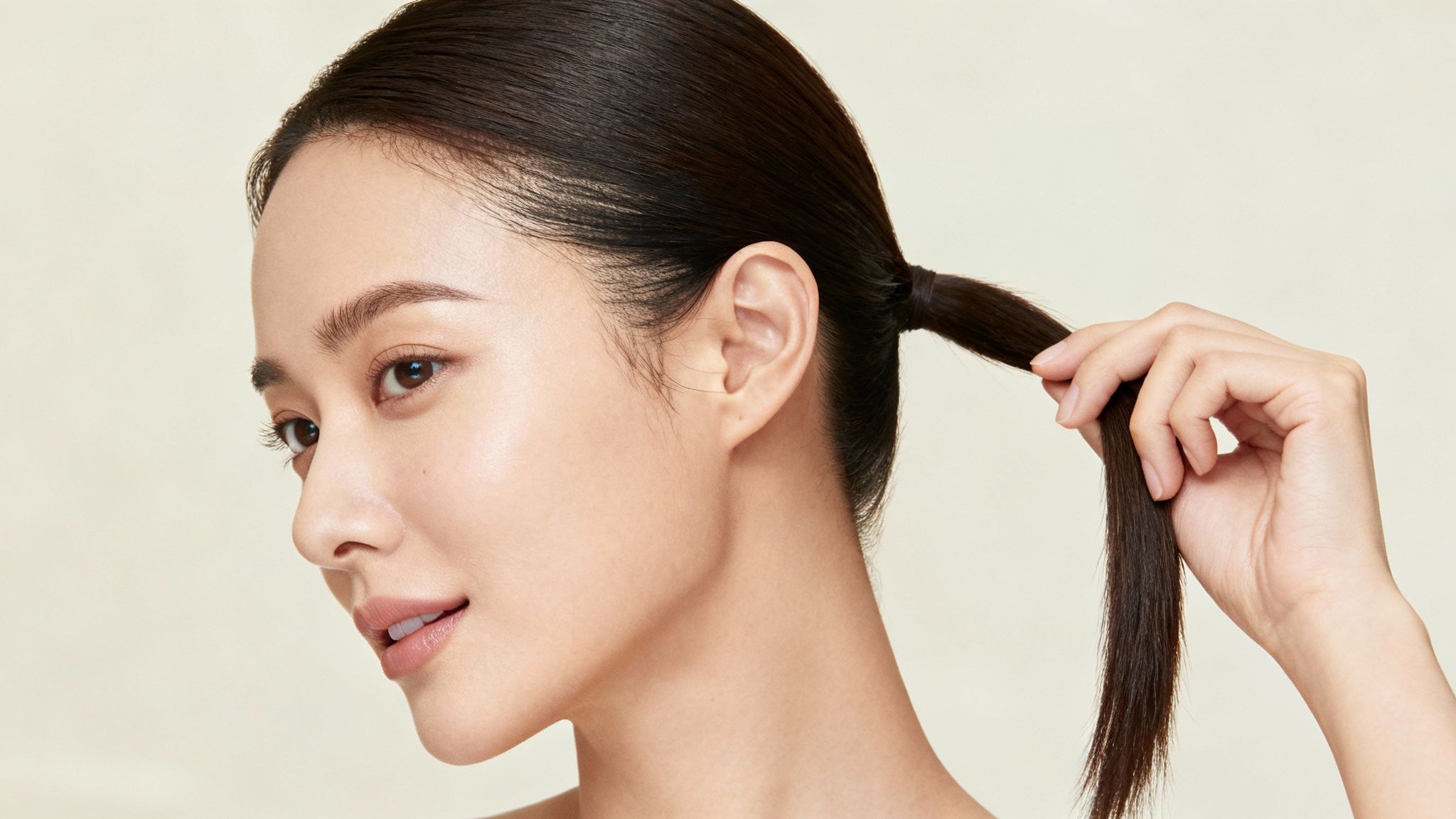
- A Thinner Ponytail: Remember how full your ponytail used to feel? If you find yourself wrapping the elastic an extra time, that noticeable decrease in circumference is a solid indicator of reduced hair volume.
- Visible Patches of Thinning: Take a closer look at your crown and temples. These areas can start to look less dense, and while it might be subtle at first, it often becomes more obvious over time.
- Increased Scalp Visibility: When your hair is wet or under bright lights, do you see more of your scalp than you used to? Water separates the strands, making any reduction in density much easier to spot.
Performing the Hair Pull Test at Home
Want a quick way to gauge your shedding? Try the "hair pull test." It’s not a formal medical diagnosis, of course, but it’s a simple at-home check that can help you see if an unusual number of hairs are in the active shedding phase.
Here’s how to do it:
- Make sure your hair is clean and dry first.
- Grab a small section of hair—about 50-60 strands—between your thumb and index finger, right near the scalp.
- Gently but firmly, pull the hair all the way through to the ends.
- Take a look at how many hairs came out.
On a normal day, you should only see between one to three hairs come loose. If you’re consistently pulling out six or more hairs from different sections of your scalp, it could be a sign that your shedding is a bit more active than usual.
Understanding Common Hair Loss Conditions
When shedding becomes persistent and you start noticing the visual signs, it's often linked to an underlying condition. The most common culprit by far is androgenetic alopecia, which you might know as pattern hair loss. It's the leading reason for significant hair thinning in both men and women.
The numbers are pretty telling. Roughly 40% of men have noticeable hair loss by age 35, and that figure jumps to around 50%–60% by age 50. It's a huge issue for women, too, with tens of millions experiencing thinning hair.
The key thing to remember about pattern hair loss is that it's progressive. It's not something that happens overnight; it’s the result of hair follicles gradually shrinking over many, many years. The sooner you spot it, the better your chances are of managing it.
Catching these signs early is everything. A widening part, a skinnier ponytail, or a surprising result from the hair pull test isn't a reason to panic. It is, however, a sign that it’s time to start paying closer attention and maybe look into more supportive care. For a deeper dive into the medical side of things, our article on understanding hair loss due to health reasons is a great resource.
Recommended Morfose Solutions for Normal Hair Shedding
A healthy scalp is the foundation for strong, resilient hair. If you’re worried about seeing more hair in your brush, shifting your focus to scalp care is one of the most powerful things you can do. A consistent routine that nourishes your follicles and strengthens your hair from the root up can create the perfect environment for healthy growth. This is where targeted solutions from Morfose can make a real difference, helping to support your hair's natural growth cycle and minimize breakage.
A Supportive Routine for Scalp and Hair Health
Building an effective routine doesn't have to be complicated. It's about choosing the right products that work together to cleanse, nourish, and protect your scalp and hair, helping to keep your shedding in the normal range.
Here’s a simple, three-step approach using Morfose products designed to promote a healthier scalp and stronger hair.
-
Start with a Fortifying Cleanse: The first step is a shampoo that cleanses gently while delivering powerful nutrients right to the follicle. The Morfose Biotin Shampoo is formulated to do exactly that. Biotin, also known as Vitamin B7, is essential for hair strength, helping to reinforce the hair shaft and reduce the brittleness that leads to breakage.
-
Provide Gentle, Restorative Care: After cleansing, it’s crucial to replenish moisture without weighing hair down. The Morfose Milk Therapy line is perfect for this. It’s infused with milk proteins and a blend of 12 essential amino acids that hydrate and soften the hair, improving its elasticity so it’s less likely to snap.
-
Target Shedding with a Specialized Serum: For an extra layer of support, a targeted serum is a must-have. The Morfose Anti Hair Loss Serum is designed to be applied directly to the scalp, where its specialized formula helps energize follicles and create the best possible conditions for new growth.
This simple routine ensures both your scalp and hair get the consistent, targeted support they need to thrive.
How Morfose Helps With Hair Health
The effectiveness of these products comes down to their key ingredients, each chosen to create a healthier ecosystem for your hair.
- Biotin: This is a core component that directly supports your hair's keratin infrastructure. Think of it as reinforcement, making each strand more resilient against the daily wear and tear that leads to breakage.
- Milk Proteins & Amino Acids: These are the essential building blocks for healthy hair. They offer deep nourishment and moisture, restoring flexibility and shine to hair that might feel dry, weak, or brittle.
By focusing on scalp wellness, you're not just managing shedding—you're investing in the long-term health and strength of your hair. A nurtured scalp is simply better equipped to produce vibrant, resilient hair from the very beginning.
Ultimately, figuring out how much hair loss is normal is the first step, but taking action with a supportive routine is what truly puts you in control. For a deeper dive into the connection between your scalp and hair growth, check out our guide on scalp health and hair growth.
When to Consult a Professional About Hair Loss
Figuring out the difference between normal, everyday shedding and something more serious is the first step in taking control of your hair's health. While a great at-home routine can keep your hair strong, some signs are your cue to look beyond the bathroom cabinet and get professional advice from a doctor or dermatologist.
Think of it this way: if your hair shedding suddenly goes from a slow, steady trickle to a rushing flood, that’s a clear signal to get it checked out. Any abrupt increase in hair loss, especially if it leads to thinning you can actually see in just a few weeks or months, is worth a professional evaluation.
Red Flags That Signal a Doctor's Visit
You shouldn't panic over every hair in your brush, but some symptoms are just too important to ignore. These are the tell-tale signs that an underlying issue might be at play. Getting a real diagnosis is the only way to find a solution that actually works.
Here are the specific red flags to watch for:
- Sudden or Patchy Hair Loss: Discovering distinct bald spots, which are often circular or oval, could point to a condition like alopecia areata.
- Scalp Pain, Itching, or Redness: Your scalp shouldn't be a source of discomfort. If hair loss comes with persistent itching, flaking, inflammation, or pain, you need a professional opinion.
- Rapid, Diffuse Thinning: Does your ponytail feel dramatically thinner? If your hair feels significantly less dense all over in a short amount of time, it could signal a systemic issue.
- Hair Loss with Other Symptoms: Pay attention if your shedding happens alongside new issues like fatigue, unexplained weight changes, or other health concerns. It's crucial to see a doctor to connect the dots.
What to Expect During a Consultation
The thought of a medical appointment for hair loss can feel a bit daunting, but it’s really just a straightforward process to find answers. A professional will usually kick things off with a detailed chat about your health history and a physical look at your hair and scalp.
They might perform a simple hair pull test or use a special magnifying tool called a dermatoscope to get a close-up view of your follicles. From there, they might suggest blood tests to check for things like nutritional deficiencies, thyroid problems, or hormonal imbalances. This step is absolutely vital for creating a treatment plan that’s right for you. It's clear more people are seeking help; one study found that hair-loss-related visits jumped from just 1.24% of all dermatology appointments in 2010 to 9.44% in 2020.
Seeking a professional opinion isn't a sign that your hair care routine failed. It's an empowered step toward getting the right diagnosis and the most effective treatment for your unique situation.
If you’re thinking about more advanced options, it could be helpful to learn about professional Platelet-Rich Plasma (PRP) treatments. Getting an expert involved early is always the fastest way back to a healthy, full head of hair.
Your Hair Shedding Questions, Answered
Even with all the facts, it’s natural to have a few nagging questions when you see hair in your brush or circling the shower drain. To help put your mind at ease, we’ve tackled some of the most common worries and myths about daily shedding.
Think of this as your quick-reference guide for straightforward, no-nonsense answers. It's all about helping you understand what's normal so you can focus on what really matters—keeping your hair healthy and strong.
Does Washing My Hair Every Day Cause More Hair Loss?
This is a classic hair myth, but the answer is a clear no. Washing your hair doesn’t actually cause you to lose more hair. What it does do is dislodge the hairs that were already in the exogen, or shedding, phase of the hair cycle.
Those strands were on their way out anyway. The water and gentle massage of shampooing just help them complete their journey. If you wait a few days between washes, you'll likely see a bigger clump in the drain, but that's just the accumulated total from the days you skipped—not a sign of a new problem. In fact, a clean, healthy scalp is the best environment for new growth to thrive.
Why Does It Seem Like I Lose So Much More Hair in the Shower?
Seeing a dark cluster of hair against the white tile of your shower can be pretty jarring, but it’s mostly a trick of the eye. Wet hair clumps together, making even a small number of strands look like a much more significant amount. A few long hairs can easily coil up to look like a substantial loss.
Just remember, the 50 to 150 hairs that make up a normal day's shedding have to fall out somewhere. The shower is a common exit point because the combination of water and the friction from your fingers working in shampoo helps release them from the scalp.
Can Certain Foods Really Help Reduce Hair Shedding?
Absolutely. What you eat has a direct impact on the health and strength of your hair. Your hair is primarily made of protein, and it depends on a steady supply of vitamins and minerals to grow properly and stay anchored in the follicle.
Think of your diet as building your hair from the inside out. Key nutrients are non-negotiable for a healthy hair cycle:
- Protein: The literal building block of hair. Find it in lean meats, fish, eggs, and beans.
- Iron: This is crucial for delivering oxygen to your follicles. Load up on red meat, spinach, and lentils.
- Biotin: Famous for supporting keratin production. Eggs, nuts, and whole grains are great sources.
- Zinc: A powerhouse for hair tissue growth and repair. Oysters, beef, and pumpkin seeds are packed with it.
Think of your diet as the internal foundation for your hair. What you eat directly fuels the follicles responsible for growing strong, resilient strands that are less prone to breakage and premature shedding.
Final Thoughts on Normal Hair Loss
Understanding that daily hair shedding is a normal and necessary part of your hair's life cycle is the first step toward peace of mind. By recognizing the difference between natural shedding and excessive hair loss, you can take proactive steps to support your scalp's health. Building a consistent routine with nourishing products is the best way to ensure your hair remains strong, resilient, and vibrant.
