

How to Use Rosemary Oil for Hair Growth: The Complete Guide
Using rosemary oil for hair growth is a straightforward process: dilute a few drops of pure essential oil with a carrier oil—like coconut or jojoba—and massage it directly into your scalp. When done consistently, this natural remedy can support thicker, fuller hair by boosting circulation right where it counts: the hair follicles.
This guide will walk you through exactly how to use rosemary oil, from preparing the right mixture to applying it for the best results, ensuring you have all the information you need for your hair growth journey.
Understanding How Rosemary Oil Fuels Hair Growth
Before you grab a bottle, it's helpful to understand why this natural remedy has become so popular for hair growth. Rosemary oil isn't just an old wives' tale; its power comes from potent natural properties that help create a healthier environment for your hair to thrive.
The science behind it is surprisingly direct. Rosemary oil is packed with compounds like carnosic acid, known for helping to rejuvenate nerves and tissue. When you massage it into your scalp, it gets to work in a few key ways:
- Boosts Blood Circulation: Better blood flow means your hair follicles get more oxygen and essential nutrients they need to enter and stay in their growth phase.
- Provides Anti-Inflammatory Benefits: A calm, healthy scalp is the foundation of healthy hair. Rosemary oil’s anti-inflammatory properties can soothe irritation and help with issues like dandruff that might be hindering growth.
- Offers Antioxidant Protection: It acts like a shield, helping protect your hair and scalp from damage caused by environmental stressors like pollution and UV rays.
The Science-Backed Evidence
This isn't just theory. A game-changing 2015 randomized trial put rosemary oil head-to-head with minoxidil 2%, a common hair growth treatment, for people with androgenetic alopecia (pattern baldness). After six months, both groups saw a significant increase in their hair count.
The most interesting part? There was no statistical difference in hair growth between the two groups. However, the people using rosemary oil reported significantly less scalp itching, making it a gentler—yet equally effective—alternative.
This study provided solid clinical proof that rosemary oil can hold its own against conventional treatments, offering a natural solution with fewer side effects.
Ultimately, understanding how to improve scalp health is a critical step in any hair growth journey. The link between a well-nourished scalp and strong hair is undeniable. To dive deeper, check out our guide on the relationship between scalp health and hair growth.
Preparing Your Rosemary Oil Hair Treatment
Before you start, setting up your treatment correctly is the secret to seeing results without causing irritation. The first step is always choosing high-quality ingredients. This means grabbing a 100% pure rosemary essential oil—not a fragrance oil—to ensure you’re getting all those potent, hair-loving compounds.
Next, you'll need a carrier oil. This part is non-negotiable. Applying pure essential oil directly to your skin can cause sensitivity, so you must dilute it. The great thing is you can pick a carrier oil that complements your hair's needs.
- For Oily or Normal Scalps: Jojoba oil is a fantastic choice. Its structure is incredibly similar to your scalp's natural sebum, so it absorbs beautifully without clogging pores.
- For Dry or Damaged Hair: Coconut or argan oil are your best friends. They're both deeply moisturizing and will nourish thirsty strands while delivering the rosemary oil right where it needs to go.
The Importance of Proper Dilution
Once you have your oils, mixing them correctly is crucial for both safety and effectiveness. A 2% dilution is the perfect starting point for most people. It's strong enough to work its magic but gentle enough for regular use.
Trust us, going stronger won't speed up your results. It’s more likely to leave you with an itchy, unhappy scalp.
Pro Tip: Always do a patch test before applying a new mixture all over your head. Mix a tiny amount, dab it on a discreet spot like behind your ear, and wait 24 hours. If there's no reaction, you're good to go.
Simple Rosemary Oil Dilution Ratios
To take the guesswork out of it, here's a simple guide to help you get the dilution just right. Follow this chart to safely mix pure rosemary essential oil with a carrier oil, tailored for different hair types and scalp sensitivities.
| Scalp Sensitivity | Carrier Oil Amount | Rosemary Oil Drops | Concentration | Best For |
|---|---|---|---|---|
| Sensitive / First-Time User | 2 Tablespoons (1 oz) | 3-6 drops | ~1% | A gentle introduction or for sensitive skin. |
| Normal / Regular Use | 2 Tablespoons (1 oz) | 6-12 drops | ~2% | The standard, effective ratio for most people. |
| Tolerant / Spot Treatment | 2 Tablespoons (1 oz) | 15 drops | ~2.5% | For experienced users or targeted application. |
Getting the mix right ensures you reap all the benefits without any irritation, making your journey to healthier hair a smooth one.
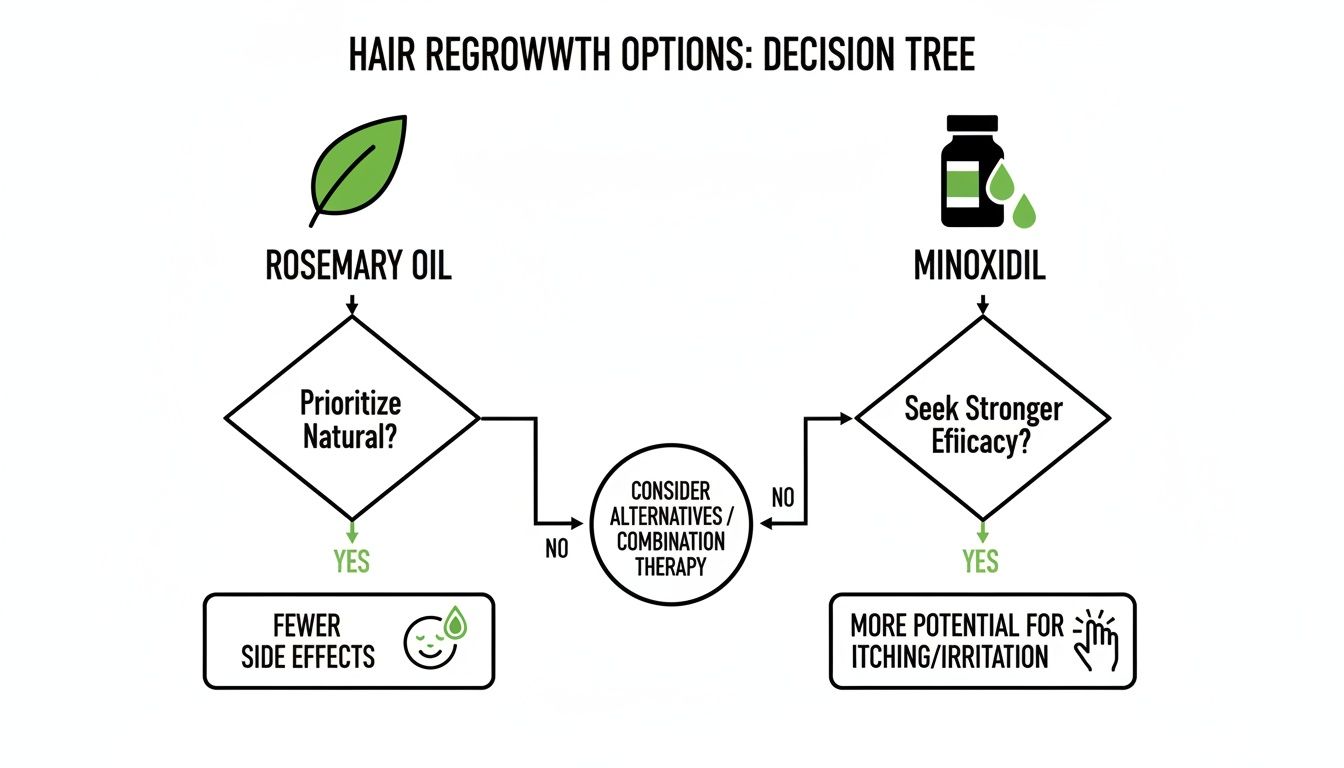
This visual helps show why so many people are drawn to a natural approach first. It can be a much gentler, yet equally effective, path for many.
If you're looking for an even more intensive moisturizing session, you can also gently warm your oil mixture. For a complete walkthrough, check out our guide on how to do a hot oil treatment for natural hair to deeply nourish your scalp and strands.
Four Ways to Use Rosemary Oil for Hair Growth
You've mixed your perfect rosemary oil blend. Now for the fun part: using it.
There’s no single "right" way to do this. The best method is the one you'll stick with consistently. Let's walk through four popular and effective techniques.
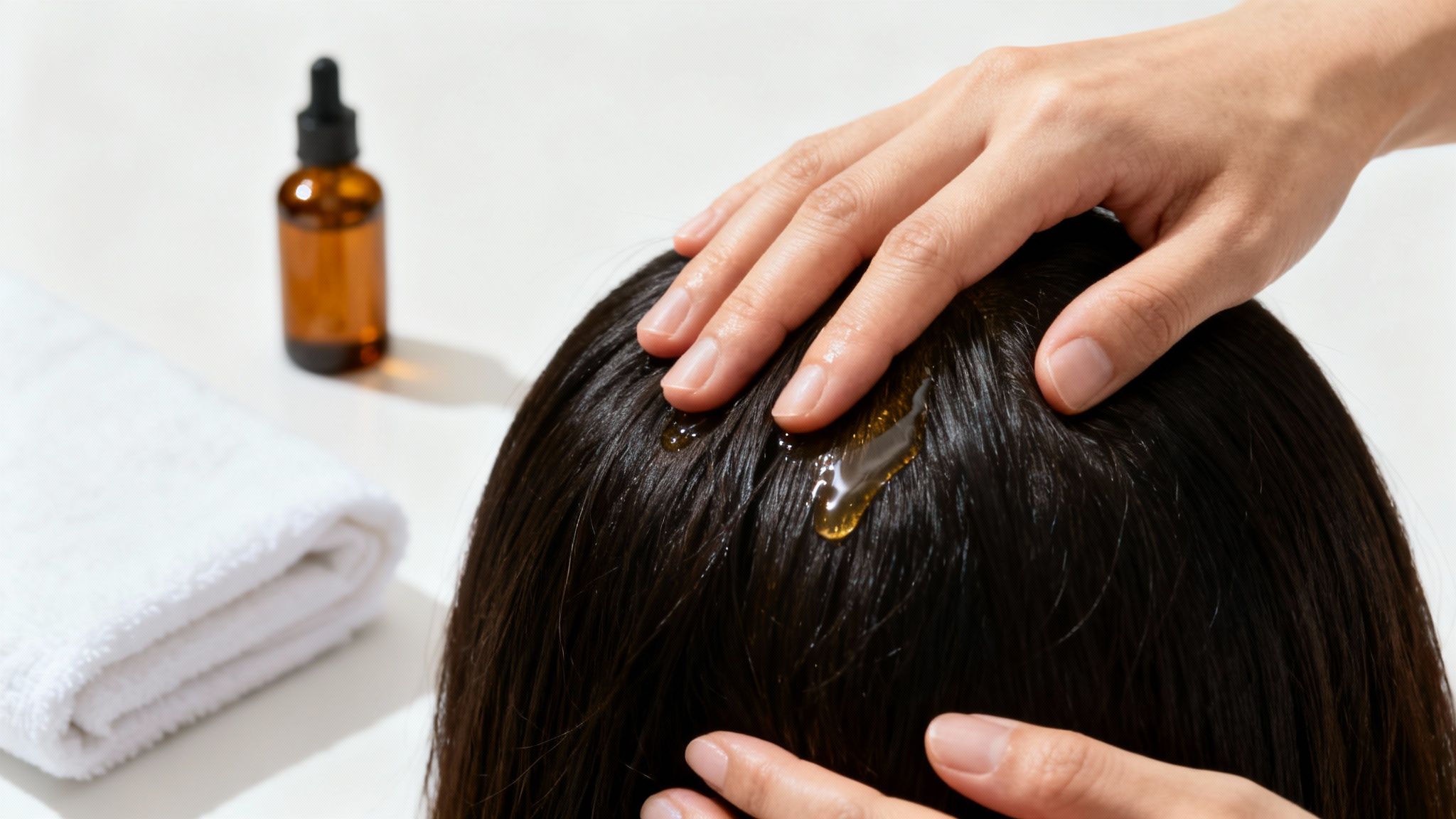
Method 1: The Classic Scalp Massage
This is the gold standard for a reason. A direct scalp massage puts the rosemary oil right where it needs to be—at the hair follicles. Plus, the massage itself boosts blood flow to deliver more nutrients to your roots. It's a powerful one-two punch for encouraging growth.
To get started, part your hair into a few sections and use your fingertips or a dropper to apply your diluted oil directly onto your scalp. Massage it in with gentle, circular motions for about five to ten minutes. Make sure you cover your entire scalp, paying special attention to any areas where you’ve noticed thinning.
The massage is just as crucial as the oil. For a deeper look into why this works so well, discover the benefits of scalp massages for hair growth.
- How Often? Aim for 2-3 times per week.
- How Long? Let it soak in for at least 30 minutes. If you can, leave it overnight for a more intensive treatment.
- Best For: Directly targeting thinning spots and giving your follicles maximum stimulation.
Method 2: A Soothing Hot Oil Treatment
If your hair is dry or your scalp feels irritated, a warm oil treatment is pure bliss. It offers deep conditioning while delivering the growth-boosting goodness of rosemary. Warming the oil helps it penetrate the hair shaft and scalp more deeply, leaving your hair feeling incredibly soft and manageable.
To do this, place your bowl of diluted oil into a larger bowl of hot water for a few minutes until it's comfortably warm. Never microwave the oil, as high heat can destroy its beneficial compounds.
Once it's ready, apply it using the same scalp massage technique. Then, work any leftover oil through the lengths and ends of your hair. To lock in the benefits, cover your hair with a shower cap or a warm towel and let it sit.
Method 3: Supercharge Your Shampoo or Conditioner
This is the most convenient method and a favorite for busy days. When you add rosemary oil to your daily products, you give your scalp a consistent, low-level dose of its benefits with every wash.
Just add about five drops of pure rosemary essential oil for every ounce (30ml) of your shampoo or conditioner. Give the bottle a good shake before each use to mix it up. While it’s not as potent as a dedicated scalp massage, this consistency helps maintain a healthy scalp between more intensive treatments.
Method 4: Mix Up a DIY Hair Growth Serum
If you love customizing your routine, creating your own hair serum is a fantastic option. This lets you combine rosemary oil with other powerhouse ingredients tailored specifically to your hair's needs.
For instance, you could add a few drops of peppermint oil for an invigorating, circulation-boosting tingle, or lavender oil for its calming properties.
For a next-level blend, try adding your rosemary mixture to a specialized product like the Morfose Anti-Hair Loss Serum. It’s already loaded with fortifying ingredients like biotin and keratin, creating a truly comprehensive approach to fighting hair thinning. For more ideas and techniques, you might find another comprehensive guide on using rosemary oil for hair growth helpful.
Best Morfose Products to Use with Rosemary Oil
Using rosemary oil on its own is a fantastic step for your hair, but you can amplify its effects by pairing it with the right products. This transforms a simple habit into a complete hair growth system.
Think of it like this: you're creating the perfect environment for rosemary oil to work effectively. When your scalp is clean, balanced, and ready to receive nutrients, the oil can do its job far better. That’s how you get faster, more noticeable results. This is where targeted solutions from Morfose can make a world of difference.
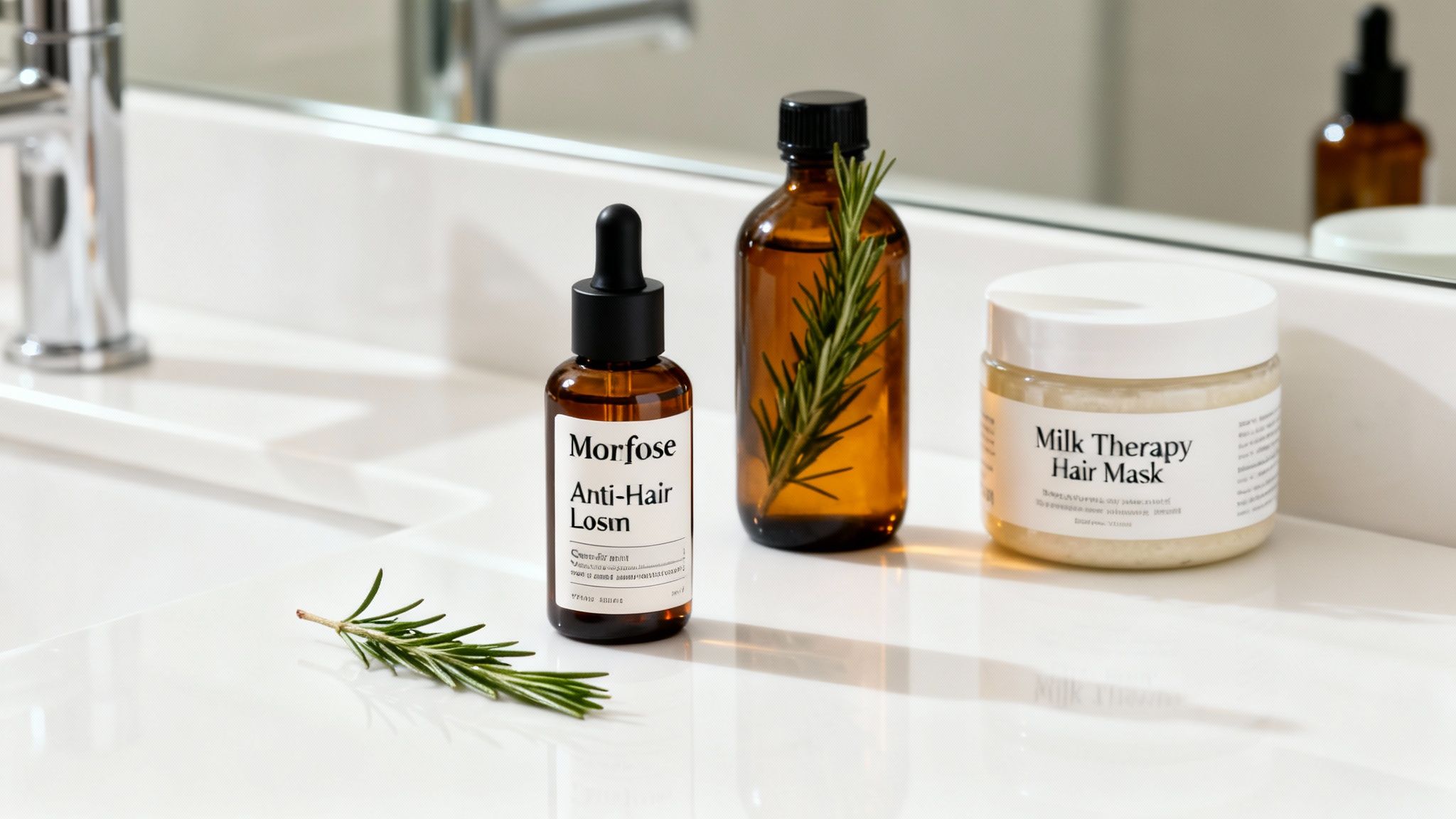
Create a Supercharged Hair Growth Serum
Instead of just mixing your rosemary oil with a basic carrier oil, you can create a truly potent hair growth elixir. The secret is blending your rosemary oil into a product that's already packed with hair-fortifying ingredients.
This approach combines the follicle-stimulating benefits of rosemary with proven compounds that tackle thinning from multiple angles. It’s an incredibly simple way to upgrade your routine.
A brilliant strategy is to mix a few drops of rosemary essential oil directly into the Morfose Anti-Hair Loss Serum. This serum is already formulated with a blend of biotin, keratin, and crucial amino acids that nourish the scalp and anchor hair follicles more firmly. By combining the two, you get a multi-action treatment that encourages new growth and protects your existing hair from breakage.
You can learn more about how to incorporate the Morfose Scalp Treatment Anti-Hair Loss Serum into a complete routine.
A Three-Part System for Success
For the absolute best results, build a complete routine around your rosemary oil application. This ensures that every step—from washing to conditioning—is working toward the same goal.
A healthy hair growth journey is about consistency and a holistic approach. It’s not just about what you add to your scalp, but also ensuring you're not stripping its natural balance during your wash routine.
Here’s a simple, powerful system to follow:
- Prep the Scalp: Start with a clean slate. Use a gentle, sulfate-free shampoo to clear away buildup without stripping natural oils. The Morfose Biotin & Keratin Shampoo is perfect for this, as it cleanses while delivering strengthening proteins to help reduce shedding.
- Apply Your Treatment: Now for the main event. On a clean, dry scalp, apply your supercharged blend of rosemary oil and the Morfose serum. Take your time massaging it in thoroughly—this boosts circulation and helps the ingredients absorb deeply where they’re needed most.
- Replenish and Hydrate: After letting your treatment sit and rinsing it out, follow up with a deep conditioner to restore moisture. The Morfose Milk Therapy Hair Mask is an amazing choice. Its milk proteins and amino acids leave hair feeling incredibly soft, shiny, and resilient.
A Realistic Timeline for Hair Growth Results
So, you’re ready to start your rosemary oil journey. One of the first questions on your mind is probably, "How long will this actually take?" Setting the right expectations from the get-go is the key to sticking with it.
Let's be real: using rosemary oil for hair growth is a marathon, not a sprint. Consistency is everything. You won't see new hair overnight, but you will see small, encouraging signs along the way if you know what to look for.
What to Expect in the First Few Months
During the first one to three months, the biggest change you'll likely notice is less shedding. This is a huge win! Seeing fewer strands in your brush or the shower drain is the first concrete sign that your scalp is getting healthier and your hair follicles are strengthening.
You probably won’t see much new growth yet, and that's completely normal. This initial phase is about building a better foundation. The rosemary oil is busy improving circulation and calming inflammation, preparing the scalp for new growth.
It's important to remember that the hair growth cycle itself takes time. Your follicles have to shift from a resting phase into an active growth phase, and that transition doesn't happen instantly. Patience is your best friend here.
The Six-Month Milestone
This is where things get exciting. The three-to-six-month mark is typically when the magic happens. It’s the timeframe highlighted in clinical studies where participants saw a significant jump in hair count. You might start spotting soft, fuzzy "baby hairs" popping up along your hairline or in sparser areas.
That’s the new growth you’ve been waiting for!
One study showed that after six months of using rosemary oil, users experienced a significant increase in hair count comparable to minoxidil 2%. Users often report not just new hairs, but also that their existing strands feel thicker and stronger. If you want to dive deeper into the different stages of growth, you can learn more about how long it takes for hair to grow in our detailed guide.
Stick with your routine, because by this point, the cumulative effects should be much more obvious.
Your Rosemary Oil for Hair Growth Questions Answered
Let's wrap up by tackling some of the most common questions about using rosemary oil. This quick FAQ will clear up any confusion so you can move forward with confidence.
Can I Use Rosemary Oil on My Hair Every Day?
While it’s tempting to go all-in for faster results, applying a rosemary oil mixture to your scalp every day might be too much. For some, this can lead to greasiness or mild irritation.
A better rhythm is to apply your diluted treatment 2 to 4 times per week. This frequency gives your scalp time to absorb the benefits without getting overwhelmed. For a gentle daily boost, adding a few drops of pure rosemary oil to your shampoo, like the Morfose Biotin & Keratin Shampoo, is a perfect solution.
Should I Apply Rosemary Oil to Wet or Dry Hair?
For the best results, apply your rosemary oil mixture to dry or slightly damp hair. This allows for direct contact with the scalp. When your scalp is dry, the oil can get straight to the hair follicles without being diluted by water.
The main exception is when you’re mixing it into a rinse-out product. If you’re adding it to your conditioner or a deep treatment like the Morfose Milk Therapy Hair Mask, apply it to clean, damp hair after shampooing, as you normally would.
How Long Does It Take for Rosemary Oil to Work?
Patience and consistency are key. Based on clinical studies and user experiences, you’ll likely notice less shedding within the first 2 to 3 months.
Real, visible new growth—those exciting baby hairs around your hairline—typically starts appearing after about six months of consistent use. So, stick with it! The payoff is worth the wait.
Can I Leave Rosemary Oil in My Hair Overnight?
Absolutely! Leaving your treatment in overnight is a fantastic way to give the oil maximum time to work its magic. Just be sure your mixture is properly diluted to avoid any potential irritation from prolonged contact.
To keep your pillows clean, wear a silk or satin bonnet to bed. If you don't have one, draping a towel over your pillowcase works, too. If your scalp is on the sensitive side, try a shorter treatment first—maybe an hour or two—to see how your skin reacts before committing to a full night.
While we're on the topic of natural oils, many others offer incredible benefits for well-being. For example, some people explore the soothing powers of lavender for pain relief for other therapeutic uses.
By following these methods and staying consistent, you can effectively use rosemary oil to support a healthier scalp and encourage stronger, fuller hair growth.
Ready to build a complete routine that strengthens your hair from root to tip? Explore the Morfose collection and discover powerful, salon-inspired solutions to support your hair growth journey at https://themorfose.com.
