
How Dandruff Causes Hair Loss and What You Can Do About It
It's a question we hear all the time: can those frustrating white flakes actually make you lose your hair? The short answer is yes, but it’s an inside job. Dandruff itself doesn't directly attack your hair follicles, but the intense itching and inflammation it brings create the perfect storm for hair shedding and breakage.
This guide will explain exactly how dandruff causes hair loss and provide a clear, step-by-step action plan to restore your scalp's health and stop the shedding for good.
The Surprising Link Between Dandruff and Hair Loss
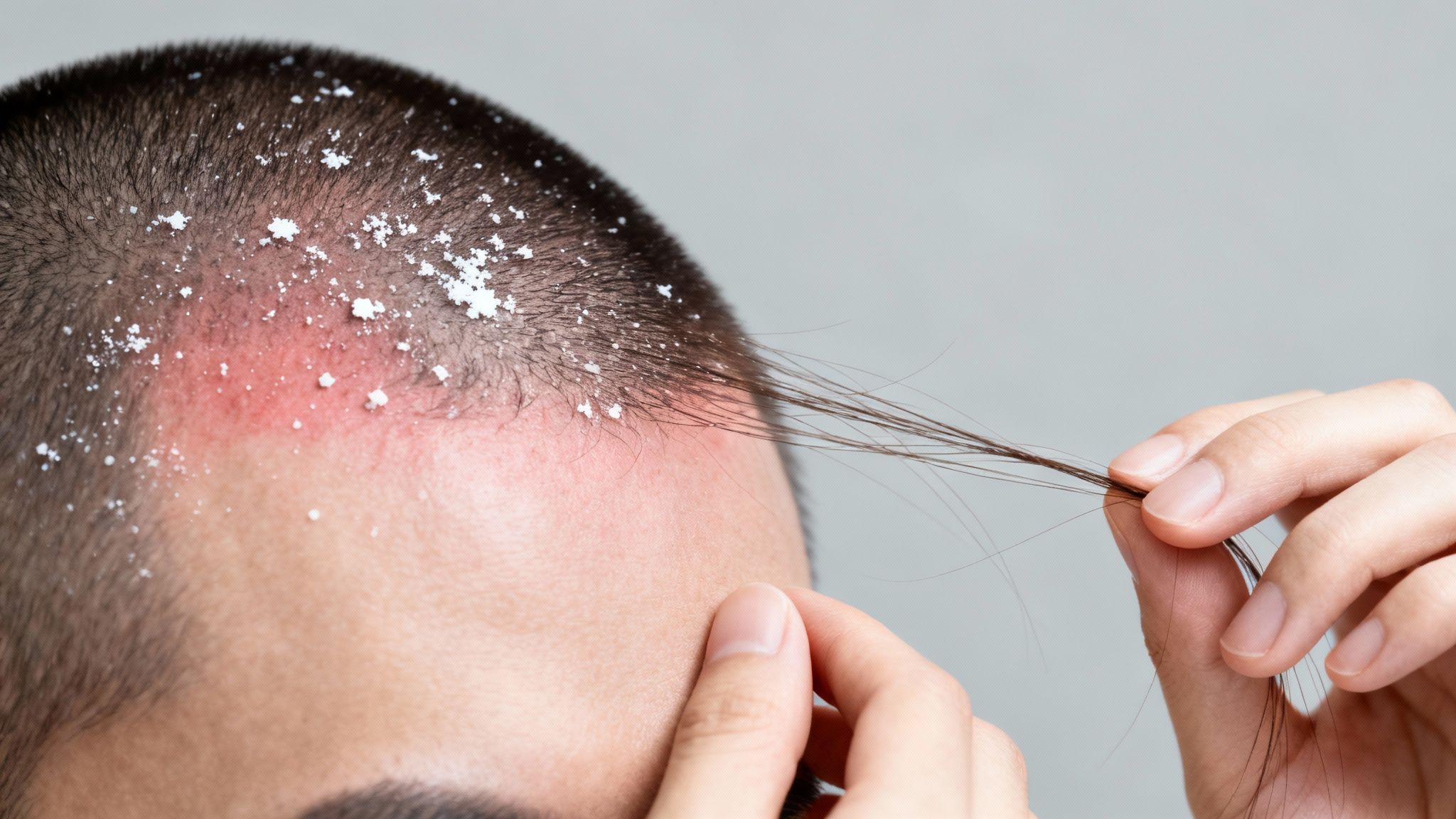
Many people write off dandruff as just a cosmetic annoyance, but it’s a genuine scalp condition that can have real consequences for your hair. Figuring out how dandruff causes hair loss is the first step to breaking the cycle. The connection isn’t about the flakes themselves, but the unhealthy scalp environment they signal.
Think of your scalp like soil in a garden. When the soil is balanced and healthy, plants grow strong. But if it becomes irritated, inflamed, and overrun with problems, the plants can't thrive. Dandruff does the same thing to your hair follicles.
The Itch-Scratch Cycle Explained
The main culprit behind dandruff-related hair loss is the vicious itch-scratch cycle. Dandruff almost always comes with a persistent, maddening itch caused by scalp inflammation. When you scratch, you get a moment of relief, but you’re also causing serious physical damage.
This constant scratching can:
- Weaken the hair shaft: Aggressively scratching damages the hair's protective outer layer (the cuticle), making strands brittle and much more likely to snap.
- Dislodge hair from the follicle: The force of scratching can literally pull hairs out from their roots before they’re ready to shed naturally.
- Increase inflammation: Scratching only irritates the skin more, which dials up the underlying inflammation and makes the itching even worse.
This cycle of itching, scratching, and more itching is a massive contributor to temporary hair thinning. To protect your hair's density and strength, you have to break that cycle.
Beyond the Scratch: Inflammation's Role
While scratching is a major player, it's not the only problem. The inflammation that triggers dandruff can throw your entire scalp ecosystem out of whack, weakening the follicles' grip on the hair shaft. A chronically inflamed scalp is simply not a good place for healthy hair to grow.
Of course, various other health issues can also play a role in hair loss. It's important to see the whole picture, which you can do by understanding hair loss due to health reasons in our detailed guide.
What Is Really Happening on Your Scalp
To solve a problem, you have to get to its root cause. Dandruff might seem like a simple case of dry skin, but what’s going on is actually a complex biological process. Once you understand the science, you can take targeted steps to get your scalp back in balance.
The main culprit behind most dandruff is a yeast-like fungus called Malassezia globosa. Don't be alarmed—this microbe is a totally normal resident on a healthy scalp.
The trouble starts when your scalp's ecosystem gets thrown out of whack. Malassezia feeds on the natural oils (sebum) your hair follicles produce. If your scalp produces too much oil, it’s like an all-you-can-eat buffet for this fungus, letting it multiply out of control.
The Unhealthy Garden Analogy
Think of your scalp like a garden. In a healthy garden, the soil is perfectly balanced. But if that soil suddenly becomes too oily, a single type of weed can take over and choke out the good stuff.
That’s what an overgrowth of Malassezia does. As it feasts on excess oil, it leaves behind a byproduct called oleic acid. For about half the population, this acid is a major irritant.
In response to this irritation, your scalp panics and sends its skin cell renewal process into hyperdrive. It's trying to shed the irritant, which causes skin cells to clump together and flake off as those tell-tale white specks we call dandruff.
This frantic cell turnover, along with the inflammation and redness, is what makes your scalp so itchy.
The Science Behind the Itch and Hair Loss
All that inflammation is the key link between dandruff and hair loss. An inflamed scalp is a stressed environment, and your hair follicles can't function properly under that pressure. This constant irritation can weaken the follicle's grip on the hair shaft, leading to more shedding than usual. To learn more about this connection, check out our complete guide on scalp health and hair growth.
Dandruff affects a staggering 55% of young people and adults worldwide, making it one of the most common scalp issues that can indirectly cause hair loss. The cycle is simple: the intense itch makes you scratch, and that physical trauma can weaken hair follicles, leading to breakage and shedding. As experts note, this can worsen if other hair loss conditions are also present. You can discover more insights on the dandruff-hair loss link on scalpmicrousa.com.
Is It Dandruff or Something More?
It's also important to know if you're dealing with simple dandruff or something more serious.
- Simple Dandruff: This usually means small, white, dry flakes you see on your scalp and in your hair. The itch is typically mild.
- Seborrheic Dermatitis: Think of this as dandruff's more aggressive cousin. The inflammation is much more noticeable, causing greasy, yellowish scales, red skin, and stubborn flakes. It can even show up on other oily areas, like your face and chest.
Figuring out which one you have is crucial because the persistent inflammation from seborrheic dermatitis poses an even greater risk to your hair follicles.
Common Triggers That Worsen Dandruff
While Malassezia is the biological cause, certain lifestyle and environmental factors can pour fuel on the fire. These triggers often increase oil production or weaken your scalp's natural defenses.
Common triggers include:
- Hormonal Shifts: Fluctuations from puberty, pregnancy, or even your monthly cycle can ramp up sebum production.
- Stress: High stress levels can mess with your immune system, making it harder for your body to keep the Malassezia population in check.
- Weather Changes: Cold, dry winter air can dry out your scalp, while hot, humid weather can make it oilier. Both extremes can make flakes worse.
By understanding what's happening on your scalp, you can move beyond just masking the flakes and start building a truly healthy foundation for strong hair.
Four Ways Dandruff Triggers Hair Thinning
So, how exactly does an irritated, flaky scalp lead to fewer hairs on your head? It’s not one single thing, but a domino effect of related issues that undermine your hair’s health.
Let's break down the four primary ways an unbalanced scalp can trigger hair thinning, breakage, and shedding.
1. The Destructive Itch-Scratch Cycle
The most direct link between dandruff and hair loss is the relentless itch-scratch cycle. That inflammation caused by the Malassezia fungus sends your scalp's itch signals into overdrive. Giving in to that urge to scratch comes at a huge cost.
Constant, aggressive scratching is a form of physical trauma. It can:
- Damage the hair cuticle: The rough action of your fingernails shreds the hair's protective outer layer, leaving the strand weak and primed to snap.
- Literally pull hair out: The force from scratching can physically dislodge hairs from their follicles long before they're ready to shed.
- Worsen inflammation: Scratching just irritates your already sensitive scalp even more, intensifying the redness and itching.
2. Chronic Scalp Inflammation
Beneath the surface, a more subtle process is at play. The inflammation triggered by dandruff messes with your hair's natural growth cycle. A healthy hair follicle moves through a growth phase (anagen), a transitional phase (catagen), and a resting phase (telogen).
Chronic inflammation throws this cycle off-balance. It can shorten the anagen (growth) phase, meaning your hair doesn’t have as long to grow strong. An inflamed scalp also weakens the follicle's grip on the hair, making it far more likely to shed prematurely. This is why more severe conditions like seborrheic dermatitis are so strongly linked to noticeable hair thinning.
Key Takeaway: An inflamed scalp is a stressed scalp. That stressful environment creates terrible conditions for hair growth, much like how plants struggle to thrive in poor-quality soil.
3. Oxidative Stress on Hair Follicles
When your scalp is constantly fighting off irritation from dandruff, it produces an excess of free radicals—unstable molecules that cause cellular damage. This process is known as oxidative stress. Research has shown that scalps with dandruff experience significantly higher levels of oxidative stress compared to healthy ones.
This cellular damage directly hits your hair follicles. It messes with their ability to function correctly, hindering their power to produce strong, healthy hair fibers. Over time, oxidative stress leads to weaker, thinner hair strands that are more susceptible to breaking and shedding.
This simple chain reaction is what leads to that inflammatory state.
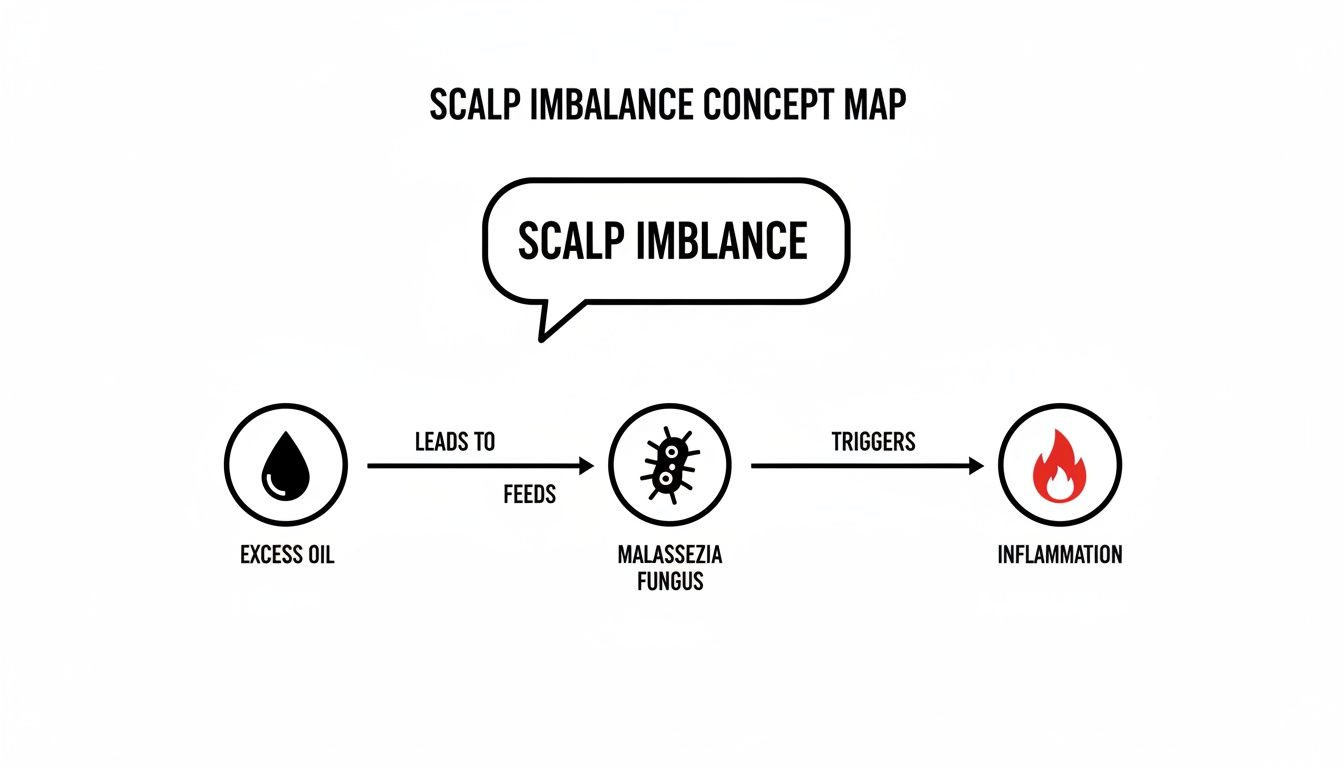
As you can see, excess oil creates the perfect feeding ground for the Malassezia fungus, which in turn kicks off the inflammation responsible for both the itchiness and the oxidative stress.
4. A Disrupted Scalp Microbiome
Finally, it's crucial to understand the scalp's microbiome—the community of billions of microorganisms living on your skin. On a healthy scalp, this community is in harmony. But when the Malassezia fungus overgrows, it throws this ecosystem into chaos.
This imbalance does more than just cause flakes. An unhealthy microbiome can't properly support your hair follicles. It often leads to a buildup of dead skin cells and sebum, which can clog follicles and starve them of the oxygen and nutrients they need.
The table below gives a quick visual summary of how a dandruff-affected scalp compares to a healthy one.
Dandruff's Impact on Hair Health
| Scalp Characteristic | Healthy Scalp | Dandruff-Affected Scalp |
|---|---|---|
| Microbiome | Balanced community of microbes | Overgrowth of Malassezia fungus |
| Inflammation | Minimal to none | Chronic and widespread |
| Cell Turnover | Normal, gradual shedding of skin cells | Accelerated, leading to visible flakes |
| Hair Follicles | Well-nourished, firmly anchored | Inflamed, weakened, often clogged |
| Hair Growth Cycle | Normal anagen (growth) phase length | Shortened anagen phase, premature shedding |
| Hair Strand Quality | Strong, resilient cuticle | Weaker, brittle, prone to breakage |
Seeing the side-by-side comparison makes it clear how dandruff compromises the scalp's environment, creating a perfect storm for hair loss.
Restoring balance is the most important step. To get started, you can explore dealing with a flaky scalp using a natural approach in our dedicated article.
Your Action Plan: How to Stop Dandruff and Hair Loss
Now that you understand the link between dandruff and hair loss, let's take action. This is your personal playbook for taking back control of your scalp and stopping that frustrating shedding in its tracks.
We’re going to cover the most effective strategies, from the active ingredients you need to look for to the daily habits that make all the difference. Consistency is your most powerful tool.
Step 1: Target the Root Cause with Medicated Ingredients
To win the fight against dandruff, you have to go after the main culprit: the Malassezia fungus. The best way is with medicated, over-the-counter shampoos designed to control this fungus and calm inflammation.
These are your first line of defense. Keep an eye out for these powerhouse ingredients:
- Zinc Pyrithione: A common and reliable anti-dandruff ingredient that is both antifungal and antibacterial. It’s gentle enough for most people to use regularly.
- Selenium Sulfide: This ingredient fights the fungus while also slowing down skin cell turnover, which helps reduce flaking.
- Ketoconazole: As a broad-spectrum antifungal, ketoconazole is a heavy hitter. It's incredibly effective for stubborn dandruff and more severe conditions like seborrheic dermatitis.
Always follow the directions on the bottle. Many medicated shampoos need to be left on the scalp for a few minutes before rinsing to give the active ingredients time to work.
Step 2: Build a Scalp-Soothing Hair Care Routine
Beyond your medicated shampoo, your day-to-day routine can either help your scalp heal or make things worse. The goal is to create a gentle, supportive environment that minimizes extra irritation.
Dandruff is often tied to seborrheic dermatitis, a condition affecting 4.38% of people globally. That inflammation and oxidative stress can lead to noticeable thinning. This is why a gentle routine is non-negotiable.
Here’s how to build a better one:
- Wash Gently but Thoroughly: Always use the pads of your fingertips to massage shampoo into your scalp, never your nails.
- Rinse Completely: Leftover product residue can clog pores. Take an extra minute to make sure all traces of shampoo and conditioner are gone.
- Avoid Harsh Products: Stay away from shampoos with sulfates or styling products high in alcohol. These can strip your scalp of its natural oils.
- Limit Heat Styling: High heat from blow dryers and flat irons can dry out your scalp. Always apply a heat protectant and use the lowest temperature setting.
For more helpful tips, check out our guide on the 7 best ways to get rid of dandruff, according to dermatologists.
Step 3: Make Lifestyle Adjustments for Lasting Results
Your daily life impacts your scalp. Things like stress and diet are connected to the health of your skin and hair. Making small, positive changes can support your treatments and help you get lasting results.
Try to incorporate these habits:
- Manage Stress: Stress can trigger hormonal changes that ramp up oil production on your scalp. Finding a healthy outlet—like exercise, meditation, or yoga—can make a huge difference.
- Eat a Balanced Diet: Focus on getting plenty of zinc, B vitamins, and healthy fats. These nutrients are building blocks for healthy skin.
- Stay Hydrated: Drinking enough water is fundamental for your skin's health, including your scalp.
While tackling dandruff, it’s also smart to be proactive about thinning. You can discover effective strategies to stop hair thinning and boost fullness. By pairing targeted scalp treatments with a supportive lifestyle, you can restore scalp health and keep your hair right where it belongs.
Best Morfose Products to Stop Dandruff-Related Hair Loss
Putting your action plan into practice is easier when you have the right products. A consistent routine built around targeted solutions is your best bet for breaking the cycle of dandruff-induced hair loss. Morfose offers products designed to calm irritation, restore balance, and fortify your hair against breakage.
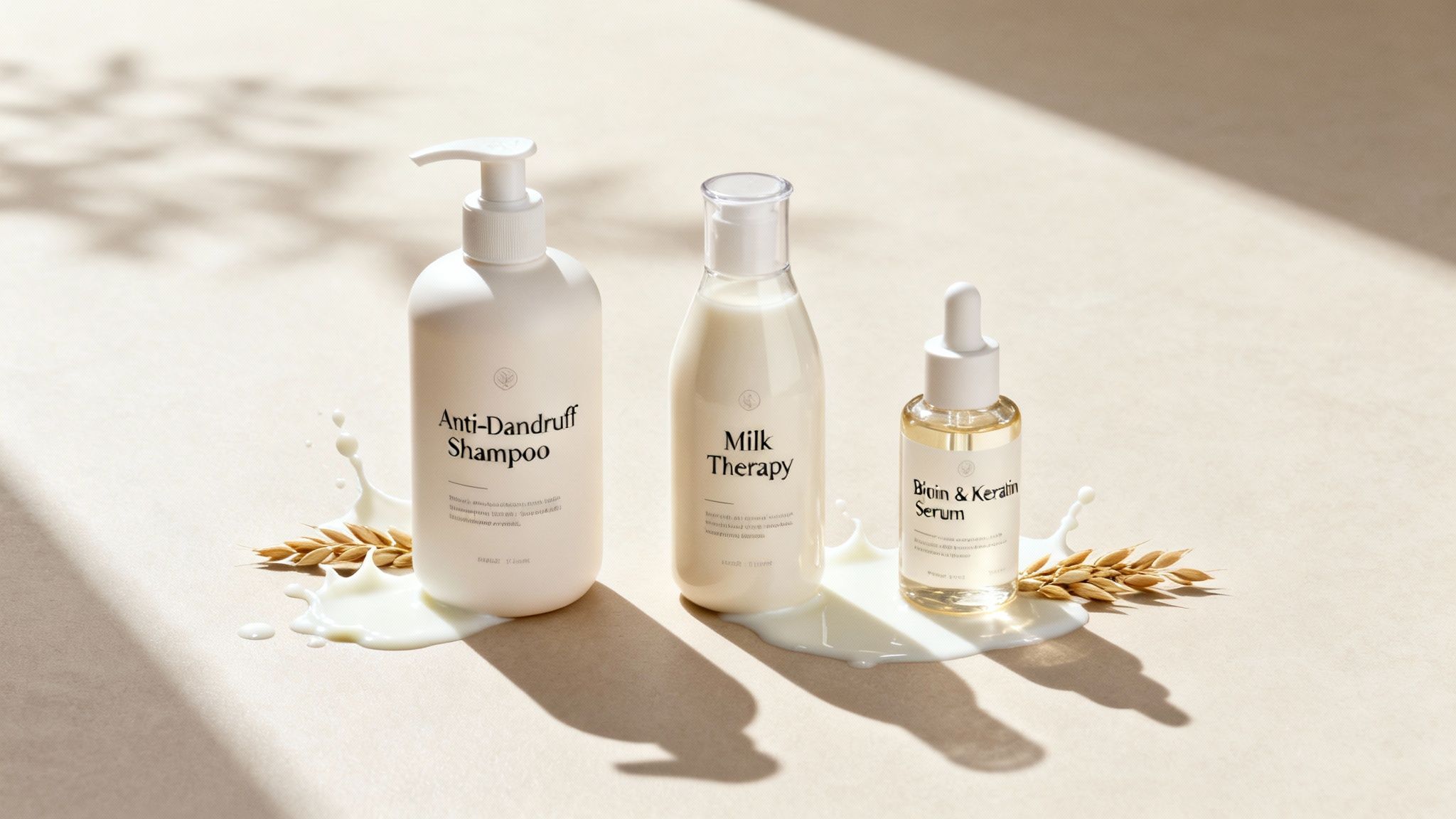
Recommended Morfose Solution: Anti-Dandruff Shampoo
The most critical step in your routine is targeting the source of the flakes. The Morfose Anti-Dandruff Shampoo is your primary defense. Its formula is specifically designed to:
- Restore Scalp Balance: It gently controls the overgrowth of Malassezia without stripping essential moisture.
- Soothe Irritation: The shampoo calms the inflammation that causes persistent itching, providing immediate relief and preventing damage from scratching.
- Cleanse Effectively: It removes excess sebum and dead skin cell buildup, ensuring your hair follicles remain clear.
How Morfose Helps Soothe and Strengthen Damaged Hair
Constant scratching and inflammation take a toll on your hair strands, leaving them brittle. Once you’ve addressed the dandruff, the next step is to repair and hydrate your hair.
The Morfose Milk Therapy line is perfect for this. Infused with a unique blend of 12 essential amino acids and milk proteins, these products deeply replenish lost moisture and restore strength and softness to weakened hair.
Fortify Your Strands Against Thinning
For those concerned about hair thinning, adding a fortifying treatment is an excellent final step. Formulas that strengthen the hair structure can make a significant difference.
To directly address hair fall, it's crucial to support the follicle and strengthen the hair shaft. This dual-action approach ensures new growth is strong and existing strands are protected.
If hair fall is your primary concern, our specialized Morfose Scalp Treatment Anti-Hair Loss Shampoo combines scalp care with hair-strengthening benefits. Building a routine with these targeted solutions from Morfose can effectively address every aspect of dandruff-related hair loss.
When to See a Dermatologist for Dandruff and Hair Loss
Most of the time, you can manage dandruff and related shedding with a consistent over-the-counter routine. But sometimes, you need to call in a professional. Knowing when to book an appointment with a dermatologist is key to protecting your scalp and hair.
Sometimes, what looks like simple flakes is a sign of a more complex condition.
Key Signs It’s Time for an Expert Opinion
If any of the following sound familiar, schedule a visit with a board-certified dermatologist. They can provide a clear diagnosis and access to prescription-strength treatments.
Look out for these red flags:
- No Improvement After Several Weeks: You’ve been using medicated shampoos diligently for a month, but the flakes, itching, and redness haven't improved.
- Severe and Persistent Itching: The itch is so intense it’s messing with your sleep or daily life.
- Painful or Oozing Patches: Your scalp feels sore, tender, or has developed weeping patches. This could point to a secondary infection.
- Noticeable Hair Loss in Patterns: You aren’t just seeing a few extra hairs in the shower. You’re noticing distinct patches of thinning or a sudden, alarming amount of shedding.
A dermatologist can determine if you're dealing with stubborn dandruff, seborrheic dermatitis, scalp psoriasis, or a fungal infection. Getting that distinction right is critical for finding a treatment that works.
Remember, the link between how dandruff causes hair loss is often tied to unchecked inflammation. A professional can help you get that inflammation under control before it leads to more significant hair thinning.
Answering Your Top Questions About Dandruff and Hair Loss
Let's clear the air. When you're dealing with flakes and shedding, a lot of questions pop up. Here are quick, straightforward answers to the things people ask most.
If Dandruff Caused My Hair to Thin, Will It Grow Back?
Yes, absolutely. In most cases, hair loss tied to ordinary dandruff is temporary. Dandruff doesn't permanently damage the hair follicle—the tiny factory that builds the hair strand. Instead, the culprits are the inflammation and scratching.
Once you get the dandruff under control and calm the scalp, your hair follicles can get back to their normal growth cycle. Your hair should begin to grow back as it did before.
Can Dandruff Cause Permanent Hair Loss?
It's extremely unlikely with typical dandruff. However, if the issue is a more severe, chronic condition like seborrheic dermatitis that's left untreated for a long time, the risk goes up. Constant, intense inflammation can, in rare cases, lead to scarring of the hair follicles, which prevents hair from growing.
This is why you shouldn't ignore a persistent scalp problem. Acting early is the best way to prevent a minor annoyance from becoming something more serious.
The bottom line is that consistent, early treatment is your best defense against long-term damage. Managing dandruff isn't just about ditching the flakes—it's about protecting the future of your hair.
Does Having Dandruff Mean My Hair Is Dirty?
Not at all. This is one of the biggest myths out there. Dandruff is a medical condition, not a reflection of your hygiene. The primary cause is an overgrowth of a naturally occurring fungus called Malassezia.
In fact, over-washing your hair with harsh shampoos can sometimes make things worse by throwing your scalp's oil production into overdrive. The goal isn't just to wash more, but to wash with the right products that bring your scalp back into balance.
Will Cutting My Hair Short Help With Dandruff?
While a haircut won't cure dandruff—the problem starts at the scalp—it can make managing it easier.
With shorter hair, it's simpler to apply medicated shampoos directly to the scalp. A shorter style also promotes better air circulation, creating a less humid environment that Malassezia doesn't like. Think of it as a strategic move that makes your treatment plan more effective, not a treatment in itself.
Conclusion
Understanding how dandruff causes hair loss is the first step toward reclaiming a healthy scalp and strong, beautiful hair. The connection lies not in the flakes themselves but in the underlying inflammation and the damaging itch-scratch cycle they trigger. By adopting a consistent hair care routine with targeted treatments, a gentle approach, and supportive lifestyle habits, you can effectively break this cycle. Addressing the root cause with the right products and seeking professional help when needed will stop the shedding and create the perfect environment for your hair to thrive again.
For a healthy scalp and strong, beautiful hair, trust the experts at Morfose. Explore our complete collection of targeted scalp treatments and nourishing hair care solutions at https://themorfose.com.
