
How to Prevent Hair Loss: A Guide to Fuller, Healthier Hair
Wondering how to prevent hair loss? You're not alone. The key is understanding why it's happening. While genetics play a big role, many other factors—like hormonal shifts, stress, and your daily hair routine—are major contributors that you can influence with the right approach. This guide will walk you through practical, step-by-step strategies to protect your hair, starting today.
Understanding Why Hair Thinning Happens
Before you can build a solid prevention strategy, it helps to know what you’re up against. Let's move past the common myths and break down the real science behind why your hair might be thinning. Getting to know these triggers is the first step toward creating a routine that supports strong, healthy hair.
The Major Culprits Behind Hair Loss
Hair loss is rarely caused by a single issue. More often, it’s a combination of factors disrupting your hair’s natural growth cycle. Understanding them helps you connect the dots for your own situation.
A few of the usual suspects include:
- Genetics (Androgenetic Alopecia): This is the most common cause, often known as male or female pattern baldness. It’s a hereditary condition that makes hair follicles shrink over time, eventually stopping new growth.
- Hormonal Changes: Major life events like pregnancy and menopause, or underlying health issues with your thyroid, can throw your hormones out of balance. Since hormones regulate the hair growth cycle, any significant fluctuation can lead to a sudden increase in shedding.
- Stress (Telogen Effluvium): Ever notice more hair in the drain after a tough few months? Significant physical or emotional stress can push a large number of your hair follicles into the "resting" phase all at once. The result is noticeable shedding a few months later. The good news? It’s usually temporary once the stressor is gone.
This visual guide breaks down how these primary triggers work together.
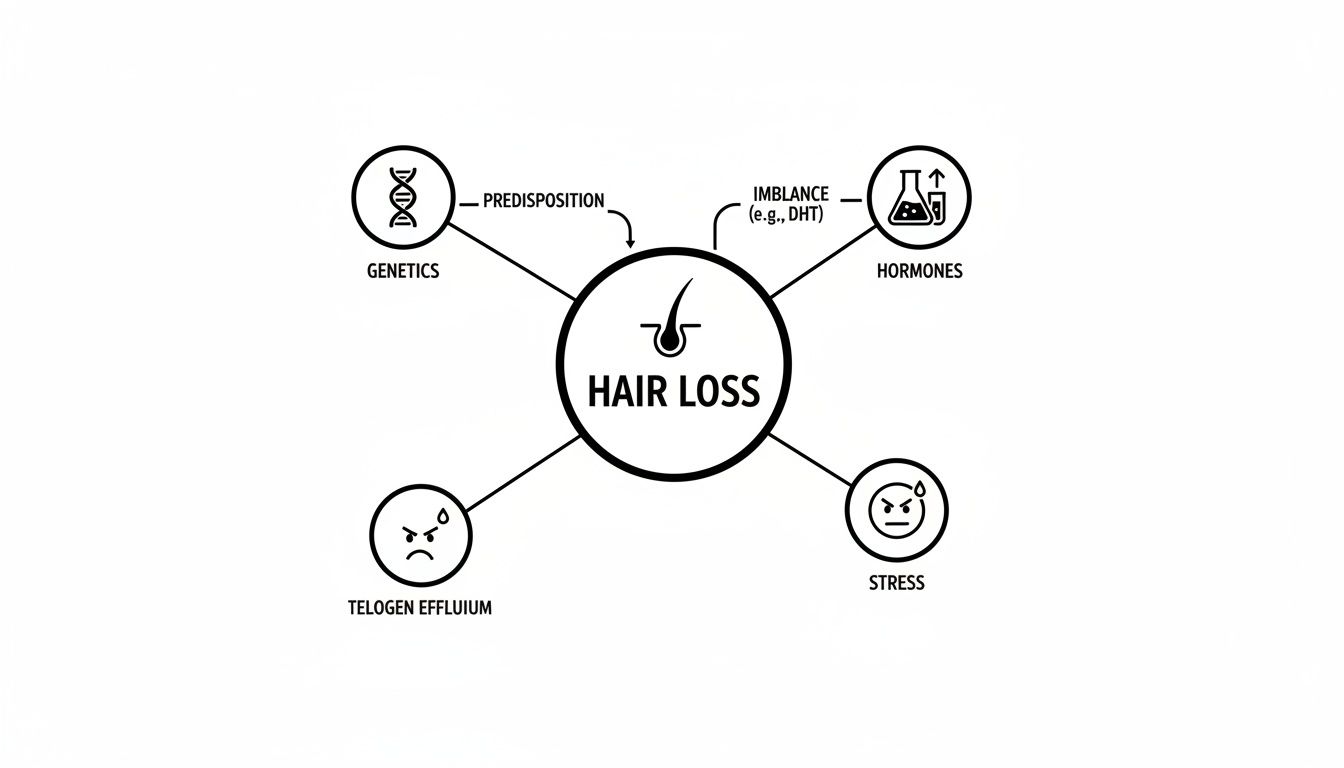
As you can see, genetics, hormones, and stress are all interconnected, and each one directly impacts the health of your hair follicles.
To make it easier to pinpoint what might be going on, here’s a quick rundown of the most common triggers and what to look for.
Common Hair Loss Triggers and Their Early Signs
| Hair Loss Trigger | What It Is | Early Warning Signs |
|---|---|---|
| Genetics | Hereditary pattern hair loss that shrinks follicles over time. | A gradually widening part, a receding hairline, or thinning at the crown. |
| Hormonal Shifts | Changes due to pregnancy, menopause, or thyroid issues. | Sudden, diffuse shedding all over the scalp; hair feels less dense. |
| Telogen Effluvium | Stress-induced shedding from illness, surgery, or emotional trauma. | A noticeable increase in hair fall 2-3 months after the stressful event. |
| Nutrient Deficiencies | Lack of key vitamins and minerals like iron, zinc, or biotin. | Brittle, dry hair and slow growth, often paired with overall shedding. |
| Traction Alopecia | Damage from tight hairstyles that pull on the follicles. | Thinning and breakage around the hairline and temples; scalp soreness. |
Spotting these signs early gives you a huge advantage in getting ahead of the problem.
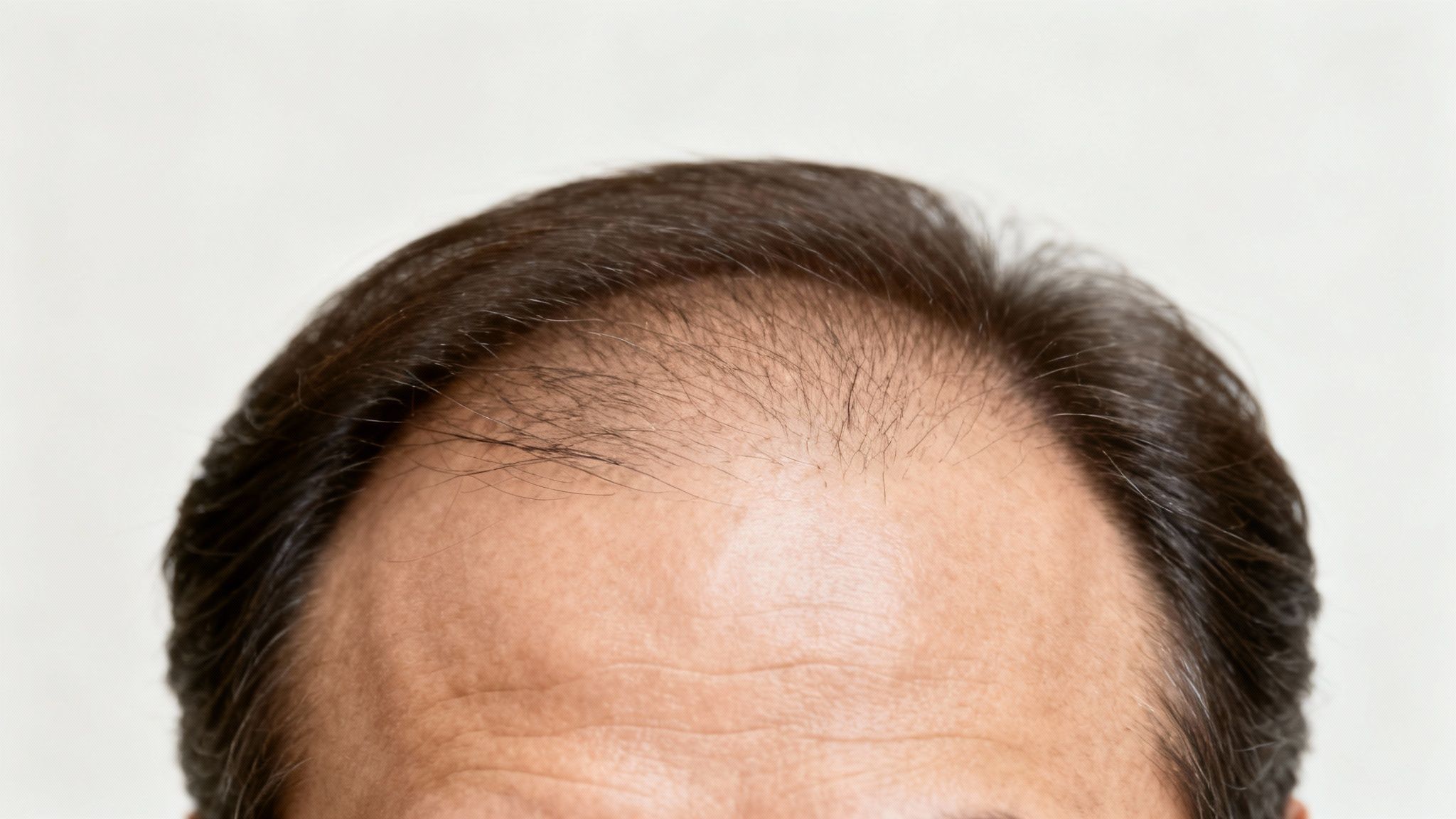
Recognizing the Early Warning Signs
Catching hair thinning early is crucial. If you start to notice your part looks a little wider, you can see more scalp than you used to, or your ponytail feels noticeably thinner, it's time to pay attention.
Another big clue is finding way more hair on your pillow or in the shower drain than your usual 50-100 strands per day. Don't ignore these signals.
The numbers are staggering: up to 85% of men and 40% of women will face some kind of hair loss in their lifetime. By age 30, a quarter of men are already seeing thinning, showing just how important it is to be proactive.
Deeper Health Connections
Sometimes, hair loss is your body’s way of waving a red flag about a deeper health issue. What’s happening inside your body can show up on your head.
Thyroid imbalances, for example, are a notorious cause of thinning hair. If you have other symptoms, it’s worth getting checked out so you can understand your thyroid function test results. Nutrient deficiencies are another common culprit—a lack of iron, zinc, or biotin can really disrupt your hair follicles.
If you suspect there’s a medical reason behind your hair loss, your best bet is always to talk to a professional. You can learn more by understanding hair loss due to health reasons in our detailed guide.
Building Your Daily Hair and Scalp Care Routine
A solid defense against hair thinning isn't about complicated rituals. It really comes down to simple, consistent habits. Small tweaks to your day—from how you wash your hair to the products on your shower shelf—can create an environment where hair doesn't just survive, it thrives.
Think of your scalp as the soil in a garden. If the soil isn't healthy and nourished, you can't expect what grows from it to be strong. This is all about making practical, sustainable changes that pay off in the long run.
Gentle Cleansing Is Non-Negotiable
How you wash your hair matters more than you think. Scrubbing too aggressively or using harsh shampoos can strip your scalp of its natural oils, leading to irritation and inflammation—two of the worst things for your hair follicles. The goal is to get your hair clean without causing collateral damage.
First, turn down the heat. Super hot water can dehydrate your scalp and make your hair brittle. Stick to lukewarm water for washing, and if you can brave it, a quick cool rinse at the end helps seal the hair cuticle, adding shine and protecting each strand.
Next, take a look at your shampoo. Sulfates create a big lather, but they can be incredibly harsh, especially for a sensitive scalp.
Key Takeaway: Switching to a sulfate-free shampoo is one of the best moves you can make for your hair. It cleanses without stripping, helping your scalp maintain its natural moisture balance and preventing the kind of irritation that can accelerate hair fall.
This simple change keeps your scalp calm, which is the ideal environment for healthy growth. Grasping the direct link between a healthy scalp and hair growth is fundamental to any prevention plan.
Smart Detangling to Minimize Breakage
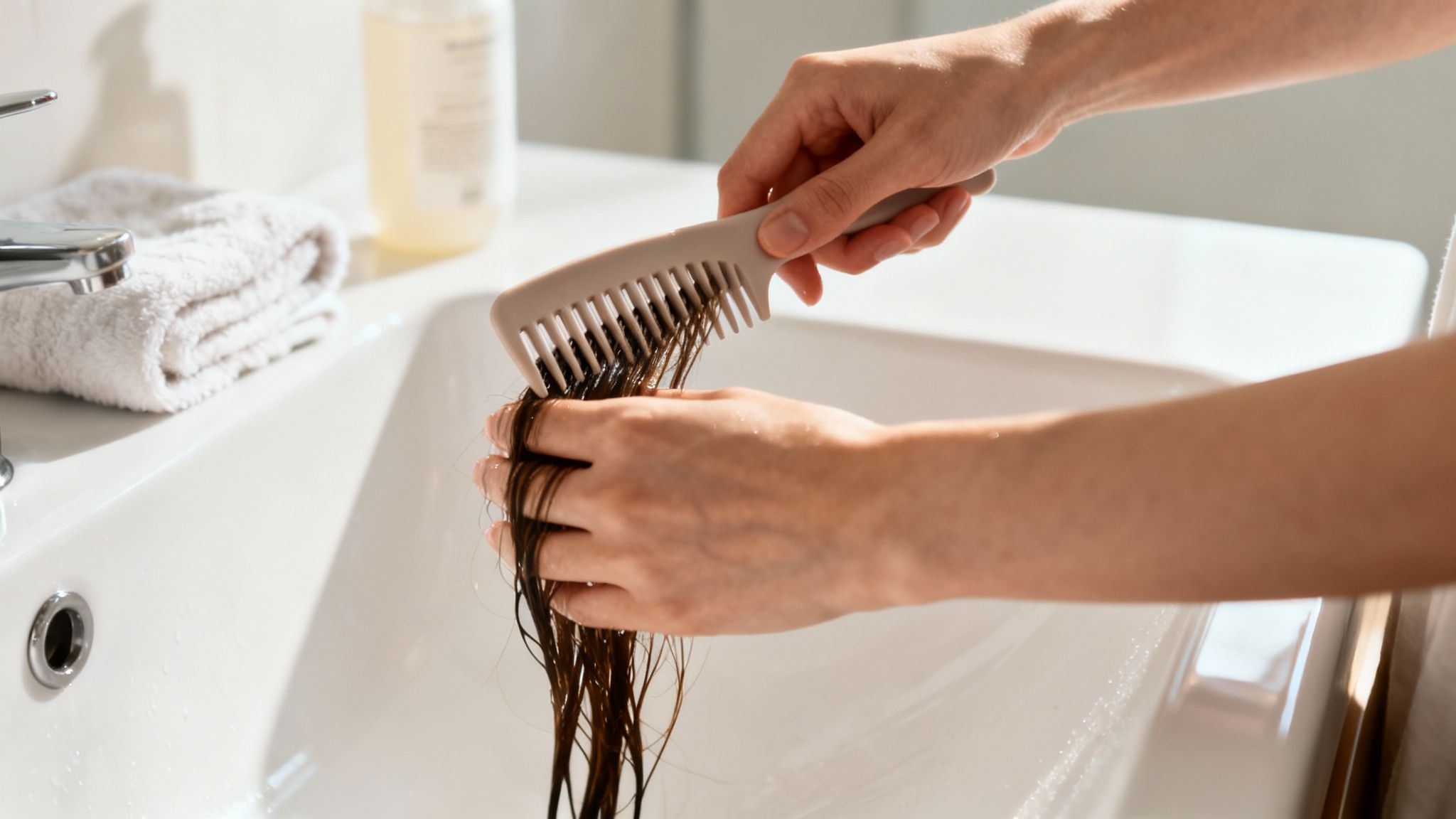
Hair is at its weakest when wet, making it incredibly easy to snap. Ripping a brush through wet, tangled hair is a recipe for unnecessary shedding and damage you can easily avoid.
Here’s the right way to get the knots out:
- Always Use Conditioner First: A good moisturizing conditioner or a leave-in spray provides "slip," letting a comb glide through with minimal resistance.
- Grab a Wide-Tooth Comb: Your best tool for the job is a wide-tooth comb, which gently works through knots without yanking hair from the root.
- Work from the Bottom Up: Instead of dragging the comb from scalp to tip, start combing at the ends. Once the ends are clear, move up an inch or two and repeat, gradually working your way to the roots. This technique removes tangles without putting stress on your follicles.
This mindful approach dramatically cuts down on mechanical breakage, which people often mistake for actual hair loss.
Create a Scalp-First Mindset
Your daily routine needs to prioritize your scalp. A clean, stimulated scalp is crucial for encouraging strong growth. A buildup of excess oil, dead skin, and product gunk can clog hair follicles, disrupting the natural growth cycle.
Try to work a gentle scalp massage into your shampoo routine. Using just the pads of your fingertips (never your nails!), apply light to medium pressure in small circles across your entire scalp for a couple of minutes. This feels amazing, helps deep-clean, and boosts blood flow, delivering more oxygen and vital nutrients right to the follicles.
By folding these simple practices into your daily life, you're building a powerful defense that supports your hair from the root.
How Morfose Helps With Hair Loss Prevention
When you’re trying to prevent hair loss, the products you use every day can either help or hurt. An effective formula does more than just clean; it delivers powerful nutrients to your scalp and strengthens every strand from the inside out. That’s the Morfose philosophy—creating specialized solutions that address the root causes of thinning and build the perfect foundation for healthy growth.
It’s about smart, science-backed combinations of ingredients like biotin, keratin, and collagen that work together to restore your hair’s vitality. Let's dig into how specific Morfose products can become your best allies in the fight for fuller, stronger hair.
Fortify and Nourish with Targeted Ingredients
The secret to seeing real results is in the formula. To reduce shedding and encourage new growth, you need products that protect the hair you have and stimulate your follicles for the future.
We pack our Morfose products with powerhouse ingredients known for their restorative properties:
- Biotin (Vitamin B7): A cornerstone of hair health, Biotin plays a crucial part in producing keratin—the protein your hair is made of—improving its strength and elasticity.
- Keratin: Think of this as the building block of your hair. When hair becomes damaged, it loses keratin, making it weak and prone to breakage. Keratin-infused products help patch up the structure, reducing thinning from snapped strands.
- Collagen: A hero for hair, collagen provides the amino acids needed to build hair protein and helps protect follicles from damage. It also supports the elasticity of your scalp, which is critical for healthy growth.
Consistently using products with these ingredients gives your hair the resources it needs to stay strong and anchored.
Recommended Morfose Solutions for Hair Loss
Navigating the world of hair loss products can feel overwhelming. To help you zero in on what your hair really needs, we've put together a quick guide to match our specialized formulas to your unique challenges.
| Your Concern | Key Ingredients to Look For | Recommended Morfose Product Line |
|---|---|---|
| Dryness & Breakage | Milk Proteins, 12 Amino Acids | Milk Therapy |
| Weak, Brittle Strands | Collagen, Keratin, Biotin | Collagen Line |
| Scalp Health & Buildup | Gentle Cleansers, Balancing Formulas | Ossion Professional |
| Targeted Hair Fall | Biotin, Herbal Extracts, Keratin | Scalp Treatment (Anti-Hair Loss) |
By choosing products that directly address the underlying causes of thinning, you're not just washing your hair—you're feeding it exactly what it needs to thrive.
For a powerful, direct-to-scalp approach, the Morfose Scalp Treatment Anti-Hair Loss Shampoo is a fantastic place to start. It’s specifically made to cleanse gently while delivering nutrients that support follicle health. You can see how our Anti-Hair Loss Shampoo revitalizes the scalp and why it's a client favorite.
Fueling Your Hair from The Inside Out
Truly healthy hair starts long before you step into the shower. While the right products work wonders on the outside, what you eat and how you live build strong, resilient hair from the ground up.
Your hair follicles are like tiny factories. To manufacture strong hair, they need the right raw materials—protein, vitamins, and minerals. This isn't about a restrictive diet, but about making smart additions to your plate that support your whole body.
The Building Blocks of Strong Hair
Your hair is made of a protein called keratin. If you don't get enough protein in your diet, your body can't produce enough keratin. The result? Weaker, more brittle hair that's more likely to shed. Prioritizing protein is a non-negotiable for anyone wondering how to prevent hair loss.
A few key micronutrients are also critical for your hair growth cycle:
- Iron: This is a big one. Iron helps your red blood cells carry oxygen to your follicles. Low iron (anemia) is a common reason for hair thinning, especially for women.
- Zinc: Zinc is essential for hair tissue growth and repair. It also helps keep the oil glands around your follicles working properly.
- Biotin (Vitamin B7): Famous for a reason, biotin helps kickstart keratin production and can increase how fast your follicles grow.
Packing your plate with these nutrients gives your hair the best possible shot at growing thick and strong. For a deeper look at what to add to your grocery list, check out our guide on the best nutrient-packed foods for healthy hair.
Eating for Healthier Hair
You don't need to overhaul your entire life overnight. Small, consistent changes add up.
Try adding a handful of spinach to your morning smoothie for iron, snacking on pumpkin seeds for a hit of zinc, or making sure you're getting eggs or salmon a few times a week for a fantastic source of both protein and biotin.
Key Takeaway: What you eat directly builds the structure of every single strand on your head. A balanced diet loaded with protein, iron, and zinc is your most powerful first line of defense against preventable hair thinning.
How Your Lifestyle Affects Your Hair
Your daily habits have a bigger impact on your hair than you might think. Two of the biggest culprits that can throw your growth cycle out of whack are chronic stress and not getting enough sleep.
When you're constantly stressed, your body pumps out more of the hormone cortisol. High cortisol levels can push a huge number of your hair follicles into the "resting" phase, leading to a noticeable shed a few months later. This is a real condition called telogen effluvium.
Sleep is when your body does its repair work. Skimping on quality sleep messes with the production of crucial hair-growth hormones.
Even simple stress-busters like a daily walk, a few minutes of meditation, or just scheduling five minutes of quiet time can help get cortisol in check. Prioritizing 7-9 hours of quality sleep each night gives your body the downtime it needs to regenerate, which means healthier follicles and stronger hair growth.
When to See a Professional for Hair Loss
A solid home routine is a powerful first line of defense, but sometimes, figuring out how to prevent hair loss requires an expert eye. While daily care and the right products make a huge difference, certain signs are a clear signal that it’s time to call in a professional.
Getting professional help from a dermatologist or trichologist (a hair and scalp specialist) means you get an accurate diagnosis and access to treatments you can't get over the counter.

Signs It’s Time to Book an Appointment
It can be tough to distinguish normal shedding from a more serious issue. Don't wait if you notice any of these red flags.
- Sudden or Rapid Hair Loss: If you're suddenly losing clumps of hair or see a dramatic increase in shedding over a short time, a professional needs to investigate.
- Patchy Hair Loss (Alopecia Areata): Finding smooth, coin-sized bald patches on your scalp or body is a classic sign of an autoimmune condition.
- Scalp Pain, Itching, or Inflammation: Redness, burning, scaling, or persistent itching could signal a scalp condition that needs medical treatment.
- A Rapidly Receding Hairline or Widening Part: While gradual thinning is common, a fast-moving change warrants a professional opinion.
- Hair Loss with Other Symptoms: If your hair thinning comes with fatigue, weight changes, or skin issues, it could be linked to an underlying medical condition.
What to Expect From a Professional Consultation
A visit to a dermatologist or trichologist is a fact-finding mission. They will likely perform a thorough examination of your scalp and ask about your medical history, diet, and stress levels.
In some cases, they might recommend:
- Blood Tests: To check for nutrient deficiencies, hormonal imbalances, or thyroid problems.
- A Pull Test: The doctor gently tugs on a small section of hair to see how many strands come loose.
- A Scalp Biopsy: In rare instances, a tiny sample of scalp tissue is examined under a microscope to diagnose specific conditions.
This detailed approach identifies the root cause of your hair loss, which is essential for creating a treatment plan that works.
Demystifying Professional Hair Loss Treatments
Once a diagnosis is made, your doctor will walk you through your options. These treatments often go beyond what you can find in stores.
Professional Insight: Many effective treatments work by stimulating dormant hair follicles or blocking the hormones that cause them to shrink. The key is finding the right treatment for your specific type of hair loss.
Some of the most common medical-grade treatments include:
- Topical Minoxidil: This is an FDA-approved, over-the-counter treatment that doctors often recommend first. It works by increasing blood flow to the follicles.
- Oral Medications: Prescription pills like Finasteride (for men) can block DHT, a hormone that is a primary driver of male pattern baldness.
- In-Office Procedures: Options like platelet-rich plasma (PRP) therapy and low-level laser therapy can help stimulate new growth.
For a deeper dive into what's available, you can explore some of the best hair regrowth treatments for a healthy scalp and learn how they can complement a strong at-home routine.
Got Questions About Preventing Hair Loss? We’ve Got Answers.
Let's wrap things up by tackling some of the most common questions about stopping hair thinning. Here are some clear, expert-backed answers to help you move forward with confidence.
Is It True That Washing My Hair a Lot Can Make It Fall Out?
This is a huge myth. The answer is a firm no. In fact, washing your hair regularly is one of the best things you can do for healthy growth by keeping your scalp clean and free from buildup.
Those hairs you see in the shower drain were already in the shedding phase. Washing just helps them on their way out. The real issue comes from aggressive scrubbing or harsh shampoos that can irritate the scalp and cause breakage that looks like hair loss. Stick to a gentle, sulfate-free cleanser for the best results.
Can Wearing Hats or Helmets Lead to Balding?
This is another common worry. The short answer is no—a clean, properly fitting hat isn't going to cause hair loss.
The confusion comes from a condition called traction alopecia, which is caused by constant, excessive pulling on the hair follicles from things like super-tight braids or ponytails. As long as your hat isn't so tight that it's yanking on your hair, you can wear it without concern.
Expert Insight: True, progressive hair loss originates deep within the follicle. External factors like a tight hat might cause some breakage from friction, but they don't cause the kind of genetic thinning seen in androgenetic alopecia.
How Long Will It Take to See Results from a New Routine?
When it comes to hair loss, patience is a necessity. Your hair grows in a long, cyclical process, and it takes time for positive changes to become visible.
You should realistically expect to wait at least 3 to 6 months before noticing any significant improvements from a new routine. This gives your follicles enough time to respond to treatments and for new, healthier hair to grow in long enough to make a difference. Consistency is truly the name of the game.
Are Hair Loss Prevention Treatments Just for Men?
Absolutely not. Millions of women experience significant hair thinning from causes like genetics, hormonal shifts (pregnancy or menopause), stress, and nutritional gaps.
Most prevention strategies and products are designed to work for everyone. The core principles of promoting scalp health, gentle handling, and proper nutrition apply across the board. If you're looking into different avenues, it's worth exploring which hair loss solution is right for you to match your specific situation.
Your Proactive Plan to Prevent Hair Loss
Preventing hair loss is an ongoing commitment, not a one-time fix. By understanding the causes, adopting a gentle hair care routine, nourishing your body from the inside out, and using targeted products, you can create the best possible environment for strong, healthy hair. Consistency is your greatest tool in building a resilient defense against thinning.
Ready to take the next step? Shop the Morfose Collection for Healthier Hair.
More on this topic: How to Stop Hair Loss: A Practical Guide to Regain Thicker Hair.
