
Your Guide to Natural Dry Hair Remedies at Home
To really nail down an effective dry hair remedy at home, you first have to play detective and figure out what’s causing the problem in the first place. Dryness happens when the protective outer layer of your hair, the cuticle, gets roughed up and lifts. When that happens, moisture escapes, and you're left with that brittle, straw-like feeling.
The fix isn't just about slathering on a product; it’s about a two-pronged approach: stop doing the things that cause damage and start actively putting moisture back in.
So, Why Is Your Hair So Dry Anyway?
Before you can bring brittle, lifeless hair back from the brink, you need to know what you’re up against. We all know that flat irons and blow dryers are major culprits, but plenty of other factors can just as easily strip your hair of its natural, protective oils.
Figuring out your personal triggers is the real first step to building a routine that actually works.
And if you’re dealing with this, you're definitely not alone. Dry and damaged hair is the single biggest concern for most people, accounting for a massive 39.5% of the market for conditioning treatments. It's a clear sign that we're all searching for real solutions.
Common Causes That Aren't Just About Heat Damage
Let’s look beyond the usual suspects. Here are some of the sneakier reasons your hair might feel like a desert:
- Your Environment: Things like hard water (heavy with minerals), constant sun exposure, and even just dry, low-humidity air can literally pull moisture right out of your hair strands.
- Harsh Product Ingredients: A lot of common shampoos use sulfates that are great at cleaning but too good—they strip away all the good oils along with the dirt. Becoming aware of potentially toxic chemicals in shampoos and other personal care products is a game-changer for long-term hair health.
- How You Wash: Washing your hair too often or with scalding hot water can throw your scalp's oil production out of whack. Those oils are your hair's natural conditioner.
- Diet and Hydration: It's a cliché for a reason—what you put into your body shows on the outside. If you're low on healthy fats, key vitamins, or just not drinking enough water, your hair will be one of the first places you see it.
Before you dive into a full treatment plan, you might be looking for some immediate relief. The table below offers quick, actionable tips for some of the most common signs of dryness.
Quick Fixes for Common Dry Hair Symptoms
| Symptom | Immediate Action | Why It Works |
|---|---|---|
| Frizzy, Flyaways | Apply a pea-sized amount of hair serum or oil to your palms, rub them together, and smooth lightly over the hair's surface. | This instantly smooths the hair cuticle, reducing friction and taming frizz without weighing hair down. |
| Dull, Lacks Shine | Finish your shower with a cool water rinse for 15-30 seconds. | The cold water helps seal the hair cuticle, creating a flatter, more reflective surface that bounces light and looks shinier. |
| Brittle Ends | Use a leave-in conditioner spray focused only on the mid-lengths and ends. | This provides a quick hit of targeted moisture where it's needed most, making ends more flexible and less prone to snapping. |
| Tangled & Rough | Mist hair lightly with a detangling spray before combing, starting from the bottom and working your way up. | The spray adds "slip" to the hair, allowing the comb to glide through knots easily and preventing further mechanical damage to the cuticle. |
These quick fixes can make a noticeable difference right away, but the real, lasting change comes from a consistent routine.
The key takeaway is that restoring moisture isn't just about a single deep conditioner; it's a holistic approach. It's about protecting your hair from daily aggressors while also nourishing it from the inside out.
Once you pinpoint whether your dryness is coming from your shower head, your styling habits, or even your diet, you can customize the remedies in this guide to get the best possible results. For a deeper dive into the science behind this, check out our guide on understanding and managing dry hair.
Your Weekly At-Home Hair Hydration Ritual
If you want to truly transform dry, brittle hair into something soft and hydrated, consistency is everything. This is where your weekly deep-conditioning ritual comes in. It's the cornerstone of any good hair repair plan, delivering an intense shot of moisture and nutrients that your daily routine simply can't match.
Think of it as hitting the reset button. All week long, things like heat styling, sun exposure, and even the air around you are constantly chipping away at your hair's moisture levels. This weekly treatment is your chance to replenish that lost hydration, giving your hair the deep nourishment it needs to feel strong and healthy again.
Before we get into the "how-to," it's helpful to see what we're up against. These are the common culprits that this ritual is designed to fight.
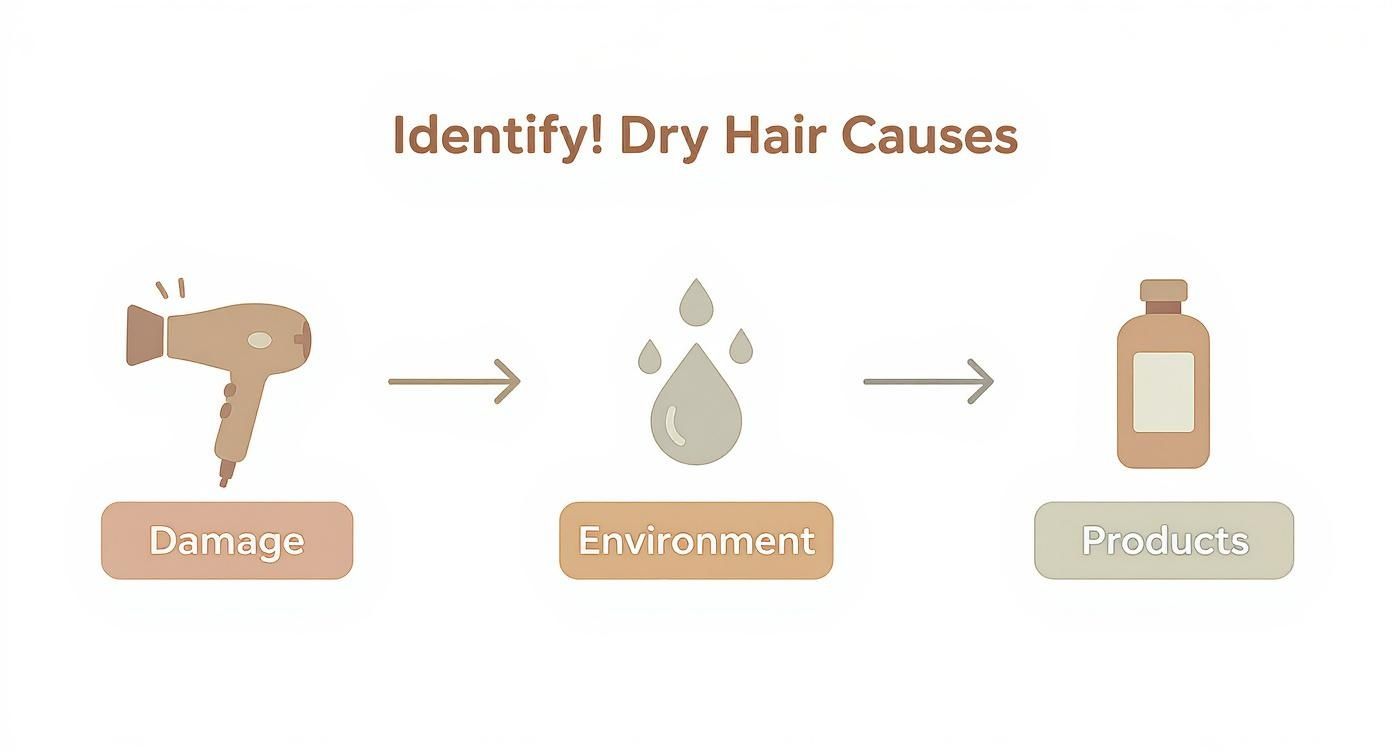
This weekly mask is your secret weapon, directly counteracting the damage from these daily stressors and helping restore your hair's natural balance.
Crafting Your DIY Hydrating Hair Mask
You don't need to spend a fortune on fancy products. Your kitchen is probably already stocked with some of the best dry hair remedies at home. These are simple, single-ingredient powerhouses that you can mix and match to create a custom treatment perfectly suited to your hair's needs.
Here are a couple of my favorite, no-fuss combinations to start with:
- For Intense Moisture: Mash up one ripe avocado and stir in two tablespoons of olive oil. Avocados are packed with fatty acids and vitamins that provide incredible nourishment, while the olive oil works to smooth the hair cuticle and lock in some serious shine.
- For Strength and Softness: Mix half a cup of plain, full-fat yogurt with a tablespoon of honey. The lactic acid in yogurt is great for the scalp, and its proteins help fortify the hair shaft. Honey is a natural humectant, which means it literally pulls moisture from the air into your hair.
To help you get creative in the kitchen, I've put together a quick guide on the benefits of some of the most popular DIY ingredients. This table breaks down what they do, who they're best for, and how to use them for maximum effect.
DIY Hydrating Hair Mask Ingredients and Benefits
| Ingredient | Primary Benefit | Best For Hair Type | How to Use |
|---|---|---|---|
| Avocado | Deep nourishment and moisture | Coarse, thick, or very dry hair | Mash until smooth and mix with a carrier oil like olive or coconut oil. |
| Yogurt | Strengthening and scalp health | Fine or normal hair that needs a protein boost | Use plain, full-fat yogurt on its own or mixed with honey. |
| Honey | Moisture retention (humectant) | All hair types, especially dull hair | Dilute with a small amount of warm water or mix into other masks. |
| Coconut Oil | Penetrating moisture and protein retention | Medium to coarse hair; can be heavy for fine hair | Warm it slightly to a liquid state and apply from roots to ends. |
These ingredients are fantastic starting points. Once you see how your hair responds, you can start experimenting with your own custom blends.
The Application Process for Maximum Impact
How you put the mask on is just as important as what's in it. You want to make sure every single strand gets coated so the nutrients can penetrate deeply and do their job. Just slapping it on won't give you the results you're looking for.
Here’s a simple process to ensure you get even coverage and amazing absorption:
- Start with Damp, Clean Hair: Don't apply it to sopping wet hair. Gently towel-dry your hair first until it's no longer dripping.
- Section It Off: This is a non-negotiable step! Divide your hair into four or more manageable sections. It makes it so much easier to get an even application without missing any spots.
- Apply from Ends to Roots: Always start with your mid-lengths and ends—they're the oldest and typically the driest parts of your hair. Once they're coated, work the leftover product up toward the roots.
- Let It Penetrate: After applying, pop on a shower cap or some plastic wrap. To take it to the next level, wrap a warm, damp towel over the cap. The gentle heat helps open up the hair cuticle, allowing the mask to sink in much more effectively. Give it at least 20-30 minutes to work its magic.
Pro Tip: Never apply a deep conditioner to soaking wet hair. The excess water creates a barrier, diluting the formula and preventing all those beneficial ingredients from actually getting into the hair shaft.
Once your time is up, rinse thoroughly with lukewarm or cool water—hot water can strip away the moisture you just added. For a more detailed walkthrough, our guide on how to deep condition hair at home has even more tips. Making this weekly ritual a habit is the single biggest step you can take to finally say goodbye to dry hair for good.
Building Daily Habits to Prevent Dryness
https://www.youtube.com/embed/cu8257t7QQ4
While a deep-conditioning treatment is a fantastic weekly reset, true, lasting hydration comes from the small things you do every single day. Think of your daily habits as your first line of defense against moisture loss, creating a shield that stops dryness from ever really taking hold.
Your weekly mask is like a deep, satisfying drink for a thirsty plant, but your daily routine provides the consistent light and humidity that allows it to truly thrive. When you nail these small adjustments, you'll find your weekly treatments work so much better.
Rethink Your Wash Day Routine
The way you wash your hair can either set you up for success or strip away the very oils you're trying so hard to preserve. It all begins with the temperature dial in your shower.
Scalding hot water feels amazing, I get it, but it’s a major culprit for dry hair. The heat blasts open the hair's outer cuticle layer, letting precious moisture escape. Instead, try using lukewarm water to shampoo and rinse. It’s more than enough to get your hair clean without being so harsh.
When you shampoo, concentrate the product on your scalp—that’s where the oil and buildup actually live. A gentle massage with your fingertips not only feels incredible but also gets the blood flowing, which is a must for a healthy scalp.
Pro Tip: One of the biggest mistakes people make is scrubbing their ends with shampoo. The suds that run down from your scalp are all you need to gently cleanse the rest of your hair. Any more than that just creates friction and damage.
After rinsing out the shampoo, gently squeeze the excess water from your hair before putting in your conditioner. This simple step stops the conditioner from getting diluted and ensures it can really do its job. Work it in from the mid-lengths to the ends, since this is the oldest, driest part of your hair.
Master Your Leave-In Products
Leave-in conditioners, serums, and oils are non-negotiable dry hair remedies at home. But just slapping them on won't cut it; how you apply them makes all the difference between hydrated locks and a greasy mess. The right amount always depends on your hair's density and texture.
Here’s a quick guide to get you started:
- Fine Hair: A dime-sized dollop of a lightweight serum or a few spritzes of a leave-in spray is plenty. Keep it focused strictly on the ends to prevent your roots from looking flat.
- Medium or Wavy Hair: Begin with a nickel-sized amount of a cream or oil. Rub it between your palms to warm it up before raking it through the bottom half of your hair.
- Thick or Coarse Hair: Don’t shy away from using a quarter-sized amount of a richer cream or oil. To get even coverage, it’s best to apply it in sections, working from the mid-lengths down.
The demand for products that deliver daily moisture is massive. The global hair and scalp care market is valued at over USD 111.01 billion, and a huge part of that is driven by people just like you looking for hydration. In North America, dry hair is a top complaint for 12% of consumers, making these products essential. You can dig into more of these consumer insights over at Precedence Research.
Ultimately, daily care is all about sealing in moisture and protecting your hair from the environment. These small, consistent actions are what lead to big results. To round out your routine, take a look at our guide on everyday hair care tips for gorgeous locks.
Using Natural Oils to Lock in Moisture
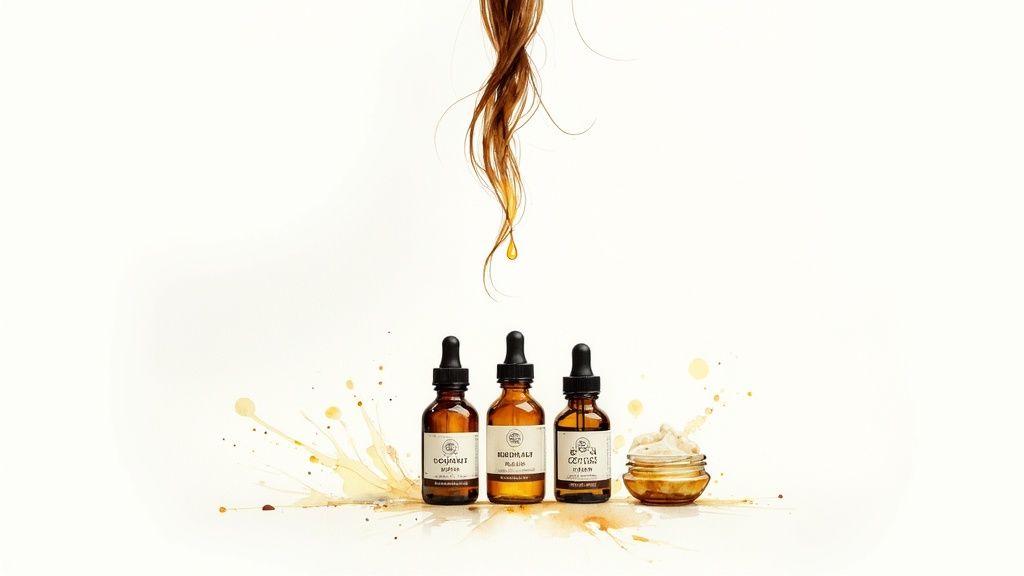
While weekly masks give your hair a deep reset, natural oils are your daily defense for keeping that moisture sealed in. Using oils correctly is one of the most effective dry hair remedies at home, but here’s something a lot of people miss: not all oils do the same job. You have to know the difference between oils that moisturize and oils that seal.
Think of it this way: moisturizing oils like coconut oil have smaller molecules. They can actually get inside the hair shaft to hydrate from within. On the other hand, sealing oils like jojoba or argan oil have larger molecules. They sit on the surface and create a protective barrier that stops moisture from escaping. It’s like putting a lid on a pot of water to keep it from evaporating.
This distinction is precisely why oils have taken over the hair care world. In fact, the hair oil market segment is projected to hold the second-leading market position, with stylists and experts recommending them as a go-to for fighting dryness and preventing breakage.
The LOC Method: A Simple Framework for Hydration
The LOC method—which stands for Liquid, Oil, Cream—is a game-changing technique for layering products to get moisture that actually lasts. It's particularly fantastic for anyone with very dry, porous, or coarse hair.
Here’s the simple breakdown:
- Liquid (L): Start with water or a water-based leave-in conditioner on damp hair. This is your foundation of pure hydration.
- Oil (O): Next, smooth a thin layer of a sealing oil over your hair. This is the crucial step that traps the water molecules you just added.
- Cream (C): Finish with a moisturizing cream or a rich butter, like shea butter. This final layer closes and smooths the hair cuticle, sealing everything in and adding extra softness.
This layering strategy ensures moisture gets locked deep inside the hair strand, keeping it feeling supple and hydrated for days, not just hours.
A huge mistake I see people make is slathering a heavy sealing oil directly onto bone-dry hair. Without a water-based product underneath, the oil just sits on top. It creates a greasy barrier that actually blocks moisture from getting in, leaving your hair feeling coated, not hydrated.
Using Oils as a Protective Treatment
Beyond just daily styling, oils are incredible when used as protective treatments. An overnight oiling session or a pre-shampoo treatment (a "pre-poo") can make a world of difference, especially for fragile, over-processed hair.
Overnight Oil Treatment
Before you go to bed, gently warm up a penetrating oil like coconut or olive oil and massage it into your scalp and through the lengths of your hair. Pay special attention to your ends—they’re the oldest and most damaged part of your hair. Pop on a silk scarf or a shower cap to protect your pillowcase and let the oil work its magic while you sleep. The next morning, shampoo and condition as usual. You’ll be amazed at how soft your hair feels.
Pre-Shampoo Treatment ("Pre-Poo")
If your hair always feels dry and stripped right after you wash it, a pre-poo is your new best friend. Simply apply oil to your dry hair for at least 30 minutes before you get in the shower. The oil forms a protective shield, preventing your shampoo from stripping away all of your hair’s natural, essential moisture. Your hair gets clean, but not parched.
Getting comfortable with the different roles oils can play is a cornerstone of great hair care. To dive deeper, check out our guide on the benefits and uses of natural oils for hair.
Adapting Remedies for Your Hair Type

The best part about using dry hair remedies at home is that you can completely customize them. Hair isn't one-size-fits-all, and a mask that someone with thick, coarse hair raves about might be a total flop for fine strands. It’s all about tweaking your approach to get the results you want without any nasty surprises.
Two hair types that need a little extra thought are color-treated hair and fine or thinning hair. Let's dig into how to make these remedies work for them.
Tips for Color-Treated Hair
When your hair is colored, the game changes. You need to pump in as much moisture as possible without accidentally stripping away that beautiful, expensive dye job. Coloring is a chemical process that can leave hair extra porous and thirsty, so gentle, smart care is non-negotiable.
Your go-to ingredients should be those that are heavy on moisture but light on anything acidic or clarifying. An avocado and olive oil mask, for example, is a fantastic choice—it delivers deep hydration without messing with your color.
Here are a few other things to keep in mind:
- Ditch the Acidic Rinses: I'd recommend skipping the apple cider vinegar rinses. While they have benefits, they can sometimes mess with the tone of your color over time.
- Target the Ends: Apply your masks and oils from the mid-lengths down. This is where color-treated hair is usually the most damaged and porous anyway.
- Cool It Down: Always rinse with lukewarm or cool water. This helps seal the hair cuticle, which does a brilliant job of locking in both moisture and your color.
A huge mistake I see people make is using a harsh, clarifying DIY remedy on colored hair. Things like baking soda might get rid of buildup, but they're way too aggressive for processed hair and can fade your color in just one wash.
Advice for Fine or Thinning Hair
If you have fine hair, the struggle is real. You're trying to add moisture without it looking like you haven't washed your hair in a week. The secret is picking lightweight ingredients that hydrate without leaving a heavy, greasy film.
Heavy hitters like shea butter or castor oil are usually too much for fine hair to handle. Instead, you'll want to reach for lighter oils that sink in quickly and won't make your hair go flat.
Lightweight Oils for Fine Hair:
- Grapeseed Oil: It's incredibly light and won't leave you feeling greasy.
- Jojoba Oil: A personal favorite because its molecular structure is so similar to our scalp's natural oils.
- Almond Oil: Packed with Vitamin E and absorbs beautifully.
When you're applying anything, start with a tiny amount—think less is more—and focus it strictly on your ends. Keep it away from your scalp. This way, you're treating the dry spots without killing your volume at the root.
These principles of tailoring care apply across the board; you'll see similar ideas when exploring natural methods for eyebrow care. And if your hair just seems to resist moisture no matter what, looking into https://themorfose.com/blogs/news/how-to-moisturize-low-porosity-hair might give you the specific techniques you need.
Common Mistakes and When to See a Professional
Even with the best intentions and a fridge full of hair-friendly ingredients, it's surprisingly easy to sabotage your own efforts. Some of the most common habits, often done with the goal of helping your hair, can actually make dryness much, much worse. Let's talk about what to watch out for so your at-home remedies can really work their magic.
One of the biggest culprits I see is protein overload. We hear "protein" and think "strength," which is true—to a point. But dousing your hair in egg or yogurt masks too often can make the strands rigid and brittle, leading to more breakage. If your hair starts to feel strangely stiff or like straw after a protein-heavy DIY treatment, that's your cue to pull back and focus purely on moisture for a while.
Another classic mistake? Hitting your hair with a flat iron or curling wand when it’s not completely dry. Even a little bit of dampness can cause the water inside the hair shaft to literally boil, creating tiny, destructive steam explosions within the cuticle. It's a recipe for serious damage. Always, always make sure your hair is 100% dry before a hot tool gets anywhere near it.
Knowing When Your Kitchen Isn't Enough
At-home care can be fantastic for managing dryness, but it's not a silver bullet for every hair problem. It’s so important to recognize when you've hit the limit of what a DIY mask can do and need to call in a professional. Think of your scalp as the soil your hair grows from—if the soil is unhealthy, the plant will never thrive.
You should seriously consider booking an appointment with a dermatologist or a certified trichologist if you notice any of these red flags:
- A Scalp That Won't Calm Down: I'm talking about severe flaking, a relentless itch, redness, or painful sores that just aren't getting better. This could point to conditions like seborrheic dermatitis or psoriasis that need a medical diagnosis.
- More Than Just Normal Shedding: We all lose hair, but if you're seeing noticeable thinning, bald patches, or a sudden and dramatic increase in shedding, it's time to get it checked out.
- You're Stuck in a Rut: If you've been diligently following a moisturizing routine for 4-6 weeks and see zero improvement in your hair's texture or dryness, a pro can help uncover what's really going on.
Remember, at-home treatments are great for managing the symptoms of dryness. A professional can diagnose the root cause, which could be anything from a hormonal imbalance to a nutritional deficiency—things no amount of avocado and olive oil can fix.
Your daily routine is like brushing your teeth; it's essential for maintenance. But when you have a real toothache, you go to the dentist. A good stylist can assess the level of damage and offer intensive, restorative salon treatments, while a dermatologist can tackle the medical side of scalp health and hair loss. The smartest thing you can do for your hair is to listen to it—and know when it's time to ask for help.
Ready to elevate your hair care routine with professionally formulated solutions? The Morfose Milk Therapy collection is designed to infuse dry, brittle hair with the moisture and amino acids it needs to feel soft, strong, and revitalized. Discover salon-quality results at home by exploring the full range at https://themorfose.com.
