

how to deep condition hair at home: get salon-worthy results
Giving your hair a deep conditioning treatment at home is one of the best things you can do for it. The basic idea is simple: after shampooing, you work a rich, nourishing mask through your damp hair, let it soak in for 20-30 minutes (maybe adding a little gentle heat), and then rinse it all out. It’s a simple ritual, but it’s the cornerstone of turning dry, brittle strands back into soft, healthy, resilient hair.
Your Foundation for Healthy Hair
Think of deep conditioning less as a product and more as a practice. Your daily rinse-out conditioner does a great job of smoothing the hair's surface for easy detangling. But a deep conditioner is different. It’s formulated to actually penetrate the hair shaft, delivering a concentrated dose of moisture or protein right to the core where damage lives. This is how you start to truly repair the wear and tear from heat styling, color treatments, and just daily life.
It's clear people are catching on to the importance of serious hair care. The global demand for deep conditioners has skyrocketed, now making up a massive 38.4% share of the entire conditioning market. Why the boom? It’s largely driven by people like us looking for real solutions for dry and damaged hair, which is a top concern for 39.5% of consumers.
Why It Matters For Your Hair
Knowing why this treatment works helps you nail the how. When hair doesn't get that deep nourishment, it becomes dehydrated and weak, which is the root cause of so many common hair frustrations.
- Restores Moisture Balance: It’s all about replenishing lost hydration. This is what combats frizz, dullness, and that crunchy, straw-like feeling.
- Improves Elasticity: Healthy hair has to have some stretch to it so it can bend without snapping. Deep conditioning gives it that bounce-back, making it way more resistant to breakage when you brush or style it.
- Enhances Shine and Softness: By sealing and smoothing the hair's outer layer (the cuticle), the treatment creates a smooth, reflective surface. The result? That glossy, touchably soft finish we’re all after.
A big mistake I see people make is leaving their regular conditioner on longer and hoping for the same result. They serve two completely different purposes. If you're curious, you can dive into the specifics in our guide on the difference between deep conditioner and regular conditioner.
To give you a quick overview, here are the core steps of any good deep conditioning routine.
Deep Conditioning at a Glance: The Core Steps
| Stage | Key Action | Primary Goal |
|---|---|---|
| Preparation | Shampoo and gently towel-dry hair. | To cleanse the hair and open the cuticle for better absorption. |
| Application | Apply the treatment evenly, focusing on mid-lengths to ends. | To ensure every strand receives the nourishing ingredients. |
| Processing | Let the product sit for the recommended time, using optional heat. | To allow the treatment to penetrate the hair shaft deeply. |
| Rinsing | Rinse thoroughly with cool or lukewarm water. | To remove excess product and seal the hair cuticle. |
Following these key stages will set you up for success every time you treat your hair.
The Two Pillars of Hair Health
Ultimately, healthy hair boils down to a delicate balance between two key components: moisture and protein. Your deep conditioning journey really begins the moment you figure out which one your hair is asking for.
Does it feel rough, dry, and gets tangled easily? It's thirsty and needs a big dose of moisture. Or is it feeling limp, mushy, or overly stretchy, almost like a wet noodle? That’s a cry for protein to help rebuild its internal structure.
Learning to read these signals is the first, most important step. It’s how you’ll choose the perfect treatment and get those salon-quality results right in your own bathroom. While deep conditioning is a huge part of the puzzle, you can also explore these other great tips to keep your hair healthy to build a complete care routine.
Finding the Right Deep Conditioner for Your Hair
Walking down the hair care aisle can feel a little overwhelming. You're faced with dozens of tubs and tubes, all promising to work wonders. But the real secret to a successful deep conditioning treatment isn't just grabbing any old mask—it's about picking the right one for what your hair is crying out for right now.
Honestly, this is the most important part of the whole process. Get this right, and you're set up for success.
The big decision you'll face is whether to go for a moisture-based treatment or a protein-based treatment. Think of it this way: moisture gives your hair hydration, making it soft and flexible. Protein, on the other hand, is like a scaffolding that rebuilds strength and structure. Using the wrong one won't just be ineffective; it could actually make things worse, leaving your hair either limp and greasy or stiff and brittle.
Is Your Hair Thirsty or Is It Weak?
The good news is that your hair is constantly giving you clues. You just need to learn how to read them. This is a simple skill that makes all the difference.
-
Signs Your Hair is Thirsty (Needs Moisture): Does your hair feel rough, dry, or frizzy? Is it a tangled mess? It's begging for a big drink of water. Look for ingredients like hyaluronic acid, glycerin, aloe vera, and natural butters or oils on the label.
-
Signs Your Hair is Weak (Needs Protein): If your hair feels mushy (especially when wet), looks limp, or just won't hold a curl or style, it needs some structural support. This is where protein comes in. You'll want to see ingredients like keratin, collagen, silk amino acids, or milk protein.
This little chart is a great visual for figuring it all out in a second.
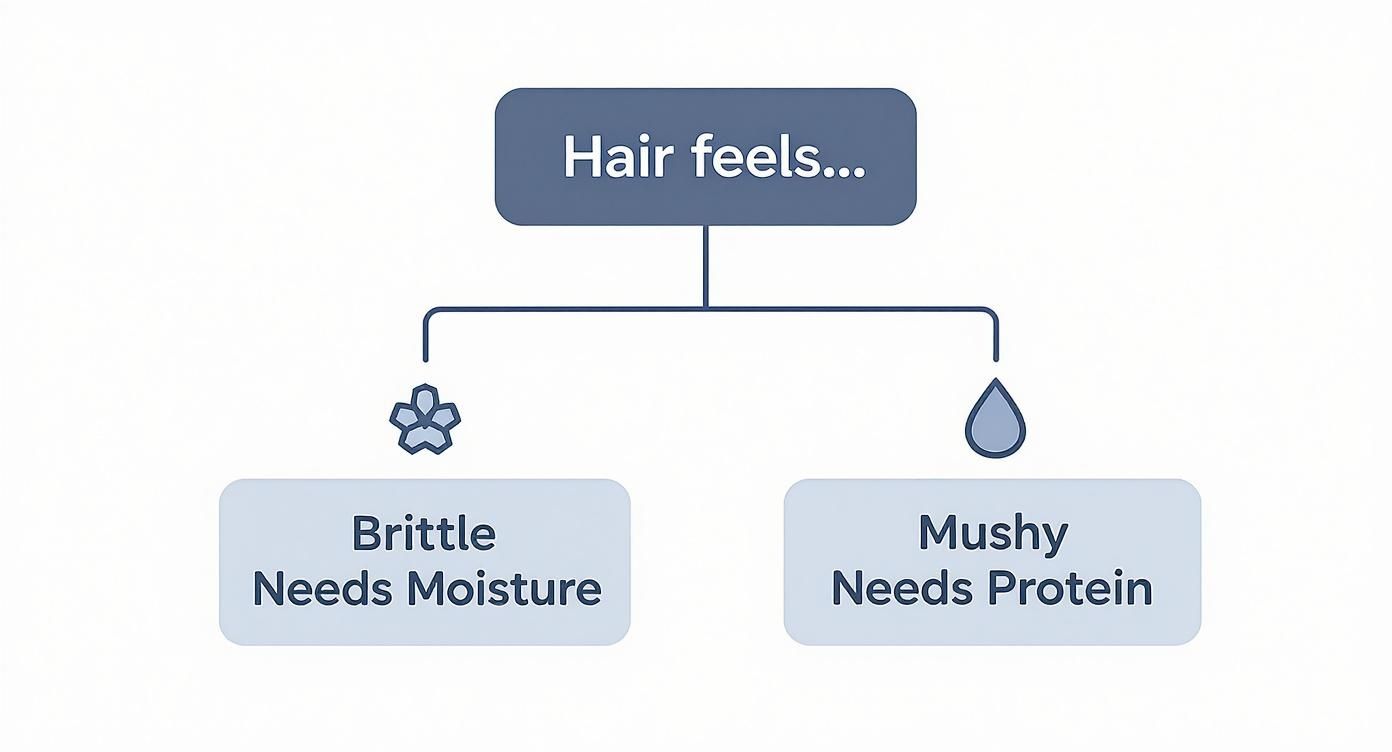
The takeaway here is simple: brittle hair is thirsty hair, while mushy, lifeless hair is weak hair.
Matching a Mask to Your Hair Type
Beyond the whole moisture-versus-protein thing, you also have to consider your hair's unique texture and density. The goal is always deep nourishment, but you never want to weigh your hair down in the process.
Let's take someone with fine, straight hair that gets oily pretty easily. They should reach for a lightweight, hydrating formula that rinses out completely clean. A super-rich, buttery mask would likely just leave their hair flat and sad.
Now, picture someone with coarse, high-porosity curls. Their hair needs a much thicker, richer cream loaded with oils and butters that can really penetrate the hair shaft and seal all that goodness in. If you want to dive deeper into this, you can learn more about how it affects product choice in our guide to understanding low vs. high porosity hair.
I see this all the time: people overdo it with heavy protein treatments and end up with "protein overload." This is a real thing. Your hair gets stiff, straw-like, and brittle because the moisture-protein balance is completely out of whack. If this happens to you, lay off the protein for a few weeks and focus only on moisturizing masks to get that softness back.
At the end of the day, finding your holy grail deep conditioner is all about listening to what your hair is telling you. Once you can identify whether it needs a drink of moisture or a dose of strength, you can pick a treatment that will give you those amazing, salon-fresh results right at home.
Mastering Your Application Technique

Alright, so you’ve picked out the perfect deep conditioner. Now comes the part that separates a decent hair mask session from a truly transformative one: the application. How you put the product in your hair is just as important as the product itself.
First things first, always work with clean, damp hair. I like to think of hair strands like a thirsty sponge. If it's totally dry, it won't absorb much, but if it's damp, it soaks up moisture beautifully. Shampooing first clears out any product residue, oil, or grime that could create a barrier and stop your treatment from getting where it needs to go.
After you rinse your shampoo, gently squeeze the water out with your hands or blot it with a microfiber towel. The goal is damp, not dripping. If your hair is sopping wet, the conditioner will get diluted and just slide off—a total waste of good product.
Sectioning for Success
Please, don't just scoop a handful of conditioner and plop it on top of your head. For every single strand to get the love it deserves, you have to work in sections. This is non-negotiable, especially if you have thick, long, or coily hair.
Grab a few clips and part your hair into at least four manageable sections. If you have a ton of hair, you might even need six or eight. By focusing on one section at a time, you ensure that even the hidden-away layers underneath get fully coated. This methodical habit is the key to learning how to deep condition hair at home like a pro.
Proper sectioning isn't just for treatments; it's a game-changer for your entire hair routine. If you're constantly fighting knots, check out our guide on how to get rid of tangles with Morfose Milk Therapy Leave-In Conditioner for more gentle management tips.
The Art of Even Distribution
So, how much product do you actually need? So many people go overboard here, thinking more is more. In reality, using too much just wastes product and can weigh your hair down. Start with a quarter-sized dollop for each section, adding a bit more only if you feel your hair hasn't been fully saturated.
Concentrate the product from the mid-lengths to the ends. This is the oldest part of your hair and almost always the most damaged. Your roots, being newer and healthier, usually don't need that intense level of conditioning.
After applying the conditioner to a section, grab a wide-tooth comb and gently glide it through from top to bottom. This simple step is a game-changer for two reasons:
- It guarantees even coverage. The comb mechanically pushes the product onto every last strand.
- It prevents breakage. Detangling while your hair is slippery with conditioner is the safest way to work through knots without snapping delicate strands.
If you have curly or coily hair, you have to try the "squish to condish" method. After applying the product, cup your ends in your palm and gently squeeze them upwards toward your scalp. This motion physically helps the hair cuticle absorb the conditioner and encourages beautiful curl clumps to form. It’s a tiny tweak in your technique that makes a huge difference in hydration and definition.
Boosting Your Treatment Results

So, you’ve applied your deep conditioner perfectly. Want to know a simple trick to make it work even harder? A little bit of gentle, consistent heat can take your treatment from good to absolutely amazing.
The science behind it is pretty simple. Warmth encourages the hair's outer layer—the cuticle—to lift slightly. This creates a clear path for all those nourishing ingredients in your conditioner to sink deep into the hair shaft where they’re needed most.
You don't need a fancy salon steamer to get this done. Just trapping your body's own warmth is often enough to make a huge difference in how well the product absorbs.
Simple Ways to Add Heat at Home
Creating a warm, moist environment for your hair is much easier than it sounds. One of the most effective methods is simply covering your conditioner-coated hair with a basic plastic shower cap. It’s that easy. This little step traps your natural body heat, creating a mini-sauna effect that helps open up the hair cuticle.
Looking for an even bigger boost? Try this technique:
- First, pop on a plastic processing cap or a standard shower cap.
- Next, grab a towel, dampen it with hot water, and wring it out well so it's not dripping.
- Finally, wrap the warm, damp towel over your capped head.
The combination of your body heat and the warm towel creates a gentle, steamy environment that’s perfect for maximum absorption. Understanding the benefits of moist heat therapy really highlights why this works so well. The same way it helps relax muscles, moist heat is incredibly effective at helping that conditioning goodness sink right in.
It's a similar principle used in other popular hair rituals. For instance, our guide on how to do a hot oil treatment for natural hair also relies on warmth to get the best results.
How Long Should You Wait?
Timing is everything here, and it’s definitely not one-size-fits-all. The sweet spot for your treatment really depends on your hair's unique porosity and texture. Letting the conditioner sit for just the right amount of time ensures you get all the benefits without accidentally over-moisturizing.
The general rule of thumb is 20-30 minutes, which works great for most hair types. But if your hair is on the finer side or has high porosity, you might find that 15-20 minutes is all you need, especially when you're adding heat.
On the flip side, if you have low-porosity hair that tends to resist moisture, extending your treatment to a full 30 minutes with some gentle heat can be a game-changer. That extra time gives the product a much better chance to get past those tightly-sealed cuticles.
Finding Your Perfect Frequency
How often you should deep condition comes down to your hair's current health and what it’s telling you it needs. The goal is to maintain that happy moisture-protein balance without overwhelming your strands.
Here’s a general schedule you can start with and adjust as you go:
- For Severely Damaged or Dry Hair: A weekly treatment is your best bet to restore hydration and strength.
- For Moderately Healthy Hair: Aim for a deep conditioning session every two weeks to maintain softness and fend off future damage.
- For Healthy Hair: A monthly treatment is often all you need to keep your hair in top shape.
Ultimately, you have to listen to your hair. If it starts feeling a bit limp or too soft, you might be overdoing it. But if it’s feeling dry and brittle again, you know it’s time for another session.
Nailing the Finish: Your Post-Treatment Routine
Alright, the timer's gone off. Don't rush this part—what you do next is what makes all that waiting worthwhile. These final steps are all about locking in the goodness, sealing the hair cuticle, and making sure that softness and shine stick around for days, not just hours.
First things first: the rinse. Turn the tap from warm down to cool or lukewarm. This isn't just for a refreshing finish; that cooler water encourages the hair cuticle, which you opened with warmth to let the treatment in, to lie flat and close back down. Think of it like closing a door to keep all the good stuff inside. A smooth, sealed cuticle is what gives you that incredible light reflection and stops frizz in its tracks. Keep rinsing until your hair feels clean, not slippery.
How to Lock It All In
With the mask rinsed out, your hair is primed and ready. You’ve just given it the main course, and now it’s time for the finishing touches that will protect your efforts.
Start by gently squeezing out the excess water with a microfiber towel or even an old, soft t-shirt. Whatever you do, don't scrub your hair like you're drying a car. That aggressive rubbing will just rough up the cuticle you just worked so hard to smooth down, inviting frizz right back in.
Now's the perfect time for a lightweight leave-in conditioner. This acts as a protective shield for your freshly treated hair. It helps with detangling (which is a lifesaver), adds a continuous layer of light moisture, and preps your hair for styling. If you have curly or coily hair, a great leave-in is non-negotiable for getting that definition and keeping your pattern happy.
To really seal the deal, finish with a few drops of a quality hair oil or serum. Warm it up between your palms and smooth it over your mid-lengths and ends.
Honestly, this final sealing step is what separates a good deep conditioning session from a truly great one. The oil creates a final barrier that stops all that lovely moisture from escaping into the air, keeping your hair feeling incredible for much longer.
Common Missteps to Sidestep
Even with the best products, a few common slip-ups can totally undermine your results. Just being aware of them can make all the difference.
- Leaving Protein Treatments On Too Long: This is a big one. While moisture masks are pretty forgiving, leaving a protein treatment on for longer than the directions say can backfire, making your hair feel stiff and brittle. Stick to the clock on those.
- Using Super Hot Water: Rinsing with scalding hot water feels nice, but it can strip away the very moisture you just put in, leaving your hair feeling parched. Always finish with a cool or lukewarm rinse.
- Applying to Dirty or Dry Hair: Slapping a deep conditioner on top of product buildup is like trying to water a plant with a plastic bag over it. The treatment can't get through. Always, always start with clean, damp hair to give the product a clear path to do its job.
Got Questions? Let's Talk Deep Conditioning
Even when you think you've got your routine down, little questions can pop up. Let's clear up some of the most common things people ask so you can feel totally confident in your at-home hair treatments.
"Can I Just Leave My Deep Conditioner on Overnight?"
This is probably the number one question I hear. It seems logical, right? More time should mean more benefits. But this is one case where you can definitely have too much of a good thing.
Leaving a mask on for hours and hours can lead to something called hygral fatigue. It’s a fancy term for what happens when the hair cuticle swells with too much water, making it weak, stretchy, and prone to snapping.
Your mask is designed to work its magic in 20-30 minutes. If you really want to supercharge your treatment, use that time to add a bit of gentle, even heat. It's much safer and way more effective.
"Why Does My Hair Feel Stiff or Brittle After a Treatment?"
Ah, the classic sign of a protein-moisture mix-up. If your hair feels crunchy or rigid after a deep conditioner, you've likely given it a heavy dose of protein when what it was really crying out for was moisture. It's a surprisingly common mistake!
The fix is simple: for your next few wash days, switch to a purely moisturizing mask. Your goal is to rehydrate and soften the hair. Look for ingredients like glycerin or hyaluronic acid. Once your hair feels soft and pliable again, you can reintroduce protein carefully.
For a deeper dive into finding the right moisture-rich formula, our guide on the best masks for damaged hair is a great place to start.
"Is a Deep Conditioner Really Different From My Regular Conditioner?"
Absolutely. Think of it like this: your daily rinse-out conditioner is like a lightweight topcoat. It smooths the surface of your hair to make it manageable and easy to detangle right now. It works on the outside.
A deep conditioner, on the other hand, is a true treatment. Its concentrated formula is made to actually penetrate the hair shaft and deliver powerful nutrients from the inside out. It's about long-term repair and building resilience, not just a quick, surface-level fix.
Ready to give your hair the professional-level care it deserves? Explore the complete collection of targeted treatments at Morfose and find the perfect deep conditioner to restore strength, moisture, and shine to your hair today. https://themorfose.com
More on this topic: Your Ultimate Guide on How to Deep Condition Hair.
