
how to make hair shiny and soft: Quick tips for glossy locks
Chasing that enviable, touchably soft hair with a mirror-like shine is far more achievable than you might think. It all boils down to a consistent routine that does three things really well: sealing the hair cuticle, locking in moisture, and clearing away anything that's making it look dull.
By weaving a few key habits into how you wash, treat, and style your hair, you can turn lackluster strands into the luminous, healthy-looking hair you've been aiming for.
The Real Reason Your Hair Lacks Shine
We all want that glossy, soft-to-the-touch hair, but the path to getting it often feels like a frustrating guessing game. Here’s the thing: shine isn't just for show. It's a direct reflection of your hair's health. When your hair looks dull and feels rough, it’s basically sending out an SOS that something is out of whack.
To find a real solution, you have to get to the root of the problem. The secret to shiny, soft hair is all about the condition of the hair cuticle, which is the outermost protective layer of each strand.
Think of healthy cuticles like smooth, tightly-laid shingles on a roof. When they lie flat, they create a uniform surface that reflects light beautifully, giving you that incredible glossy finish.
Common Causes of Dull, Rough Hair
So, what causes those "shingles" to get roughed up? Several culprits can lift and damage the cuticles, scattering light instead of reflecting it.
You're likely dealing with one or more of these common issues:
- Chronic Moisture Loss: When hair is dry and dehydrated, it doesn't have the internal moisture it needs to keep those cuticles sealed shut.
- Product and Mineral Buildup: That film you sometimes feel? It's often residue from styling products, silicones, or even minerals from hard water. This coating completely blocks shine.
- Heat and Chemical Damage: Overdoing it with hot tools or chemical treatments like coloring and bleaching physically blasts the cuticle open, leaving it porous, weak, and rough.
A lot of people don't realize how much their tap water affects their hair. If you feel like you're fighting a losing battle against dullness, it might be worth looking into how to get rid of hard water at home to stop mineral buildup in its tracks. For a deeper dive, our guide on how to revive dull hair and restore its shine has even more targeted tips.
The global hair care market was valued at approximately USD 96.7 billion as of 2025, with projections showing it could climb to USD 128.7 billion by 2034. A huge driver of this growth is the demand for products that do more than just clean—they enhance texture and shine, from shampoos to serums.
Ultimately, getting that soft, shiny hair isn't about finding a single magic potion. It's about building a simple, sustainable routine that nurtures your hair from the inside out. This guide is designed to walk you through exactly how to do that, from picking the right products to mastering styling techniques that amplify shine.
Finding the Right Products for Your Hair
Let's be honest: using the "right" products is the cornerstone of shiny, soft hair. But what is "right," really? It's entirely personal. The shampoo that gives your best friend a mirror-like shine might leave your fine hair feeling greasy and flat. The secret is to stop guessing and start playing detective with your own hair.
I like to think of hair like fabric. Fine, straight hair is like silk—it needs delicate, lightweight formulas that won't crush it. On the other hand, coarse, curly hair is more like wool; it's thirsty for rich, moisturizing ingredients to stay soft and defined. This simple mindset shift can make navigating the product aisle so much easier.
Decoding Your Hair's Unique Profile
Before you can pick the perfect Morfose products, you have to get real about your starting point. Is your hair porous and weak from that last balayage, crying out for protein? Or is it pretty healthy but just gets frizzy at the first sign of humidity?
Let’s look at a few common hair situations:
- Fine and Weighed Down: If your hair gets oily fast and falls flat by noon, heavy creams are not your friend. You need products that clarify and add volume without residue.
- Coarse and Thirsty: Does your hair drink up conditioner like it's water? That means it’s craving rich, emollient-based formulas packed with nourishing oils and butters.
- Bleached and Fragile: Chemical treatments are rough on hair structure. To bring it back to life, you'll need repairing ingredients like collagen, keratin, and amino acids to rebuild strength and seal that roughed-up cuticle.
- Oily Scalp with Dry Ends: This is a classic combo! It just requires a two-pronged attack. Use a balancing shampoo that cleanses your scalp without stripping your ends, then follow up with a rich conditioner applied only from the mid-lengths down.
This simple chart can help you figure out if dullness is coming from buildup or actual damage, pointing you toward the right fix.
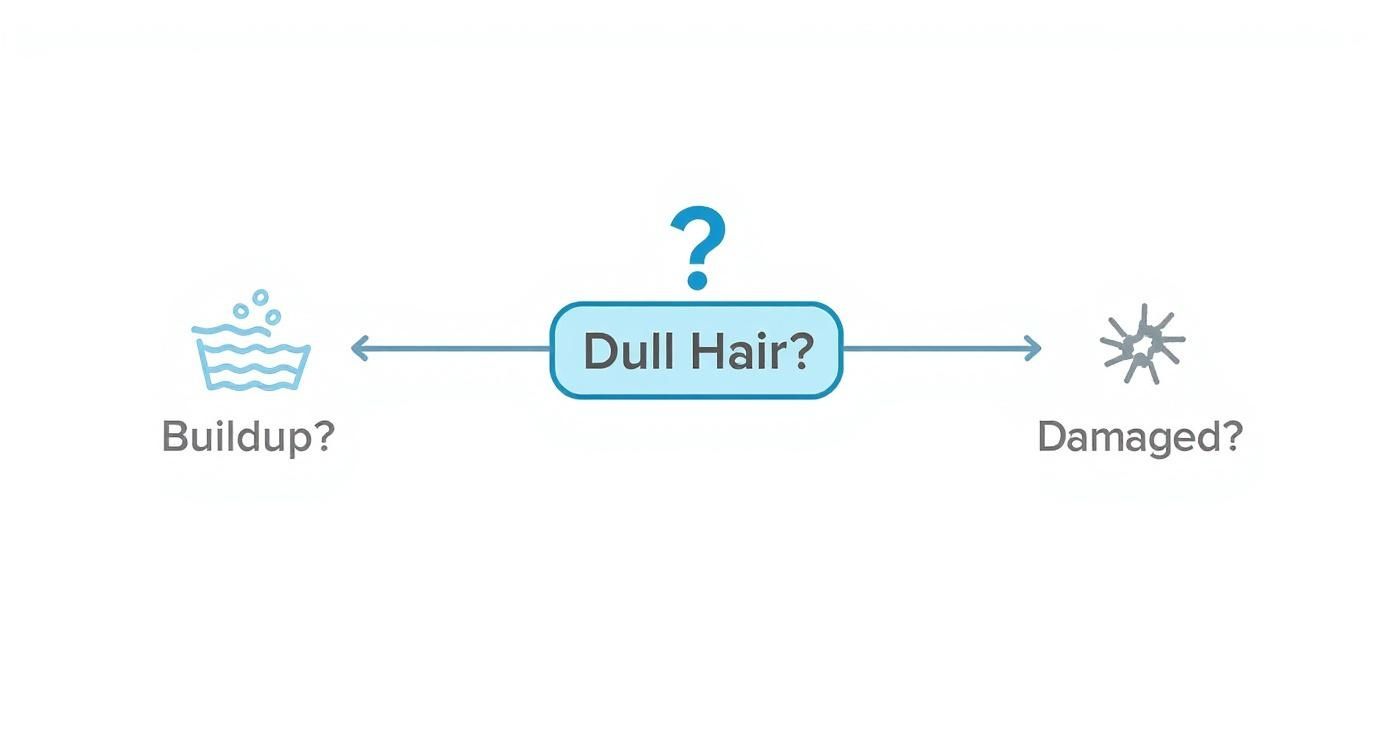
As you can see, dullness usually boils down to two culprits: buildup (which needs a good clarifying wash) or damage (which needs deep repair). Knowing which road to take is half the battle.
Selecting Your Shine-Boosting Arsenal
Once you know what your hair needs, you can build a routine that actually works. Don't just grab the first bottle that screams "shine!" on the label. Look for formulas that solve your specific problems, which is what truly creates the foundation for that glossy finish you’re after.
For instance, the Morfose Milk Therapy line is brilliant for putting moisture back into dry, brittle hair, while the Keratin series is all about reinforcing and strengthening damaged strands.
The real secret to soft, shiny hair isn't a single miracle product. It's a cohesive system where your shampoo, conditioner, and treatments all work in harmony to smooth the hair cuticle and lock in hydration.
When building out your routine, think about the little extras, too. Some brands even offer unique products like hair-specific body & linen mists that can add a final touch of fragrance and moisture.
For a deeper dive into matching ingredients to your hair type, check out our full guide on choosing the right hair care products. It’s the perfect resource for pairing your hair profile with the ideal Morfose solution and getting you on the path to your best hair yet.
Mastering Your Wash and Condition Routine
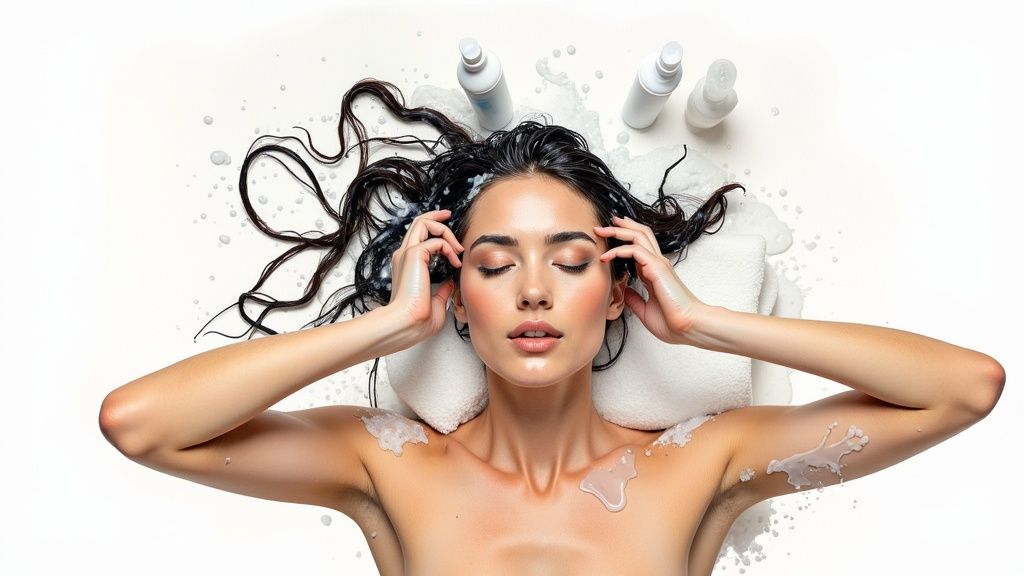
The path to incredibly soft, shiny hair really does start in the shower, and it’s all about nailing your technique. So many of us are guilty of just slapping shampoo all over and scrubbing away, but this common habit can actually strip the natural moisture from your fragile ends, leading to dullness and breakage. A small adjustment here makes a massive difference.
Before the shampoo even touches your hair, squeeze a quarter-sized amount into your palms and rub them together. This simple act of emulsifying the product creates a gentle lather and gets the ingredients working. It's a small step that feels more luxurious and is so much better for your hair.
The Scalp-First Cleansing Method
Now, focus that lather exclusively on your scalp. This is where oil and product buildup actually live, so it’s the only area that needs a direct, thorough cleanse. Gently massage the shampoo into your scalp with your fingertips—never your nails!—to lift away grime without causing irritation.
As you rinse, the suds will naturally travel down the lengths of your hair. This is all the cleansing your ends need. This targeted approach gets your scalp squeaky clean while protecting your ends from unnecessary friction and stripping.
The single biggest mistake people make is over-washing their ends. Remember, your scalp produces oil; your ends produce shine. Treat them accordingly.
How often you wash is just as important as how you wash. If you're not sure what's right for you, our guide on how often you should wash your hair can help you find the perfect schedule for balanced, healthy hair.
Strategic Conditioning for Maximum Softness
When it's time for conditioner, just think the reverse of your shampoo technique. Applying conditioner to your roots is a fast track to greasy, weighed-down hair that just won't cooperate.
First, gently squeeze the excess water from your hair. This step is crucial because it stops the conditioner from being diluted and makes it way more effective. Then, apply it generously from the mid-lengths down to the ends, which is where your hair is thirstiest.
Let it sit for at least a few minutes to really sink in. For a game-changing final touch, finish with a quick blast of cold water. This isn't just an old wives' tale; the cold temperature helps to slam the hair cuticle shut. This creates a smooth, flat surface that reflects light beautifully—an instant, free shine boost that seals in all your hard work. This simple switch is a vital part of learning how to make hair shiny and soft.
This shift towards healthier hair habits is happening everywhere. The global natural hair care market is on track to hit USD 16.99 billion by 2030, driven by our search for ingredients that smooth the cuticle and boost shine. It's no wonder nourishing oils like argan and coconut are so popular—they're celebrated for their ability to make hair feel silky and fight off frizz.
Deep Conditioning for Lasting Softness
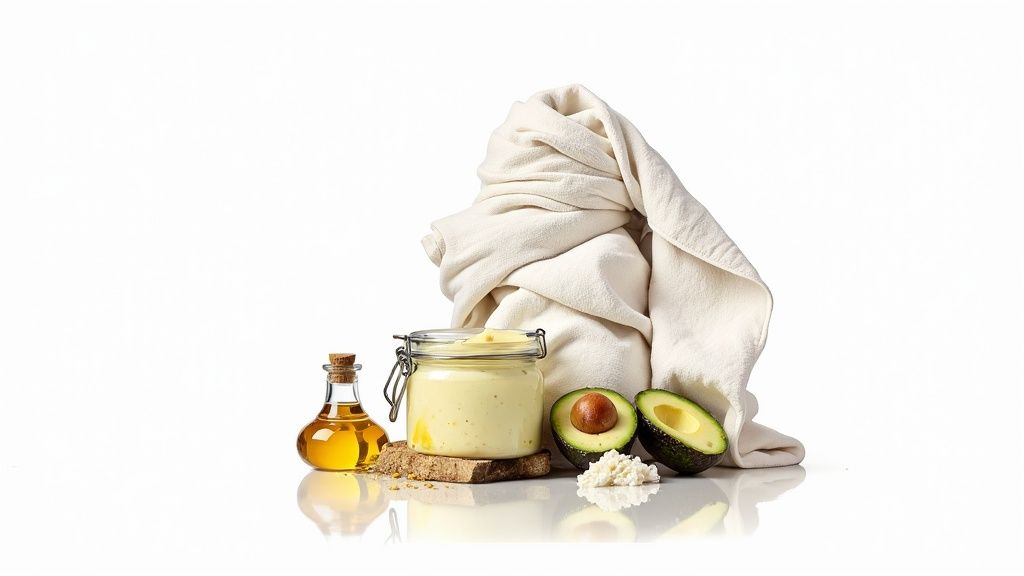
Think of your weekly hair mask as a reset button. It’s that one moment in your routine dedicated to delivering a potent dose of nourishment that your daily conditioner simply can't match. If you’re serious about achieving that lasting, touchable softness, a weekly treatment isn’t just a nice-to-have—it’s essential. This is your chance to give your hair the intensive repair it needs to smooth the cuticle from the inside out.
Getting the most out of your mask really comes down to technique. Always apply it to clean, damp hair. After shampooing, gently squeeze out the excess water with a towel. This simple step is crucial because it stops the mask from getting diluted, allowing all those incredible ingredients to penetrate the hair shaft properly.
Getting More from Your Mask
Want to take your treatment to the next level? Add a little heat. Once you've worked the mask through your hair, pop on a shower cap or wrap your head in a warm towel. This traps your natural body heat, which gently lifts the hair's cuticle layer, letting the conditioning agents sink in much, much deeper.
This one small tweak can turn a good treatment into a salon-worthy one. Just let it work its magic for the recommended time—usually 10 to 30 minutes is perfect—before rinsing with lukewarm water. For more pro tips on getting it just right, check out our guide on how to deep condition hair at home.
Protein or Moisture: What Does Your Hair Actually Need?
Not all masks are created equal, and grabbing the wrong one can stall your progress. Hair treatments typically fall into two main camps: moisture or protein. Understanding the difference is the key to giving your hair exactly what it’s thirsty for.
-
Moisture Masks: These are your go-to for hydration. They’re loaded with ingredients like hyaluronic acid, natural oils, and glycerin. If your hair feels dry, brittle, or just plain rough, a moisture mask will replenish that lost water and boost elasticity for a silky, supple finish.
-
Protein Treatments: Think of these as reconstructors. They contain ingredients like keratin and collagen that rebuild the very structure of your hair. If you’re dealing with damage from color, heat, or chemical treatments, a protein mask is what you need to fill in the gaps, stop breakage, and restore strength.
A classic mistake is reaching for a protein mask when all your hair really needs is a big drink of water. This can actually make it feel stiff. If your hair feels dry and snaps easily, it's craving moisture. If it feels mushy, weak, or overly stretchy when wet, that’s a clear signal it needs protein.
DIY vs Product-Based Hair Masks
Wondering whether to whip something up in your kitchen or invest in a professional formula? Both have their place. A DIY mask using ingredients like avocado and honey can provide fantastic natural nourishment. On the other hand, a professional mask from a brand like Morfose is scientifically formulated with concentrated, targeted ingredients for specific hair concerns.
Here’s a quick breakdown to help you decide what’s best for your routine:
| Feature | DIY Hair Mask (e.g., Avocado & Honey) | Professional Mask (e.g., Morfose) |
|---|---|---|
| Ingredients | All-natural, fresh, and fully customizable. | Formulated with specific concentrations of active ingredients like keratin or collagen. |
| Effectiveness | Great for general hydration and adding natural shine. | Designed for targeted repair, deep conditioning, and solving specific problems like severe damage or frizz. |
| Convenience | Requires preparation and can be messy to apply and rinse. | Ready to use, with a smoother consistency that’s easy to apply and wash out. |
| Cost | Typically inexpensive, using common kitchen ingredients. | Higher initial cost but offers concentrated, long-lasting results. |
Ultimately, the best choice depends on your hair's needs and your lifestyle. A DIY mask can be a wonderful, natural boost, while a professional mask offers reliable, high-impact results for more serious hair goals.
A Go-To DIY Mask for Natural Shine
For anyone who loves a natural approach, a homemade mask can work wonders. This simple avocado and olive oil recipe is one of my favorites for injecting moisture and shine back into tired hair.
The healthy fats and vitamins in avocado are amazing for deep nourishment. Paired with olive oil, a natural emollient, it’s the perfect combination for sealing the cuticle and leaving behind a beautiful gloss.
- Mash up half of a ripe avocado until it's perfectly smooth.
- Mix in one tablespoon of olive oil.
- Apply the mixture to damp hair, focusing on your mid-lengths and ends.
- Let it sit for 20-30 minutes, then rinse thoroughly and follow with your shampoo and conditioner.
It’s a simple, effective treatment that uses the power of natural ingredients to give your hair a soft, shiny finish.
Styling Techniques That Enhance Shine
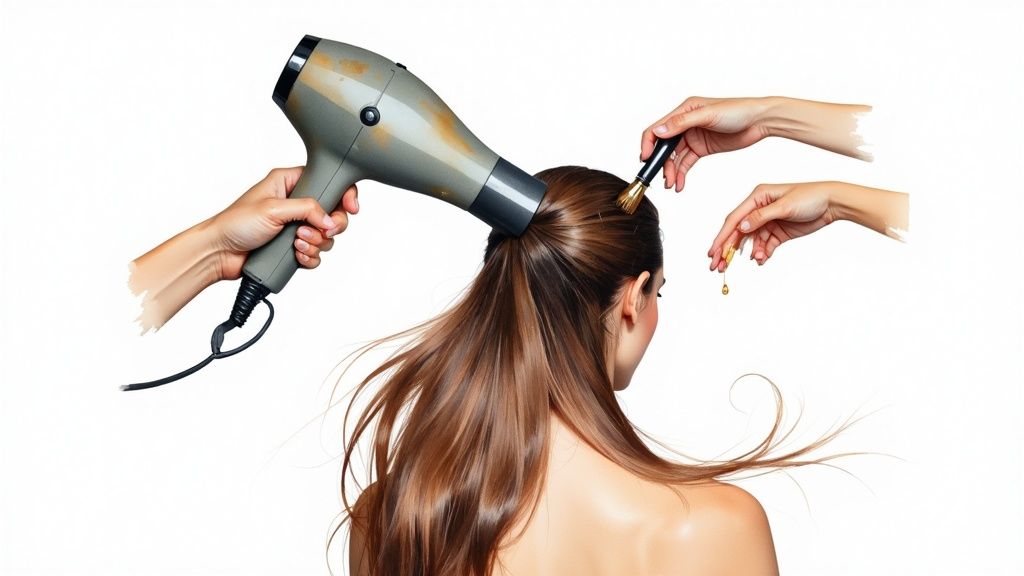
You can do everything right in the shower, but if you’re not careful with your styling, you can completely undo all that hard work. That incredible, light-reflecting shine we're all after comes from having a smooth, sealed hair cuticle. When the tiny scales on each strand lie flat, they create a uniform surface that bounces light beautifully.
This means your styling routine needs to be all about protecting that cuticle. The absolute, non-negotiable first move? Heat protectant. Before any hot tool even thinks about touching your hair, you have to shield it. A good spray creates a protective buffer, stopping high heat from blasting the cuticle open and causing damage that leads directly to dullness.
Smart Blow-Drying for a Polished Finish
This is where the magic really happens. A lot of people make the mistake of just blasting their hair with hot air from every direction, which is a one-way ticket to a frizzy, light-scattering mess. You have to work with your hair, not against it.
The secret is to always point the dryer’s nozzle down the hair shaft, following the direction of growth from root to tip. This simple motion physically encourages the cuticle to lie flat, creating that sleek, reflective surface we want. Using a round brush and working in manageable sections gives you way more control and helps smooth every last strand.
Once a section is dry, hit it with the cool shot button for a few seconds. This blast of cold air locks the smoothed-out cuticle in place, seriously boosting the shine factor.
Pro Tip: For the last few minutes of your blow-dry, switch to a boar bristle brush. The natural bristles are amazing at pulling your scalp’s own oils down the hair shaft. It’s like a free, perfectly-formulated shine serum.
If you’re a regular user of straighteners or curling wands, it's worth diving deeper into protecting your hair. We've actually put together a full guide on how to maintain healthy hair while using heat styling tools that’s packed with more in-depth strategies.
The Finishing Touch for Frizz-Free Gloss
That final step is what takes your hair from looking good to looking amazing. This is where you tame any lingering flyaways and add that final layer of gloss with a lightweight serum or a couple of drops of hair oil.
The golden rule here is that less is always more. Too much product will just weigh your hair down and make it look greasy instead of glossy.
Start with a pea-sized amount, warm it up between your palms, and then gently skim your hands over the surface of your hair. Focus on the mid-lengths and ends where hair tends to be driest. This simple move adds a gorgeous sheen and seals in moisture, keeping your hair touchable and soft all day long. It's the key to truly mastering how to make hair shiny and soft.
Your Hair Care Questions, Answered
Let's be honest, figuring out hair care can sometimes feel like a full-time job. You follow all the rules, but something's still not quite right. I get it. Here are some of the most common questions I hear, with practical answers to help you finally get the results you're after.
So, how often should you really be washing your hair? The "never wash your hair daily" rule is one of the biggest myths out there. There's no one-size-fits-all answer; it truly comes down to your hair type and your daily life.
If you have fine hair that gets greasy by the end of the day or you hit the gym hard, a daily wash with a gentle shampoo is probably what your scalp needs to stay healthy and balanced. On the flip side, if your hair is thick, coarse, or color-treated, stretching washes to two or three times a week is a much better strategy. This gives your natural oils a chance to do their job—keeping your hair moisturized, soft, and shiny without stripping them away.
Are Silicones Really the Enemy?
This is a huge debate, and the answer isn't a simple yes or no. Silicones get a bad reputation because some of the older, heavier types (like dimethicone) can build up on the hair strand. Over time, this creates a coating that can block out moisture, weigh your hair down, and make it look dull.
But the technology has come a long way. Many modern formulas use water-soluble silicones (look for ingredients with a "PEG-" prefix) that provide that amazing slip and frizz-smoothing effect without the dreaded buildup. They rinse away cleanly, so you get the shine without the baggage. The key is balance. If you love your silicone-based serums, just be sure to use a good clarifying shampoo every few weeks to hit the reset button.
Why Does My Hair Still Feel Dry After Using a Mask?
This is one of the most frustrating hair problems. You dedicate 20 minutes to a deep conditioning treatment, expecting silky-soft results, and instead, your hair feels just as parched as before. What gives?
Nine times out of ten, it’s one of two things. First, you might be using the wrong kind of mask. If your hair is crying out for moisture, but you’re giving it a protein-heavy treatment packed with keratin or collagen, it can actually make your hair feel stiff and brittle.
The most common mistake is misdiagnosing your hair's needs. If your hair feels brittle and snaps easily, it's begging for moisture. If it feels mushy or overly stretchy when wet, that's a clear sign it needs a protein boost to rebuild its structure.
The other culprit is often the application. Don't just slap a mask onto sopping-wet hair right out of the shower. Gently squeeze out the excess water with your hands or a towel first. This simple step stops the mask from getting diluted and allows it to actually penetrate the hair shaft and do its work.
Ready to build a routine that delivers consistent shine and softness? The Morfose collection is designed with targeted formulas to address every hair concern, from intense hydration to structural repair. Discover the perfect products to unlock your hair’s true potential. Explore the Morfose collection today.
