
How to Protect Hair From Heat Damage: A Complete Guide
Protecting your hair from heat isn’t just about one magic product. It’s a complete strategy: using a quality heat protectant, styling with the lowest effective temperature, and never applying heat to damp hair. Think of it as building a line of defense that shields your hair from moisture loss and structural damage.
Understanding How Heat Actually Damages Hair
To really get a handle on protecting your hair, you first need to understand what you're up against. Picture each hair strand as a sophisticated structure. It has a protective outer layer, the cuticle, and an inner core built from keratin proteins. When you hit it with high heat, you're essentially launching an attack on this delicate system.
First off, that intense heat rapidly boils away the water molecules locked inside the hair shaft. This sudden dehydration leaves your hair brittle and prone to snapping. It’s like taking a healthy, green plant and sticking it in the desert sun—it’s not going to end well.
Breaking Down Your Hair's Defenses
It’s not just about drying your hair out, though. The heat physically wrecks the hair's architecture. The cuticle, which is supposed to lie flat like shingles on a roof to seal in moisture and give you that beautiful shine, starts to lift and crack under the stress.
When the cuticle is compromised, you’ll start to see a few familiar problems:
- Frizz and Roughness: With the cuticle scales all raised and jagged, they catch on each other. The result? A rough, unmanageable texture we all know as frizz.
- Dullness: A smooth, flat cuticle reflects light beautifully, which is what gives healthy hair that coveted sheen. A damaged, uneven cuticle scatters light, making hair look dull and lifeless.
- Split Ends: All that continuous cracking and chipping eventually causes the hair strand to fray from the bottom up. Hello, split ends.
The Damage to Your Hair's Inner Strength
And the damage goes deeper than the surface. Extreme heat actually degrades the keratin proteins that give your hair its strength and elasticity. This process, called protein denaturation, permanently weakens the hair's internal structure. Once those protein bonds are broken, your hair becomes incredibly fragile and susceptible to breakage from something as simple as brushing.
While heat is a huge factor, it's just one piece of the puzzle. You can learn more about the top culprits of hair damage in our other guide.
The constant use of styling tools, especially flat irons, is one of the main reasons for this kind of cumulative damage. The global market for these tools was valued at USD 774.38 million in 2024 and is only expected to grow. That tells you just how common heat styling is. Despite their popularity, consistent use strips away natural oils and weakens the hair's core.
Knowing what's happening at a microscopic level really changes your perspective. You shift from just "doing your hair" to actively preserving its health. Every step you take, from spritzing on a protectant to dialing down the temperature, is a direct defense against this cycle of dehydration, cuticle damage, and protein breakdown.
Your Pre-Styling Heat Protection Playbook
Great styling starts long before you ever plug in your flat iron. Think of your pre-styling routine as the essential groundwork—it’s your first and best line of defense against the high temperatures to come. How you prep your hair will make all the difference between a style that shines and one that singes.
Let's start with the golden rule: Never, ever use a flat iron or curling wand on damp hair. When that intense heat hits a wet strand, the water inside literally boils, creating steam bubbles that permanently fracture your hair's internal structure. It’s a fast track to weak, brittle hair that’s prone to snapping.
This is exactly what happens on a microscopic level. Direct, unprotected heat essentially cooks the hair from the inside out.

As you can see, that heat cracks the protective cuticle layer, leaving the core of your hair exposed and vulnerable. Once that damage is done, it's incredibly difficult to reverse.
Finding the Right Heat Protectant for You
Choosing the right heat protectant is easily the most critical step in this entire process. These products are not optional; they are your hair's personal bodyguard. They create a thermal shield over the hair's cuticle, which helps slow down heat transfer and drastically reduces moisture loss.
It's a step more and more people are refusing to skip. The global market for hair heat protectants was valued at a massive USD 3.84 billion in 2024 and is expected to climb to USD 6.14 billion by 2032. That growth is fueled by people just like you who want gorgeous styles without sacrificing hair health.
But not all protectants are created equal. The key is matching the formula to your hair type.
- Sprays: These are the go-to for most people, and for good reason. They're lightweight, distribute easily, and won't weigh down fine to normal hair. Perfect for all-over coverage before you blow-dry or use a hot tool.
- Creams and Lotions: Got thick, coarse, or particularly thirsty hair? A cream-based formula will be your best friend. They offer a more substantial barrier and are often packed with moisturizing ingredients that smooth the cuticle and fight frizz.
- Serums: Serums, which are usually silicone-based, are fantastic for getting that glossy, super-smooth finish. They're brilliant for taming flyaways and sealing the look of split ends, but be careful—a tiny bit goes a very long way, especially on fine hair.
I always tell my clients to think of a heat protectant like sunscreen for their hair. You wouldn't lie on a beach for an hour without it, so why would you blast your hair with 400°F heat without a shield?
Your Guide to Morfose Heat Protectants
Picking the perfect product can feel overwhelming, so we've broken down our top Morfose heat protectants to help you find your match. Each one is designed with specific hair needs in mind, ensuring you get the protection you need for the style you want.
Choosing Your Morfose Heat Protectant
| Product | Best For Hair Type | Key Benefit | How to Use |
|---|---|---|---|
| Heat Shield Thermal Protection Spray | All hair types, especially fine to normal | Lightweight, invisible protection that doesn't weigh hair down | Mist evenly onto damp or dry hair from 6-8 inches away before using any heat tool. |
| Keratin Two Phase Conditioner | Damaged, brittle, or chemically treated hair | Fortifies with keratin to rebuild strength while protecting from heat | Shake well to mix phases. Spray onto damp hair before blow-drying or dry hair before styling. |
| Argan Two Phase Conditioner | Dry, dull, or frizzy hair | Deeply moisturizes with Argan oil for a soft, glossy finish | Shake to combine. Apply to damp or dry hair to add moisture, detangle, and protect. |
| Biotin Two Phase Conditioner | Thinning or weak hair prone to breakage | Strengthens hair follicles and promotes resilience with Biotin | Mix by shaking. Spray liberally on hair to fortify strands before heat application. |
This table should make it easy to pinpoint the best Morfose shield for your hair's unique needs. Whether you need a lightweight mist or a strengthening keratin boost, the right formula is waiting.
The Art of Application: How to Get Full Coverage
A quick, half-hearted spritz over the top layer of your hair just isn't going to work. For a heat protectant to do its job, it needs to cover every single strand. Any missed spots are left completely exposed to damage.
Here’s how to apply it like a pro:
- Prep Your Canvas. Before anything else, a few mists of a product like the Morfose Two Phase Conditioner can make all the difference. It helps detangle and smooth the hair, creating an even surface so your heat protectant can glide on without snagging.
- Section, Section, Section. Divide your hair into at least four parts. If your hair is thick, you might need six or eight. Working in small, manageable sections is the only way to ensure the product gets beyond the surface.
- Apply from Root to Tip. Take your chosen protectant and apply it thoroughly to each section. For sprays, hold the bottle about six inches away for an even mist. With creams or serums, rub a small amount between your palms and work it through the hair.
- Comb It Through. This step is non-negotiable. After applying the product, use a wide-tooth comb to distribute it evenly from root to tip. This guarantees no strand is left uncoated.
- Give It a Minute. Let the product sink in and dry for about a minute before you bring in the heat. This gives the protective ingredients time to form their shield around the hair shaft.
By making this playbook part of your routine, you’re not just styling—you're actively protecting the health and integrity of your hair. This prep work is the secret to getting stunning, long-lasting styles without the fallout. You can browse our full line of Morfose heat protection sprays to find the perfect shield for your hair. A few extra minutes now will keep your hair strong, healthy, and beautiful for years to come.
Getting Your Heat Styling Technique Right
Having the right products in your arsenal is a huge first step, but even the best heat protectant can't fully shield your hair from bad technique. The way you use your flat iron or curling wand—from the temperature you dial in to how you move it through your hair—is just as important as the prep work. This is where you can truly get that sleek, polished look without sacrificing your hair's health.
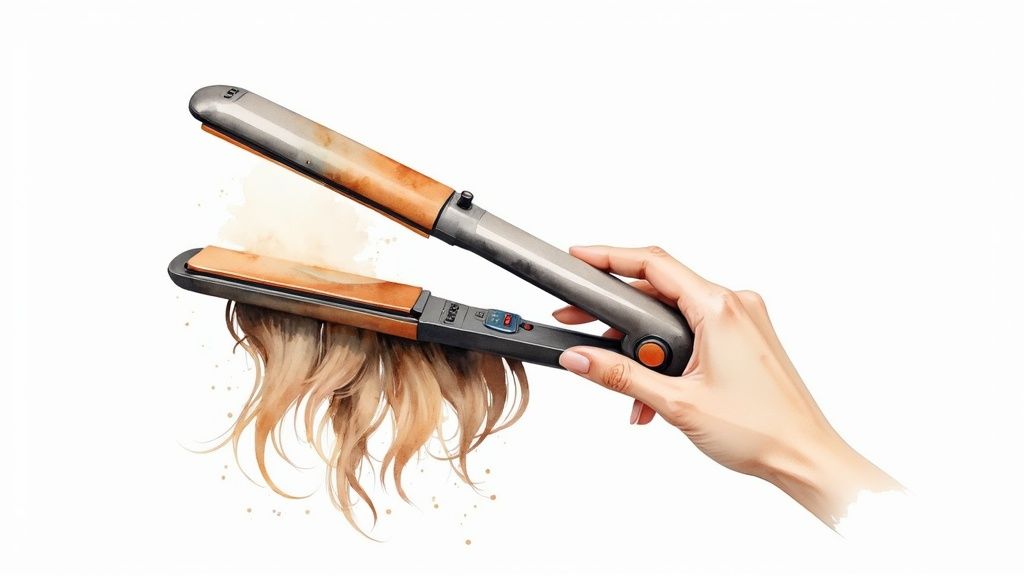
Let's bust a common myth right now: hotter isn't better. A sizzling-hot tool might seem faster, but it's a one-way ticket to fried, brittle ends. Every head of hair is different, so your heat settings should be, too.
Finding the Right Temperature for Your Hair
The goal here is simple: find the lowest temperature that still gets the job done effectively. This simple adjustment dramatically cuts down on heat exposure and stops you from accidentally cooking your hair.
Here’s a practical guide to finding that sweet spot:
- Fine or Color-Treated Hair: Your hair is more delicate, so play it safe. Stick to the 250-325°F (120-160°C) range. I always recommend starting at the absolute lowest setting and nudging it up only if you're not getting the results you want.
- Normal or Healthy Hair: You've got a bit more leeway. A good starting point is somewhere between 325-375°F (160-190°C). This is usually plenty of heat to style your hair efficiently without causing unnecessary stress.
- Thick, Coarse, or Curly Hair: Your strands are built tougher and often need a little more heat to become smooth and manageable. Aim for 375-425°F (190-220°C). Whatever you do, try to never go above 450°F (230°C)—that's the temperature where keratin proteins literally start to melt.
Think of these as starting points, not strict rules. If you can get a perfect, sleek finish at 350°F, there is zero reason to crank the dial up to 400°F. Your hair will thank you.
Master the One-Pass Rule
Once you've found your ideal temperature, it's all about technique. One of the worst things you can do is go over the same section of hair again and again. That's where the one-pass rule becomes a game-changer.
It’s exactly what it sounds like: straighten each section of hair with a single, slow, and steady pass. To make this work, you need to work with small sections, about one to two inches wide, so the heat can penetrate evenly.
If you move too quickly, you'll be tempted to go back for a second or third pass. But if you move too slowly, you risk scorching your strands. The key is to find that fluid, consistent motion from root to tip. It takes some practice, but it drastically reduces the time your hair is clamped between those hot plates. It's a skill right up there with learning how to master the art of blow-drying your hair at home.
Why the Material of Your Tool Matters
Finally, don't overlook what your styling tool is actually made of. It makes a huge difference. Cheaper tools with basic metal plates often heat unevenly, creating "hot spots" that can singe one part of your hair while leaving another section untouched.
Investing in a tool with better plate technology is one of the smartest things you can do for your hair's long-term health.
- Ceramic Plates: These are popular for good reason. They provide incredibly even heat and generate infrared heat, which is gentler because it styles the hair from the inside out.
- Tourmaline Plates: Think of this as an upgrade to ceramic. Tourmaline is a mineral that's crushed and coated over the plates. It releases negative ions that fight frizz by sealing the hair cuticle, which leaves you with a much shinier, smoother finish.
- Titanium Plates: These are the powerhouses. They heat up in a flash and hold a very consistent high temperature. While they are a favorite among pros, they are best suited for very thick, coarse hair and demand a careful, practiced hand to avoid damage.
By picking the right temperature, embracing the one-pass method, and using a quality tool, you can turn heat styling from a hair-damaging chore into a safe and effective part of your routine.
Post-Styling Care And Damage Restoration
The moment you turn off the flat iron isn't the end of the story. It’s actually the start of the recovery phase. What you do in the hours and days after heat styling is just as important as all the prep work you did beforehand. This is your chance to put moisture back in, strengthen weakened strands, and get your hair ready for the next round.
Think of it like this: heat styling is a high-intensity workout for your hair. You wouldn't finish a tough gym session and just walk away, right? Your muscles need to cool down and recover. Your hair is no different—it needs dedicated care to bounce back from the stress of high temperatures. Skipping this step is a fast-track to long-term damage that only gets harder to fix.
Go Deep To Replenish Lost Moisture
Heat’s number one victim is moisture. High temperatures essentially boil the water within your hair strands, leaving them parched and brittle. This is where intensive treatments like deep conditioners and hair masks become your best friends. They are absolutely non-negotiable.
These formulas are packed with concentrated ingredients that go way deeper than your everyday conditioner. They work to restore hydration, smooth down that roughed-up outer cuticle, and infuse your hair with the nutrients it’s craving. This targeted approach is a core part of learning how to protect hair from heat damage for the long haul.
It's no surprise that the demand for these types of products has exploded. The global market for conditioning hair treatments hit a staggering USD 8.0 billion in 2024, and the slice for dry and damaged hair accounts for almost 40% of that. This isn't just a trend; it's a clear sign that people understand proactive repair is key. You can dig into more data on this growing market on market.us.
Build Your Weekly Hair Repair Ritual
So, how often should you be using a hair mask? It really comes down to two things: how frequently you use heat and what shape your hair is in right now.
- Frequent Stylers (3+ times a week): Your hair is under constant stress. Make a deep conditioning mask a weekly habit to keep moisture levels topped up and prevent damage from accumulating.
- Occasional Stylers (1-2 times a week): A bi-weekly mask treatment should be plenty to keep your hair happy and balanced.
- Visibly Damaged Hair: If you're already seeing dryness, split ends, or breakage, it’s time for an intervention. Use a restorative mask twice a week for the first couple of weeks to give your hair a serious dose of TLC.
For an intense repair session, the Morfose Milk Therapy Hair Mask is a game-changer. It uses a potent mix of milk protein and 12 essential amino acids to nourish and rebuild from the inside out. If your hair is especially coarse or brittle, the Morfose Argan Hair Mask delivers a rich dose of hydration that helps bring back that soft, touchable feel.
Key Takeaway: Consistency is everything. A single hair mask won't magically undo months of damage. But making it a regular part of your routine builds resilience over time, making your hair stronger and better prepared for whatever you throw at it next.
To make it even easier, here’s a simple schedule you can adapt.
Weekly Hair Repair Schedule
This sample routine helps you weave restorative treatments into your week, counteracting the effects of regular heat styling without feeling overwhelming.
| Day | Action | Recommended Product | Goal |
|---|---|---|---|
| Day 1 | Wash & Deep Condition (Mask Day) | Morfose Milk Therapy Mask | Intense nourishment and repair |
| Day 2 | Rest Day (No Heat) | Leave-in Conditioner | Maintain moisture, reduce stress |
| Day 3 | Heat Style with Protectant | Morfose Heat Shield Spray | Style safely, minimize damage |
| Day 4 | Rest Day (Co-wash if needed) | Cleansing Conditioner | Gently cleanse without stripping oils |
| Day 5 | Second Mask Day (if hair is damaged) | Morfose Argan Hair Mask | Boost hydration and softness |
| Day 6 | Heat Style with Protectant | Morfose Heat Shield Spray | Style safely, minimize damage |
| Day 7 | Rest & Scalp Care | Scalp Serum | Promote healthy new growth |
This is just a template, so feel free to adjust it based on your hair's specific needs and your styling habits. The main goal is to build in those crucial "rest days" for recovery. And for more in-depth strategies, our guide on how to repair heat damaged hair is full of practical tips.
Seal The Deal With A Finishing Oil
Your final move after styling should always be to seal the hair cuticle. Think of a finishing oil as a protective topcoat. It locks in all the moisture you've worked so hard to add, smooths the cuticle for a brilliant shine, and creates a lightweight shield against humidity.
Forget the heavy, greasy oils from back in the day. Modern formulas are incredibly lightweight. Just a few drops can work wonders:
- Tame Flyaways: It instantly calms frizz by smoothing down the hair’s outer layer.
- Boost Shine: A sealed cuticle reflects light beautifully, giving you that glossy, healthy look.
- Add Softness: It makes your hair feel silky and amazing without weighing it down.
Put one or two drops into your palms, rub them together to warm the oil up, and then gently skim your hands over the mid-lengths and ends of your styled hair. This simple final touch doesn't just make your style look polished—it adds that last layer of defense, keeping your hair protected long after the styling tool is off.
Tailoring Heat Protection for Your Hair Type
When it comes to protecting your hair from heat damage, a one-size-fits-all approach is a recipe for disaster. Your hair's unique texture, thickness, and condition are the real determinants of what it needs to stay healthy.
Think about it: slathering a heavy cream on fine hair will leave it greasy and flat. On the other hand, a barely-there mist might as well be water on coarse, thick strands. Customizing your product choice and technique is the secret, ensuring your hair gets the defense it requires without any unwanted side effects.
Shielding Fine or Thin Hair
If you have fine hair, your mission is protection without the weight. Your strands are incredibly delicate and prone to burning, but heavy formulas will instantly make them look limp and lifeless. This is where lightweight products become your best friends.
You'll want to look for heat protectant sprays with a fine, watery mist. These create an effective thermal barrier without leaving behind any heavy residue. You want a shield that feels totally invisible but works hard behind the scenes.
A few tips to keep in mind:
- Be a Smart Shopper: Opt for water-based or alcohol-free sprays. Products like the Morfose Two Phase Conditioners are perfect because they detangle and protect without weighing hair down.
- A Little Goes a Long Way: A light, even mist is all you need. Concentrate on the mid-lengths and ends—they're the oldest and most fragile parts of your hair.
- Start Low: Always begin with your styling tool on the absolute lowest heat setting. Fine hair rarely needs high temperatures to style effectively, so you can always dial it up slightly if necessary.
Fortifying Coarse, Thick, or Curly Hair
On the other end of the spectrum, coarse, thick, or curly hair needs a much more substantial barrier. These hair types are often drier and more porous, which means they need serious help locking in moisture and stopping heat from penetrating too deeply. For this job, a simple mist just won’t cut it.
Cream-based heat protectants are a total game-changer here. These richer formulas pull double duty: they create a robust thermal shield while simultaneously infusing your hair with much-needed hydration. They help smooth the cuticle, fight off frizz, and ensure your style looks polished, not parched. It's also worth noting how your hair's structure affects product absorption; understanding the difference between low vs high porosity hair can make a huge difference.
For thick and curly textures, think of your heat protectant as more than just a shield—it’s also a styling primer. It smooths and preps the hair, making the whole process more efficient and cutting down on the number of passes you need with your hot tool.
Extra Care for Color-Treated or Processed Hair
Has your hair been colored, bleached, or chemically treated? If so, consider it in the high-risk category. These processes inherently damage the hair's protective cuticle, making it significantly more vulnerable to heat. For you, a good heat protectant isn't just about preventing future damage; it’s about preserving the health you have left.
Your hair needs a multi-pronged defense strategy, so look for products loaded with nourishing and reparative ingredients.
- Protein Power: Formulas with keratin, like the Morfose Keratin Two Phase Conditioner, are fantastic for fortifying weakened strands by filling in gaps along the cuticle.
- Moisture Infusion: Ingredients like amino acids and hydrating oils are crucial for replenishing moisture lost during chemical processing.
- UV Protection: Color-treated hair is also prone to fading from the sun. Many modern heat protectants include UV filters to help keep your color vibrant for longer.
By really dialing in on your hair’s specific needs—whether it's lightweight defense, intense moisture, or restorative care—you can choose the right products and techniques. This personalized approach is truly the key to getting the styles you love while keeping your hair healthy, strong, and resilient.
Got Questions About Heat Damage? We've Got Answers
Even with the best tools and intentions, sometimes you're left staring at your flat iron with a million questions running through your head. Getting clear on the facts can be the difference between gorgeous, healthy hair and a cycle of damage. Let's clear up some of the most common worries I hear all the time.
So, How Often Can I Actually Use Heat on My Hair?
This is the big one, and the honest-to-goodness answer is: it depends. There’s no universal rule, but your hair’s current condition is your best guide.
If your hair is in great shape—strong, healthy, and resilient—you can probably get away with heat styling two to three times a week. The key word here is if. You absolutely must use a high-quality heat protectant every single time, without fail. For anyone with fine, color-treated, or already fragile hair, your best bet is to pull back and aim for just once a week.
Your hair will tell you what it needs. If you notice it’s looking a little lackluster, feeling drier than usual, or you’re seeing more snaps and splits, that’s your signal. It’s time to ease up on the hot tools and give your hair some extra love with a deep conditioning treatment.
Is It Possible to Reverse Heat Damage?
I wish I could give a simple "yes," but it’s a bit more complicated than that. When a hair strand is fried to the point of splitting, that specific damage is permanent. You can’t magically fuse a split end back together.
What you can do, however, is make a massive difference in how your hair looks and feels, while also stopping the damage from spreading. This is where a smart repair strategy comes in.
- Bring in the Protein: Restorative products, like those in the Morfose Milk Therapy line, work by temporarily patching up the tiny gaps and holes in the hair's cuticle. Think of it like smoothing over a rough surface—it adds strength, cuts down on frizz, and gives the illusion of much healthier hair.
- Hydrate, Hydrate, Hydrate: Deep conditioners are all about putting moisture back where it belongs. When hair is hydrated, it’s more flexible and elastic, which means it’s far less likely to snap and break.
At the end of the day, the only true cure for severely damaged ends is a good haircut. Trimming off those split ends is essential because it prevents them from traveling further up the hair shaft, which lets you focus on keeping your new growth healthy from the start.
Do I Really Need a Heat Protectant Just to Blow Dry?
Yes. A thousand times, yes. This is one step you should never, ever skip.
A blow dryer might not feel as scorching as a 400°F styling iron, but don't be fooled. The prolonged exposure to hot air is what gets you. Without a protective barrier, the heat basically flash-boils the water molecules inside your hair strands. This creates tiny, damaging steam bubbles that can cause permanent fractures in your hair's internal structure.
Think of a heat protectant as a shield. It creates a thermal barrier that helps distribute heat more evenly and slows down the heating process. This gives your hair a chance to dry more gently, preventing that sudden, destructive moisture loss. Always use one, keep the dryer moving, and hit that cool shot button at the end to seal your cuticle for a smoother, shinier result.
Ready to build your ultimate defense against heat damage? Morfose offers a complete range of professional-grade heat protectants and restorative treatments designed to keep your hair strong, vibrant, and beautiful. Find your perfect match and style with confidence by exploring our collection.
