
What Causes Hair Breakage and How to Stop It for Good
We’ve all been there: you run a brush through your hair and hear that dreaded snap. Or you find a collection of short, ragged-looking strands on your bathroom sink. That’s hair breakage, and it’s a clear signal your hair is crying out for help.
Unlike natural shedding where a full strand of hair falls from the root, breakage is what happens when a weakened hair shaft simply snaps somewhere along its length. The main culprits are usually things we do every day: heat styling, chemical treatments, and even rough physical handling. These stressors gradually wear down your hair’s protective outer layer, leaving it brittle, frizzy, and fragile. This guide will walk you through exactly what causes hair breakage and provide actionable steps to get strong, healthy hair.
What Hair Breakage Really Is and How to Spot It
Before you can fix the problem, you need to be sure you're actually dealing with breakage. Imagine a healthy hair strand is like a strong, flexible rope. Damaging habits are like friction, constantly rubbing against that rope, fraying it little by little until it finally snaps.
That snap is hair breakage. It’s a physical sign that your hair's internal structure has been compromised. The good news? Once you understand what’s causing the damage, you can take the first step toward reclaiming your hair's strength and resilience.
The Difference Between Breakage and Shedding
It’s easy to mix up breakage and shedding, but they’re two completely different things. Figuring out which one you’re experiencing is the key to finding the right solution.
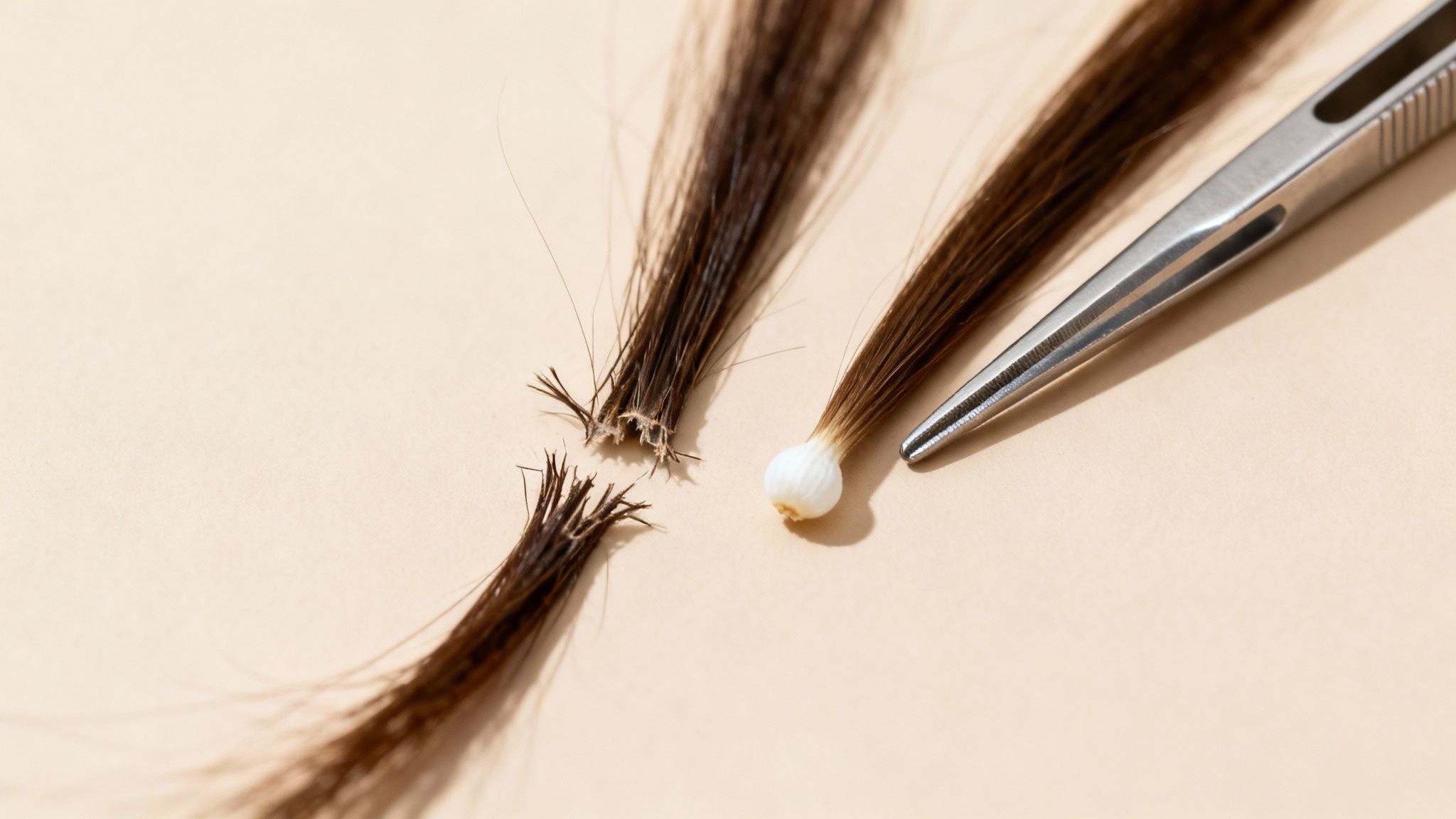
Think of it this way: shedding is a natural part of your hair’s life cycle. It’s a full-length strand that has completed its growth phase and fallen out directly from the root. You’ll often spot a tiny white bulb at the end where it detached from the follicle. This is totally normal.
Breakage, on the other hand, is a sign of damage. A broken hair is just a piece—a shorter, fragmented strand that snapped off. You won’t see a white bulb because it didn't come from the scalp.
If you’re finding lots of these short, uneven strands on your clothes or pillowcase, that’s your clue you’re dealing with breakage. While shedding 50 to 100 hairs a day is normal, finding excessive short pieces means it's time to investigate the cause. You can start by learning about some of the most common haircare mistakes you should avoid to help minimize this damage.
To make it even clearer, here’s a quick comparison to help you tell the difference at a glance.
Hair Breakage vs Hair Shedding Key Differences
Use this table to quickly determine if you are experiencing breakage or natural hair shedding by comparing their defining characteristics.
| Characteristic | Hair Breakage | Hair Shedding |
|---|---|---|
| Appearance | Short, fragmented strands of varying lengths. | Full-length hair strands. |
| Root Bulb | No white bulb at the end. | A small white bulb is visible at the root end. |
| Cause | Damage from styling, treatments, or stress. | A natural part of the hair growth cycle. |
| What It Indicates | Weak, damaged, brittle hair structure. | Healthy, normal hair turnover. |
Seeing the differences laid out like this makes it much easier to diagnose what's happening with your own hair.
How to Tell If Your Hair Is Breaking
Still not sure if your hair is damaged? Your hair gives off some pretty clear signals. Do a quick self-check and look for these telltale signs of breakage:
- Split Ends: This is the most obvious sign. The ends of your hair are visibly frayed or splitting into two or more strands.
- White Dots: Look closely at your hair shafts. If you see tiny white dots, those are weak points where the hair is about to snap.
- Frizz and Flyaways: Notice a halo of frizz, especially at the crown or around your hairline? Those are often shorter, broken pieces sticking up.
- Uneven Length: Does your hair feel much thinner at the ends compared to the roots? Breakage can create the appearance of layers you never asked for.
If any of this sounds familiar, don’t panic. Simply identifying the problem is a huge first step. Now that you know what to look for, you can start digging into the root causes and begin your journey toward stronger, healthier, and more resilient hair.
The Three Main Causes of Hair Breakage
Now that you can tell the difference between a bit of breakage and normal shedding, let's get to the real question: what’s making your hair snap in the first place? While a dozen different things can weaken your hair, the damage almost always boils down to three main culprits. Getting to know them is the first step toward building a routine that actually protects and strengthens your strands.
Think of your hair’s outer layer—the cuticle—like the shingles on a roof. When those shingles lie flat and smooth, your hair is strong, protected, and shiny. But when they get roughed up, they lift, leaving the fragile inner core of your hair exposed and ready to break.
Let’s dive into the three forces that are notorious for lifting those shingles and causing breakage.
1. Thermal Damage from Heat Styling
One of the biggest offenders behind hair breakage is thermal damage. We're talking about your flat iron, curling wand, and even your trusty blow dryer, which can all hit temperatures way over 400°F (204°C). When that kind of heat hits your hair, the water molecules trapped inside the cortex literally boil, turning into steam and creating tiny, explosive bubbles.
This phenomenon, known as "bubble hair," creates microscopic cracks all the way through the hair shaft, permanently messing with its structure. It’s like creating a bunch of tiny potholes along a once-smooth road; eventually, that road is going to crumble.
Every time you apply high heat without a protective barrier, you're essentially cooking the delicate proteins that give your hair its strength and flexibility. This leads to a trifecta of trouble:
- A damaged cuticle: The protective outer layer gets cracked and raised, which is why heat-damaged hair often looks rough and dull.
- Loss of moisture: Sizzling heat strips your hair of its natural moisture, leaving it parched, brittle, and far more likely to snap under even the slightest pressure.
- Weakened protein bonds: The keratin proteins that form the backbone of your hair are permanently damaged, killing your hair's natural elasticity and resilience.
The constant cycle of heating and cooling creates structural fatigue in the hair shaft. This makes your strands dramatically more likely to break from simple things like brushing or putting your hair up.
If giving up your hot tools is a non-starter, then minimizing the damage is an absolute must. You can learn more in our complete guide on how to protect hair from heat damage. A quality heat protectant is non-negotiable. It acts as a shield between the tool and your strands, helping to spread the heat more evenly and slow down the process that creates those destructive steam bubbles.
2. Chemical Damage from Treatments and Coloring
Next up is chemical damage. Processes like bleaching, coloring, perming, and relaxing all rely on potent chemicals to force a change in your hair's internal structure. And while the results can be stunning, they often come at a steep price for your hair’s health.
Picture your hair’s protein structure as a strong, stable ladder. Chemical treatments are designed to break the rungs of that ladder so they can either be reshaped (like with a perm) or have their color stripped out (like with bleach).
Here’s a closer look at what's really happening:
- Bleaching and Highlighting: To lift color, bleach uses an alkaline agent that forces the hair cuticle to swell open. This lets hydrogen peroxide get into the cortex and dissolve your natural melanin pigments. This process also obliterates the protective fatty acids on the hair shaft, leaving it porous, thirsty, and incredibly fragile.
- Permanent Coloring: Hair dye works in a similar way, opening the cuticle to deposit artificial color molecules inside. While it’s often less aggressive than bleach, doing it over and over again still weakens the hair’s integrity over time.
- Perms and Relaxers: These services use chemicals to break and then reform the disulfide bonds that create your hair’s texture. This fundamentally re-engineers your hair's protein structure, stripping it of its natural strength and elasticity.
Hair that’s been chemically processed is way more porous, meaning it soaks up water quickly but loses it just as fast. This is why it often feels constantly dry and becomes incredibly prone to snapping, even when you handle it with care.
3. Mechanical Stress from Daily Habits
Finally, we have mechanical stress—the simple physical wear and tear your hair goes through every single day. This is the sneakiest type of damage because it’s caused by habits that seem totally harmless. But over time, the cumulative effect of friction and tension is one of the top reasons for hair breakage.
Think about a single piece of thread. You can tug on it gently a few times without any issue. But if you repeatedly snag it, stretch it, or rub it against a rough surface, it’s going to fray and eventually snap. Your hair is no different.
Common sources of mechanical stress include:
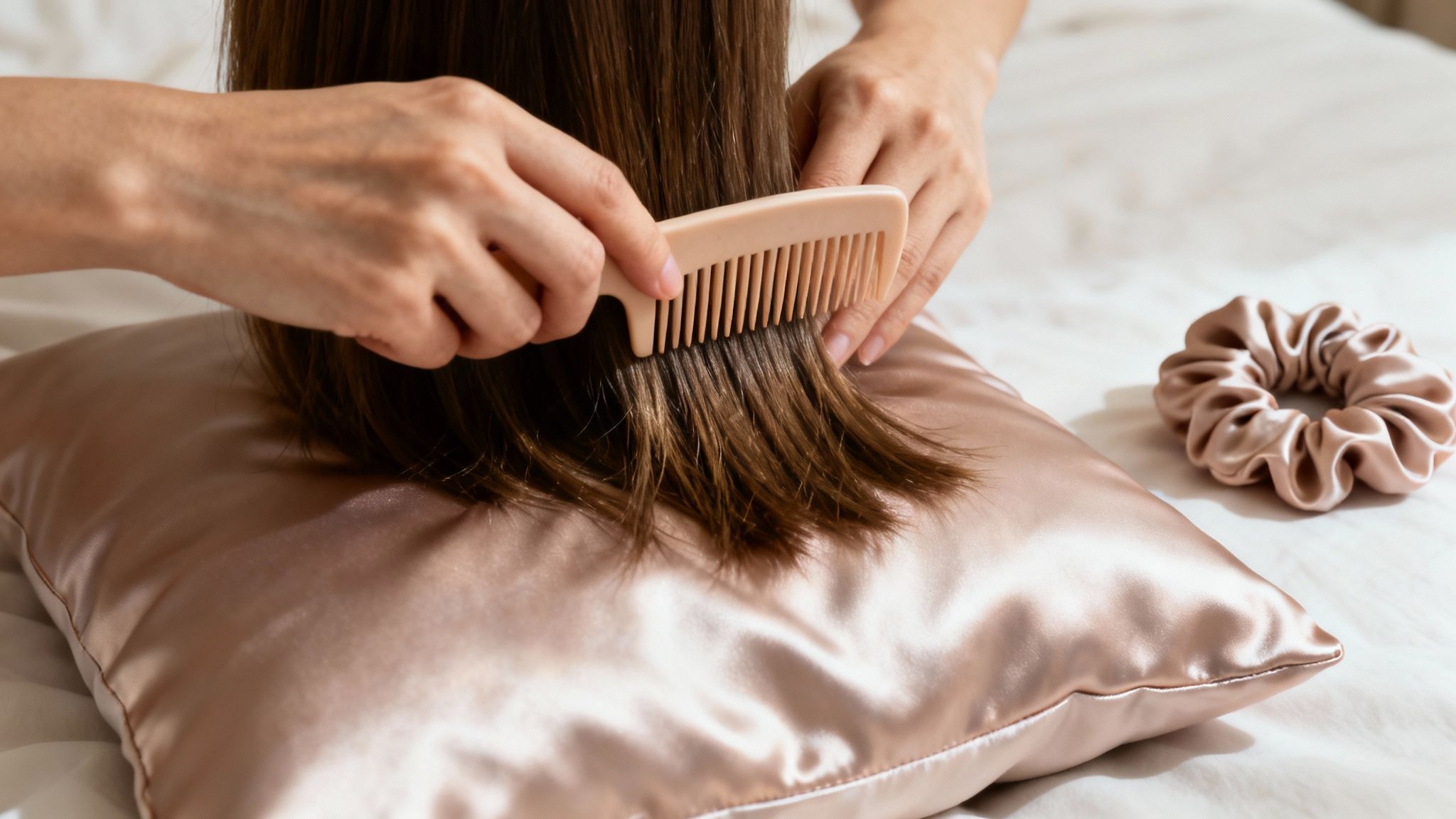
- Aggressive Brushing: Tearing through tangles, especially when your hair is wet and at its most fragile, can stretch your strands far past their breaking point. Always use a wide-tooth comb and start detangling from the ends, gently working your way up to the roots.
- Tight Hairstyles: Those super-tight ponytails, buns, and braids create constant tension on the hair shaft. This can lead to a specific kind of breakage called traction alopecia, where the strain actually weakens the follicle and causes hair to snap off right near the scalp.
- Friction from Towels and Pillowcases: Vigorously rubbing your wet hair with a coarse cotton towel is a recipe for a roughed-up cuticle. In the same way, sleeping on a cotton pillowcase creates friction all night long as you move, leading to tangles and breakage. Switching to a soft microfiber towel and a silk or satin pillowcase can make a world of difference.
By figuring out which of these three culprits—thermal, chemical, or mechanical—is doing the most harm, you can start making targeted changes to your routine. Cutting back on heat, giving your hair a break between chemical treatments, and adopting gentler handling habits are the foundational steps to finally stopping breakage in its tracks.
How Morfose Helps With Hair Breakage
Knowing what’s causing your hair to break is half the battle. The real game-changer is finding the right solutions to turn those damaged, fragile strands into strong, healthy hair. This is where a smart haircare routine, packed with the right ingredients from Morfose, steps in to repair, protect, and prevent future breakage.
Morfose products are built to fight the main causes of breakage by delivering specialized formulas that rebuild, shield, and smooth the hair fiber.
This diagram shows the major culprits we've been talking about.
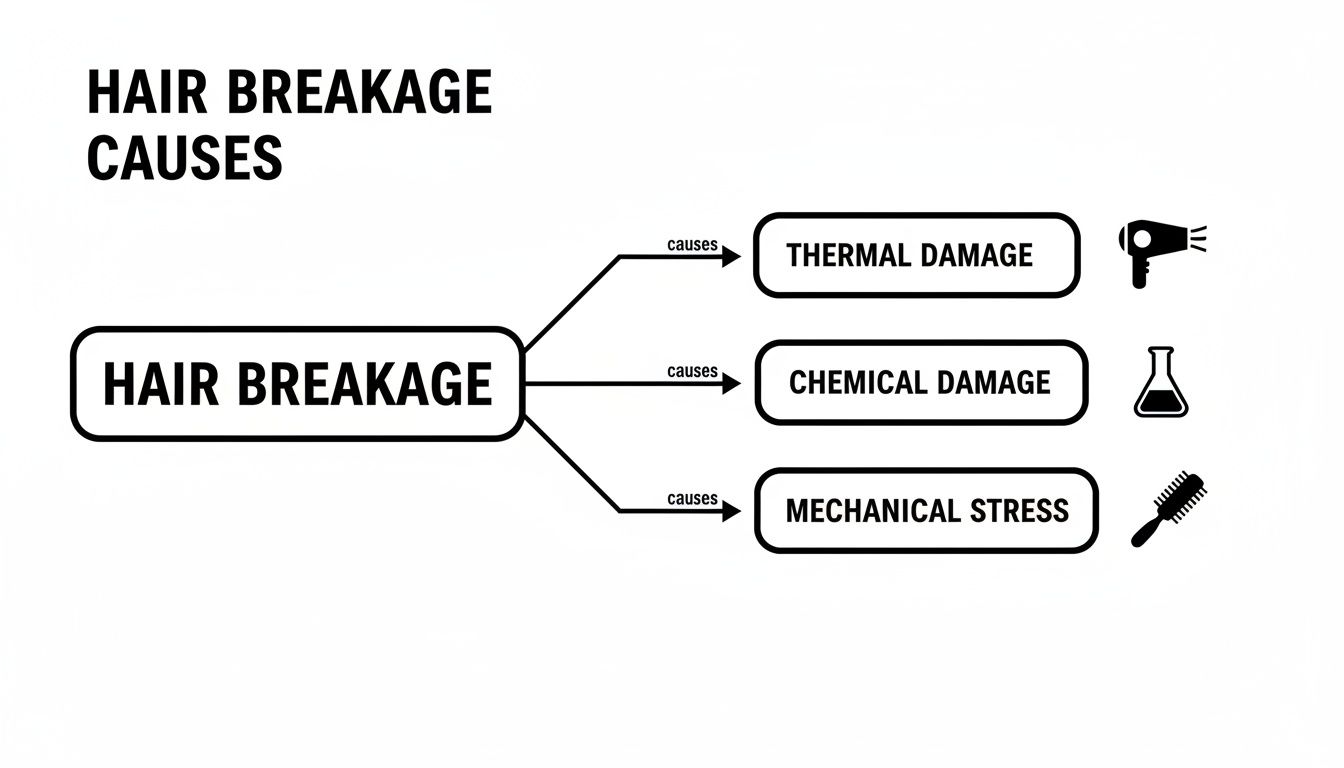
As you can see, thermal, chemical, and mechanical damage each attack the hair’s structure in different ways. And that means each one requires a unique solution to bring your hair back to life.
Recommended Morfose Solutions for This Problem
- For Chemical Damage: Chemical treatments strip hair of its natural proteins. The Morfose Milk Therapy Two Phase Conditioner uses milk protein and 12 essential amino acids to replenish the protein bonds that chemical processes break down, restoring strength from the inside.
- For Thermal Damage: If you use heat tools, a shield is essential. The Morfose Heat Shield Spray acts as a buffer between your hair and the hot tool. It coats each strand, helping distribute heat more evenly while slowing down water evaporation to prevent destructive "bubble hair" cracks.
- For Mechanical Stress: To combat daily wear and tear, you need to create "slip." A deep conditioning treatment like the Morfose Keratin Hair Mask smooths the cuticle, reduces friction, and allows combs to glide through with less resistance.
Key Takeaway: The most effective way to stop breakage is to match the solution to the cause. Using protein-rich formulas for chemical damage, heat protectants for thermal stress, and smoothing products for mechanical friction creates a comprehensive defense system for your hair.
To give your hair an extra boost of repair, consider incorporating products with deeply nourishing ingredients, like those found in Keratin Argan Oil Hair Serum Capsules. These concentrated treatments provide an extra layer of protection and hydration, fortifying strands against daily stressors. By integrating these targeted Morfose solutions into your routine, you can finally move from just managing breakage to actively building stronger, more resilient hair.
Your Action Plan: How to Stop Hair Breakage Step-by-Step
Alright, you know what causes breakage—now it's time to do something about it. The best defense is a good offense, and building a protective, long-term routine is the only way to stop damage in its tracks. Don’t worry, this doesn't require a total life overhaul. Just a few smart, consistent tweaks to your habits can make all the difference.
Think of this as your practical, step-by-step playbook to create an environment where your hair can thrive.
Step 1: Revamp Your Wash Routine
How you wash your hair sets the tone for its overall health. A harsh routine can strip away the natural oils that protect your hair, leaving the cuticle roughed up and ready to snap. The goal is to get your hair clean without causing friction.
First, turn down the heat. Scalding hot water makes the hair cuticle swell up, making it more vulnerable to damage. Stick to lukewarm water for washing and rinsing. For bonus points, finish with a quick blast of cool water to help seal that cuticle shut and lock in moisture.
Next, choose a sulfate-free shampoo. These are much gentler, cleansing your scalp and hair without robbing it of the essential oils it needs to stay flexible.
Pro Tip: Focus the shampoo on your scalp—that’s where the oil and buildup really live. Instead of scrubbing your ends, just let the suds run down the lengths of your hair as you rinse. It's a simple change that dramatically cuts down on tangles and friction.
Step 2: Master Gentle Detangling
Detangling is prime time for breakage, especially when your hair is wet. Think of wet hair like a delicate, stretchy fabric; pulling too hard at knots will stretch it right past its breaking point. Patience and the right tools are everything here.
Ditch your old bristle brush and grab a wide-tooth comb or a detangling brush specifically made for wet hair. These tools are designed to glide through knots with a lot less force.
And always, always start detangling from the bottom up. This technique is a total game-changer.
- Start at the Ends: Gently work through the last few inches of your hair until they're tangle-free.
- Move Upward: Once the ends are clear, move up a few more inches and repeat the process, slowly making your way toward the roots.
- Finish at the Roots: By the time you get to your scalp, the major knots are already gone, letting you comb through smoothly without any painful pulling.
Applying a leave-in conditioner or a detangling spray beforehand gives your hair some extra "slip," making the whole process even smoother and safer.
Step 3: Style Smarter, Not Harder
Heat styling is a notorious culprit behind breakage, but you don't have to break up with your tools completely. You just have to style smarter by turning down the heat and always protecting your strands.
First, lower the temperature on your straighteners and curling wands. Most hair types can be styled perfectly well at temperatures below 350°F (175°C).
Second, never let a hot tool touch your hair without a barrier. A quality heat protectant spray is absolutely non-negotiable. It creates a shield that helps distribute heat more evenly and slows down water evaporation, preventing those tiny internal cracks that lead to breakage.
Finally, try to build more heat-free days into your week. Get creative with braids, buns, or air-drying techniques to give your hair a much-needed vacation from all that thermal stress. If you're looking for more ways to bring your hair back to life, check out our guide on how to repair damaged hair fast.
Step 4: Upgrade Your Accessories
The final piece of your anti-breakage puzzle is about the little things—the everyday items that touch your hair. The wrong accessories can cause constant, low-grade friction and tension.
-
Switch Your Pillowcase: Your cotton pillowcase creates friction as you toss and turn, roughing up your hair's cuticle. Switching to a satin or silk pillowcase lets your hair glide across the surface without snagging.
-
Rethink Your Hair Ties: Those tight elastic ties with metal clasps are famous for snagging hair. Opt for gentler alternatives like scrunchies, spiral hair ties, or any fabric-covered elastic that won’t put so much pressure on your ponytail.
To give your hair an extra boost from the inside out, you might also look into nutrition. Providing your body with the right building blocks is key for strong strands. For some great tips, check out this complete guide to the best vitamins for hair, skin, and nails. When you combine these gentle daily habits with a nourishing diet, you're creating a powerful defense against breakage.
Hidden Factors That Weaken Your Hair
While we all know to be wary of hot tools and tight ponytails, the real reasons your hair is breaking might be much more subtle. These hidden culprits work behind the scenes, slowly chipping away at your hair’s strength until one day, it just snaps.
Think of it like tending a garden. You can use the best fertilizers (your products), but if the soil is nutrient-poor (your diet) or the climate is harsh (your environment), your plants will struggle. It's time to look beyond the bathroom cabinet and see the bigger picture.
Environmental Stressors
Your hair is out in the world with you every single day, and that constant exposure can cause some serious wear and tear. These environmental aggressors are like a slow, steady assault on your hair's protective cuticle layer.
The main culprits you're up against are:
- UV Damage: Yes, your hair can get sunburned, too. Just like with your skin, the sun's ultraviolet rays break down the protein structure of the hair shaft. This process zaps moisture and color, leaving your strands dry, brittle, and incredibly weak.
- Pollution: All those tiny particles from traffic fumes and industrial smoke don’t just disappear—they settle on your hair and scalp. These pollutants trigger oxidative stress, which damages hair proteins and can even cause inflammation right at the follicle.
- Hard Water: The water in your shower might be a secret saboteur. Hard water is full of minerals like calcium and magnesium, which build up on your hair strand by strand. This mineral coating acts like a shield, blocking moisture from getting in and leaving your hair stiff, dull, and prone to snapping.
Nutritional Gaps
Beautiful, strong hair is an inside job. Your hair follicles need a consistent supply of very specific nutrients to build resilient strands. When your diet falls short, your body cleverly prioritizes sending those nutrients to your vital organs, leaving your hair at the bottom of the list.
It's like trying to build a brick wall with half the bricks missing—the whole structure is bound to be weak. A diet lacking in key vitamins and minerals is a direct line to brittle hair that breaks at the slightest provocation.
Your body’s internal health is reflected directly in the health of your hair. A nutrient deficiency can show up as weak, dull, and fragile strands long before you notice any other symptoms.
Here are the most critical nutrients for building strong hair:
- Protein: Hair is made almost entirely of a protein called keratin. If you're not eating enough protein, you're literally not giving your body the fundamental building blocks it needs to make hair.
- Iron: This mineral is crucial for making hemoglobin, the part of your blood that carries oxygen to all your cells—including the ones that grow your hair. Low iron levels can lead directly to weaker, thinner hair.
- Biotin: This is a B-vitamin that plays a starring role in producing keratin. While a true deficiency is rare, making sure you get enough is a great way to support your hair’s natural strength.
To get a much deeper understanding of this connection, check out our article on the role of nutrition in hair health.
Internal Health and Hormonal Shifts
Finally, what's happening inside your body plays a massive role in your hair's health. Any condition that throws your body's systems off balance can disrupt your hair growth cycle and weaken its very structure.
Hormonal shifts, in particular, can have a dramatic impact. Major life events like pregnancy and menopause, or underlying conditions like thyroid disorders, completely alter your body's chemistry. This can directly affect your hair's texture, strength, and growth, often leading to a frustrating increase in breakage.
Got Questions About Hair Breakage? We’ve Got Answers.
When you’re staring down split ends and snapping strands, you just want clear, straightforward advice. The world of hair repair can feel complicated, but it doesn't have to be. Let's cut through the noise and tackle some of the biggest questions people have about what causes hair breakage.
Can You Actually Repair Broken Hair for Good?
This is the question on everyone's mind, and the honest answer is nuanced. Once a hair strand physically splits or breaks, you can't magically fuse it back together. It's a bit like a frayed rope—you can smooth down the edges, but the underlying break is still there.
But don't lose hope! You can absolutely improve the look and feel of damaged hair. Treatments like deep conditioners, protein masks, and bonding products work by temporarily filling in weak spots and patching up the hair's cuticle. This makes your hair feel smoother, look shiner, and most importantly, helps prevent the damage from getting worse.
The real strategy isn't trying to "un-break" the hair you already have. It's all about protecting the new hair that's growing in from meeting the same fate.
How Do I Know If My Hair Needs Protein or Moisture?
Getting this right is crucial, because giving your hair the wrong thing can actually backfire. If you load up on protein when your hair is just thirsty, it can feel even more brittle. Luckily, there’s a simple trick to figure out exactly what your hair is craving: the Strand Stretch Test.
- Find a single strand of clean, wet hair.
- Gently hold it between your fingers and give it a slow, easy stretch.
- Pay close attention to what happens next:
- Stretches a lot and feels gummy before snapping? Your hair is over-moisturized and needs protein.
- Snaps almost immediately with barely any stretch? Your hair is brittle and desperate for moisture.
- Stretches just a little, then bounces back to its original length? Perfect! Your hair has a healthy protein-moisture balance.
If your test reveals a need for strength, reach for something like the Morfose Milk Therapy Two Phase Conditioner. Its milk proteins are fantastic for rebuilding that internal structure. If your strands are parched, a deeply hydrating treatment is the way to go.
How Often Should I Be Using a Deep Conditioning Mask?
How often you deep condition really depends on your hair's damage level and type. You have to learn to listen to your strands.
Here’s a solid starting point:
- For hair that's pretty healthy or just a little dry: Using a deep conditioner once every couple of weeks should be plenty.
- For color-treated or moderately damaged hair: Bump it up to once a week. This gives your hair a consistent dose of repair to counteract stress.
- For severely damaged or bleached hair: Don't be afraid to use a mask twice a week at first. As you see improvement, you can dial it back to once a week.
The golden rule? Pay attention to your hair. If it starts feeling heavy or too soft, you might be overdoing it. If it still feels rough and dry after a treatment, you might need to use your mask a little more often.
A quality mask like the Morfose Collagen Hair Mask is a fantastic weekly ritual for bringing elasticity and strength back to weakened hair.
Understanding what causes hair breakage is the first step toward achieving the strong, healthy hair you deserve. By identifying the culprits—whether thermal, chemical, or mechanical—and adopting a gentle, protective routine with targeted Morfose products, you can break the cycle of damage for good.
