
how to repair damaged hair fast: quick, proven tips
When your hair is visibly stressed and fragile, you need a triage plan that brings it back from the brink, and fast. The most effective way to start repairing damaged hair is with a two-pronged attack: a gentle, sulfate-free cleanse followed immediately by a seriously intensive, moisture-rich deep conditioning treatment.
This initial combo is your first-aid kit. It works right away to infuse desperate strands with hydration and helps seal the outer cuticle, creating a smoother, shinier appearance from the very first wash.
Your Immediate Hair Repair Action Plan
When your hair feels brittle, frizzy, or just completely lifeless, it's sending out an SOS. Right now, our goal isn't a long-term strategy. It's about providing immediate relief and building a better foundation for the deeper repair work to come.
Think of it as damage control. The first, most critical step is to gently clear away any product buildup or grime that's blocking treatments from actually getting into the hair shaft. Using a harsh, stripping shampoo on already-weakened hair would be a disaster, which is why a sulfate-free option is non-negotiable here.
The Power of a Deep Conditioning Treatment
After that gentle cleanse, the real magic happens. An intensive deep conditioning treatment is the absolute cornerstone of repairing damaged hair quickly. This isn't your everyday, rinse-out conditioner that just smooths the surface. A true deep conditioner is formulated to penetrate deep inside the hair cuticle, delivering a concentrated dose of moisture and nutrients where it’s needed most.
Pro Tip: For a truly effective treatment, apply your mask to damp, not soaking wet, hair. After shampooing, gently squeeze out the excess water with a microfiber towel before you apply it. This stops the formula from getting diluted and ensures your hair soaks up all the good stuff.
This single step provides the most significant and immediate visual improvement you can get. It works to:
- Replenish Lost Moisture: Damaged hair is incredibly thirsty. A deep conditioner gives it the major dose of hydration it's craving.
- Smooth the Cuticle: By sealing down that roughed-up outer layer, it immediately cuts down on frizz and ramps up the shine.
- Improve Elasticity: You’ll notice your hair feels softer and more flexible, which means it’s less likely to snap and break.
Here's a quick summary of your first moves.
Immediate Hair Repair Triage
| Action | Purpose | Immediate Benefit |
|---|---|---|
| Gentle, Sulfate-Free Cleanse | Remove buildup without stripping natural oils. | Hair feels clean but not "squeaky" or dry. |
| Intensive Deep Condition | Infuse deep moisture and nutrients into the hair shaft. | Softer texture, reduced frizz, and noticeable shine. |
| Squeeze, Don't Rub, Dry | Use a microfiber towel to gently press out water. | Prevents cuticle damage and reduces breakage. |
Taking these initial steps sets the stage for real, lasting recovery.
The shift towards powerful, clean ingredients has completely changed the game in hair care. In fact, the natural hair care market is projected to hit $16.99 billion by 2030, all because people are demanding solutions backed by science, without the harsh sulfates and parabens. You can find more insights on this innovation boom over at GCI Magazine.
For a complete walkthrough on making your treatment as effective as possible, be sure to check out our detailed guide on how to deep condition hair at home.
Finding Your Moisture and Protein Balance
Think of your hair’s health as a delicate balancing act. You have two key players: protein and moisture. Protein provides the scaffolding—the very structure that gives your hair its strength and integrity. Moisture, on the other hand, is all about flexibility and resilience, keeping those structures pliable and preventing them from becoming brittle.
When you're trying to figure out how to repair damaged hair fast, getting this balance right is everything. Too much protein, and your hair feels stiff, straw-like, and snaps at the slightest touch. But go too far in the other direction with too much moisture—a condition often called hygral fatigue—and your hair becomes gummy, limp, and overly stretchy, almost like a wet noodle. Neither is a good place to be.
The Strand Elasticity Test: A Quick Diagnosis
So, how can you tell what your hair is crying out for? Skip the guesswork and try this simple strand test. It takes less than a minute and will point you in the right direction for your next treatment.
Here’s what you do:
- Grab a single strand of clean, damp hair.
- Hold it gently between two fingers and give it a little pull.
- Now, watch closely to see what happens.
- It snaps almost instantly. If there’s barely any give before it breaks, your hair is screaming for moisture. It's become too rigid, likely from a protein overload or just severe dehydration.
- It stretches and stretches… and stretches. If it feels weak and keeps extending before finally breaking (or maybe doesn't break at all), it's desperate for protein. It lacks the internal support to hold its shape.
- It stretches a bit, then bounces right back. Perfect! This is the goal—a healthy, harmonious balance.
As a rule of thumb, healthy hair should stretch about 30% of its length before returning to its original state. Anything significantly more or less is a clear sign that you need to intervene.
This simple diagnostic is the first crucial step in giving your hair exactly what it needs to recover.
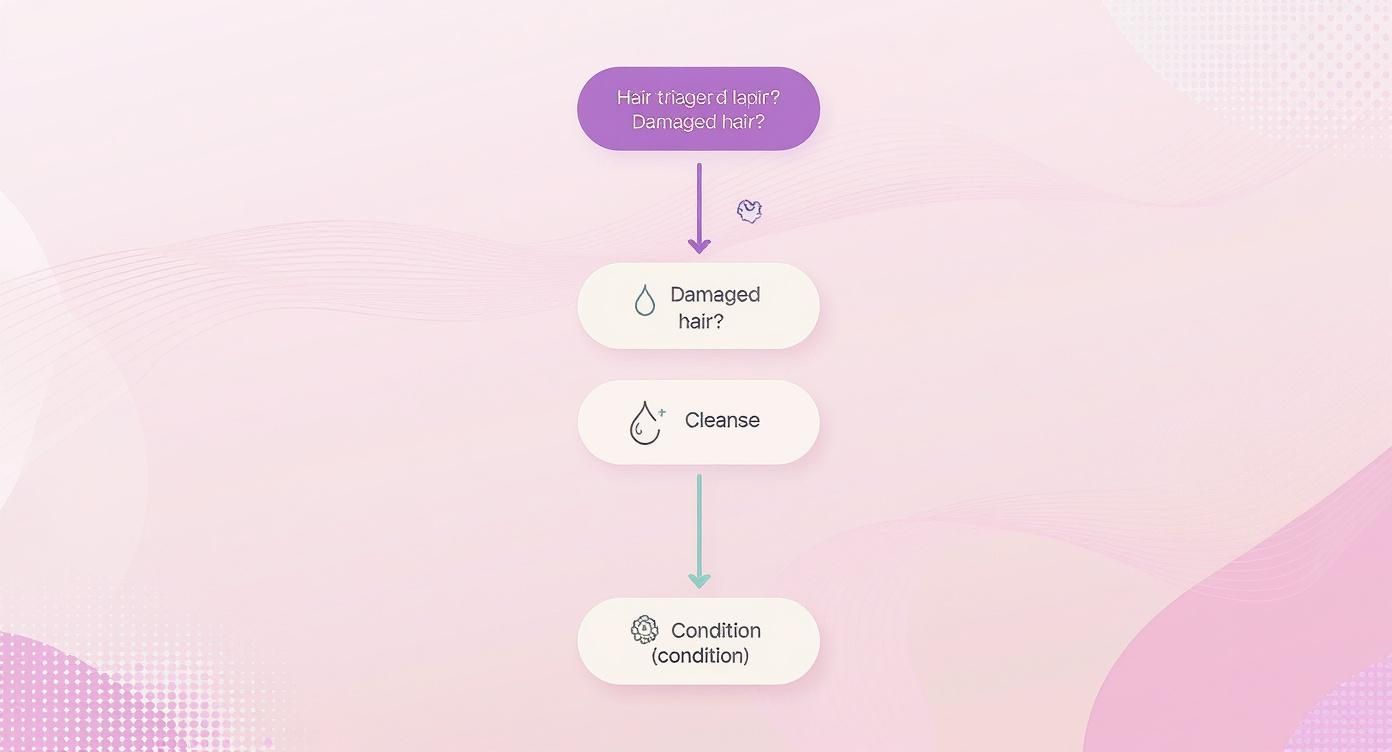
The flowchart above outlines these foundational steps, showing how proper cleansing and conditioning set the stage for any successful repair routine.
Choosing Your Treatment
Once you know whether you're dealing with a protein deficit or a moisture crisis, you can pick the right tools for the job.
If Your Hair Needs Protein (It's Mushy & Overly Stretchy):
You need to rebuild from the inside out. Your mission is to reinforce that internal scaffolding. Look for treatments packed with ingredients like:
- Hydrolyzed Keratin or Collagen: These are essentially protein fragments small enough to get inside the hair shaft and patch up the weak spots.
- Amino Acids: These are the literal building blocks of protein. Infusing your hair with them helps fortify its core structure. Morfose's Milk Therapy line is fantastic for this, as it's rich in hair-loving amino acids.
- Rice Water Rinses: This is a great at-home option for a gentle protein boost without overdoing it.
For a deeper look into how nutrition impacts your strands, it’s worth understanding the role of protein in hair health.
If Your Hair Needs Moisture (It's Brittle & Stiff):
Your goal is deep, lasting hydration. You need to soften your strands and restore their elasticity. Seek out masks and conditioners with:
- Humectants: Ingredients like glycerin and honey are brilliant because they actively pull moisture from the air right into your hair.
- Natural Oils & Butters: Think argan oil, avocado oil, and shea butter. These are emollients that seal in moisture and make your hair feel soft and pliable again.
- Hyaluronic Acid: This skincare superstar is amazing for hair, too. It can hold a massive amount of water, delivering a major dose of hydration to parched strands.
Keep in mind that your hair's porosity plays a big role in how well it absorbs these treatments. To get even better results, take a look at our guide to see if you have low vs high porosity hair and tailor your routine accordingly.
A Fresh Look at Your Styling and Coloring Routine
If you want to get real about repairing damaged hair, you have to go straight to the source. More often than not, the culprit is staring back at us in the mirror: our daily styling and coloring habits. All that heat and chemical processing wears down the very structure of our hair, leaving us with the exact frizz, breakage, and dullness we’re trying to eliminate.
This isn't about giving up your flat iron or favorite balayage forever. It's about being smarter and more strategic. Think of it as playing defense—you’re protecting your hair from future damage so your repair treatments can actually focus on healing what's already there, instead of constantly fighting a losing battle.
And it’s not just a niche problem. Hair damage and loss are more common than you might think, and it's not just an older person's issue. Data shows that 85% of men and 33% of women will face hair loss at some point. What's truly eye-opening is that 47% of those reporting it were between 18 and 34 years old. You can dig into more of these hair loss statistics on Medihair if you're curious. It just goes to show how vital proactive care is at any age.
Your Heat Styling Damage Control
Let’s be honest: heat styling is probably one of the biggest offenders when it comes to hair damage. Sizzling temperatures literally boil the moisture out of your hair and break down its protein bonds, leaving it fragile and prone to snapping. But you can absolutely minimize the fallout with a few simple tweaks.
First and foremost, never, ever put a hot tool on bare hair. A good thermal protectant isn't optional; it's your hair's bodyguard. These products coat the hair shaft, creating a buffer that helps distribute heat more evenly and shields the delicate inner core. For a deeper dive into safe styling, take a look at our guide on how to maintain healthy hair while using heat styling tools.
Here's a quick temperature guide I live by: If you have fine or damaged hair, keep your tools below 300°F (150°C). For those with thicker, coarser hair, you can go up to 400°F (200°C). Avoid cranking it to the max setting unless you have a very specific styling need.
Smarter Coloring for Healthier Hair
Chemicals from coloring and bleaching are, by nature, damaging. They have to pry open the hair's outer layer—the cuticle—to change the pigment inside. The real secret to keeping your hair healthy is simply stretching the time between these appointments. And you can do it without your color looking faded or grown out.
Here are a few tricks to keep your color looking fresh for longer:
- Go Sulfate-Free: Sulfates are powerful detergents that act like a magnet for color molecules, pulling them right out of your hair. Making the switch to a sulfate-free shampoo, like one from the Morfose Color-Safe line, is a game-changer.
- Use a Color-Depositing Gloss: Think of these as a quick color refresher. An at-home gloss or a tinted conditioner can revive your tone and add incredible shine, easily buying you a few more weeks before your next salon visit.
- Rinse with Cool Water: This one is so simple but so effective. Hot water swells the hair cuticle, letting color escape. A final rinse with cool water helps slam that cuticle shut, locking in both your color and much-needed moisture.
By weaving these small changes into your routine, you’ll drastically cut down on the daily stress your hair endures. You're creating the perfect foundation for true repair and letting your hair's natural strength and shine come through.
Your Scalp Is Where Strong Hair Begins
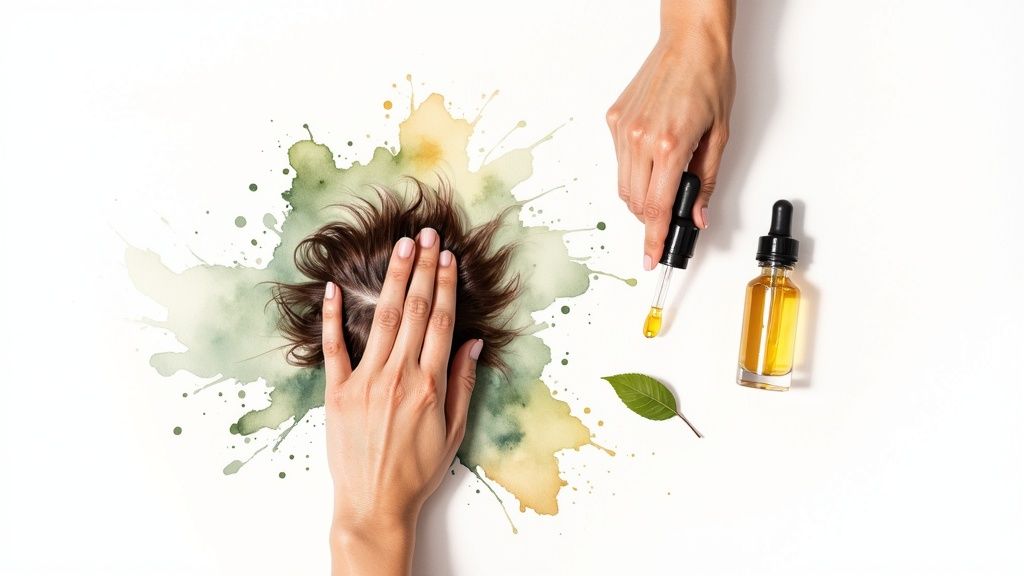
It’s easy to focus on split ends and frizzy lengths, but real, lasting hair repair starts at the root. Think of your scalp as the foundation for everything—if it’s not in great shape, the hair that grows from it won't be either. So many people overlook their scalp, but giving it some attention is one of the smartest things you can do to fix existing damage and grow stronger hair from the get-go.
Healthy hair follicles need good circulation to thrive, and you don’t need a complicated routine to get it. Something as simple as a regular scalp massage while you shampoo can make a huge difference. This small action helps stimulate blood flow, which is like a delivery service for the oxygen and nutrients your hair roots are craving.
Give Your Scalp a Skincare-Level Routine
Just like the skin on your face, your scalp can get clogged and irritated. Product buildup, dead skin, and excess oil can block follicles and stunt growth, so treating these issues is key. This is where targeted treatments come in handy.
Serums with ingredients like peppermint oil can feel incredibly refreshing and invigorating, while gentle exfoliants with salicylic acid can dissolve all that gunk. You can use a dedicated scalp scrub or a chemical exfoliant to clear the path for healthier, stronger hair to grow. Creating a clean, balanced environment is a non-negotiable step if you're serious about repairing damage quickly. To learn more about this foundational approach, check out our guide on https://themorfose.com/blogs/news/nourishing-your-scalp-the-foundation-of-healthy-hair.
You wouldn't try to grow a beautiful garden in bad soil, right? The same logic applies to your hair. Neglecting your scalp while trying to fix your damaged ends is a losing battle.
The demand for real solutions is huge. The hair loss treatment market is on track to hit an incredible $88.18 billion by 2030. A big piece of that pie is technology, with hair growth devices alone projected to become a $1.5 billion industry.
Don't Forget to Feed Your Hair from the Inside
Topical treatments are only half the story. What you eat directly impacts the health of your hair follicles and the strength of every strand. Your body needs the right fuel to build strong hair.
A few key nutrients are especially important for the hair growth cycle:
- Biotin: Famous for a reason—it's essential for producing keratin, the protein your hair is made of.
- Iron: If you're low on iron, it can interrupt hair growth and even lead to shedding.
- Zinc: This mineral is a powerhouse for hair tissue growth and repair.
Getting a handle on your diet can make a significant difference. Learning more about the essential vitamins for thinning hair is a great way to support your efforts from the inside out. When you combine dedicated scalp care with smart nutrition, you’ve got a powerful strategy for building truly resilient hair for the long haul.
Building a Protective Long-Term Hair Routine
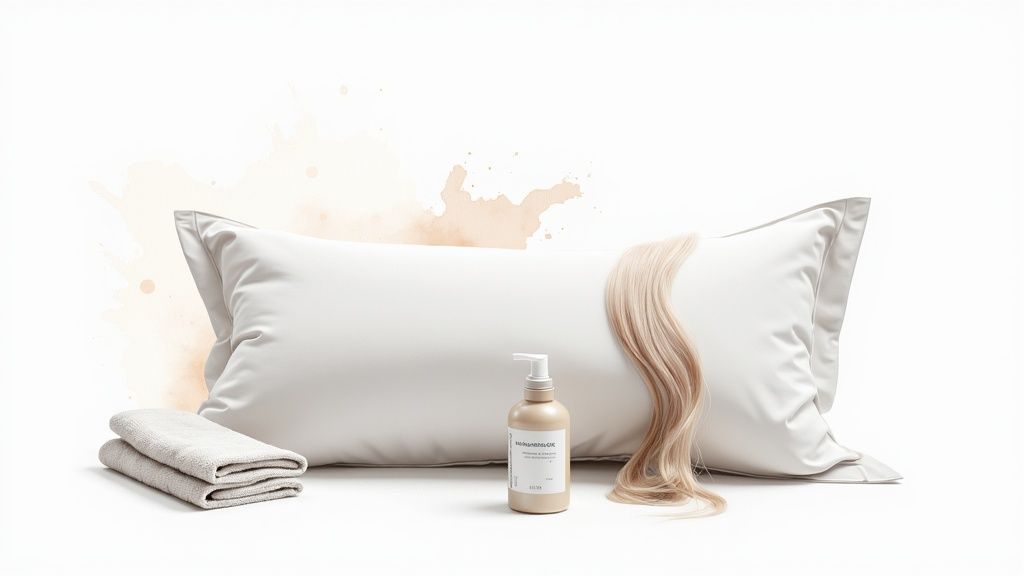
While an emergency mask can feel like a miracle, the real secret to strong, healthy hair isn't found in a single treatment. It's built day by day. Think of it as creating a protective bubble around your strands to shield them from the small, everyday stressors that add up to major damage.
Lasting recovery comes from weaving small, powerful habits into your routine. These shifts might seem minor, but their combined effect is what allows your hair to finally heal and thrive without constantly fighting against friction, strain, and environmental damage. This is how you move beyond the cycle of damage and repair.
Upgrade Your Everyday Tools
What touches your hair daily has a bigger impact than you might think. Two of the simplest yet most effective upgrades you can make are your towel and your pillowcase. Your standard cotton towel feels soft on your skin, but its rough fibers are notorious for snagging the hair's cuticle, creating frizz and breakage on already fragile strands.
The fix is easy. Switch to a microfiber towel or even an old, soft cotton t-shirt. These materials have a much smoother surface and absorb water without roughing up the hair shaft. Instead of rubbing your hair vigorously, gently squeeze or blot it dry. This one small change dramatically cuts down on mechanical damage over time.
Your pillowcase is another silent culprit. Tossing and turning at night creates constant friction between your hair and a standard cotton pillowcase, leading to those frustrating morning tangles and breakage.
A silk or satin pillowcase is a game-changer. It allows your hair to glide smoothly across the surface as you sleep, which means less friction, fewer tangles, and better protection for your delicate strands.
Master Protective Styling
Protective styling is a brilliant strategy for anyone with damaged hair, not just those with coily or curly textures. The whole point is to reduce how much you handle your hair and keep the fragile ends tucked away, safe from the elements and from rubbing against your clothes.
You don't need complicated updos. Simple, low-tension styles work wonders:
- Loose Braids: A classic for a reason. A single loose braid or two pigtail braids are perfect for sleeping or just a low-key day.
- Gentle Buns: Twist your hair into a loose bun on top of your head using soft scrunchies or spiral hair ties. This keeps your ends protected without putting stress on your roots.
- Silk or Satin-Lined Caps: For the ultimate protection while sleeping or lounging at home, a cap or bonnet is your best friend.
Just remember to keep it loose. Any style that pulls tightly on your scalp can cause stress and even lead to traction alopecia, a type of hair loss. Comfort is key.
Create a Shield Against the Elements
Your hair needs protection from the environment just as much as your skin does. UV rays and pollution can break down the protein structure of your hair, fade your color, and leave it feeling dry and brittle.
An easy way to build a defense is by using a leave-in product with UV filters. Many modern leave-in conditioners and styling creams offer this invisible shield. A light application of a product like the Morfose Argan Oil Hair Serum not only tames frizz and adds a beautiful shine but also helps form a barrier against daily aggressors. It's the perfect finishing touch before you walk out the door.
To make prevention even easier, here's a quick guide to tailoring your habits to your specific hair type.
Damage Prevention Checklist by Hair Type
| Habit | Fine Hair Focus | Wavy/Medium Hair Focus | Curly/Coarse Hair Focus |
|---|---|---|---|
| Washing | Wash more frequently to avoid product buildup and scalp oil, which can weigh hair down. Use a gentle, volumizing shampoo. | Find a balance—every 2-3 days often works well. Co-washing can be a great option to maintain moisture without stripping oils. | Wash less frequently (1-2 times a week) or co-wash exclusively. Focus on getting moisture into the hair during the wash process. |
| Drying | Blot gently with a microfiber towel and air-dry whenever possible. Use a blow dryer on low heat/speed with a protectant. | "Plop" hair in a t-shirt to encourage wave patterns, then diffuse on low or air-dry. Avoid aggressive rubbing. | "Plop" or scrunch with a microfiber towel. Use a diffuser on a low setting or air-dry to prevent disrupting curl patterns and causing frizz. |
| Detangling | Detangle when dry with a wide-tooth comb, starting from the ends, or use a detangling spray on damp hair. Be extra gentle. | Detangle with fingers or a wide-tooth comb only when hair is wet and saturated with conditioner. | Never dry-comb. Detangle thoroughly with conditioner in the shower using your fingers or a wide-tooth comb designed for curls. |
| Styling | Avoid heavy oils and butters. Opt for lightweight mousses or sprays. Use heat tools sparingly and always below 350°F (175°C). | Use curl creams or light gels to define waves without weighing them down. "Scrunch out the crunch" when dry for soft definition. | Layer products for maximum moisture and hold (leave-in, cream, gel). The "LOC" or "LCO" method is excellent for sealing in hydration. |
Focusing on these small, consistent habits will do more for your hair's long-term health than any single repair treatment ever could. It’s all about creating a routine that supports and protects your hair every single day.
Got Questions About Fast Hair Repair? We've Got Answers
When you're frantically searching for ways to fix damaged hair, a million questions probably run through your mind. It’s completely normal to want straightforward answers and a realistic idea of what to expect. Let's dig into some of the most common questions that come up on the road to healthier hair.
How Long Does It Really Take To See A Difference?
This is always the first question, and the answer isn't black and white. You can absolutely feel an immediate improvement in how soft and manageable your hair is after just one good deep conditioning treatment. That instant boost is great, but it's more of a cosmetic, surface-level fix.
True, structural repair takes a bit more patience. You’ll probably start to notice a real, lasting change in your hair's strength and texture within 2-4 weeks of a consistent, dedicated routine.
For hair that's been through a lot—think severe bleach damage or chemical processing—it becomes a longer journey. The hair that's already grown out is permanently altered, so the goal is to manage its condition while making sure any new growth is as healthy as possible. The most significant, truly transformative results will become apparent after about 3-6 months.
Can I Actually Fix Split Ends Without A Haircut?
Honestly? No. Once a hair strand has physically split, there's no magic potion that can permanently fuse it back together. Products that claim to be "split end menders" typically use ingredients like silicones to temporarily glue the ends together, making them look better until your next shampoo.
The only permanent fix for split ends is to snip them off. Getting regular micro-trims—we’re talking just a quarter-inch every 8-12 weeks—is the best preventative strategy. It stops that split from traveling up the hair shaft, which would only cause more damage down the line.
Is Coconut Oil Really The Miracle It’s Made Out To Be?
Coconut oil can be a lifesaver for some and a total disaster for others. Its power is in its small molecular size, which allows it to actually penetrate the hair shaft and help prevent protein loss. This makes it a fantastic tool for preventing damage and softening hair that isn’t sensitive to protein.
But for anyone with fine or low-porosity hair, it can be way too heavy. It can cause build-up in a flash, making hair feel stiff, brittle, and even more prone to snapping. If you've ever used it and felt like your hair turned to straw, you know exactly what I mean. A lighter oil like argan or jojoba is usually a much better fit in those cases. Separating fact from fiction is a huge part of hair care, and you can dive deeper into common hair care myths debunked to learn more.
How Often Should I Be Using A Protein Treatment?
This completely depends on your hair's current state of damage. The golden rule is to listen to your hair and avoid going overboard.
- For severely damaged, mushy, or overly stretchy hair: A heavy-duty, concentrated protein treatment is best used once every 4-6 weeks.
- For moderately damaged hair: A lighter protein-infused mask or conditioner can be safely used every 1-2 weeks.
Pay close attention to how your hair feels after a treatment. If it starts to feel stiff, dry, or brittle, that’s your signal to ease up on the protein for a while. And always follow up a protein treatment with a rich, moisturizing conditioner. It's non-negotiable for restoring that essential moisture-protein balance.
Ready to give your hair the balanced care it deserves? The Morfose Milk Therapy and Argan Oil collections are perfectly formulated to deliver that ideal blend of protein and moisture, helping you bring back strength and shine. Find your new repair routine today at https://themorfose.com.
Related reading: Hair Fixing: Repairing Damaged Strands.
