
How to Treat Dry Hair for Softer, Healthier Strands
If you want to learn how to treat dry hair, it comes down to a simple, effective plan: add moisture back in and then seal the hair cuticle so it can’t escape. This means using hydrating shampoos, deep conditioners, and leave-in treatments while reducing heat styling and harsh chemicals. With a consistent routine, you can turn dry, brittle hair into soft, healthy strands.
Your Quick Guide to Treating Dry Hair
Dealing with dry, brittle hair can feel like a constant battle against frizz and dullness. The great news is that restoring its natural softness and shine is achievable with the right routine. Think of this as your starting point for transforming parched strands into silky, healthy hair you love.
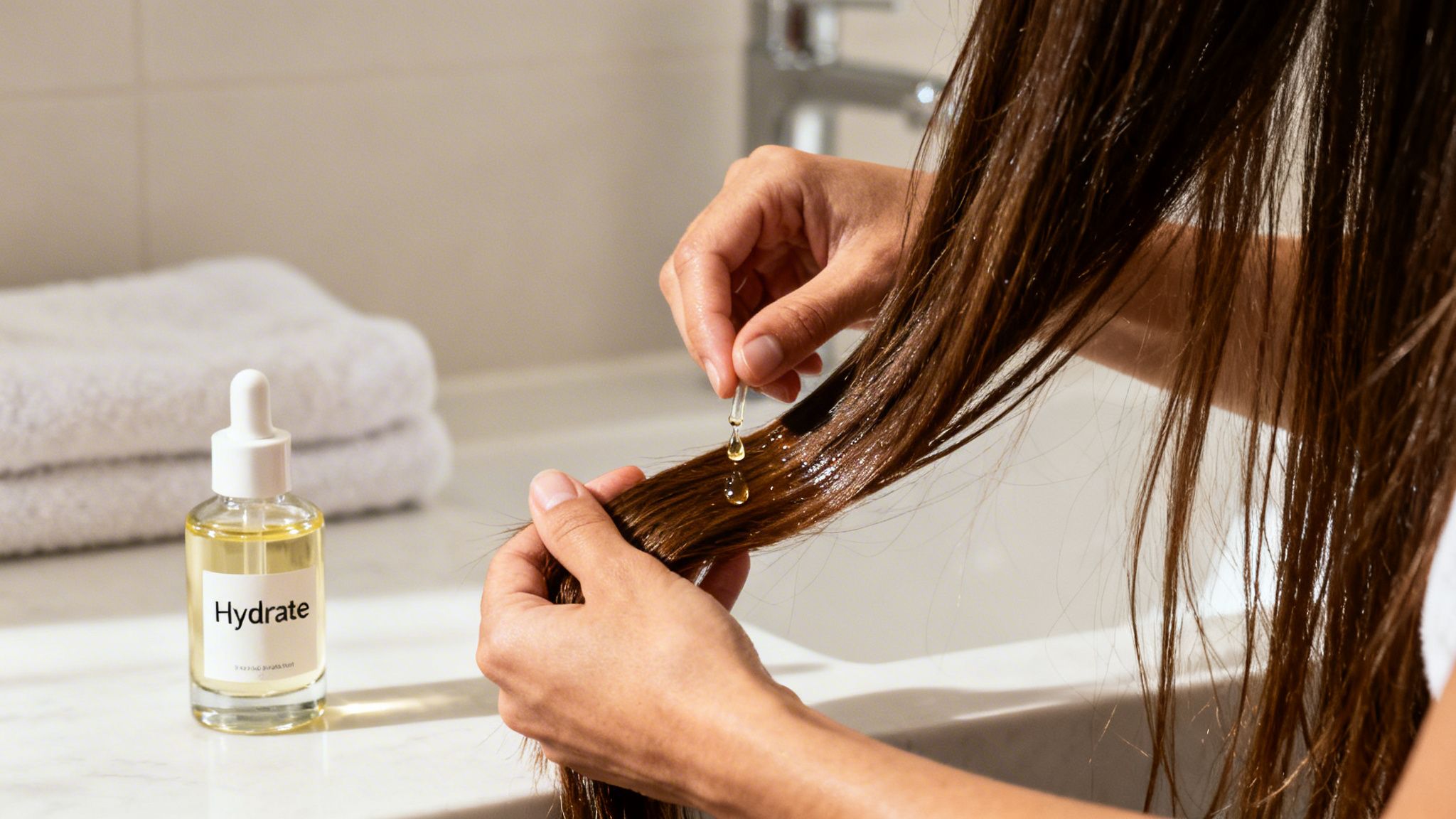
If you're struggling with dryness, you are definitely not alone. It's one of the most common hair concerns in the US. The global market for conditioning treatments hit USD 8.0 billion and is projected to reach USD 17.3 billion by 2034, showing just how many people are seeking solutions.
The biggest driver of this market? Treatments for dry and damaged hair, which hold a massive 39.5% market share. This isn't surprising, given that daily stressors like sun exposure, heat styling, and chemical treatments constantly compromise our hair's health.
The Core Principles of Hair Hydration
Reviving dry hair isn't about finding one miracle product. It's about building a consistent routine based on a few key principles. Once you make these habits second nature, you'll be on the path to lasting moisture and healthier hair.
Here are the most impactful habits you can start building today:
- Cleanse Gently: Ditch harsh, stripping shampoos and switch to a sulfate-free, moisturizing formula. Over-washing is a major cause of dryness, so try to limit washes to just 2-3 times per week.
- Condition Deeply: A weekly deep conditioner or hair mask is non-negotiable for thirsty hair. These treatments contain concentrated ingredients that penetrate the hair shaft for intense, lasting hydration.
- Seal in Moisture: This is the step people often miss. After washing and conditioning, always apply a leave-in conditioner or hair oil to damp hair. This final layer is critical for locking in all that moisture you just added.
For a more detailed breakdown of this last step, you can check out our guide on how to moisturize dry hair.
To make it even simpler, here is a quick-start table. These are the actions that will give you the most immediate results.
Key Steps for Immediate Dry Hair Relief
| Action Item | Why It Works | Frequency |
|---|---|---|
| Switch to a Sulfate-Free Shampoo | Sulfates strip natural oils, leading to more dryness. A gentle cleanser removes buildup without compromising moisture. | Every wash |
| Use a Deep Conditioner or Mask | Provides an intense dose of moisture and nutrients that regular conditioner can't, repairing the hair from within. | Once a week |
| Apply a Leave-In Product on Damp Hair | Creates a protective barrier on the hair cuticle to lock in hydration and prevent moisture from evaporating as it dries. | After every wash |
| Turn Down the Water Temperature | Hot water opens the hair cuticle, allowing moisture to escape. Lukewarm or cool water helps seal it shut. | Every wash |
Focusing on just these four things will create a powerful foundation for your routine. It's all about consistency and giving your hair the gentle, hydrating care it needs.
Why Is Your Hair So Dry? Understanding the Causes
Before you can effectively treat dry hair, it’s important to understand why it’s happening. Dryness is a clear signal that your hair is struggling to retain moisture. The cause could be anything from your daily routine and environmental factors to the natural structure of your hair.
Think of your hair's outer layer, the cuticle, like shingles on a roof. When healthy, these shingles lie flat and smooth, locking moisture inside. This is what gives hair a healthy, shiny look. But when the cuticle is damaged or raised, moisture escapes, leaving the inner hair strand exposed and dehydrated.
The Most Common Causes of Dryness
So what’s lifting those protective "shingles"? A few common culprits are likely to blame. Pinpointing which ones are affecting your hair is the first step toward finding a lasting solution.
- Environmental Stressors: Sun, wind, and dry indoor air constantly pull moisture from your hair. UV rays are particularly damaging, acting like a mild bleach that weakens hair's protein structure over time.
- Over-Washing and Harsh Shampoos: Washing hair too often, especially with shampoos containing harsh sulfates, strips away the natural oils (sebum) your scalp produces. Sebum is your hair's built-in conditioner, and without it, your strands are left unprotected.
- Heat Styling: Your blow dryer, flat iron, or curling wand can be a major source of damage. High heat causes water inside the hair shaft to evaporate too quickly. Without a quality heat protectant, this will lead to brittle, fried strands.
- Chemical Treatments: Coloring, bleaching, perms, and chemical straightening all force open the hair cuticle to alter its structure. While the results can look great, this process permanently makes hair more porous and much more likely to lose moisture.
- Internal Factors: Sometimes, the problem starts from within. A diet low in essential fatty acids, vitamins, and minerals can directly impact scalp sebum production and overall hair health.
Once you identify the culprits, you can stop just masking symptoms and start tackling the root cause of your dry hair.
Hair Porosity: The Missing Piece of the Puzzle
Beyond external factors, your hair's natural structure plays a huge role. This is where hair porosity comes in. Simply put, porosity is your hair's ability to absorb and retain moisture. Understanding this is the secret to choosing products that will actually work for you.
Porosity generally falls into three categories:
- Low Porosity: The cuticles are very tightly packed. This makes it difficult for moisture to get in, but once it's in, it tends to stay there. The downside? Products often feel like they're just sitting on top of your hair.
- Medium (or Normal) Porosity: The cuticles are slightly looser, which is the ideal state. Moisture gets in easily and stays put without much fuss. This is the low-maintenance hair type.
- High Porosity: The cuticles have gaps and holes, either from damage or genetics. This hair type soaks up moisture like a sponge but loses it just as quickly, leading to a constant cycle of dryness and frizz.
Pro Tip: Not sure where your hair falls? Try the "float test." Drop a clean, product-free strand of hair into a glass of water. If it sinks quickly, you likely have high porosity. If it floats on top for a while, you're looking at low porosity.
Figuring out your porosity level is a game-changer. For a deeper dive, learn more about low vs high porosity in our article. It will help you select treatments designed for how your hair behaves, ensuring the moisture you add actually sticks around.
Building Your Weekly Hair Hydration Routine
Applying a hair mask now and then is a nice treat, but it won’t solve chronic dryness. For lasting change, you need a consistent, structured weekly routine that nourishes your strands on a regular schedule.
Think of it like watering a plant: a little water consistently is far better than a big downpour once a month. Your hair works the same way. This simple, sustainable weekly ritual can fit into your life and start transforming your hair from the inside out.
As you can see below, dry hair is caused by a mix of our habits, our environment, and our hair's natural structure.
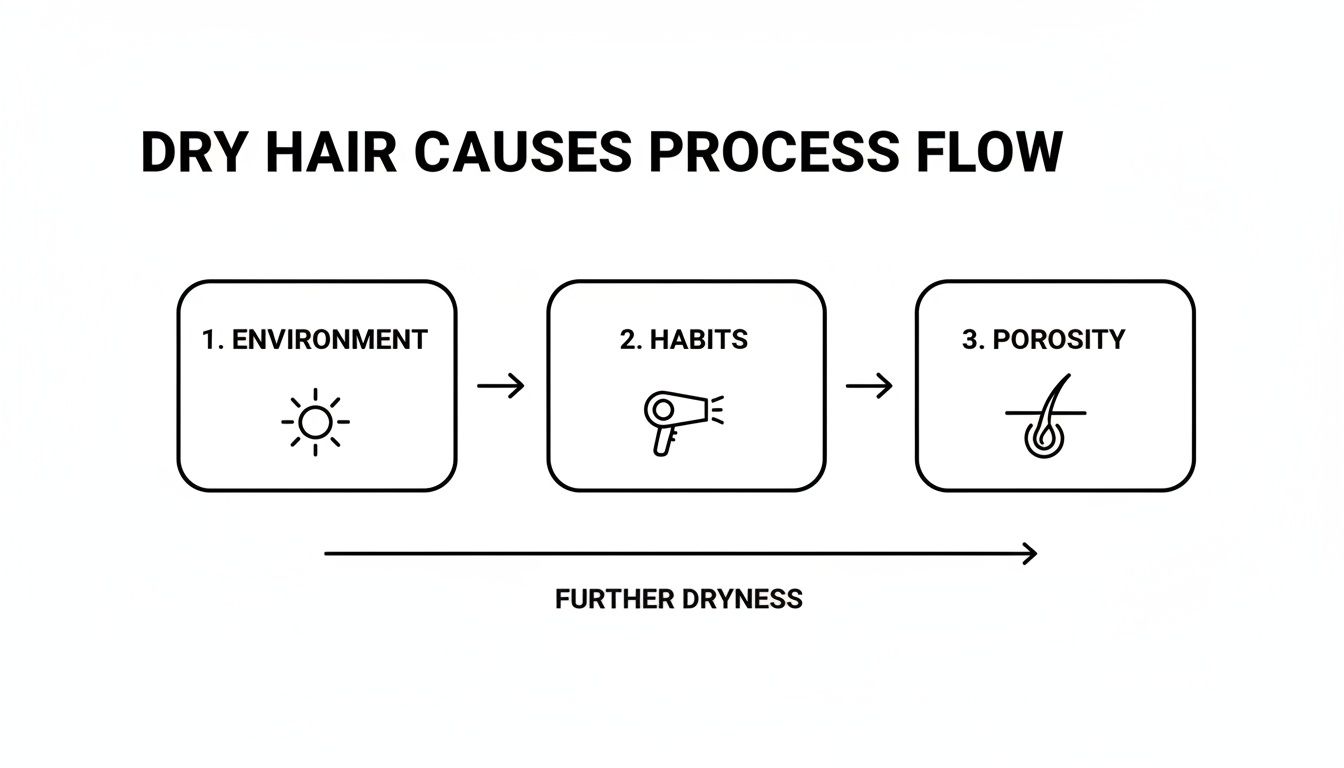
This illustrates that fixing dryness requires a holistic approach—from protecting your hair from the elements to choosing products based on your porosity.
The Power of Pre-Shampoo Treatments
Before you even reach for the shampoo, consider a "pre-poo." This is simply applying a protective oil or conditioner to your hair before you wash it, and it's a game-changer for dry, fragile ends.
Shampoo is designed to cleanse, but it can strip natural oils from your entire hair shaft. A pre-poo creates a shield, protecting your vulnerable ends from the stripping effects of shampoo.
This one simple step helps:
- Reduce breakage during washing and detangling.
- Prevent moisture loss from the most delicate parts of your hair.
- Boost the performance of your conditioner later on.
You don't need anything fancy. Natural oils like coconut, olive, or argan work wonders. Just apply a light coating to your lengths and ends about 30 minutes before you get in the shower.
Mastering the Art of Deep Conditioning
Your weekly deep conditioning session is the core of your hydration routine. A good hair mask delivers a concentrated dose of moisture and nutrients that a regular conditioner can't match. To get the most out of it, your technique matters.
After applying your mask, don't just let it sit. A little gentle heat helps the product penetrate deeper into the hair cuticle. Try wrapping your hair in a warm towel or using a thermal cap—it can seriously boost the hydrating power of your treatment.
The demand for effective at-home hair treatments is booming. The dry hair cap market was valued at USD 1,088.15 million in 2021 and is expected to exceed USD 4,000 million by 2033. Why? These caps can increase hydration by 50-60% more than a standard conditioner by using warmth to open the hair cuticle for deeper absorption.
If you're wondering how often to do this, our guide on how often you should deep condition your hair breaks it all down.
The Final Seal: Leave-In Conditioners and Oils
This last step is crucial: sealing in the moisture you just worked so hard to add to your hair. After rinsing out your deep conditioner, while your hair is still damp, apply a leave-in conditioner followed by a sealing oil or serum.
This two-part method, often called the LOC (Liquid/Leave-in, Oil, Cream) method or a variation of it, is incredibly effective for locking in hydration.
- The Leave-In Conditioner: This adds a final layer of moisture and makes detangling easier, which means less mechanical damage.
- The Sealing Oil: An oil like jojoba, argan, or grapeseed doesn't add more moisture. Instead, it creates a protective barrier over the hair strand, physically blocking water from evaporating.
This final seal is what keeps your hair feeling soft and hydrated for days, not just a few hours.
As you build your routine, don't forget about powerful natural ingredients. Exploring the benefits of 100 percent aloe vera gel can be a great addition; it’s fantastic for deep moisture and can be used as a pre-poo or mixed into your favorite mask.
Best Morfose Products to Treat Dry Hair
When you’re fighting a losing battle with dry, brittle hair, choosing the right products is everything. A targeted routine with high-quality ingredients can turn straw-like strands back into soft, healthy hair. Here are the best Morfose products specifically designed to bring your hair back to life.
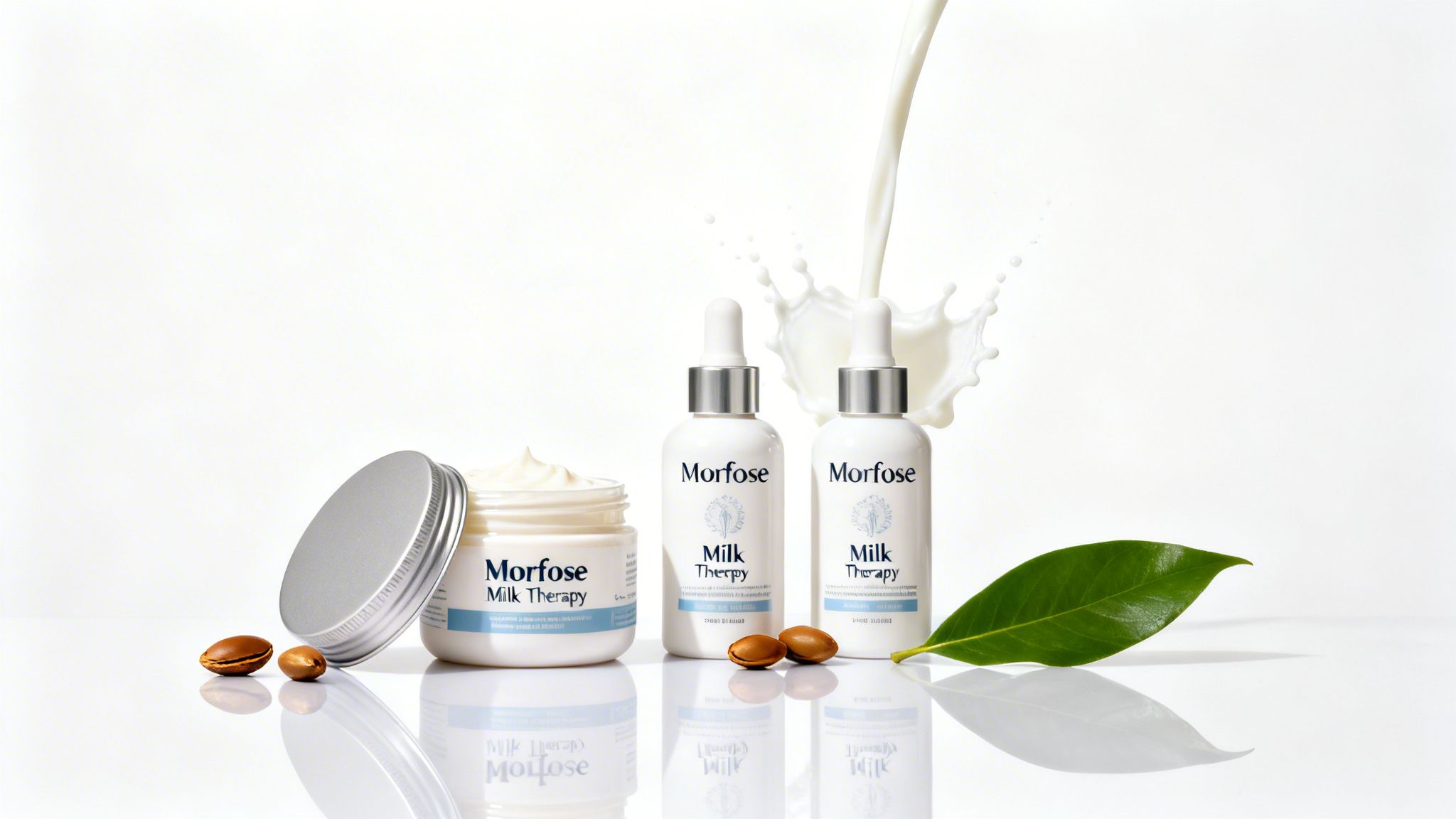
These solutions are formulated to deliver real, noticeable results by targeting the root causes of dryness.
Harness the Power of Milk Therapy
Our Morfose Milk Therapy line is a game-changer for anyone trying to figure out how to treat dry hair. The magic is in its unique formula, packed with milk proteins and a powerful complex of 12 essential amino acids.
The milk protein acts like a repair crew, patching up weak spots and smoothing down the hair's outer cuticle. This reinforces the hair's structure from the inside out. The amino acids are the building blocks of keratin—what your hair is made of. By delivering these nutrients directly, you're giving your hair exactly what it needs to rebuild its strength and hold onto moisture.
Go Deep with Argan Oil and Keratin
Daily care is crucial, but sometimes your hair needs an intensive intervention. That's where treatments featuring argan oil and keratin come in, delivering a salon-level dose of hydration at home.
The global hair care market is expected to jump from USD 87.49 billion in 2022 to USD 147.23 billion by 2030, with a huge part of that growth driven by treatments that repair damage. In fact, 39.5% of consumers prioritize products that fix hair issues. For more details, see the latest hair care market trends at marketsanddata.com.
Ingredients like these work. Studies show argan oil can restore 75% of moisture in just four weeks, while keratin is known to slash frizz by up to 50%.
Our Morfose Argan Hair Mask was created to deliver exactly that kind of deep repair. Here's how it works:
- Argan Oil: This liquid gold is loaded with fatty acids and vitamin E. Its molecules are small enough to penetrate deep into the hair shaft, providing intense hydration without a heavy, greasy feeling.
- Keratin: This protein fills in the porous, damaged spots along the cuticle. This not only tames frizz but also creates a protective barrier that seals moisture inside each strand.
Expert Tip: To maximize the benefits of your mask, apply it to clean, damp hair and cover with a shower cap for about 20 minutes. The gentle heat helps open the hair cuticle, allowing the ingredients to sink in even deeper.
Your Morfose Dry Hair Treatment Kit
Getting incredible results is all about using the right combination of products. To make it easy, we've pulled together a simple, powerful lineup from Morfose to get you started.
| Morfose Product | Key Ingredients | Primary Benefit for Dry Hair |
|---|---|---|
| Milk Therapy Two Phase Conditioner | Milk Protein, 12 Amino Acids | Instantly detangles and adds a weightless layer of moisture. Perfect for daily softness and protection. |
| Argan Hair Mask | Argan Oil, Keratin | A deep conditioning powerhouse that repairs damage, calms frizz, and restores elasticity to brittle hair. |
| Keratin Hair Serum | Hydrolyzed Keratin | Your finishing touch. It seals the cuticle to lock in moisture, fight humidity, and give hair a smooth, glossy finish. |
When you use these products together, you’re creating a complete system for hair health. You’re not just masking the problem—you're actively rebuilding your hair's structure and making it more resilient.
Ready for a truly transformative treatment? Explore our Morfose Argan Hair Mask and see the difference for yourself. This strategic approach is your key to achieving hydrated, healthy hair that lasts.
Lifestyle Habits That Prevent Dryness
Topical treatments are a massive part of learning how to treat dry hair, but the real secret to lasting hydration goes beyond your shower routine. Your daily habits are what make that moisture stick around. This is where you build a strong defense against dryness from the inside out, making your hair more resilient.
These lifestyle adjustments work hand-in-hand with your hair care products, creating a powerful system that helps keep dryness from returning.
Fuel Your Hair from Within
Healthy, hydrated hair starts on your plate. Your scalp produces a natural oil called sebum, which is your body’s own built-in conditioner. When your diet lacks key nutrients, sebum production can slow down, leaving your hair dry from the root.
To keep your scalp healthy, focus on these nutrients:
- Omega-3 Fatty Acids: Found in salmon, walnuts, and flaxseeds, these healthy fats nourish hair follicles and promote sebum production.
- Vitamin E: This antioxidant protects your hair from environmental damage. Find it in avocados, almonds, and spinach.
- Biotin: Often called the "hair growth vitamin," biotin is essential for producing keratin. Eggs, nuts, and whole grains are great sources.
- Iron and Zinc: Deficiencies in these minerals are linked to hair brittleness. Lean red meat, lentils, and pumpkin seeds can help boost your levels.
A balanced diet provides the raw materials needed for strong, moisturized hair. For a deeper look, check out our post on the nutrient-packed powerhouses and best foods for healthy hair.
Rethink Your Wash Day Habits
Even with the best products, a few common mistakes during your wash routine can strip moisture from your hair. Making small tweaks can preserve hydration and protect your strands.
One of the biggest culprits is water temperature. Steaming hot showers might feel amazing, but they are harsh on your hair. Hot water lifts the outer cuticle layer, allowing precious moisture to escape.
By simply turning down the temperature to lukewarm or finishing with a cool rinse, you can help seal the cuticle shut. This simple change locks in moisture from your conditioner and leaves your hair looking smoother and shinier.
This one habit helps your conditioner work more effectively and reduces the need for extra frizz-fighting products.
Protect Your Hair While You Sleep
You can cause a surprising amount of friction and moisture loss while you sleep. Traditional cotton pillowcases absorb moisture from your hair all night long, leaving it parched by morning. The rough texture can also snag and pull on strands, leading to frizz and breakage.
Switching to a silk or satin pillowcase is one of the easiest and most effective changes you can make.
- Reduced Friction: The smooth surface allows your hair to glide effortlessly, minimizing tangles and cuticle damage.
- Moisture Retention: Unlike cotton, silk and satin are far less absorbent, helping your hair retain its natural oils and leave-in products.
If a new pillowcase isn't an option, wrapping your hair in a silk or satin scarf or bonnet provides similar benefits. You'll wake up with hair that feels softer and looks less frizzy.
Common Mistakes to Avoid When Treating Dry Hair
Sometimes, learning how to treat dry hair is less about what you start doing and more about what you stop doing. You can buy the most expensive conditioners, but a few common missteps can sabotage your efforts, leaving your hair in a cycle of dehydration.
Correcting these habits can make a massive difference in how quickly your hair recovers.
Over-Washing and Using Harsh Shampoos
One of the most common mistakes is washing your hair too often. Every time you shampoo, you wash away dirt and also strip your scalp's natural oils, known as sebum. Sebum is your hair's built-in conditioner and first line of defense against dryness.
When you combine frequent washing with shampoos loaded with harsh sulfates, you create a perfect storm for parched hair. Sulfates give you that "squeaky clean" feeling, but they often remove natural moisture, leaving your hair stripped and vulnerable.
Pro Tip: Try to wash your hair just 2-3 times per week with a gentle, sulfate-free shampoo. This gives your natural oils a chance to keep your hair moisturized from the scalp down.
Rough Towel-Drying
That vigorous rubbing motion with a standard cotton towel is a huge contributor to frizz and breakage. Your hair is most fragile when wet, and the rough texture of a typical bath towel can damage the hair's cuticle.
The fix is simple. Instead of rubbing:
- Gently squeeze the excess water out of your hair with your hands first.
- Then, use a microfiber towel or an old cotton t-shirt. These materials are much gentler and absorb water without causing damaging friction.
Using High Heat Without Protection
We all love the smooth finish from a flat iron or the volume from a blow-dryer. The problem is, high heat is one of the fastest ways to dehydrate your hair. It causes the water inside the hair shaft to boil and evaporate, leading to brittle, straw-like strands over time.
The biggest mistake is using hot tools without a shield. A good heat protectant spray is non-negotiable. It creates a barrier between your hair and the intense heat, dramatically reducing moisture loss and preventing damage.
Answering Your Dry Hair Questions
As you start your journey to healthier hair, it’s normal to have questions. Here are answers to some of the most common things people wonder about when learning how to treat dry hair.
How Long Does It Take to See Results?
This is the big one. While you'll likely feel a wonderful softness after your first deep conditioning treatment, seeing significant, lasting change takes consistency.
On average, it can take 4 to 6 weeks of a dedicated routine to really repair your hair's moisture barrier. Hair health is a marathon, not a sprint. You have to give your hair time to adapt to a new, healthier regimen, so patience is key.
Can Dry Hair Be Permanently Cured?
You can't really "cure" your hair's natural tendency toward dryness, especially if you have a high porosity type that's naturally thirsty. However, you can manage it so effectively that it stops being a problem. Think of it as a successful, long-term management plan.
By sticking with the right products and building healthy habits, you can keep your hair in a constant state of hydration. The frustrating symptoms of dryness will become a thing of the past.
The goal isn't to change your hair's fundamental nature. It's about consistently giving your hair what it needs to thrive. With the right care, chronic dryness doesn't have to be your reality.
Are Professional Products Better Than DIY Masks?
DIY hair masks with ingredients like avocado or coconut oil can be a fun, natural treat for your hair. They often provide a nice boost of surface-level moisture and shine.
However, they usually lack the technology needed for deep, lasting repair. Professional products are scientifically formulated with ingredients that have specific molecule sizes designed to penetrate the hair shaft, not just sit on top. This allows them to deliver concentrated nutrients for more effective, long-term results.
At Morfose, our passion is creating salon-quality solutions that bring science-backed care into your home. Ready to build a routine that delivers real, lasting hydration? Discover the Morfose collection today.
More on this topic: Your Guide to Natural Dry Hair Remedies at Home.
