
How to Repair Damaged Hair: A Proven Guide to Restoring Health and Shine
Feeling frustrated with hair that seems permanently dry, brittle, or frizzy? We've all been there. The good news is that repairing damaged hair isn’t about some miracle cure—it's about creating a consistent, gentle routine that puts back what life and styling have taken out. The secret is simple: reduce heat, switch to gentle, sulfate-free cleansers, and get serious about treatments that deliver both protein and moisture. This is how you rebuild strength and bring back softness from the inside out.
Your Realistic Path to Healthier Hair
When you're dealing with split ends, a dull look, and constant tangles, it's easy to feel defeated. This kind of damage is incredibly common, usually stemming from heat styling, chemical treatments, or even small daily habits like brushing too aggressively. While many people think a big chop is their only option, genuine repair is totally possible with the right game plan and a little patience.
Getting your hair back to a healthy state isn't about one magic product. It’s about building a sustainable plan that gets to the root cause of the damage. This guide will walk you through a clear, actionable blueprint for lasting hair health. We'll break down exactly what your hair needs to heal and thrive.
Understanding the Core of Hair Repair
To fix the damage, you first have to understand what you're up against. Healthy hair has a smooth, sealed outer layer—the cuticle—that locks in moisture and protects the inner core. When that protective layer gets chipped, lifted, or broken down, your hair becomes vulnerable. That's when the trouble starts.
Your repair strategy really boils down to two main goals:
- Restoring Structural Integrity: This is all about putting back the lost proteins, like keratin, that are the literal building blocks of your hair. Protein treatments are like filler for the weak, porous spots, which helps stop breakage and makes your hair feel more elastic again.
- Replenishing Moisture: Damaged hair is thirsty hair. Deeply hydrating your strands with nourishing ingredients is absolutely essential for getting back that softness, shine, and manageability.
Think of it like fixing a cracked wall. First, you have to spackle the cracks (that’s the protein), and then you apply a protective coat of paint (that’s the moisture) to seal everything in. The first step to success is learning how to build a routine around this balance. You can dive deeper with our guide on building a routine for beautiful hair.
A study actually found that 9 out of 10 women do something that damages their hair every single day. It just goes to show how critical a consistent, protective routine is—both for preventing damage before it starts and for fixing what's already been done.
First, Let’s Figure Out What We’re Dealing With
Before you start slathering on masks and treatments, you have to play detective. Applying the wrong solution—no matter how great the product is—won't get you very far if it’s not targeting the right problem. Nailing down the root cause of your hair’s distress is the single most important first step toward getting it back to a healthy state.
Think of this as your personal diagnostic toolkit. We’re going to break down the three main culprits behind damaged hair so you can pinpoint exactly what’s going on and build a repair plan that actually works.
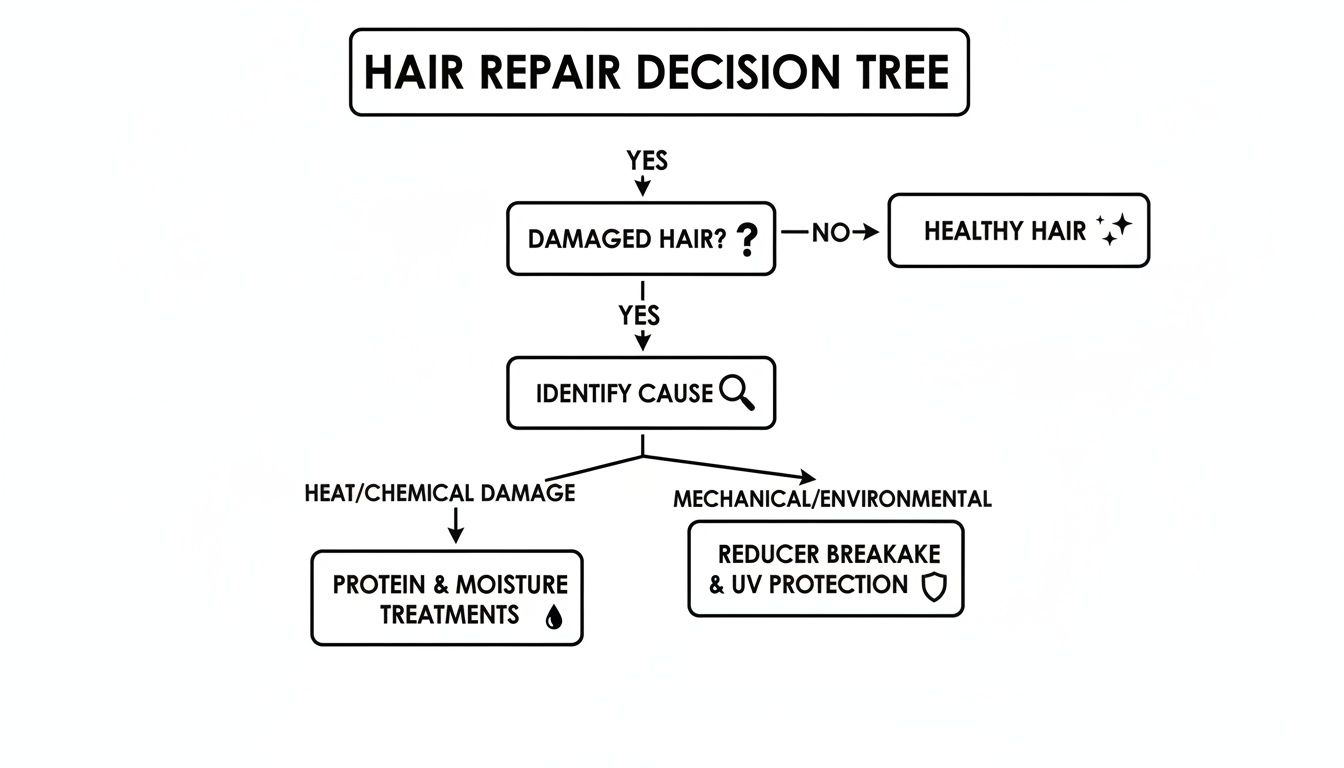
Ultimately, the path to healthier hair starts with a clear diagnosis. Once you know the enemy, you can choose the right weapons.
Identifying Your Hair Damage Symptoms
Not sure where to start? This quick guide breaks down the common signs of damage to help you figure out what your hair is trying to tell you.
| Damage Type | What It Looks Like | What It Feels Like | Primary Cause |
|---|---|---|---|
| Chemical | Stringy, limp appearance; noticeable breakage and flyaways. | Gummy or mushy when wet; overly stretchy before it snaps. | Bleach, hair color, relaxers, perms. |
| Heat | Dull, frizzy, and fried-looking; loss of natural curl pattern; visible white dots on hair ends. | Rough, brittle, and extremely dry. | Flat irons, curling wands, blow dryers. |
| Mechanical | Split ends, thinning on the ends, general frizz and a lack of shine. | Snags easily when brushing; feels rough to the touch. | Aggressive brushing, tight hairstyles, friction. |
Once you've matched your symptoms to a cause, you'll have a much better idea of how to start your repair journey. Let’s dive a little deeper into each one.
Chemical Damage From Treatments
This is the heavy hitter of hair damage, caused by any process that chemically alters your hair's internal protein structure. We’re talking about bleach, permanent color, relaxers, and perms. These services work by breaking down the bonds that give your hair its strength, which can leave it incredibly fragile.
Here's what to look for:
- A "gummy" or mushy texture when your hair is wet. Healthy hair should feel smooth, not like overcooked pasta.
- Extreme elasticity, where a strand stretches way more than it should before finally snapping.
- Noticeable breakage, especially those short, spiky pieces around your hairline and part.
If you’ve recently had a chemical service and your hair suddenly feels weak and lifeless, you’re almost certainly dealing with chemical damage. This type of damage requires serious, protein-based repair to rebuild its inner framework.
Heat Damage From Styling Tools
Your beloved flat iron, curling wand, and even your blow dryer can be the villains in this story if you’re not careful. High temperatures literally boil the water inside your hair strands and degrade the proteins, leading to a loss of elasticity and strength.
Over-styling with heat essentially cooks the hair's proteins. This damage is cumulative, meaning each pass of a hot tool without proper protection chips away at your hair's health, leading to irreversible breakage over time.
You'll often spot white dots near the ends of your hair—those are points where the cuticle has completely fractured. Other tell-tale signs include a rough, dry texture, a halo of frizz that won't go away, and a loss of your natural curl or wave pattern.
Mechanical Damage From Daily Habits
This is the slow burn of hair damage—the most common and often overlooked type. It’s the result of physical stress and friction from all the little things you do every day.
Common culprits include:
- Ripping a brush through your hair, especially when it’s wet and at its most fragile.
- Roughly towel-drying with a standard cotton towel, which frays the hair cuticle.
- Constantly wearing tight hairstyles like high ponytails or buns that put tension on the follicles.
- Friction from sleeping on rough cotton pillowcases.
This steady wear-and-tear slowly erodes the hair's protective outer layer, leading to split ends, frizz, and an overall dull appearance. While it might seem less dramatic than a bad bleach job, it can be just as destructive over the long run.
It's no surprise so many of us are dealing with this. The global hair care market is projected to skyrocket from USD 96.7 billion in 2025 to USD 128.7 billion by 2034. For 74% of people with hair concerns, the issues started over five years ago, making consistent repair a part of daily life.
Understanding your hair's porosity is also a game-changer in any repair plan. To learn more, check out our guide on the differences between low vs. high porosity hair and what it means for your routine.
Building Your At-Home Hair Repair Routine
Okay, you've figured out what kind of damage you're up against. Now it’s time to get hands-on and build a powerful, consistent routine right at home. This is the triage stage, where you create a simple but effective blueprint that gives your hair exactly what it needs to heal. Lasting hair repair comes from consistently choosing gentle, nourishing habits that stop the cycle of damage and start rebuilding your hair's strength from the inside out.
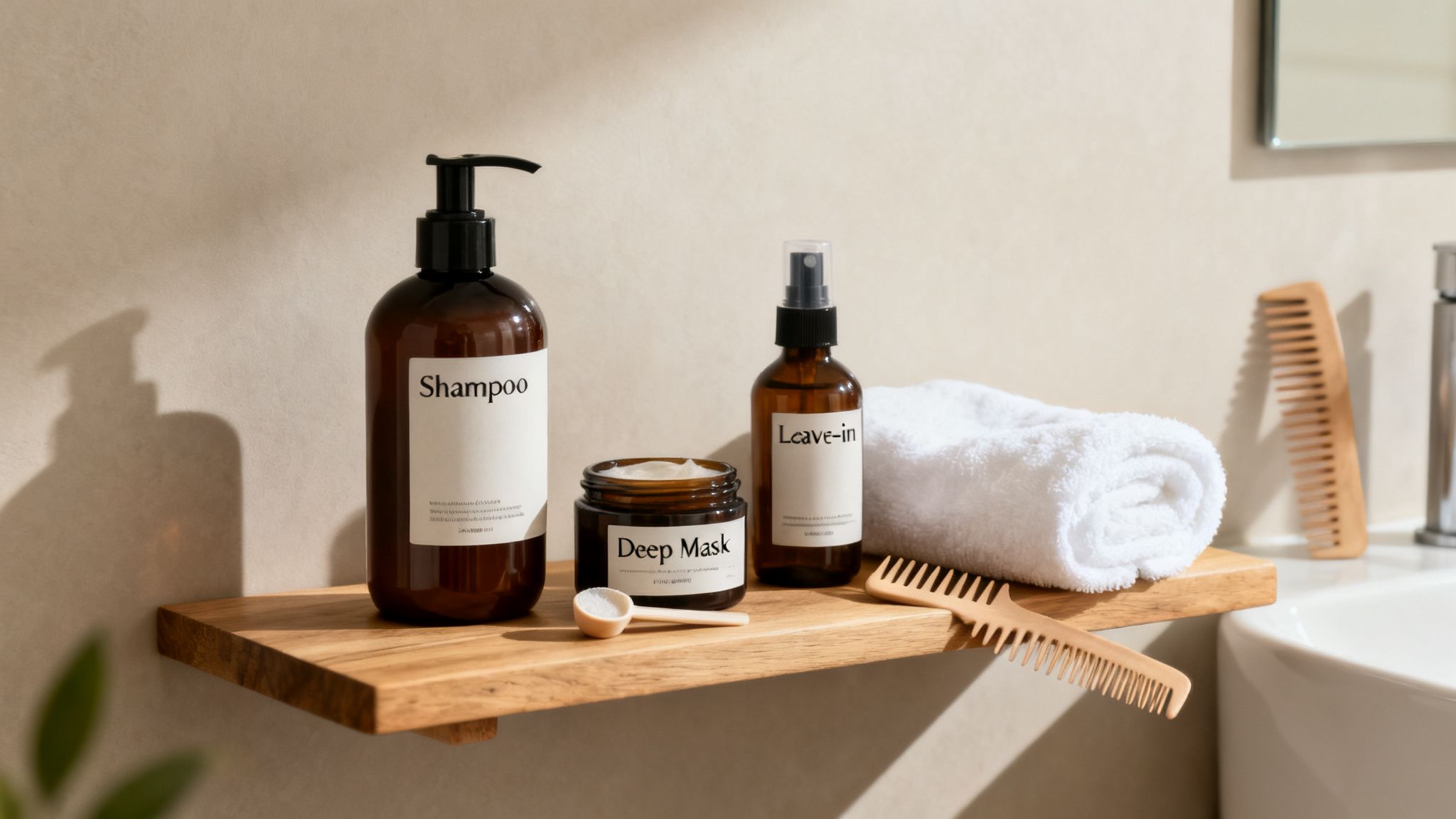
Here are the non-negotiables for a weekly routine designed to bring tired, stressed strands back from the brink.
Step 1: Start with a Gentle, Sulfate-Free Cleanse
The first and most critical change you can make is swapping out your shampoo. Many conventional shampoos use harsh sulfates—like sodium lauryl sulfate—to create a satisfying lather. The problem? That lather also strips your hair of its natural, protective oils. For hair that's already fragile, this is a major setback. Making the switch to a sulfate-free shampoo is a must. These gentler formulas clean your hair and scalp without disrupting your moisture balance, which is the foundation for preventing more dryness and breakage.
Pro Tip: When you wash, focus the shampoo on your scalp. Massage it in with your fingertips (never your nails!). The suds that run down the lengths of your hair as you rinse are more than enough to cleanse your fragile ends without roughing them up.
Step 2: Unlock the Magic of a Weekly Deep Conditioning Mask
If gentle shampooing is your baseline, a deep conditioning mask is your heavy-hitting treatment. This is where the real repair work happens. Unlike a regular conditioner that mostly smooths the hair's surface, a true hair mask is packed with a higher concentration of restorative ingredients that are meant to penetrate deep into the hair shaft. Using a mask once or twice a week delivers a powerful dose of moisture and proteins, helping to literally fill in the gaps in a damaged cuticle. This strengthens the hair, brings back its elasticity, and restores that soft, healthy feel.
Step 3: Your Daily Defense: A Leave-In Conditioner
Your repair efforts shouldn't stop the moment you step out of the shower. A daily leave-in conditioner is your best defense against the friction, humidity, and environmental stressors your hair faces all day long. It acts like a protective shield, locking in moisture and keeping your hair hydrated.
For anyone on a mission to repair damaged hair, this is especially crucial. It helps:
- Detangle Gently: Leave-in conditioners give hair that necessary "slip," making it much easier to comb through without snapping or pulling.
- Fight Frizz: By sealing the cuticle, a leave-in stops humidity from puffing up your hair into a cloud of frizz and flyaways.
- Provide Continuous Hydration: It keeps your hair moisturized all day, preventing that dry, brittle feeling you might get by the evening.
Just a few spritzes onto damp hair is all it takes. Comb it through, and you’ve created a lasting barrier that keeps your hair soft, manageable, and protected.
Step 4: Rethink Your Towel-Drying Technique
One of the most common—and overlooked—causes of daily damage is how you dry your hair. Vigorously rubbing your hair with a rough cotton towel creates a ton of friction that lifts and tears at the delicate hair cuticle. The result? Frizz and split ends.
It's such an easy fix. To protect your hair, just make this simple switch:
- Stop Rubbing: First, gently squeeze the excess water out of your hair with your hands.
- Use a Microfiber Towel or T-Shirt: These softer materials are much kinder to your hair, absorbing water without roughing up the shaft.
- Blot, Don't Rub: Gently blot or wrap your hair to absorb the rest of the moisture.
This small change significantly reduces mechanical damage and helps all those nourishing products you just used work that much better.
Best Morfose Products to Use for Damaged Hair
Knowing what your hair needs is one thing, but having the right tools to fix it is a game-changer. We designed Morfose formulas to do the heavy lifting in your routine, giving your damaged strands the exact ingredients they're crying out for. Instead of playing a guessing game with what might work, you can match a powerful, ingredient-driven solution directly to your hair's problem. This is how you stop just managing damage and start actively reversing it.
For Dry and Dehydrated Hair
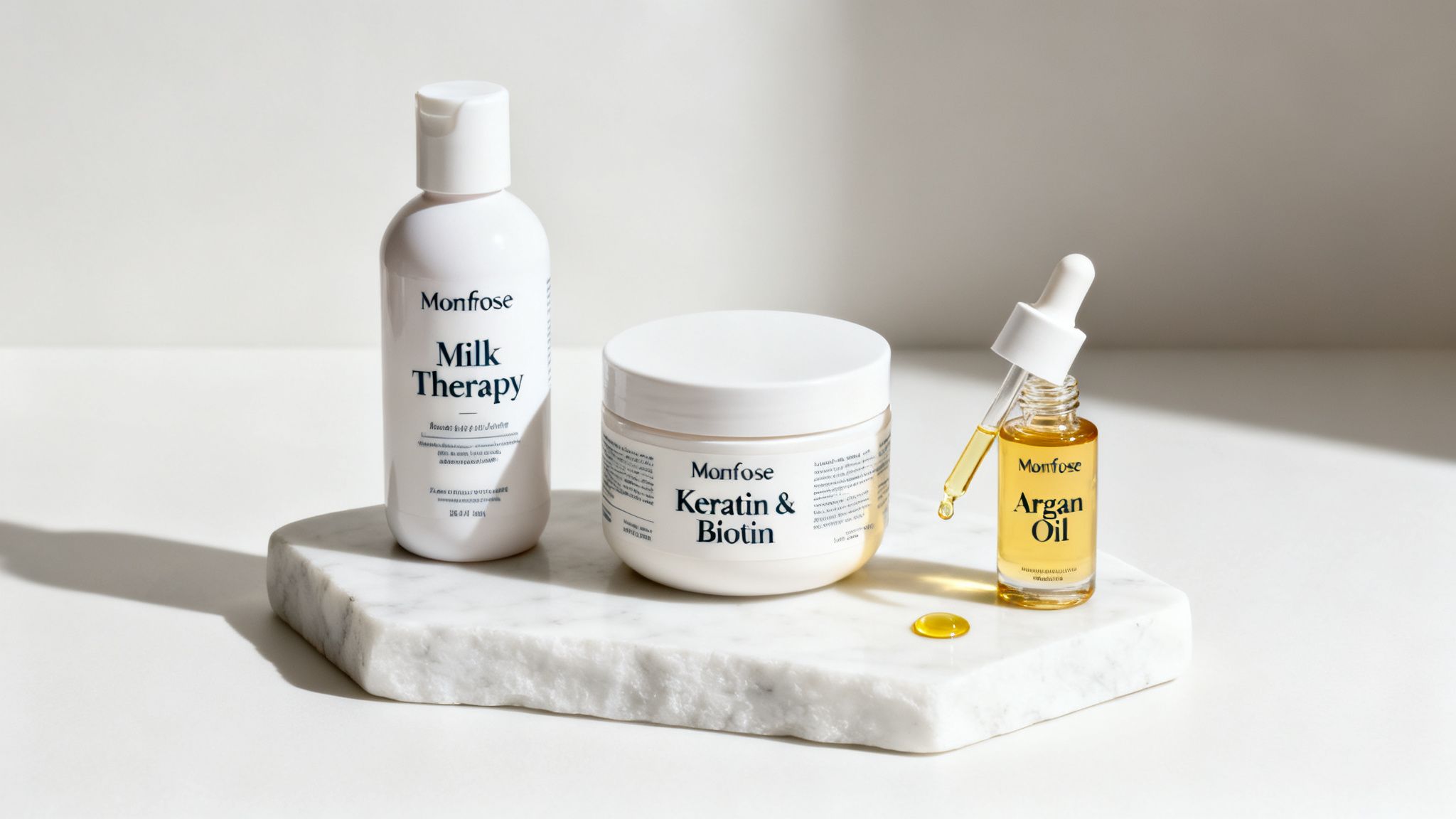
When your hair feels constantly rough, frizzy, and just plain dull, it’s sending out an S.O.S. for moisture. This kind of damage needs a deep, penetrating dose of hydration to bring back its softness and flexibility. The Morfose Milk Therapy line is your go-to for this exact problem. Packed with milk proteins and a unique blend of 12 essential amino acids, these formulas get to work hydrating each strand from the inside. They restore lost moisture without ever weighing your hair down, leaving it feeling incredibly soft and so much easier to handle.
- Milk Therapy Two Phase Conditioner: The perfect daily leave-in spray to instantly detangle and provide a continuous stream of moisture.
- Milk Therapy Creamy Mousse Conditioner: A one-of-a-kind foam conditioner that deeply nourishes without a trace of residue.
For Brittle and Chemically Damaged Hair
If your hair snaps easily, feels mushy when wet, or has been through the wringer with bleach and color, its internal structure is compromised. Moisture alone won't cut it—your hair needs to be rebuilt with protein. This is where ingredients like keratin and biotin become non-negotiable. Keratin is literally what your hair is made of, so applying it topically acts like spackle, filling in the weak and porous spots along the cuticle. Biotin then comes in to support overall hair strength and elasticity, which helps prevent future breakage.
A major sign of structural damage is thinning hair. The global market for hair thinning solutions is expected to hit $1.64 billion by 2025, and searches for treatments are projected to climb by 12% by 2030. For the 33% of women and 85% of men affected, using fortifying formulas with biotin and keratin can reinforce follicles and reduce breakage—directly tackling one of the biggest concerns out there.
Making a treatment like the Morfose Keratin Hair Mask a weekly ritual is a must. This intensive mask delivers a concentrated dose of protein to shore up your strands, making them far more resilient.
For Frizzy Hair and Split Ends
Frizz and split ends are usually signs of a roughed-up, damaged hair cuticle that can't do its job of sealing in moisture. To fight back, you need products that can smooth down and seal that outer layer. This is the perfect job for a high-quality hair serum. The Morfose Argan Oil Hair Serum is an incredible finishing touch for any repair plan. Just a couple of drops worked through the mid-lengths and ends of either damp or dry hair will:
- Tame Frizz: It instantly smooths the hair cuticle for a sleek, polished finish.
- Seal Split Ends: While nothing can permanently fuse a split end, the serum temporarily binds them, preventing the split from traveling further up the hair shaft.
- Add a Protective Barrier: The oil creates a shield that helps block out humidity and environmental stressors.
By building these specific Morfose solutions into your routine, you’re not just crossing your fingers for better hair—you’re actively rebuilding it with the precise ingredients it needs to recover and truly thrive.
Advanced Tips to Prevent Future Damage
Getting your hair back on track is a huge win, but keeping it that way is the real goal. Once you’ve nailed down a solid repair routine, your focus needs to shift from fixing past mistakes to preventing future ones. This is about building proactive, long-term habits that shield your hair from daily stress and create a strong, resilient foundation.
Master the Protein and Moisture Balance
One of the biggest "aha!" moments in hair care is understanding the delicate dance between protein and moisture. When you get this right, you sidestep two of the most frustrating hair problems: protein overload and hygral fatigue.
- Protein Overload: This happens when you go too hard on strengthening treatments without balancing them with hydration. Your hair becomes stiff, brittle, and snaps easily because it has no flexibility.
- Hygral Fatigue: This is the opposite problem, caused by too much moisture. The hair cuticle swells and contracts over and over, which weakens its internal structure over time. Hair suffering from this feels mushy, overly stretchy when wet, and won't hold a style.
The fix is surprisingly simple: alternate your treatments. If you use a protein-packed mask one week, grab a deeply hydrating, moisture-focused one for the next. This simple rotation gives your hair the structural support it needs from protein without sacrificing the softness and elasticity that moisture provides.
Embrace Safer Styling Habits
Let's be honest—heat styling is usually the number one culprit behind recurring hair damage. You don't have to break up with your favorite tools, but you do need to be smarter about using them. A high-quality heat protectant is completely non-negotiable. Think of it as creating a protective shield between your fragile strands and intense heat, which drastically reduces moisture loss and cuticle damage. For a deep dive, check out our guide on how to properly protect hair from heat damage.
Key Takeaway: Treat your heat protectant like sunscreen for your hair. Applying it every single time you use a hot tool is the most effective way to prevent the slow, cumulative damage that leads to chronic dryness and breakage.
Adopt Protective Styling Strategies
Protective styles are your hair’s best friend. These are any hairstyles that tuck your ends away safely, minimizing manipulation and protecting them from friction. They’re the perfect way to give your hair a much-needed break from the daily grind.
Simple, effective options are often the best:
- Loose Braids: A classic braid is fantastic for preventing tangles and friction, especially while you sleep.
- Low Buns or Twists: A loose bun at the nape of your neck keeps your ends protected without pulling on your scalp.
- Silk or Satin Accessories: This is a game-changer. Sleeping on a silk pillowcase or using satin scrunchies creates a smooth surface for your hair to glide over, which dramatically cuts down on overnight breakage and split ends.
By weaving these proactive strategies into your life, you finally break the cycle of damage and repair. You’re not just fixing problems—you’re preventing them from ever starting.
Setting Realistic Expectations for Hair Repair
Patience is everything when you're learning how to repair damaged hair. While you’ll definitely feel an immediate improvement in softness after your first deep conditioning treatment, true structural repair is a marathon, not a sprint. The damage didn't happen overnight, and neither will the recovery. Setting a clear and realistic timeline is key to celebrating small victories and staying motivated.
Your Repair Journey Week by Week
Think of your hair repair in phases. At first, you're focused on damage control—making your hair feel and look better on the surface. But as you stay consistent, the deeper, more lasting changes will really start to take hold.
- After 1 Week: Expect immediate but temporary wins. Your hair should feel much softer and be easier to detangle. You'll probably also notice a visible reduction in frizz as you start replenishing lost moisture.
- After 1 Month: This is when you'll start seeing more consistent results. You should notice less daily breakage (fewer hairs in your brush!), and your hair will likely have more natural shine. The initial improvements in manageability will start to feel like your new normal.
- After 3 Months: By now, your hair should feel noticeably stronger and more resilient. The cumulative effect of regular masks and gentle care will have fortified the hair shaft, making it less prone to snapping. This is when the health of your hair really starts to turn a corner.
The Role of a Strategic Trim
Here's a tough pill to swallow: a haircut isn't a sign of failure in your repair journey—it’s an essential and strategic step forward. Once a hair strand is split, there's no product that can permanently fuse it back together.
A trim is the only real fix for split ends. If you leave them, the damage will just keep traveling up the hair shaft, undoing all your hard work. Regular trims every 6-8 weeks are a non-negotiable part of any successful repair plan.
At the end of the day, repairing damaged hair is a three-pronged attack: intensive treatments, gentle daily habits, and snipping off the damage that’s beyond repair. Embrace the process and stay consistent.
Your Hair Repair Questions, Answered
As you start this journey back to healthy hair, a few questions are bound to come up. Let's tackle some of the most common things people ask when they're figuring out how to repair damaged hair.
Can You Really Fix a Split End?
Honestly? No. Once a hair strand splits, there's no magic glue to fuse it back together permanently. The only true fix is a good trim. Snipping off the split ends is crucial because it stops that damage from traveling further up the hair shaft. That said, you can definitely make them look better. A good serum or leave-in conditioner can temporarily seal the cuticle down, making split ends less noticeable and protecting them from further friction until your next salon visit.
Protein vs. Moisture: What Does My Hair Actually Need?
This is the age-old question, but thankfully, your hair gives you clues. The best way to find out is with a simple "strand test." Just take a single strand of clean, damp hair and gently stretch it.
- Does it feel a little gummy and stretch way too far before finally breaking? Your hair is crying out for protein.
- Does it feel brittle and snap almost immediately with no give? It's thirsty and desperately needs moisture.
Healthy hair has a bit of both—it will stretch slightly before bouncing back. To get that balance back, try alternating between a protein-rich treatment, like a keratin mask, and a deeply hydrating one, like our Morfose Milk Therapy line.
How Often Should I Use a Hair Mask on Damaged Hair?
If your hair is seriously struggling, you'll want to bring out the big guns. Using an intensive hair mask once or twice a week will give it that concentrated dose of nutrients that your daily conditioner just can't provide. For hair with milder damage, once a week is usually plenty to keep it strong and hydrated. The most important thing is to listen to your hair. If it starts to feel weighed down or limp, scale back. It’s all about finding that perfect sweet spot for your hair's unique needs.
Bringing your hair back from the brink is a marathon, not a sprint. It's all about consistency, patience, and using the right tools for the job. By sticking with these techniques and targeted products, you absolutely can restore that strength, softness, and shine you've been missing. Ready to give your hair the professional-level support it needs to thrive? Explore the complete collection at Morfose and find the perfect formulas to start rebuilding your hair today. Visit https://themorfose.com.
