
How to Stop Hair Breakage and Achieve Stronger Hair
It's one of the most frustrating feelings—seeing those little snapped-off strands of hair on your shirt or bathroom counter. But before you can fix the problem, you have to understand what’s actually happening. To stop hair breakage, you first need to pinpoint the root cause, which is usually a mix of heat damage, chemical treatments, and everyday wear and tear. Once you know what you're up against, you can build a routine that focuses on bringing strength and moisture back to your hair.
Uncovering the Root Causes of Hair Breakage
First things first, let's clear up a common confusion: breakage is not the same as natural shedding. Everyone loses hair every single day—it’s a normal part of your hair’s growth cycle. But breakage is a whole different beast.
When a hair sheds, the entire strand falls out from the root, and you might even see a tiny white bulb on the end. Breakage, on the other hand, is when the hair shaft snaps somewhere along its length. Those short, frayed pieces are a dead giveaway that your hair's structure is compromised. It’s a sign that the protective outer layer, the cuticle, has been weakened and is vulnerable to snapping.
To make it easier to tell the difference, here’s a quick breakdown:
Breakage vs Shedding Key Differences
| Indicator | Hair Breakage (Damage) | Hair Shedding (Natural) |
|---|---|---|
| Appearance | Short, snapped pieces; often have split or frayed ends. | Full-length strands; may have a tiny white bulb at the root. |
| Length | Varied, shorter lengths. | The full length of your hair. |
| Cause | External stressors like heat, chemicals, friction. | Natural part of the hair growth cycle. |
| Solution | Repair and strengthening treatments, gentle handling. | Generally requires no action unless it's excessive. |
Understanding this difference is key because it tells you whether you're dealing with a natural process or a damage issue that needs immediate attention.
Heat and Chemical Damage
Let’s be honest, heat styling is probably one of the biggest culprits here. Your flat iron, curling wand, and even your blow dryer on the highest setting can literally cook the moisture right out of your hair. This leaves it dry, brittle, and ready to crack under the slightest pressure.
Chemical treatments are right up there with heat. Things like bleaching, coloring, and relaxing treatments are designed to alter your hair's internal protein structure. While the results can look amazing, the process weakens the hair shaft significantly, making it much more prone to damage. If you’re dealing with the fallout from this, it’s worth digging deeper into the top culprits of hair damage.
Mechanical Stress and Daily Habits
Sometimes, the damage comes from things we don't even think about. Are you guilty of aggressively brushing your hair, especially when it's wet? When hair is wet, it's at its most fragile, and yanking a brush through it is a recipe for snapping.
Even your go-to hairstyles can be a problem. Super tight ponytails, braids, or buns create constant tension on the hair shaft, which eventually leads to breakage—often around the hairline. Simple habits, like rubbing your hair dry with a rough towel, can also rough up the cuticle and weaken the strands over time.
Internal Factors: Diet and Stress
What you put into your body has a direct line to the health of your hair. If your diet is missing key nutrients like protein, iron, zinc, and biotin, your body can't build strong, resilient keratin—which is literally what your hair is made of. This makes your hair weak from the inside out, so it's far more likely to break from everyday stressors.
And then there's stress. Periods of high stress can throw your hair's growth cycle out of whack, leading to weaker strands that are much more susceptible to damage.
The impact of all this is huge. Did you know that breakage often leads to visible thinning? It affects a staggering 72% of women in the US, making it their top unmet hair care need. This just goes to show how common this struggle is. Breakage isn't just about a few split ends; it’s about a weakened cuticle that can cause you to lose way more than the normal 50-100 hairs per day. For some, this can even lead to more specific issues, so knowing how to stop thinning crown hair loss can provide a more targeted approach to getting your hair’s health back on track.
Building Your Anti-Breakage Hair Care Routine
Let’s be real: transforming fragile, snapping hair into strong, resilient strands isn’t about a single magic product. It's all about consistency. Building a reliable daily and weekly routine is your absolute best defense against the dreaded snap and those pesky split ends. This approach fortifies your hair day by day, making it much less likely to break over time.
Before we dive in, it helps to understand what we're up against. Breakage is rarely a one-cause problem.
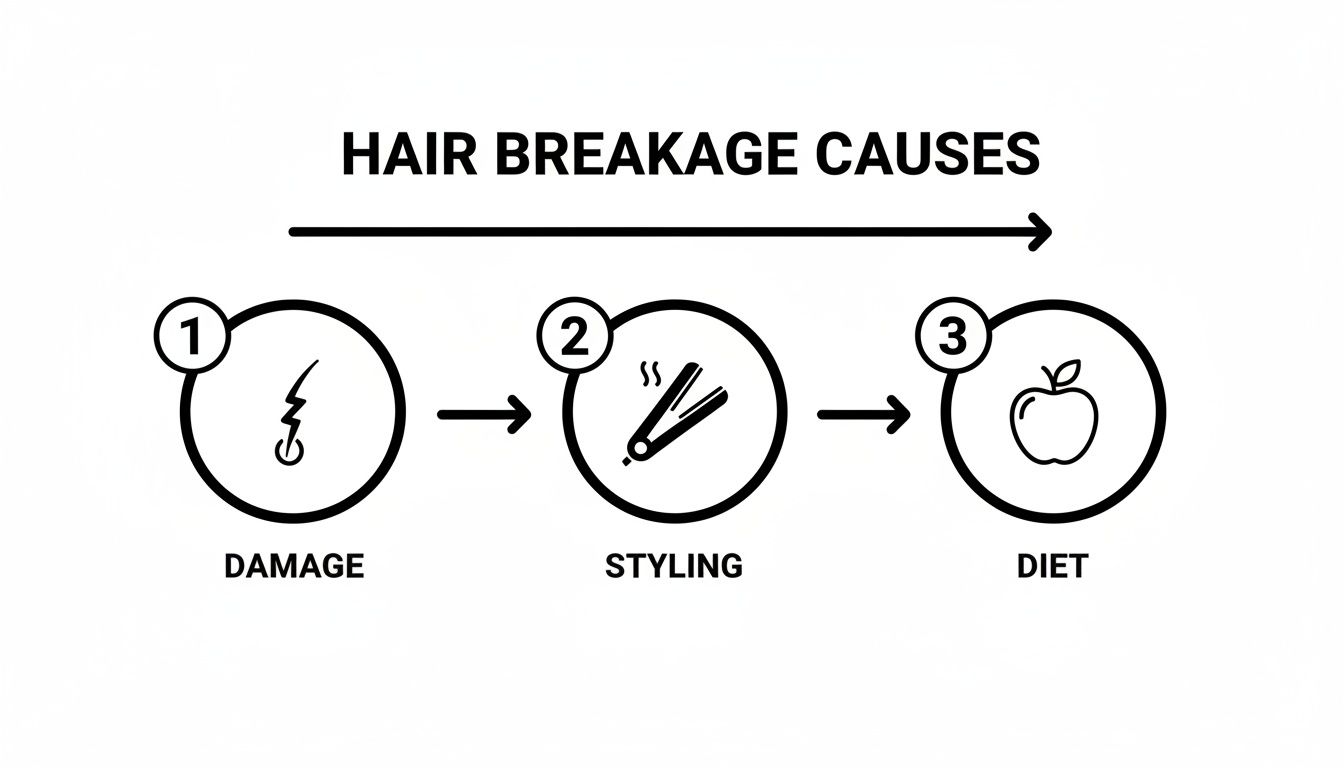
As you can see, the issue is multi-faceted. It stems from physical damage, our styling choices, and even what’s going on inside our bodies. This is exactly why a holistic care plan is so important.
Your Daily Anti-Breakage Plan
The small things you do every single day add up to make the biggest difference in your hair's health. Think of this as your foundational strategy to stop breakage before it even has a chance to start. The main goal here is to minimize daily stress on your hair fibers.
Your daily routine should put gentle handling above all else. This starts the moment you step into the shower. Instead of vigorously scrubbing your shampoo into a tangled mess, use your fingertips to gently massage it directly into your scalp. Let the suds just rinse down through your lengths rather than roughing them up.
And conditioning? It's completely non-negotiable for preventing breakage. A good moisturizing conditioner smooths the hair's outer layer—the cuticle—which immediately reduces friction and makes detangling so much easier. Make sure to apply it from the mid-lengths to the ends, since this is where your hair is oldest and most vulnerable to damage.
The Right Way to Detangle
Detangling is a major source of mechanical damage for so many people, but it really doesn't have to be. The golden rule is to never, ever rip a brush through wet, tangled hair. When hair is wet, it's at its most elastic and fragile state, making it incredibly easy to snap.
Here’s a much better approach:
- Tackle knots before washing. If you have straight or wavy hair, gently brush out any major tangles while your hair is still dry. For curly and coily hair, it's often safer to detangle with loads of conditioner in the shower to create "slip."
- Use the right tools. A wide-tooth comb or even just your fingers are your best friends for working through wet hair. Always start from the ends and gradually work your way up to the roots to gently tease out knots without pulling.
- Pat, don't rub. After washing, gently squeeze the excess water out with a soft microfiber towel or an old cotton t-shirt. Aggressively rubbing with a coarse bath towel roughs up the cuticle, creating instant frizz and weakness.
Patience during this step is one of the single most effective ways to reduce daily hair fall from breakage.
Your Weekly Restorative Ritual
While your daily habits maintain your hair's health, a weekly treatment is where you actively repair and rebuild its strength. This is your chance to give your hair a concentrated dose of the moisture and protein it’s craving to resist damage. A deep conditioning mask is an absolute must.
Set aside time once a week for this. After shampooing, squeeze out as much water as you can and apply a rich, restorative hair mask from the mid-lengths to the ends. Want to boost its effectiveness? Wrap your hair in a warm towel for 10-15 minutes. The gentle heat helps the ingredients penetrate more deeply.
For a comprehensive guide on fitting these steps into a bigger plan, check out our advice on building a routine for beautiful hair. This weekly reset is crucial for replenishing moisture lost from styling and environmental stress, leaving your hair softer, more flexible, and so much stronger.
Best Morfose Products to Use for Hair Breakage
Choosing the right products is a total game-changer when you're trying to stop hair from breaking. The right formula can deliver the specific nutrients your fragile strands are craving, turning the tide from constant snapping to renewed strength. Here at Morfose, we've poured our expertise into specialized lines that get to the core of why hair becomes weak and damaged.
Think of this as your personal guide to finding the perfect match for your hair's unique SOS call.
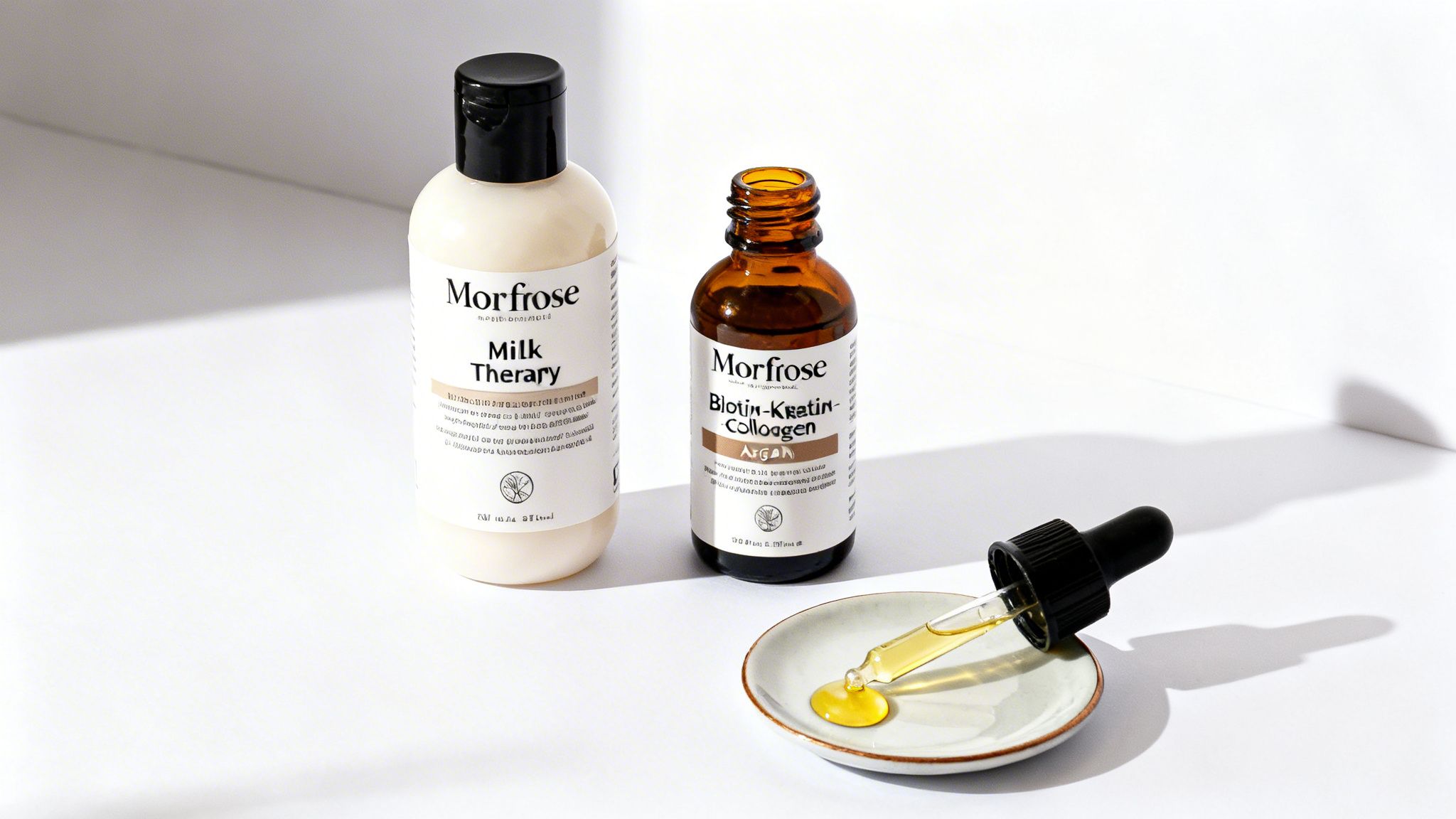
For Dry and Brittle Hair: Milk Therapy
Let's be real: one of the biggest culprits behind breakage is chronic dryness. When hair lacks moisture, it loses all its elasticity and becomes stiff. That makes it way more likely to snap under the slightest pressure from brushing or styling. If that sounds familiar, your hair is practically screaming for deep hydration.
This is exactly where our Morfose Milk Therapy collection comes in. This line was specifically created to drench dry, brittle hair in that much-needed moisture. Its power comes from a unique blend of milk proteins and 12 essential amino acids that work together to bring back softness and flexibility from the inside out.
Using these products consistently helps refill your hair's internal moisture reserves, making every single strand more pliable and resilient. The result? Hair that feels noticeably softer and is far less likely to snap when you so much as look at a hairbrush.
For Structurally Weak and Damaged Hair
Sometimes the problem is deeper than just dryness. Things like chemical treatments, constant heat styling, and even environmental stress can literally break down the protein bonds that give hair its structure. Once those bonds are compromised, your hair becomes weak, porous, and a prime candidate for severe breakage.
To fight back, you have to rebuild the hair's foundation with fortifying ingredients. Our product lines featuring Biotin, Keratin, and Collagen are engineered to do just that.
- Biotin: Often called "vitamin B7," biotin is a powerhouse for improving the infrastructure of keratin, which is the very protein your hair is made of.
- Keratin: This is the literal building block of your hair. Using keratin-based products helps to patch up the weak spots along the hair shaft, reinforcing its entire structure.
- Collagen: Known for its strengthening abilities, collagen helps boost elasticity and fortifies the hair against all that external damage we put it through.
These ingredients work as a team to reinforce your hair's internal structure. They effectively make each strand stronger and much more resistant to the forces that cause it to break in the first place.
For Sealing Cuticles and Preventing Split Ends
Even if you're building strength from within, you still have to protect the hair's outer layer—the cuticle. A rough, lifted cuticle doesn't just cause frizz; it creates friction. That friction leads to tangles and split ends that can quickly travel up the hair shaft. Sealing that cuticle is a non-negotiable step in preventing breakage before it even starts.
For this job, a high-quality hair serum is your absolute best friend. Serums create a protective barrier around each strand, smoothing down the cuticle and cutting down on friction. This makes your hair so much easier to detangle, meaning it's less likely to snag and snap.
Our Morfose Ossion Keratin Hair Serum is fantastic for this. Infused with keratin, it not only creates a smooth, glossy finish but also reinforces weak spots. A few drops can make a world of difference in your detangling routine, helping you glide right through without causing more damage.
Smart Styling Habits to Prevent Damage
Your daily styling routine can be your hair’s best friend or its worst enemy. Getting the look you want shouldn't have to sacrifice your hair's health. With a few smart adjustments, you can style your hair beautifully and actively prevent the kind of damage that leads to breakage. It’s all about working with your hair, not against it.
This really boils down to rethinking your relationship with heat and tension. While that perfectly sleek, flat-ironed finish or a tight, snatched ponytail can look incredible, they're also major sources of stress on your strands. The good news? You don’t have to give them up entirely. You just need to be smarter about how you approach them.
Master the Rules of Heat Styling
Heat styling often gets a bad rap as the ultimate villain in the story of hair breakage, but it doesn't have to be. When used the right way, your tools can absolutely be part of a healthy hair routine. The absolute key is to protect your hair before any heat even thinks about touching it.
A quality heat protectant is completely non-negotiable. Think of it as armor for your hair. It creates a shield between your delicate strands and the high temperatures of your tools, minimizing moisture loss and protecting the cuticle from getting scorched. Without it, you’re essentially frying your hair, leaving it brittle and primed to snap.
Here are the golden rules for safer heat styling:
- Always Use Protection: Never, ever apply heat to bare hair. A few spritzes of the Morfose Heat Protector Spray can make a world of difference.
- Find Your Lowest Effective Temperature: You almost never need to crank your tools to 450°F. Start on a lower setting and only increase it if absolutely necessary to get the style you want. Fine hair, especially, rarely needs extreme heat.
- One and Done: Make a real effort to pass the tool over each section of hair only once. Going over the same spot again and again concentrates the damage and dramatically increases the risk of breakage.
For a deeper dive, our guide on how to protect hair from heat damage is a must-read. It’s packed with practical tips to keep your hair healthy while still using your favorite tools.
Reduce Mechanical Damage from Tight Styles
It’s not just heat that causes problems; physical stress is just as guilty. Those tight ponytails, high buns, and intricate braids might look chic, but they place constant tension on your hair follicles and the hair shaft itself. Over time, this relentless pulling can lead to a specific type of hair loss and breakage known as traction alopecia.
Constant pulling and mechanical stress are responsible for a shocking 26% of gradual thinning cases worldwide. This type of damage often affects women who frequently wear tight styles, making it a widespread—but completely preventable—issue.
Fortunately, avoiding this kind of mechanical damage is pretty straightforward. It all comes down to giving your hair a break and choosing gentler accessories.
Simple Swaps for Stronger Hair
Small changes in your styling habits can deliver big results in reducing breakage. You don't need a complete routine overhaul, just a few more conscious choices day-to-day.
Consider making these easy swaps:
- Switch to Silk or Satin: Ditch those tight elastic bands, especially the ones with metal clasps that snag and rip hair. Opt for soft silk or satin scrunchies that glide over your hair without causing friction.
- Vary Your Hairstyle: Avoid wearing the same tight style every single day. If you love a high ponytail, try wearing it lower the next day or switching to a loose braid. This prevents constant stress on the same group of strands.
- Embrace Heat-Free Options: Give your hair a vacation from hot tools by exploring heatless styling methods. Techniques like braiding damp hair, using foam rollers, or trying the "plopping" method for curls can create beautiful textures without any of the damage.
Nourishing Your Hair from the Inside Out
While all the masks, treatments, and gentle styling habits are game-changers, the real journey to unbreakable hair starts on your plate. What you eat directly fuels the growth and strength of every single strand. Honestly, a nutrient-rich diet is one of the most powerful tools you have to stop hair breakage for good.

Think of it this way: your hair follicles are like tiny factories. If they don’t get the right raw materials, the hair they produce will be weak and brittle from the moment it emerges. You can’t build a strong house with flimsy materials, and the same goes for your hair.
The Building Blocks of Strong Hair
To build hair that can stand up to daily life, you need to focus on a few non-negotiables. These are the core nutrients that fortify your hair from its very foundation.
- Protein (Keratin): Hair is made of about 90% protein, so this one is a no-brainer. When your diet is low in protein, your body rations it, and hair growth is one of the first things to get cut off, leading to weak, snap-prone strands.
- Iron: This mineral is essential for producing hemoglobin, the protein in your red blood cells that carries oxygen everywhere—including to your hair follicles. Low iron is a super common, yet often overlooked, cause of thinning and breakage.
- Biotin (Vitamin B7): Famous for a reason, biotin helps improve your body's keratin infrastructure. It’s a key player in maintaining the structural integrity of your hair.
- Zinc: Zinc is crucial for hair tissue growth and repair. It also helps keep the oil glands around the follicles working properly, which is vital for a healthy scalp and, by extension, healthy hair.
Building a Hair-Healthy Plate
Weaving these nutrients into your diet is simpler than it sounds. This isn't about some restrictive eating plan; it’s about making smart, delicious swaps and additions.
For instance, starting your day with eggs gives you a fantastic hit of both protein and biotin. For lunch, a big spinach salad topped with lentils or chickpeas delivers a powerful dose of iron. A piece of salmon for dinner? You’re getting quality protein and omega-3 fatty acids, which are amazing for scalp health.
Practical Food Sources for Stronger Hair
Ready to start eating your way to better hair? Here’s a quick cheat sheet of foods packed with the nutrients your hair is craving:
| Nutrient | Top Food Sources | Why It Matters for Hair |
|---|---|---|
| Protein | Lean meats, fish, eggs, Greek yogurt, lentils | Directly builds the keratin structure of the hair shaft. |
| Iron | Spinach, red meat, lentils, fortified cereals | Ensures follicles get enough oxygen for healthy growth. |
| Biotin | Eggs, almonds, salmon, sweet potatoes | Supports the production of keratin, the hair's core protein. |
| Zinc | Oysters, beef, pumpkin seeds, chickpeas | Aids in cell reproduction and tissue growth for stronger hair. |
By prioritizing foods like these, you're not just nourishing your body—you're giving your hair the exact fuel it needs to grow strong from the root. For more delicious ideas, dive into our guide on the nutrient-packed powerhouses that are the best foods for healthy hair.
If you're curious about how supplements can fill in any gaps, you might want to explore the benefits of a chlorella food supplement for hair. This holistic approach—combining a balanced diet with targeted external care—is hands down the most effective way to finally win the battle against breakage.
Your Top Questions About Hair Breakage, Answered
When you're dealing with frustrating hair breakage, a lot of questions can come up. It's totally normal. To help you get on the right track and feel confident about your hair care plan, I've rounded up some of the questions I hear most often.
Let's clear things up so you can focus on getting that strong, healthy hair you deserve.
How Long Does It Take to See Results?
This is probably the number one question, and the honest answer is: it depends, but patience is your best friend here.
You can definitely start feeling a difference pretty quickly. By switching to a gentler routine, you'll notice less snapping and snagging within just a couple of weeks. Your hair will likely feel softer and look less frizzy within 2-4 weeks, especially if you're consistently using strengthening products like the ones in Morfose's Keratin or Milk Therapy collections.
But for that real, deep-down transformation? You’ll want to give it at least 3-6 months. That's the time it takes for healthier, more resilient hair to grow out from the scalp, showing the true results of your efforts.
Can I Stop Hair Breakage Completely?
While aiming for zero breakage ever might be a stretch—life happens!—you can absolutely get it down to a bare minimum. The real goal is to get your hair to its strongest, most resilient state so it can handle day-to-day life.
Think of it this way: by combining a nutrient-rich diet, smarter handling techniques, and cutting back on heat and chemical damage, you're building up your hair's defenses. Add in targeted restorative products, and you'll dramatically reduce how much it snaps. The aim is hair that doesn't just survive, but thrives.
We dive even deeper into this topic in our guide on how to reduce hair breakage and split ends.
Is It Better to Use Protein or Moisture Treatments?
The magic isn't in choosing one over the other—it's in finding the perfect balance of both. Your hair needs protein for structure and strength, but it also needs moisture for flexibility and elasticity. Tipping the scales too far in either direction can actually make things worse.
A simple, effective strategy is to use a deep moisturizing mask weekly. The Morfose Milk Therapy Hair Mask is fantastic for this, as it keeps hair soft and pliable. Then, weave in a protein treatment, like a keratin-based product, every 4-6 weeks to help rebuild and fortify the hair shaft. Pay attention to how your hair feels and adjust as needed.
When Should I See a Professional?
If you've been consistent with a solid hair care routine for a few months and you're still seeing a discouraging amount of breakage, it might be time to call in an expert. This is especially true if you notice the hair isn't just snapping mid-shaft, but seems to be shedding directly from the scalp.
A trichologist (a specialist in hair and scalp health) or a dermatologist can help figure out if there's an underlying issue. Sometimes, things like scalp conditions, nutritional gaps, or other health concerns can be the root cause. They can give you a proper diagnosis and point you toward more targeted medical treatments if that's what you need.
It's important to remember that while breakage is common, it's often connected to the bigger picture of hair health. While 95% of hair loss cases are linked to androgenetic alopecia, breakage can make thinning look much more severe, impacting the 50 million men and 30 million women in the US dealing with hair loss. Since dry hair is a whopping 3x more likely to break, keeping it hydrated is non-negotiable. You can read more of these hair loss statistics on electroiq.com.
Stop Hair Breakage for Good
Ending the cycle of hair breakage is completely achievable when you take a holistic approach. By understanding the causes, adopting a gentle daily routine, and nourishing your hair from the inside out, you're building a powerful defense. Consistency is key, and incorporating targeted solutions from Morfose can significantly accelerate your journey back to strong, healthy hair.
Ready to turn things around? Explore our collections and find the perfect routine to put a stop to hair breakage today.
Shop Morfose Hair Care Solutions Now
More on this topic: What Causes Hair Breakage and How to Stop It for Good.
