
How to Treat Chemical Burns on Scalp: A Practical Guide
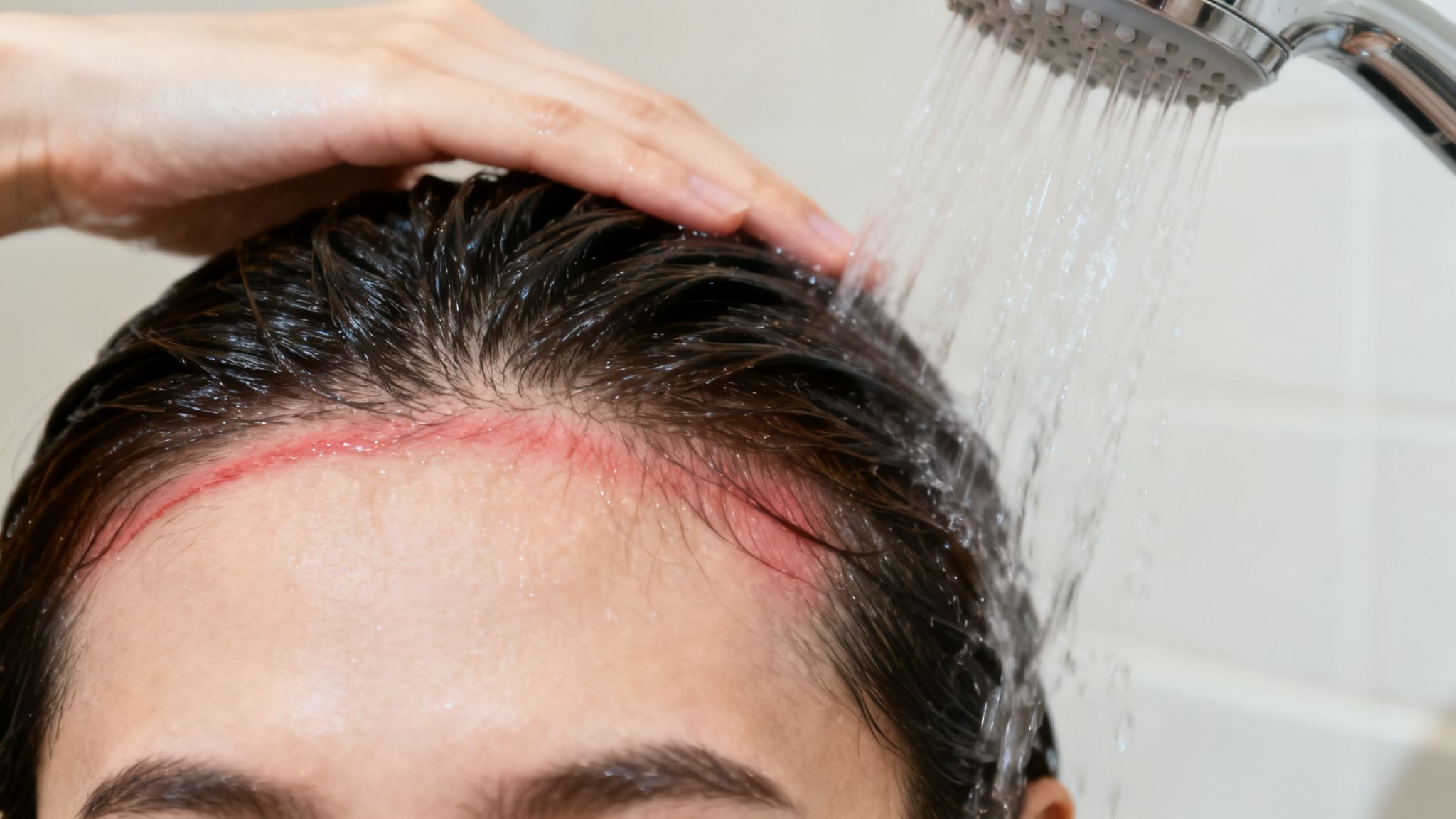
A chemical burn from hair dye, bleach, or a relaxer requires immediate action. The single most important first step is to get your head under cool, running water. You must rinse the affected area for at least 20-30 minutes to halt the chemical reaction and prevent the damage from getting worse.
Your Immediate First Aid Plan For A Chemical Scalp Burn
That sudden, intense burning sensation on your scalp during a hair treatment is a clear sign something is wrong. Whether it's bleach left on too long, a harsh dye, or a powerful relaxer, your actions in the first few moments are critical. Knowing how to treat a chemical burn on the scalp can be the difference between a minor irritation and a serious, long-term injury.
Your immediate goal is simple: dilute and wash away the chemical causing the burn. Getting it off your skin as quickly as possible is the key to stopping the damage, easing the pain, and giving your scalp the best chance for a full recovery.
The First Crucial Step: Rinsing
Don't wait. Get into the shower or put your head under a sink faucet immediately. Use cool water—not ice-cold, as extreme temperatures can shock the skin and worsen the injury. Let the cool water run continuously over the burned area for a full 20 to 30 minutes.
This might feel like a long time, but this step is non-negotiable. It's the only way to ensure you've completely flushed the chemical out of your hair and off your scalp. Research shows that very few people rinse for the recommended duration. Taking this one step can reduce the risk of a severe, full-thickness burn by five times.
Gently Remove Contaminated Items
While rinsing, carefully remove anything that might hold the chemical against your skin. This includes hair clips, earrings, or clothing around your neck and shoulders, like a shirt or salon cape. Be incredibly gentle; do not pull on your hair or scrub your scalp.
The goal is to eliminate any lingering source of the chemical. If you got dye on your hands, we have some great tips on how to remove hair dye from skin safely.
Key Takeaway: Do not scrub, rub, or try to "neutralize" the burn with other substances like vinegar or baking soda. Your only job is to rinse with copious amounts of cool water. Attempting to counteract the chemical can trigger a second reaction and make the burn significantly worse.
This guide provides a quick visual reminder of the essential first aid steps.
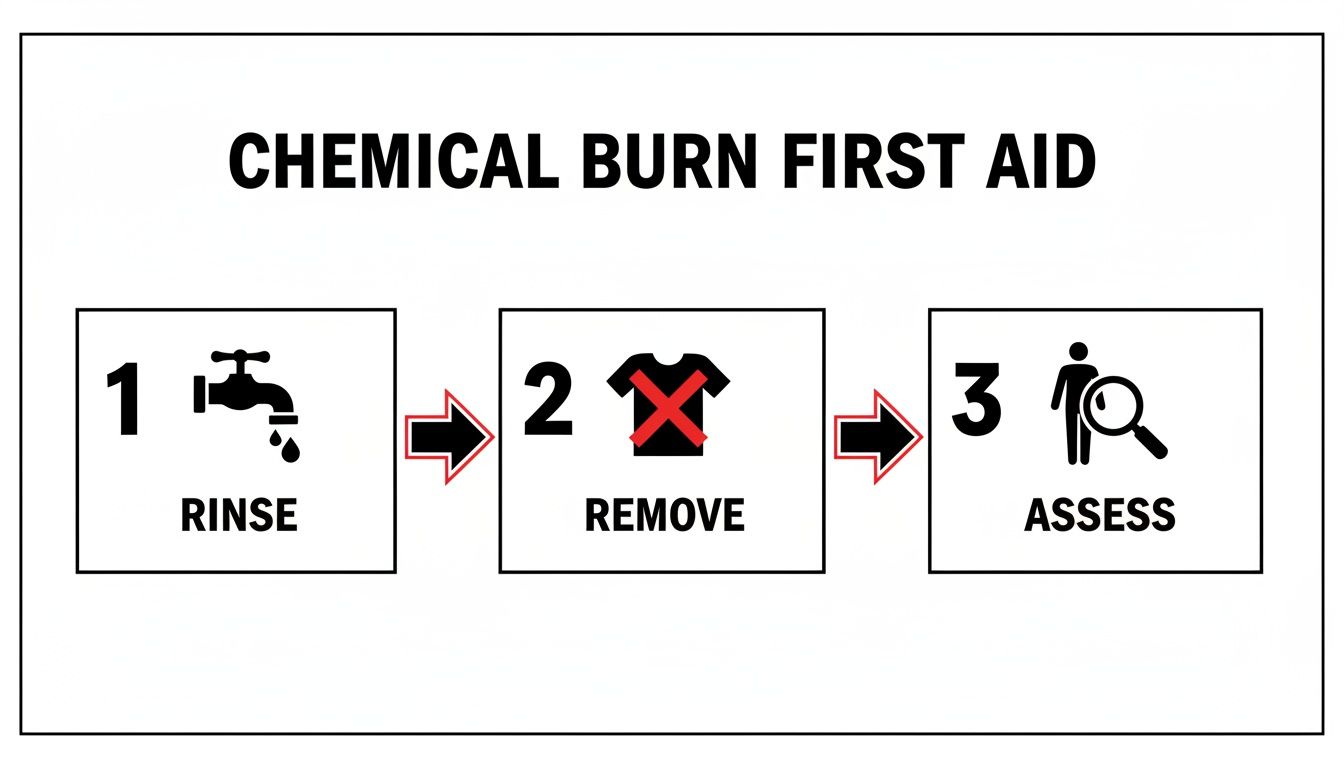
The process is straightforward: rinse, remove contaminated items, and then assess the burn to determine your next steps.
After the long rinse is complete, you can begin to assess the damage. Look for signs of a serious burn: intense, persistent pain, widespread redness, swelling, or blistering. These are all red flags indicating you need to see a doctor. Here is a quick reference guide for those critical first moments.
Emergency Dos and Don'ts for Scalp Chemical Burns
When you're in pain, it's easy to forget what to do (and what not to do). Use this simple table as your quick guide for immediate actions.
| Action | What to Do (The Dos) | What to Avoid (The Don'ts) |
|---|---|---|
| Rinsing | Rinse with cool, running water for 20-30 minutes straight. | Don't use hot or ice-cold water. |
| Contact | Gently remove contaminated clothing, jewelry, or hair accessories. | Don't scrub, rub, or pick at the scalp. |
| Application | Leave the area clean and bare after rinsing. | Don't apply ointments, creams, or home remedies like vinegar or butter. |
| Observation | Pay close attention to the burn's appearance after rinsing. | Don't ignore symptoms like blisters, severe swelling, or intense pain. |
Following these guidelines can make a significant difference in your recovery. Your focus should always be on diluting the chemical and avoiding anything that could complicate the injury.
When to Seek Professional Medical Help for a Scalp Burn
After you've completed the crucial first step of rinsing, it's time to calmly assess the situation. While many minor irritations from hair products can be managed at home, some chemical burns are true medical emergencies. Knowing the difference is critical for your long-term scalp and hair health.
The challenge with chemical burns is that the initial appearance isn't always the full story. An injury can seem minor at first but worsen over the next few hours. That's why recognizing the warning signs that it's time to call a doctor is so important.
Identifying the Severity of the Burn
Like thermal burns, chemical burns are classified by their severity. Understanding these levels will help you determine how serious the injury is and communicate it clearly to a medical professional.
-
First-Degree Burn: This is the mildest type. Your scalp will be red, slightly swollen, and tender, similar to a sunburn. There will be no blisters. The damage is limited to the top layer of skin and usually heals on its own.
-
Second-Degree Burn: This is a more serious injury that penetrates deeper into the skin. Along with significant redness and swelling, the key sign of a second-degree burn is the presence of blisters. They may be small or large and can sometimes weep a clear fluid. This type of burn is typically very painful.
-
Third-Degree Burn: This is the most severe and always requires immediate emergency medical care. The damage extends through all layers of the skin, possibly reaching the underlying tissue. The scalp might appear white, charred, blackened, or have a leathery texture. A third-degree burn may not be painful at its deepest point because the nerve endings have been destroyed.
Red Flags That Signal a Medical Emergency
If you are even slightly unsure about the severity of the burn, do not hesitate to seek medical help. It is always better to be cautious.
Seek professional medical care immediately if you experience any of these symptoms:
- Intense, Unrelenting Pain: The pain is severe and does not improve after rinsing or taking over-the-counter pain relievers.
- Large or Numerous Blisters: You see any blisters larger than a quarter or multiple blisters covering a large area of your scalp.
- Signs of Deep Damage: The skin on your scalp appears white, blackened, or feels leathery.
- Oozing or Pus: Any discharge, particularly if it's yellow or green, indicates an infection and requires medical attention.
- Large Burn Area: The burn covers an area larger than three inches in diameter.
Crucial Advice: If you begin to feel generally unwell—developing a fever, dizziness, nausea, headache, or muscle weakness—go to an emergency room. This could indicate that the chemical has been absorbed into your bloodstream, which is a very serious situation.
When you see a doctor, be prepared to tell them exactly what product caused the burn and how long it was on your skin. If possible, bring the product packaging with you.
What About Poison Control?
Calling Poison Control is an excellent and highly recommended step. Their number in the US is 1-800-222-1222.
The experts at Poison Control can provide specific advice over the phone for the exact chemical that caused the burn. They will guide you on what to do and whether your symptoms warrant a trip to the ER. Their service is free, confidential, and available 24/7.
Ultimately, trust your instincts. If something feels seriously wrong, it probably is. Delaying care can lead to worse scarring, a higher risk of infection, and potentially permanent hair loss.
How to Care for Your Scalp as It Heals
Once the initial emergency has been handled and you've confirmed you don't need immediate medical attention, the focus shifts to healing. The way you care for the area in the following days and weeks is crucial for a successful recovery. The plan is simple: be exceptionally gentle, prevent infection, and soothe the traumatized skin.
This healing phase requires patience and protection. Your scalp's natural barrier has been compromised, leaving it vulnerable to further irritation. Simple changes, like using the right water temperature or avoiding your usual styling products, will make a significant difference in how quickly and effectively you heal.
Keeping the Area Clean and Soothed
Cleanliness is essential to prevent infection, but you must be incredibly gentle. For the first few days, use only lukewarm water to rinse the area. Hot water will intensify the pain and inflammation, while ice-cold water can shock the skin.
When you're ready to wash your hair again, usually after a day or two, avoid your regular shampoo. You need the mildest, sulfate-free cleanser you can find. Sulfates are harsh detergents that will strip away your scalp's remaining natural oils, causing more irritation and dryness.
Pro Tip: After rinsing, do not rub your scalp with a towel. Gently pat the area dry with a soft, clean cloth, or better yet, let it air-dry completely. Friction is your enemy right now.
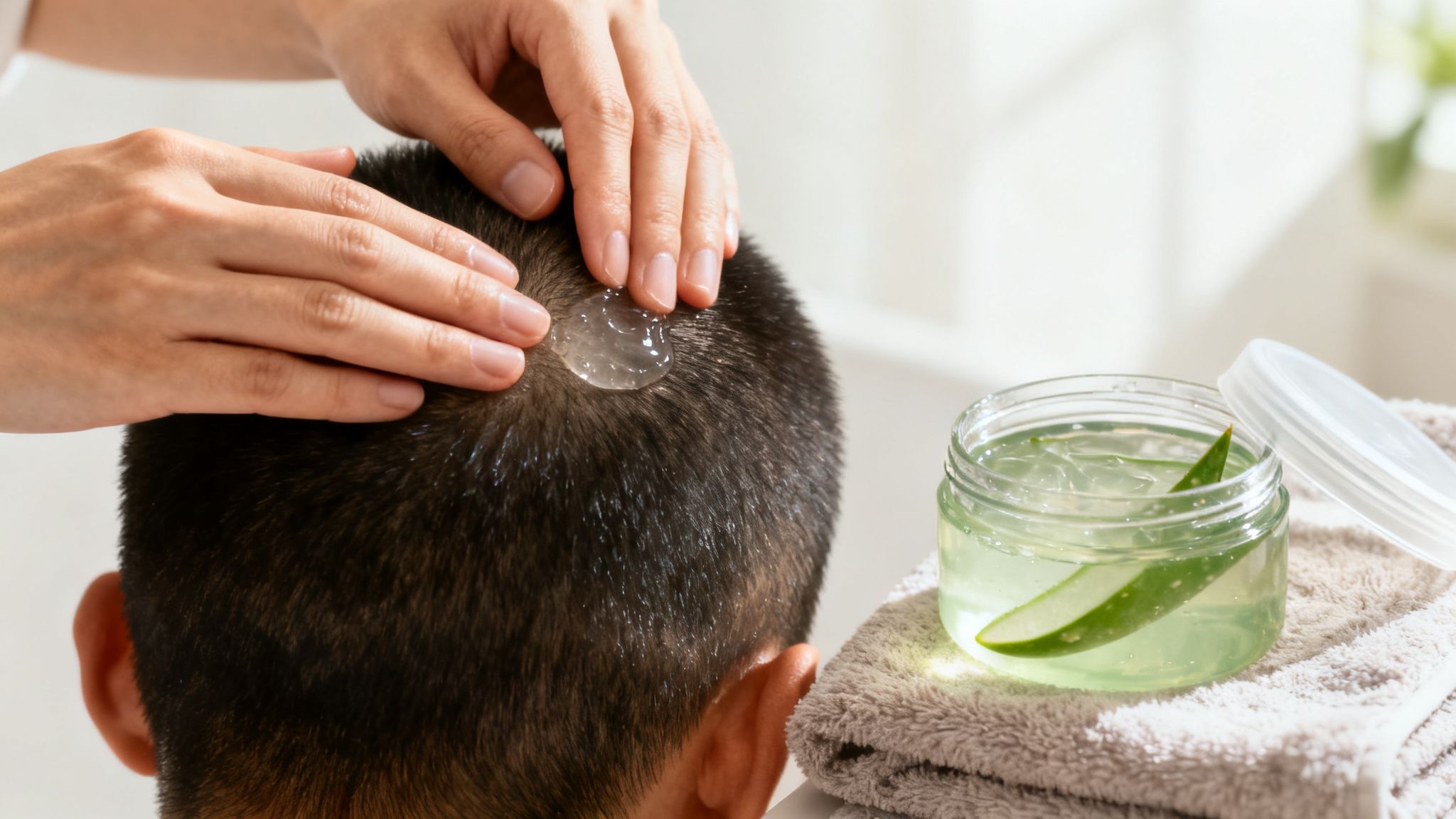
After cleaning, applying a soothing agent can provide significant relief. Studies suggest that applying pure aloe vera gel or a thin layer of petroleum jelly can shield the healing scalp and reduce the risk of infection as it scabs over.
Managing Discomfort and Promoting Healing
Even a mild chemical burn can be painful. Over-the-counter pain relievers like ibuprofen or acetaminophen can help manage the discomfort and reduce inflammation. Always follow the dosage instructions on the package.
A cool compress can also offer immediate relief. Soak a clean washcloth in cool water, wring it out, and gently lay it on the affected area for 15-20 minutes at a time. Repeat this several times a day to ease the stinging sensation and reduce swelling.
It is critical that you resist the urge to pick at any scabs or peeling skin.
- Scabs Are Natural Bandages: They form a protective barrier over the delicate new skin forming underneath.
- Picking Leads to Scars: Removing them prematurely can introduce bacteria, leading to infection and increasing the risk of permanent scarring.
- Delaying Healing: Interfering with the natural healing process will only set back your recovery.
Your scalp is highly vulnerable to the sun while healing. Sun exposure can cause hyperpigmentation (dark spots) and slow down the healing process. If you must be outside, wear a wide-brimmed hat or use a physical sunblock with zinc oxide that you can gently apply.
As your scalp recovers, you might explore options like wound oxygen therapy for healing to support the process. For a deeper dive into overall scalp health, read our guide on nourishing your scalp for healthy hair.
Recommended Morfose Solutions for Healing a Burnt Scalp
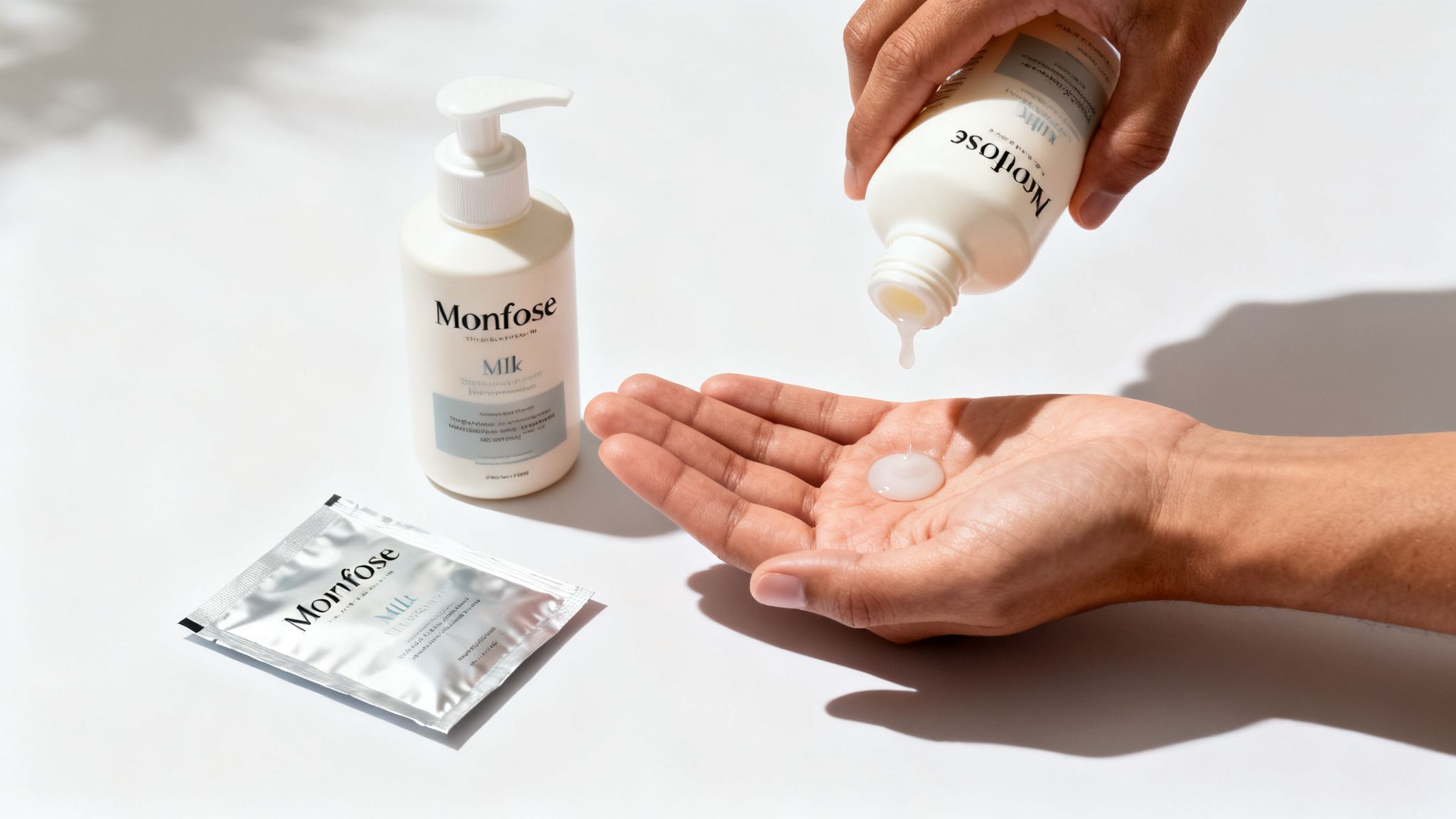
After a chemical burn, your scalp and hair are left in a fragile state. The natural protective barrier is compromised, and your hair follicles are stressed. This is a critical recovery phase where your choice of products can either promote healing or cause further harm.
It is essential to switch from your regular routine. Standard hair products with harsh sulfates or drying alcohols are detrimental to a healing scalp. Your mission is to soothe irritation, provide intense moisture, and gently strengthen weakened hair without adding more stress. This aftercare is just as vital as the initial first aid.
Start with Gentle, Soothing Cleansing
When your scalp is raw and tender, an aggressive shampoo is the last thing it needs. The Morfose Milk Therapy line is specifically designed for gentle care. It uses milk protein and a blend of 12 essential amino acids to deliver deep, calming hydration.
The formula is exceptionally mild, with milk proteins that calm inflammation and replenish moisture, creating an ideal environment for your skin to repair itself. The amino acids help rebuild the hair's protein structure, which is often compromised after a chemical injury. Using the Morfose Milk Therapy Creamy Milk Shampoo allows you to cleanse your hair without stripping the fragile oils your scalp needs to recover, making it the perfect first step toward rebuilding scalp health.
Rebuild Strength from the Follicle Out
A chemical burn can wreak havoc on your hair, leaving it brittle and prone to breakage. The alkalinity of chemicals in relaxers or bleaches can damage the keratin bonds that give hair its strength. To counteract this, you need to infuse your hair with targeted, fortifying ingredients.
- Bring in the Keratin: The Morfose Keratin Hair Mask acts as a repair crew for your hair strands. It helps patch up damaged spots, smooth the cuticle, restore resilience, and reduce the risk of further breakage.
- Support with Biotin: Biotin (Vitamin B7) is a powerhouse for healthy hair growth. A Biotin-rich conditioner supports the follicles as they recover, encouraging stronger, healthier hair to grow.
Using these treatments together provides a two-pronged approach: keratin repairs existing damage while biotin supports strong new growth.
A Complete Approach to Scalp and Hair Recovery
To fully recover from a chemical burn, your scalp needs a comprehensive care routine. Incorporate gentle leave-in treatments and serums that provide continuous nourishment throughout the day.
By building a complete routine that supports every aspect of recovery—from cleansing and conditioning to ongoing protection and repair—you give your scalp and hair the best chance to heal completely.
Explore our full range of scalp and hair treatments to find the perfect combination for your recovery needs.
Understanding and Preventing Future Scalp Burns
The best way to treat a chemical burn on your scalp is to prevent it from ever happening. After experiencing the painful healing process, prevention should be your top priority. Understanding the risks associated with chemical hair treatments, whether at a salon or at home, empowers you to protect yourself.
Many popular hair treatments involve powerful chemicals that can cause significant damage if used incorrectly. High-volume developers in bleach, paraphenylenediamine (PPD) in dark dyes, and sodium hydroxide in relaxers are common culprits. Familiarizing yourself with these ingredients and their proper application is a crucial step toward safer hair care.
Mastering At-Home Hair Color Safety
Coloring your hair at home offers convenience, but it also places the responsibility for safety squarely on your shoulders. When working with chemicals that can burn your skin, you must be meticulous.
For a broader perspective on chemical safety, this practical guide to chemical safety in the workplace offers relevant principles.
Follow these non-negotiable rules every time:
- Always Do a Patch Test: This is the golden rule. Apply a small amount of the product to a discreet spot, like behind your ear, 48 hours before you plan to use it. This test can alert you to an allergic reaction or severe sensitivity before the product touches your entire scalp.
- Respect Processing Times: The instructions on the box are not suggestions. Leaving a chemical on for "just five more minutes" can be the difference between tingling and a full-blown chemical burn. Set a timer and adhere to it strictly.
- Never Overlap Chemicals: Avoid applying new chemical treatments to recently processed hair. If you just relaxed your hair, wait several weeks before coloring. Layering harsh chemicals can weaken your hair and dramatically increase the risk of a scalp injury.
Key Insight: It's a myth that chemical burns are solely a DIY problem. A case series on scalp burns from hair bleach found that a staggering 71% of incidents occurred in professional salons. You can read more about these findings on ajops.com.
How to Advocate for Yourself at the Salon
Even when you're paying a professional, you need to be an active participant in your own safety. A great stylist will prioritize your scalp's health, but clear communication is essential.
Be upfront about your hair history and any sensitivities. If you've had a bad reaction in the past or know your scalp is sensitive, inform your stylist before they begin. Don't hesitate to ask about the products they're using and the protective measures they plan to take.
A few simple questions can make all the difference:
- "My scalp can be quite sensitive. What kind of barrier cream will you be using around my hairline?"
- "Since we're trying a new color line, could we do a patch test before my appointment?"
- "How long do you plan to leave the bleach on? I want to make sure we don't over-process."
Being informed and proactive is your best defense. If you're considering lightening your hair yourself, check out our detailed guide on how to bleach hair at home for more essential safety tips.
Common Questions About Scalp Chemical Burns
After the initial shock of a chemical burn on your scalp, it's normal to have questions and feel anxious. Understanding what to expect during the healing process can provide reassurance and help you feel more in control of your recovery.
Here are clear answers to some of the most common concerns people have after this type of injury.
Will My Hair Grow Back After a Chemical Burn?
This is often the first and most frightening question. The good news is that the answer is usually yes, but it depends entirely on the depth of the burn.
Your hair follicles, where hair growth begins, are located deep within the dermis layer of your skin.
- For first-degree and most second-degree burns, the damage is typically superficial. You might experience some temporary hair shedding (telogen effluvium), but the follicles themselves are usually unharmed. In these cases, your hair should start to grow back once the scalp has fully healed.
- For severe second-degree or third-degree burns, the damage can be deep enough to permanently destroy the hair follicles. Once a follicle is destroyed, it cannot regenerate, which can lead to permanent patches of hair loss (scarring alopecia).
How Long Does a Scalp Burn Take to Heal?
Patience is key during the healing process. Recovery times vary depending on the severity of the burn.
Here’s a general timeline:
- First-Degree Burns: These mild burns, characterized by redness and tenderness, usually heal within a week. You may notice some light peeling, similar to a sunburn.
- Second-Degree Burns: These are more serious, often involving blisters, and typically take two to three weeks to heal, provided no infection occurs. Keeping the area clean and avoiding picking at scabs is crucial.
- Third-Degree Burns: These severe injuries require a doctor's care. Healing can take months and may involve treatments like skin grafts. In serious cases, medical interventions can range from IV narcotics to surgical procedures. To learn more, you can read the full research abstract on the subject.
Can I Color My Hair Again After a Burn?
It is absolutely essential to wait until your scalp is 100% healed before considering any chemical service, including coloring or relaxing.
Expert Advice: Never apply hair dye or any other chemical to broken, irritated, or scabbed skin. Doing so is not only incredibly painful but also risks severe infection and permanent damage.
Even after a mild burn, your scalp needs a minimum of four to six weeks to recover. For more serious burns, consult a dermatologist before attempting another chemical service. They can confirm if your skin is strong enough to handle it.
When you get the green light, take new precautions. Opt for gentler, ammonia-free formulas and always perform a patch test 48 hours beforehand, even with a product you've used before. Your scalp's sensitivity may have permanently changed. For more answers, check out our comprehensive FAQs page.
After a chemical burn, your scalp's recovery depends on gentle, restorative care. Morfose products, especially our Milk Therapy line, are formulated with soothing milk proteins and amino acids to help replenish moisture and calm irritation without harsh sulfates. Trust our expertly crafted solutions to support your scalp's healing journey.
