
Heat Protectant Spray for Hair: Your Ultimate Guide to Safe Styling
Think of a heat protectant spray for hair as your hair's personal bodyguard. It’s the invisible shield standing between your delicate strands and the intense heat of a blow-dryer or flat iron. If you style with heat, using one is a non-negotiable step to prevent breakage, stop frizz in its tracks, and keep moisture locked in, ensuring every style is a masterpiece, not a mistake.
What Is a Heat Protectant Spray and Why Is It Essential?
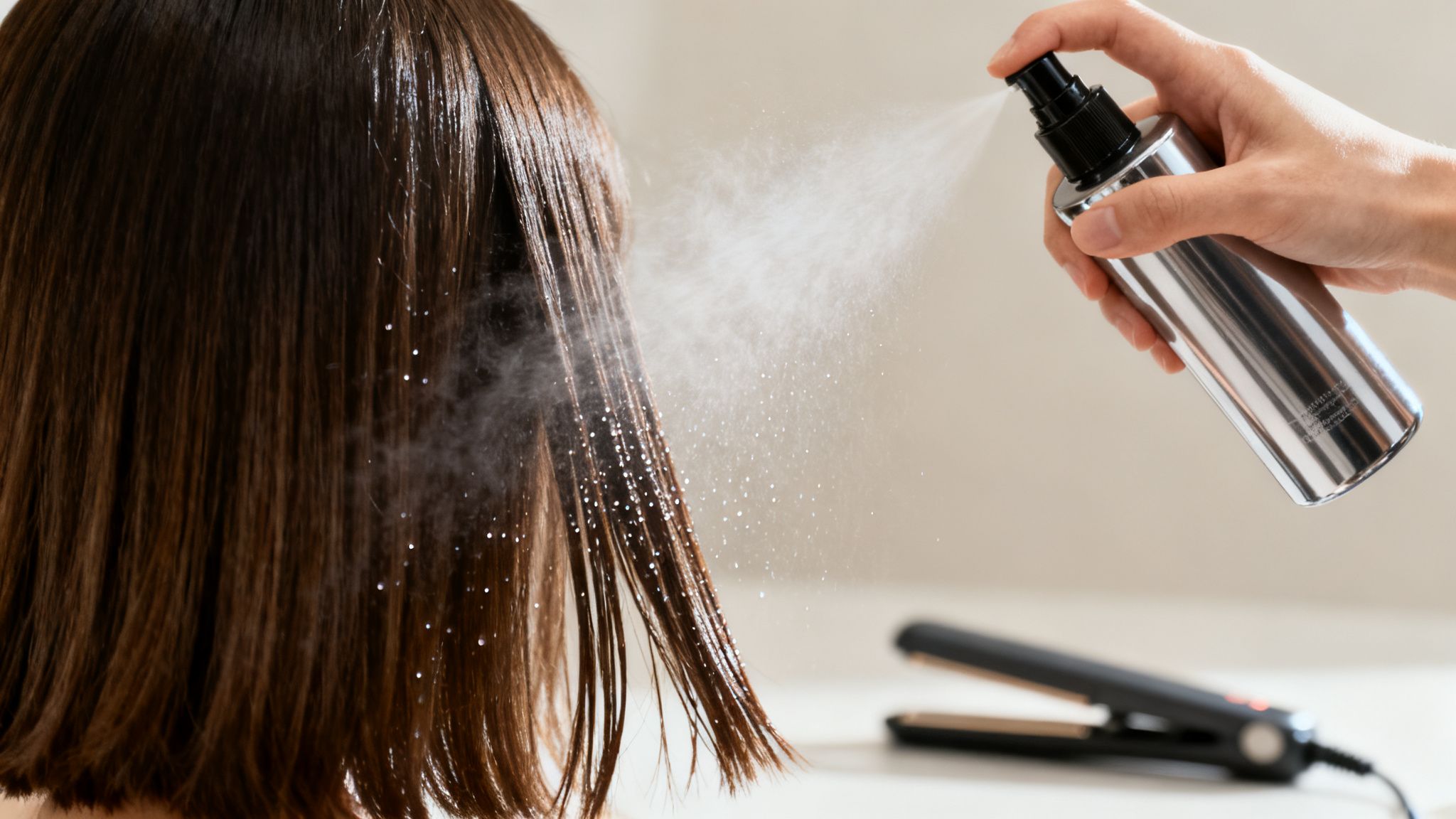
At its core, a heat protectant is a styling product designed to form a protective barrier around the hair shaft. This layer minimizes the damage from hot tools like flat irons, curling wands, and blow dryers. Without it, the intense heat can actually boil the water inside your hair, creating tiny cracks in its surface, degrading its natural proteins, and causing damage that’s impossible to undo.
But a great protectant does more than just play defense. By sealing the hair's outer layer, or cuticle, it also helps you get better styling results. Your hair will be less frizzy, hold onto moisture, and have a beautiful, healthy-looking shine. It’s a critical first step that makes your final style look more polished and last much longer.
The Growing Need for Thermal Protection
More people are reaching for these sprays than ever before, and it’s easy to see why. The global market for heat protection sprays was valued at a massive $11,030.1 million in 2023 and is expected to more than double to $22,140.1 million by 2031.
This boom is directly tied to the fact that the use of heat styling tools has shot up by over 25% in the last decade. As we style more, we're becoming more aware of the risks, making a good heat protectant an absolute staple.
A heat protectant spray does more than just shield your hair; it primes it for a better, longer-lasting style. Think of it as the foundational step that makes every other styling product work more effectively.
What Happens Without a Heat Shield?
To understand what your hot tools are doing, imagine placing a fresh, damp leaf on a hot pan. It sizzles, dries out instantly, and becomes brittle enough to crumble. On a microscopic level, that’s exactly what’s happening to your hair every time you apply direct heat without protection.
The intense temperature strips away natural oils and moisture, leaving your hair vulnerable. This leads to a whole host of common problems, which we can see when comparing protected vs. unprotected hair.
Let's break down the differences.
Heat Styling Damage vs Protected Hair
| Hair Concern | Without Heat Protectant | With Heat Protectant |
|---|---|---|
| Moisture Levels | Hair becomes severely dehydrated and straw-like. | Natural moisture is sealed in, keeping hair soft. |
| Breakage | Strands become brittle, leading to split ends and snapping. | Hair remains strong and flexible, reducing breakage. |
| Color Vibrancy | Heat fades color-treated hair, causing dullness and brassiness. | Color is shielded, staying vibrant and true for longer. |
| Texture & Shine | Hair appears frizzy, dull, and lifeless. | The cuticle is smoothed, resulting in a sleek, shiny finish. |
As the table shows, that quick spritz of protectant makes all the difference in the world. It’s the simple step that prevents these issues before they start. By creating a buffer, the spray slows down how quickly your hair heats up and distributes that heat more evenly.
This is the key to how to protect hair from heat damage while still getting the beautiful, sleek, or curly styles you love.
The Science Behind Shielding Your Hair from Heat
Ever wonder how a fine, lightweight mist can possibly stand up to a 450°F flat iron? It’s not magic—it's smart cosmetic science. A good heat protectant creates a powerful thermal shield that works on multiple levels to keep your strands safe.
When you spritz on a heat protectant spray for hair, you’re coating each strand in a cocktail of protective ingredients. The goal is to stop the intense heat from your styling tools from directly torching the hair’s delicate inner structure. It all comes down to three core functions working in perfect harmony.
The First Line of Defense: Forming a Barrier
First and foremost, a heat protectant creates a physical barrier between your hair and the hot tool. This is where hardworking ingredients like polymers and silicones come into play. They’re chosen specifically for their low thermal conductivity, which is a fancy way of saying they slow down the transfer of heat.
Think of it like using an oven mitt to pull a hot dish from the oven. The mitt doesn't get rid of the heat, but it dramatically slows down how fast it reaches your hand, saving you from a burn. These ingredients form a similar protective film on the hair shaft.
This film does two critical things:
- Slows Heat Transfer: It forces the hair to heat up more gradually, preventing "hot spots" that can scorch and snap a strand in an instant.
- Distributes Heat: The barrier helps spread the heat more evenly along the hair, so no single section gets blasted with extreme temperatures for too long.
Many people are wary of silicones, but for this specific job, they are incredibly effective. You can explore the truth about how silicones affect your hair in our detailed guide.
The Second Key Function: Locking in Moisture
One of the biggest risks of heat styling is that it can literally boil the water molecules inside your hair. This process is called "flash drying," and it causes steam to burst through the hair's outer layer, creating tiny cracks and leaving hair brittle and straw-like.
A great heat protectant stops this by sealing the hair's cuticle layer shut.
This sealing action traps your hair’s natural moisture inside the strand. By keeping that water from rapidly turning to steam, the protectant minimizes internal damage and keeps your hair hydrated and flexible, even under high heat.
This moisture retention is the secret to hair that still feels soft after you style it. Instead of becoming dehydrated and frizzy, your hair stays pliable and healthy-looking.
The Final Touch: Smoothing the Cuticle
The outer layer of your hair, the cuticle, is made of tiny, overlapping scales. When your hair is healthy, those scales lie flat, creating a smooth surface that reflects light and looks shiny. Heat blasts these scales open, making hair look dull, rough, and frizzy.
Heat protectants are often packed with nourishing oils, proteins, and conditioning agents that smooth and seal these cuticles down. This doesn't just add another layer of protection—it makes your finished style look so much better.
By keeping the cuticle flat, a heat protectant spray:
- Reduces Frizz: A smooth, sealed cuticle can't absorb moisture from the air, which is what causes hair to puff up and frizz out.
- Increases Shine: A flat surface reflects way more light, giving your hair that healthy, glossy finish we all want.
- Minimizes Tangles: Smooth strands glide past each other instead of snagging, preventing knots and breakage while you style.
So, the science is clear. A heat protectant isn't just another styling product to clutter your shelf; it's an essential treatment that actively shields, hydrates, and smooths your hair. It’s the proof you need that gorgeous style and healthy hair really can go hand in hand.
How to Find The Right Heat Protectant For Your Hair Type
Picking the right heat protectant spray for hair isn't a one-size-fits-all deal. Think of it like skincare—you wouldn't slather a heavy cream on oily skin, right? The same logic applies to your hair.
The perfect formula gives you all the protection you need without wrecking your style. But the wrong one? It can leave your hair greasy, totally flat, or worse, still exposed to heat damage. The first step to finding your holy grail product is understanding your hair's unique texture, density, and condition.
For Fine or Thin Hair
If you have fine or thin hair, the biggest struggle is finding something that won't weigh it down. A heavy product can make your hair look limp and oily before you even plug in the flat iron. This is why lightweight mists are your absolute best friend.
You want to look for water-based sprays that feel like next to nothing. These formulas create a solid thermal barrier without leaving behind any gunky, heavy residue.
- What to look for: Keep an eye out for products labeled "lightweight," "volumizing," or "oil-free." Ingredients like hydrolyzed wheat protein are great because they add strength without bulk.
- What to avoid: Run from heavy creams, thick serums, and anything loaded with rich oils like coconut or shea butter. They will almost certainly flatten your style.
The goal here is protection without sacrifice. A super-fine mist coats your hair evenly, giving it a powerful defense against heat while letting your hair keep its natural bounce and movement.
For Thick, Coarse, or Curly Hair
Thick, coarse, or curly hair tends to be on the drier side and needs a lot more moisture to stay healthy and manageable. Your hair can handle richer, more substantial formulas, so don't be shy about reaching for them.
Creams and oil-based serums are fantastic choices for you. They do more than just provide top-notch heat protection; they also deliver a much-needed drink of hydration that helps smooth the hair's cuticle and tame frizz.
For thicker hair types, a heat protectant has to pull double duty. It needs to form a strong shield against heat while simultaneously infusing the hair with moisture, preventing that brittle, straw-like feeling after styling.
Ingredients like argan oil, keratin, and shea butter work wonders for nourishing and strengthening dense hair. These richer formulas help seal the cuticle down tight, which is the secret to getting that smooth, glossy finish on textured hair.
This visual decision tree can help you quickly figure out which product type is right for your hair's main needs.
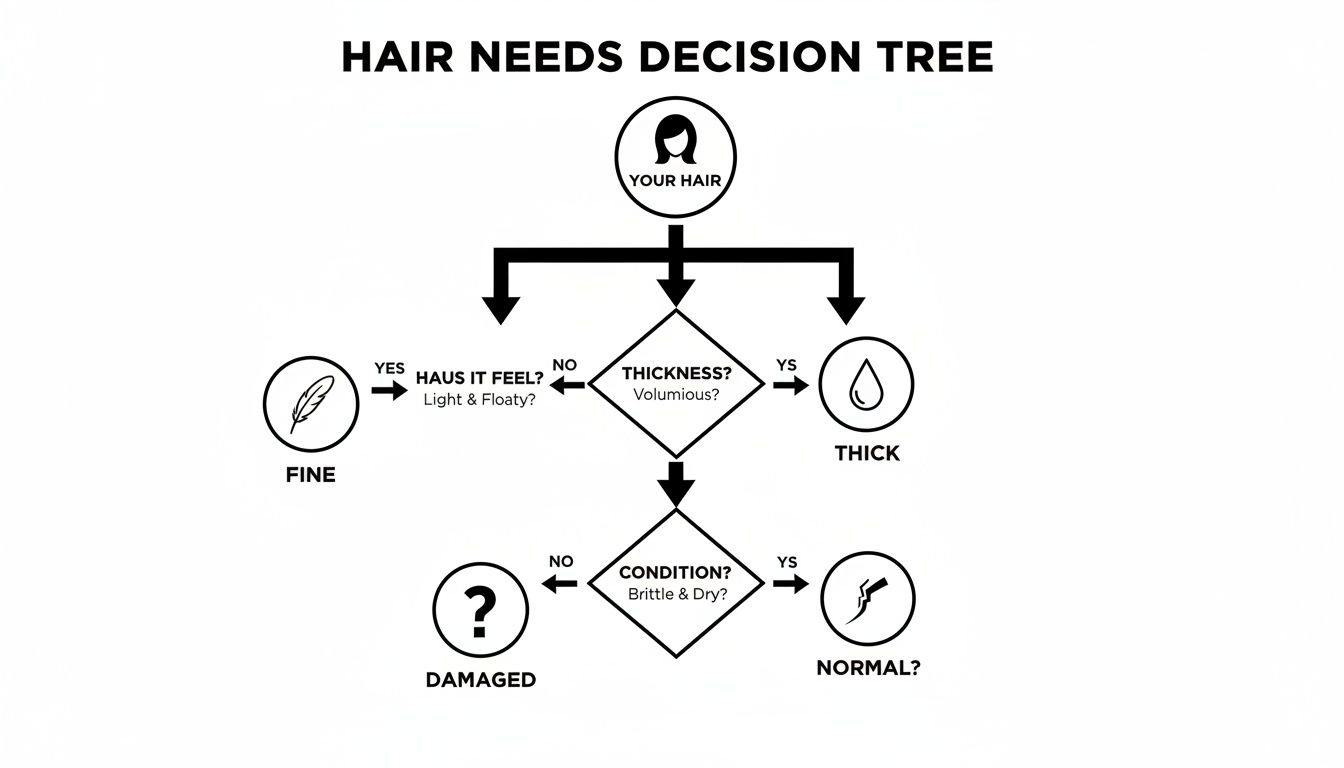
This little chart makes the process way easier, guiding you toward a mist for fine hair, a cream for thick hair, or a reparative formula if your strands are damaged.
For Damaged or Color-Treated Hair
When your hair is color-treated or chemically processed, its protective outer layer—the cuticle—is already compromised. This makes it way more vulnerable to heat damage. High temps can make your color fade fast and make existing weakness even worse, leading to breakage and split ends.
For this hair type, a restorative heat protectant is absolutely non-negotiable. You need something packed with ingredients that strengthen and repair, not just coat the hair.
- Keratin: This is a protein that helps rebuild your hair's natural structure. It fills in the little gaps in the cuticle, making it stronger and smoother.
- Amino Acids: Think of these as the building blocks of protein. They're essential for repairing damage from the inside out.
- Antioxidants: Ingredients like Vitamin E are great for protecting your hair from environmental stress and stopping your color from oxidizing and fading.
When you're shopping, look for labels like "repairing," "restoring," or "color-safe." These products are specifically made to fortify fragile hair while shielding it from your hot tools. And if you're still trying to nail down your specific texture, you can learn more about how to know what hair type you have in our complete guide.
Remember, a great hair routine starts at the scalp. Using the right foundational products, like a targeted tea tree shampoo for scalp care, can make a huge difference in your hair's overall resilience. A healthy scalp is the perfect environment for strong hair to grow, which is exactly what you need when you're a fan of heat styling.
How to Apply Heat Protectant Spray Like a Pro
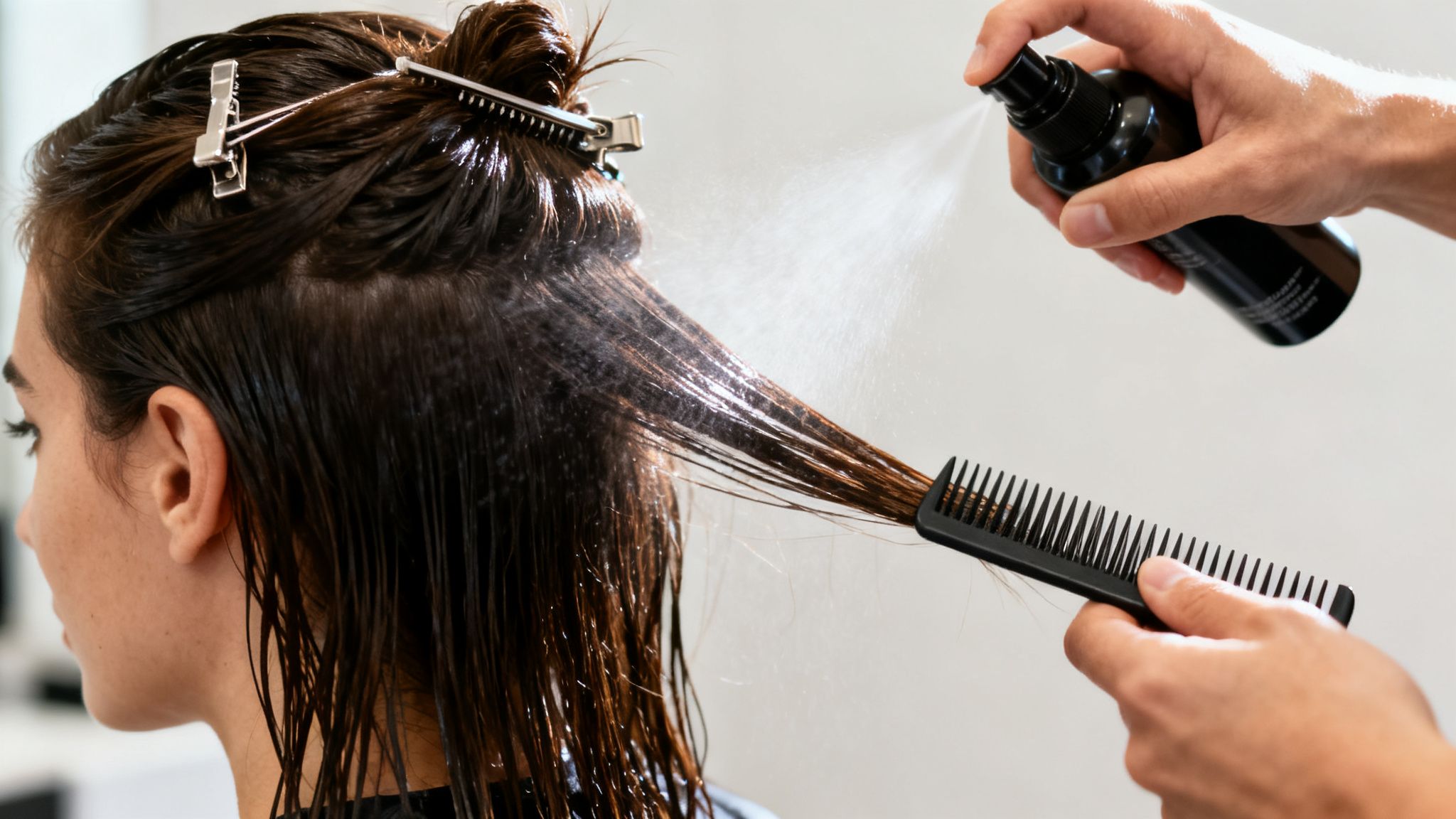
So you’ve found the perfect heat protectant for your hair type—now it's time to use it correctly. Mastering the application is just as crucial as the product itself. The right technique ensures every single strand gets the shielding it desperately needs, turning your spray into a powerful defense against heat damage.
Getting that complete, even coverage is the real game-changer here. A quick, careless spritz just isn't going to cut it. Let’s walk through the pro-level steps to apply your heat protectant for flawless, damage-free styling, every single time.
Step 1: Start with Clean, Damp Hair
For the best possible results, you’ll always want to apply your heat protectant to clean, towel-dried hair. When your hair is damp, the cuticle is slightly raised, which allows the product to absorb more effectively and create a solid protective layer as it dries.
Trying to apply it to dry hair can sometimes leave a sticky or crunchy residue. And applying it to dirty hair? That just seals in all the oil and buildup you're trying to get rid of.
Step 2: Section Your Hair for Total Coverage
This is the step most people skip, but it’s easily the most critical one for proper protection. If you just spray the top layer of your hair, you’re leaving all the underlying sections completely exposed to the heat. We need to work in manageable sections to avoid this.
- Divide and Conquer: Split your hair into at least four sections—two in the front, two in the back. If you have really thick hair, you might even need six or eight sections to get the job done right.
- Secure Each Section: Use clips to hold the other sections out of your way while you focus on one at a time. This simple trick ensures you’re not just spraying aimlessly but actually targeting specific areas for full coverage.
This method guarantees every strand, from root to tip and from the top layer to the bottom, gets an even coating of product.
Professional stylists always work in sections for a reason—it’s the only way to ensure uniform product distribution and consistent, beautiful results. Applying heat protectant this way means no strand gets left behind.
Step 3: Spray from the Right Distance
Now it’s time to get spraying. The goal is a fine, even mist, not a concentrated drenching that leaves your hair soaking wet.
- Hold the bottle about 6-8 inches away from your hair. This distance is the sweet spot; it allows the spray to disperse widely and lightly coat the section without making it feel greasy.
- Spray from the roots all the way down to the ends. Give a little extra love to the ends, since they're the oldest and most fragile part of your hair.
Step 4: Comb the Product Through
After spraying a section, grab a wide-tooth comb or a detangling brush and gently distribute the product. This final comb-through is essential for making sure the protectant is evenly spread and every last strand is coated. It also helps smooth the hair cuticle down, prepping it perfectly for styling.
If you really want to level up your blow-dry game, our guide on how to master the art of blow-drying your hair at home has you covered.
And don't forget, this isn't just for natural hair. Understanding how to heat style human hair wigs effectively while keeping them protected is absolutely key to their longevity.
Step 5: Make Sure Hair Is Completely Dry Before Using Hot Tools
This is a non-negotiable rule in the world of hair care. Never, ever use a flat iron or curling wand on even slightly damp hair. Applying that kind of direct, high heat to wet strands will literally boil the water inside the hair shaft, causing damage that you can't undo.
After applying your protectant and blow-drying, run your fingers through your hair to make sure it’s 100% dry before you even think about picking up those hot tools.
Recommended Morfose Solutions for Heat Protection
Choosing a heat protectant spray for hair should be about more than just playing defense—it’s your chance to actively improve your hair’s health with every style. While some formulas just create a simple barrier, Morfose products work to nourish, strengthen, and transform your strands from the inside out. This is where Morfose comes in, offering products that are as much a treatment as they are a shield.
Instead of just coating the hair, our formulas are designed with powerful, hair-loving ingredients that get to the root of common issues like dryness, damage, and weakness. This dual-action approach means that every time you reach for your flat iron or blow dryer, you’re also giving your hair a dose of reparative care. You get the protection you need and the healthier hair you want, all in one simple step.
Morfose Milk Therapy Two Phase Conditioner
For hair that is crying out for moisture, the Morfose Milk Therapy Two Phase Conditioner is an absolute game-changer. Think of it less as a simple protectant and more as a deeply nourishing treatment designed to bring dry, brittle hair back from the brink.
Its standout formula is packed with milk proteins and a special blend of 12 essential amino acids. These powerhouse ingredients work together to replenish lost moisture, restore elasticity, and leave your hair feeling incredibly soft and easy to manage.
When you spray it on, you’re doing two critical things at once:
- Shielding: It creates a reliable barrier that defends your delicate strands from the intense temperatures of your styling tools.
- Nourishing: The milk proteins get to work hydrating and repairing from within, targeting the very damage that heat styling often makes worse.
This makes it the perfect go-to for anyone with thirsty, over-processed, or naturally dry hair. You get serious thermal protection while actively fighting the signs of damage.
Morfose Keratin Two Phase Conditioner
If your hair is weak, color-treated, or prone to snapping, you need a protectant that does more than just shield—you need one that reinforces its very structure. The Morfose Keratin Two Phase Conditioner is specifically formulated to infuse your hair with the strength it needs to stand up to heat.
Keratin is the core protein that makes up your hair. When heat, coloring, or chemical treatments deplete it, hair becomes fragile and easily damaged. This conditioner puts that lost keratin back, rebuilding your hair’s internal foundation.
Using a keratin-infused heat protectant is like giving your hair a reinforcing skeleton. It fills in the weak, porous spots along the hair shaft, making each strand more resilient and far less likely to break under the stress of heat.
This formula provides a tough defense against thermal damage while actively making your hair stronger with every single use. It’s an essential tool for keeping color-treated or chemically processed hair healthy and vibrant.
Choosing a product that actively improves your hair is a smart investment in its long-term health. To find the perfect match for your routine, you can explore our full collection of Morfose heat protection sprays and discover a formula that works for you.
How Morfose Helps With Heat Damage
Not sure which Morfose heat protectant is right for you? It really comes down to what your hair needs most. Some hair craves deep moisture to combat dryness, while other types need a dose of protein to rebuild strength and prevent breakage.
This table breaks down two of our most popular solutions to help you decide.
| Morfose Product | Key Ingredients | Best For | Primary Benefit |
|---|---|---|---|
| Milk Therapy Two Phase | Milk Protein, 12 Amino Acids | Dry, brittle, or thirsty hair | Deeply moisturizes and restores softness. |
| Keratin Two Phase | Keratin Complex | Weak, damaged, or color-treated hair | Strengthens, reinforces, and prevents breakage. |
Whether you choose the hydrating power of Milk Therapy or the strengthening infusion of Keratin, you're getting more than just a heat shield. You're giving your hair a targeted treatment that leaves it better than you found it.
Common Heat Protectant Mistakes to Avoid
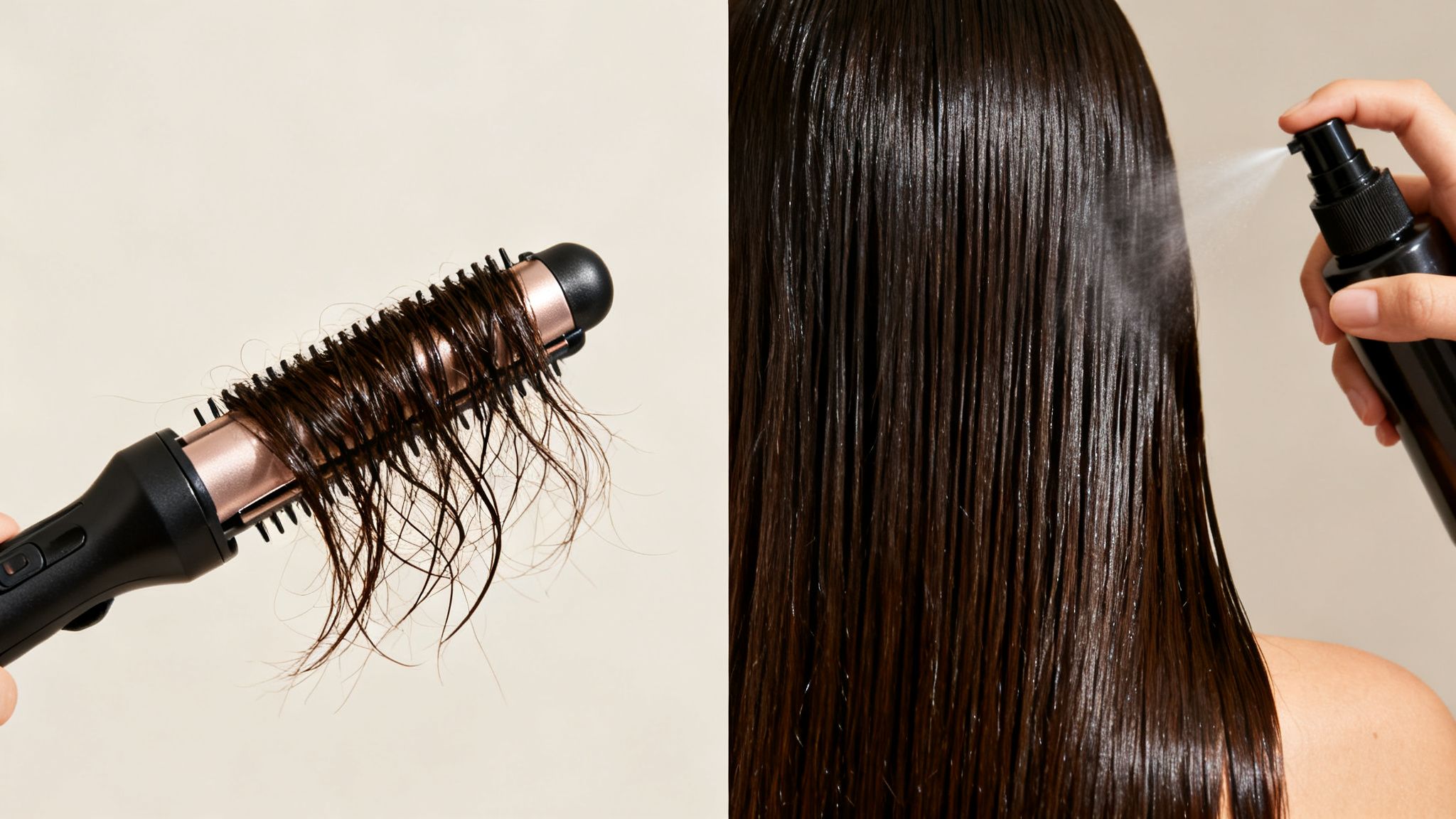
So, you've invested in a quality heat protectant spray for hair—that's a great first step! But are you absolutely sure you're getting the most out of it? Even the best products on the shelf can’t work their magic if they’re applied incorrectly.
A few common slip-ups can leave your hair surprisingly vulnerable, completely undermining your efforts to keep it healthy and strong. These small errors can turn your protective shield into a spotty, unreliable defense. Let's walk through the most frequent mistakes we see and how to fix them for good.
Mistake 1: Only Spraying the Top Layer
This is probably the most common mistake out there. You give the surface of your hair a quick spritz, think you're covered, and start styling. The problem? This leaves the entire under-layer of your hair completely exposed to intense heat.
Every single strand makes direct contact with your flat iron or curling wand, not just the ones on top. It’s like putting sunscreen on just your shoulders and expecting your back not to burn.
The Fix: Always work in sections. Seriously, this makes all the difference. Divide your hair into at least four manageable parts, and spray each one thoroughly from root to tip before styling. This is the only way to guarantee every strand gets coated and protected.
Mistake 2: Applying It to Soaking Wet Hair
Another frequent error is grabbing your protectant spray the second you step out of the shower. When your hair is dripping wet, the excess water dilutes the product, preventing it from forming that strong, even barrier on the hair shaft. You end up with a watered-down shield that just isn't effective.
The Fix: Gently towel-dry your hair until it's just damp—not soaking, but not completely dry, either. At this stage, the hair cuticle is slightly open, which is the perfect time for the protectant to absorb properly and create a solid defensive layer as it dries.
Mistake 3: Using Hot Tools on Damp Hair
This one is the ultimate hair care sin. Applying a 400°F flat iron to hair that's still even slightly damp from your spray will literally boil the water trapped inside the strand. You’ll often hear a sizzle, which is the sound of your hair being fried from the inside out. This causes irreversible damage.
A sizzling sound is a major red flag. It's an audible warning that you're creating steam pockets inside the hair cuticle, leading to breakage and a brittle, straw-like texture. Your hair must be 100% dry before a hot tool touches it.
The Fix: Patience is everything here. After applying your protectant, either let your hair air-dry the rest of the way or use a blow dryer. Only once you are absolutely certain every single strand is dry should you even think about picking up your flat iron or curling wand. This step is completely non-negotiable for hair health.
Your Heat Protectant Questions Answered
Alright, let's wrap things up by tackling some of the most common questions that pop up about heat protectant spray for hair. This quick rundown will give you clear, straightforward answers so you can style with total confidence.
Think of this as your final checklist. We'll cover everything from whether you can use it on dry hair to if these sprays can magically turn back the clock on old damage.
Can I Use Heat Protectant on Dry Hair?
Yes, you absolutely can, but it’s all about timing. If you're just doing a quick touch-up with a flat iron or curling wand on second-day hair, a light mist on dry strands is a fantastic idea. Just give it a minute to dry completely before you bring in the heat.
However, for a full-blown styling session right after washing, your best bet is always to apply it to damp, towel-dried hair. This helps the product spread evenly and soak in, creating a much stronger shield as your hair goes from damp to dry.
How Often Should I Apply It?
Simple: apply it every single time you use a hot tool. Think of it this way—heat protectant isn't a "one and done" product that sticks around through washes. Each time you style with heat, you need a fresh coat of armor.
Make it a non-negotiable part of your routine, just like putting on sunscreen before heading outside.
Consistency is everything. Even skipping it once in a while can lead to damage that builds up over time. Making it a habit is the only way to keep your hair truly defended.
Does Heat Protectant Actually Repair Damaged Hair?
This is a really common mix-up. A heat protectant's main job is prevention, not repair. It puts up a shield to stop damage before it happens, but it can't magically mend existing split ends or breakage.
That said, many modern formulas—like the ones from Morfose—come packed with nourishing ingredients like keratin or amino acids. While they can't reverse damage, they can improve your hair's overall condition, making it feel stronger, look healthier, and stand up better to daily wear and tear. But when it comes to split ends? The only real fix is a trim.
Will It Make My Hair Greasy or Weigh It Down?
A totally valid concern, especially if you have fine hair. The good news is that a heat protectant will only make your hair feel greasy if you’ve chosen the wrong formula for your hair type or simply used way too much.
- For fine hair: Always go for lightweight, water-based mists.
- For thick hair: You can get away with richer creams or even some oil-based serums.
- Application is key: Hold the bottle 6-8 inches away and spritz a light, even layer. The secret is to comb it through to make sure you don't have any heavy, concentrated spots.
When you get the product and the application right, it should feel completely invisible.
Ready to give your hair the professional-grade protection it deserves? Morfose offers advanced, nourishing formulas designed to shield every hair type without compromise, so you can style confidently and keep your hair healthy and beautiful.
Discover the perfect Morfose heat protectant for your routine today.
