
How to Stop Hair Loss: A Practical Guide to Regain Thicker Hair
That first gut-punch feeling when you see way too much hair in your brush or circling the shower drain is a tough one. It's easy to panic, but the first step is to breathe and understand this: stopping or slowing hair loss is a marathon, not a sprint. The real key is a smart, consistent plan that combines gentle hair care, targeted treatments, and a few lifestyle tweaks.
This guide will walk you through a realistic strategy to tackle thinning and get your hair back on a healthier, stronger track.
A Realistic Approach to Stopping Hair Loss
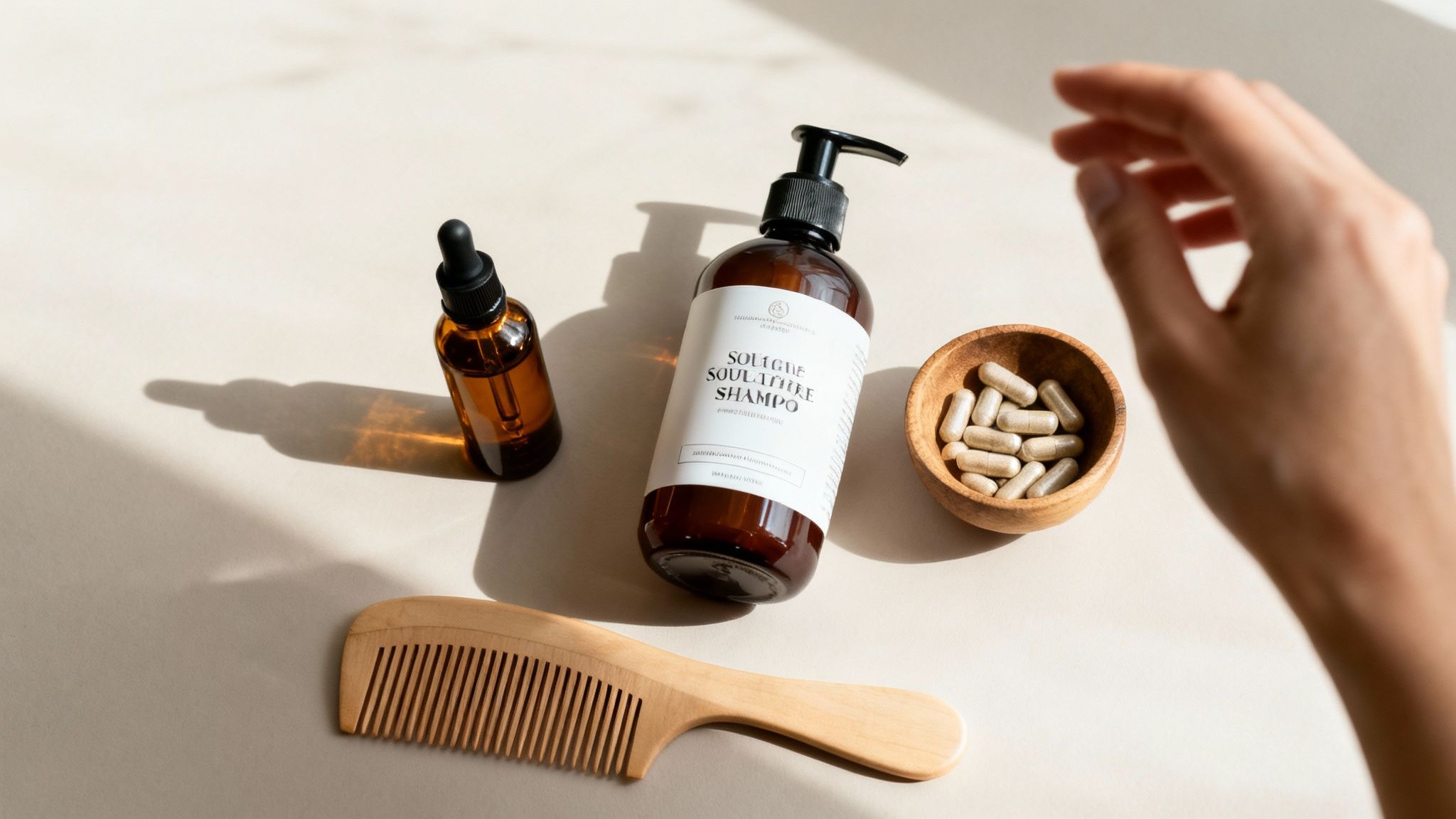
There’s no single magic bullet for hair loss. The real solution lies in building a solid, consistent routine that nurtures your hair from every angle—inside and out. We’re talking about creating the perfect environment for growth: a healthy scalp, fortified hair strands, and a well-nourished body.
If you're dealing with thinning, you are far from alone. It's an incredibly common experience. By age 35, an incredible 66% of men are dealing with noticeable hair loss. For most, this is androgenetic alopecia, which is behind 95% of all male hair loss cases.
But here's the good news: when you start early with the right approach, you can halt or significantly slow this process in up to 80-90% of cases. If you want to dive deeper, you can explore more hair loss statistics on chemist-4-u.com.
The Four Pillars of Hair Retention
To make things simple, we can break down a solid action plan into four core pillars. Each one targets a different part of your hair’s health, and when you combine them, they create a powerful defense against thinning. Think of it as a complete system where every piece supports the others.
- Pillar 1: Scalp Health. Your scalp is the foundation for healthy hair. If your follicles are clogged or there’s inflammation, growth will be stifled. Dedicated scalp care is non-negotiable.
- Pillar 2: Gentle Care Routines. How you wash, dry, and style your hair every day genuinely matters. Harsh techniques and the wrong products cause breakage and stress your follicles, undoing all your hard work.
- Pillar 3: Targeted Treatments. This is where you bring in the heavy hitters—products with proven ingredients that nourish follicles, strengthen strands from within, and support a healthy growth cycle.
- Pillar 4: Lifestyle Adjustments. You can’t ignore the inside job. Your diet, stress levels, and overall wellness have a direct and powerful impact on the health of your hair.
Beyond your daily routine, it's also worth knowing about advanced professional treatments. Options like Polynucleotides are designed to repair and regenerate on a cellular level, offering another avenue for serious cases.
Key Takeaway: A successful hair retention strategy demands patience and consistency across multiple fronts. By focusing on scalp health, gentle habits, targeted treatments, and proper nutrition, you create the ideal environment for your hair to not just survive, but thrive.
To give you a quick snapshot of this foundational plan, I've put together a simple table. Think of it as your cheat sheet for the key actions we'll be exploring throughout this guide.
Your 4-Pillar Plan to Combat Hair Loss
| Pillar | Key Action | Why It Works |
|---|---|---|
| Scalp Health | Use a targeted scalp serum. | Delivers vital nutrients directly to the hair follicles, improving circulation and reducing inflammation. |
| Gentle Care | Switch to a sulfate-free shampoo. | Cleanses without stripping natural oils, preventing dryness and irritation that can worsen shedding. |
| Treatments | Incorporate a protein-based mask. | Strengthens the hair shaft, reduces breakage, and fortifies weakened strands against daily stressors. |
| Lifestyle | Balance your diet with key nutrients. | Provides the essential building blocks (like iron, zinc, and protein) your body needs for healthy hair production. |
With these four pillars as your guide, you have a clear, actionable framework for taking back control of your hair's health. Now, let's dive into the specifics of each one.
Understanding Why Your Hair Is Thinning
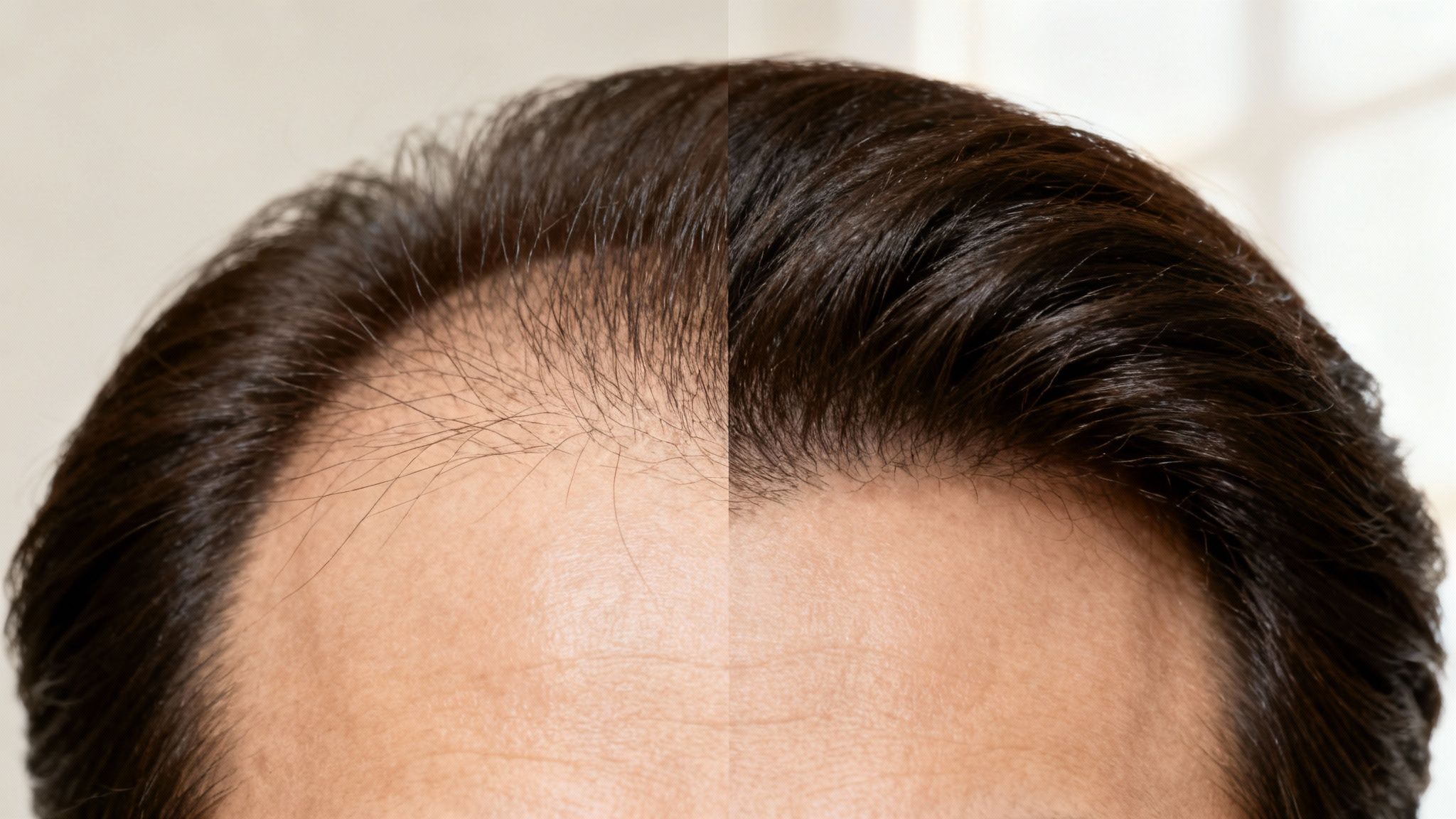
Before you can tackle hair loss, you have to play detective. Seriously. Pinpointing the root cause is the single most important step in finding a solution that will actually work for you. It's like trying to fix a car without knowing what's broken—you can’t effectively treat thinning hair without understanding why it's happening in the first place.
This isn’t about guesswork. It’s about connecting the dots between your life, your body, and what you’re seeing in the mirror. Let's break down the usual suspects behind thinning hair so you can start to identify your personal triggers.
The Genetic Factor: Androgenetic Alopecia
For a huge number of people, the reason for hair thinning is written right into their DNA. Androgenetic alopecia, which you probably know as male or female pattern baldness, is the most frequent cause of hair loss on the planet. It all comes down to a genetic sensitivity to a hormone called dihydrotestosterone (DHT).
DHT is a byproduct of testosterone, and if you're genetically susceptible, it can attach to the receptors in your hair follicles. This causes the follicles to shrink over time in a process called miniaturization. As the follicle gets smaller, the hair it produces becomes shorter, finer, and lighter, until it eventually stops growing hair altogether.
This process tends to look different depending on your sex:
- In Men: It often starts with that classic receding hairline at the temples and thinning on the crown, creating the familiar "M" shape.
- In Women: The thinning is usually more spread out across the entire scalp. One of the first signs is often a widening part.
When Stress Becomes a Physical Problem
Ever gone through a period of intense stress—a tough breakup, a job loss, or a serious illness—only to notice a ton of shedding a few months later? You were likely experiencing telogen effluvium.
Normally, about 85-90% of your hair is in the anagen (growing) phase. The rest is in the telogen (resting) phase before it naturally sheds. A major shock to your system, whether physical or emotional, can jolt a large number of follicles into that resting phase all at once.
Fast forward three to four months, and all those resting hairs shed simultaneously. It can be alarming, but the good news is that telogen effluvium is almost always temporary. Once the stressor is gone, your follicles usually get back to their normal growth cycle. For a deeper dive, check out our guide on understanding hair loss due to health reasons.
Hormonal Shifts and Their Impact on Hair
Hormones are powerful messengers that control countless functions in your body, and your hair growth cycle is definitely one of them. When your hormones fluctuate, your hair is often the first to feel the effects.
Certain life stages make women particularly vulnerable. In fact, a staggering 33% of women will experience hair loss at some point, often first noticing it after pregnancy or during menopause.
Common hormonal triggers include:
- Postpartum Shedding: After giving birth, estrogen levels take a nosedive, which can push a lot of follicles into the shedding phase at the same time.
- Menopause: The drop in estrogen and progesterone during menopause can lead to slower hair growth and finer, weaker strands.
- Thyroid Imbalances: Both an underactive (hypothyroidism) and an overactive (hyperthyroidism) thyroid can throw the hair growth cycle completely out of whack.
When you get into the biology behind hair thinning, it's interesting to look into the mechanisms of IGF-1 peptides in cell growth and repair. These growth factors play a huge part in the cellular processes that keep follicles healthy and functioning.
Key Insight: Understanding what's going on inside your body is crucial. If you suspect a hormonal issue or even a nutritional deficiency, seeing a doctor for blood tests can give you real answers and point you toward the right treatment path.
Building Your Daily Hair Retention Routine
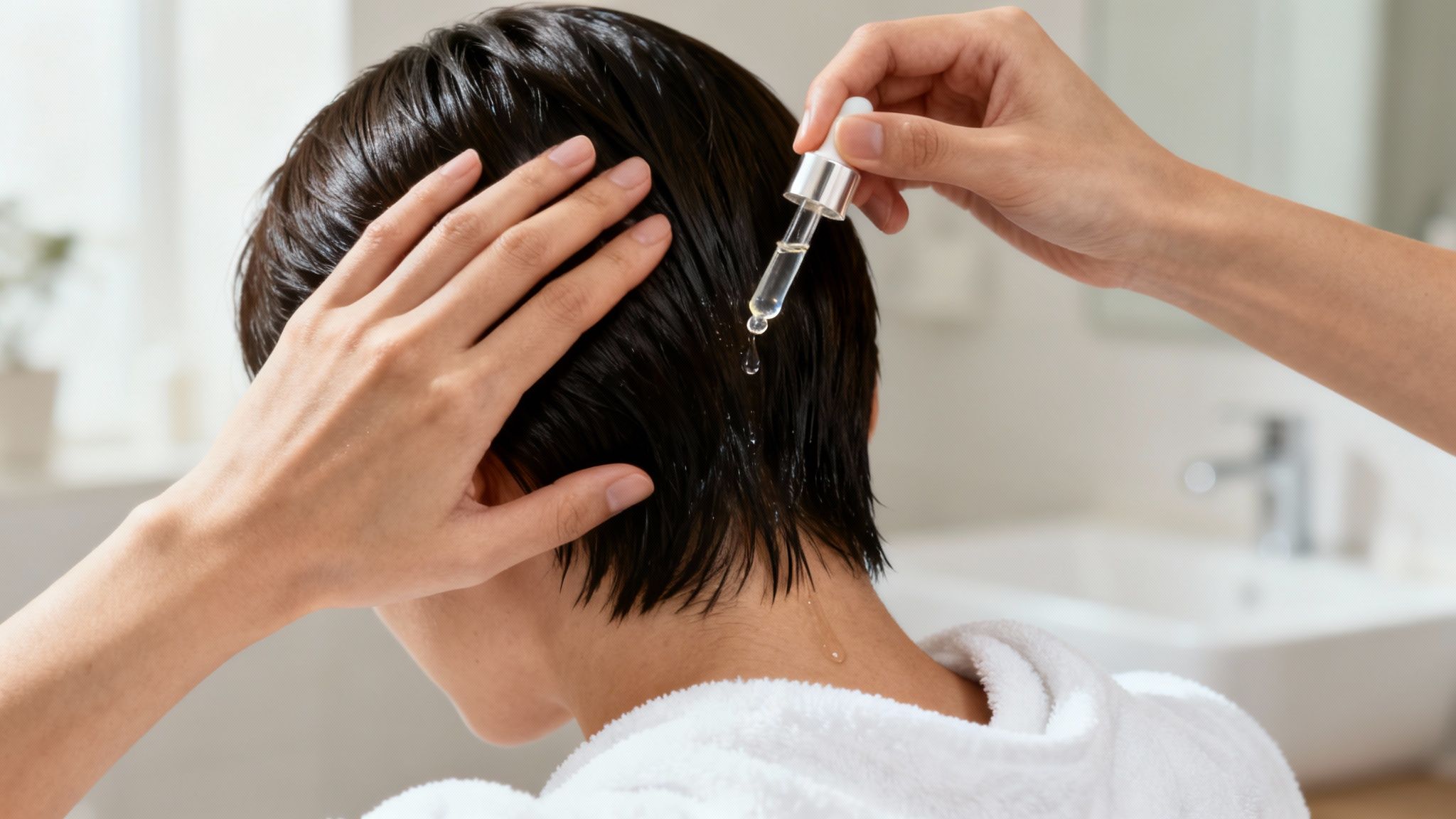
Consistency is your greatest weapon in the fight against hair loss. While big treatments and lifestyle overhauls are important, it's the small things you do every day that truly add up. Building a daily routine that actively supports your hair doesn’t have to be complicated, but it does mean shifting your mindset from just cleaning your hair to strategically caring for it.
This means looking at every step—how you wash, condition, treat, and even dry your hair. Each moment is an opportunity to either protect fragile strands or accidentally cause more stress and breakage. Let's put together a practical, powerful daily routine that creates the perfect environment for your hair to thrive.
Step 1: Gentle Cleansing for Scalp Health
When your scalp is already stressed and your hair is thinning, aggressive cleansing is the last thing you need. So many traditional shampoos use sulfates, which are amazing at creating a big, satisfying lather but can also strip your scalp of the natural oils it needs to stay balanced and healthy. For hair that's already in a weakened state, this can trigger dryness, irritation, and inflammation—all major roadblocks to healthy growth.
The simple fix? Switch to a sulfate-free shampoo. These gentler formulas clean your hair and scalp perfectly without disrupting that delicate moisture barrier. It’s a small change that helps maintain a calm, happy foundation for your follicles.
And it’s not just what you use, but how you use it. Technique is everything.
- Focus on the Scalp: Work the shampoo directly into your roots and scalp, not the lengths of your hair. That’s where the oil and buildup are.
- Use Fingertips, Not Nails: Gently massage your scalp with the pads of your fingertips using small, circular motions. Scratching with your nails can create micro-abrasions and even break off fragile new hairs.
- Let the Suds Do the Work: When you rinse, the suds will flow down and gently clean the rest of your hair. There’s absolutely no need to pile all your hair on top of your head and scrub it into a tangled mess.
Step 2: Strengthening and Conditioning Every Strand
After you've cleansed, a strengthening conditioner is non-negotiable. Thinning hair is often much finer and way more susceptible to breakage, so reinforcing the hair shaft is key to holding on to the length you have.
Look for conditioners loaded with ingredients like proteins (think keratin or collagen) and amino acids. These are the building blocks of hair, and they work by penetrating the cuticle to fill in weak spots and improve its structure from the inside out. Just be sure to apply conditioner mainly from the mid-lengths to the ends, keeping it away from the roots where it can weigh your hair down.
Pro Tip: While the conditioner is still in your hair, use a wide-tooth comb to gently detangle. The slip from the conditioner makes this process a breeze and is so much less damaging than trying to yank a brush through dry, knotted hair.
Step 3: Proactive Scalp Care With Targeted Serums
Washing and conditioning take care of the hair you can see, but a scalp serum gets to the source of it all—the follicle. Honestly, this is probably the most important step in any proactive hair retention plan. A good scalp serum delivers a concentrated dose of active ingredients right to the roots where new hair is born.
Think of it as fertilizer for your scalp. These powerful formulas are designed to boost circulation, deliver critical nutrients, and create an energized environment for your follicles to do their best work. Using one consistently can help support the hair's natural growth cycle and fortify new strands right as they emerge.
Understanding the direct link between your scalp's condition and hair growth is crucial. For a deeper dive, you can explore our detailed guide on scalp health and hair growth.
Step 4: Smart Styling and Drying Techniques
Your routine isn’t over when you step out of the shower. The way you dry and style your hair can either protect your strands or cause a ton of mechanical damage, which can lead to a type of hair loss called traction alopecia.
Drying Your Hair Gently
- Squeeze, Don't Rub: Ditch the rough towel rub-down. Instead, gently squeeze excess water out with a soft microfiber towel or even an old cotton t-shirt. This cuts down on friction that can rough up the hair’s cuticle and cause frizz and breakage.
- Lower the Heat: If you have to blow-dry, always use the lowest heat setting and never without a heat protectant. Keep the dryer moving constantly so you aren’t blasting one spot for too long.
Avoiding Damaging Hairstyles
Constant pulling is a major enemy of hair follicles. Hairstyles that put your roots under chronic tension can lead to inflammation and, over time, permanent damage.
- Ease up on super-tight ponytails, buns, and braids.
- If you do tie your hair back, switch to soft ties like scrunchies instead of tight elastics that can cut into the hair.
- Give your hair a break. Wear it down whenever you can, especially when you’re sleeping.
Recommended Morfose Solutions for Hair Loss
Building a solid daily routine is half the battle, but using the right products is what really brings it all home. This is where Morfose can be a real game-changer in your fight against thinning hair. Instead of thinking about our products as just another shampoo or conditioner, see them as targeted tools, each one designed to tackle the common culprits behind hair loss.
Our approach is straightforward: give your hair and scalp the ingredients they need to thrive. When you incorporate key players like Biotin, Collagen, and Keratin into your routine, you’re doing more than just cleaning your hair—you’re actively building it up against breakage and creating a much healthier environment for new growth to start.
Targeted Formulas for a Stronger Foundation
One of the first things you need to address with thinning hair is making sure the hair you do have is as strong as it can be. When strands are weak and brittle, they snap easily, which can make thinning look even more pronounced. This is exactly why a strengthening cleanser is a non-negotiable first step.
To start building that stronger foundation, our Morfose Biotin & Collagen Shampoo is the perfect place to begin. This formula is a real powerhouse, designed to do two things incredibly well: gently cleanse your scalp without stripping away good oils, and infuse every single strand with hair-building proteins. Collagen helps boost elasticity, making hair less likely to snap, while Biotin is a crucial nutrient for producing keratin—the very protein your hair is made of.
Nourishing From Root to Tip
Cleansing is just the start. You also need to put back what daily life, styling, and environmental stressors strip away. The Morfose Milk Therapy line is a fantastic example of deep, restorative care that does exactly that. It’s formulated with a unique blend of milk protein and 12 essential amino acids that get to work rebuilding the very structure of weakened hair.
Think of those amino acids as tiny building blocks repairing a damaged wall. They get inside the hair shaft to fill in the gaps, which smooths the outer layer (the cuticle) and seriously cuts down on breakage. Your hair won't just feel softer; it will be structurally stronger from the inside out.
Expert Insight: Sticking with protein and amino acid-based treatments can make a huge difference in your hair's tensile strength. In simple terms, it means your hair can handle more tension from brushing and styling before it breaks. That’s a massive win when you're trying to hold onto every strand and encourage length.
Direct Action for Healthier Follicles
While your shampoo and conditioner are busy fortifying the hair strands themselves, a targeted serum can get right to the heart of the matter—the scalp and the follicle. For that kind of direct nourishment, the Morfose Anti-Hair Loss Serum is your most powerful ally. It's a concentrated treatment you apply right to the scalp, delivering a potent mix of ingredients designed to wake up your roots and support a healthy growth cycle.
This serum works by improving the microcirculation around each follicle, ensuring it gets a steady stream of oxygen and nutrients. By creating the best possible environment right at the source, you’re encouraging stronger, healthier hair to grow. It’s the most direct step you can take to support new growth.
To help you pinpoint exactly what you need, we've put together a quick guide matching some common hair concerns with the Morfose products that can help.
Morfose Product Guide for Healthier Hair
Navigating all the options can be overwhelming, so this table breaks it down. Find your primary hair concern below to see which product and key ingredient can offer the most targeted support for your hair goals.
| Hair Concern | Recommended Morfose Product | Key Ingredient & Benefit |
|---|---|---|
| Overall Thinning & Weakness | Biotin & Collagen Shampoo | Biotin & Collagen strengthens existing hair and supports keratin production. |
| Breakage & Fragile Strands | Milk Therapy Two Phase Conditioner | 12 Amino Acids help rebuild and repair the protein structure of the hair shaft. |
| Sluggish Growth & Scalp Health | Anti-Hair Loss Serum | Targeted Peptides invigorate follicles and improve scalp circulation for healthier growth. |
| Dryness & Damage | Argan Hair Mask | Argan Oil provides intense moisture and antioxidants to protect and soften hair. |
Choosing the right products is a crucial part of any effective hair care plan. By matching our ingredient-led formulas to your specific needs, you can build a routine that not only stops damage but actively promotes a healthier, fuller head of hair.
Lifestyle Adjustments That Promote Stronger Hair

While the right shampoo and scalp treatments are non-negotiable, what you do outside the shower has a massive impact on your hair. Think of it this way: you can't build a strong house on a shaky foundation. The same goes for your hair. If you truly want to stop hair loss, you have to support your body from the inside out.
This isn't about some restrictive, miserable overhaul of your life. It's about making smart, sustainable tweaks that nourish your follicles, help balance your hormones, and lower the internal stress that fuels thinning. You'd be surprised how much of a difference small, consistent changes can make for your hair and your overall health.
Fueling Your Follicles With a Hair-Healthy Diet
Your hair follicles are tiny but powerful factories, and they need a steady supply of specific nutrients to churn out strong, healthy strands. If your diet is lacking, your body is smart—it diverts those precious resources to more essential functions, putting hair growth on the back burner. That’s why nutritional gaps are a huge, often overlooked, reason for thinning hair.
The key is to load your plate with a variety of nutrient-dense foods that give your hair the fuel it needs to thrive.
Your Hair-Healthy Grocery List:
- Lean Proteins: Hair is literally made of protein (keratin), so skimping on it can lead directly to brittle, weak strands. Make sure you’re getting enough from sources like chicken, fish (salmon is a star for its omega-3s), eggs, and Greek yogurt.
- Iron-Rich Foods: Iron is essential for making hemoglobin, the protein that carries oxygen to all your cells—including the ones that kickstart hair growth. Load up on spinach, lentils, lean red meat, and even fortified cereals.
- Zinc Powerhouses: This mineral is a major player in hair tissue growth and repair. Oysters are packed with it, but you can also get a good dose from beef, pumpkin seeds, and beans.
A balanced diet really is the cornerstone of healthy hair. To dive deeper into the specific vitamins and minerals that pack the biggest punch, check out our guide on the role of nutrition in hair health.
Managing Stress to Protect Your Hair
Ever notice more shedding a few months after a really stressful time? It's not a coincidence. Chronic stress is a notorious trigger for telogen effluvium, a condition where a shock to your system pushes a ton of hair follicles into the shedding phase all at once. The stress hormone cortisol can seriously disrupt your hair's natural growth cycle.
Learning to manage that stress isn't just a "nice-to-have" for your mental health; it's a critical strategy for keeping your hair on your head.
Key Takeaway: Stress management is not a luxury—it's a necessity for healthy hair. By incorporating simple relaxation techniques into your daily routine, you can actively protect your follicles from the damaging effects of cortisol and support a healthier growth cycle.
You don't need an hour-long yoga class every day. Simple, manageable habits can make all the difference:
- Mindful Moments: Just five minutes of daily meditation or deep breathing exercises can help bring those cortisol levels down.
- Prioritize Sleep: Your body does its best repair work while you sleep. Aim for 7-9 hours a night to give the cells in your hair follicles a chance to regenerate.
- Gentle Exercise: You don't have to run a marathon. Activities like walking, yoga, or stretching are fantastic for reducing stress and boosting circulation to your scalp.
Reconsidering Habits That Harm Your Hair
Some daily habits can quietly sabotage your efforts by restricting blood flow to the scalp or messing with nutrient absorption.
Smoking, for example, constricts blood vessels. This means less oxygen and fewer vital nutrients can actually reach your hair follicles, essentially starving them over time and stunting healthy growth. Likewise, drinking too much alcohol can dehydrate your body and interfere with its ability to absorb key minerals like zinc and iron—creating an internal environment that’s hostile to hair growth.
Making a conscious choice to cut back on these habits is another powerful step in your game plan to stop hair loss.
Knowing When to Consult a Professional
A solid at-home routine is your best first line of defense, but it’s just as important to know when you've hit the limits of what cosmetic solutions can do. It's time to call in a professional.
Think of it this way: targeted formulas, like those in the Morfose Collection, are incredible for fortifying your existing hair, nourishing the scalp, and creating the best possible environment for growth. They do their job beautifully. But they aren't designed to treat underlying medical conditions that might be the real culprit behind your hair loss.
Knowing when to escalate your concerns can save you a ton of time, money, and emotional energy. It’s all about recognizing the signs that something more is going on beneath the surface.
Red Flags That Signal a Doctor's Visit
If you feel like you’re doing everything right but still hitting a wall, or if you notice any particularly alarming symptoms, don’t wait. It’s time to book an appointment with a dermatologist or your primary care doctor.
Get on the phone if you experience any of these:
- Sudden or Rapid Shedding: A huge, noticeable increase in hair loss over a short period is a classic sign of telogen effluvium. This can be triggered by things like a major illness, intense stress, or nutritional gaps that need a doctor's input.
- Patchy Hair Loss (Alopecia Areata): Finding distinct, smooth, coin-sized bald spots on your scalp or anywhere else is a strong indicator of an autoimmune condition that requires a proper medical diagnosis.
- A Troubled Scalp: If your hair loss is accompanied by constant itching, burning, redness, flaking, or pain, you could be dealing with a scalp infection or an inflammatory issue like psoriasis.
- No Improvement After 6 Months: Have you been consistent with a great routine and positive lifestyle changes for half a year with nothing to show for it? A professional can start digging for those hidden causes.
Important Takeaway: Your dermatologist is like a detective for your scalp. They can run tests to check for hormonal imbalances, thyroid problems, and vitamin deficiencies—things that no topical product can fix by itself.
Understanding Medical Treatment Options
Once you get a professional diagnosis, your doctor might recommend over-the-counter (OTC) or prescription treatments. These are medical-grade solutions that work on a completely different level than your daily hair care products.
Some common options you might discuss include:
- Minoxidil (Rogaine): This is a popular OTC topical treatment you apply directly to the scalp. It works by stimulating the follicles and helping to extend the hair's growth phase.
- Finasteride (Propecia): This is a prescription oral pill for men that addresses male pattern baldness by blocking DHT, the hormone largely responsible for shrinking follicles.
Partnering with a professional opens up a whole new toolkit. It ensures you’re not just treating the symptoms you can see, but you're actually getting to the true root cause of your hair loss.
Common Questions About Hair Loss Answered
Starting a new routine to tackle hair loss always brings up a lot of questions. That's completely normal. You're putting in the effort, and you want to know what to expect and when. Let's clear up some of the most common concerns so you can move forward with confidence.
How Long Until I See Results From a New Routine?
This is the big one, isn't it? The honest answer is that you have to be patient. Hair grows in cycles, so it takes a little while for the changes you’re making on the surface to show up in the hair itself.
You should plan on sticking with a new, consistent routine for at least three to four months before you can expect to see real, noticeable improvements. The first couple of months are all about creating a healthy foundation. Your scalp needs to rebalance, and your follicles need that steady stream of nourishment to kick back into a healthy growth phase. It’s the consistency that truly makes all the difference.
Can Hair Actually Grow Back After Thinning?
For many people, the answer is a resounding yes. It really comes down to what caused the thinning in the first place. If your hair loss is from temporary issues like a stressful period (telogen effluvium), a nutritional deficiency, or hormonal changes from something like pregnancy, your hair will often grow back once you get the underlying problem sorted out.
Now, with genetic hair loss (androgenetic alopecia), the follicles shrink over time. While you can't revive a follicle that’s gone completely dormant, you can absolutely rejuvenate those that have just miniaturized. This helps them produce thicker, stronger hair again. The sooner you start, the better your shot at seeing significant regrowth. Many people think once hair is gone, it's gone for good, but that’s one of the most stubborn hair care myths debunked.
Key Insight: Most common forms of hair loss are treatable, not permanent. The key is to address the specific cause with a consistent, targeted approach that gives your follicles the support they need to recover.
Is It Safe to Use Styling Products When My Hair Is Thinning?
Of course! You don't have to give up on styling your hair. You just need to be a bit more selective about the products you use. The main goal is to steer clear of anything harsh, heavy, or loaded with drying alcohols that can make already fragile hair even more brittle.
Look for lightweight mousses, serums, and sprays designed to add volume without weighing your hair down. You want products that won’t leave behind a sticky residue that could clog your scalp. A great option is a formula that also offers some nourishment, like the Morfose Milk Therapy Creamy Mousse Conditioner. It conditions and adds body without any of that heaviness. The right styling products can actually make your hair look fuller and give you a great confidence boost while your treatment routine gets to work.
