

How to Grow Thicker Hair: A Complete Guide to Fuller Locks
If you've ever wondered how to grow thicker hair, the answer is simpler than you might think. It’s not about finding one miracle product, but about embracing a consistent routine that nurtures your hair from the inside out. Achieving fuller, healthier hair is possible by creating the perfect environment for growth at the scalp, strengthening every strand, and making smart lifestyle choices that support it all.
This guide provides a clear, actionable roadmap to help you achieve your hair goals. We'll break down the essential pillars of hair thickness, from scalp care and strand protection to nutrition and smart styling, so you can build a routine that delivers real, lasting results.
The Real Foundation for Growing Thicker Hair
Let's cut through the noise. Achieving visibly thicker hair is a major goal for many, but the path is often cluttered with myths and quick-fix promises. The reality? Sustainable results are built on a solid foundation that tackles hair health from every angle.
The desire for thicker hair isn't just in your head. Androgenetic hair thinning—also known as pattern hair loss—is a major reason why, affecting an estimated 85% of men and 33% of women at some point in their lives. This widespread concern has fueled a massive global market for hair growth products, valued at around $52.4 billion in 2022 and projected to climb near $88 billion by 2030.
The Three Pillars of Hair Thickness
To make this journey feel less overwhelming, we can break it down into three core pillars. Get these right, and you're building the healthy foundation your hair needs to truly thrive.
- Pillar 1: Scalp Health. Think of your scalp as the soil in a garden. If the soil is congested, inflamed, or has poor circulation, you can't expect to grow healthy plants. Nurturing your scalp is the absolute, non-negotiable first step for growing thicker hair.
- Pillar 2: Strand Strength. Thicker-looking hair isn't just about growing more of it; it's also about protecting the hair you already have. Preventing breakage and fortifying the hair shaft from root to tip is crucial for keeping that density and fullness.
- Pillar 3: Internal Wellness. Your hair is a direct reflection of what's going on inside your body. Your nutritional intake, hormonal balance, and even stress levels have a massive impact on your hair's growth cycle and overall quality.
This visual shows just how interconnected this process is. You can't focus on one area and expect magic to happen in the others.
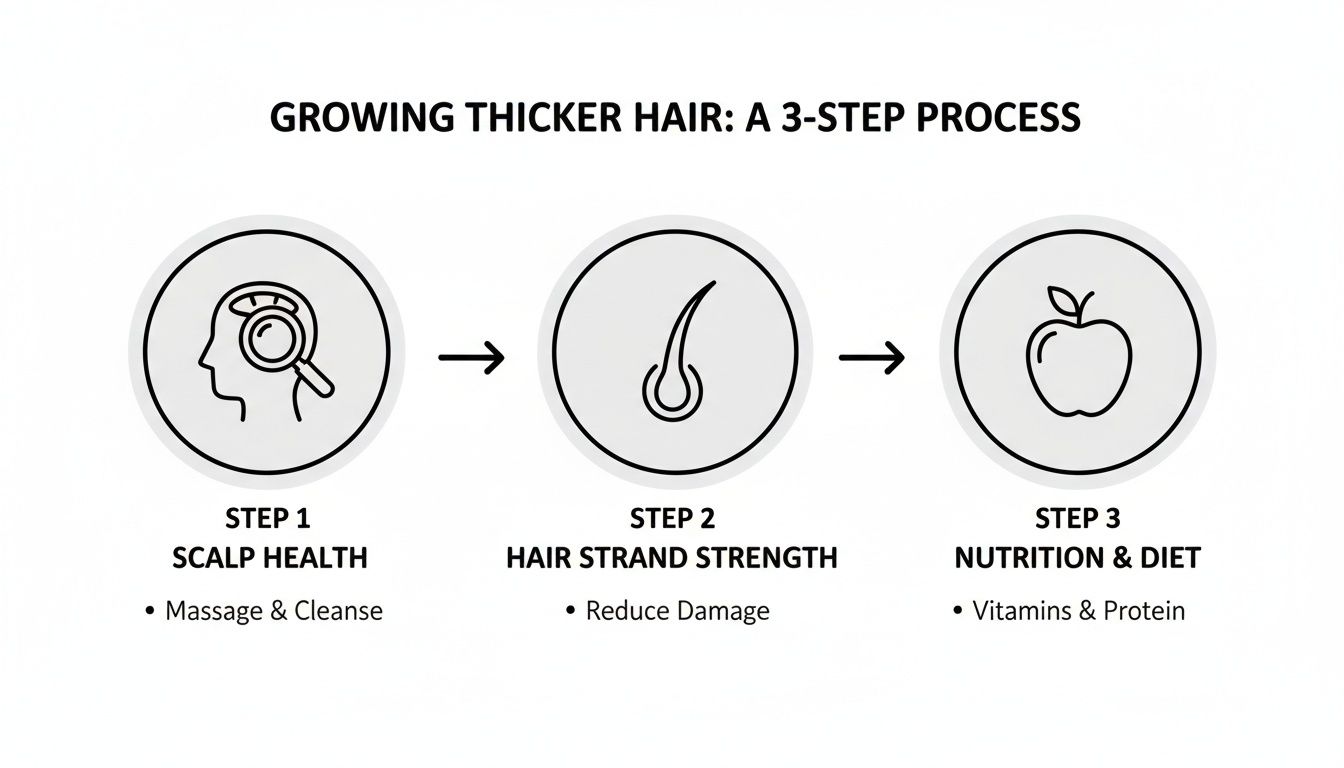
As you can see, these three elements work together in a continuous cycle. A healthy scalp grows strong strands, which are in turn fueled by good nutrition, which then supports a healthy scalp.
Key Takeaway: You'll never achieve long-term hair thickness by focusing on just one thing. A winning strategy has to integrate scalp care, strand protection, and internal health all at the same time.
Since true hair health starts from within, understanding how to balance hormones naturally can be a fundamental piece of the puzzle. This guide will now walk you through practical, actionable steps for each of these pillars, giving you a clear roadmap to the fuller, healthier hair you're after.
Your Quick-Start Guide to Growing Thicker Hair
Feeling overwhelmed? Don't be. This table breaks down the core strategies we're about to cover into simple, actionable goals. Think of it as your cheat sheet for building a powerful hair-thickening routine.
| Strategy | Primary Goal | Key Actions |
|---|---|---|
| Scalp Care | Create the optimal environment for hair growth. | Regular cleansing, exfoliation, scalp massage, and using targeted serums. |
| Strand Protection | Prevent breakage and improve the integrity of existing hair. | Proper conditioning, deep-conditioning masks, and gentle handling. |
| Internal Wellness | Fuel hair follicles from the inside out. | A balanced diet rich in key nutrients, proper hydration, and supplements. |
| Smart Styling | Minimize damage from daily habits. | Reducing heat styling, using protective products, and avoiding tight hairstyles. |
By focusing on these four areas, you create a comprehensive system that supports your hair from every possible angle, setting you up for the best results.
Start at the Source by Nurturing Your Scalp
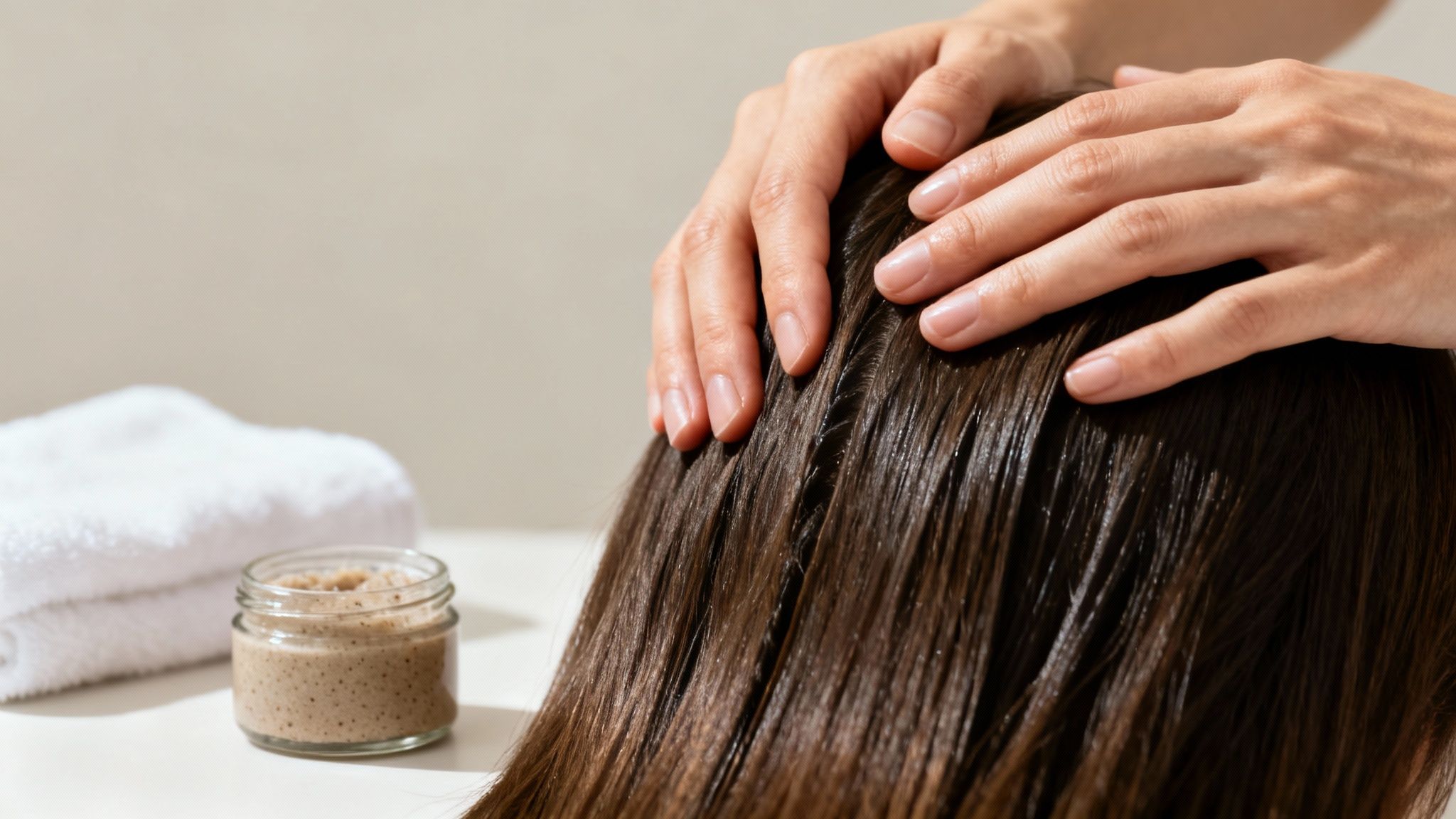
Think of your scalp as the garden where your hair grows. If the soil is unhealthy, you’ll never get the lush, thriving results you want. To really understand how to grow thicker hair, we have to stop focusing only on the strands and look at the crucial ecosystem at the roots. A healthy scalp is, without a doubt, the foundation for producing dense, strong hair.
So many common roadblocks to thicker hair—like clogged follicles and poor circulation—start right there. When product residue, excess oil, and dead skin cells pile up, they can literally smother your hair follicles, preventing them from producing robust strands.
The Power of Scalp Exfoliation
Just like the skin on your face, your scalp can get congested and needs a good, gentle exfoliation. This single step is a total game-changer for clearing out the buildup that even a good shampoo can miss.
By sweeping away all that debris, you give your hair follicles a clean, open environment to grow from. It’s a simple move that can drastically improve the health of new hair coming in, setting the stage for better density over time.
Picture this: a clogged follicle is like a plant trying to push its way through hard, compacted soil. It’s going to struggle, and any growth that does emerge will be weaker for it.
Key Takeaway: Scalp exfoliation isn't some fancy, extra step—it's essential for creating the best possible conditions for hair growth. Make a habit of using a gentle scalp scrub or a chemical exfoliant with ingredients like salicylic acid about once a week.
Boost Circulation with Scalp Massage
One of the easiest—and most enjoyable—ways to support your scalp is with a regular massage. Massaging your scalp fires up blood flow, which is how your follicles get a steady delivery of oxygen and vital nutrients. This boost in circulation basically energizes the roots, encouraging them to perform at their peak.
Here’s a simple technique you can start tonight:
- Using the pads of your fingertips (never your nails!), apply gentle but firm pressure to your scalp.
- Move in small, circular motions, making your way across your entire head. Aim for about 3-5 minutes.
- You can do this on dry hair before hopping into bed or in the shower while you shampoo to really help the product work its magic.
Not only does this practice create a healthier environment for growth, but it’s also a fantastic way to de-stress. And since we know stress can contribute to thinning, it’s a total win-win.
For a deeper dive, check out our guide on the undeniable link between scalp health and hair growth for even more insights.
Identifying the Signs of Scalp Distress
Learning to read the signals your scalp is sending is key to stopping problems before they sabotage your hair density. An unhealthy scalp rarely suffers in silence.
Common Signs of Scalp Imbalance:
| Symptom | What It Means for Hair Growth |
|---|---|
| Persistent Dryness & Flaking | A dehydrated scalp can produce weaker, brittle hair that breaks off right near the root. |
| Excess Oil & Greasiness | Too much sebum can easily clog follicles, leading to inflammation that disrupts the hair growth cycle. |
| Itchiness & Irritation | Constant inflammation and irritation can damage follicles and create a hostile environment for new growth. |
| Redness or Soreness | These are classic signs of inflammation or sensitivity, which can interfere with the follicle's ability to produce strong hair. |
If you're noticing any of these signs, consider it a direct message from your scalp that it needs some help. Taking action with targeted treatments can bring your scalp's ecosystem back into harmony, creating the perfect foundation for the thicker, healthier hair you're working towards.
Build Stronger Strands with a Fortifying Hair Care Routine
Growing thicker hair isn't just about what's happening at the scalp; it’s also about fiercely protecting the strands you already have. Breakage is one of the biggest reasons hair feels thin and scraggly, making a solid daily and weekly routine your absolute first line of defense. By building up your hair's resilience from the outside in, you can hang on to your length and keep the density you’ve worked so hard for.
Every little thing adds up—from how you wash your hair to the treatments you choose. It all works together to create hair that can stand up to daily life, whether that’s brushing, heat styling, or just the environment outside.
Choose Your Cleansers Wisely
The absolute foundation of any strong hair care routine is the right shampoo and conditioner. When thickness is the goal, you need formulas that are packed with strengthening ingredients designed to rebuild and reinforce the hair shaft.
Keep an eye out for products that feature these power players:
- Keratin: This is literally what your hair is made of. Shampoos and conditioners with keratin act like filler for a pothole, patching up weak spots and smoothing everything down.
- Biotin: An essential B-vitamin for producing keratin, biotin helps to build up your hair's internal infrastructure.
- Collagen: You know it's great for skin, but collagen also boosts elasticity in your hair. More elasticity means less snapping and breaking.
These ingredients team up to make each strand more robust and ready to face the day.
Master the Art of Washing and Conditioning
It's not just what you use, but how you use it. For those with fine or thinning hair, the wrong washing technique can leave hair looking limp and flat, completely defeating the purpose.
Here's the golden rule: shampoo is for the scalp, conditioner is for the ends.
When you shampoo, focus the product right on your scalp. Use your fingertips (not your nails!) to gently massage and break down oil and buildup. The lather that rinses down the lengths is plenty to get them clean. This prevents you from stripping the natural oils from your more fragile ends.
Then, do the opposite with your conditioner. Apply it mainly from the mid-lengths down to the ends, steering clear of the roots. This gives moisture where it's needed most without creating that greasy, weighed-down look at the scalp.
Embrace Weekly Deep Conditioning Treatments
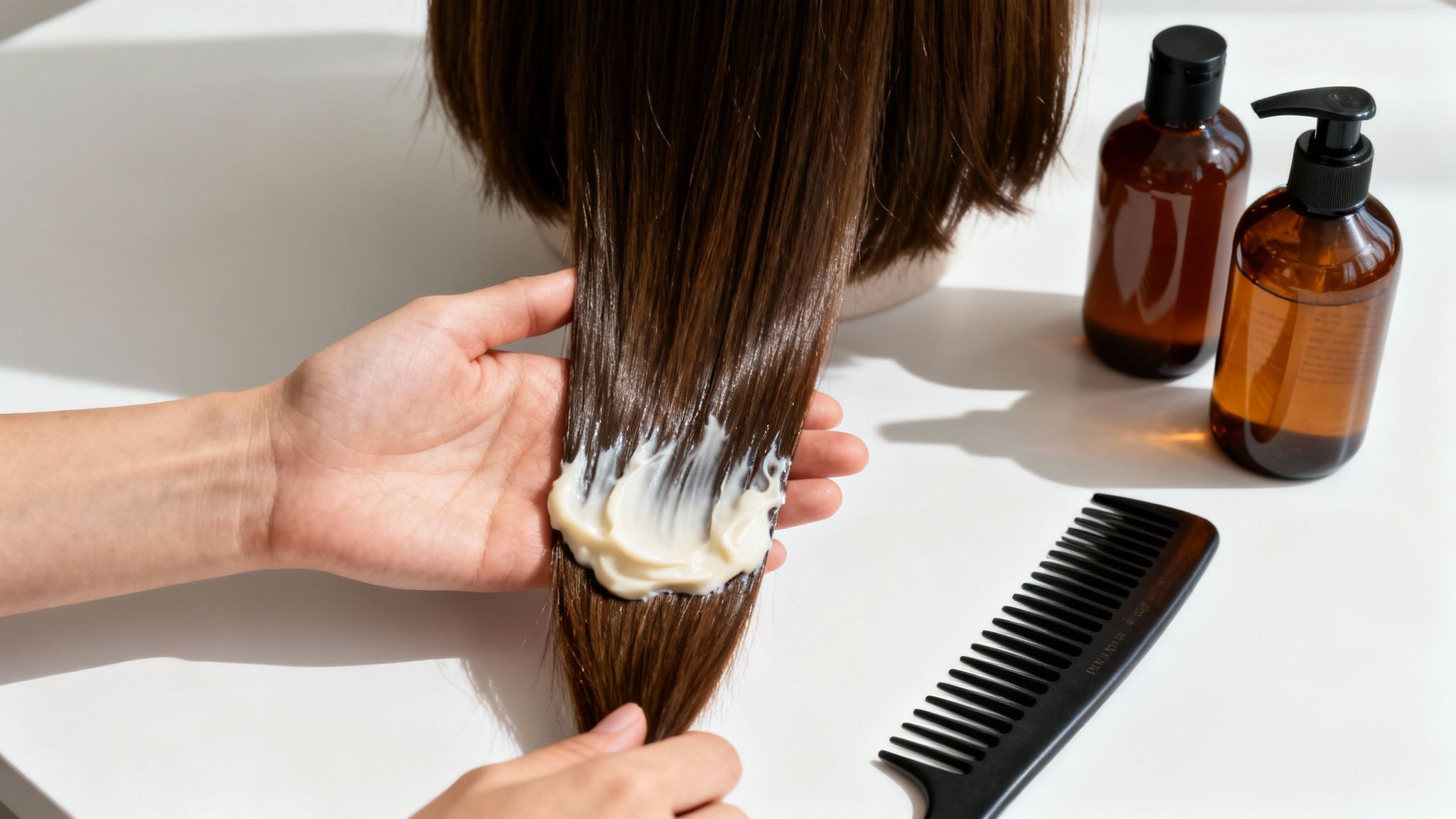
While your daily conditioner is crucial, a weekly deep conditioner or hair mask is a total game-changer if you're serious about getting thicker hair. These treatments deliver a super-concentrated dose of moisture and reparative ingredients that go way beyond what your regular conditioner can do.
Think of it like this: daily conditioner is a quick snack for your hair, but a weekly mask is a full, nourishing meal. It infuses the hair shaft with proteins and lipids that restore strength from the inside out. Using one consistently can dramatically cut down on breakage over time.
Pro Tip: Want to get more bang for your buck? After applying your mask, pop on a shower cap. The trapped heat from your scalp helps open the hair cuticle, letting all those good ingredients sink in even deeper. Aim for at least 20-30 minutes to get the full benefits.
A Sample Weekly Schedule for Thicker Hair
Consistency is everything, but you also don't want to overdo it with products. Here’s a sample schedule that balances cleansing, deep conditioning, and other treatments to build strength without causing buildup.
| Day | Action | Focus |
|---|---|---|
| Sunday | Deep Conditioning Mask | Deeply moisturize and repair. Apply after shampooing and leave on for 30 minutes. |
| Monday | Rest Day | Let your hair's natural oils do their thing. Use dry shampoo if needed. |
| Tuesday | Wash & Condition | Use your strengthening shampoo and conditioner, focusing on scalp and ends. |
| Wednesday | Scalp Treatment | Apply a nourishing scalp serum to a dry scalp before bed to stimulate follicles. |
| Thursday | Wash & Condition | Another gentle cleanse and condition to keep hair fresh and fortified. |
| Friday | Rest Day | Give your hair a break from washing and styling. |
| Saturday | Scalp Exfoliation | Use a gentle scalp scrub before shampooing to remove buildup and boost circulation. |
This kind of balanced approach gives your hair everything it needs to thrive. For even more pointers on tailoring a regimen just for you, check out our guide on building a routine for beautiful hair. A smart plan is the key to protecting your strands and paving the way for thicker, healthier growth.
Best Morfose Products to Use for Thicker Hair
While a solid routine is foundational, integrating targeted products can significantly accelerate your journey to thicker hair. Morfose offers specialized solutions designed to strengthen strands, nourish the scalp, and prevent breakage—tackling the core issues that lead to thinning. Think of these products as your toolkit for rebuilding stronger, fuller hair.
Strengthen Every Strand with Biotin and Collagen
One of the quickest ways to make hair feel thicker is to fortify each individual strand from the inside out. This is a job for powerhouse ingredients like biotin and collagen. They are the essential building blocks for creating strong, elastic hair that can actually resist snapping.
Our Morfose Biotin & Collagen Hair Mask was created to specifically target thinning and weakness.
- Biotin (Vitamin B7) is a must-have for reinforcing your hair’s natural keratin structure. More keratin means more strength and durability.
- Collagen works on improving elasticity, so your hair can bend and flex without breaking. This is absolutely key for keeping the length and density you’re working so hard to grow.
Using this mask once a week gives your hair a potent infusion of what it needs to cut down on breakage. For daily maintenance, the Morfose Biotin & Collagen Shampoo and Conditioner keep that strength topped up with every single wash.
Nourish from the Root with Targeted Scalp Care
Like we’ve said, a healthy scalp is the launchpad for thicker hair—no question. If your follicles are congested or circulation is poor, growth can grind to a halt. That’s why a targeted scalp treatment isn't just a nice-to-have; it's a non-negotiable part of any serious hair-thickening plan.
The Morfose Anti Hair Loss Serum is engineered to deliver a concentrated dose of nutrients right to the hair follicle. This is the stuff that energizes the roots and creates the ideal environment for strong, healthy growth.
By applying a specialized serum directly to the scalp, you're bypassing the hair shaft and feeding the follicle where it counts. This direct delivery system helps stimulate circulation and provides the nourishment needed to produce stronger, thicker strands over time.
Want to dive deeper into biotin? Check out our guide on how Morfose Biotin Hair Drops can boost your hair health naturally.
Repair and Hydrate with Milk Therapy
Breakage is one of the biggest enemies of hair thickness. When strands are dry and brittle, they’re far more likely to snap, which immediately makes your hair look thinner and less full. Getting moisture back into your hair and repairing existing damage is crucial for holding on to every strand.
Our Morfose Milk Therapy Creamy Milk Mask is like a tall drink of water for parched, stressed-out hair. It’s packed with milk protein and a blend of 12 essential amino acids that work together to:
- Deeply Hydrate: The milk protein dives deep to replenish lost moisture, leaving hair feeling incredibly soft and flexible again.
- Repair Weak Points: Those amino acids get into the hair shaft and patch up damaged spots, basically reinforcing the strand from within.
When you make this mask a regular part of your routine, you’re building up your hair’s defenses against the daily wear and tear that leads to thinning. It’s a fundamental step toward getting—and keeping—the thicker, healthier hair you want.
Fuel Your Hair from the Inside Out
What you eat is just as important—if not more so—than the products you put on your hair. While a great shampoo or mask works wonders on the outside, true, lasting hair thickness is built from the inside. Think of your hair follicles as tiny factories; they need a constant supply of raw materials to produce strong, healthy hair.
When your diet is missing those key building blocks, your body gets smart. It redirects nutrients to your vital organs first, leaving your hair follicles with the leftovers. The result? Weaker, thinner hair that’s more prone to shedding.
The Powerhouse Nutrients Your Hair Craves
If you really want to know how to grow thicker hair, you have to start with your diet. Your hair is made of a protein called keratin, and your body needs a whole team of vitamins and minerals to produce it effectively.
Here are the non-negotiables for a hair-healthy diet:
- Protein: Since hair is protein, this one is a no-brainer. Lean meats, fish, eggs, beans, and lentils are packed with the amino acids your body needs to build strong keratin.
- Iron: This mineral helps your red blood cells shuttle oxygen to your follicles. Low iron is a well-known cause of hair loss, so load up on spinach, red meat, and fortified cereals.
- Zinc: Zinc is a key player in hair tissue growth and repair. It also helps the oil glands around the follicles work properly. Oysters, beef, and pumpkin seeds are fantastic sources.
- Biotin (Vitamin B7): Famous for its role in hair health, biotin is essential for producing keratin. You’ll find it in foods like eggs, nuts, and sweet potatoes.
- Vitamin D: Research has linked low levels of Vitamin D to hair loss. While sunshine is a great source, you can also get it from fatty fish and fortified foods.
For a more detailed shopping list, check out our guide to the best nutrient-packed foods for healthy hair. It’ll help make your next grocery run count.
Let’s Talk About Protein’s Role in Hair Structure
Protein is the absolute foundation of your hair. Each strand is a complex structure of keratin fibers, and if your diet is lacking, your body simply can't construct them properly. This leads directly to hair that's brittle, weak, and grows much slower than it could.
For anyone looking to really dial in their nutrition, it’s worth learning how to increase protein intake the right way. Hitting your daily protein goals is a direct investment in the structural integrity of every single strand on your head.
Lifestyle Factors That Can Thin Your Hair
Diet is a massive piece of the puzzle, but your daily habits play an equally important role. Things like chronic stress and poor sleep can quietly sabotage all your hard work.
When you're under high stress, your body can push a large number of hair follicles into a "resting" phase all at once. A few months later, you might notice significant shedding. This condition, known as telogen effluvium, is a direct link between your mental state and your hair's health.
Making small, realistic changes to manage stress can make a surprising difference. Try incorporating a quick daily walk, a five-minute mindfulness exercise, or simply prioritizing 7-8 hours of quality sleep each night. These simple habits help regulate cortisol (the stress hormone) and keep your hair in a healthy growth cycle.
Adopt Smart Styling Habits to Protect Hair and Create Volume
The final piece of the puzzle in growing thicker, healthier hair comes down to what you do with it every single day. All your hard work with serums and supplements can be undone in an instant by a few bad styling habits. The goal is to shift your daily routine to protect your strands while faking a little extra fullness along the way.
It really all starts before a blow dryer or flat iron even gets near your head. Heat is probably the biggest enemy of fine, fragile hair, causing the kind of breakage that makes everything look thinner and more frayed. Using a quality heat protectant isn't just a good idea—it's completely non-negotiable.
Avoid Common Breakage Culprits
So many of us are damaging our hair without even realizing it. These little, seemingly harmless habits add up over time, directly working against your goal of getting thicker hair. It's time to put a stop to them.
For example, that super-tight ponytail you wear to the gym? It puts constant tension on your hair follicles. Over time, this can lead to a condition called traction alopecia, which can cause permanent hair loss if you don't ease up. Another classic mistake is aggressively rubbing your wet hair with a standard bath towel. The friction roughs up the hair's cuticle and can easily snap delicate strands.
Key Takeaway: Treat your hair with a gentle touch, especially when it's wet and at its most vulnerable. Switch out that rough cotton towel for a soft microfiber version or even an old t-shirt. And please, trade those tight elastic ties for seamless, no-snag options like silk or satin scrunchies. These small swaps make a huge difference in preventing breakage.
Master Gentle Detangling
Tackling knots the wrong way is another major reason for unnecessary hair fall. I see it all the time—people ripping a brush straight through their tangled hair from the root down. That's a surefire recipe for breakage and stress on the follicle.
Instead, a much gentler approach will preserve every precious strand. Always start by working from the ends of your hair and moving upwards, using a wide-tooth comb. This method lets you carefully work out tangles without yanking on the roots. For best results, only detangle when your hair is damp and has some conditioner in it to provide slip and prevent snapping.
Pro Tips for Faking Fullness
While you're playing the long game and waiting for new growth, there are some fantastic tricks to create instant volume. The right techniques and products can give you the look of significantly fuller hair without that awful stiff, crunchy feeling.
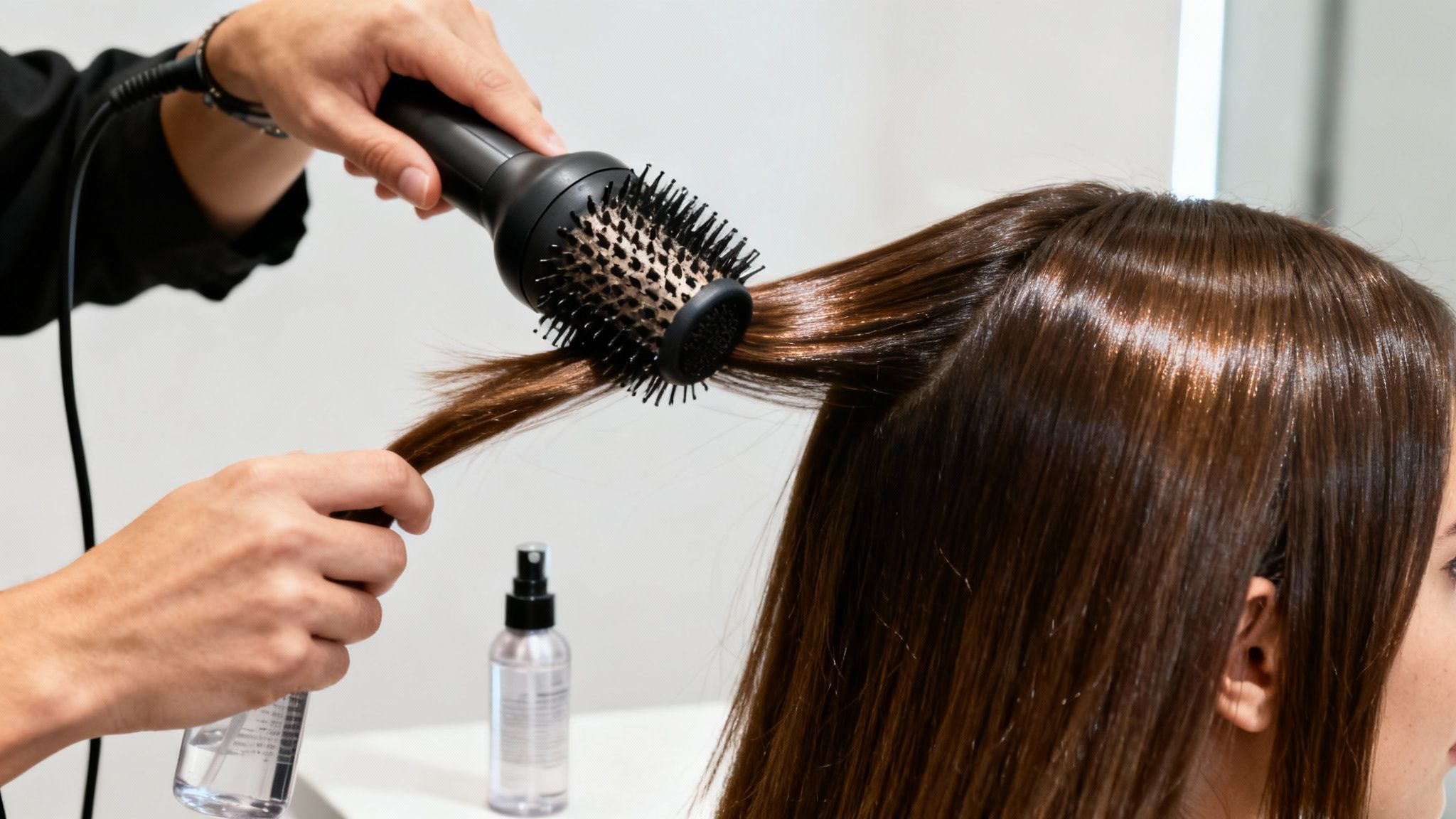
- Blow-Dry for Lift: This is a classic for a reason. When you blow-dry, flip your hair upside down and aim the airflow directly at the roots. This simple move lifts the hair away from your scalp, creating natural-looking body that actually lasts.
- Use Volumizing Products: Before you start styling, apply a lightweight volumizing mousse to your damp roots. Once your hair is dry, finish with a texturizing spray to add body and a bit of hold through the lengths.
For even more expert advice on this, check out our complete guide on how to style fine hair for maximum volume. Mastering these smart styling habits is a double win: you protect your hair's health for the future while making it look amazing right now.
Got Questions About Growing Thicker Hair? We've Got Answers
Even after you've started putting all these great strategies into practice, you might still have a few questions popping up. It's totally normal. Let's tackle some of the most common concerns people have on their journey to fuller, thicker hair so you can set realistic goals and feel confident in your routine.
How Long Does It Really Take to See Thicker Hair?
This is the big one, isn't it? The honest answer is: be patient. Hair grows at its own pace, typically about half an inch per month.
You’ll need to stick with your new routine for at least three to six months before you see a noticeable change in thickness. The first wins you'll likely spot are less shedding and a healthier shine. After that, you'll start to feel that new, stronger growth coming in at the roots.
Can My Hair Strands Actually Get Thicker?
This is a great question with a nuanced answer. While you can't magically change the genetic diameter of each individual hair strand, you can make them significantly stronger and more resilient. The real goal is to beef up the hair you have and stop the breakage that creates the illusion of thin hair.
Think of it this way: by using strengthening products and focusing on scalp health, you're doing two things. You're ensuring new hair grows in at its maximum potential thickness, and you're protecting your existing strands from snapping. The combined result is hair that looks and feels worlds thicker and fuller.
What Are the Worst Ingredients for Thinning Hair?
When you’re trying to build volume, the last thing you want are ingredients that work against you. Some common culprits in hair products can cause buildup, dryness, or irritation that sabotage your efforts.
Keep an eye out for these on your labels:
- Heavy Silicones: Anything ending in "-cone" (like dimethicone) can pile up on the hair shaft. For fine hair, this means instant flatness and a limp, greasy look.
- Sulfates (SLS & SLES): These are powerful detergents that can strip away your scalp's natural, protective oils. The result is often dryness, irritation, and brittle strands that are way more likely to break.
- Drying Alcohols: Not all alcohols are bad, but some, like alcohol denat, are incredibly dehydrating. They can leave your hair feeling straw-like and contribute to frizz and damage.
Final Thoughts on Growing Thicker Hair
Learning how to grow thicker hair is a journey, not a sprint. By focusing on the three pillars—scalp health, strand strength, and internal wellness—and supplementing your efforts with targeted products, you create a powerful system for achieving the lush, full hair you desire. Consistency is your greatest tool, so stick with your new routine and be patient as you nurture your hair back to its healthiest state.
Ready to build a routine that actually works? Explore the full range of strengthening and nourishing solutions at Morfose and give your hair the expert care it’s been waiting for. https://themorfose.com
