
How to Properly Wash Your Hair for a Healthier Scalp and Shine
It might sound almost too simple, but learning how to properly wash your hair can completely change its health, feel, and day-to-day appearance. If you've been fighting a losing battle with oiliness, dryness, or just dull, lifeless hair, the problem might not be your products—it's probably your technique. This guide provides a step-by-step blueprint for a truly effective hair wash that solves common problems and builds the foundation for healthy, shiny hair.
Why Your Hair Washing Technique Matters
Going beyond the old "lather, rinse, repeat" mantra is where the magic happens. Many common issues—from greasy roots to brittle ends—don't come from the products we buy, but from the washing habits we've picked up over the years. A great routine is about more than just getting your hair clean; it’s about creating the perfect foundation for healthy growth and vibrant shine.
The fundamentals of a successful hair wash are universal, focusing on prep, the right application, and post-wash care. You’d be surprised how tiny tweaks—like turning down the water temperature or changing where you apply your conditioner—can solve problems you thought were just part of your hair's personality.
The Benefits of a Proper Wash Routine
Think of your scalp as the bedrock of healthy hair. A proper wash directly impacts its condition, and a clean, balanced scalp is better at supporting strong growth. Here’s a quick rundown of why focusing on how you wash is so critical:
- Prevents Buildup: Washing incorrectly often leaves behind a film of product residue and natural oils. This buildup weighs hair down, making it look dull and feel greasy too soon.
- Reduces Damage: Scrubbing too aggressively or using scalding hot water can strip away essential moisture. This leads directly to breakage, frizz, and can even cause your color to fade faster.
- Boosts Scalp Health: A gentle massage with your fingertips (never your nails!) while you shampoo does more than feel good—it stimulates blood flow and clears away debris without causing irritation. For a deeper dive, learn more about the critical link between scalp health and hair growth.
- Makes Your Products Work Better: When your hair and scalp are genuinely clean, your conditioners and treatments can penetrate the hair shaft and do their job. You’ll get much better results from the products you already own.
By mastering a few key steps, you can turn a mundane chore into a powerful ritual that lays the groundwork for healthier, more beautiful hair, no matter your hair type.
Before we get into the step-by-step, here's a quick summary of what a perfect hair wash looks like.
Your Quick Guide to the Perfect Hair Wash
This table breaks down the entire process into manageable stages, explaining what to do and why it’s so important for your hair’s overall health.
| Stage | Key Action | Why It Matters for Hair Health |
|---|---|---|
| Preparation | Gently brush hair before getting it wet. | Removes tangles and loose hair, preventing breakage and allowing for more even product distribution. |
| The First Rinse | Thoroughly saturate hair with lukewarm water. | Opens the hair cuticles slightly, preparing them to receive shampoo and loosening initial dirt and oil. |
| Shampoo Application | Emulsify a coin-sized amount of shampoo in your hands and massage into the scalp with fingertips. | Focuses cleaning power where it's needed most (the scalp) and prevents stripping moisture from the ends. |
| The Final Rinse | Rinse thoroughly with lukewarm water, then finish with a cool water rinse. | Ensures all product is removed and the cool water helps seal the hair cuticle, locking in moisture and adding shine. |
| Conditioning | Squeeze out excess water and apply conditioner from the mid-lengths to the ends. | Delivers moisture and nutrients where hair is oldest and most damaged, avoiding greasy roots. |
| Post-Wash Care | Gently squeeze out water with a microfiber towel or t-shirt and apply leave-in products. | Minimizes friction and frizz caused by rough towels and protects hair before styling. |
This process might seem detailed, but once you get the hang of it, it becomes second nature, and the results speak for themselves. Let's break down each step.
A Step-by-Step Guide to Properly Washing Your Hair
Let's be honest, washing your hair can feel like just another chore. But what if you could turn that routine into a purposeful ritual? It’s not about adding complicated steps. It's about making small, intentional tweaks that seriously pay off for your hair's health and appearance. The process starts before you even step into the shower.
Step 1: Start with a Pre-Wash Detangle
This is one of those steps people often skip, but it’s a game-changer. Hair is at its absolute weakest when it's wet—it's more elastic and incredibly prone to snapping. By brushing out knots while your hair is still dry, you avoid putting stress on your vulnerable, wet strands.
Grab a wide-tooth comb or a gentle detangling brush. Always start from the ends and carefully work your way up to the roots. This simple technique stops you from yanking on tangles and causing more damage. Plus, it helps pull some of your scalp's natural oils down the hair shaft, which is like a mini pre-wash conditioning treatment.
This quick visual shows you exactly where this prep step fits in.
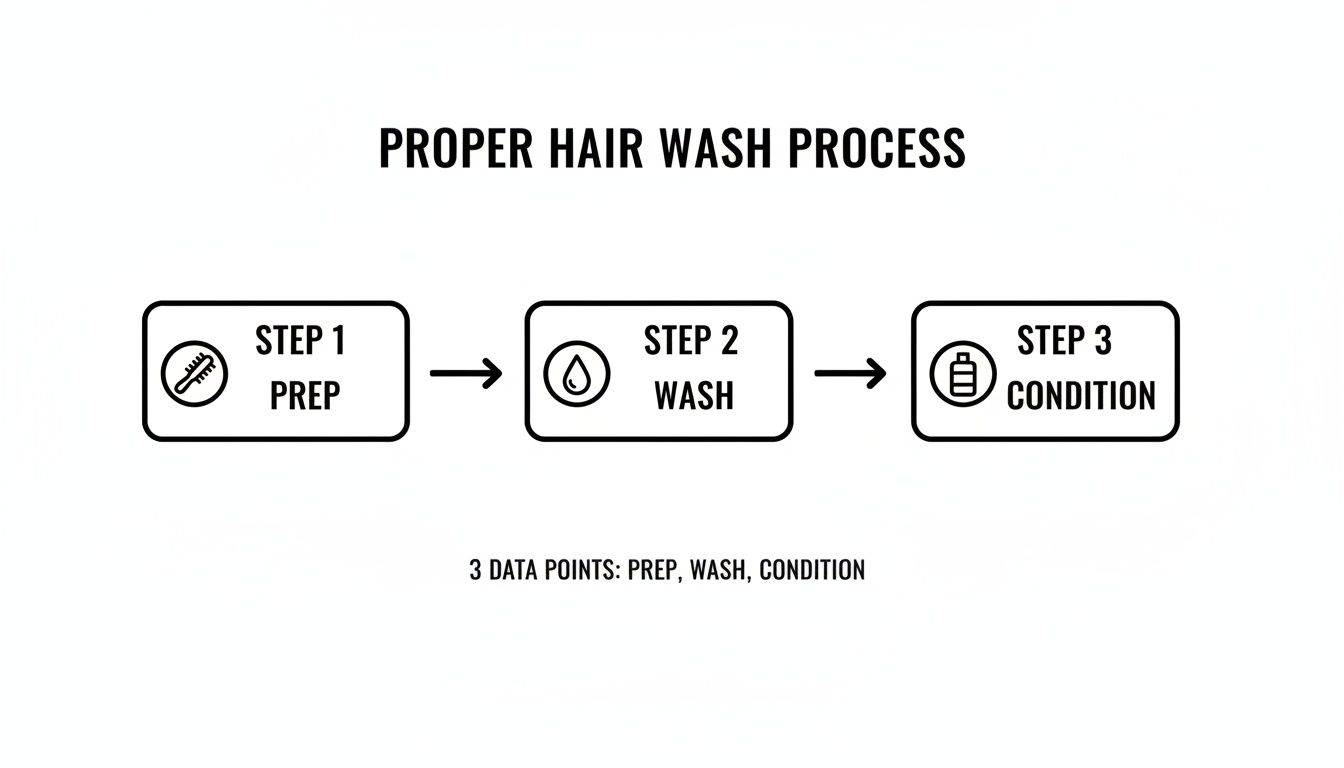
As you can see, a great hair wash is a system. Each step builds on the last to give you the best possible results.
Step 2: Get the Water Temperature Just Right
Now it's time to get your hair wet, but the temperature matters more than you’d think. A scalding hot shower might feel amazing, but it's not doing your hair or scalp any favors. Hot water can strip the natural, protective oils from your scalp, leading to dryness, irritation, and sometimes causing your scalp to overproduce oil to compensate. Hello, greasy roots.
Instead, go for lukewarm water. It’s the perfect middle ground—warm enough to help open the hair cuticle so your shampoo can get in and do its job, but not so hot that it causes damage. This one switch makes a huge difference in preserving moisture and is an absolute must if you have color-treated hair.
Step 3: Master Your Shampoo Application
How you apply shampoo is just as important as which one you use. Don't just squeeze a huge blob directly onto the top of your head.
Instead, put a quarter-sized amount into your palms first. Rub them together to emulsify the product until it creates a light lather before it touches your hair. This helps you get a much more even application. Focus that lather right where you need it most: your scalp. That's where all the oil, sweat, and product buildup hangs out.
Pro Tip: Use your fingertips—never your nails!—to gently massage the shampoo into your scalp with small, circular motions. This stimulates blood flow for a healthier scalp and lifts away grime without causing tangles or breakage. You don't need to scrub the lengths of your hair; the suds will run down and clean them just fine as you rinse.
Step 4: Condition with Purpose and Finish Cool
Once you've rinsed all the shampoo out, gently squeeze the excess water from your hair. If your hair is sopping wet when you apply conditioner, you’re just diluting the product, and it won’t work as well.
Focus the conditioner from the mid-lengths to the ends. This is where your hair is the oldest and needs the most moisture. Slathering it on your roots will just weigh your hair down and can make your scalp feel greasy faster. If your ends are feeling extra thirsty, learn more from our guide on how to deep condition hair at home.
Let the conditioner work its magic for a minute or two before the final rinse. For a pro-level trick that boosts shine, finish with a quick blast of cool water. This helps seal the hair cuticle, locking in moisture and creating a smooth, reflective surface for incredible gloss.
Customizing Your Wash Routine for Your Hair Type
A one-size-fits-all approach to washing your hair simply doesn't work. The real secret to unlocking your hair's full potential is tailoring your technique to its unique needs. How to properly wash your hair isn't a universal formula; what works for fine, straight hair could be a disaster for thick, coily curls. Your hair type dictates everything—from the products you use to how often you wash.
For Fine or Thinning Hair
If your hair is fine or thinning, the goal is volume and lift without weighing anything down. Heavy, ultra-moisturizing products can leave your hair looking flat and greasy in hours.
- Choose a Volumizing Shampoo: Look for formulas designed to build body and remove buildup that drags hair down.
- Condition Strategically: Only apply conditioner from your mid-lengths to the ends. Getting it near the scalp is a fast track to flat roots.
- Rinse Thoroughly: Any leftover product residue will instantly kill your volume. Make sure you rinse until your hair feels squeaky clean.
For Oily Scalps and Hair
An oily scalp can be frustrating, often making you feel like you have to wash your hair daily. The problem is, overwashing can backfire by stripping the scalp, which then produces even more oil to compensate. The solution isn't more washing, but smarter cleansing.
This is where double cleansing can be a game-changer. The first wash breaks down surface-level oil and product buildup. The second wash can then provide a much deeper, more thorough clean. Of course, choosing the right products starts with understanding your scalp's specific needs. If you're not sure, our guide can help you learn how to find your scalp type.
For Dry or Color-Treated Hair
When you're working with dry, damaged, or color-treated hair, your number one priority is moisture retention. Harsh cleansers are the enemy—they can strip away essential natural oils and your expensive hair color, leaving hair brittle and faded.
- Sulfate-Free Shampoos are Your Best Friend: These cleansers are much gentler. They clean effectively without stripping the moisture or color you're trying to protect.
- Wash Less Frequently: Try to stretch the time between washes to allow your natural oils to travel down the hair shaft. A good dry shampoo can be a lifesaver on in-between days.
- Use Hair Masks and Treatments: Incorporate a hydrating hair mask or a deep conditioner into your routine at least once a week to restore moisture, elasticity, and shine.
For Curly and Coily Hair
Curly and coily hair textures are naturally drier because the scalp's oils have a harder time traveling down all those beautiful twists and turns. This means your washing routine must be all about hydration to keep your curls defined and frizz-free.
Co-washing—washing your hair with only conditioner—is an incredibly popular method for those with very dry or curly hair. It gently cleanses the scalp without stripping the natural oils crucial for healthy, bouncy curls.
This need for a personalized approach is reflected in broader consumer habits. Data shows that 47% of Black respondents use hair oil regularly, compared to just 10% of White respondents. It’s a clear example of how different hair types and cultural practices shape our daily routines. You can discover more insights about these hair care trends and see why a one-size-fits-all plan is a myth.
Best Morfose Products to Use for Your Hair Type
Your washing technique is crucial, but pairing it with the right products takes your routine from good to great. Knowing how to wash your hair properly also means knowing which formulas will solve your specific concerns. The Morfose collection is designed with targeted solutions in mind, helping you build the perfect hair care arsenal based on your hair's primary need—whether it's dryness, weakness, or fading color.
For Intense Hydration and Softness
If your hair feels constantly dry, brittle, or straw-like, it's begging for a serious dose of moisture. This is where nourishing ingredients can restore softness and flexibility to every strand. The Morfose Milk Therapy line is your go-to solution. The Morfose Milk Therapy Shampoo is packed with milk protein and 12 essential amino acids to deeply moisturize and repair. Follow it up with the Milk Therapy Two Phase Conditioner to lock in hydration, leaving hair silky and manageable without feeling heavy.
For Strengthening Weak or Thinning Hair
When your hair feels weak, breaks easily, or you're noticing more shedding, it's time to reinforce its internal structure. Our Biotin and Keratin-infused products are designed specifically for this battle. Biotin supports hair health from the follicle, while Keratin patches up weak spots along the hair shaft. Incorporating the Morfose Keratin Hair Mask into your weekly routine can dramatically improve your hair's strength and reduce breakage over time.
For Color-Treated and Scalp Concerns
Protecting your hair color investment starts on wash day. Harsh sulfates are notorious for causing vibrant shades to fade prematurely. We always recommend sulfate-free options that cleanse effectively without stripping your hair. You can learn more about finding the best sulfate-free shampoo for your needs in our detailed guide. These gentler formulas help maintain your color’s vibrancy while also being kinder to your scalp, making them an excellent choice for anyone dealing with sensitivity or oiliness.
Common Hair Washing Mistakes to Avoid
Even with the best intentions, it's surprisingly easy to fall into hair washing habits that do more harm than good. The good news is that these common mistakes are simple to fix. Learning how to properly wash your hair often means unlearning a few bad habits first.
Using Water That Is Too Hot
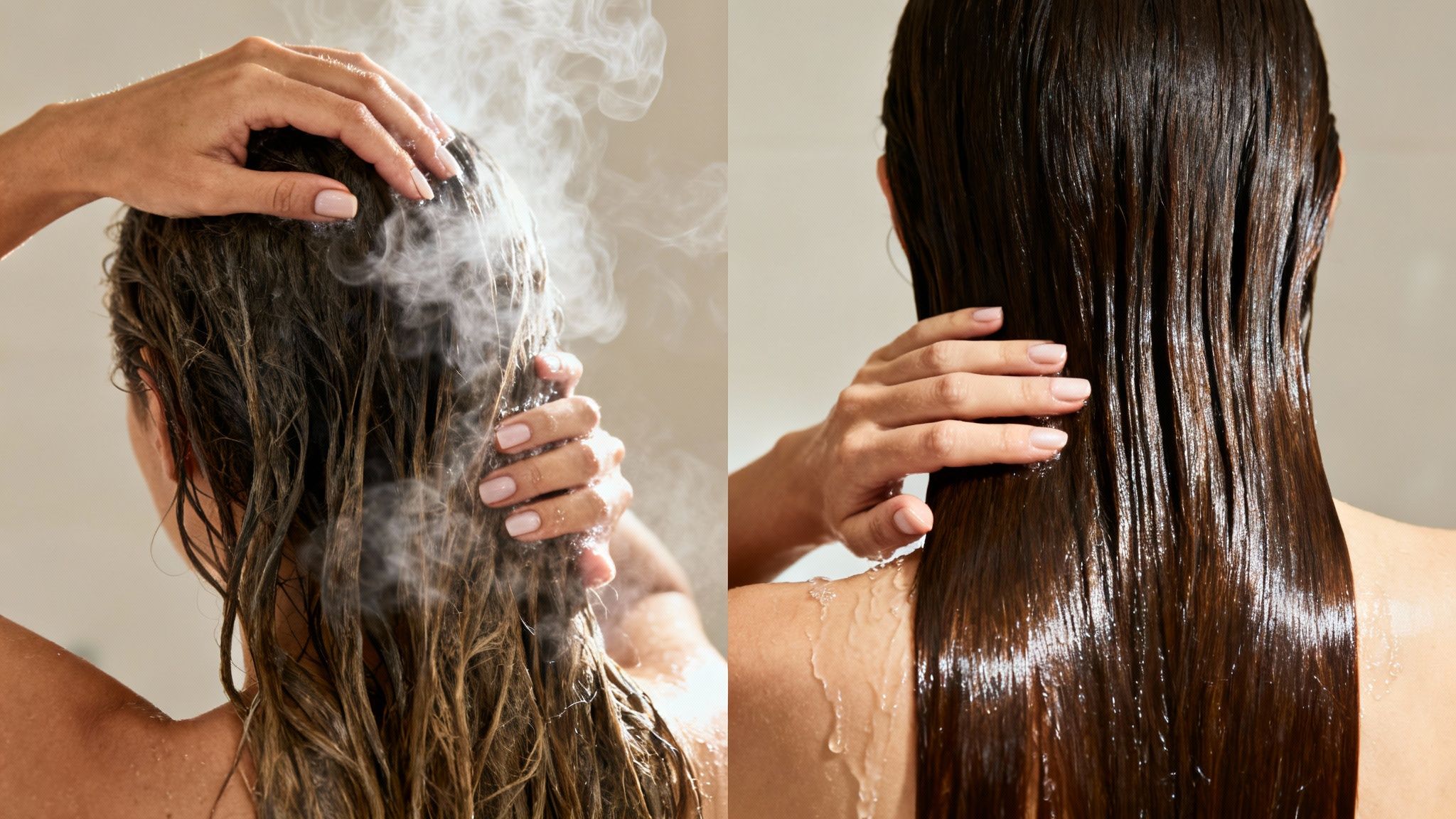
A steamy shower feels incredible, but scalding hot water strips your scalp of its natural protective oils. This can trigger a cycle of dryness and irritation or cause your scalp to overproduce oil to compensate, leading to greasy roots. For color-treated hair, hot water is a fast track to faded color.
The Fix: Always opt for lukewarm water. It's effective at cleansing without causing unnecessary damage or color loss.
Applying Conditioner to Your Roots
Conditioner is designed to hydrate the driest parts of your hair—the mid-lengths and ends. When you slather it all over your scalp, you’re asking for greasy, weighed-down hair.
The Fix: After rinsing out your shampoo, squeeze the excess water from your hair. Apply your conditioner from the middle of your hair shaft down to the tips, keeping it well away from the scalp.
The goal of a proper hair wash is a clean, balanced scalp and hydrated ends. Many common mistakes disrupt this balance by either stripping the scalp or overloading the roots with unnecessary product.
Scrubbing Aggressively with Fingernails
It’s tempting to dig in with your nails, thinking a vigorous scrub equals a deeper clean. In reality, you could be creating tiny micro-tears on your scalp, leading to irritation, inflammation, and potential follicle damage.
The Fix: Use the pads of your fingertips, not your nails. Gently massage your scalp in small, circular motions. This technique is enough to lift away oil and buildup, plus it stimulates blood circulation, which is fantastic for promoting healthy hair growth.
For a more detailed look at what to avoid, check out these 7 common haircare mistakes you should avoid.
Answering Your Hair Washing Questions
Perfecting your hair washing routine is a process of trial and error. Let’s tackle some of the most frequent questions to help you get it just right.
How Often Should I Really Be Washing My Hair?
There's no magic number. The right frequency depends on your hair type, scalp condition, and lifestyle. If you have an oily scalp or very fine hair, you might find washing every other day keeps it feeling fresh. For those with dry, coarse, or curly hair, less is more—washing two or three times a week allows your scalp's natural oils to moisturize the hair shaft.
The golden rule? Pay attention to what your hair is telling you. If it feels greasy, looks flat, or your scalp is itchy, it's wash day. If it still looks and feels fantastic, you can wait another day.
Can't I Just Wash My Hair with Water?
While a water rinse can remove light dust or sweat, it can’t properly clean your hair and scalp. Water alone can’t break down the oils, styling product residue, or environmental grime that builds up. Shampoo contains cleansing agents specifically formulated to grab onto that gunk and rinse it away cleanly, which is a non-negotiable step for a healthy scalp.
What Happens If I Don't Wash My Hair Enough?
Going too long between shampoos can cause issues. Oil, dead skin, and product residue create a layer of buildup on your scalp that can clog hair follicles. This can lead to scalp irritation, dandruff, and even inflammation that may hinder healthy hair growth. Your hair will likely look dull, feel greasy, and lose its bounce. Think of your scalp like the skin on your face—it needs regular cleansing to stay balanced.
Final Thoughts on Achieving the Perfect Wash
Mastering how to properly wash your hair is one of the most effective ways to transform its health and appearance. By tailoring your routine to your hair type, using the right water temperature, and applying products correctly, you can solve common issues like oiliness, dryness, and buildup. A mindful washing ritual doesn't just clean your hair—it lays the foundation for stronger, shinier, and healthier strands from root to tip.
Ready to build the perfect routine with products designed for your hair's unique needs? Explore the full collection at Morfose and discover targeted solutions that bring out the best in your hair. Find your ideal shampoo, conditioner, and treatments today at https://themorfose.com.
