
How Vitamin Deficiencies Cause Hair Loss: Causes, Symptoms, and Solutions
Finding a few too many strands in your hairbrush or noticing your ponytail feels a little less full? Before you panic, take a look at your plate. It's true—vitamin deficiencies cause hair loss by starving your hair follicles of the essential nutrients they need to build strong, healthy hair.
When your body is running low on key vitamins, the intricate biological machinery responsible for hair growth can slow down or, in some cases, grind to a halt. This guide will walk you through exactly how vitamin deficiencies cause hair loss, which nutrients are the biggest culprits, and what you can do to restore your hair's health and vitality from the inside out.
Why Your Diet Is The Foundation Of Healthy Hair
Think of each hair follicle as a tiny, high-powered factory that never shuts down. Like any factory, it needs a steady stream of raw materials and energy to keep production humming along. Those crucial materials? The vitamins and minerals from your food.
When your diet falls short, these little factories can’t do their job. This nutritional gap throws a wrench in the works, directly impacting your hair in a few critical ways:
- Weakened Hair Structure: Without enough building blocks like biotin and other B-vitamins, the keratin protein—the very stuff your hair is made of—becomes weak and brittle.
- Premature Shedding: A sudden drop in certain nutrients can literally shock your follicles, pushing them out of their active growth phase (anagen) and into a resting and shedding phase (telogen) far too soon. This leads to a condition called telogen effluvium, where you'll notice diffuse thinning all over your scalp.
- Halted New Growth: Vitamin D, for example, plays a key role in waking up new hair follicles. If you're deficient, fewer new hairs will start their growth cycle to replace the ones that naturally fall out each day.
The Building Blocks Analogy
Here’s a simple way to picture it: building a house. You can’t construct a sturdy home without bricks (keratin), cement to hold it together (collagen), and electricity to power the tools (oxygen delivered by red blood cells).
If the delivery trucks stop bringing bricks or the power gets cut, construction stops. It's the same with your hair. Without a consistent supply of vitamins from your diet, your body simply can't build healthy strands.
This diagram shows just how directly a good diet nourishes your follicles, fuels keratin production, and helps keep shedding in check.
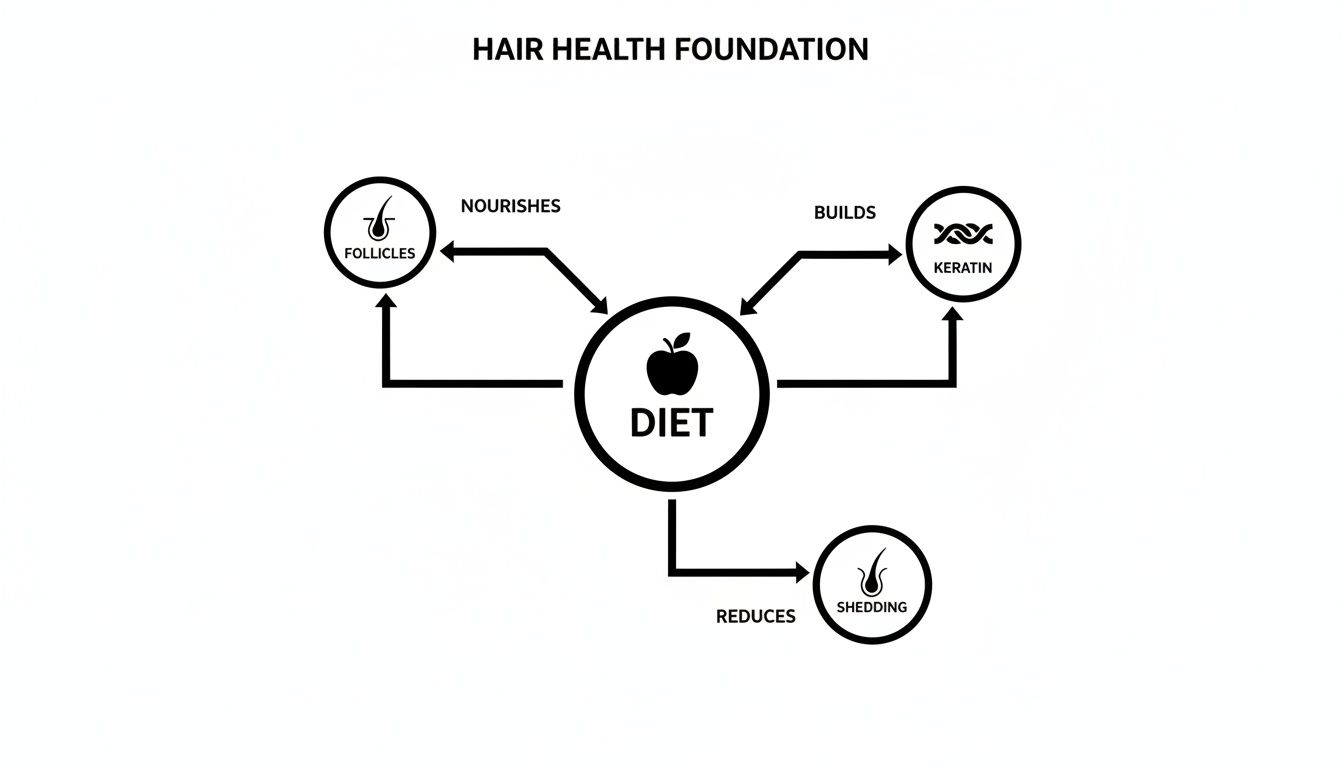
As you can see, diet is the central pillar supporting every single part of the hair growth cycle.
This fundamental link is why looking at your nutrition is always the first step in tackling hair loss. To get started on replenishing your body's reserves, check out our guide on the best foods for healthy hair and begin feeding your follicles from the inside out.
It’s important to remember that what affects your hair often affects the rest of your body, too. You can learn more about common vitamin deficiencies and their widespread health impacts to get a fuller picture of your overall wellness.
By understanding the direct connection between what you eat and the health of your hair, you're empowered to make changes that build a stronger, more resilient mane.
The Critical Role Of Vitamin D In Hair Growth
Most of us know Vitamin D as the "sunshine vitamin" that's essential for strong bones. But when it comes to hair, its role is just as critical. Think of it as the master switch for your hair follicles. It’s absolutely non-negotiable for creating new follicles and, just as importantly, waking up the ones that have gone dormant.
Imagine tiny "on" switches scattered all over your scalp—these are your Vitamin D receptors. When your body has enough Vitamin D, those switches get flipped on, kicking the follicles into the anagen, or growth, phase. But if you’re running low, many of those switches stay off. The result? Follicles remain asleep.
This doesn't happen overnight. It's a gradual process where the hairs that naturally shed aren't being replaced by new ones fast enough. Over time, this leads to visible thinning and a significant drop in hair density, often before you even connect the dots.
The Link Between Low Vitamin D And Hair Loss
If you're waking up to more hair on your pillow or noticing a sparser ponytail, a Vitamin D deficiency could absolutely be the culprit. It's an incredibly common issue, affecting around 35% of American adults and even more people worldwide.
This vitamin is a star player in hair follicle cycling—the process that tells your hair when to grow, rest, and shed. When your levels are too low, it throws the whole system out of whack, often disrupting the anagen (growth) phase. This can show up as diffuse thinning all over your head or trigger more specific conditions like alopecia areata, an autoimmune issue where the body attacks the follicles.
This disruption can manifest in a few distinct ways:
- Telogen Effluvium: This is a classic sign of a deficiency. It’s a temporary but dramatic type of shedding where a huge number of hairs are prematurely pushed into the resting (telogen) phase all at once.
- Alopecia Areata: Research has found a strong link between low Vitamin D levels and this autoimmune condition, which causes patchy, unpredictable hair loss.
- Female Pattern Hair Loss: Many studies also point out that women dealing with this common type of thinning often have lower-than-average Vitamin D levels.
A healthy scalp is the foundation for healthy hair, and a lack of essential nutrients can quickly compromise it. To learn more, check out our guide on the connection between scalp health and hair growth.
Signs Of Vitamin D Deficiency
Spotting a Vitamin D deficiency can be tricky because the symptoms often masquerade as other problems. But when it comes to your hair and scalp, there are a few red flags to watch for.
One of the biggest giveaways is a noticeable increase in hair shedding that just doesn't stop after a few weeks. You might also notice your scalp feels more sensitive or inflamed. Often, this goes hand-in-hand with general fatigue and muscle weakness, which are classic signs of low Vitamin D.
Other clues include:
- Hair growth that seems to have slowed to a crawl
- Strands that feel finer or weaker than they used to
- In some cases, patchy hair loss that seems to come out of nowhere
How To Get More Vitamin D
Boosting your Vitamin D levels is a three-pronged approach: sunlight, diet, and, if needed, smart supplementation. Your body is designed to make its own Vitamin D when sunlight hits your skin, but things like your location, the season, and sunscreen can get in the way.
Here’s how you can up your intake:
- Sunlight: Try to get 10-30 minutes of midday sun a few times a week. Leave some skin exposed, like your arms, without sunscreen for this short window to allow for production.
- Dietary Sources: Load up your plate with Vitamin D-rich foods. Think fatty fish like salmon and mackerel, egg yolks, and fortified foods like milk, orange juice, and cereals.
- Supplementation: If a blood test confirms you're deficient, your doctor will likely recommend a supplement. To get the most out of it, you might want to look into the best vitamin D3 and K2 supplement, as these two vitamins work as a team to support your body.
Ultimately, you can’t know your levels without a simple blood test. If you suspect a deficiency, talking to a healthcare professional is the smartest first step. They can give you a clear diagnosis and a personalized roadmap to get your levels back on track and support healthy hair regrowth.
Understanding The B-Vitamin Complex For Stronger Hair
When we talk about the vitamins that are the true architects of our hair, the B-vitamin family stands out, with Biotin (B7) and Vitamin B12 leading the charge. These two aren’t just helpful—they’re fundamental to building strong, resilient hair from the inside out. A shortfall in either can quickly throw your hair growth cycle out of whack, leading to noticeable thinning and breakage.
Think of Biotin as the master craftsman for your hair's structure. Its main job is to help produce keratin, the tough protein that makes up over 90% of every single hair strand. When your biotin levels are where they should be, your body can efficiently create strong, well-formed keratin. The result? Hair that’s elastic and far less prone to snapping.
But when biotin is in short supply, that production line starts to sputter. The keratin that gets made is weaker and poorly structured, which leads directly to brittle, fragile hair that breaks at the slightest provocation. This is a huge reason why a lack of biotin is so often connected to increased shedding and a general decline in hair quality.
Vitamin B12: The Nutrient Delivery System
While biotin is busy building the hair strand itself, Vitamin B12 plays a totally different—but equally critical—role. It’s the engine that drives your body’s red blood cell production. These cells are the microscopic delivery trucks carrying oxygen and vital nutrients to every part of your body, including your scalp and hair follicles.
Here’s a simple way to picture it: imagine your hair follicles are tiny, remote workshops that need a constant stream of fuel and building materials to stay open. Red blood cells are the trucks traveling the highways of your bloodstream to deliver those supplies. A Vitamin B12 deficiency means there just aren't enough trucks on the road.
This slowdown in deliveries essentially starves your hair follicles of the oxygen and nutrients they need to thrive. Deprived of their lifeblood, follicles can weaken and may prematurely enter the shedding phase, leading to diffuse hair loss across the entire scalp.
This gets to the heart of how vitamin deficiencies cause hair loss—it's not always about the hair's structure, but often about the underlying support system that keeps follicles active and productive.
Recognizing The Signs And Sources
Pinpointing a B-vitamin deficiency can be tough, since the symptoms often overlap with other health issues. But, there are some specific clues to watch for when it comes to your hair.
Common Signs of B-Vitamin Deficiency Related to Hair:
- For Biotin (B7): Hair that feels noticeably brittle, dry, or coarse, along with an uptick in breakage and thinning.
- For Vitamin B12: Diffuse shedding across the entire scalp, slower-than-usual hair growth, and sometimes even premature graying.
The good news is that you can boost your intake of these crucial vitamins through your diet. To make sure you're getting enough, focus on adding a variety of nutrient-rich foods to your plate.
Top Food Sources for B-Vitamins:
- Biotin-Rich Foods: Cooked eggs (especially the yolks!), almonds, walnuts, sweet potatoes, and avocados are all fantastic sources. For a deeper dive on how much you need, you can check out our guide on how much biotin to take daily for hair growth.
- Vitamin B12-Rich Foods: This vitamin is found almost exclusively in animal products. Top sources include lean beef, liver, chicken, fish like salmon and tuna, and dairy products like milk and yogurt.
Because B12 doesn't naturally occur in plant-based foods, anyone following a vegan or strict vegetarian diet is at a much higher risk of coming up short. If that's you, it's essential to look for B12-fortified foods (like nutritional yeast or certain plant milks) and talk to a healthcare provider about supplementation to head off hair loss and other health concerns.
How Vitamins C And E Protect Hair From Damage
Think of Vitamins C and E as your hair’s dedicated security detail, constantly on patrol to neutralize invisible threats. Every single day, things like UV rays, city pollution, and even your own internal stress are generating aggressive little molecules called free radicals.
These free radicals cause something called oxidative stress. If you've ever seen rust form on metal, you have a perfect picture of what oxidative stress does to your hair follicles. It's a slow, steady process of cellular breakdown.
Over time, this relentless attack damages the cells in your follicles, weakens the hair itself, and can even speed up the aging of your scalp. This disruption can throw your hair growth cycle out of whack and lead to noticeable thinning. That’s where Vitamins C and E come in, ready to stop the damage before it starts.
Vitamin E: The First Line Of Defense
Vitamin E is a fat-soluble antioxidant, meaning it works right at the cellular level on your scalp. It's the first responder, neutralizing free radicals on the spot before they can do any real harm to the delicate follicle cells.
By cutting down on this cellular damage, Vitamin E helps maintain a healthy, calm scalp environment—which is the absolute foundation for strong, consistent hair growth. A healthy scalp is far less likely to suffer from the kind of inflammation that can cut the anagen (growth) phase short. On top of that, studies show that Vitamin E can help support healthy circulation to the scalp, keeping a steady flow of oxygen and nutrients coming to your follicles.
Vitamin C: The Dual-Action Protector
When it comes to protecting your hair, Vitamin C is the ultimate multitasker. It’s a powerhouse antioxidant on its own, working right alongside Vitamin E to disarm free radicals. But its job description for healthy hair doesn't stop there.
Vitamin C is absolutely essential for two other critical processes that prevent hair loss:
- Collagen Production: Your body literally cannot make collagen without an adequate supply of Vitamin C. Collagen is the protein that provides the structural scaffolding around your hair follicles, keeping them strong and anchored. Without enough of it, follicles can weaken, and your hair becomes much more prone to shedding.
- Iron Absorption: This is a big one. Vitamin C significantly boosts your body's ability to absorb non-heme iron—the kind you get from plant-based foods. Since iron deficiency is a well-known and major cause of hair loss, making sure your body can actually use the iron you eat is crucial. Think of Vitamin C as the key that unlocks that iron, making it available to your system.
By kickstarting collagen synthesis and unlocking iron absorption, Vitamin C provides both the structural support and the essential fuel your follicles need to stay firmly in place and keep producing healthy hair. This one-two punch makes it a non-negotiable nutrient for anyone serious about hair wellness.
Fueling Your Hair’s Defense System
Loading up on these antioxidant heroes is both easy and delicious. You can build up your hair's internal defense shield just by adding more colorful fruits and vegetables to your plate.
Foods Rich in Vitamins C and E:
- For Vitamin C: Think citrus fruits like oranges and grapefruits, but also strawberries, bell peppers, kiwi, and dark leafy greens like kale. They're all packed with it.
- For Vitamin E: To get more of this protector, look to avocados, almonds, sunflower seeds, spinach, and broccoli.
These two vitamins work even better when they're together, so try to combine them in your meals. A simple spinach salad topped with strawberries and a sprinkle of sunflower seeds is a perfect example. For more ideas on how to shield your hair from daily stressors, check out our guide on protecting your hair from environmental damage.
The Fine Balance Of Vitamin A For Scalp Health
When it comes to your hair, some nutrients are a clear case of "more is better." Vitamin A, however, is a bit different. It’s more of a Goldilocks situation—you need just the right amount to keep things running smoothly.
Get it right, and Vitamin A plays a vital role in keeping your scalp and hair properly moisturized. Get it wrong, by having either too little or way too much, and it can actually contribute to hair thinning.
This vitamin is a powerhouse for cell growth, and that includes the cells that build your hair—officially the fastest-growing tissue in the human body. More specifically, Vitamin A helps the glands in your scalp produce sebum. Think of sebum as your body's own built-in, perfectly formulated hair conditioner. It moisturizes the scalp, keeps the follicles healthy, and stops your hair from becoming dry and brittle.
The Dangers Of Too Little And Too Much
If you don't have enough Vitamin A, your scalp can't produce the sebum it needs. The result is a dry, itchy scalp and hair that feels like straw, making it incredibly fragile and prone to snapping. While a true deficiency is pretty rare in most American diets, it clearly shows how essential this vitamin is for keeping your scalp hydrated.
But here’s the twist. The more common problem when we talk about how vitamin deficiencies cause hair loss is actually getting too much Vitamin A, which almost always comes from overdoing it with high-dose supplements.
When your body is overloaded with Vitamin A, it becomes toxic and actually throws the hair growth cycle into overdrive. This shock to the system pushes follicles into the shedding (telogen) phase way too soon, leading to noticeable, all-over hair loss. It’s a classic case of too much of a good thing backfiring completely.
A dry, flaky scalp can be a red flag for a Vitamin A imbalance. While not having enough can starve your sebum glands, taking too much (over 10,000 IU daily) from supplements can trigger widespread shedding.
How To Safely Get The Vitamin A You Need
The safest and smartest way to get the right amount of Vitamin A is through your diet, not from a pill bottle. Your body is incredibly efficient; it converts beta-carotene from plants into Vitamin A on an as-needed basis, which dramatically reduces the risk of an overload.
Try to weave these Vitamin A-rich foods into your meals:
- Sweet potatoes
- Carrots
- Spinach and kale
- Pumpkin
- Red bell peppers
- Mangoes
By getting your Vitamin A from whole foods, you give your scalp everything it needs to produce that crucial sebum without ever tipping the scales into toxic territory. It's a balanced, food-first approach that ensures your hair stays strong, moisturized, and healthy.
Recommended Morfose Solutions for Nutrient-Deficient Hair
While fixing your diet is the number one long-term strategy for reversing hair loss from vitamin deficiencies, that process takes time. The hair that’s already on your head is still weak and vulnerable to snapping and breaking. This is where targeted topical care becomes your best friend—it acts as a crucial support system to protect your hair while your body rebuilds from the inside out.
Think of it as a two-part recovery plan. Better nutrition is busy rebuilding the foundation for strong, healthy future growth. At the same time, the right haircare products provide immediate backup to the fragile strands you already have. This external support helps cut down on breakage, improves elasticity, and makes your hair feel stronger and healthier during the transition.
Fortify Weak Strands With Biotin
When hair is weak due to nutrient gaps, it needs direct reinforcement. Applying products with biotin helps to shore up the hair’s internal structure, temporarily filling weak spots and creating a smoother, stronger surface. This protective layer is a game-changer for reducing the risk of snapping and splitting, which is especially common when you’re dealing with how vitamin deficiencies cause hair loss.
For a serious dose of TLC, consider the Morfose Biotin Hair Mask. This powerful mask delivers a concentrated shot of biotin and other nourishing ingredients directly to weak, brittle hair, helping to bring back volume and shine while you work on improving your diet.
By infusing the hair with essential building blocks like biotin, you give fragile strands the immediate structural support they need to survive the recovery period. This helps you hold onto more of your hair while you wait for healthier, stronger strands to grow in.
Repair and Smooth With Milk Proteins
Another fantastic approach for supporting nutrient-starved hair is to double down on repair and moisture. The Morfose Milk Therapy range is perfect for this. It uses a blend of milk proteins and 12 essential amino acids to nourish and restore the hair's surface.
These proteins get to work patching up the cuticle—the hair's outer protective layer—which often becomes rough and damaged when your nutrient levels are low. The amino acids penetrate deeper to replenish moisture and bring back a smoother, softer feel. Not only does this improve how your hair looks and feels, but it also makes it much easier to manage, reducing tangles and the mechanical damage that comes with them.
Your Questions About Vitamin Deficiencies and Hair Loss, Answered
Working the connection between your diet and your hair health can feel a little confusing, so let's clear things up. Here are some straightforward answers to the questions we hear most often about vitamin deficiencies and hair loss.
How Long Until I See Hair Growth After Fixing a Vitamin Deficiency?
Patience is probably the hardest part of the whole process. Your hair grows in cycles, and it takes a while for your follicles to get the message that the nutrient supply line is back up and running.
Once you start consistently correcting a deficiency, either through your diet or with supplements prescribed by a doctor, you can usually expect to see a real drop in shedding and the first little signs of new growth within three to six months. Sticking to a professional's recommendation is the only way you'll see those results.
Can a Daily Multivitamin Prevent My Hair From Falling Out?
Think of a standard multivitamin as a great "insurance policy" for your diet. It can help fill in any minor nutritional gaps you might have on a day-to-day basis. But when you’re dealing with a true clinical deficiency that’s causing noticeable hair loss, a multi just isn't potent enough to fix the problem. It's a tool for maintenance, not a powerful repair kit.
If you suspect something is seriously off, the only way to know for sure is to get a blood test. Your doctor can pinpoint exactly what you're low on and prescribe the targeted dose you need to actually treat it—which is often much, much higher than what you’d find in a generic multivitamin.
The Bottom Line: A multivitamin is great for general wellness, but a diagnosed deficiency needs a specific treatment plan from a doctor to truly stop hair loss and get things growing again.
Is It Safe to Take High Doses of Vitamins for Hair Growth?
Absolutely not. Taking huge doses of vitamins without a doctor's supervision is a bad idea and can be genuinely dangerous. When it comes to certain nutrients, more is definitely not better, and it can completely backfire.
This is especially true for fat-soluble vitamins like A, D, and E. Your body stores any extra it doesn't use, and high doses can build up to toxic levels over time. Ironically, this can trigger even more hair loss, not to mention other serious health issues. Even overdoing a water-soluble vitamin like biotin can throw off important lab test results, potentially leading to misdiagnoses for other conditions.
Always, always talk to a healthcare professional before you start any kind of high-dose supplement. They can make sure it’s safe, necessary, and right for you, protecting both your hair and your overall health.
Understanding how vitamin deficiencies cause hair loss is the first step toward reclaiming your hair's health. By focusing on a nutrient-rich diet and seeking professional medical advice for any suspected deficiencies, you can build a strong foundation for regrowth. While you focus on nourishing your hair from the inside, let Morfose provide the external strength and care your strands need right now. Check out our full collection of restorative treatments at themorfose.com and give your hair the best possible support for a healthy recovery.
