
How Much Biotin to Take Daily for Hair Growth: A Complete Guide
If you're wondering how much biotin to take daily for hair growth, you've probably noticed a wide range of dosages, from a modest 30 mcg to a powerful 5,000 mcg or more. This difference can be confusing, but it boils down to one thing: the difference between meeting your body's basic needs and pursuing a specific hair health goal.
The standard 30 mcg is the adequate daily intake to prevent deficiency and support metabolism. The higher doses found in hair supplements are designed to provide extra support for keratin production, potentially leading to stronger, healthier-looking hair. This guide will help you understand the right dosage for your goals, how to get biotin naturally, and how to use it safely and effectively.
Your Guide to Daily Biotin for Hair Growth

Walking down the vitamin aisle, it's easy to feel overwhelmed. One bottle of biotin offers 30 mcg, while the one next to it boasts 5,000 or even 10,000 mcg. That massive gap exists because these supplements serve two very different purposes.
The smaller dose is the baseline—the amount your body needs to prevent a deficiency and keep your metabolism running smoothly. For most people, a balanced diet easily provides this amount. The higher doses, however, are marketed specifically to individuals looking to strengthen their hair and nails and encourage healthy growth.
The Standard Dose vs. The Hair Growth Dose
Health authorities recommend a daily intake of just 30 micrograms (mcg) for adults. This small amount is easily obtained from everyday foods like eggs, salmon, and nuts. In fact, most people in the US get between 35 and 70 mcg daily without even trying. You can learn more about the nutritional science behind this at the National Institutes of Health.
In contrast, supplements designed for hair health often contain doses over 100 times higher than that daily baseline. It's important to know that these mega-doses deliver the most dramatic results for people with a genuine biotin deficiency, which is quite rare. For everyone else, the effects are typically more subtle but can still support overall hair strength.
To make this clearer, let's break down the numbers.
Biotin Dosage At A Glance
| Dosage Type | Recommended Amount (mcg) | Primary Purpose |
|---|---|---|
| Standard Daily Intake | 30 mcg | Meeting basic nutritional needs and preventing deficiency. |
| Supplemental Hair Dose | 2,500 - 5,000 mcg | Supporting hair strength and growth as a cosmetic goal. |
This table shows the clear difference between what your body needs to function and what's often used to pursue aesthetic benefits like healthier-looking hair.
Setting Realistic Expectations
Before starting any new supplement, remember that it's just one piece of the puzzle. Biotin works from the inside out, but protecting your hair on the outside is just as crucial for seeing real progress. Combining a supplement with a healthy lifestyle and the right topical products gives you a much better shot at success. For more on this, check out our expert tips for healthy hair growth.
The key to seeing results is consistency and a two-pronged approach. Nourishing your body internally gives new hair the best start, while a proper external routine protects the hair you already have from damage.
Understanding Biotin's Role in Building Strong Hair
Before we can figure out how much biotin to take daily for hair growth, we need to understand what this vitamin actually does. Biotin, also known as Vitamin B7, is more than just a "hair vitamin." At its core, biotin is a key player in your body's metabolic engine, helping turn the food you eat—proteins, fats, and carbs—into usable energy.
Think of biotin as the foreman on a construction site. It doesn't mix the concrete itself, but it’s essential for directing the crew. When it comes to your hair, biotin’s main job is overseeing the production of keratin—the protein that gives structure and strength to your hair, skin, and nails.
Biotin: The Keratin Production Foreman
Let’s stick with that construction analogy. Your body is building a strand of hair, and the building blocks are amino acids. The finished structure is keratin. Biotin is the foreman, ensuring every amino acid is put in the right place to build a tough, resilient keratin structure.
If the foreman is on the job, construction moves along smoothly, and you end up with a solid structure. But what happens if the foreman doesn't show up? That’s what a biotin deficiency is like. The project stalls. Without direction, the building materials can't be assembled correctly. The result is a weak, poorly built structure—or in this case, brittle hair prone to breakage.
This is why biotin is so fundamental. It supports the very foundation of how your hair is made.
Recognizing the Signs of Biotin Deficiency
A true biotin deficiency is rare in the US, as most people get enough from a balanced diet. But when it does happen, the signs are often easy to spot, and your hair is usually one of the first places to show trouble.
Here are the classic tell-tale signs that your body might be low on biotin:
- Thinning Hair: This isn't just a few extra strands in the brush; it’s often a noticeable, diffuse hair loss across the scalp.
- Brittle Nails: If your nails are constantly splitting, peeling, or breaking, it could be a clue.
- Red, Scaly Rash: This often appears around the face, particularly near the eyes, nose, and mouth.
- Fatigue and Neurological Symptoms: In more serious cases, a deficiency can lead to lethargy and even depression.
If you're dealing with significant hair thinning alongside these other symptoms, a lack of biotin might be part of the problem.
The main takeaway: High-dose biotin supplements are most effective for people who have a confirmed or suspected deficiency. For them, restoring biotin levels helps get the keratin factory back up and running.
Of course, biotin is just one piece of the hair health puzzle. A holistic approach is always best, as lacking other essential vitamins for thinning hair can also cause problems. Understanding the bigger picture will help you build a complete wellness strategy to reach your hair goals.
The Science-Backed Dosage for Visible Hair Growth
When you're trying to figure out how much biotin to take daily for hair growth, the real answers are found in scientific research. While everyone needs biotin to be healthy, studies show that high-dose supplements provide the most significant benefits for people with a confirmed deficiency.
If your biotin levels are already normal, taking extra may offer more subtle support for hair strength. The key is to understand where the popular dosage numbers come from and to have realistic expectations based on your body's needs and your hair’s natural growth cycle.
Finding The Sweet Spot for Supplementation
So, what's the most effective dose? In clinical settings, experts often land on a specific range. For targeting hair growth, professionals frequently suggest taking 2,500 to 5,000 mcg of biotin a day, especially if a deficiency is suspected. This recommendation comes from observing real patients with low biotin levels experience noticeable hair regrowth after starting a supplement routine.
Remember that hair growth is a marathon, not a sprint. Hair grows about half an inch per month on average, so patience is key. It can take anywhere from three to six months of consistent supplementation to see visible improvements in thickness and strength.
A 2017 review of scientific studies examined 18 cases where biotin successfully reversed hair loss for people with underlying issues. The doses in those cases varied widely, but they were all significantly higher than the standard daily intake.
The takeaway is this: while a standard 30 mcg dose is fine for general health, the 2,500 to 5,000 mcg range is what’s most often cited as a therapeutic dose for tackling hair concerns tied to low biotin levels.
This simple decision tree can help you determine if biotin supplementation is a logical next step for you.
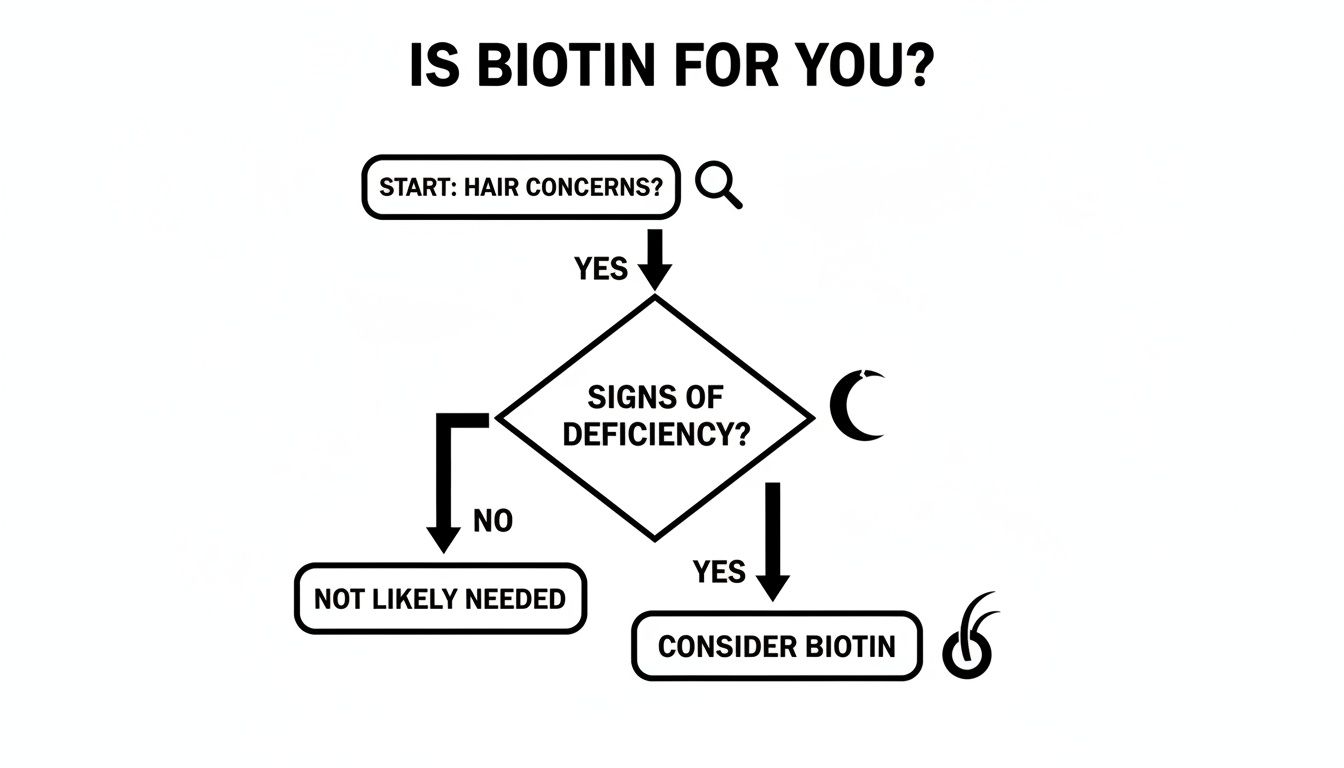
As the flowchart shows, the clearest path to benefiting from biotin starts with spotting signs of a potential deficiency.
Understanding the Timeline for Results
Patience is a must on any hair growth journey. Your hair follicles are constantly cycling through growth, rest, and shedding phases. Because of this, it takes a while for any internal supplement to show external results.
- Months 1-3: In the beginning, biotin works behind the scenes to support keratin production and nourish hair follicles. You probably won't see a big difference in length yet, but you might notice less shedding or that your hair feels a bit stronger.
- Months 3-6: By this point, new hair that got a boost from the biotin has had time to grow out. This is when most people start to see and feel a real difference in their hair's overall volume and thickness.
This timeline aligns with the natural hair growth cycle, proving that consistency is more important than a quick fix.
A supplement can’t do all the work on its own. It's crucial to pair it with a routine that supports a healthy scalp—the foundation for strong hair. Understanding the connection between scalp health and hair growth can help you build a more effective strategy. For a deeper dive into clinically supported daily intake, you can explore detailed insights on Finding Your Ideal Biotin Dosage for Hair Growth.
How to Get Enough Biotin From Your Diet
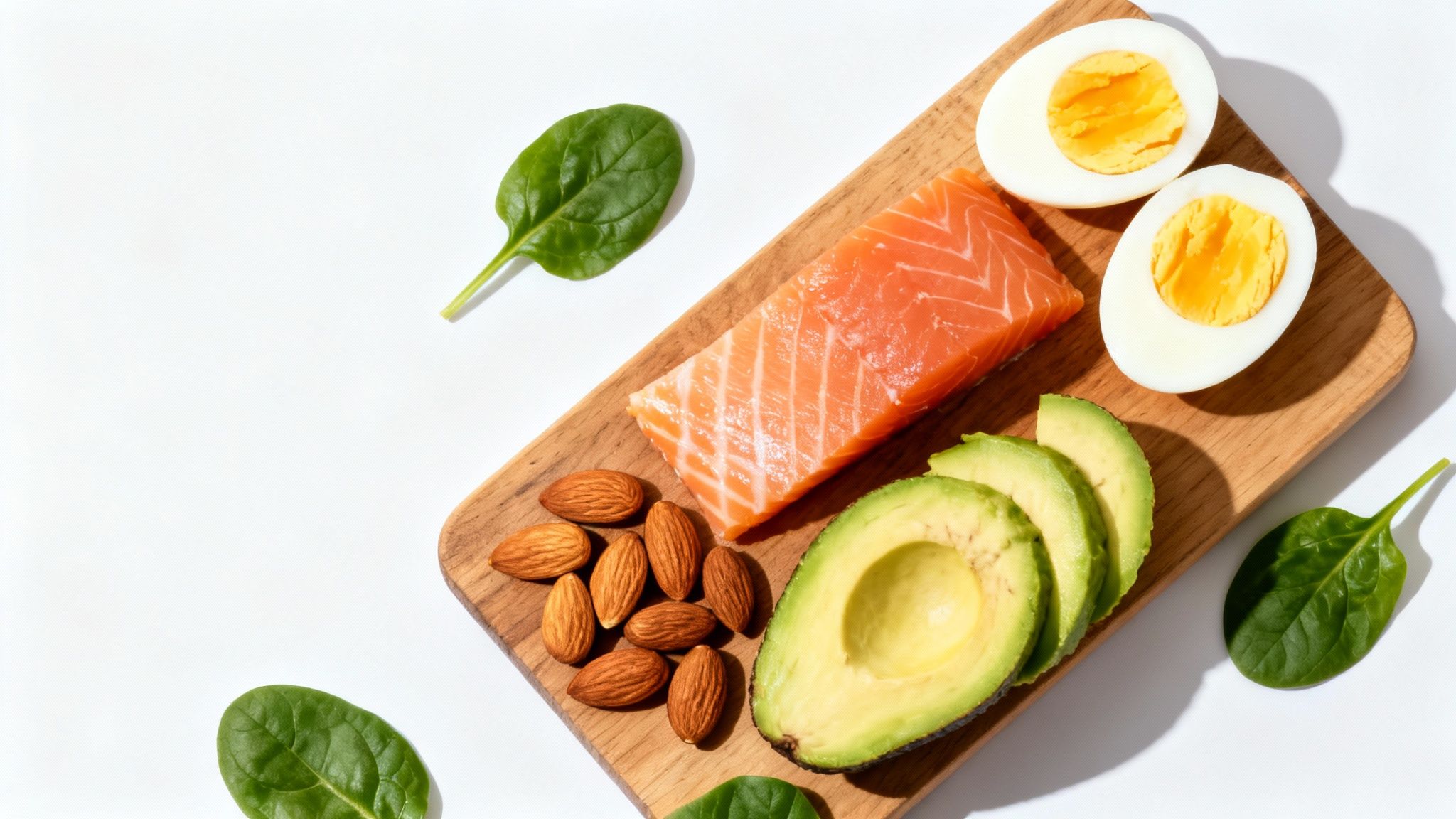
Before deciding how much biotin to take daily for hair growth via a supplement, it’s smart to look at your diet first. Our bodies are designed to absorb nutrients from whole foods, and a balanced diet already provides all the biotin most of us need for general health.
The official Adequate Intake (AI) for adults is just 30 micrograms (mcg) per day. You might be surprised to find you’re already hitting that target with your regular meals.
Top Biotin-Rich Foods to Add to Your Diet
Where can you find this essential B-vitamin? Luckily, biotin is present in many common foods, making it easy to incorporate into your routine. A "food-first" approach also ensures you get other vitamins and minerals that work together to support healthy hair.
Here are some of the best foods for a natural biotin boost:
- Cooked Eggs: The yolk is a biotin powerhouse. A single large, cooked egg contains about 10 mcg of biotin, a third of your daily goal.
- Salmon: A great source of omega-3s, a 3-ounce serving of this fatty fish also provides around 5 mcg of biotin.
- Pork: You can get about 4 mcg of biotin from a 3-ounce serving of a cooked pork chop.
- Beef Liver: If you eat organ meats, you're in luck. A 3-ounce serving of cooked beef liver contains a massive 31 mcg of biotin.
- Sweet Potatoes: A half-cup of cooked sweet potato offers about 2.4 mcg of this key vitamin.
- Nuts and Seeds: Almonds, walnuts, and especially sunflower seeds are great sources. A quarter-cup of roasted almonds has around 1.5 mcg.
To give you a better idea of how it all adds up, here’s a quick chart of top food sources.
Top Biotin-Rich Foods For Your Diet
| Food Source | Serving Size | Approximate Biotin (mcg) |
|---|---|---|
| Beef Liver, cooked | 3 ounces | 30.8 mcg |
| Egg, whole, cooked | 1 large | 10.0 mcg |
| Salmon, pink, canned | 3 ounces | 5.0 mcg |
| Pork Chop, cooked | 3 ounces | 3.8 mcg |
| Hamburger Patty, cooked | 3 ounces | 3.8 mcg |
| Sunflower Seeds, roasted | ¼ cup | 2.6 mcg |
| Sweet Potato, cooked | ½ cup | 2.4 mcg |
| Almonds, roasted | ¼ cup | 1.5 mcg |
As you can see, it doesn't take much to hit the 30 mcg target. A couple of eggs for breakfast and a salmon salad for lunch, and you're there! For more inspiration, check out our guide on the nutrient-packed powerhouses that are the best foods for healthy hair.
Factors That Can Impact Biotin Absorption
Even if your diet is packed with biotin-rich foods, a few factors can interfere with your body's ability to absorb and use it.
Keep in mind that your body's biotin levels aren't just about what you eat—they're also about what your body can absorb. Lifestyle habits and medications can play a significant role.
Here are a few things that might lower your biotin levels:
- Excessive Alcohol Consumption: Heavy drinking can interfere with the absorption of many B-vitamins, including biotin.
- Certain Medications: Long-term use of some anticonvulsant drugs for conditions like epilepsy has been shown to reduce biotin levels.
- Gastrointestinal Conditions: Chronic issues like Crohn's disease can make it harder for your gut to absorb nutrients.
- Eating Raw Egg Whites: Raw egg whites contain a protein called avidin, which binds to biotin and prevents its absorption. The solution is simple: cooking eggs completely neutralizes avidin.
By looking at both your diet and these other factors, you can get a clearer idea of whether a supplement is the right move for your hair goals.
Is Taking a High Dose of Biotin Safe?
When you’re deciding how much biotin to take daily for hair growth, it's easy to assume "more is better." And while biotin is a water-soluble vitamin—meaning your body excretes what it doesn’t use—taking massive doses isn't completely without risk. The biggest concern isn't toxicity, but its potential to interfere with important lab tests.
High levels of biotin in your bloodstream can skew the results of many critical blood tests. This can lead to a misdiagnosis or incorrect treatment for a condition that has nothing to do with your hair.
The Hidden Danger of Skewed Lab Results
The most well-known issue with high-dose biotin supplements is their effect on thyroid hormone tests. Too much biotin can falsely indicate hyperthyroidism (an overactive thyroid) or mask hypothyroidism (an underactive thyroid). This could lead to getting prescriptions you don't need or failing to treat a real thyroid problem.
More alarmingly, high biotin levels can interfere with tests for troponin, a key marker used to diagnose a heart attack. Falsely low troponin levels might lead a doctor to incorrectly rule out a heart attack in an emergency, which could have life-threatening consequences.
The Food and Drug Administration (FDA) has issued official warnings about this risk. They stress the importance of telling your doctor about any biotin supplements you're taking before getting blood work done. It’s a simple conversation that could prevent a major medical mistake.
Putting Biotin Doses in Perspective
The hype around mega-dosing biotin has grown much faster than the science to back it up for the general population. While the standard adequate intake is only 30 mcg a day, the popularity of high-dose supplements has exploded. By 2016, a surprising 2.8% of US adults were taking 1,000 mcg (1 mg) or more daily—a massive leap from just 0.1% in 1999. There's very little evidence that these huge doses provide additional hair benefits for people who aren't deficient. You can find a full analysis in the Journal of the American Medical Association.
For those using Morfose products, like our Ossion Beard Care line or our color-safe formulas, sticking to a modest dietary intake of 30-100 mcg is a safe approach. The mega-doses of 5,000-10,000 mcg are the ones known to interfere with lab results.
Your Safety Checklist Before Taking Biotin
To get the potential hair benefits of biotin without risking your health, follow these simple guidelines:
- Always Tell Your Doctor: Before any blood tests, inform your healthcare provider about all supplements you're taking, especially the exact dose of biotin.
- Consider Taking a Break: Many experts suggest stopping biotin supplements for at least 72 hours before having blood drawn to ensure accurate results.
- Listen to Your Body: It's rare, but if you start a high dose and notice unusual symptoms like skin rashes or an upset stomach, consult your doctor.
Taking this proactive approach allows you to work toward your hair goals safely.
Recommended Morfose Solutions for Hair Growth
A great hair growth strategy works from two angles: inside out and outside in. While you’re figuring out how much biotin to take daily for hair growth and nourishing your body internally, that’s only half the story. To see real results, you also have to protect the hair you already have with the right topical treatments.
Think of your biotin supplement as the construction crew building a strong foundation for new hair. Morfose products act as the security team, protecting the entire structure from external damage. This dual approach ensures your efforts aren't wasted and your new growth can thrive.
Fortifying Hair From the Outside In
Internal supplements are fantastic for ensuring new hair grows in strong. But what about the lengths you already have? Environmental stress, heat styling, and chemical treatments can weaken the hair shaft, leading to breakage long before you reach your goals. A targeted topical routine is crucial.
Morfose products are specifically designed to provide this critical external support. By delivering strengthening ingredients directly to the hair fiber, they boost resilience, reduce breakage, and help create the perfect scalp environment for healthy growth. It’s all about protecting your new, biotin-fueled hair from the moment it appears.
The Power of Biotin and Keratin Topically
Adding products infused with biotin and keratin to your routine is a game-changer, especially when paired with a supplement. These ingredients work directly on the hair shaft to fortify and shield it from daily wear and tear.
- Morfose Biotin & Collagen Shampoo: This shampoo cleanses your scalp and hair while infusing it with biotin and collagen, helping to strengthen existing strands. This is key for reducing frustrating breakage that can make it feel like your hair isn’t growing.
- Morfose Professional Biotin Hair Mask: For a deeper level of fortification, this weekly treatment provides intensive repair to restore volume and strength, helping to prevent hair loss and protect your hard-earned growth.
A complete approach means you’re not just growing hair; you’re retaining length. By strengthening strands topically with Morfose, you give your internally-nourished new growth a much better chance of reaching its full potential.
When you pair your daily biotin supplement with the external strengthening power of Morfose’s biotin and keratin products, you create the ultimate support system for achieving the long, healthy hair you’ve been working toward.
Common Questions About Biotin for Hair Growth
Even with all the science covered, you probably still have a few questions. Deciding how much biotin to take daily for hair growth is a personal choice, and it’s smart to have all the facts straight. Let's clear up some of the most common queries.
Can You Overdose on Biotin?
It's almost impossible to "overdose" on biotin in a way that causes toxic harm. Since it's a water-soluble B-vitamin, your body flushes out any excess through your urine.
However, as discussed earlier, taking excessively high doses can seriously interfere with important lab tests for thyroid and heart conditions. So, while it won’t poison you, mega-dosing isn’t risk-free.
How Long Does It Take to See Hair Growth Results?
Patience is key. Hair grows slowly, about half an inch per month. When you start a biotin supplement, you're nourishing new hair forming in the follicle.
You have to wait for that new, stronger hair to grow long enough to be visible. Most people start to notice a real difference in thickness, strength, and reduced shedding within 3 to 6 months of consistent daily use.
Are Biotin Shampoos and Conditioners Effective?
Absolutely. Topical products like biotin shampoos act as your hair's support team. They won't boost your body's internal biotin levels, but they work directly on the hair you already have, fortifying strands and reducing breakage.
Using a product like the Morfose Biotin & Collagen Shampoo helps protect your existing hair, giving new, stronger growth a better chance to thrive. They work best when paired with good nutrition from the inside.
Key Takeaway: Biotin supplements build stronger hair from the inside, while biotin-infused topical products protect and fortify that hair from the outside. Combining both offers the most complete strategy for retaining length.
Does Biotin Help with Beard Growth?
Yes, the same logic applies to facial hair. A beard is made of the same protein—keratin—as the hair on your head. If a man has a biotin deficiency, it can impact the thickness and health of his beard.
Ensuring adequate biotin levels can support stronger, fuller beard growth. The best approach is pairing a balanced diet or supplement with great grooming products. The Morfose Ossion Beard Care line has specialized formulas to keep both the beard and the skin underneath it in fantastic shape.
Ready to support your hair from the outside in? The topical application of strengthening ingredients is a crucial step in preventing breakage and protecting your growth. Explore the Morfose collection and discover how our biotin, collagen, and keratin-infused formulas can fortify your hair for maximum length and health. Start building your perfect routine at https://themorfose.com today.
