
How to Remove Static from Hair for Good
Getting rid of static in your hair comes down to two key actions: adding moisture and neutralizing the electrical charge. While quick fixes like running a dryer sheet over your hair or using a bit of lotion work in a pinch, a long-term solution requires a hydration-focused routine. Building this routine will keep your hair so smooth and moisturized that static doesn't stand a chance.
This guide will walk you through exactly why your hair gets staticky and provide actionable steps—from quick fixes to a complete anti-static hair care routine—to help you achieve sleek, smooth hair for good.
Why Does My Hair Have So Much Static?

Ever feel like your hair has a mind of its own, especially when the weather turns cold and dry? That frustrating halo of flyaways isn't just a bad hair day—it’s simple science happening on your head.
At its core, hair static is an imbalance of electrical charges. When your hair rubs against something else, like a wool hat or a synthetic scarf, electrons are transferred. This leaves your hair with a positive electrical charge, causing individual strands to repel each other and stand on end.
What Causes Static Hair?
So, what creates this electric environment? It's usually a combination of factors working together to create the perfect storm for static.
- Dry Air: This is the number one culprit. Humid air naturally helps dissipate electrical charges. In dry air, especially during winter, those charges have nowhere to go and build up on your hair.
- Friction from Fabrics: Those cozy winter accessories can be your hair's worst enemy. Wool, acrylic, and other synthetic fabrics are notorious for creating friction and transferring electrons to your hair.
- Hair Condition: The health of your hair plays a massive role. Healthy, moisturized hair has a smooth, sealed cuticle that reduces friction. In contrast, dry or damaged hair has a rough, raised cuticle, creating more surface area for static to build up.
If you're constantly battling dryness, our comprehensive guide to managing dry hair can help you tackle the root of the problem.
This is also why static often feels worse after bleaching or coloring. Chemical treatments can rough up the hair's cuticle, making it more susceptible to picking up a charge. In fact, chemically treated hair can get staticky 2–3 times more often than untreated hair, and synthetic fabrics can generate roughly 40% more static than natural fibers like cotton or silk.
Common Static Triggers to Avoid
To understand what you're up against, it helps to see all the potential culprits in one place. Here’s a quick breakdown of what might be causing your flyaways.
| Static Trigger | Why It Causes Static | Impact Level |
|---|---|---|
| Dry Indoor/Outdoor Air | Lack of moisture in the air prevents electrical charges from dissipating. | High |
| Synthetic/Wool Clothing | These materials easily create friction and transfer electrons to your hair. | High |
| Dry or Damaged Hair | A raised, rough cuticle increases surface area and friction. | High |
| Plastic Combs/Brushes | Plastic is a poor conductor, allowing static charge to build up as you brush. | Medium |
| Over-Washing Hair | Stripping natural oils leads to drier, more vulnerable strands. | Medium |
| Low-Quality Hair Products | Products with drying alcohols can zap moisture from your hair. | Medium-Low |
As you can see, the common thread is a lack of moisture—either in your hair or in the air around you.
Key Takeaway: Static isn't just a surface-level annoyance. It's a direct signal that your hair and your environment are desperately lacking moisture.
It's not just about what you put on your hair; the environment you're in plays a huge part. Taking a moment for understanding why your air is too dry at home can be a game-changer. By addressing these root causes, you can stop static before it even starts.
How to Get Rid of Static in Hair Immediately
Static has a knack for showing up at the worst moments—right before a big meeting or just after you’ve perfected your style. When your hair is standing on end and you need a fast solution, these on-the-go tricks are your secret weapon. These simple methods work by neutralizing the electrical charge or adding a quick hit of moisture to tame flyaways.
Step 1: Use What You Have On Hand
You'd be surprised how many common items can double as static-busters.
- Dryer Sheets: Gently rub a dryer sheet over the staticky sections of your hair. The sheet is designed to neutralize electrical charges on fabrics, and it does the exact same thing for your hair.
- A Touch of Lotion: Squeeze a pea-sized amount of hand lotion into your palm, rub your hands together, and then lightly smooth them over the surface of your hair. The lotion adds just enough moisture to tame static without making your hair greasy.
- Water: Lightly dampen your hands with water and gently run them over your hair. The moisture helps the electrical charge dissipate, smoothing everything down in seconds.
Step 2: Use Strategic Styling Tools and Products
For a more polished and lasting quick fix, the right tool or product can make all the difference.
A metal comb is fantastic for an immediate fix. Unlike plastic combs that increase static, metal is conductive. Running a metal comb through your hair "grounds" the electrical charge, transferring it away from your strands.
Pro Tip: If you don't have a metal comb, touch something metal and grounded, like a filing cabinet or a lamp post. This will discharge the static electricity from your body, which in turn helps calm your hair.
A lightweight serum is another perfect solution. A product like the Morfose Anti-Frizz Hair Serum can be applied sparingly to dry hair. Its smoothing properties instantly tame flyaways while adding a touch of shine.
How to Prevent Static in Hair with a Proper Routine
Winning the war against static isn’t just about quick fixes; it’s about building a consistent, moisture-focused routine that makes your hair naturally resistant to flyaways. It all starts in the shower.
Your first move should be to swap harsh shampoos for a gentle, hydrating, sulfate-free formula. Sulfates strip hair of its natural oils, leaving it parched and prone to static. Always follow up with a quality conditioner, concentrating on the mid-lengths and ends where hair is typically the driest.
Go Deeper with Weekly Moisture Treatments
While daily conditioner maintains hair health, a weekly deep conditioning mask is your secret weapon for lasting hydration. These treatments penetrate the hair shaft, flooding it with moisture and smoothing the cuticle. Making this a non-negotiable part of your weekly routine will dramatically improve your hair's resilience.
For a truly game-changing treatment, our guide on how to deep condition hair breaks down how to get the most out of every application. Look for products with potent humectants—ingredients that attract and hold water in your hair. Understanding the hydrating power of hyaluronic acid, for example, can help you spot ingredients that will make the biggest difference.
When you need a quick fix, this simple decision tree can help.
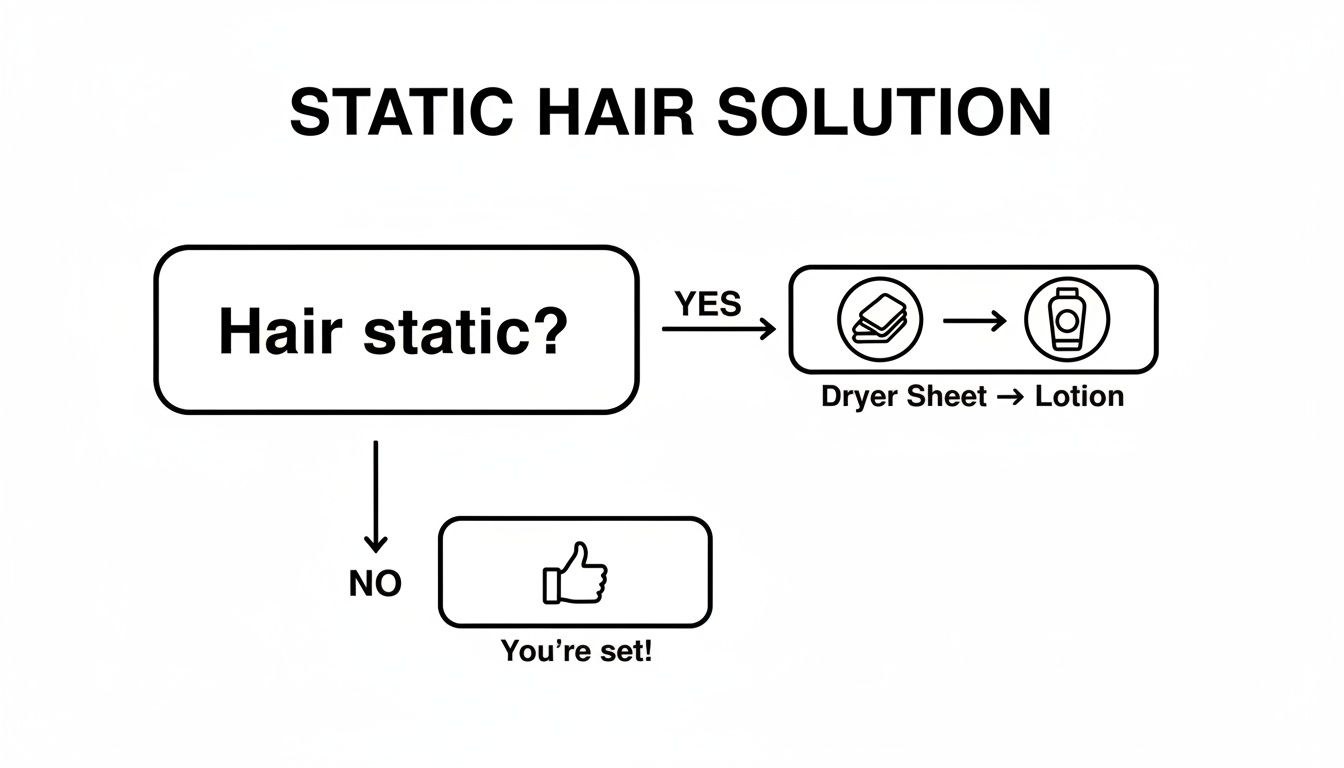
As the flowchart shows, even simple items like a dryer sheet or lotion can offer an immediate—though temporary—solution when static strikes.
Perfect Your Post-Wash Care
What you do after the shower is just as critical for keeping static at bay. Many people unknowingly cause friction by rubbing their hair with a rough cotton towel.
Key Takeaway: Ditch your traditional terry cloth towel. Switching to a gentle microfiber towel or an old cotton t-shirt can dramatically cut down on friction. Instead of rubbing, gently squeeze and blot the excess water to keep the cuticle smooth.
Before styling, apply a protective layer of moisture. A good leave-in conditioner or hair serum on damp hair works wonders. These products provide extra hydration while sealing the cuticle. A sealed cuticle creates a smooth surface that looks shinier and acts as a shield against the friction that causes static.
How Morfose Helps With Static Hair
While a consistent routine is your best long-term defense, the right products provide immediate relief and supercharge your efforts. Morfose has developed targeted solutions to infuse your hair with deep, lasting moisture and create a protective shield against the friction and dryness that cause static.
Best Morfose Products to Use for Static Hair
Your anti-static strategy kicks into gear the moment you step out of the shower. Applying a leave-in treatment to damp hair is a game-changer, locking in moisture and smoothing the cuticle before it becomes a magnet for static.
- For Post-Wash Protection: Our go-to is the Morfose Milk Therapy Two Phase Conditioner. This lightweight powerhouse is formulated with milk proteins and 12 essential amino acids to strengthen your hair. It creates an ultra-smooth surface, drastically cutting down on the friction that leads to static electricity.
- For Daily Taming: A quality serum is your best friend for fending off environmental static triggers all day long. A few drops from our collection of Morfose anti-frizz serums will seal the hair cuticle, lock out humidity, and add a gorgeous, glossy finish that keeps static from getting a foothold.
- For All-Day Hold: For that final, foolproof layer of security, a finishing spray is non-negotiable. The Morfose Anti-Static Hairspray was engineered specifically for this problem. Unlike traditional hairsprays that can dry out hair, this formula provides a flexible hold while actively zapping static on contact.
Pro Tip: Don't apply serum directly to your hair. Instead, put a few drops into your palms, rub them together to warm it up, and then lightly skim your hands over the mid-lengths and ends. This technique ensures even coverage without making your roots greasy.
Choosing Styling Tools That Eliminate Static
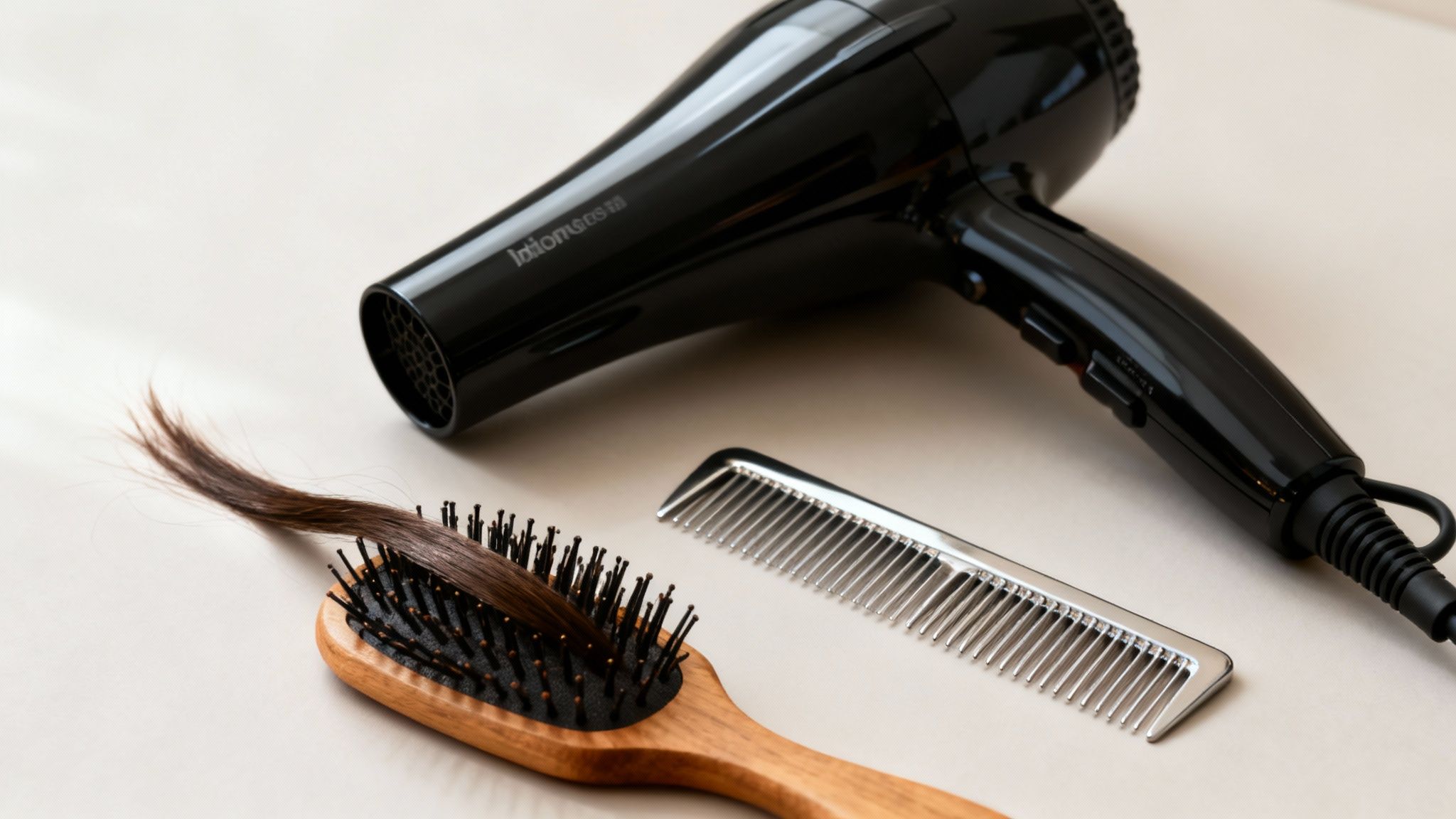
You might not realize it, but your styling tools could be the secret source of your static struggles. Choosing the right equipment can fundamentally change your hair's behavior, especially when the air gets dry.
The biggest game-changer here is the ionic hair dryer. These devices release negative ions that neutralize the positive charge building up in your hair. This process smooths the hair cuticle, helps lock in moisture, and leaves your hair less prone to static.
The Power of Ionic Technology
Traditional hair dryers blast hair with intense, dry heat, stripping away moisture and creating the perfect storm for static. An ionic dryer works smarter, breaking down water molecules faster so you can dry your hair with less heat exposure. Studies show that using ionic devices can lead to a 20–60% reduction in static-related flyaways.
To get the most out of your tools, check out our guide on how to master the art of blow-drying your hair at home.
Upgrade Your Brushes and Combs
Your plastic comb or brush is a major static generator. Plastic is non-conductive, so every pass through your hair builds up more static charge. It's time to make a simple but powerful switch.
- Wooden Combs: Wood is a natural material that won't create a static charge as it glides through your hair.
- Metal Combs: Metal is an excellent conductor of electricity. A metal comb will pick up the excess electrical charge from your hair and ground it, instantly eliminating static.
- Boar Bristle Brushes: These natural bristles distribute your scalp's natural oils down the hair shaft, providing a light, natural coating of moisture that helps prevent static.
Key Takeaway: Swapping your plastic styling tools for ones made of wood, metal, or natural bristles is one of the easiest and most effective ways to prevent static before it even starts.
Your Top Static Hair Questions, Answered
Even with a solid anti-static routine, a few questions can linger. Here are answers to some of the most common queries about static hair.
Does hair type affect how much static I get?
Absolutely. Fine, thin hair is almost weightless, so it doesn't take much of a charge to make strands lift up. Curly and coily hair, while heavier, tends to be drier because scalp oils have a tougher journey down the hair shaft. Since dryness is the primary cause of static, these hair types are prime targets if they aren't properly moisturized. The bottom line: well-hydrated hair, no matter the type, is less likely to get staticky.
Can a humidifier at home actually help?
Yes, and it’s one of the best things you can do for your hair (and skin!) in dry weather. Static loves dry air. A humidifier adds moisture back into the air, giving the static charge an escape route. Keeping the humidity in your home between 40-60% creates an environment where static can't thrive.
Why is my hair more static-y in the winter?
It all comes down to a massive drop in humidity. Cold winter air can't hold as much moisture as warm summer air. When we turn on indoor heating, the relative humidity plummets even further. This arid environment, combined with friction from hats and scarves, creates the perfect storm for static electricity.
Is a metal or a wooden comb better for static?
Both are huge upgrades from plastic, but they work differently. Your choice depends on whether you're preventing static or getting rid of it right now.
- A metal comb is your quick fix. It's conductive, so it picks up and grounds the excess electrical charge.
- A wooden comb is for prevention. Wood is neutral and doesn’t conduct electricity, so it glides through hair without generating friction or static.
Use a metal comb for instant relief from existing static, and a wooden comb for daily styling to keep it from starting in the first place.
Ready to build a routine that keeps your hair sleek, smooth, and static-free all year long? The experts at Morfose have developed salon-quality solutions to infuse your hair with the moisture it needs to stay beautifully grounded. By incorporating targeted products and smart styling habits, you can finally say goodbye to flyaways and hello to flawless hair.
