
Can a Conditioner for Hair Growth Really Help You Get Longer Hair?
Let's get right to it: can a conditioner for hair growth actually make your hair grow faster?
The short answer is no. Conditioners don't speed up the rate of growth from the scalp. But what they do is arguably even more important—they help you keep the length you’ve worked so hard to grow.
Think of a great conditioner as a dedicated bodyguard for your hair. Its main job is to stop the number one enemy of long hair goals: breakage. By strengthening strands and preventing split ends, a good conditioner ensures the hair you grow can actually survive long enough to add visible length.
How Conditioner Helps Your Hair Grow Longer
While conditioners don't directly stimulate follicles to produce hair at a faster pace, they create the perfect supportive environment for the hair you do grow to survive and thrive. Without this protection, your hair is vulnerable to daily wear and tear.
Styling, environmental stress, and even simple friction can lead to split ends and snapping. This damage effectively "trims" your hair before it ever reaches the length you're aiming for. A specialized conditioner works by fortifying your hair from the outside in, protecting the integrity of each strand so you can see the results of your growth.
How Conditioners Protect Hair Length
Picture your hair like a delicate silk rope. The stronger and more flexible that rope is, the less likely it is to fray and break under pressure. A conditioner for hair growth acts as a protective treatment that reinforces this rope from root to tip.
Here’s a breakdown of how it works:
- Strengthens Hair Strands: The best conditioners infuse hair with strengthening ingredients like proteins and amino acids. These helpers patch up weak spots along the hair shaft, making it far more resilient against the daily grind of brushing and styling.
- Reduces Friction and Tangles: By smoothing down the hair's outer layer (the cuticle), conditioner reduces friction between individual strands. This means fewer tangles and knots, which are a major cause of the mechanical breakage that happens when you brush or comb your hair.
- Boosts Moisture and Elasticity: Dry, brittle hair snaps easily. Conditioners deliver a crucial dose of moisture, making each strand more flexible and elastic. Hydrated hair can bend and stretch without breaking, which is key for retaining length.
Imagine a gardener tending to young saplings. The gardener can't force the trees to grow faster, but they can protect them from harsh wind, pests, and drought. A good conditioner does the same for your hair—it shields it from daily damage, allowing it to reach its full, beautiful potential.
Ultimately, the journey to longer hair isn't just about how fast it grows, but how well you preserve it. To get a better handle on the timeline, you can learn more about how long it takes for hair to grow. This protection is the true secret behind how a conditioner for hair growth helps you achieve your length goals.
The Science Of How Conditioner Supports The Hair Growth Cycle
To understand why a conditioner for hair growth is so essential, you first have to understand the natural rhythm your hair follows. Every single strand embarks on a three-part journey: a long growth period, a short transition, and then a resting phase. The real secret to getting visible length is protecting your hair while it's in that first, longest phase.
The Three Phases Of Hair Growth
Your hair doesn't just grow all at once; it’s a constant, staggered cycle. Picture a garden where some plants are just sprouting, some are in full bloom, and others are dormant, all happening simultaneously.
-
Anagen (The Growth Phase): This is the main event. During the anagen phase, which can last anywhere from 2 to 7 years, cells in your hair bulb are dividing rapidly to create new hair. The length of this phase determines your hair's maximum potential length.
-
Catagen (The Transition Phase): After its growth spurt, your hair enters a quick transitional stage called catagen. This only lasts about 10 days. Here, the hair follicle shrinks and detaches from the blood supply, bringing growth to a halt.
-
Telogen (The Resting Phase): Finally, the strand enters the telogen phase, where it rests for about three months. Once this period is over, the old hair is shed, making way for a brand-new anagen hair to start the cycle all over again.
So, where does conditioner fit in? Its most important job is to act as a bodyguard during that long and productive anagen phase. By protecting the hair shaft from damage, it ensures the strand can survive its multi-year journey without snapping off prematurely.
Strengthening Hair's Natural Armor
Every hair strand is wrapped in an outer layer called the cuticle, which looks like overlapping shingles on a roof. This cuticle layer is your hair’s built-in armor, shielding the inner core (the cortex) from damage.
When we expose our hair to heat, chemical treatments, or even just daily friction, those "shingles" start to lift and break off. This leaves the inner cortex exposed and vulnerable, which leads directly to split ends and breakage. A good conditioner works by smoothing down and sealing this cuticle layer shut.
A great conditioner replenishes lost moisture and reinforces the hair’s cuticle. By keeping this protective shield intact, it minimizes the daily wear and tear that can cut the anagen phase short, ensuring the length you grow is the length you keep.
This protective role is more critical than ever, with consumers actively seeking formulas that support growth and fight damage. This timeline shows how consistently protecting your hair with conditioner prevents damage and lets you see real length retention over time.
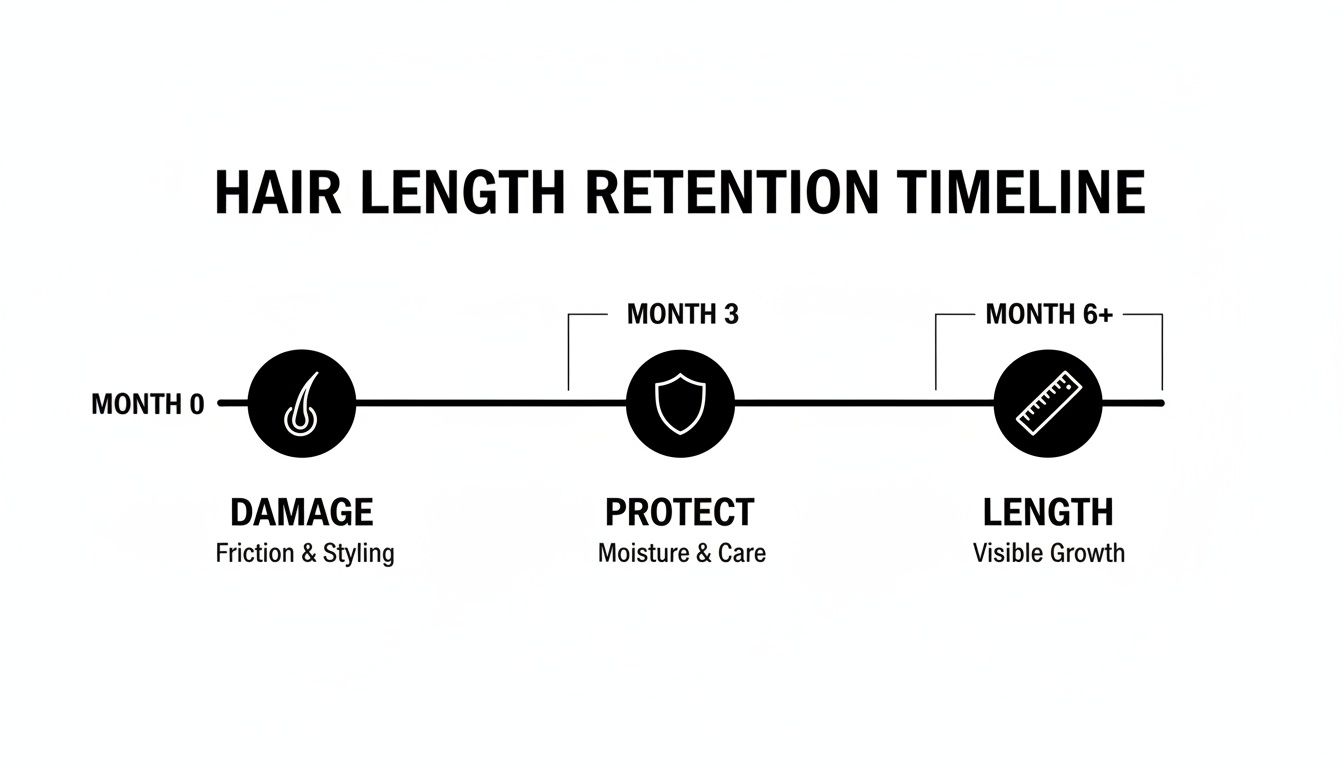
As the visual makes clear, preventing breakage through consistent protection is what allows you to accumulate length month after month.
While conditioner is your hair's first line of defense on the outside, a healthy growth cycle also depends heavily on what's happening on the inside. To get the full picture, it's worth exploring the role of essential B vitamins in overall body function, which in turn supports robust hair. For a deeper dive, check out our guide on scalp health and its crucial role.
Key Ingredients to Look For in a Hair Growth Conditioner
Walking down the hair care aisle can feel overwhelming. With so many bottles promising longer, stronger hair, how do you choose? The secret is on the back of the bottle.
Choosing a conditioner that actually supports your hair growth goals is all about learning to read the ingredient list. Once you know which ingredients add strength and which ones lock in moisture, you can pick the perfect formula for your hair with total confidence.
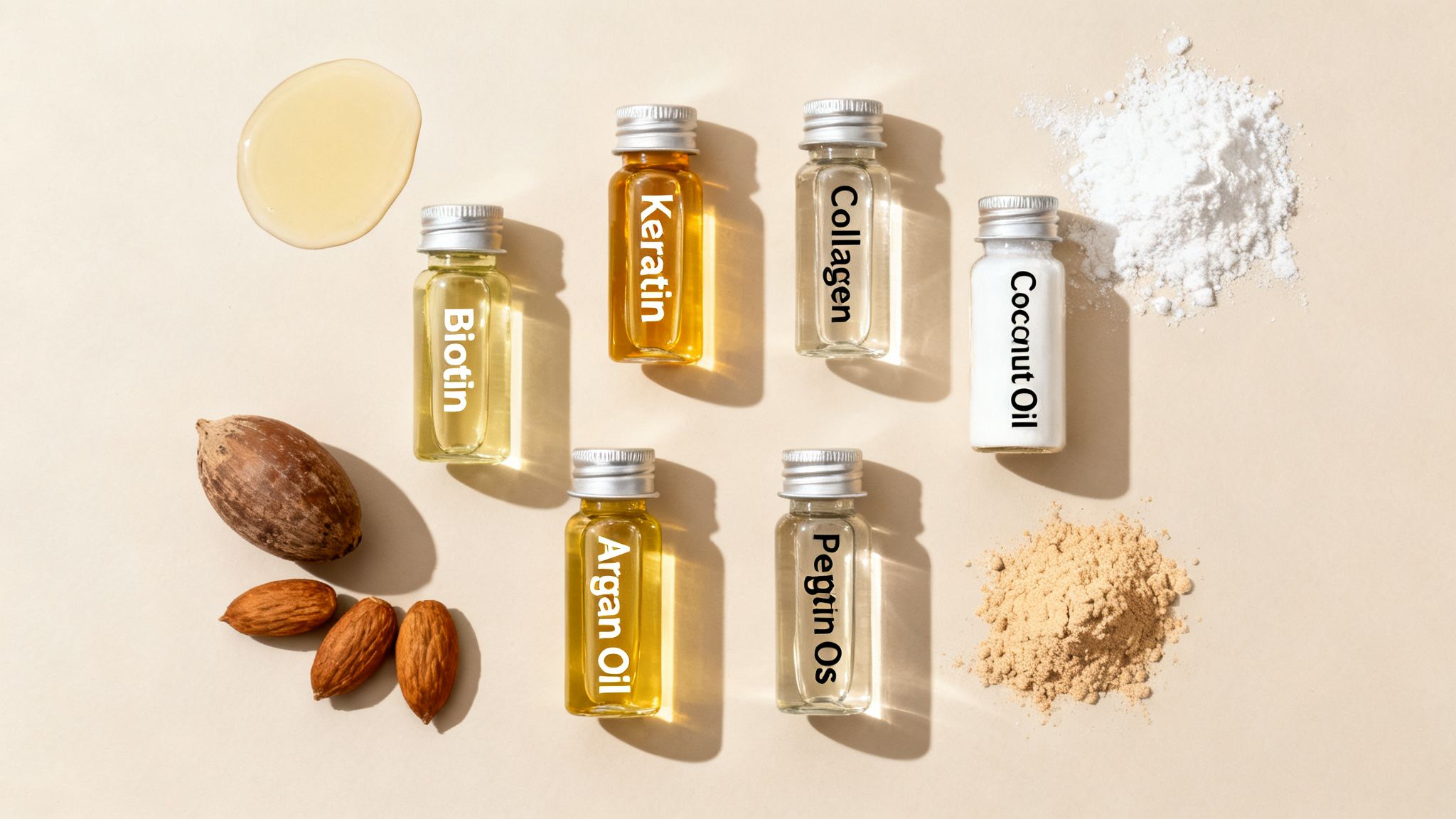
To get you started on decoding your hair care labels, here are the powerhouse ingredients to look for. Use this quick-reference table to match the right ingredients to what your hair truly needs.
Your Guide To Hair Growth Ingredients In Conditioners
| Ingredient | Primary Benefit | Best For Hair Type |
|---|---|---|
| Keratin | Repairs damage, smooths the cuticle, and reduces breakage. | Damaged, color-treated, or frizz-prone hair. |
| Collagen | Improves strand elasticity and supports follicle health. | Fine, aging, or weak hair. |
| Peptides | Penetrate the hair shaft and signal collagen production. | Thinning hair or those seeking better scalp health. |
| Biotin (B7) | Supports the hair’s natural keratin infrastructure. | All hair types, especially weak or brittle strands. |
| Niacinamide (B3) | Boosts scalp circulation and locks in moisture. | Anyone with scalp concerns or dry hair. |
| Argan Oil | Deeply moisturizes, tames frizz, and adds shine. | Dry, frizzy, or dull hair. |
| Coconut Oil | Prevents protein loss and nourishes from within. | All hair types, especially dry or damaged hair. |
Now that you have the cheat sheet, let’s dig a little deeper into why these ingredients work so well.
Proteins: The Building Blocks Of Strong Hair
At its core, hair is made of protein. When you use heat, get your hair colored, or just expose it to daily wear and tear, tiny cracks form in the hair strand. Protein-based ingredients are like a repair crew, filling in those gaps to bring your hair back to life.
- Keratin: This is literally what your hair is made of. Adding it back with a conditioner is like applying liquid reinforcement. It smooths the outer cuticle, fights frizz, and strengthens the hair shaft to stop breakage.
- Collagen: You hear a lot about collagen for skin, but it’s just as important for hair. It helps create a supportive environment for the hair follicle and makes each strand more elastic, so it's less likely to snap.
- Peptides: Think of these as the smaller messengers for proteins. Because they’re so tiny, peptides can get inside the hair shaft and help kickstart collagen production right where it matters—at the scalp.
Vitamins and Nutrients: Your Follicle Support System
While proteins rebuild the hair itself, vitamins and nutrients work at the root. They create a healthy scalp environment where your hair can grow strong from the very beginning.
- Biotin (Vitamin B7): Biotin is the most famous "hair growth" vitamin for good reason. It plays a huge role in producing keratin. Applying it topically helps strengthen the hair's structure, making strands feel fuller and more robust.
- Niacinamide (Vitamin B3): This powerhouse ingredient helps improve circulation in your scalp. Better circulation means your hair follicles get more of the oxygen and nutrients they need to thrive.
Hydrators And Oils: For Flexibility And Shine
Strength is great, but strength without flexibility just leads to brittle, snapping strands. That's where moisturizers come in. They give your hair the hydration it needs to be supple and elastic, allowing it to bend without breaking. This is non-negotiable for retaining length.
- Argan Oil: Often called "liquid gold," argan oil is loaded with fatty acids and vitamin E. It’s a fantastic moisturizer that smooths frizz and adds a gorgeous, healthy-looking shine. You can learn more about Argan Oil in our comprehensive guide.
- Coconut Oil: The special thing about coconut oil is its ability to penetrate the hair shaft deeper than most other oils. This helps prevent protein loss from the inside out, keeping your hair strong and deeply nourished.
By recognizing these key players, you can turn your conditioner from a simple detangler into a targeted treatment that supports your journey to longer, healthier hair.
How To Use Your Conditioner For Maximum Growth Potential
Having the best conditioner for hair growth is one thing, but if you aren't using it correctly, you’re basically pouring all those strengthening benefits down the drain. The right technique ensures every single strand gets the nourishment it needs to fight off breakage and reach its full length potential.
Think of your conditioner as a targeted treatment. You wouldn't put eye cream all over your face, right? The same logic applies here. Nailing the application is the secret to unlocking incredible results without weighing your hair down.
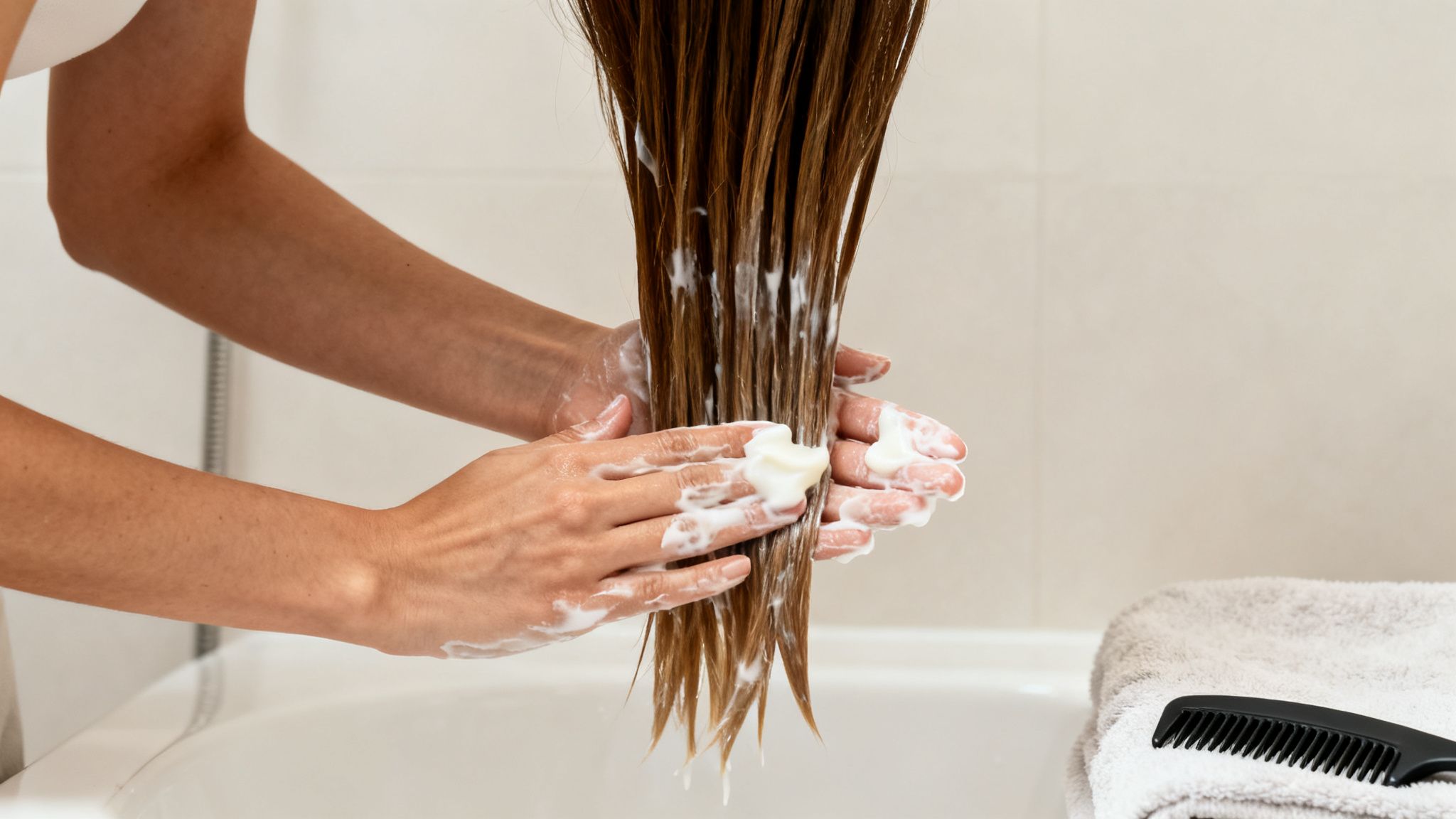
A Step-By-Step Guide To Effective Conditioning
Mastering how you apply conditioner can make a massive difference in your hair's health, shine, and resilience. Just follow these simple steps to get the most out of every wash.
- Remove Excess Water First: This is a crucial first step. Applying conditioner to sopping-wet hair dilutes the product and stops it from adhering to the hair cuticle. After rinsing your shampoo, gently squeeze the extra water out of your hair.
- Apply from Mid-Lengths to Ends: Squeeze out a quarter-sized amount and focus it on the mid-lengths and ends of your hair. This is the oldest, most fragile part of your hair, and it needs the most help to fend off split ends and breakage.
- Use Your Fingers as a Comb: Gently work the conditioner through your strands with your fingers or a wide-tooth comb. This ensures even distribution and helps detangle without causing friction or damage, especially when your hair is wet and vulnerable.
- Let It Absorb: Don't just rinse it out immediately. Give it a chance to work! Let the conditioner sit for at least 2-3 minutes so all those nourishing ingredients have time to penetrate the hair shaft.
- Rinse with Cool Water: When you're ready to rinse, switch to cool or lukewarm water. This helps seal the hair cuticle, which locks in moisture and gives you a much smoother, shinier finish.
Fine-Tuning Your Routine For Different Conditioner Types
Not all conditioners are created equal, and knowing which one to use when is a game-changer for a healthy hair routine. For a deeper dive, check out our guide on how often you should condition your hair based on your specific hair type.
Pro Tip: Your daily rinse-out conditioner is for smoothing and detangling, while a deep conditioner or hair mask is an intensive weekly treatment. Using a deep conditioner too often can lead to over-moisturized, limp hair, so balance is key.
Here’s a quick breakdown of the main types and what they do:
- Rinse-Out Conditioner: This is your everyday workhorse. It’s designed to be used after every shampoo to restore moisture, reduce friction, and make your hair manageable.
- Deep Conditioner or Hair Mask: Use this about once a week. These formulas are thicker and more concentrated, made to deliver a serious dose of hydration and repair ingredients that penetrate deeper into the hair strand.
- Leave-In Conditioner: This is a lightweight product you apply to towel-dried hair. It adds an extra layer of protection against daily stressors and heat styling, all while taming frizz and adding softness. For anyone serious about preventing breakage, this is a non-negotiable.
By following these simple but effective tips, you can turn your conditioner from a basic detangler into a powerhouse tool that actively helps you reach your hair growth goals.
Best Morfose Conditioners for Hair Growth
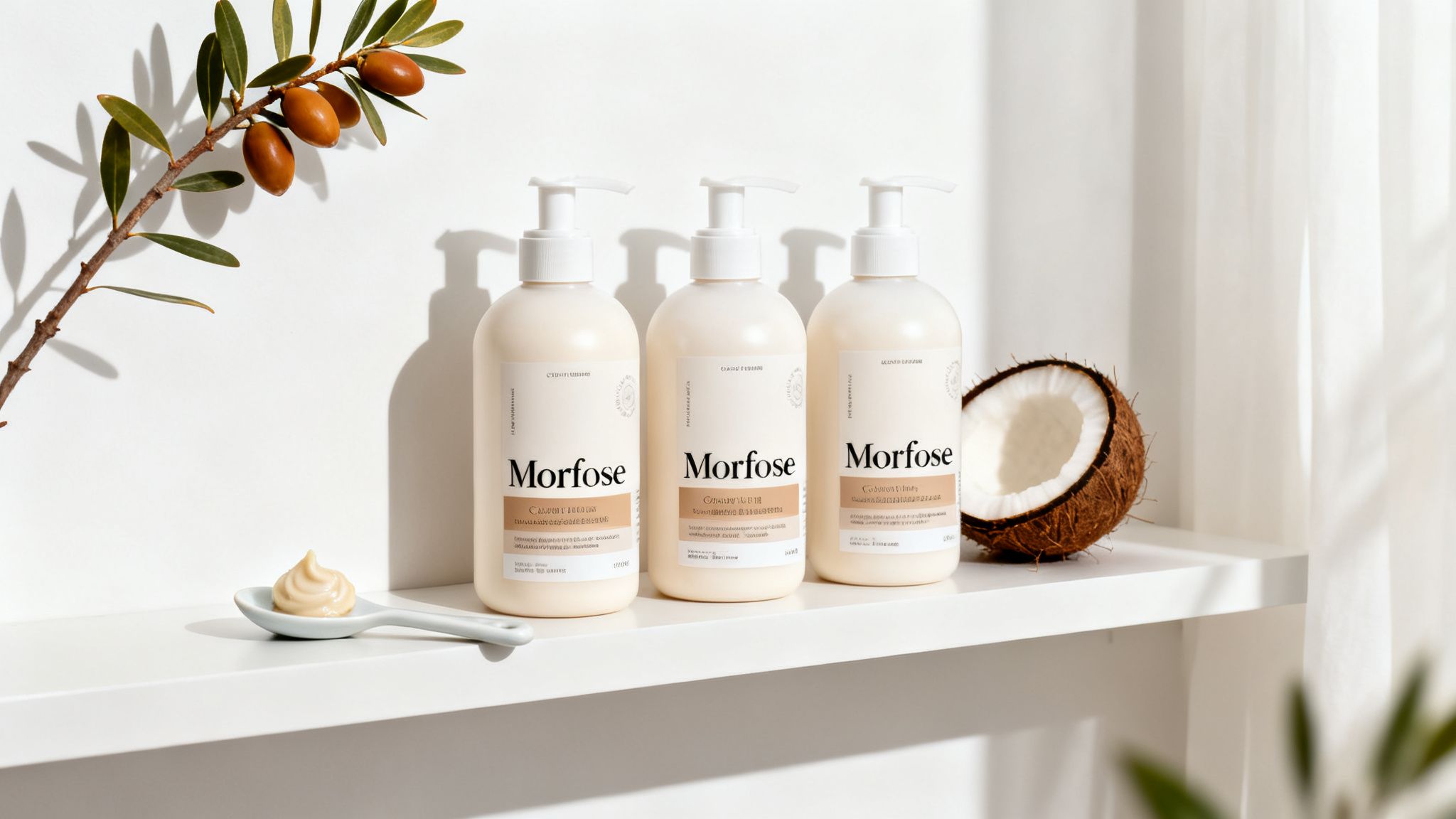
Knowing the science behind a great conditioner for hair growth is one thing. Finding a product that puts that knowledge into practice is the real game-changer. At Morfose, we focus on creating targeted formulas that get to the root of breakage and weakness, giving your hair the best possible foundation for reaching its full potential.
Let's find the right Morfose conditioner to help you achieve your hair goals.
For Visibly Damaged and Brittle Hair
If your hair feels weak, dull, or fried from heat and color treatments, it’s sending out an S.O.S. for protein. Protein-based conditioners act as a repair crew, patching up weak spots along each strand to restore strength and structure.
- Recommended Morfose Solution: The Morfose Milk Therapy Creamy Milk Conditioner is your best bet. It’s packed with milk protein and a special blend of 12 essential amino acids that work together to rebuild and strengthen hair from the inside out.
- How Morfose Helps: The amino acids dive deep into the hair cuticle to fix internal damage, while the milk proteins work on the surface, smoothing and sealing everything down. This powerful combination drastically reduces breakage, leaving your hair feeling incredibly soft, resilient, and much easier to manage.
For Hair Prone To Thinning and Breakage
If your main frustration is hair that snaps at the slightest touch or seems to be losing its fullness, you need to reinforce your hair's natural building blocks. Biotin and Collagen are the power players for this job.
- Recommended Morfose Solution: The Morfose Biotin Conditioner was made specifically to fight weakness and build resilience. It's the perfect choice if you're seeing more hair in your brush than you'd like, or if you just want to give your strands some serious backbone.
- How Morfose Helps: Biotin, also known as Vitamin B7, is essential for producing keratin. By helping your body build stronger, more robust hair strands, this conditioner minimizes the daily wear-and-tear that keeps you from seeing real length.
Don’t stop at your rinse-out conditioner. For around-the-clock protection from breakage and daily stressors, a lightweight leave-in is a must. Try spritzing the Morfose Biotin Leave-In Conditioner through your damp hair after washing.
When you choose a conditioner that directly addresses your hair’s unique challenges, you’re turning a simple shower step into a powerful part of your plan for achieving longer, stronger, healthier hair.
Building A Complete Hair Growth Routine
A great conditioner for hair growth is a fantastic team player, but it can’t win the game on its own. To really see the benefits of its protective and strengthening power, you need to build a complete hair care routine that supports your length goals from every angle.
Think of it like this: your conditioner is your defense, protecting your strands from damage. But a solid routine provides the offense, actively creating the best environment for healthy growth.
Pairing Your Conditioner With The Right Products
Building an effective routine is about making sure each step works in harmony, strengthening and moisturizing without causing buildup or stripping away the natural oils your hair needs.
Here’s how to build your perfect support system:
- Start with a Gentle Shampoo: Harsh, sulfate-filled shampoos can strip your hair, leaving it brittle and ready to snap—completely undoing the good your conditioner is trying to do. Always choose a gentle, sulfate-free cleanser that cleans your scalp without damaging your strands.
- Add a Weekly Deep Conditioning Mask: Once a week, swap out your daily conditioner for an intensive hair mask. This delivers a super-concentrated dose of moisture and repairing ingredients that go deeper than a regular conditioner, giving you an extra boost of strength and elasticity.
- Finish with a Leave-In Treatment: This is a must for anyone serious about retaining length. A good leave-in conditioner or serum acts like a bodyguard for your hair, shielding it from friction, UV rays, and other daily stressors. The Morfose Milk Therapy Two Phase Conditioner is a fantastic lightweight option that detangles and protects without weighing your hair down.
Smart Habits That Amplify Your Conditioner's Effects
What you do outside the shower is just as important as what you do in it. Making a few simple changes to your daily habits can dramatically reduce breakage, helping you see the results of your routine much faster.
Your conditioner works hard to make your hair resilient, but minimizing stress on your strands is the other half of the equation. Gentle handling is the key to preserving the length you grow.
Try adding these simple but powerful habits to your day:
- Gentle Towel-Drying: Your regular bath towel has rough fibers that can snag and fray your hair’s delicate cuticle layer. Switching to a soft microfiber towel or an old t-shirt to gently squeeze out excess water can make a huge difference in reducing frizz and damage.
- Minimize Heat Styling: High heat is one of the quickest ways to cause irreversible damage. If you have to use hot tools, always apply a quality heat protectant first. Even better, try to embrace heat-free styling options a few days a week to give your hair a break.
Frequently Asked Questions About Hair Growth Conditioners
Even with the best game plan, it's natural to have a few questions when you're adding a conditioner for hair growth to your routine. Let's tackle some of the most common ones so you can feel confident on your journey to longer, stronger hair.
How Long Does It Take To See Results from a Hair Growth Conditioner?
This is the big one! It's important to remember that these conditioners don't magically speed up growth from the root; their real job is to protect the length you already have. You'll definitely notice immediate benefits like softness, shine, and fewer tangles right after the first wash.
The real magic—visibly longer and healthier hair because it’s not breaking off—takes time. Be patient and stick with it. It typically takes about three to six months of consistent use to see a noticeable difference in length retention. That's the sweet spot where you'll realize your hair is actually getting longer instead of snapping off at the ends.
Can I Use A Hair Growth Conditioner Every Day?
For most hair types, using a rinse-out conditioner every time you shampoo is a fantastic habit. If you wash your hair daily, then yes, using a conditioner daily is perfectly fine. It helps replenish moisture and keeps your hair protected from daily wear and tear.
That said, you have to listen to your hair. If you notice it starting to feel limp, weighed down, or too soft, you might be over-moisturizing. If that happens, simply try conditioning every other day or swap in a lighter formula.
Should I Put Conditioner On My Scalp If I Have Oily Hair?
This is a very common concern! As a general rule, it's best to keep conditioner off your scalp, especially if your hair is fine or gets oily quickly. Your scalp produces its own natural oils (sebum), and adding conditioner at the root can weigh hair down and make it look greasy.
The golden rule of conditioning is to focus the product where it’s needed most: the mid-lengths and ends. This is the oldest, most fragile part of your hair, and it's screaming for moisture and reinforcement to stop breakage.
By concentrating your conditioner away from the roots, you get all the strengthening and detangling benefits without killing your volume or causing buildup. It’s a targeted approach that gives your hair exactly what it needs, right where it needs it.
A great conditioner is the foundation of any routine aimed at achieving longer, healthier hair. By protecting your strands from the daily damage that leads to breakage, you give them the chance to reach their full potential.
Ready to give your hair the support it needs to thrive? Explore the full range of strengthening and restorative hair care solutions from Morfose and find the perfect products to help you reach your length goals. Start building your ideal routine at https://themorfose.com.
