
How to Fix Brassy Hair After Bleaching: A Complete Guide
Shop Morfose brass control
Violet-pigment shampoo and mask that neutralise yellow and orange in bleached and highlighted hair.


To fix brassy hair after bleaching, you need to neutralize unwanted yellow or orange tones using a color-correcting product. This process, called toning, almost always involves using purple or blue pigments to counteract the warmth exposed by bleaching, guiding your hair back to a cooler, more balanced blonde.
Understanding Why Bleached Hair Turns Brassy
That heart-stopping moment you rinse out bleach and see shades of yellow or bright orange is a common experience for at-home colorists. It's frustrating but completely normal. Understanding why your hair turned brassy is the first step to fixing it for good, and it all comes down to a little color theory.
The Science Behind Unwanted Warmth
Bleaching isn't just about removing color; it's a chemical process that systematically lifts your natural hair pigment, melanin, in predictable stages. As dark pigment molecules break down, they reveal the warm undertones that were hiding underneath all along.
Every hair color has these undertones, and they always appear in a specific order during the lightening process:
- Dark hair first lifts to reveal red undertones.
- Medium brown hair will then lift to expose orange.
- Lighter brown and dark blonde hair are the last to lift, showing yellow undertones.
If you stop bleaching too soon or your lightener isn't strong enough to power past those warm stages, you'll land squarely in brassy territory. This is especially true if you start with dark hair because there is much more pigment to lift. You can get a more detailed look at these stages in our guide on how to bleach hair at home.
Other Factors That Contribute to Brassiness
Even if your initial bleach job looks great, brassiness can creep back in over time. Several environmental and lifestyle factors can cause those unwanted warm tones to resurface, including sun exposure, hard water minerals, and chlorine.
Key Takeaway: Brassy hair isn't a mistake. It's a natural, predictable stage of the lightening process that needs to be corrected and maintained with the right toning products.
This is an incredibly common issue, which makes sense when you consider how many people color their hair. The global hair color market was valued at over $26 billion in 2024, with a huge portion involving bleaching. This widespread demand highlights a real need for effective aftercare to manage common side effects like brassiness. You can dig into more of these industry trends in this detailed market analysis.
Ultimately, understanding the "why" behind brassiness is your best weapon. It teaches you that fixing the problem isn’t about bleaching more, but about using smart, targeted color correction to get that perfect cool-toned blonde you were aiming for.
Your At-Home Toolkit for Neutralizing Brassiness
The two that cancel brass
So, you’ve got some unwanted warmth creeping into your blonde. Don’t panic. Before you call your stylist, you should know that some of the most effective fixes for brassy hair are likely already in your bathroom. With the right know-how, you can tackle those yellow and orange tones head-on and restore that cool, crisp color you love.
First, it helps to understand why your hair went brassy. This chart breaks down the common culprits, from your natural underlying pigments to the bleaching process itself.
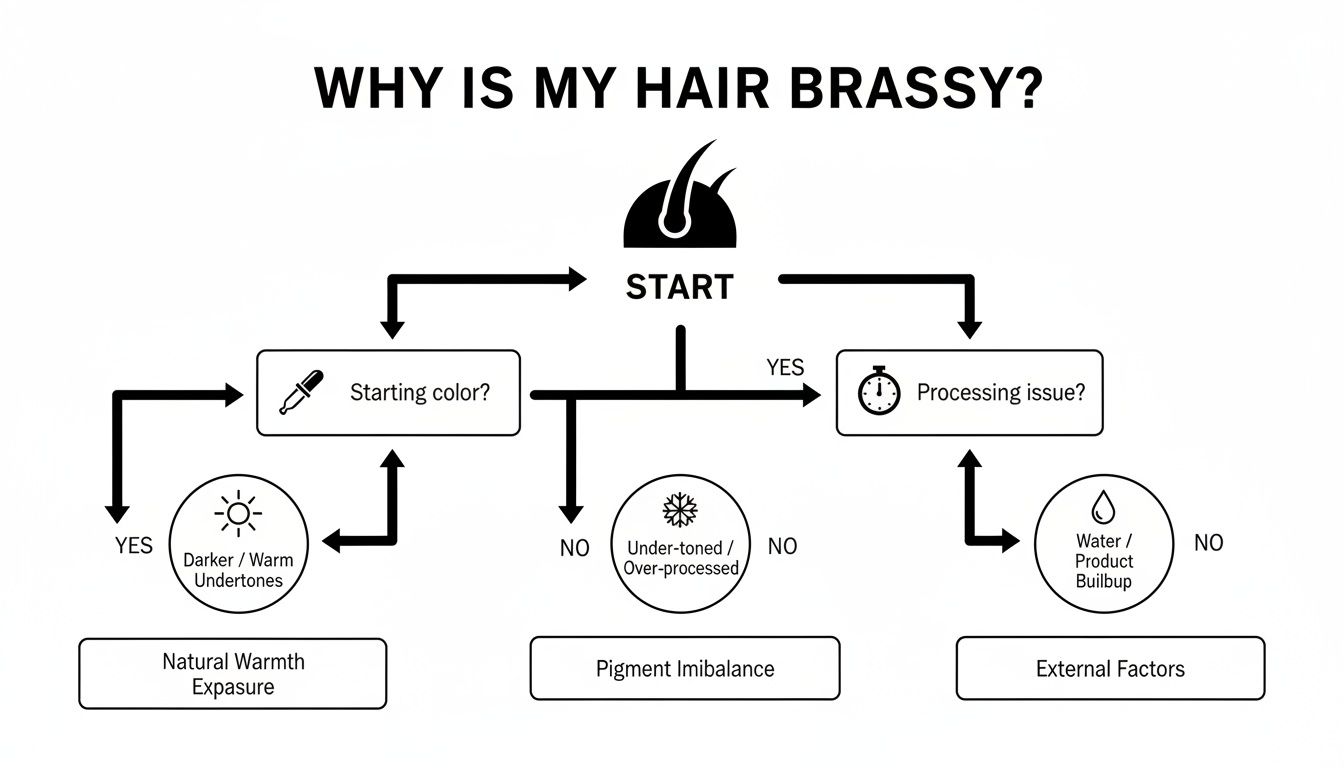
As you can see, brassiness is usually a predictable side effect of lifting hair color. Pinpointing the cause helps you choose the right weapon to fight back.
Step 1: Start with a Purple or Blue Shampoo
Your first line of defense is a good color-correcting shampoo. Think of these as your go-to for regular maintenance, not just a one-time fix. They are packed with pigments designed to neutralize specific tones.
- Got Yellow Tones? If your blonde is looking more buttery or canary yellow, you need a purple shampoo. On the color wheel, purple sits directly opposite yellow, so it cancels it out, leaving behind a cooler, more neutral blonde.
- Seeing Orange Tones? For those more stubborn, coppery orange hues (common when lightening darker hair), grab a blue shampoo. Blue is the opposite of orange and is formulated to knock out that specific brassy warmth.
To get the most out of it, lather up and let the shampoo sit on your hair for about 3-5 minutes before rinsing. This gives the pigments enough time to deposit onto the hair shaft and work their magic.
Step 2: Escalate to a Toning Mask for Deeper Correction
When your regular shampoo isn't quite cutting it, or if your hair is feeling extra thirsty and fragile post-bleach, it’s time to bring in a toning mask. These are the heavy hitters of at-home toning.
A good toning mask does two crucial jobs at once: it deposits a more concentrated dose of purple or blue pigments to neutralize brassiness and it delivers a surge of deep conditioning ingredients to nurse your strands back to health. Using one once a week instead of your normal conditioner is a perfect way to combine a powerful toning session with some much-needed hair repair.
| Solution | Best For | Frequency | Toning Power |
|---|---|---|---|
| Purple/Blue Shampoo | Mild yellow or orange tones; regular maintenance. | 1-3 times per week | Light |
| Toning Mask | Moderate brassiness; hair that needs moisture and repair. | Once per week | Medium |
| At-Home Toner | Significant yellow/orange tones; a salon-like refresh. | Every 4-6 weeks | Strong |
Step 3: Use an At-Home Toner for a Salon-Level Refresh
For a more dramatic and longer-lasting fix, an at-home toner is your most powerful tool. Unlike shampoos and masks that sit on the surface, toners are demi-permanent colors mixed with a low-volume developer. They work by getting inside the hair cuticle to neutralize warmth from within, giving you that fresh-from-the-salon look.
While they’re incredibly effective, you must use them with care to avoid over-toning or causing more damage. If you're curious about the process, our guide explains more about how toners can impact your hair's health.
Pro Tip: Never skip the strand test. Apply the toner to a small, hidden section of your hair first. This lets you see exactly what the final color will look like and ensure your hair isn't so porous that it grabs too much pigment and turns gray or purple.
How Morfose Products Banish Brassy Tones
Keeping that perfect, cool-toned blonde is a commitment, but having the right products makes all the difference. When you're searching for how to fix brassy hair after bleaching, a targeted routine isn't just nice—it's non-negotiable. Morfose gives you the specific tools needed to neutralize warmth and protect your color investment.
Best Morfose Products to Use
The key to an effective anti-brass routine is using products designed to both tone and repair. Morfose offers a complete system to keep your blonde cool, bright, and healthy.
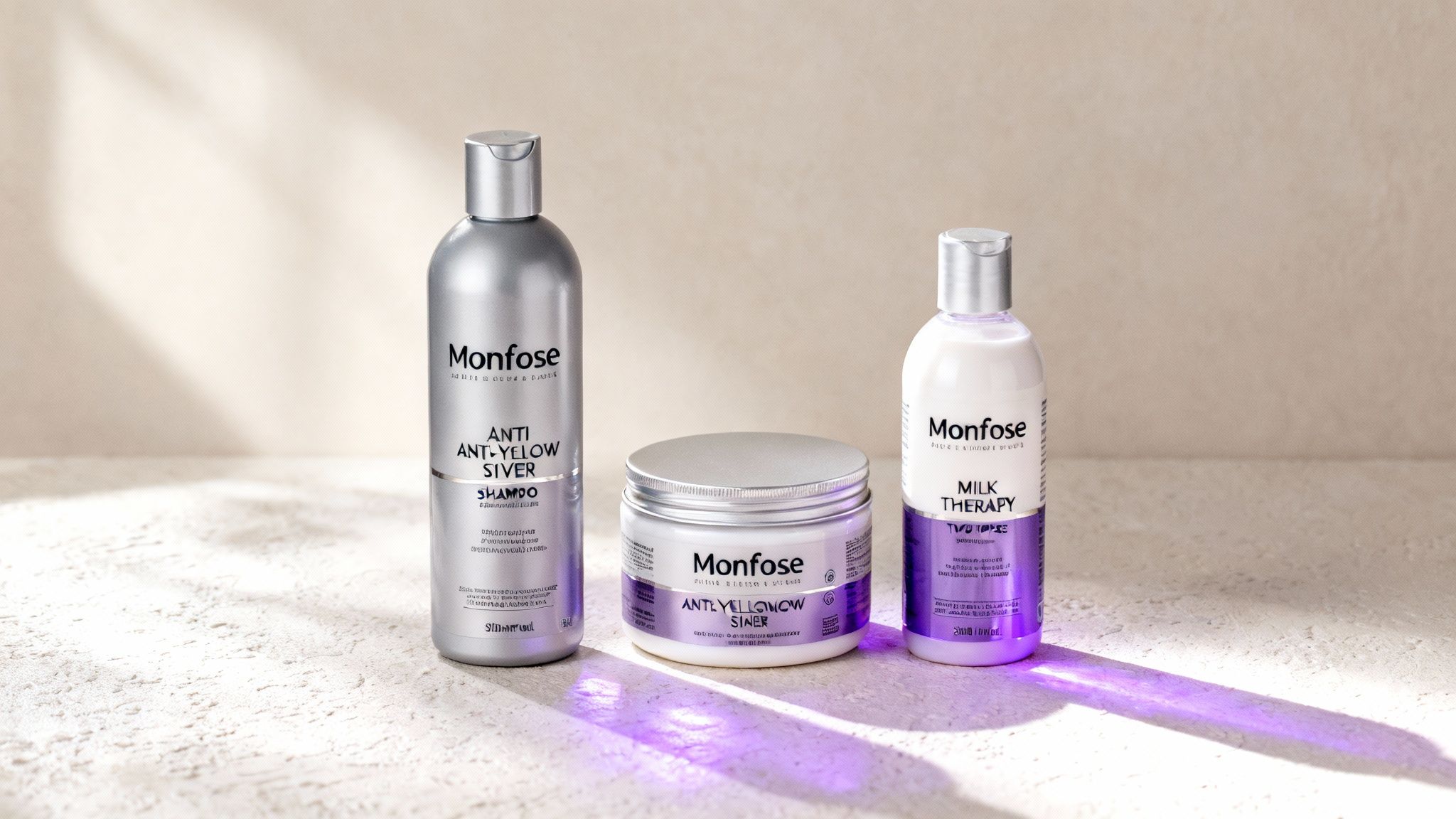
For Regular Toning: Morfose Anti-Yellow Silver Shampoo
The powerhouse in any anti-brass arsenal is a high-quality purple shampoo. The Morfose Anti-Yellow Silver Shampoo is your first line of defense against unwanted yellow tones. Its formula is packed with balanced violet pigments that work based on color theory—purple sits opposite yellow on the color wheel, so it cancels it out. A weekly wash with this shampoo deposits just enough pigment to neutralize brassiness without turning your hair purple, keeping your blonde crisp and bright while gently cleansing.
For Deep Toning & Repair: Morfose Anti-Yellow Silver Hair Mask
Sometimes, especially in the first few weeks after bleaching, shampoo alone isn't enough. For a more intensive treatment that tackles stubborn brass while delivering serious conditioning, the Morfose Anti-Yellow Silver Hair Mask is your go-to. This mask gives your hair a more concentrated dose of violet pigments and infuses strands with much-needed moisture, improving elasticity and leaving hair soft and revitalized.
For Daily Strength & Protection: Morfose Milk Therapy Two Phase Conditioner
Toning is only half the battle. Protecting bleached hair from further damage is crucial for making that beautiful color last. The Morfose Milk Therapy Two Phase Conditioner is the perfect daily leave-in treatment to support your anti-brass routine. This lightweight spray strengthens, detangles, and adds shine, creating a stronger foundation for your color. Stronger hair holds onto toner more effectively and is less prone to the environmental damage that causes brassiness.
For days when your hair needs more protein, our Morfose Professional Silver Keratin Creamy Hair Shampoo is an excellent choice to rotate with your toning products.
Your Complete Morfose Anti-Brass Routine:
- Weekly Toning: Wash with Morfose Anti-Yellow Silver Shampoo.
- Deep Conditioning: Follow with the Morfose Anti-Yellow Silver Hair Mask once a week for an extra toning boost and repair.
- Daily Protection: Mist damp or dry hair with Morfose Milk Therapy Two Phase Conditioner to strengthen, detangle, and add shine.
For Rebuilding What Bleach Broke: Morfose Metamorfose Bond Care
Toner fixes the colour you can see. It does nothing for the internal bonds that bleach actually broke — and that damage is why brass comes back faster on over-processed hair, because a porous cuticle loses pigment and picks up warmth from everything it touches. Morfose Metamorfose Bond Care is the part of the routine that works on structure rather than tone. Use the Bond Care Hair Mask once a week between toning sessions: the better your hair holds its cuticle shut, the longer your blonde stays cool.
Knowing When to Call a Professional Colorist
While at-home fixes are fantastic for keeping brassiness at bay, there are times when you need to put down the purple shampoo and pick up the phone. Knowing when to call in a professional is the single best thing you can do to protect your hair's health and get that flawless blonde you've been dreaming of.
A professional colorist is like a master artist. They can custom-mix a toner that tackles multiple levels of warmth in your hair at once—neutralizing stubborn orange, correcting a pale yellow, and blending everything seamlessly.
When Your Hair Color Is Uneven or Patchy
If your bleach job left you with a patchwork of pale yellow, bright orange, and darker spots, a single toning product isn't going to cut it. A stylist can use advanced techniques like root shadowing or color melting to blend those inconsistencies into a beautiful, cohesive look. Applying one toner over patchy hair at home will likely cause lighter, porous strands to grab all the pigment while darker, brassier sections are left behind.
If Your Hair Is Severely Damaged
Bleaching is an intense chemical process. If your hair feels mushy or stretchy when wet, or if you're seeing significant breakage, adding more chemicals at home is a recipe for disaster. A professional can assess your hair's integrity and use bond-building treatments and professional-grade toners that correct the color without pushing fragile strands past their breaking point. To learn more, check out our guide on the dos and don'ts of professional hair coloring.
When You're Dealing with Intense Orange Tones
That stubborn, fiery orange brassiness is one of the toughest tones to correct at home. It's a classic sign that the hair wasn't lifted light enough, and a simple blue shampoo often lacks the power to neutralize it completely. A colorist has the tools to perform a gentle "bleach wash" or use a high-lift toner, safely nudging your hair past that difficult orange stage before applying the perfect corrective gloss.
Expert Insight: Don't try to re-bleach stubborn orange at home! This is a fast track to getting "hot roots"—where the hair closest to your scalp's heat lightens much faster and brighter than the rest, creating a very noticeable, uneven band of color.
The global hair lightening market is expected to climb from $8.3 billion in 2025 to $12.8 billion by 2035, showing just how many people are using these powerful services. With North America holding about 40% of that market share, professional expertise remains crucial for achieving complex color results safely. A salon visit isn't a splurge—it's an investment in your hair's health.
Long-Term Strategies to Keep Brassy Tones Away
Getting rid of brassiness is the first battle, but preventing its comeback is how you win the war. Once you’ve neutralized those unwanted tones, the goal is to build a hair care routine that keeps your blonde cool and vibrant. This is about playing the long game with a few smart habits.
Adjust Your Wash Routine
One of the most effective changes happens in the shower. Hot water opens up the hair cuticle, allowing cool-toned toner molecules to wash down the drain. By switching to lukewarm or cool water, you help keep the cuticle sealed, locking in your color and moisture. Alternate your toning shampoos with a gentle, sulfate-free shampoo, and try to extend the time between washes to prevent fading.
Shield Your Hair from Environmental Culprits
Your hair is under constant attack from the environment, and these factors are notorious for turning blonde hair brassy.
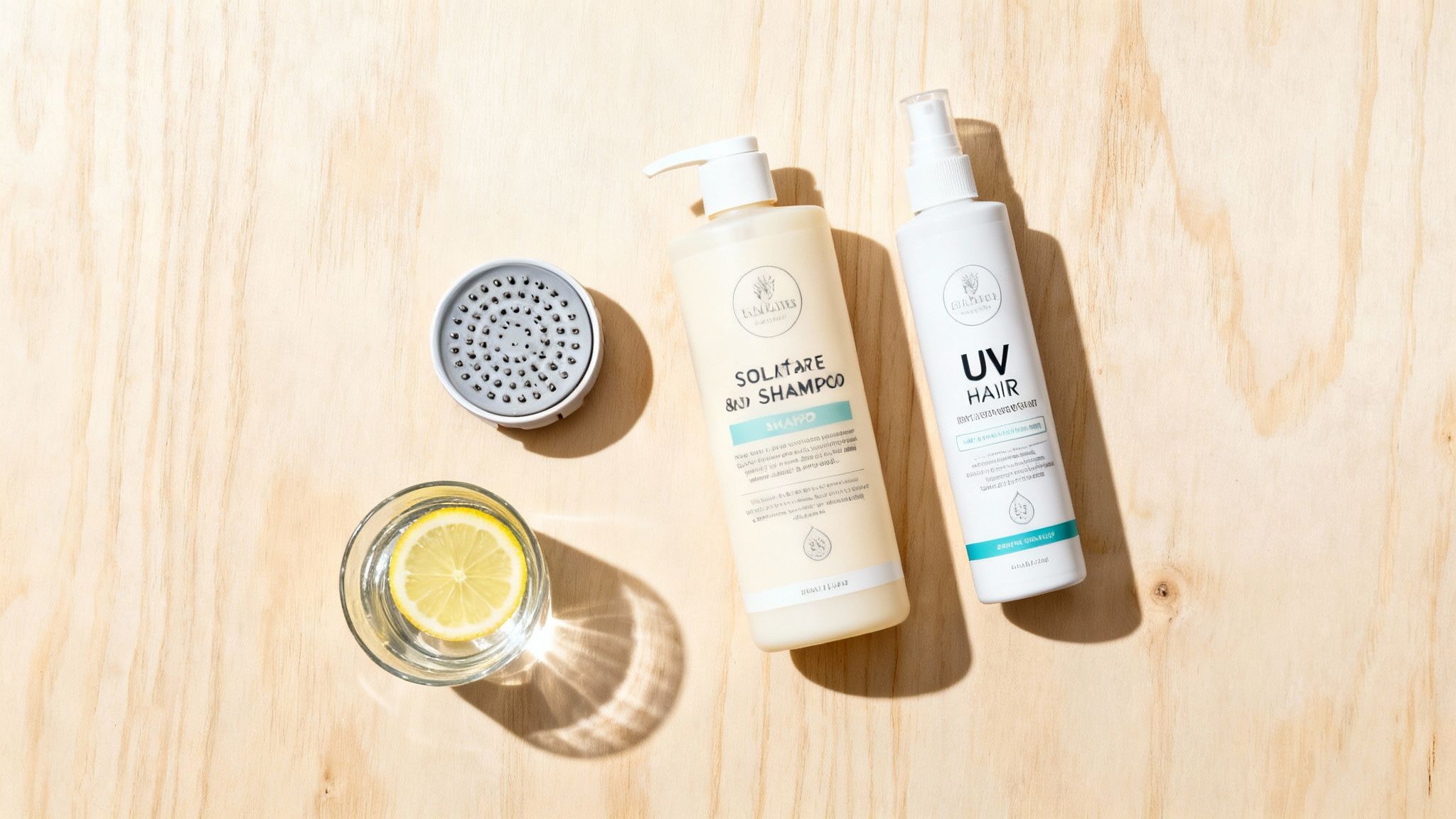
- UV Rays: The sun can oxidize your hair, breaking down cool tones and exposing warm pigments. A UV protectant hair spray is a must for sunny days.
- Hard Water Minerals: Minerals like iron and copper in hard water build up on your hair, leaving a yellowish or rusty tint. A showerhead filter can remove these minerals before they reach your hair.
- Chlorine: Chlorine strips hair of its natural oils and can make blonde go brassy or even green. Wet your hair with clean water and apply a leave-in conditioner before swimming to create a protective barrier.
Key Insight: Keeping brassiness at bay is less about big fixes and more about small, consistent tweaks to your daily routine. Protecting your hair from the elements is just as crucial as the toning products you use.
Adopting these habits not only saves your color but also boosts the overall health of your hair. For more tips, check out our guide on how to make your hair color last longer.
FAQs on Fixing Brassy Hair After Bleaching
When you’re staring at freshly bleached hair that’s looking more orange than intended, it’s easy to panic. Getting the right answers can make the difference between a beautiful blonde and a hair disaster. Let's walk through some of the most common questions.
How often should I use purple shampoo?
This depends on your hair. If you’re in damage-control mode with serious yellow showing up, use a quality purple shampoo 2-3 times a week. This will deposit enough violet pigment to actively neutralize the warmth. Once the brassiness is under control, you can scale back to once a week for maintenance to keep sunny tones from returning. If your hair starts looking dull or lavender, you're overdoing it; switch to a regular color-safe shampoo for a few washes.
Is it safe to use a toner on damaged, bleached hair?
Yes, but proceed with caution. If your hair feels gummy or stretchy when wet, focus on repair first with protein and moisture masks. Once your hair feels more stable, opt for a gentle, ammonia-free, demi-permanent gloss paired with a low-volume developer (10-volume or less). Always perform a strand test on a hidden piece of hair first to see how your fragile strands will react.
Why did my hair turn orange instead of yellow?
This almost always means the bleach wasn't left on long enough to lift your hair past the red and orange stages of pigment. Dark hair reveals red, then orange, then yellow undertones as it lightens. If you stop too soon, you'll land in that stubborn orange zone. The fix here is a blue-based product, like a blue shampoo or toner, not purple. Blue sits opposite orange on the color wheel and will properly neutralize it.
What's the difference between toner and purple shampoo?
Think of purple shampoo as daily maintenance, while a toner is a more intensive corrective treatment.
- Purple Shampoo: This is a cleansing product that deposits a small amount of violet pigment onto the surface of your hair. It’s perfect for keeping minor yellowing at bay between salon visits.
- Toner: This is a chemical service, usually a demi-permanent color mixed with a developer. It penetrates the hair cuticle to neutralize unwanted pigments from within and deposit the desired shade (like ash or beige). The results are more dramatic and last longer, typically 4-6 weeks.
Keeping your blonde looking brilliant and brass-free comes down to a consistent, high-quality routine. Morfose has a complete line of professional-grade products designed to protect your color, repair bleach damage, and prevent brassiness from ever showing up again.
Find the perfect routine for your post-bleach hair care needs at https://themorfose.com.
Brass keeps coming back?
Bleached hair is porous, so it pulls warmth from water and sun. Toning treats the symptom; bond repair treats the porosity underneath.

