
How to Straighten Hair Without Damage for Sleek, Healthy Results
Getting that perfectly straight, glossy hair you see in magazines doesn't have to be a trade-off for its health. The secret to straightening hair without damage isn't just about the tools you use; it's about a smart, protective approach that starts long before you plug in your flat iron. It all comes down to mastering safe heat styling and knowing when to use effective heatless techniques to give your strands a break.
This guide will walk you through the step-by-step process of achieving the sleek, polished results you want while keeping your hair strong, vibrant, and damage-free.
The Secret to Silky Straight Hair Without the Damage
The love for sleek, straight hair is undeniable. The global hair straightener market hit a massive USD 6.83 billion in 2024 and is still growing. But with that popularity comes a very real concern: heat damage. Dryness, split ends, and that dreaded fried look are all too common when hair isn't properly protected.
This guide is designed to solve that problem. We're going to show you how to get smooth, straight hair safely, keeping it strong and healthy. It’s not about ditching your heat tools, but about learning to use them wisely and giving your hair the protection it deserves every single time.
Understanding the Two Paths to Straight Hair
When it comes to straightening without damage, you have two main options. Think of them as different tools for different occasions, each with its own set of best practices.
- Safe Heat Styling: This is your go-to for an ultra-sleek, polished finish using blow dryers and flat irons. The key isn't to be afraid of heat, but to respect it. Success comes down to three things: prepping your hair correctly, using a high-quality heat protectant, and using the right temperature for your hair type.
- Heatless Techniques: These are your hair's best friend on off-days or when you want to give it a break from heat. Methods like hair wrapping or using jumbo rollers can gently smooth your strands as they dry. The result is a softer, more natural straight look, achieved with zero risk of heat damage.
Having beautiful, straight hair that feels as healthy as it looks is completely achievable. It starts with understanding what your hair needs and using the right products and techniques. Whether you're considering the long-term smoothness from the benefits of a keratin treatment or simply perfecting your daily routine, a healthy foundation is everything.
At-a-Glance Damage Prevention Checklist
This table breaks down the essential steps for keeping your hair healthy throughout the straightening process.
| Phase | Key Action | Why It Matters |
|---|---|---|
| Preparation | Deep condition & apply heat protectant | Creates a protective barrier and ensures hair is moisturized before heat is applied. |
| Drying | Rough dry to 80%, then section & blow-dry | Minimizes direct heat exposure and allows for a smoother, more controlled blowout. |
| Straightening | Use the right heat setting & one pass per section | Prevents "cooking" the hair and reduces the risk of breakage and split ends. |
| Finishing | Apply a lightweight serum or oil | Seals the cuticle, fights frizz, and adds that coveted glossy shine. |
| Aftercare | Use restorative masks & limit heat styling | Replenishes moisture and protein, giving hair time to recover and stay strong. |
Think of this as your cheat sheet. Each step plays a crucial role in the final look and, more importantly, in the long-term health of your hair.
Building the Foundation for Flawless Straightening
Getting a sleek, straight finish without damaging your hair starts long before you plug in your flat iron. Think of it like prepping a canvas before you paint; the better the prep work, the smoother and safer the final result will be.
You can prevent a ton of potential damage just by starting with a clean, well-hydrated, and resilient foundation. This isn’t just about a quick wash. It’s a strategic process of cleansing gently, conditioning deeply, and balancing protein and moisture to fortify your strands against heat.
Start with a Gentle Cleanse
First things first: wash your hair with a gentle, sulfate-free shampoo. Sulfates can be harsh, stripping away your hair's natural, protective oils along with dirt and product buildup. This leaves your hair dry and vulnerable before you even apply heat—which is the last thing you want.
A sulfate-free formula cleans your hair effectively without removing the essential moisture that acts as a natural buffer against damage. This simple switch ensures your hair is clean and ready to absorb the benefits of your conditioning treatments.
Finding Your Protein and Moisture Balance
Healthy hair requires a delicate balance between protein and moisture. Protein (mostly keratin) gives your hair its structure and strength. Moisture provides elasticity, softness, and flexibility. When this balance is off, your hair becomes a prime target for heat damage.
Here’s a quick way to figure out what your hair needs:
- Too much moisture, not enough protein: Gently stretch a single strand of damp hair. If it feels mushy or stretches a lot before it breaks, it’s crying out for protein.
- Too much protein, not enough moisture: Does your hair feel stiff, brittle, and snap almost instantly with little stretch? It’s desperate for a serious hydration boost.
Getting this balance right is key. For a deeper dive into building stronger hair, learning how to strengthen hair follicles is a fantastic start for creating resilient strands that can handle heat.
The Power of Deep Conditioning
Once you know what your hair needs, a deep conditioning treatment is your next non-negotiable step. This is where you actively restore what your hair is missing, creating a strong, moisturized base for straightening. Using a mask packed with hydrating ingredients can dramatically improve your hair's ability to withstand heat.
For a complete walkthrough on getting the most out of every treatment, check out our guide on how to properly deep condition your hair. It’s full of tips to ensure you’re getting maximum benefits from your mask.
Pro Tip: For maximum absorption, always apply your deep conditioner to damp, towel-dried hair. Squeeze out excess water first. If your hair is sopping wet, the product gets diluted and can’t penetrate the hair shaft as effectively.
Detangle with Care to Prevent Breakage
The final prep step before you touch a blow dryer is detangling—and how you do it matters. Hair is most fragile when it's wet. Ripping through it with a brush can cause breakage and split ends before you’ve even started styling.
Always use a wide-tooth comb or a brush designed for wet hair. Start detangling from the ends and gently work your way up to the roots. Hold the section of hair you're working on to minimize pulling on your scalp. This simple habit prevents mechanical damage that weakens hair over time, leaving your strands smooth and ready for the next step.
Best Morfose Products to Straighten Hair Without Damage
Great technique is crucial, but it’s only half the story. To get a sleek, damage-free finish, you need a solid lineup of products designed to protect, moisturize, and strengthen your hair. Think of them as your personal defense system against heat. These Morfose essentials create that all-important buffer between delicate strands and high temperatures.
Your First Line of Defense: A Leave-In Conditioner
Before you plug in your blow dryer, your hair needs moisture and slip. This is where a quality leave-in conditioner becomes a game-changer, especially if your hair is prone to tangles.
The Morfose Milk Therapy Two Phase Conditioner is perfect for this. This lightweight spray infuses your hair with milk protein and 12 essential amino acids for a serious hydration boost. It also makes detangling a breeze, smoothing the hair cuticle to prevent the pulling and snapping that can cause breakage.
The Non-Negotiable: A Heat Protectant
If you only use one product before styling with heat, make it this one. A heat protectant is the single most important tool in your damage-prevention arsenal. It creates an invisible shield around each strand, helping to distribute heat more evenly and preventing "hot spots" that can scorch your hair.
For reliable protection, the Morfose Heat Shield Thermal Protection Spray is a must-have. Its formula is designed to form a weightless barrier, defending your hair from blow dryers and flat irons. You can explore more options in our full collection of heat protection sprays to find the perfect fit.
Key Takeaway: Think of heat protectant like sunscreen for your hair. You wouldn't sit in the sun all day without it, right? It's a simple, preventative step that makes a world of difference.
Restorative Care for Lasting Strength
Finally, your styling toolkit needs a powerful restorative treatment to replenish what heat styling takes away. This isn't about fixing damage after it's done; it's about proactively maintaining your hair's health.
The Morfose Argan Hair Mask is an incredible choice for a weekly ritual. It’s infused with rich argan oil that deeply nourishes and repairs from the inside out, leaving your hair feeling soft and looking shiny. Using it consistently ensures your hair stays in peak condition, strong and ready for your next sleek look.
A Smarter Approach to Heat Styling
Getting an ultra-sleek, polished look with heat doesn't have to be a gamble. It’s all about shifting your mindset from a quick, high-heat blast to a deliberate, intelligent styling process. By choosing the right tools, mastering temperature control, and adopting professional techniques, you can get a flawless finish without the damage. The goal is to work smarter, not hotter.
Choose Your Flat Iron Wisely
The flat iron you use is your most important tool, and they are not all created equal. The plate material makes a massive difference in how heat affects your hair.
- Ceramic Plates: These are fantastic for even heat distribution, which helps prevent "hot spots" that scorch hair. They glide smoothly and are a great choice for fine to medium hair.
- Tourmaline Plates: These are ceramic plates coated with the mineral tourmaline. They emit negative ions that combat frizz, resulting in a much smoother, shinier finish.
- Titanium Plates: This is the powerhouse option. Titanium heats up incredibly fast and holds a consistent, high temperature, making it best for very thick, coarse, or resistant hair types. However, it’s easy to overdo it if you’re not careful.
Master the Art of Temperature Control
Cranking your flat iron to the highest setting is one of the fastest ways to cause irreversible damage. The key is to use the lowest possible temperature that effectively straightens your hair in a single pass.
Finding that sweet spot is worth the effort.
Recommended Heat Settings by Hair Type
| Hair Type | Recommended Temperature Range (°F) | Key Considerations |
|---|---|---|
| Fine, Thin, or Damaged | Below 300°F | This hair is fragile. Always start at the lowest setting and only increase slightly if necessary. |
| Normal or Healthy Hair | 300°F - 380°F | This is the ideal range for most. It's hot enough to be effective without causing undue stress. |
| Thick, Coarse, or Curly | 380°F - 410°F | These hair types can handle more heat, but always use a protectant and never exceed 410°F to avoid damage. |
Sticking to these guidelines is your best defense against fried ends. For more details, our guide on how to protect hair from heat damage offers a deep dive into creating a safe styling routine.
Perfect Your Blow-Drying Technique First
A flawless flat iron finish starts with your blow dryer. Trying to straighten damp hair forces the iron to work overtime, essentially boiling the water within your hair strands and causing catastrophic damage. Your goal should be to get your hair 90% straight with just your blow dryer and a brush.
Use a paddle brush and maintain tension as you dry each section. Always point the nozzle of the dryer down the hair shaft. This smooths the cuticle from the start, dramatically reducing the work your flat iron has to do.
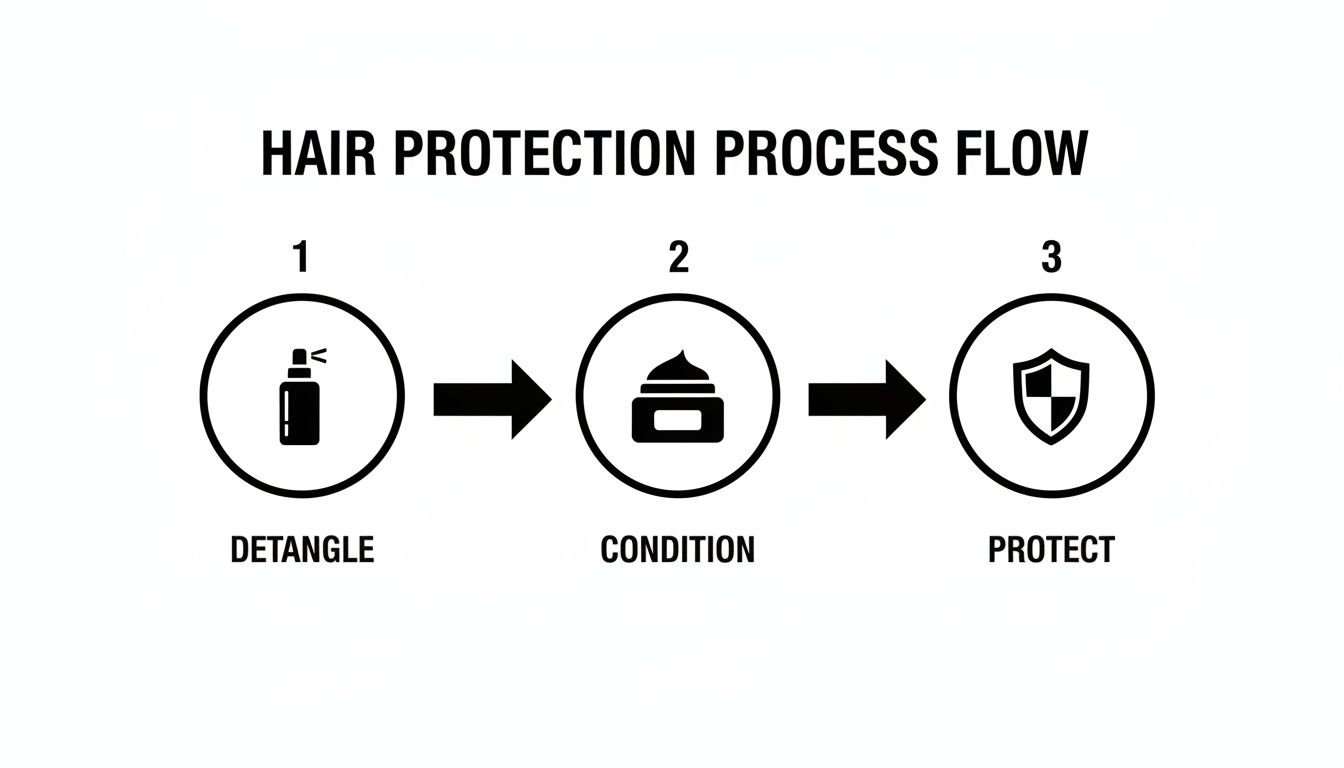
This process—detangle, condition, and protect—is the bedrock of healthy heat styling.
Embrace the One-Pass Rule
Once your hair is completely dry, it's time to straighten. The most crucial technique is the one-pass rule. Instead of quickly running the iron over the same section multiple times, move the iron down each section slowly and steadily. Just once.
This single, controlled glide is far more effective and infinitely less damaging. For an even sleeker result, try the "chase method": as you glide the flat iron down a section, "chase" it with a fine-tooth comb held just below the iron. This keeps strands perfectly taut for a pin-straight, glossy finish in that single pass.
Mastering Heatless Hair Straightening
Some days, your hair needs a vacation from the flat iron. Mastering heatless straightening methods is a game-changer for giving your strands that much-needed break. These techniques rely on tension and time—not scorching temperatures—to gently coax your hair into a smoother state.
You might not get the pin-straight finish of a ceramic iron, but you will get a beautiful, soft style that's completely damage-free.
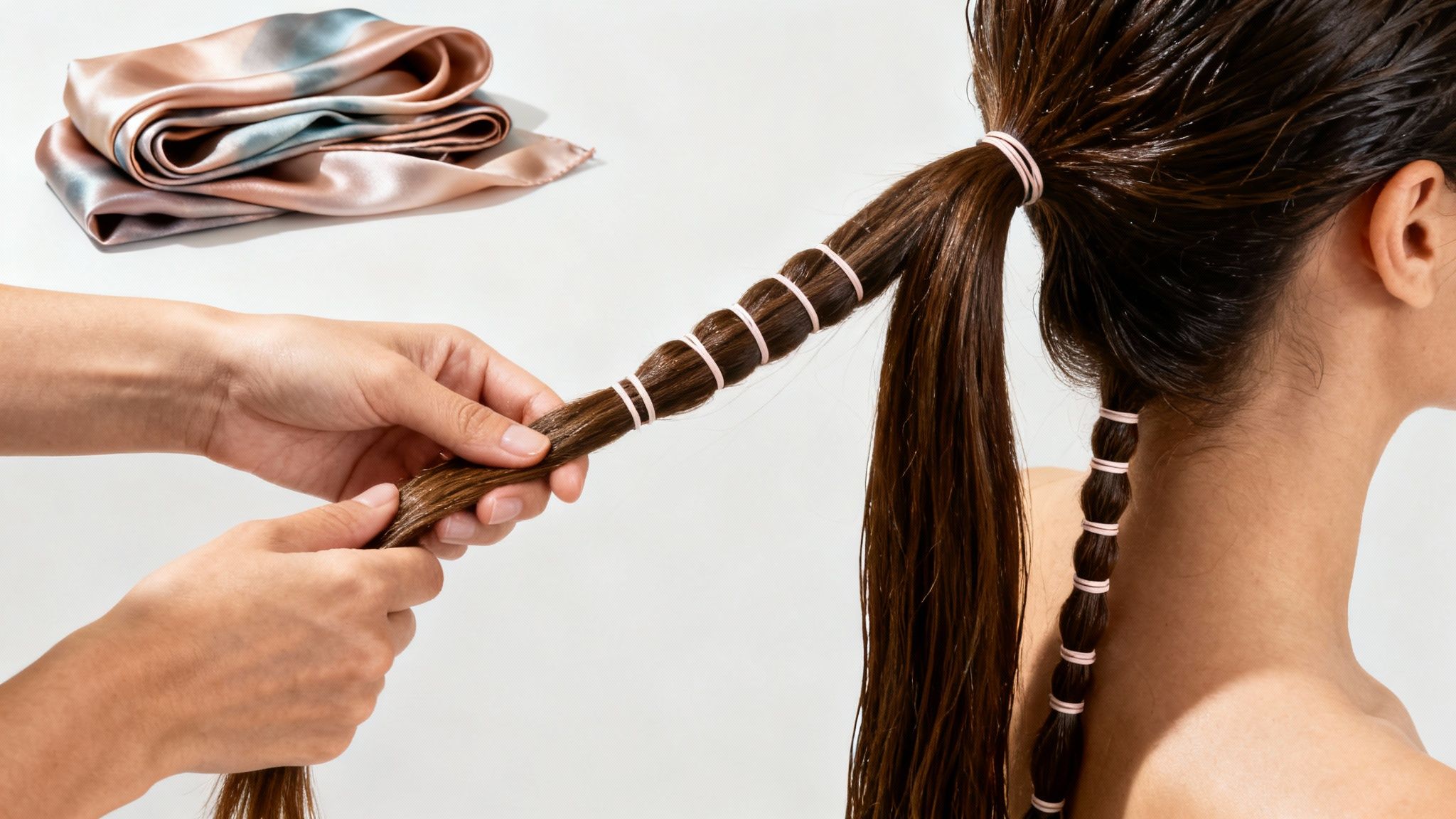
Giving your hair regular breaks from thermal styling is crucial for long-term health. Heat-free methods let your hair’s natural moisture and protein bonds stay intact, preventing the brittleness and breakage caused by constant heat. Here are a few of the most effective techniques.
The Classic Hair Wrapping Method
This timeless technique, also known as a "doobie wrap," has been used for generations to get hair straight without heat. It works wonders for fine to medium hair with a looser wave pattern, resulting in a sleek, smooth finish with natural body.
The idea is simple: you comb clean, damp hair flat against your scalp, wrapping it section by section around your head and securing it with bobby pins. Your head becomes a giant roller, and the gentle tension smooths the cuticle as it dries.
Pro Tip: For the best results, work a smoothing cream or a leave-in conditioner through your damp hair before you start wrapping. This helps control frizz and leaves you with a silky finish.
Using Jumbo Rollers for a Smooth Finish
Jumbo rollers aren’t just for curls. When used on damp hair, large-diameter rollers—think two inches or more—can give you a surprisingly straight and voluminous look. It's a fantastic method for most hair types.
Here’s how to do it:
- Prep Your Hair: Start with damp, detangled hair. A light styling mousse or setting lotion will provide hold.
- Section and Roll: Grab a section of hair no wider than your roller. Place the roller at the ends and roll up toward the scalp, keeping the hair taut. Pin it securely.
- Let It Dry Completely: This is the most important part. Your hair must be 100% air-dried. If you remove the rollers while your hair is still damp, your natural texture will return.
The tension from the rollers gently stretches the hair shaft, smoothing out waves. For more ideas, check out our guide on 7 heatless styling tips for healthy hair.
The Banding Technique for Maximum Stretch
For those with very curly or coily hair who want maximum length and stretch, banding is an incredibly effective heat-free method. This technique uses hair ties along the length of a ponytail to gently pull the hair straight while it dries.
Gather your damp hair into one or more low ponytails. Then, place additional hair ties every inch or so down the ponytail. Don't tie them too tightly, as this can create dents. This lineup of bands keeps your hair elongated and stops it from shrinking back into its natural curl pattern.
No matter which method you choose, a good finishing product is your secret weapon. Warm a small amount of a flexible styling product, like the Ossion Hair Styling Wax, between your palms and lightly smooth it over the surface for a polished, frizz-free look.
Keeping Your Straight Style and Hair Healthy for the Long Haul
Getting a perfect, silky-smooth finish is one thing, but making it last—and keeping your hair healthy in the process—is the real goal. Your aftercare routine determines how long your style holds up and how resilient your hair remains. This is about creating a sustainable cycle of care through overnight protection, heat-free refreshing, and a restorative routine.
Preserve Your Straight Hair Overnight
Tossing and turning on a standard cotton pillowcase creates friction, roughing up the hair's cuticle and leaving you with frizz.
The fix is simple: switch to a silk or satin pillowcase. The smooth surface lets your hair glide as you move, drastically cutting down on friction. This one swap means you wake up with sleeker hair and need less touch-up work. For ultimate protection, loosely wrap your hair in a silk or satin scarf before bed to keep your style smooth for days.
Day-Two Styling Without the Heat
The golden rule for day two (and beyond) is to avoid the flat iron. Instead of blasting your hair with more heat to tame a few flyaways, let a targeted product do the work.
A lightweight serum is your best friend for a quick refresh. Just one pump of the Morfose Milk Therapy Hair Serum, warmed between your palms and smoothed over mid-lengths and ends, is often all it takes. It instantly calms frizz, restores shine, and makes your hair look polished without any heat.
Build a Sustainable Hair Care Routine
Long-term hair health is built on consistency. Heat styling is demanding, and giving your strands regular breaks is essential for recovery.
Key Insight: Healthy, straight hair isn't a one-off achievement; it's the result of a continuous cycle of smart prep, careful styling, and dedicated aftercare.
Try to build at least one or two "heat-free" days into your weekly schedule. On those days, rock a cute braid or a chic bun. This rest period gives your hair a chance to reset.
Additionally, make a weekly deep conditioning treatment a non-negotiable part of your routine. Using a restorative mask like the Morfose Keratin Hair Mask is crucial for replenishing the protein and moisture that heat styling can deplete. For more comprehensive tips on building hair resilience, check out this guide on how to prevent hair loss naturally.
Still Have Questions? Let's Clear a Few Things Up
When you're trying to master straightening your hair without damaging it, a few questions always come up. Here are the answers to some of the most common ones.
Is It Really That Bad to Straighten My Hair Every Day?
Yes. Straightening your hair daily is a one-way ticket to damage, no matter how careful you are. Constant high heat breaks down your hair's protein structure and removes moisture, leaving it brittle, dull, and prone to snapping.
Instead, limit heat styling to one to two times per week. Learn how to make your style last. A silk pillowcase reduces overnight frizz, and a touch of lightweight serum can refresh your look in the morning.
What’s the Secret to Straightening Thick, Curly Hair?
Thick, curly hair needs a smart strategy. Most of the work should happen before the flat iron comes out. It all starts with the blow dryer.
After applying a generous amount of heat protectant to damp hair, use a paddle brush to create tension as you blow-dry. Always point the dryer’s nozzle down the hair shaft to smooth the cuticle. This should get your hair about 90% straight.
Now, finish the job with a titanium flat iron set to a controlled temperature (380°F-410°F). Work in small sections, using one slow, deliberate pass over each section. Patience is key; it's less damaging to take your time with smaller sections on lower heat than to blast large chunks on high heat repeatedly.
Will My Hair Ever Go Back to Being Curly After I Straighten It?
Yes, as long as you haven't caused irreversible heat damage. Straightening temporarily breaks down the hydrogen bonds in your hair. When your hair gets wet, those bonds reset, and your natural curl pattern returns.
The danger comes from using too much heat too often, which can permanently alter the protein bonds. This is what causes limp strands that refuse to curl. A good heat protectant and mindful temperature control are non-negotiable for preserving your natural texture.
Ready to create a straightening routine that gives you a flawless, silky finish without the damage? Take a look at the complete lineup of protective and restorative products from Morfose to find everything you need to get the job done right.
