
How Often Should You Condition Your Hair: The Ultimate Guide
Shop Morfose conditioners & masks
Rinse-out masks for the deep work, leave-in sprays for every wash — the two jobs people keep confusing.


Determining how often you should condition your hair is key to a healthy care routine. For most hair types, using a rinse-out conditioner 2-3 times per week right after shampooing is the perfect starting point. However, this isn't a one-size-fits-all rule. Your ideal frequency depends on your unique hair type, its current condition, and your daily styling habits.
This guide will help you build a personalized conditioning schedule to give your hair exactly what it needs for optimal health, shine, and manageability.
Your Quick Guide to Conditioning Frequency
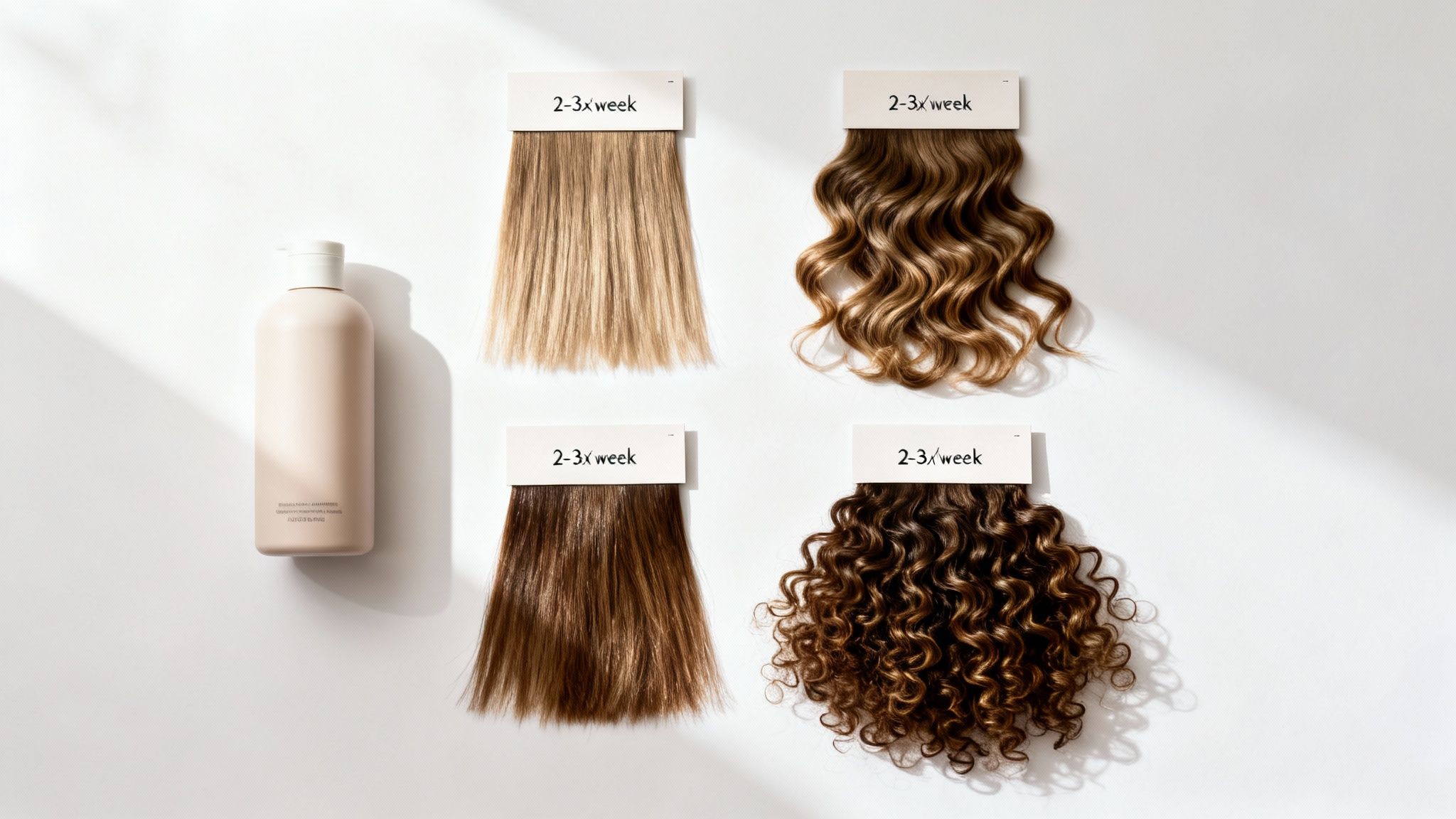
Figuring out how often to condition doesn't have to be complicated. The goal of a conditioner is to restore moisture, smooth the hair's outer layer (the cuticle), and improve manageability after shampooing removes natural oils. It's about listening to your hair's needs.
Expert advice from stylists and trichologists aligns with this common practice, recommending conditioning about 2 to 3 times per week. This frequency matches the usage habits of consumers globally, making rinse-out conditioners a staple for everyday hair maintenance.
Conditioning Schedule by Hair Type
To find your perfect starting point, let's break it down by hair type. Different textures require different levels of moisture. Fine hair can be easily weighed down, while coarse or curly hair often craves more hydration.
Use this simple table as a baseline for your routine.
Conditioning Frequency Guide by Hair Type
| Hair Type | Rinse-Out Conditioner | Deep Conditioner or Mask |
|---|---|---|
| Fine or Oily Hair | 2-3 times per week (on ends only) | Every 2 weeks |
| Normal or Wavy Hair | 3-4 times per week | Once per week |
| Thick, Coarse, or Dry Hair | Every time you wash | 1-2 times per week |
| Damaged or Color-Treated Hair | Every time you wash | At least once per week |
| Coily or Very Curly Hair | Every time you wash (or co-wash) | 1-2 times per week |
This table provides a solid foundation, but remember that your conditioning schedule is directly linked to your washing schedule. To get the full picture, you also need to know how often you should wash your hair based on its specific needs. These two practices work together to keep your hair balanced and healthy.
Why Conditioner Is Your Hair's Best Friend
One for every wash, one for weekly
To truly nail down how often you should condition your hair, it’s helpful to understand what conditioner actually does. Think of it as the essential partner to your shampoo—a targeted treatment designed to restore your strands after cleansing.
Shampoo’s main job is to remove dirt, oil, and product buildup by lifting the hair's cuticle. While effective for cleaning, this leaves the cuticle open and vulnerable. This is where conditioner comes in, smoothing the cuticle back down and sealing it shut. This single action triggers a cascade of benefits for your hair.
The Science of Smooth Hair
A sealed cuticle is the secret to hair that looks and feels healthy. Conditioner is formulated with ingredients that transform hair from a rough, porous state to a sleek, protected one.
Here’s a quick rundown of what happens every time you condition:
- It Locks in Moisture: By sealing the cuticle, conditioner traps water inside the hair shaft, keeping strands hydrated and preventing dryness and brittleness.
- It Fights Frizz and Static: An open cuticle creates a rough surface that invites frizz. Conditioner smooths this surface for a sleek, polished finish.
- It Prevents Breakage: Conditioned hair is more flexible and has less friction between strands, which means less snagging and snapping during brushing and styling.
- It Enhances Manageability and Shine: A smooth cuticle reflects light more evenly, creating a healthy, glossy appearance and making detangling significantly easier.
In short, conditioner doesn’t just make your hair feel soft—it’s actively rebuilding the protective barrier that keeps your hair strong and resilient.
More Than Just a Routine Step
Understanding this makes conditioning a non-negotiable step in your routine. It’s a critical part of maintaining your hair’s structural integrity. Each time you condition, you replenish lost lipids and proteins, prevent damage from detangling, and create a shield against daily environmental stressors.
This is a fundamental piece of any healthy hair care plan. For a deeper dive, exploring the benefits and tips for healthy hair can offer a broader perspective. When you start treating conditioner as the powerful tool it is, you actively make your hair healthier with every wash.
Creating Your Personalized Conditioning Routine
Generic advice like "condition your hair a few times a week" is a decent starting point, but a truly effective routine is personalized. Building a plan that works means looking at your hair's unique characteristics.
Think of it like solving a puzzle. Each piece—your hair type, porosity, and damage level—is crucial to the final picture. By understanding these factors, you can determine how often you should condition your hair and create a schedule that gives your strands exactly what they need.
Factor 1: Hair Type and Texture
The most obvious starting point is your natural hair type. The thickness of your individual strands and the overall texture dictate how much moisture your hair can handle before becoming greasy or weighed down.
-
Fine or Straight Hair: This hair type gets overwhelmed easily. Stick to conditioning 2-3 times per week, applying it only to the mid-lengths and ends to avoid flat roots. A lightweight conditioner is essential.
-
Wavy or Medium Hair: With more body, this hair can handle more moisture. Conditioning 3-4 times per week usually keeps waves defined and frizz-free without sacrificing volume.
-
Thick, Curly, or Coily Hair: These textures are naturally drier and lose moisture quickly. Conditioning every time you wash is crucial. Many people with curly and coily hair also co-wash (wash with conditioner only) between shampoos to maintain hydration.
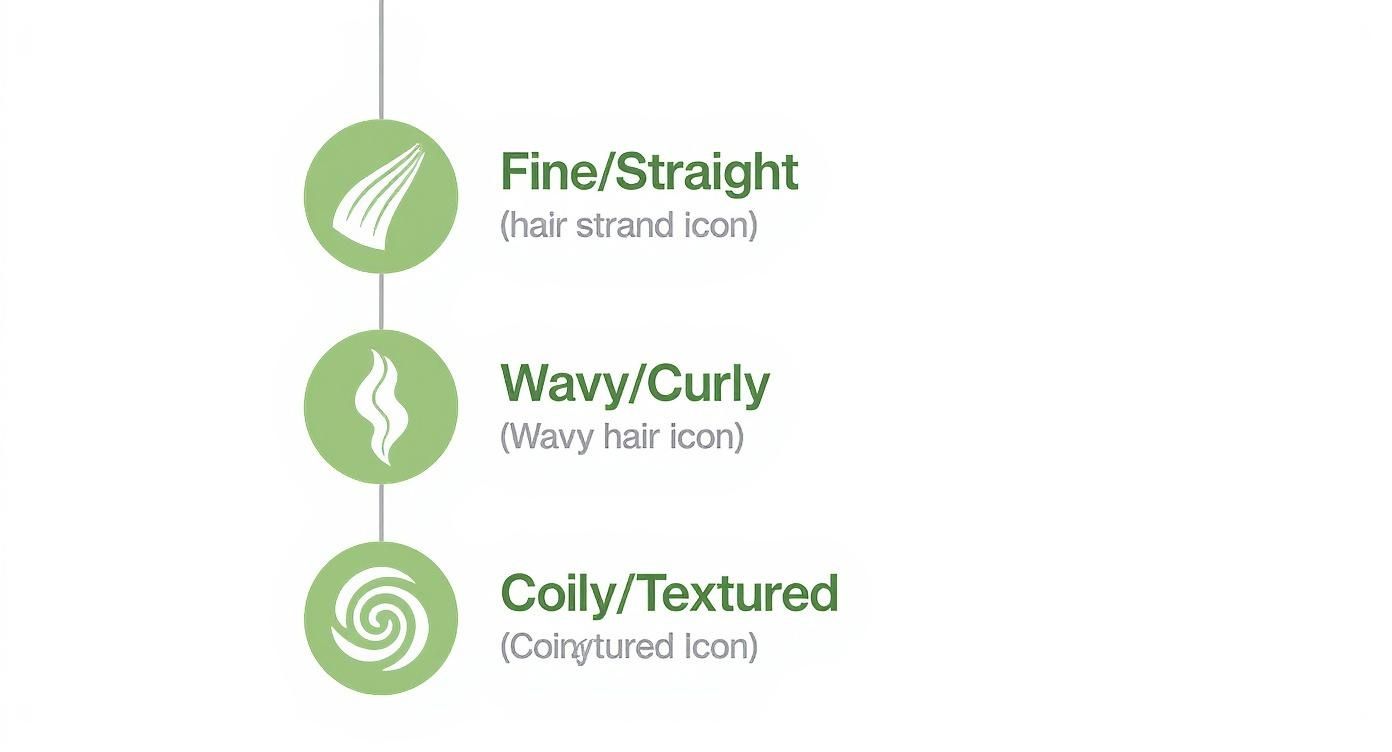
As the diagram shows, each hair texture has a unique structure, which is why they absorb and retain moisture differently.
Factor 2: Hair Porosity
Beyond texture, porosity is key to understanding your hair's health. It refers to your hair's ability to absorb and retain moisture, determined by how open or closed the cuticle layer is.
- Low Porosity: Hair has tightly sealed cuticles, making it difficult for moisture to penetrate. Products may sit on top of the hair. It benefits from less frequent deep conditioning, perhaps once every two weeks. Using gentle heat (like a warm towel) can help products absorb.
- High Porosity: Hair has raised cuticles, absorbing moisture quickly but losing it just as fast. It needs constant hydration. Conditioning every time you wash is a must, along with a regular deep conditioning treatment (once a week) to seal the cuticle and lock in moisture.
If you're unsure where you land, check out our guide on low vs high porosity hair.
Factor 3: Damage and Chemical Treatments
Your lifestyle and hair history also play a significant role. Heat styling, coloring, bleaching, and environmental factors can all take a toll.
-
Color-Treated or Chemically Processed Hair: Bleaching and coloring lift the hair's cuticle, increasing porosity and susceptibility to damage. It's essential to condition every time you wash with a color-safe formula. Use a deep conditioning mask at least once per week to restore protein and moisture.
-
Heat-Styled Hair: Frequent use of blow dryers, flat irons, or curling wands strips moisture from the hair. Conditioning every wash and adding a weekly deep treatment will help restore its strength and elasticity.
Choosing the Right Conditioner for the Job
The conditioner aisle can be overwhelming, but it's simpler when you think of conditioners as a toolkit for specific jobs. Using the right type of conditioner at the right time is key to figuring out how often you should condition your hair.
Your hair’s needs can change. Sometimes it needs a quick detangling session; other times, it needs intensive repair. Achieving the right moisture-protein balance with the right products is the secret to healthy, resilient hair.
Rinse-Out Conditioner: The Daily Driver
This is the standard conditioner you use in the shower after shampooing. Its main job is to quickly restore moisture, detangle knots, and smooth the hair cuticle.
- When to Use: Use it every time you shampoo, which for most people is 2-4 times per week.
- Best For: Everyone. A quality rinse-out conditioner is a non-negotiable for regular hair maintenance.
Deep Conditioners and Hair Masks: The Weekly Spa Treatment
When your hair needs a powerful dose of hydration and nutrients, it's time for a deep conditioner or hair mask. These formulas are thicker and more concentrated, designed to penetrate the hair shaft more deeply than a regular conditioner. Learn more about the difference between a deep conditioner and a regular conditioner.
- When to Use: Aim for once a week. If your hair is severely dry or damaged, you can increase this to twice a week.
- Best For: Dry, damaged, color-treated, or coarse and curly hair types that struggle to retain moisture.
Leave-In Conditioner: The 24/7 Protector
A leave-in conditioner is a lightweight product applied to damp hair that you don't rinse out. It provides continuous moisture, controls frizz, and protects against environmental damage throughout the day.
A leave-in conditioner is to your hair what moisturizer is to your skin. It locks in a lasting layer of hydration that keeps your strands soft, smooth, and protected long after you've finished styling.
- When to Use: After every wash. It’s also great for refreshing dry hair on non-wash days to tame flyaways.
- Best For: Frizzy, dry, curly, or damage-prone hair. It's also an excellent detangler for all hair types.
Protein Treatments: The Structural Reinforcement
Protein treatments are specialized formulas designed to rebuild the structure of your hair. Hair is made of a protein called keratin, which can be lost due to damage. These treatments replenish that protein, strengthening weak, brittle strands.
However, use them sparingly. Overuse can lead to "protein overload," making hair stiff and brittle.
- When to Use: Typically once a month. For severely damaged hair, every 4-6 weeks may be necessary.
- Best For: Chemically treated, bleached, or highly porous hair that feels limp or overly elastic when wet.
Recommended Morfose Solutions for Your Hair Goals
Once you understand what your hair needs, the next step is to find the right products. Knowing how often you should condition your hair is much simpler when you have tools designed for specific goals. Whether you’re fighting daily tangles, reversing damage, or need intense moisture, the right Morfose conditioner can make all the difference.
For Daily Detangling and Lightweight Moisture
If knots and dullness are your primary concerns, the Morfose Milk Therapy Two Phase Conditioner is your solution. This lightweight leave-in spray is perfect for all hair types, especially fine to normal hair that gets easily weighed down. Infused with milk protein and 12 essential amino acids, it nourishes without leaving residue. Shake, spray on damp hair for instant detangling, softness, and heat protection. It’s the perfect final step after every wash.
For Weekly Deep Repair and Strength
If your hair feels dry, brittle, or damaged from color treatments and heat styling, it needs a deep treatment. The Morfose Collagen Hair Mask is designed for this SOS call. Collagen reinforces the hair's internal structure, improving elasticity and reducing breakage. Use this intensive mask once a week in place of your regular conditioner. Leave it on for 5-10 minutes to restore strength and bounce.
For Lasting Smoothness and Frizz Control
For hair that struggles with chronic dryness and frizz, the Morfose Argan Hair Conditioner provides rich, lasting hydration. This rinse-out conditioner is enriched with nourishing argan oil, known for its ability to smooth the hair cuticle and lock in moisture. It’s an excellent choice for thick, coarse, curly, or high-porosity hair, helping to tame frizz and improve manageability.
Ready to find your perfect match? Explore our complete collection and browse the full range of Morfose hair conditioners today.
Signs of Over-Conditioning vs. Under-Conditioning
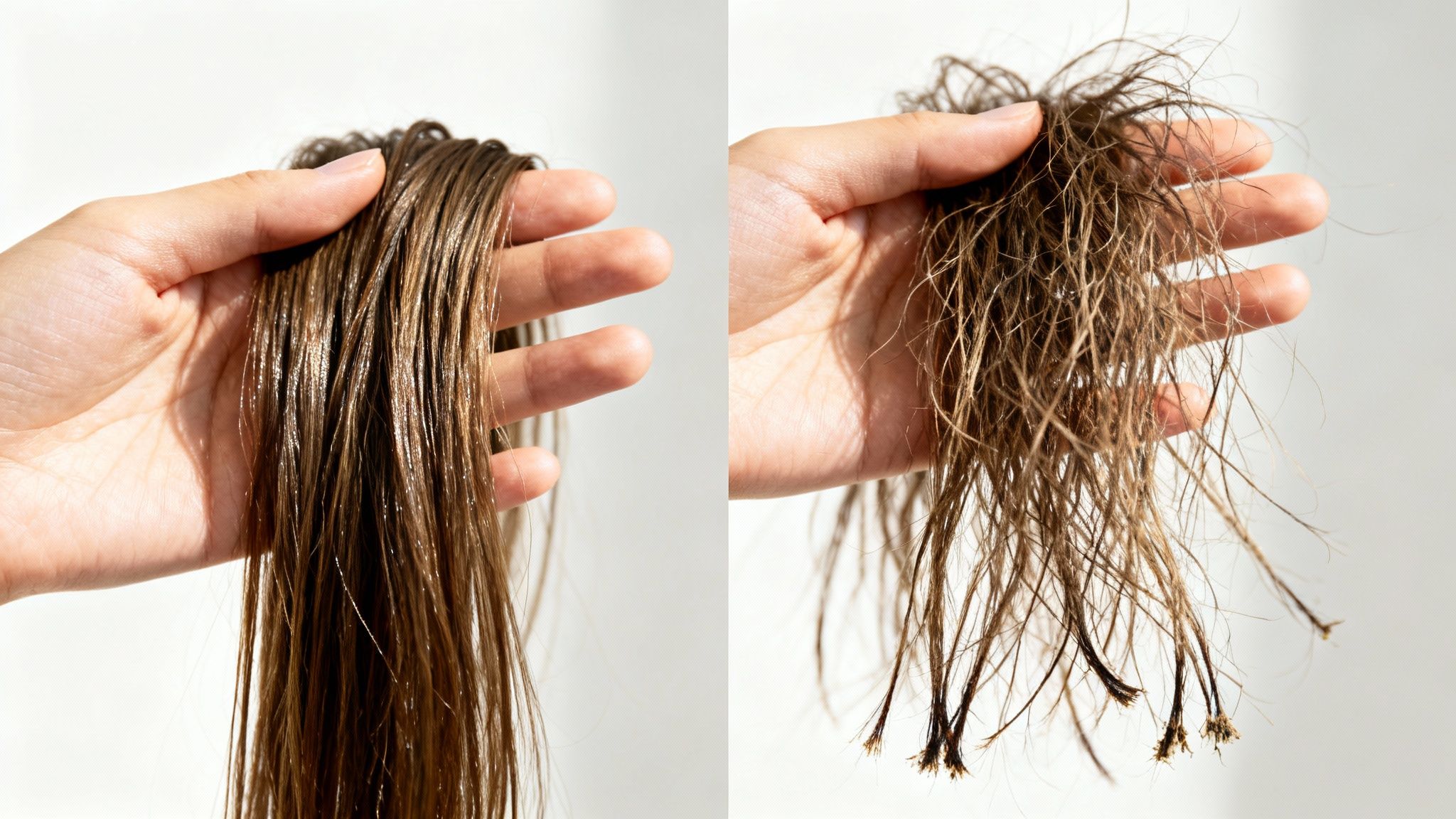
Achieving the perfect conditioning balance is the goal. Your hair will send you signals if you're using too much or too little. Learning to read these signals is the final step in perfecting your routine and knowing exactly how often you should condition your hair.
Over-conditioning, sometimes called "hygral fatigue," occurs when the hair is so overwhelmed with moisture that the cuticle swells and weakens.
Are You Over-Conditioning Your Hair?
Too much of a good thing can leave your hair feeling worse. If you're using heavy conditioners or masks too frequently, watch for these signs:
- Limp and Lifeless Hair: Strands feel overly soft, mushy, and have no volume or bounce.
- Difficulty Styling: Hair is too slippery or limp to hold a style or curl.
- Greasy or Weighed-Down Feeling: Hair feels heavy or looks greasy, even right after washing.
How to Fix It: Use a clarifying shampoo to remove product buildup. Then, scale back on how often you use heavy deep conditioners.
Signs You Are Under-Conditioning Your Hair
Skimping on moisture leads to a different set of problems. Under-conditioned hair is thirsty, and its signs are usually quite clear:
- Excessive Frizz and Flyaways: The hair cuticle is rough and open, leading to an unruly appearance.
- Constant Tangles and Knots: Dry strands create more friction, causing tangles.
- Dull Appearance: Dehydrated hair can't reflect light, resulting in a lack of shine.
- Brittleness and Breakage: Hair feels brittle and straw-like and snaps easily during brushing or styling.
How to Fix It: Increase moisture. A great place to start is by adding a nourishing leave-in spray, like the Morfose Milk Therapy Two Phase Conditioner, to your routine after every wash for continuous hydration.
Got Questions? We’ve Got Answers.
Let's clear up a few common questions to help you finalize your perfect conditioning routine.
Can I Condition My Hair Every Day?
Yes, for some hair types, daily conditioning (or co-washing) is beneficial. If you have very dry, coarse, or curly hair, co-washing can maintain moisture without stripping natural oils. However, for fine or oily hair, daily conditioning can lead to product buildup and leave hair feeling flat and heavy.
Should I Put Conditioner On My Scalp?
As a general rule, no. Your scalp produces its own natural oils (sebum) to keep your roots moisturized. Applying conditioner to the scalp can disrupt this balance, leading to greasy roots and buildup.
Focus your conditioner from the mid-lengths to the ends. This is where your hair is the oldest and driest. This technique keeps your roots lifted and your ends hydrated.
How Long Should I Leave Conditioner In?
Timing depends on the product type. Following the recommended time ensures you get the full benefits without overloading your hair.
- Rinse-Out Conditioner: 1-3 minutes is sufficient for detangling and smoothing the cuticle.
- Deep Conditioner or Mask: Allow 15-30 minutes for the ingredients to penetrate deeply and perform intensive repair.
- Leave-In Conditioner: This product is designed to be left in to provide continuous moisture and protection.
With this knowledge, you are now equipped to create a conditioning routine tailored perfectly to your hair. For products designed to meet every hair goal, explore the full Morfose collection at https://themorfose.com.
How often is often enough?
Leave-in on every wash, mask once or twice a week. More mask is not more repair — over-conditioned hair goes limp and stops holding a style.

