
How Often Should You Wash Your Hair for a Healthy Scalp
Let's get one thing straight: there’s no magic number for how often you should wash your hair. It's a question we get all the time, and the honest answer is… it depends. Some people need a daily wash to feel fresh, while others can go a week and their hair still looks fantastic. Your ideal schedule is deeply personal, dictated by your hair type, scalp health, and even your daily routine.
Your Guide to the Ideal Hair Washing Schedule
Figuring out your perfect wash frequency can feel like a bit of a puzzle, but it’s simpler than you think. The first step is to throw out the old "one-size-fits-all" advice. Instead of chasing a rigid rule, let's focus on creating a flexible routine that listens to what your hair and scalp are telling you.
The real goal here is to find a healthy balance. You want to clean away sweat, oil, and product buildup without stripping your hair of the essential natural oils that keep it hydrated and healthy. Nailing this balance is the secret to unlocking your hair's full potential.
Finding Your Starting Point
To get started, you just need to identify your hair and scalp type. Is your hair fine and your scalp prone to getting oily fast? Or is your hair thick and your scalp on the drier side? This is the single biggest clue to how often you should be reaching for the shampoo.
This flowchart gives you a great visual starting point based on your hair's behavior.
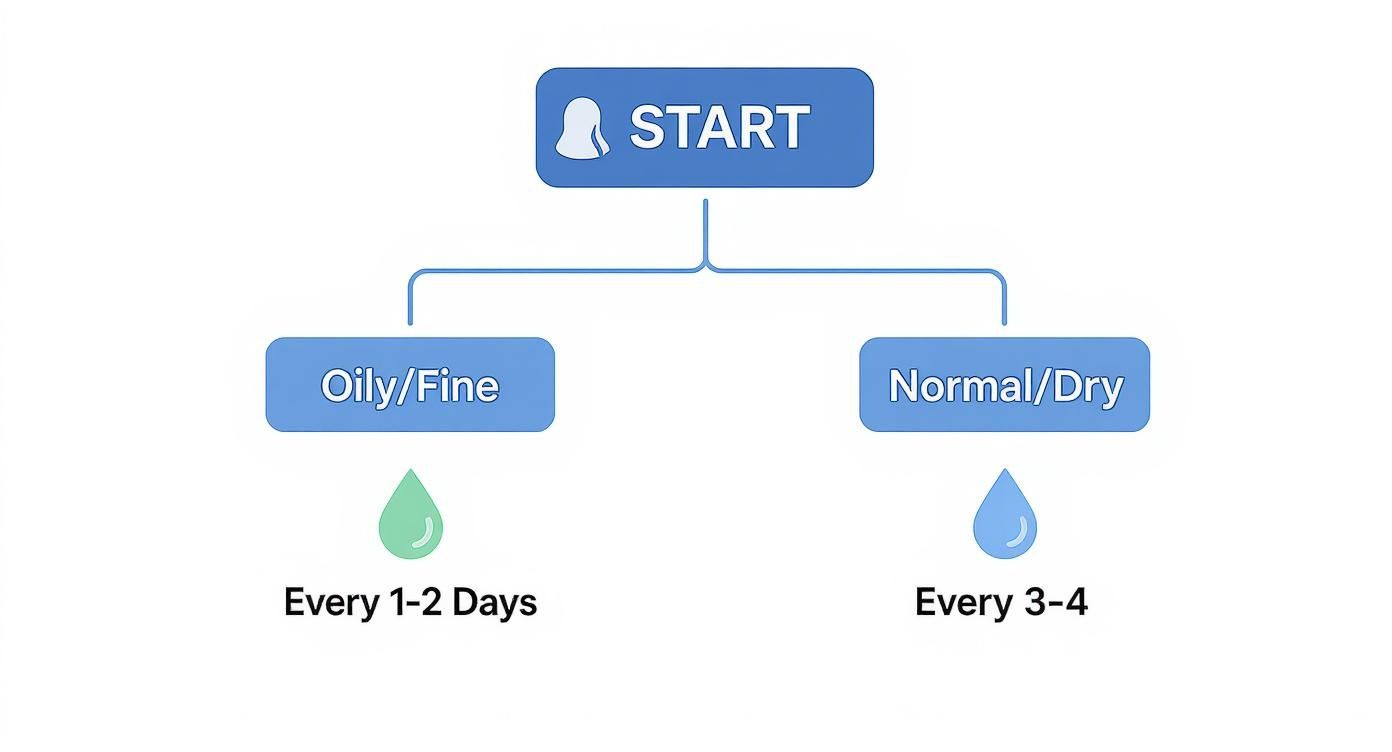
As you can see, the general rule of thumb is that finer, oilier hair benefits from more frequent washing, while thicker, drier hair is happier with less.
Quick Guide to Hair Washing Frequency by Type
Use this table as a starting point to find the recommended washing schedule for your hair and scalp.
| Hair/Scalp Type | Recommended Frequency | Key Consideration |
|---|---|---|
| Oily/Fine | Every 1-2 days | Oil travels easily down fine strands, leading to a greasy look much faster. |
| Normal | Every 3-4 days | This type has a balanced sebum production, so it doesn't get greasy or dry quickly. |
| Dry/Thick | Every 5-7 days | Washing too often can strip necessary oils, making dryness and frizz worse. |
| Coily/Curly | Once a week | Curls need natural oils to stay defined and moisturized; over-washing causes frizz. |
Remember, this is just a guide. Your activity level, the products you use, and even the weather can all play a role.
Common Habits and Changing Norms
It’s always interesting to see what everyone else is doing. A major global study found that about 80% of people wash their hair either daily or every other day. But things have been changing—the pandemic actually shifted our habits, with 14% of people starting to wash their hair less often. If you're curious, you can learn more about these global hair habits and see how you compare.
The most important thing to remember is that there is no "correct" answer. The best way to know when to wash is by listening to your hair. Is it greasy at the roots? Is your scalp itchy? Or does it feel dry and brittle? These signals are far more reliable than any strict schedule.
By understanding your hair's basic needs, you can stop guessing and start building a routine that actually works. We'll walk you through everything you need to find that perfect rhythm.
Getting to Know Your Hair and Scalp
Before you can figure out your perfect wash schedule, you have to get personal with your scalp. It all boils down to one simple, yet crucial, element: sebum.
Think of sebum as your body's built-in conditioning treatment. It's a natural, oily substance your sebaceous glands produce to keep your hair and skin moisturized and protected. The amount of sebum your scalp makes is the single biggest factor in how often you need to wash your hair.
Too much, and your hair gets greasy and heavy. Too little, and you're left with a dry, itchy, and flaky scalp. The goal is to find that "just right" balance for happy hair.
The Four Main Scalp Profiles
Just like facial skin, scalps have different personalities. You might have an oily T-zone situation up there, or your scalp might be as consistently dry as your cheeks in winter. Nailing down your profile is the first step to building a routine that actually works.
Here are the most common types:
- Oily Scalp: If your hair feels greasy less than 24 hours after a wash, you're likely in this camp. Your glands are working overtime, producing a surplus of sebum that quickly coats your hair.
- Dry Scalp: Does your scalp often feel tight, itchy, or do you see small, white flakes? That’s a classic sign of a dry scalp, meaning your glands aren't producing enough oil to keep things hydrated.
- Combination Scalp: This is a tricky one. You'll have oily roots but the ends of your hair feel dry and brittle. The sebum is there, but it’s getting stuck at the scalp instead of traveling down to nourish your strands.
- Balanced Scalp: This is the sweet spot. If you can comfortably go a few days between washes without your hair feeling overly greasy or your scalp feeling dry, you have balanced sebum production.
For a deeper dive, you can learn how to find your scalp type with our step-by-step guide. Knowing your starting point is everything.
How Hair Texture Changes the Game
Your hair's texture has a huge impact on how sebum behaves. It's not just about how much oil your scalp produces, but how easily that oil can travel down the hair shaft.
Here's a simple way to think about it: a fine, straight strand of hair is like a slick, straight highway. Oil zips down it in no time, making the whole strand look greasy fast. This is why people with fine, straight hair often feel like they need to wash daily. There's nothing to slow the oil's journey.
Now, picture thick, curly, or coily hair. That's more like a winding country road full of twists and turns. Sebum has a much tougher time navigating this path. It tends to hang out at the roots, leaving the ends thirsty for that natural moisture. This is exactly why these hair types can, and should, go much longer between washes—sometimes several days or even a week.
If your scalp feels constantly dry, itchy, or just plain irritated, you might be dealing with a compromised skin barrier. Learning about how to repair a damaged skin barrier can offer some great insights that apply to your scalp, too. A healthy barrier is key for maintaining balanced moisture everywhere.
Listening to Your Hair's Cues
Forget the rigid schedules. The best way to know when to wash your hair is to simply pay attention to what it's telling you. Your hair and scalp give you constant feedback, and learning to read those signals is the key to a truly responsive routine.
Think of it like skincare. You wouldn’t slather on a heavy, oily cream if your face felt greasy, right? The same intuitive approach works wonders for your hair. By tuning in, you can wash it at the perfect moment—right when it needs it, without stripping away the good stuff.
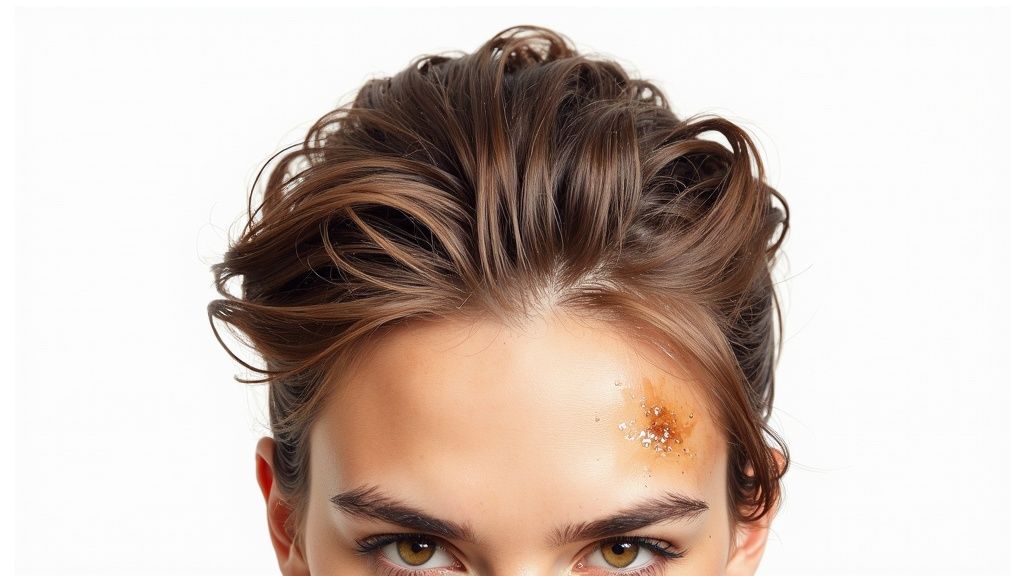
Signs You Need to Wash Your Hair
These are the classic tell-tale signs that sebum, product residue, and daily grime have built up and your scalp is ready for a reset.
- Greasy Roots: This is the most obvious one. If your roots look dark, clumpy, or feel heavy, it’s a clear sign of excess oil.
- Itchy or Irritated Scalp: A nagging itch often means buildup is starting to irritate your skin. It’s your scalp’s way of saying, “Help me out here!” before things get worse.
- Visible Flakes: Seeing small, often oily, flakes? That’s typically the result of sebum buildup creating an environment for irritation. If it's a constant battle, you’ll want to check out our guide on dealing with dandruff and effective solutions.
- Lifeless or Unmanageable Hair: When your hair just won't cooperate—it falls flat, looks dull, or refuses to hold a style—it's often just weighed down. A good wash is the only fix.
Are You Washing Your Hair Too Often?
On the flip side, washing too frequently can cause a whole other set of problems. It’s a common mistake that can kickstart a frustrating cycle of dryness and irritation because your scalp needs some of its natural oil to stay balanced and healthy.
When you over-wash, you strip away those protective oils. Your scalp panics and sends a signal to your oil glands to work overtime to replace what was lost. The result? Your hair can ironically get greasier, faster.
While over-washing is a real issue for some, research often links higher wash frequencies to better overall scalp health. One major study found that people washing 5–6 times weekly reported the highest satisfaction with their hair, seeing less hair loss and brittleness. Infrequent washing, on the other hand, was tied to scalp sensitivity from all that sebum buildup. You can learn more about the findings on wash frequency and scalp health.
Here’s how to tell if you’re cleansing too much:
- Persistent Frizz and Flyaways: Stripping the natural oils roughens up the hair cuticle, making it unable to lie flat. Hello, frizz.
- Brittle, Dry Ends: Without enough sebum to moisturize the entire hair shaft, your ends get dehydrated, weak, and start to snap.
- Fast-Fading Color: Washing too often, especially with hot water, lifts the hair cuticle and lets those expensive color molecules wash right down the drain.
- A Tight, Dry Scalp: If your scalp feels tight and uncomfortable right after you wash it, you’ve likely stripped away its natural protective layer.
How Your Lifestyle and Environment Change the Game
Let's be real—your hair doesn't live in a vacuum. Your daily grind, where you live, and what you do all have a massive say in how often you should be washing it. It's less about a rigid schedule and more about a flexible routine that responds to your life.

Think about it: if you hit the gym for an intense workout, your scalp is going to get sweaty. That mix of salt and oil can clog your hair follicles and leave your head feeling itchy and just plain grimy. On those days, a good wash is probably non-negotiable, unlike the days you spend relaxing at home.
Your Surroundings Have a Bigger Impact Than You'd Guess
The environment around you is a huge piece of the puzzle. If you're a city slicker, your hair is constantly battling pollution. All those tiny particles from car exhaust and city grime latch onto your hair strands, making them feel dirty and look lifeless way faster than they would in the countryside.
And of course, there's the climate.
- High Humidity: Ever feel like your hair just gives up in humid weather? All that moisture in the air can make your scalp feel greasy and turn your hair into a frizzy mess.
- Dry, Cold Air: On the flip side, cold, dry air is notorious for zapping moisture right out of your hair, leaving it brittle. Over-washing in these conditions will only make things worse.
- Sun Exposure: A long day in the sun can feel great, but UV rays are not your hair's friend. They break down the hair's protective outer layer, so a gentle cleanse to wash away salt, sand, and chlorine is a must after a beach day.
Figuring out how to take care of your hair in different climates is a game-changer for keeping it balanced. Even your home environment matters—learning how to properly wash your pillows can cut down on the oils and products that transfer to your hair overnight, maybe even buying you an extra day between washes.
It's also fascinating how culture influences our habits. In the UAE, 61% of people wash their hair daily, and in Singapore, it's 67%. But in Europe, it's a different story. Only 26% of French and 30% of British people suds up every day.
At the end of the day, it all comes down to being flexible. Listen to your hair. Pay attention to how it reacts to your life and your surroundings, and don't be afraid to adjust your washing routine to keep it looking and feeling its best.
Fine-Tuning Your Wash Routine for Special Hair Needs
A one-size-fits-all washing schedule just doesn't cut it when you're dealing with specific hair challenges. If your hair is color-treated, thinning, or damaged, it has unique demands that call for a more thoughtful approach. It’s not just about swapping products; it's about changing how and when you wash to protect, strengthen, and bring your hair back to life.
Getting this strategy right can be a game-changer. The wrong shampoo can wash your expensive new color down the drain in a heartbeat, while the right one acts like a bodyguard for your hair. A gentle touch can give thinning hair the support it needs to thrive, and a serious dose of moisture can be a lifeline for brittle, damaged strands.
Caring for Color-Treated Hair
There's nothing like freshly colored hair, but it's also incredibly fragile. The coloring process opens up the hair’s outer layer (the cuticle), which makes it super easy for those new color molecules to slip right out. The secret to keeping that vibrant shade locked in is simple: wash less, and wash smarter.
Try to stick to washing just two to three times per week. When you do lather up, grab a sulfate-free shampoo made for color protection, like our Morfose Color Lock Shampoo. Sulfates are powerful cleansers that can be too harsh, stripping color right out. A color-safe formula, on the other hand, cleanses gently without prying open the cuticle.
Here’s a simple routine to keep your color looking fresh:
- Turn Down the Heat: Hot water is your color’s enemy. It opens the hair cuticle and lets the color escape. Stick to lukewarm or cool water to keep it sealed tight.
- Scalp First: Concentrate your shampoo at the roots where oil and dirt build up. The suds will clean the rest of your hair as you rinse without being too harsh on the ends.
- Condition Like You Mean It: Follow up with a rich, color-safe conditioner. The Morfose Milk Therapy Two Phase Conditioner is perfect for sealing in moisture and shine from the mid-lengths to the ends.
Supporting Thinning Hair
When you're dealing with thinning hair, the main goal is to create a healthy, happy scalp that can support new growth. You don't want to stress out those delicate follicles. Over-washing can irritate the scalp, but under-washing can lead to buildup that clogs follicles and gets in the way of growth. It's all about finding that perfect balance.
Washing every two to three days is usually the sweet spot. This keeps your scalp clean without the daily wear and tear. Look for a gentle, lightweight shampoo that won't weigh down your hair. While you’re in there, take an extra minute to massage your scalp as you shampoo—it’s a great way to boost blood flow to the follicles. If oiliness is part of the problem, learning how to treat an oily scalp and keep it healthy can offer more targeted solutions to help you reach your hair goals.
Reviving Damaged Hair
Damaged hair is thirsty hair. Whether it’s from heat styling, chemical treatments, or just the environment, it’s usually porous and brittle, which means it can’t hold onto moisture. Washing it too often just strips away the natural oils it’s so desperate for.
With damaged hair, less is definitely more. Try to stretch the time between washes to every four to seven days. This gives your scalp's natural oils a chance to travel down the hair shaft and nourish those parched ends.
On wash days, your mission is to pump moisture and protein back into your strands. You could try co-washing (using only conditioner) or swap your regular conditioner for a deeply restorative treatment like the Morfose Keratin Hair Mask. This approach cleanses gently while delivering a major dose of hydration and strength, helping to rebuild bonds and bring back that softness you’ve been missing.
How to Extend Time Between Washes
Are you ready to break up with your daily shampoo habit but worried about your hair turning into a greasy mess? I get it. Stretching the time between washes is a skill, but it’s one you can absolutely master with a few smart moves.
The secret isn’t waiting for the oil to show up and then trying to fix it. It's about getting ahead of the game.
One of the best tricks in the book is using dry shampoo… but probably not the way you think. Instead of spraying it on oily hair, apply it to your clean, dry roots right after you’ve washed and styled. Think of it as a preventative shield. This creates an invisible, absorbent base that soaks up oil the moment your scalp produces it, keeping that "just washed" look going for days.
Train Your Scalp and Tweak Your Routine
Another game-changer is what we call scalp training. It’s all about teaching your scalp to chill out on oil production. If you’re a daily washer, start by shifting to every other day. Stick with that for a few weeks. Your scalp, which has been working overtime to replace the oils you strip away, will get the message and start to balance itself out.
Beyond products, a few simple habit changes can make a huge difference:
- Swap Your Pillowcase: A standard cotton pillowcase acts like a sponge, soaking up your hair’s natural oils and creating friction that messes up your style. A silk or satin one lets your hair glide, reducing that morning-after greasy look.
- Embrace Second-Day Styles: Hair that isn't squeaky clean often has better texture and grip, making it perfect for stylish updos, braids, and ponytails. These styles are a chic way to hide roots that are starting to look a little less than fresh.
- Hands Off!: We all do it, but constantly touching, twisting, or running your fingers through your hair transfers oils and dirt straight to your strands. Be mindful and try to keep your hands out of your hair.
The real goal here is to find a rhythm that works for you and your hair. Washing less isn't just about saving time—it’s about letting your scalp’s natural oils nourish your hair, leading to stronger, healthier strands in the long run.
If you're curious about taking this even further, exploring low-poo and no-poo methods for healthy hair can open up a whole new world of hair care. These simple but powerful habits can help you find that perfect balance and finally break free from the daily wash cycle.
Your Hair Washing Questions, Answered
Even when you think you've got your routine figured out, questions always seem to pop up. Let's tackle some of the most common hair washing myths and mysteries so you can feel totally confident in your schedule.
Does Washing Your Hair Every Day Cause Hair Loss?
This is a big one, but let's set the record straight: for most people, washing your hair daily does not cause hair loss. In reality, keeping your scalp clean is a good thing! It helps prevent the kind of product and oil buildup that can clog your hair follicles, which could actually contribute to shedding.
More often than not, significant hair loss is tied to things like genetics, hormonal shifts, or other health issues, not how often you lather up.
What Is Co-Washing And Who Is It For?
Ever heard of co-washing? It's short for "conditioner-only washing," and it's exactly what it sounds like. You skip the shampoo and wash your hair only with conditioner.
This super-gentle method is a lifesaver for people with very dry, coarse, or curly hair because it cleanses without stripping away precious natural oils. On the flip side, it's not the best choice if you have fine or oily hair, as it can leave your strands feeling heavy and weighed down.
Pro Tip: If your home has hard water, you might notice your hair feels dull and dry no matter what you do. That's mineral buildup! Using a clarifying shampoo every so often will cut through that residue and allow your favorite products to work their magic again.
Can I Wash My Hair After A Workout?
Absolutely! In fact, you should. When you work up a sweat, that perspiration mixes with your scalp's natural oils and any bacteria that might be hanging around.
If you leave it be for too long, it can lead to irritation or clogged follicles. A quick, gentle cleanse after a gym session is the best way to keep your scalp happy and healthy.
Ready to put all this knowledge into action? Morfose has a whole lineup of targeted solutions to help you build the perfect routine for your hair's unique needs. From color-safe shampoos to deeply restorative masks, everything is designed to get your hair to its healthiest, most vibrant state.
Find your perfect match over at the Morfose website.
