

How to prevent split ends naturally: Simple tips that work
If you want to stop split ends in their tracks, the game plan is pretty simple: be gentle, keep your hair hydrated, and steer clear of harsh treatments. It really comes down to daily habits—things like how you detangle, whether you use a deep conditioner, and how often you reach for the flat iron. These little things make a huge difference in keeping your ends strong and healthy.
Understanding the Root Causes of Split Ends
Before we jump into the "how-to," let's talk about the "why." What actually are split ends?
Scientifically, they're called trichoptilosis, but think of them as a distress signal from your hair. It means the hair's protective outer layer, the cuticle, has been worn away. When that shield is gone, the inner core of the hair shaft starts to fray and unravel, just like a piece of rope. This isn't a one-time thing; it’s the result of all the little things your hair goes through every day.
The Three Main Culprits of Hair Damage
Most hair damage can be traced back to one of three culprits. Figuring out which ones are affecting your hair is the first step to building a routine that actually works.
- Mechanical Stress: This is all about physical wear and tear. We're talking about aggressive brushing (especially when wet), rough towel-drying, and tight ponytails or buns that constantly pull and strain the hair strands.
- Chemical Damage: If you color, bleach, relax, or perm your hair, you're familiar with this one. These processes can strip away the natural proteins and oils that keep hair strong, leaving it brittle and prone to splitting.
- Environmental Factors: The world around us takes a toll, too. Sun exposure, dry air (hello, winter!), wind, and even pollution can gradually weaken your hair, making it dry and fragile.
This visual gives you a great snapshot of how these three factors team up against your hair.
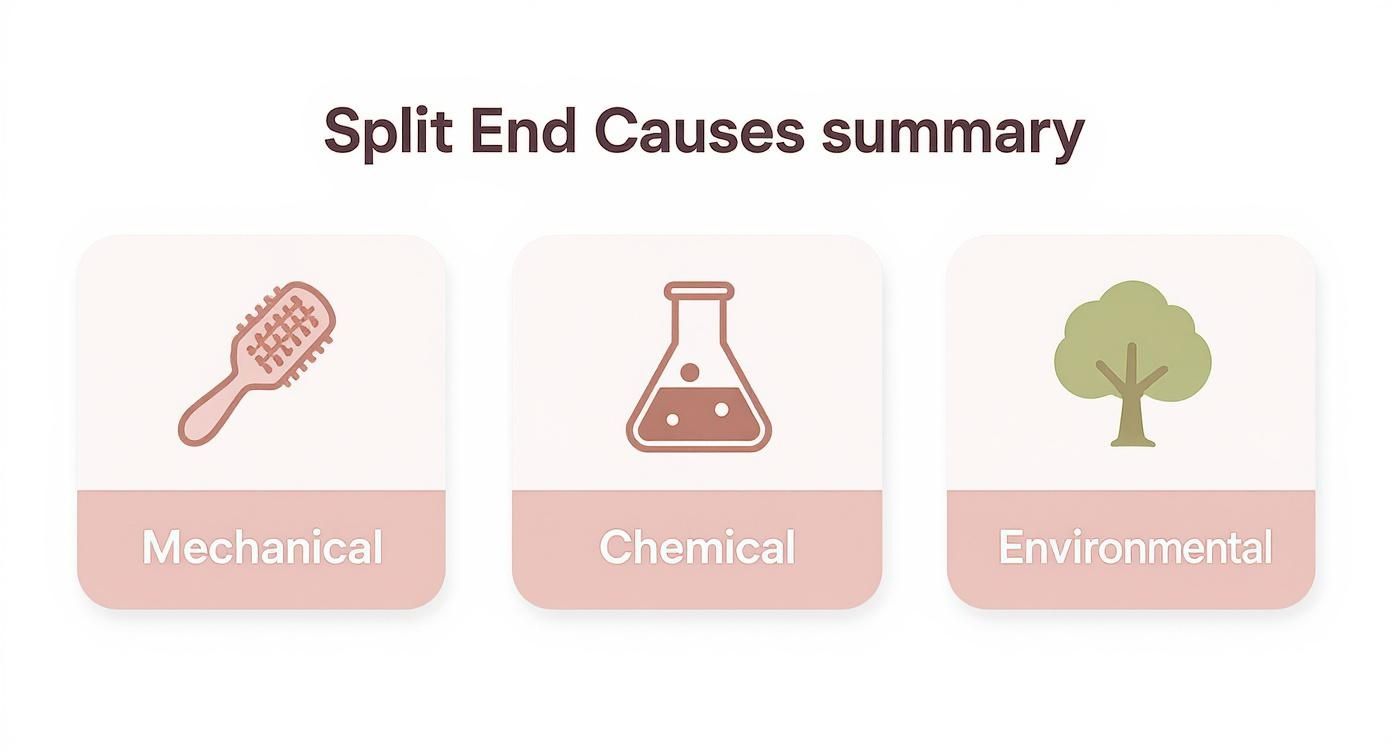
As the infographic shows, it’s this combination of mechanical, chemical, and environmental stress that chips away at the hair’s cuticle, eventually leading to those dreaded split ends.
Why Your Habits Matter Most
It’s so easy to dismiss the small, everyday things, but they truly add up. A global study by Dyson found that a staggering 70% of people feel their hair is damaged, often from heat styling without proper protection.
Many of our daily routines are filled with little habits that, over time, cause major damage. A quick swap can make a world of difference.
Here’s a quick look at some common damaging habits and the simple, hair-safe alternatives you can start using today.
Common Habits That Cause Split Ends vs Hair-Safe Alternatives
| Damaging Habit | Hair-Safe Alternative |
|---|---|
| Ripping through tangles with a plastic brush. | Gently detangling from ends to roots with a wide-tooth comb. |
| Vigorously rubbing hair with a cotton towel. | Squeezing out excess water with a soft microfiber towel or an old t-shirt. |
| Using high heat on styling tools every day. | Air-drying when possible or using the lowest effective heat setting with a protectant. |
| Wearing tight elastic bands with metal clasps. | Securing hair with gentle scrunchies, spiral hair ties, or claw clips. |
| Skipping conditioner to avoid "weighed-down" hair. | Applying a nourishing conditioner from mid-lengths to ends after every wash. |
Making these small adjustments consistently is far more effective than any one-off treatment.
The key takeaway is that split ends are a symptom of underlying damage. By addressing the root causes—from how you brush to how you style—you can proactively protect your hair's integrity and keep your ends healthy and whole.
When you understand what's causing the problem, you can make smarter choices for your hair. If you want to dig a little deeper, you can explore the top culprits of hair damage to see if any other habits are holding you back. The goal isn't to stop styling or coloring your hair forever, but to do it mindfully, with a strategy that always puts hair health first.
Building Your Gentle Daily Hair Care Routine

Let's be real: healthy, split-end-free hair doesn't come from a single miracle product. It's the result of small, consistent, and gentle habits that add up over time. Think of it as building a protective shield for your strands, and that starts with your daily routine.
Your first line of defense is actually in the shower. When you wash your hair, try to focus the shampoo right at the scalp where all the oil and product buildup happens. You really don't need to pile it on and scrub the lengths of your hair—the suds will do a fine job of cleaning them as you rinse.
Then, when it’s time for conditioner, concentrate it on the mid-lengths and ends. This is the oldest, most fragile part of your hair, and it needs that moisture the most. This simple trick keeps your roots from getting greasy and delivers hydration exactly where it's needed.
Smart Washing and Drying Techniques
Your hair is at its absolute weakest when it's soaking wet, so how you handle it right after a shower is a huge deal. One of the biggest mistakes I see is aggressive towel-drying. That rough rubbing motion is a fast track to a roughed-up cuticle, which means breakage and split ends.
Instead, gently squeeze or blot out the excess water. An even better move? Swap your coarse cotton towel for a soft microfiber one or even an old, clean t-shirt. It might seem like a small change, but it makes a world of difference in reducing that damaging friction.
Detangling wet hair also requires a bit of patience. Please, don't just rip a brush through knots. Grab a wide-tooth comb and work in small sections, starting from the very ends and slowly making your way up to the roots. This carefully teases out tangles without snapping those delicate, wet strands. If you want to dive deeper into this crucial step, check out the ultimate after-shower hair routine for healthy hair.
Overnight Protection and Styling Choices
Did you know your hair care continues even while you sleep? All that tossing and turning on a standard cotton pillowcase creates a surprising amount of friction, leading to tangles and weakened ends by morning.
A game-changer is switching to a silk or satin pillowcase. The smooth surface lets your hair glide around as you move, which dramatically cuts down on friction and helps your hair hold onto its moisture.
It’s such an easy swap that protects your hair for about eight hours every single night.
Finally, take a look at what you’re using to tie your hair up. Those tight elastic bands, especially the ones with the little metal bits, are notorious for snagging and breaking strands.
There are much gentler ways to keep your hair secure without causing damage:
- Fabric Scrunchies: They’re not just a style statement; they provide a soft, protective barrier.
- Spiral Hair Ties: Their unique coil shape distributes pressure evenly, so you can say goodbye to that ponytail dent and reduce strain.
- Claw Clips: These are fantastic for creating loose, chic updos that don't pull or put any tension on your roots.
By weaving these small, mindful habits into your day, you’re creating a powerful defense against split ends. It’s all about working with your hair, not against it, to keep it strong and healthy from root to tip.
Whip Up Some Kitchen Magic with DIY Masks and Oils
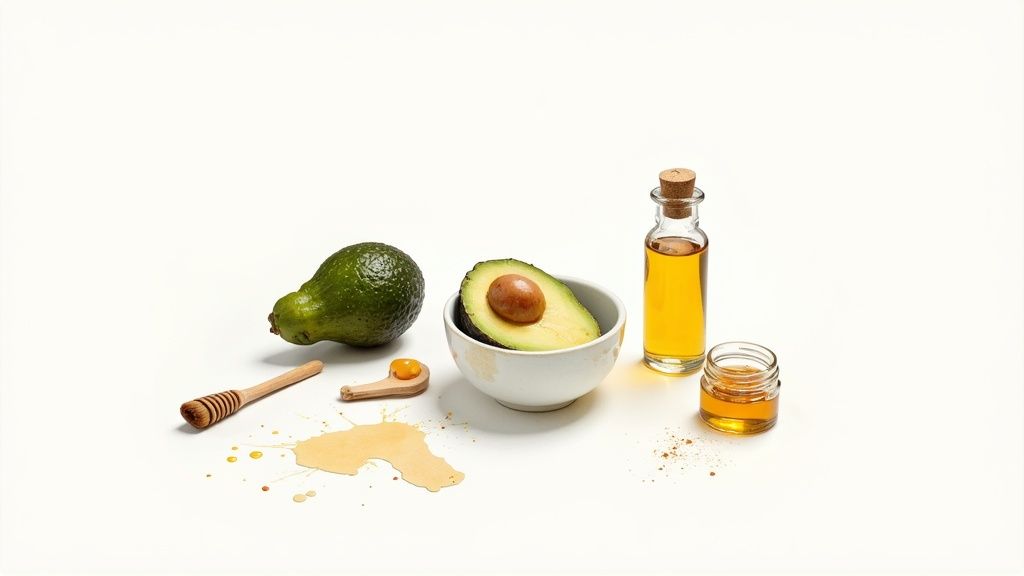
While your day-to-day care is essential, setting aside time for a weekly deep-conditioning treatment can be a total game-changer. This is where you give your hair an intensive dose of moisture and nutrients to really fortify it against damage. The best part? Your kitchen is probably already stocked with everything you need.
These homemade treatments are more than just a surface-level fix. Ingredients like rich, creamy avocado are packed with fatty acids that actually get inside the hair shaft to strengthen it. And something as simple as honey works as a natural humectant, pulling moisture from the air right into your hair and locking it down. It’s all about creating a consistent, nourishing ritual.
Simple and Effective DIY Hair Mask Recipes
You don’t need to be a chemist to create a restorative hair mask. A few simple ingredients can easily rival pricey store-bought tubs. The trick is just knowing which ones offer the best moisturizing and strengthening punch.
Here’s one of my favorite, incredibly simple recipes to get you started:
- Mash up one ripe avocado in a bowl. Get it really smooth—no lumps!
- Stir in one tablespoon of olive oil and one tablespoon of raw honey. Keep mixing until it forms a creamy, consistent paste.
- Work the mixture through damp hair, paying special attention to the mid-lengths and ends where split ends love to pop up.
- Let it do its thing for 20-30 minutes. For an extra boost, pop on a shower cap. The trapped heat helps the mask penetrate even deeper.
- Rinse everything out with lukewarm water, then follow up with your usual shampoo and conditioner.
This mask is a true triple-threat: avocado nourishes, olive oil adds that beautiful softness and shine, and honey seals in all that good moisture. If you want to explore other natural hydrators, using aloe vera juice as a leave-in conditioner is another fantastic option to work into your routine.
Think of a weekly hair mask as a serious hydration session for your hair. Your skin loves a good face mask, right? Your hair craves that same targeted care to stay strong, flexible, and free of split ends.
The Power of Natural Oils for Sealing and Protecting
Beyond a weekly mask, pure oils are your secret weapon for daily protection. They work by creating a lightweight barrier around the hair cuticle, which locks in moisture and shields your delicate ends from everyday friction and stress.
Using oils like coconut or argan can make a huge difference in preventing protein loss and boosting your hair’s overall strength. In fact, some analyses have shown they can help prevent split ends by up to 30%!
Getting oils into your routine is incredibly easy:
- Pre-Shampoo Shield: An hour before you wash, gently warm a bit of coconut oil and massage it into your ends. This stops your shampoo from stripping away too many of your hair's natural, protective oils.
- Frizz-Fighting Finisher: After washing, rub just a drop or two of argan oil between your palms and smooth it over your damp ends. It seals the cuticle, tames flyaways, and adds a gorgeous, non-greasy shine.
- Overnight Rescue: If your hair is feeling particularly parched, apply a light coat of jojoba oil to your ends before bed. Wash it out in the morning for seriously replenished, silky hair.
Every oil brings something different to the table, from coconut oil’s deep-penetrating abilities to argan oil’s lightweight finish. To discover the perfect fit for your hair, check out this guide to natural oils for hair, their benefits, and how to use them. This kind of consistent care is what truly builds resilient, healthy hair from the inside out.
Styling Your Hair Without Causing Damage

Let's be honest—styling is usually where the real damage happens. It's so easy to fall into a cycle of cranking up the flat iron to tame frizz, which, ironically, just creates more damage and more frizz down the line. But you don't have to sacrifice your hair's health to get the look you want.
It all starts with rethinking your approach. Embracing heat-free methods isn't just a trend; it's a game-changer for preventing split ends naturally. These techniques save your strands from brutal thermal damage and can create some seriously beautiful, long-lasting styles. It’s a total win-win.
Embracing Heat-Free Styling Techniques
Going heat-free doesn't mean you're stuck with boring hair. Far from it. Some of the most gorgeous styles I've seen were created without a single hot tool. The trick is to work with your hair's natural texture, not against it, using gentle methods to shape and define.
Here are a few of my favorite hair-safe ideas:
- Overnight Braids for Effortless Waves: After washing, let your hair air-dry until it's about 80% dry. Then, pop in some braids—a single loose one for subtle, beachy waves, or several smaller ones for a more defined, crimped look. Sleep on it, and you'll wake up to perfect, heatless waves.
- Foam Rollers for Gentle Curls: Those old-school foam rollers are making a major comeback, and for good reason. They can create bouncy, beautiful curls with zero heat. Just roll up sections of damp hair and let them air-dry completely before taking them out.
- The Scarf Method for Soft Curls: For an incredibly gentle approach, try wrapping sections of damp hair around a silk or satin scarf before bed. This method is so kind to your ends and leaves you with soft, romantic curls in the morning.
These techniques let you style your hair as it dries, cutting out the need for damaging heat and reducing the physical stress on your strands.
The real goal is to shift your mindset. Instead of fighting your hair with intense heat, you're gently guiding it into a style. When you work with your hair's nature, you preserve its strength and integrity.
Navigating Heat Styling the Safe Way
Of course, there will be days when only a curling wand or straightener will cut it. I get it. For those times, the right preparation and technique can make a world of difference in reducing damage. It's all about putting a protective barrier between your hair and the heat.
Always, always start with a quality heat protectant. This isn't just a friendly suggestion; it's a non-negotiable rule. A good one creates a shield over the hair cuticle, helping to distribute heat more evenly and slow down how quickly your hair heats up. This isn't a niche tip anymore—a recent study showed 83% of women now regularly use heat protectant products. You can find more on this and other common missteps in our guide to 7 common hair styling mistakes that cause split ends.
Here's your quick checklist for safer styling:
- Never Style Damp Hair: Applying high heat to hair that's even slightly damp will literally boil the water inside the strand. This causes the hair to swell and cracks the cuticle from the inside out.
- Use the Lowest Effective Temperature: You don’t need to blast your hair on the highest setting. Start low and only turn it up if you absolutely need to.
- One and Done: Try to style each section in a single, smooth pass. Going over the same piece of hair again and again concentrates the heat and dramatically increases the risk of damage.
Finishing with hair serums and oils can also be a huge help, as they seal the cuticle to lock in moisture. This trend is booming, and the global hair serum market is growing fast as more people look for products to protect against styling damage. You can find more insights on hair serum market trends on coherentmarketinsights.com.
Why Regular Trims Are Your Best Defense Against Split Ends
While all these natural strategies are fantastic for keeping your hair healthy, we need to have an honest conversation about existing damage. The hard truth is, you can’t glue a split end back together. Once the hair shaft has frayed, the only real fix is to snip it off.
This is exactly why regular trims are the cornerstone of any healthy hair routine. Ignoring a split end won't make it disappear—it actually gives it a green light to travel. That split will continue to creep up the hair shaft, making more of the strand weak, thin, and brittle until it snaps.
Think of it like a tiny snag in a sweater. At first, it's just one loose thread, but if you don't address it, it can unravel a whole section. Trimming stops that damage in its tracks, preserving the strength and integrity of the rest of your hair.
So, How Often Should You Really Get a Trim?
Okay, the big question: how often do you actually need to see your stylist? There isn’t a one-size-fits-all answer. The ideal schedule really comes down to your hair type, its current condition, and your daily styling habits.
As a general guide, most people find that a trim every 6 to 12 weeks is the sweet spot. This is usually enough time to catch any budding split ends before they get a chance to cause real trouble.
To get more specific, here’s how you can find the right rhythm for your hair:
- For Fine or Damage-Prone Hair: If your hair is on the delicate side, or if you regularly use heat or color, you'll want to aim for a trim every 6 to 8 weeks. Staying proactive is the best way to keep breakage at bay.
- For Healthy or Thicker Hair: If you have naturally resilient hair and stick to a gentle routine, you can probably stretch your appointments to every 10 to 12 weeks.
- If You're Trying to Grow Your Hair Out: I know it feels counterintuitive, but skipping trims can seriously backfire. A light "dusting" every 8 to 12 weeks—just taking off the very tips—removes split ends before they can cause breakage that costs you more length in the long run.
This focus on preventative care is part of a bigger movement toward total hair wellness. It's a huge priority for people, with the market for hair loss prevention products valued at an impressive USD 23.6 billion back in 2021. You can see just how much people are prioritizing hair integrity by reading more about the growing focus on hair health on globenewswire.com.
Ultimately, a consistent trim schedule is the final piece of the puzzle. It ensures that all the healthy, new hair you’re so carefully nurturing isn’t undermined by old damage hanging around at the ends. To dive deeper into the professional take, check out the benefits of regular trims and see why stylists consider it non-negotiable.
Common Split End Questions Answered
Even with the best routine, questions about split ends always seem to surface. It's totally normal. Getting into the nitty-gritty of hair care is what really makes a difference in preventing those pesky splits for good. Let's tackle some of the most common concerns I hear all the time.
Can Split Ends Be Repaired Without Cutting Them?
This is the big one, and I’m going to be straight with you: no. You can't permanently mend a split end. Think of it like a frayed rope—you can't just glue the fibers back together and expect it to be strong again.
Sure, there are products out there that can temporarily smooth the hair and make the split less noticeable. They act like a cosmetic bandage, but they don't heal the damage. The only real fix is to snip off the damaged part. This stops the split from traveling further up the hair shaft, which would only lead to more breakage and frustration down the road.
What Foods Help Prevent Split Ends?
You can't overlook the power of your diet. Strong, resilient hair is literally built from the inside out, and what you eat plays a huge part in that.
To give your hair the right building blocks, try to pack your meals with these key nutrients:
- Protein-Rich Foods: Your hair is mostly protein, so feed it what it needs. Think lean meats, fish, eggs, and if you're plant-based, lots of beans and nuts.
- Iron Sources: Iron is crucial for carrying oxygen to your hair follicles. You can find it in things like spinach, lentils, and red meat. Healthy follicles mean healthy growth.
- Healthy Fats: Don't be afraid of fats! Avocados, nuts, and seeds are full of fatty acids that give your hair moisture and that beautiful shine.
- Hydration: It sounds simple, but drinking enough water is a game-changer. It moisturizes your hair from within, making it more flexible and less likely to snap.
A well-rounded, nutrient-rich diet isn't just a quick fix; it's one of the best long-term strategies for preventing split ends and all kinds of hair damage.
How Often Should I Oil My Hair?
This is where you have to listen to your hair—there’s no single right answer. How often you should oil your hair really comes down to your hair type and how thirsty it is.
For most people, using a natural oil like coconut or argan oil as a treatment before you shampoo or as a light leave-in conditioner 1-2 times per week works beautifully. If you have really coarse or dry hair, you might find that a tiny drop on your ends every day helps. On the flip side, if your hair is fine and gets greasy easily, you’ll probably want to stick to a weekly treatment so you don't weigh it down.
Learning these fundamentals is so empowering. For more great tips, you can also check out this guide on how to keep your hair healthy and vibrant.
When you want to give your natural routine a professional-grade boost, Morfose offers salon-quality formulas you can trust at home. Our products are designed to fortify your strands and protect against future damage. You can explore the full collection at https://themorfose.com.
