
Your Ultimate Guide on the Best Treatment for Damaged Hair
The best treatment for damaged hair isn't a single miracle product, but a smart, consistent routine that stops damage and rebuilds your hair’s strength from the inside out. This guide will show you how to diagnose the problem, use gentle cleansing methods, apply restorative masks with ingredients like keratin, and protect your hair from heat and chemical styling. Think of it as part first-aid, part long-term recovery plan for your hair.
How to Fix Damaged Hair: Your Step-by-Step Action Plan
We’ve all had that sinking feeling—staring in the mirror at split ends, frizz, and hair that just looks… sad. If you're dealing with hair that feels brittle, snaps easily, or simply refuses to cooperate, you’re definitely not alone. The search for a solution is so universal that the global hair and scalp care market hit a staggering USD 103.15 billion in 2024.
But before you can start fixing the problem, you have to play detective. The absolute first step is to pinpoint the real cause of your hair's distress. Is it the daily flat iron, that last balayage, or just general wear and tear? Each culprit requires a slightly different battle plan.
Step 1: Identify the Source of Your Hair Woes
Think of your hair like a delicate fabric. A straightening iron can scorch it, bleach can unravel its very fibers, and even a tight ponytail can cause repeated physical stress. Nailing down the primary offender is what helps you choose the right products and techniques for a real recovery.
To get you started, here’s a quick-reference table to help you diagnose the issue based on what you’re seeing and feeling.
Identifying Your Hair Damage Type
| Symptom | Likely Cause | Immediate Action |
|---|---|---|
| Split ends, white dots on the hair shaft, straw-like texture | Heat Damage | Unplug the hot tools. Immediately start using a high-quality heat protectant when you must style. |
| Feels gummy or mushy when wet, very brittle and porous when dry | Chemical Damage | Step away from the bleach and color. Focus on protein treatments and bonding services to rebuild. |
| Breakage at the crown or where a ponytail sits, lots of frizz | Mechanical Damage | Loosen up! Switch to gentler hair ties, a wide-tooth comb, and stop aggressive towel-drying. |
Once you have a better idea of what you’re up against, you can tailor your approach for much better results.
Key Takeaway: You can't truly fix a problem until you know its source. The foundation of any successful hair repair journey is understanding what caused the damage in the first place.
With the cause identified, you can begin your hair’s first aid. This isn't about an overnight miracle cure, but about immediately halting the damage cycle to create a healthy environment for healing.
Start with simple swaps that make a huge difference. Trade your rough bath towel for a soft microfiber one. Ditch the brush on wet hair and use a wide-tooth comb instead. We cover more of these initial steps in our guide to the essential tools for hair repair. These small adjustments are crucial because they set the stage for the deeper, more intensive treatments to come.
How to Build a Weekly Hair Repair Routine
If you want to bring your hair back from the brink, consistency is everything. A single mask won't cut it; real recovery comes from a dedicated weekly routine that consistently nourishes and protects your strands. Think of it like a fitness plan for your hair—each step builds on the last, creating strength, resilience, and shine over time.
A good routine doesn't have to be complicated. It just needs to revolve around a few key pillars: gentle cleansing, intensive conditioning, targeted treatments, and vigilant protection. By setting up a simple schedule you can actually stick to, you give your hair the steady support it needs to repair existing damage and fend off future problems.
This visual shows the simple yet powerful flow of a successful hair damage action plan, starting with diagnosis and moving through prevention and repair.
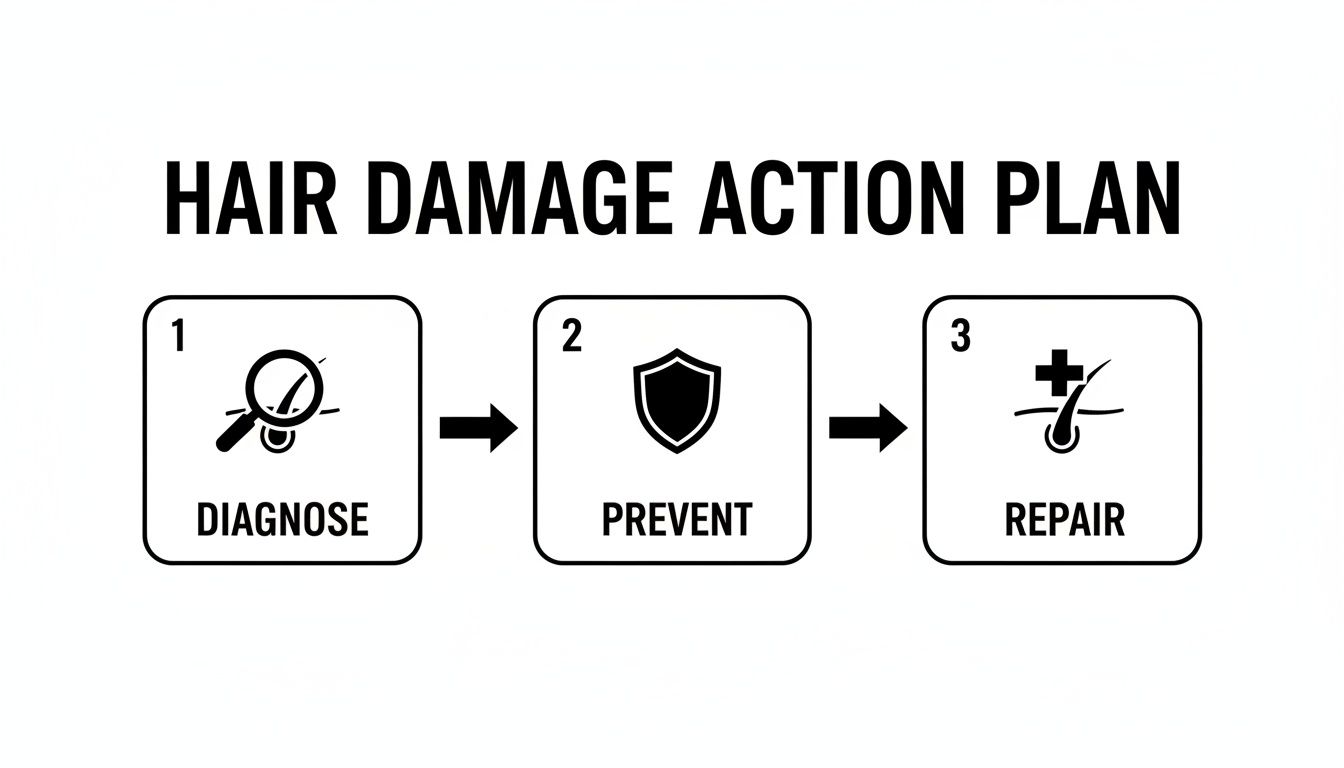
This process really highlights that a successful routine is a cycle. You have to understand your hair's needs, protect it daily, and then actively put in the work to repair it each week.
Foundational Step: Gentle Cleansing
The very first tweak to make in your weekly routine is your wash schedule. It's easy to overdo it, but over-washing strips your hair of its natural protective oils, leaving it even more vulnerable to dryness and breakage. For most people with damaged hair, washing just two to three times a week is the sweet spot.
When you do wash, the kind of shampoo you use matters. A lot.
- Sulfate-Free is Non-Negotiable: Sure, sulfates create a satisfying lather, but they can be incredibly harsh and strip away precious moisture. A sulfate-free shampoo cleanses just as effectively without causing more dehydration.
- Focus on the Scalp: Concentrate your shampooing efforts right at the scalp, where oil and product buildup actually happen. Gently massage it in with your fingertips (never your nails!) and just let the suds run down the lengths of your hair as you rinse.
This gentle approach ensures your hair gets clean without compromising its fragile state, which sets the perfect foundation for the conditioning to follow.
The Power of Deep Conditioning and Masks
If shampoo is for cleansing, then conditioner and masks are for healing. This is where the heavy lifting of your repair routine really happens. While a daily conditioner is great for smoothing things out after each wash, a weekly deep conditioning treatment is absolutely essential for intensive repair.
These masks are packed with concentrated ingredients designed to penetrate deep into the hair shaft to restore moisture and protein. To get the most out of every treatment, check out our in-depth guide on how to deep condition hair for maximum benefits.
Pro Tip: After applying a hair mask, wrap your hair in a warm towel or a shower cap for about 15-20 minutes. The gentle heat helps open up the hair cuticle, allowing all those nourishing ingredients to penetrate more deeply for even better results.
Sealing and Protecting with Serums and Leave-Ins
Your hair care routine doesn't stop when you step out of the shower. The final, crucial steps are all about sealing in that hard-earned moisture and protecting your hair from daily stressors. This is where serums, oils, and leave-in conditioners become your best friends.
Work a small amount of a lightweight serum or argan oil through damp hair, focusing on the mid-lengths and ends. This simple step helps to smooth the cuticle, fight off frizz, and add a much-needed protective barrier.
Finally, and this is a big one: never, ever use hot tools without a heat protectant. This is the single most important preventative step you can take. A good heat protectant creates a shield between your hair and the intense temperatures of a blow dryer or flat iron, dramatically cutting down the risk of thermal damage.
Decoding Hair Repair Ingredients That Work
Walking down the hair care aisle can feel like you need a chemistry degree. With so many bottles promising a total transformation, the only way to know what really works is to understand the ingredient list. The secret to an effective treatment for damaged hair isn't magic; it's science. It's about finding products packed with ingredients proven to repair, rebuild, and protect.
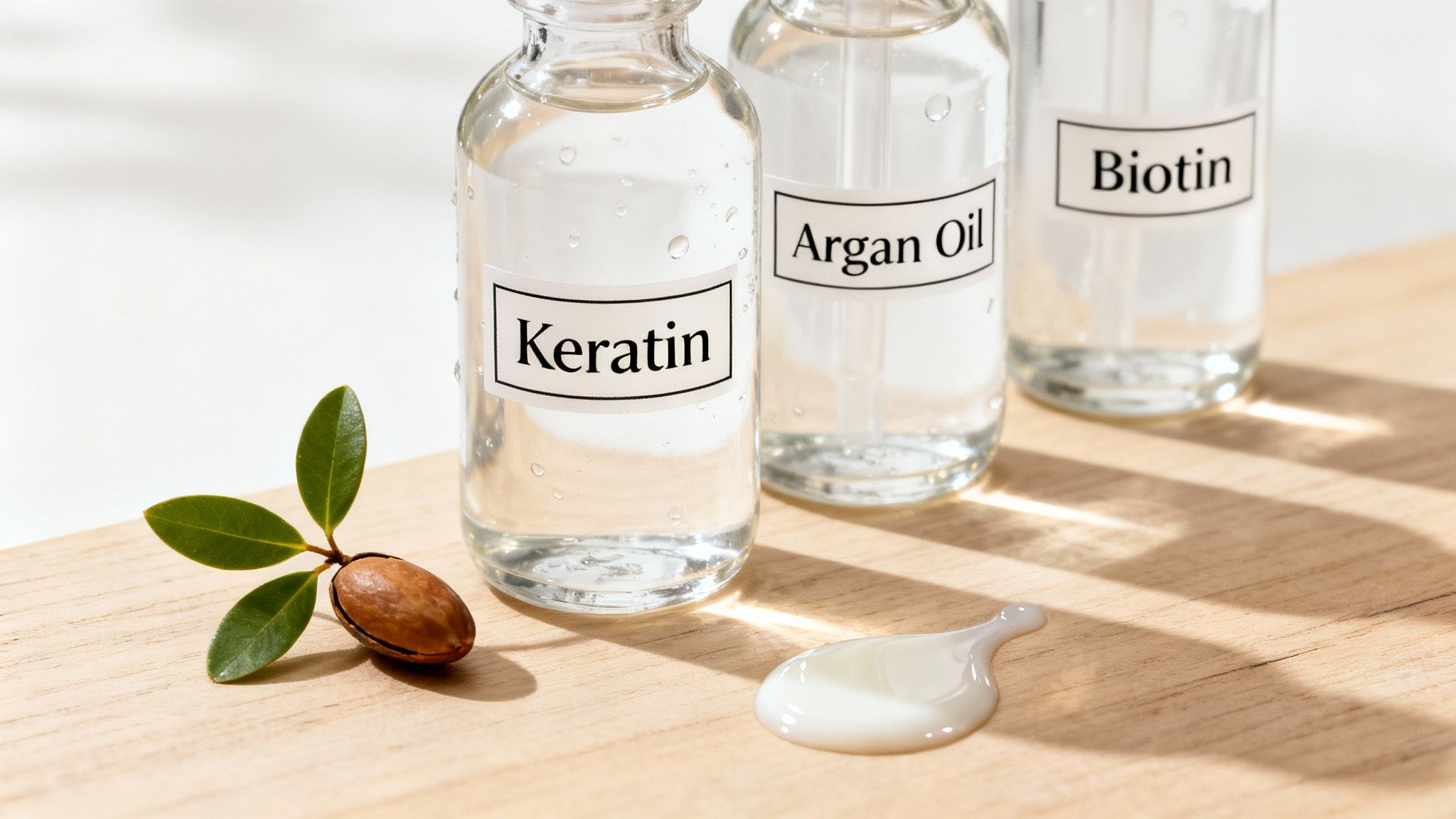
Let's turn you into a label-reading pro so you can confidently pick products that will actually deliver on their promises.
The Building Blocks of Strength
At its core, damaged hair is simply hair with a broken protein structure. Every time you color, heat-style, or even just expose your hair to the sun, you can create tiny tears in its natural keratin foundation. That’s why protein-based ingredients are absolutely essential for any real repair job.
- Keratin: This is literally what your hair is made of. When you use a product with keratin, you're essentially patching up the weak spots and potholes along the hair shaft. This immediately smooths the surface and restores some of that lost structural integrity.
- Amino Acids: Think of these as the individual LEGO bricks that build proteins like keratin. Shampoos and conditioners formulated with amino acids give your hair the raw materials it needs to start rebuilding its own strength from the inside.
These ingredients work by filling in the porous, damaged areas of the hair, leading to instantly smoother-feeling hair and a real reduction in breakage over time.
Moisture and Fortification Superstars
While protein rebuilds the structure, moisture and vitamins bring back the flexibility and resilience. Hair that's packed with protein but lacks hydration will just feel stiff and brittle. This is where hardworking oils and vitamins come into play.
Biotin (Vitamin B7) is famous in the hair world for a good reason. It helps fortify the hair shaft from within, which can improve thickness and reduce the appearance of thinning. Consider it a support system for each individual strand.
Argan Oil is a hydration hero. It’s loaded with fatty acids, antioxidants, and vitamin E, so it can deliver intense moisture without that greasy, weighed-down feeling. Its molecules are small enough to actually get inside the hair shaft, hydrating from within and then sealing the cuticle to lock all that goodness in. If you want to dive deeper, our guide on natural oils for hair has even more fantastic options.
Ingredients to Avoid for Damaged Hair
Knowing what to look for is only half the battle; knowing what to avoid is just as crucial. Some common ingredients are simply too harsh for fragile, damaged hair and can make the problem much worse.
The number one offender? Sulfates (like Sodium Lauryl Sulfate, or SLS). They're responsible for that rich, satisfying lather, but they're also powerful detergents that strip away your hair's natural oils. For anyone with dry, brittle, or color-treated hair, switching to a sulfate-free routine is a non-negotiable step toward recovery.
The real magic happens when you understand how different ingredients work together. For instance, learning about specific innovations like Olaplex's bond-building technology shows how certain products can repair damage on a molecular level. By becoming a savvy shopper, you can finally choose a treatment for damaged hair that lives up to its claims.
Best Morfose Products for Your Damaged Hair Treatment
Let’s be honest: the right products are the engine behind any successful plan to rescue damaged hair. While your routine is important, the formulas you use are what actually deliver the repairing ingredients your hair is desperate for. This is where Morfose comes in, with specialized, salon-quality solutions designed to tackle every type of damage head-on.
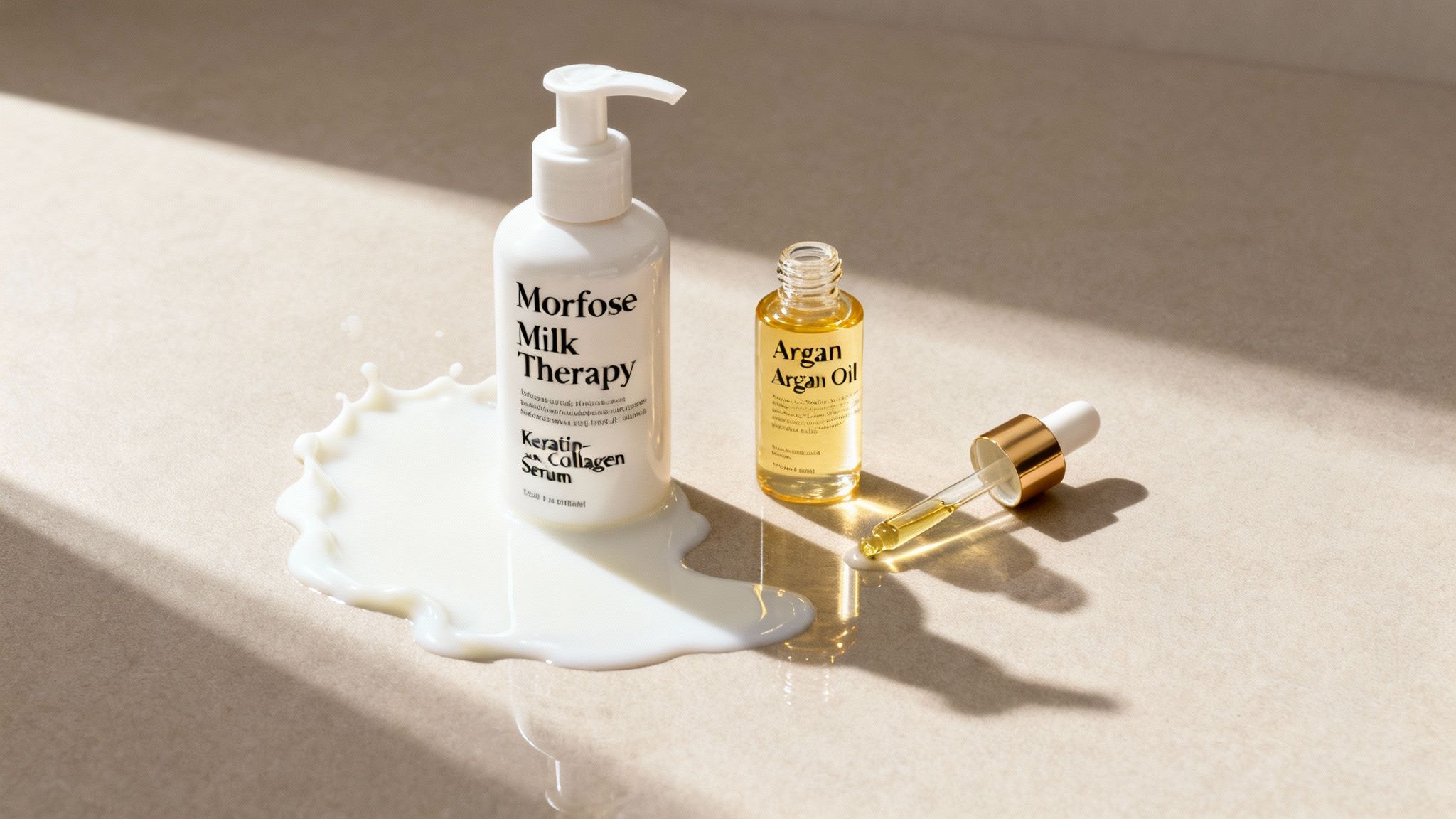
We believe that professional-level hair repair shouldn't be complicated or confined to a salon chair. Our product lines are built to make creating a powerful, effective regimen at home totally achievable. Each formula has a specific job, letting you customize a routine that goes straight to the source of your hair concerns.
Restoring Softness with Milk Therapy
Is your hair feeling dry, brittle, or just plain lifeless? The answer is almost always a serious dose of moisture and amino acids. This is exactly why the Morfose Milk Therapy line is such a fan favorite. It’s built around a unique blend of milk proteins and 12 essential amino acids that work together to bring back hydration and elasticity.
Think of milk protein as a deep conditioning treatment for your hair’s internal structure. It replenishes that lost moisture and smooths down the cuticle, which immediately cuts down on frizz and amps up the shine. The amino acids get to work right after, filling in the tiny gaps in the hair shaft to make each strand stronger against future breakage. It's the perfect combination for reviving hair that's been stressed out by heat or the environment.
Rebuilding Strength with Keratin and Collagen
When the damage is more severe—especially from chemical services like bleach or color—you need to bring in the heavy hitters. Seriously weakened hair has lost its fundamental protein structure. It might feel mushy when it's wet and snap with the slightest touch when it's dry. This is precisely when our keratin and collagen-infused products become non-negotiable.
- Keratin: This is literally what your hair is made of. Using a Morfose Keratin Hair Mask is like applying liquid reinforcement, patching up damaged areas and rebuilding that core strength from the inside out.
- Collagen: You know how it plumps and strengthens skin? Collagen does something similar for your hair. It improves elasticity and helps fortify the hair follicle, which is so important for encouraging healthier, more resilient growth over time.
This powerful duo works to reconstruct your hair’s core integrity, making it the go-to solution for anyone trying to recover from significant chemical damage.
Finishing and Protecting with Argan Oil
No repair routine is truly complete without a finishing step to lock in all that hard work and protect your hair from daily life. Our argan oil serums are designed to be that final, protective shield in your regimen.
Argan oil is wonderfully lightweight yet incredibly nourishing. It’s a master at taming frizz, smoothing the hair cuticle for a glossy finish, and creating a barrier against humidity and environmental junk. Just a few drops worked through damp or dry ends can make a world of difference in how your hair looks and feels.
By zeroing in on your hair's specific needs, you can easily build a complete Morfose regimen that just works. To make it even easier, here's a simple guide to help you find the perfect product line for your hair's situation.
Your Morfose Solution Finder
Finding the right products shouldn't feel like a guessing game. Use this quick chart to match your biggest hair concerns with the Morfose line that was specifically formulated to solve them.
| Hair Concern | Key Morfose Ingredient | Recommended Morfose Product Line |
|---|---|---|
| Dryness, Frizz, Lack of Shine | Milk Protein & 12 Amino Acids | Milk Therapy |
| Severe Breakage, Chemical Damage | Keratin & Collagen | Keratin & Collagen Series |
| Frizz, Dullness, Environmental Damage | Argan Oil & Vitamin E | Argan Oil Series |
| Thinning, Weak Strands, Scalp Health | Biotin & Herbal Extracts | Biotin & Hair Growth Series |
With this at your fingertips, you can confidently pick the products that will deliver the most effective treatment for your damaged hair, bringing those salon-level results right into your own bathroom.
When to Get Professional Salon Treatments
While a solid at-home routine is your first line of defense, some types of damage are just too much for weekly masks and serums to handle. If your hair feels gummy or mushy when it's wet, or it snaps with the slightest touch, it’s sending out an SOS.
When the breakage seems to get worse no matter what you do, it's time to call in a professional. Think of it as escalating from first aid to the emergency room—sometimes, your hair just needs an intervention that only a salon can provide.
A stylist can give you a real, honest assessment of the damage. They have access to professional-grade treatments that are far more concentrated and powerful than anything you can buy off the shelf. These services are an investment, but they can hit the brakes on the damage cycle and give your hair a real fighting chance.
Professional-Grade Protein Treatments
When hair is fried from chemicals or heat, its internal protein structure is shattered. Professional protein treatments are designed to tackle this head-on. They use tiny, hydrolyzed proteins that are small enough to get deep inside the hair's cortex, filling in the gaps and reinforcing the strand from the inside out.
Unlike the masks in your shower, these salon treatments pack a much bigger punch with higher concentrations of keratin and amino acids. Your stylist will apply the formula and often use controlled heat to help it bond to your hair, creating an immediate, noticeable improvement in strength and elasticity. This isn't just deep conditioning; it's a structural repair job.
Advanced Bonding Services
For hair that's been pushed to its limit by bleach and other chemical processes, bond-building treatments are a total game-changer. These services work at a molecular level to repair the disulfide bonds that give hair its strength and shape. When those bonds break, hair becomes weak, brittle, and prone to snapping off.
Salon-exclusive treatments can actually seek out and relink these broken bonds, rebuilding your hair's core integrity. The result? A massive reduction in breakage and a return to hair that feels resilient and healthy again. This kind of deep repair is something standard conditioners simply can't do. If you're curious to learn more, we've explored the benefits of professional hair treatments for damaged hair in another article.
Key Insight: Professional salon treatments aren't just stronger versions of at-home products. They use advanced chemistry and application techniques to repair hair on a structural level, offering a reset button for severely compromised strands.
After investing in a professional service, keeping up the results at home is everything. Your stylist will likely map out a specific routine for you, often including sulfate-free shampoos and protein-rich conditioners, to make the benefits last. By combining a pro-level intervention with dedicated at-home care, you can truly bring your hair back from the brink.
How to Prevent Hair Damage in the Long Run
After putting in all that work to rescue your damaged hair, the last thing you want is to see it all unravel. Now, the goal shifts from intense repair to smart prevention. This is all about building a solid, long-term game plan to protect your hard-earned results and keep your hair strong and vibrant.
Think of it as moving from the hair ICU to a wellness routine. You’re no longer just putting out fires; you're actively fireproofing your hair to keep the damage from ever coming back. It all comes down to making smarter, sustainable choices in your daily and weekly habits.
Adopt Smarter Styling Habits
Let's be real: heat and physical stress are two of the biggest offenders when it comes to hair damage. Mastering gentler styling techniques is your absolute best defense.
- Ease Up on the Heat: Your flat iron or curling wand does not need to be cranked up to the max. Most hair can be styled beautifully between 300-350°F (150-175°C). Anything hotter is practically an invitation for scorched, brittle strands.
- Give Your Hair a Day Off: Try to work at least two or three "no-heat" days into your weekly schedule. It’s the perfect excuse to experiment with chic braids, a slicked-back bun, or cute headbands. It seems like a small change, but the cumulative effect over time is huge.
- Rethink Your Hair Ties: Those standard elastic ties, especially the ones with the little metal clamp? They’re notorious for snagging and snapping hair. Make the switch to seamless options, like soft fabric scrunchies or spiral ties, that hold your hair securely without causing friction.
These little adjustments might not feel like much on their own, but when you practice them consistently, they make a massive difference in your hair's overall health.
A quick pro tip: Healthy hair starts with a healthy scalp. If you find yourself reaching for dry shampoo a lot to extend your styles, make sure you're also using a good scalp-clarifying treatment to dissolve all that buildup. Clogged follicles can seriously get in the way of healthy new growth.
Shield Your Hair from the Elements
Your hair needs protection from the environment, just like your skin does. Things like sun exposure, pollution, and even hard water in your shower can slowly wear down its health, fade your color, and leave it feeling rough.
The easiest way to build a line of defense is to work a protective leave-in product into your daily routine. Look for a lightweight spray or serum that has UV filters to guard against sun damage—the number one cause of color fade and brittleness.
Many modern formulas also pack in antioxidants to fight off damage from pollution. A product like the Morfose Milk Therapy Two Phase Conditioner is perfect for this. It gives your hair a light, protective coating that helps with detangling while defending your strands from all the daily wear and tear.
Common Questions About Treating Damaged Hair
When you’re starting down the path of fixing damaged hair, it’s natural for a lot of questions to pop up. Having the right information can make the whole process feel less overwhelming and give you the confidence to actually stick with your new routine.
We’re tackling some of the most common questions we hear all the time, breaking them down with clear, straightforward answers to help you get started.
How Long Does It Take to See Results?
This is the big one, isn't it? Everyone wants to know when they'll see that healthy shine return. The honest answer is: it really depends on the level of damage you're dealing with. You'll probably feel a difference in softness and find your hair is easier to manage after just one or two deep conditioning treatments.
But for those visible, lasting improvements—like stronger strands and less breakage—you'll need to be a bit more patient.
- Minor Dryness & Frizz: You can start seeing real improvements within 2-4 weeks of consistent care.
- Heat or Mechanical Damage: For this kind of damage, expect to see significant changes in texture and resilience in about 2-3 months.
- Severe Chemical Damage: Rebuilding hair from something like a harsh bleach job can take 6 months or more. A lot of this is about waiting for healthier new growth to come in.
Remember, hair only grows about half an inch per month on average. True recovery is a long game that involves treating the hair you have while nurturing the new, healthy hair that's growing in.
Can Damaged Hair Be Fully Repaired?
While you can't magically glue a split end back together, you can absolutely restore the health, feel, and appearance of your hair. The trick is to understand what "repair" really means in this context.
You can't turn damaged hair back into its original, untouched "virgin" state. But with the right treatment for damaged hair, you can fill in the porous gaps, rebuild its protein structure, and smooth down the cuticle. This makes the hair look and act healthy again.
Think of it like restoring a piece of old wooden furniture. You can sand it, fill in the cracks, and apply a new varnish. It’s not brand new, but it’s strong, smooth, and beautiful once again. A good trim to snip off the most damaged ends is also a huge part of this process, making way for the healthier hair to shine.
Is It Better to Air Dry or Blow Dry Damaged Hair?
Nine times out of ten, letting your hair air dry is the gentler choice. It completely removes the risk of heat damage, which is a big win. However, for some hair types, air drying can actually cause more frizz or simply take forever.
If you have to blow dry, your technique is everything. Always, always use a heat protectant spray first. Keep the dryer on a low or medium heat setting, and hold it at least six inches away from your hair.
Here’s the best compromise: let your hair air dry until it’s about 70-80% of the way there, then finish it off with the blow dryer. You get the style you want without exposing fragile hair to prolonged, intense heat.
Ready to give your hair the professional-grade care it deserves? The Morfose collection is designed with powerful, restorative ingredients to tackle every type of damage. Explore our complete range of hair repair solutions and start your journey to healthier, stronger hair today!
Related reading: Hair Fixing: Repairing Damaged Strands.
