
Your Ultimate Guide to Shampoo for Color-Treated Hair
If you do one thing—and only one thing—to stop your new hair color from fading, make it this: switch to a shampoo for color-treated hair.
It's the single most important step you can take in your hair care routine. Unlike regular shampoos that can literally wash your color down the drain, these specialized formulas are built differently. They use gentler ingredients and a lower pH to keep your hair's outer layer, the cuticle, sealed tight. This is the secret to locking in that vibrant, fresh-from-the-salon look and solving the problem of premature fading.
Why a Special Shampoo for Color Is Non-Negotiable
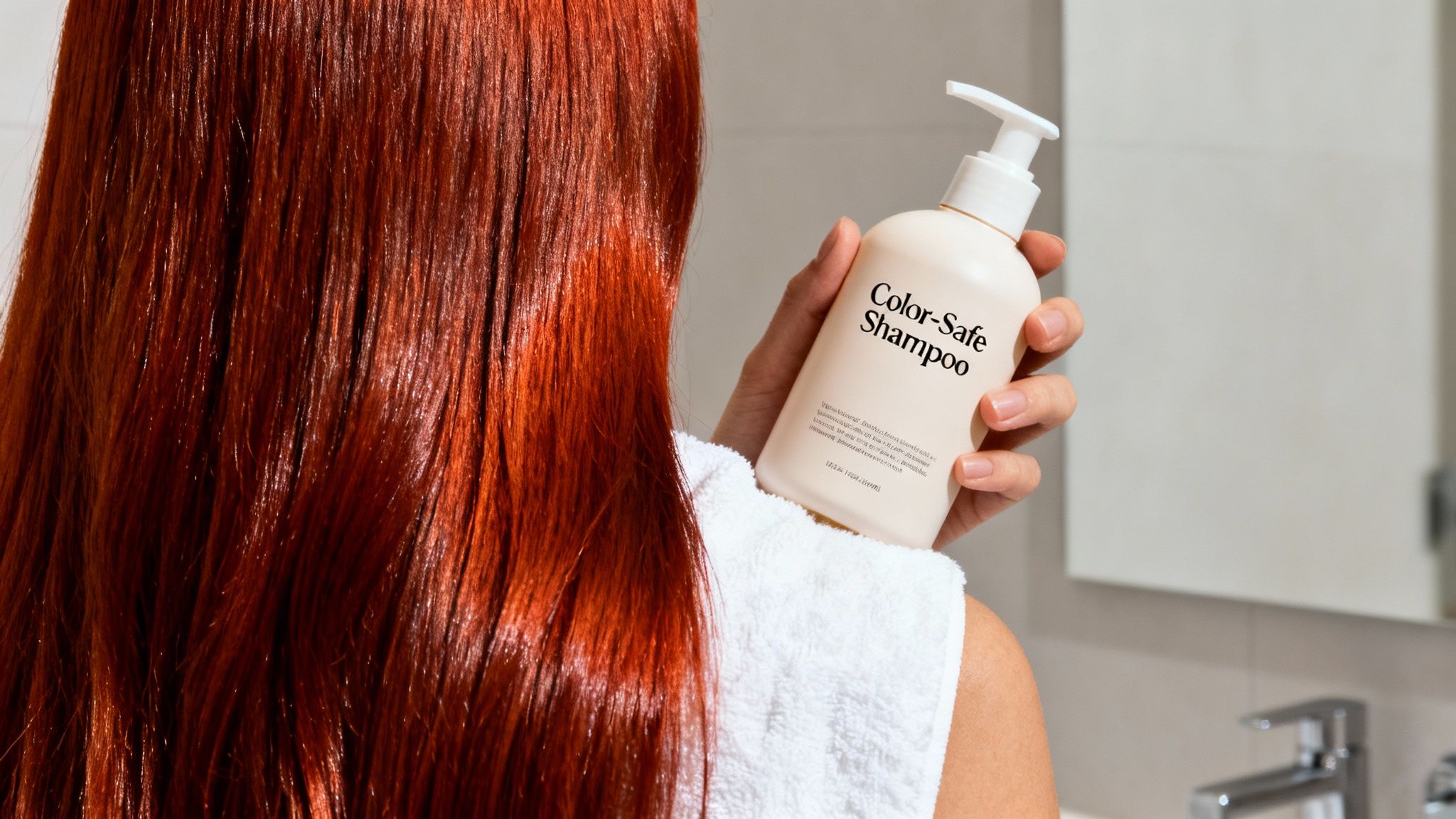
Think of your hair care routine as an insurance policy for your color. After spending good money and a few hours in the salon chair, using the wrong shampoo is like leaving the door wide open for your investment to escape.
Many standard shampoos contain harsh detergents, like certain sulfates, that create that rich, satisfying lather we all love. The problem? They're often too good at their job, stripping away not just dirt and oil, but also the delicate, artificial color molecules you just paid for.
How to Protect the Hair Cuticle
Let's get into the simple science of it. The hair coloring process has to gently lift the hair's outer layer—the cuticle—to deposit the new pigment inside. A dedicated shampoo for color is specifically formulated to help smooth this layer back down and keep it sealed.
A flat, sealed cuticle gives you two major wins:
- It physically traps color molecules inside the hair shaft, which dramatically slows down the fading process.
- It creates a smooth, even surface that reflects light better, making your hair look shinier and far more brilliant.
This is exactly why your color looks its absolute best right after a salon visit. Your stylist uses professional products designed to slam that cuticle shut and show off their work.
Color-Safe vs Regular Shampoo At a Glance
To make it even clearer, let's break down the key differences side-by-side.
| Feature | Color-Safe Shampoo | Regular Shampoo |
|---|---|---|
| Cleansing Agents | Uses mild, gentle surfactants (often sulfate-free). | Often contains strong surfactants like SLS for a deep clean. |
| pH Level | pH-balanced (typically 4.5-5.5) to keep the cuticle sealed. | Can have a higher, more alkaline pH that lifts the cuticle. |
| Primary Goal | To cleanse gently while preserving color and moisture. | To remove dirt, oil, and product buildup effectively. |
| Effect on Cuticle | Smoothes and seals the hair's cuticle. | Can lift or roughen the cuticle, causing color loss. |
| Added Ingredients | Often includes UV filters, antioxidants, and moisturizers. | Focus is primarily on cleansing, may lack protective extras. |
Seeing them compared like this, it's easy to understand why using a standard shampoo on colored hair is a recipe for fast fading.
The Problem with Harsh Cleansers
Many popular drugstore shampoos rely on powerful sulfates like Sodium Lauryl Sulfate (SLS) to get that squeaky-clean feeling. While they definitely clean your hair, they're just too aggressive for color-treated hair, which is already in a more fragile state from the chemical service.
Using one of these is one of the quickest ways to watch your vibrant red turn coppery or your rich brunette go brassy.
By choosing a gentler, color-safe formula, you are actively preserving the integrity and longevity of your hair color with every single wash. It's a fundamental shift from simply cleaning your hair to actively caring for it.
Switching to the right shampoo isn't just a friendly suggestion; it's the foundation of any successful color care regimen. To learn more about building a complete routine around this crucial first step, check out our guide on how to make hair color last longer. After all, it all starts with what’s in your shower.
How Color-Safe Shampoo Actually Works
Ever wonder what "color-safe" on a shampoo bottle really means? It's not just a marketing gimmick; it points to a specific formula designed to keep your hair color from literally going down the drain. To get how it works, you first need to picture the structure of your hair.
Imagine a single strand of your hair is like a tiny pinecone. The outer layer, called the cuticle, is made of little overlapping scales. When you color your hair, chemicals gently lift these scales so the pigment can get into the core of the hair shaft.
Once your color is in, those scales need to lie down flat again to seal the new pigment inside. This is where your shampoo choice becomes a massive deal.
The Science of Gentle Cleansing
Any shampoo's main job is to clean, but how it cleans is what makes or breaks your color. Many traditional shampoos are packed with harsh detergents, like sulfates, that create that big, satisfying lather. While they're great at stripping away dirt and oil, they're way too aggressive for color-treated hair.
These powerful cleansers essentially force your hair's cuticle scales open with every single wash. Think of it like taking a power washer to a delicate painting—you're blasting away the very thing you want to protect. Each time that cuticle lifts, precious color molecules escape, causing your vibrant new shade to fade way too fast.
A real shampoo for color treated hair, on the other hand, is built with much milder cleansing agents.
A color-safe shampoo has a twofold mission: gently remove grime without roughing up the hair's cuticle. That one difference is the secret to making your color last and shine.
By using gentler surfactants, these shampoos clean your scalp and hair without forcing the cuticle open. They help it stay smooth and tightly sealed, which is exactly what you need to keep your color locked in.
The Critical Role of pH Balance
Beyond the type of cleanser, the pH level of your shampoo is a huge player in color protection. The term pH just refers to how acidic or alkaline something is. Your hair and scalp are naturally a bit acidic, usually sitting somewhere between 4.5 and 5.5 on the pH scale.
When your hair is in this happy, slightly acidic state, the cuticle scales lie down flat and tight, forming a strong, protective shield. This smooth surface doesn't just hold color in; it also reflects light beautifully, which is what gives your hair that healthy, brilliant shine.
Unfortunately, many standard shampoos have a higher, more alkaline pH. Alkaline products make the hair shaft swell up and the cuticle scales lift. Great for a deep clean, but a disaster for colored hair. A raised cuticle directly leads to:
- Accelerated Fading: Open scales are an easy exit route for color molecules.
- Dullness: A rough, uneven cuticle surface scatters light instead of reflecting it, making your hair look flat and lifeless.
- More Frizz: Lifted cuticles are like open doors for humidity, which is a one-way ticket to frizz.
A quality shampoo for color is carefully pH-balanced to match your hair’s natural acidity. By keeping your hair in this optimal pH zone, the shampoo helps ensure your cuticle stays sealed, smooth, and ready to protect your color investment.
How to Tell if a Shampoo Works for Colored Hair
So, how does a color-safe shampoo really work its magic? It boils down to two key things working in harmony:
- Mild Cleansers: It uses gentle, often sulfate-free, ingredients that clean away dirt and oil without prying open the hair’s cuticle.
- Acidic pH: It’s formulated to be between 4.5 and 5.5, encouraging the cuticle to lie flat, which seals in color and amps up the shine.
This gentle, pH-balanced approach cleans your hair while respecting its fragile, color-treated state. By keeping the "pinecone scales" of your cuticle closed, it provides the best defense against fading, making sure your color stays vibrant and true for as long as possible.
Decoding Ingredients for Colored Hair
Ever feel like you need a chemistry degree to read the back of a shampoo bottle? You're not alone. To keep that beautiful color you paid for, you need to become a savvy shopper who can spot the good guys from the bad guys on that ingredient list. Think of it like assembling the perfect defense team for your hair—some ingredients will protect and strengthen it, while others will actively work against your color.
This skill is more critical than ever. The global hair color market is exploding and expected to hit $37.3 billion by 2030. Why? Because everyone is looking for products that solve the number one problem with colored hair: fading. With 65% of women calling fading their top issue, choosing the right shampoo is your first and best line of defense.
The Villains: Ingredients to Avoid
Some ingredients are notorious for stripping color and moisture, leaving your hair dull, brittle, and faded way too soon. When you see these on a label, it's a huge red flag for your color-treated hair.
The main culprits to watch out for are:
- Harsh Sulfates (SLS & SLES): Sodium Lauryl Sulfate and Sodium Laureth Sulfate are the powerhouses behind that rich, foamy lather we all used to love. But for colored hair, they're way too aggressive. They strip away not just dirt, but also your hair's natural oils and, you guessed it, your expensive color molecules.
- Certain Alcohols: Not all alcohols are created equal, but some, like Isopropyl Alcohol and SD Alcohol 40, are incredibly drying. They zap moisture from your already-vulnerable hair, making it prone to breakage and causing your color to look flat and lifeless.
- Sodium Chloride: You know this one as table salt. It's often used to thicken up shampoos, but it can be abrasive on the hair cuticle and speed up color fading, especially if you've had a keratin treatment.
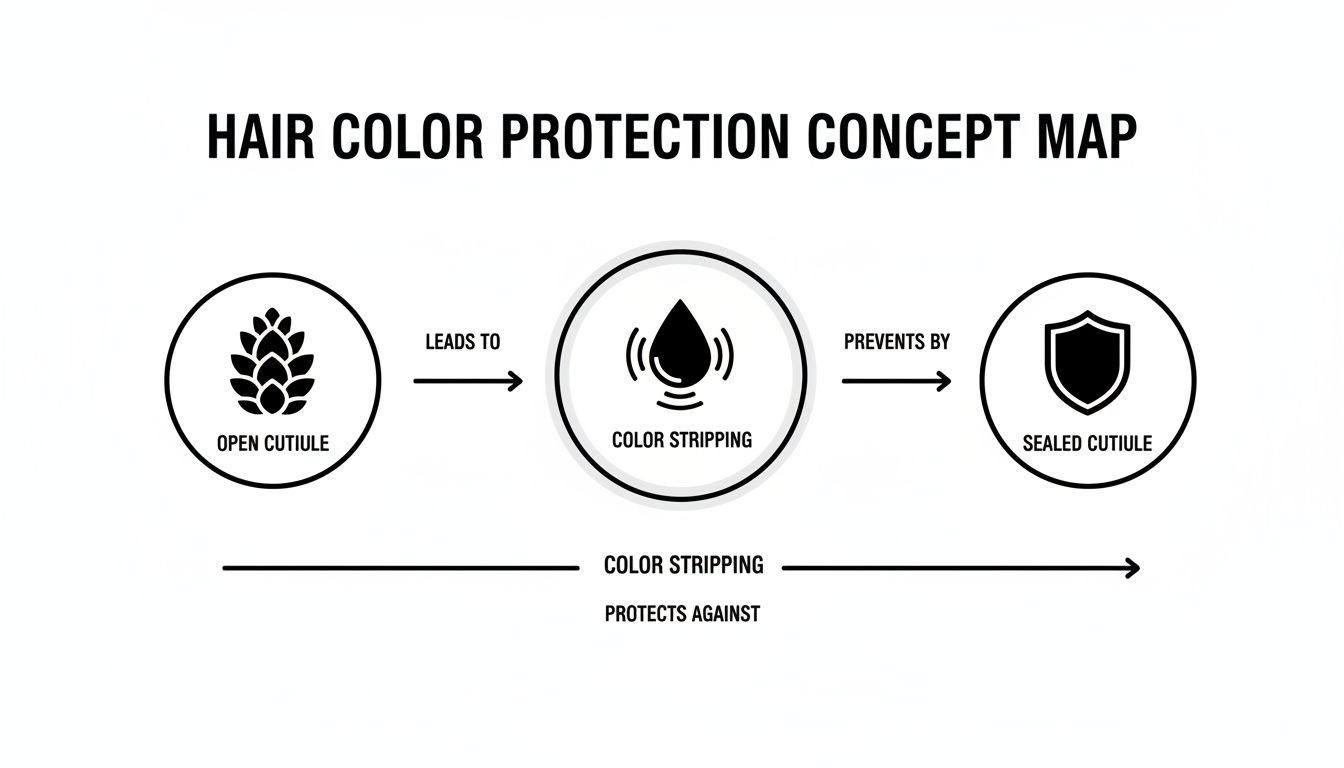
The takeaway here is simple: a sealed cuticle is the ultimate gatekeeper for your hair color's longevity and shine. Harsh ingredients throw that gate wide open.
The Heroes: Ingredients to Look For
On the flip side, a fantastic shampoo for color will be loaded with nourishing ingredients designed to repair, protect, and hydrate. These are the heroes you want on your team, working together to keep your hair healthy and your color looking fresh-from-the-salon vibrant.
A well-formulated color-safe shampoo doesn't just clean; it actively deposits beneficial ingredients that fortify the hair fiber and shield it from the elements that cause fading.
Keep an eye out for these powerful allies on the ingredient list:
- Hydrolyzed Proteins: Ingredients like hydrolyzed keratin and milk protein are a total game-changer for chemically treated hair. Their molecules are tiny enough to get inside the hair shaft, patching up the little gaps and weak spots left behind by the coloring process. This strengthens the hair from the inside out and helps seal that all-important cuticle.
- Nourishing Oils: Natural oils like argan oil, coconut oil, and jojoba oil are brilliant for putting lost moisture back into your hair. They coat each strand, taming frizz, adding incredible softness, and creating a protective barrier that helps lock in color.
- Antioxidants: Just like they protect your skin, antioxidants such as Vitamin E and green tea extract help shield your hair from daily environmental stress. They fight off free radicals from pollution and UV exposure, which can cause your color to oxidize and turn brassy.
- UV Filters: The sun is one of the biggest enemies of vibrant hair color. Ingredients like Benzophenone-4 act like a sunscreen for your hair, absorbing harmful UV rays before they have a chance to break down and fade your color.
Understanding these key players lets you confidently pick a shampoo that actually nurtures your colored hair. The science of how color fades can get complicated, but having the right ingredients on your side makes all the difference. To get a better handle on the process, check out our article on how semi-permanent hair dye fades. Knowing how to decode that label is the first step toward choosing a product that delivers real, lasting results for your color.
How Morfose Helps With Protecting Your Color
Understanding the science behind color fade is one thing, but seeing how a product actually stops it from happening is what really matters. At Morfose, we've engineered our formulas to tackle the real-world problems your color-treated hair faces every single day. We don’t just make a generic shampoo for color; we build targeted solutions that start protecting your investment from the very first wash.
Our whole approach is built on smart, science-backed formulas that defend against the top three culprits of fading: harsh cleansers, a damaged cuticle, and moisture loss. Instead of stripping your hair clean, our shampoos are designed to gently wash away impurities while depositing nourishing ingredients that fortify each strand from the inside out.
Think of it as a daily defense system for your color. This way, your hair isn't just clean—it's stronger, smoother, and far better at holding onto that precious pigment.
Gentle Cleansing Meets Powerful Repair
One of the biggest enemies of fresh hair color? Harsh sulfates that aggressively strip hair of its natural oils and, along with them, your new color. That’s exactly why our color-safe shampoos are built around milder, more thoughtful cleansing agents that respect the delicate state of chemically treated hair.
A perfect example is our Morfose Milk Therapy Shampoo. This formula is completely sulfate-free, which means it cleanses your scalp and hair without prying open the cuticle—the very thing that keeps your color locked in. But it doesn't stop there.
It’s infused with two key ingredients that are absolute heroes for colored hair:
- Milk Protein: This powerhouse ingredient helps restructure and strengthen the hair fiber, which often becomes weak and porous during the coloring process.
- 12 Essential Amino Acids: These are the literal building blocks of your hair. They penetrate the hair shaft to repair damage from the inside, sealing the cuticle to lock in both moisture and color molecules.
By combining gentle cleansing with deep repair, this shampoo ensures your color stays vibrant while your hair actually becomes healthier and more resilient with every wash.
Sealing the Deal with pH Balance and Nourishment
Beyond gentle cleansing, maintaining the right pH is mission-critical for color longevity. As we've covered, a lower, slightly acidic pH keeps the hair cuticle sealed tight, which is your best defense against color molecules washing down the drain.
The Morfose Color Lock Shampoo is specifically engineered with a pH-balanced formula to keep that cuticle layer smooth and closed. This not only traps pigment inside the hair shaft but also creates a reflective, high-gloss surface for incredible shine.
Choosing the right shampoo means you’re not just washing your hair—you're actively participating in its preservation. Morfose formulas are designed to make that preservation effortless and effective.
To boost its protective power even further, this shampoo is enriched with argan oil, a celebrated ingredient famous for its intense moisturizing abilities. It replenishes the moisture that’s often lost during coloring, fighting off the dryness and brittleness that can make even the most beautiful color appear dull.
Whether you need the deep, protein-based repair of Milk Therapy or the targeted fade-fighting power of Color Lock, you can find the perfect solution in our collection of color-safe shampoos. Each product is a direct answer to the problems color-treated hair faces, giving you the tools to keep your color brilliant and beautiful.
How to Wash Your Hair to Prevent Color Fading
Finding the perfect shampoo for color is your first victory, but your washing technique is what wins the war against fading. How you wash your hair matters just as much as what you wash it with. A few simple tweaks to your shower routine can make a massive difference in how long your vibrant color lasts, turning every wash into a color-preserving treatment.
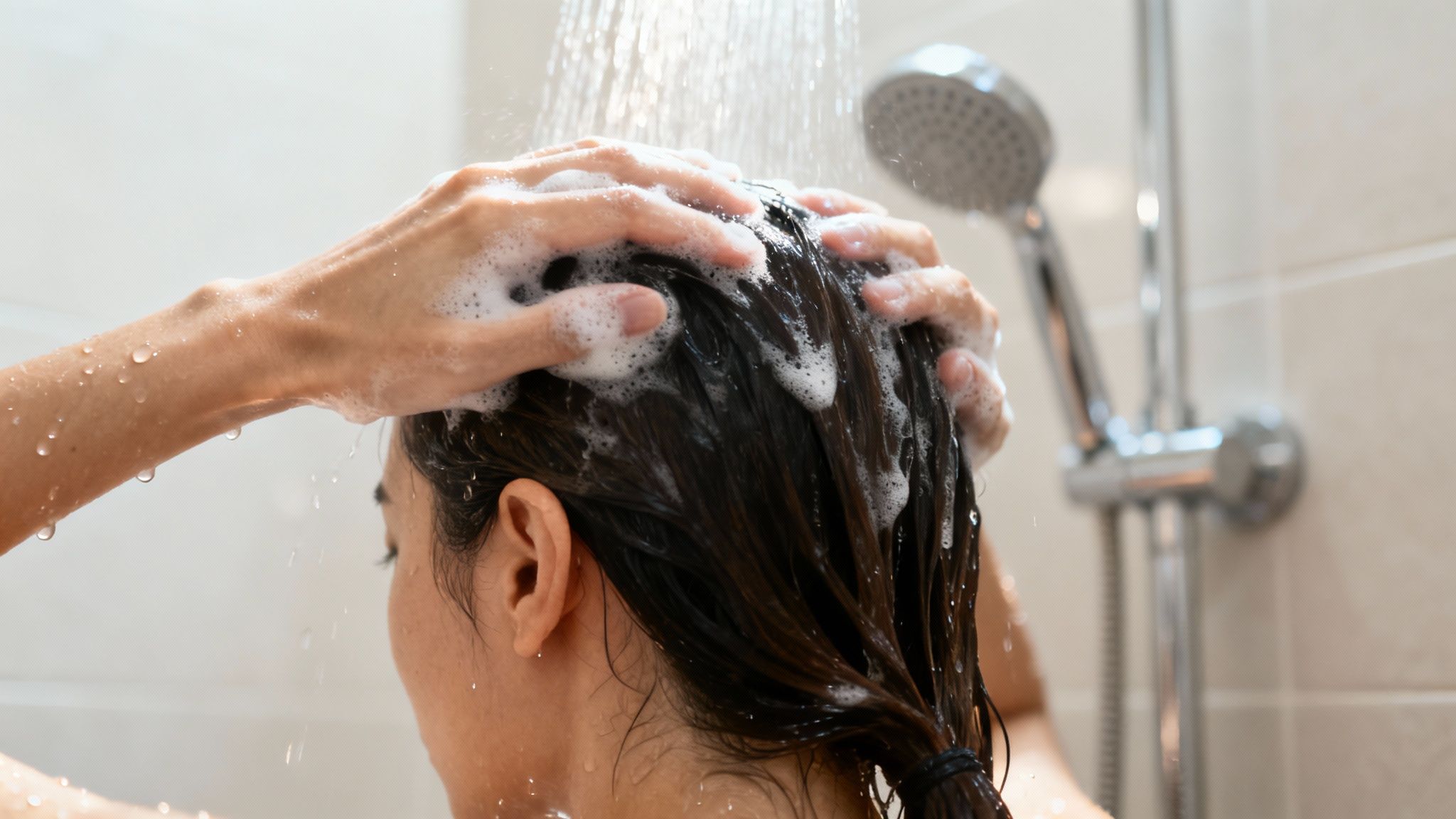
It all comes down to creating a gentle environment that keeps your hair's cuticle sealed and happy. The goal is to get your scalp clean without giving the rest of your hair an unnecessary bath in hot water and detergent, which are notorious for making color bleed. Nailing these simple steps will help you protect your salon investment and keep your hair looking brilliant for weeks longer.
Step 1: Turn Down the Temperature
Let’s get this one out of the way first: hot water is the number one enemy of hair color. Steamy showers might feel amazing, but for your hair, they're a disaster waiting to happen. Hot water forces open the hair's outer cuticle layer, creating a perfect escape route for the pigment you just paid for.
Instead, switch to lukewarm water for the entire wash and rinse. It’s more than enough to get your hair and scalp clean without prying that cuticle open. For an extra color-locking boost, finish with a quick blast of cool water to slam the cuticle shut. This simple trick adds incredible shine and seals in moisture.
Step 2: Focus Shampoo on the Scalp
Remember, shampoo is really for your scalp—its main job is to clear away oil, sweat, and product buildup from your roots. The ends of your hair are older, more porous, and rarely need that same deep clean. Concentrating your shampoo right where it’s needed is a pro-level move for preserving your color.
Here's how to do it right:
- Squeeze a quarter-sized amount of shampoo into your palm.
- Apply it directly to your scalp, focusing on the roots and the nape of your neck.
- Gently massage with your fingertips (never your nails!) to work up a lather.
- As you rinse, just let the suds run down the lengths of your hair. That’s all the cleansing your ends need.
This targeted approach minimizes how much detergent touches your color-treated strands, which is a huge factor in preventing that dreaded premature fade.
Step 3: Wash Less Frequently
This might be the easiest and most effective way to save your color: just wash it less. Every single time your hair gets wet, a tiny bit of color can wash away. By stretching the time between washes to every 2-3 days, you dramatically cut down on color loss.
Frequent washing is one of the fastest ways to dull your color. By washing less, you're not being lazy—you're being strategic about color preservation.
A good dry shampoo will be your new best friend, soaking up oil at the roots to keep your style looking fresh between washes. This strategy is key, as learning how long to wait to wash hair after coloring is just the beginning of a smart, long-term care plan.
Step 4: Never Skip a Color-Safe Conditioner
Conditioner isn't an optional add-on; it's a non-negotiable step in locking down your color. While shampoo cleanses, the conditioner's job is to put moisture back in and, crucially, reseal the cuticle that the water and shampoo just opened up. This is what traps the color molecules inside and creates a smooth, reflective surface.
Always follow up with a conditioner made for color-treated hair. Apply it from the mid-lengths to the ends, which is usually the driest and most porous part of your hair. Let it sit for a few minutes before rinsing with lukewarm or cool water to finish the job.
Step 5: Add a Weekly Deep Conditioning Treatment
Color-treated hair is naturally more susceptible to dryness and damage. To fight this and keep your hair healthy enough to hold onto its color, you need to bring in the heavy hitters. A weekly deep conditioning treatment is your chance to infuse your hair with some serious moisture and reparative ingredients.
The Morfose Milk Therapy Hair Mask is perfect for this. Its blend of milk protein and 12 essential amino acids gets to work repairing chemical damage and bringing back elasticity. A weekly mask gives back what daily styling and environmental stress take out, ensuring your hair is strong, shiny, and vibrant.
This commitment to proper care is why the market for these products is growing. Shampoos for color-treated hair are projected to make up 29.9% of the market by 2025. In North America alone—a region with 45.1% market dominance—consumers are demanding gentle, natural ingredients to combat fading and dryness. Discover more insights about these market trends on marketreportanalytics.com.
How to Fix Common Problems with Colored Hair
Even with the best intentions, color-treated hair can throw you a curveball. One day you're loving your shade, and the next you're dealing with unexpected brassiness or sudden dryness. It’s frustrating, but don’t panic—these are completely normal issues, and they have clear, effective solutions. This is your go-to troubleshooting guide for fixing the most common hair color hiccups, fast.
Think of it as learning your hair's language. When it shows signs of trouble, it's just asking for a specific kind of help. By recognizing these signals, you can respond with the right products and techniques to bring its health and vibrancy right back.
Problem 1: How to Fix Brassy Tones
Brassiness—those unwelcome yellow, orange, or reddish hues that sneak in weeks after your salon visit—is easily the most common complaint. It happens when the cool tones in your hair dye (usually blues and violets) fade away faster than the warm pigments underneath. For blondes, this looks yellow; for brunettes, it shows up as coppery orange.
The Solution: Toning Shampoo
The fix for brassiness is pure color theory. To cancel out an unwanted warm tone, you need its opposite from the color wheel. This is where a purple or blue toning shampoo comes in, depositing a sheer veil of cool pigment to neutralize that warmth.
The Morfose Silver Shampoo is made for this exact job. Its violet formula is a lifesaver for blondes and silver hair, working to knock out those pesky yellow tones that can make your color look dull or cheap. Swapping this in for your regular shampoo for color once or twice a week is all it takes to keep your shade crisp and salon-fresh. If you're curious about the science behind it, our guide exploring if hair toner causes damage is a great next read.
Problem 2: How to Stop Color from Fading Too Quickly
Does your vibrant new color seem to ghost you within a few weeks? It’s time to take a hard look at your routine. Rapid fading is almost always caused by outside factors that are literally opening up your hair's cuticle and letting the pigment wash away.
The usual suspects? Washing with water that’s too hot, using harsh shampoos with sulfates, washing your hair too often, and going overboard with heat styling. Each of these habits lifts the hair's protective cuticle, giving your color an escape route.
The Solution: Reinforce Your Routine
Let’s go back to basics. The best defense is a disciplined routine built on the color-safe habits we've already covered. Make sure you're consistently using lukewarm water and a dedicated sulfate-free shampoo. Stretch the time between washes with a good dry shampoo, and never use a hot tool without a heat protectant. Sticking to this will make a world of difference.
Problem 3: How to Fix Dry and Brittle Hair
The chemical process of coloring can rough up your hair’s internal structure, leaving it more porous and unable to hold onto moisture. If your hair feels like straw—dry, rough to the touch, and snapping easily—it’s sending out an S.O.S. for intensive hydration and repair.
The Solution: Intensive Moisture and Protein
To recover, your hair needs two key things: moisture to get its flexibility back and protein to rebuild its strength. The trick is to alternate between a deep-hydrating mask and a protein-rich treatment to give your hair a balanced recovery plan.
A deep conditioner like the Morfose Milk Therapy Hair Mask is perfect for that deep drink of moisture it’s craving. To patch up the damage, look for treatments with keratin or amino acids that fill in the weak spots. This one-two punch will restore elasticity and shine, helping your hair not only look better but also hold onto its color for longer.
This constant need for targeted solutions is a huge driver in the hair industry. Hair coloring products account for a massive 20% of total haircare revenue. Brands are constantly innovating to counter the 40-50% color loss that can happen in the first week alone without the right care. You can learn more about these global haircare market trends on marketresearch.com.
Got Questions About Color-Treated Hair? We've Got Answers.
Alright, let's wrap things up by tackling some of the questions I hear all the time about taking care of colored hair. Getting these basics down can make all the difference in keeping your color looking fresh from the salon, day in and day out.
Can I Use a Clarifying Shampoo on Color-Treated Hair?
This is a big one, and the answer is: very, very carefully. Think of most clarifying shampoos as a deep clean for your hair—and that deep clean can easily strip your precious color right out.
If you're dealing with serious product buildup that just won't budge, you can reach for a gentle, color-safe clarifying formula. But make it a rare occasion, maybe once a month at the absolute most.
And when you do, you absolutely have to follow it up with a heavy-hitting deep conditioner, like the Morfose Milk Therapy Hair Mask, to put all that moisture back where it belongs. For every other wash, stick to your dedicated shampoo for color.
How Long Should I Wait to Wash My Hair After Coloring?
Patience is everything here. You really need to wait at least 48 to 72 hours after your salon appointment before that first wash.
This isn't just an arbitrary rule; this waiting period gives the hair cuticle—the protective outer layer of your hair—enough time to fully close and trap the new color molecules inside. Washing too soon is one of the fastest ways to see your new shade literally go down the drain.
Is a Special Shampoo Needed for Vivid Colors?
Yes, 100%. If you're rocking bright, fun fashion colors like pink, blue, or purple, a gentle shampoo is non-negotiable.
These types of colors are made with semi-permanent pigments that don't penetrate the hair shaft as deeply as permanent dyes. Instead, they mostly sit on the surface, which makes them fade much faster. An extra-gentle, sulfate-free shampoo for color treated hair is your best defense.
On top of that, you'll want to wash as little as you possibly can and always use cold water. It might be a bit of a shock in the shower, but it makes a huge difference in preserving that vibrancy.
How Often Should I Wash Color-Treated Hair?
For most people, washing every two to three days is the sweet spot. Over-washing is probably the number one enemy of fresh color. Every time you shampoo, you're exposing your hair to water and cleansers that can slowly lift the pigment out.
A good dry shampoo is your best friend here. It’ll help you stretch the time between washes by soaking up oil and keeping your hair feeling clean, all without turning on the faucet.
Choosing the right shampoo is the single most effective way to protect your hair color investment. By switching to a gentle, pH-balanced, and nourishing formula, you actively prevent fading with every wash. A smart washing technique further ensures your color stays vibrant and your hair remains healthy.
Ready to build a routine that actually protects your investment? Check out the entire collection of gentle, nourishing solutions from Morfose to keep your hair healthy and your color brilliant.
