
How To Style Wavy Hair for Effortless, Frizz-Free Results
If you want to know how to style wavy hair, the real work doesn't start with a styling cream or a diffuser. It starts in the shower. The secret to consistently gorgeous waves is building a strong, hydrated foundation. Get this part right, and you're setting your hair up for frizz-free success every single time.
Building Your Foundation for Flawless Waves
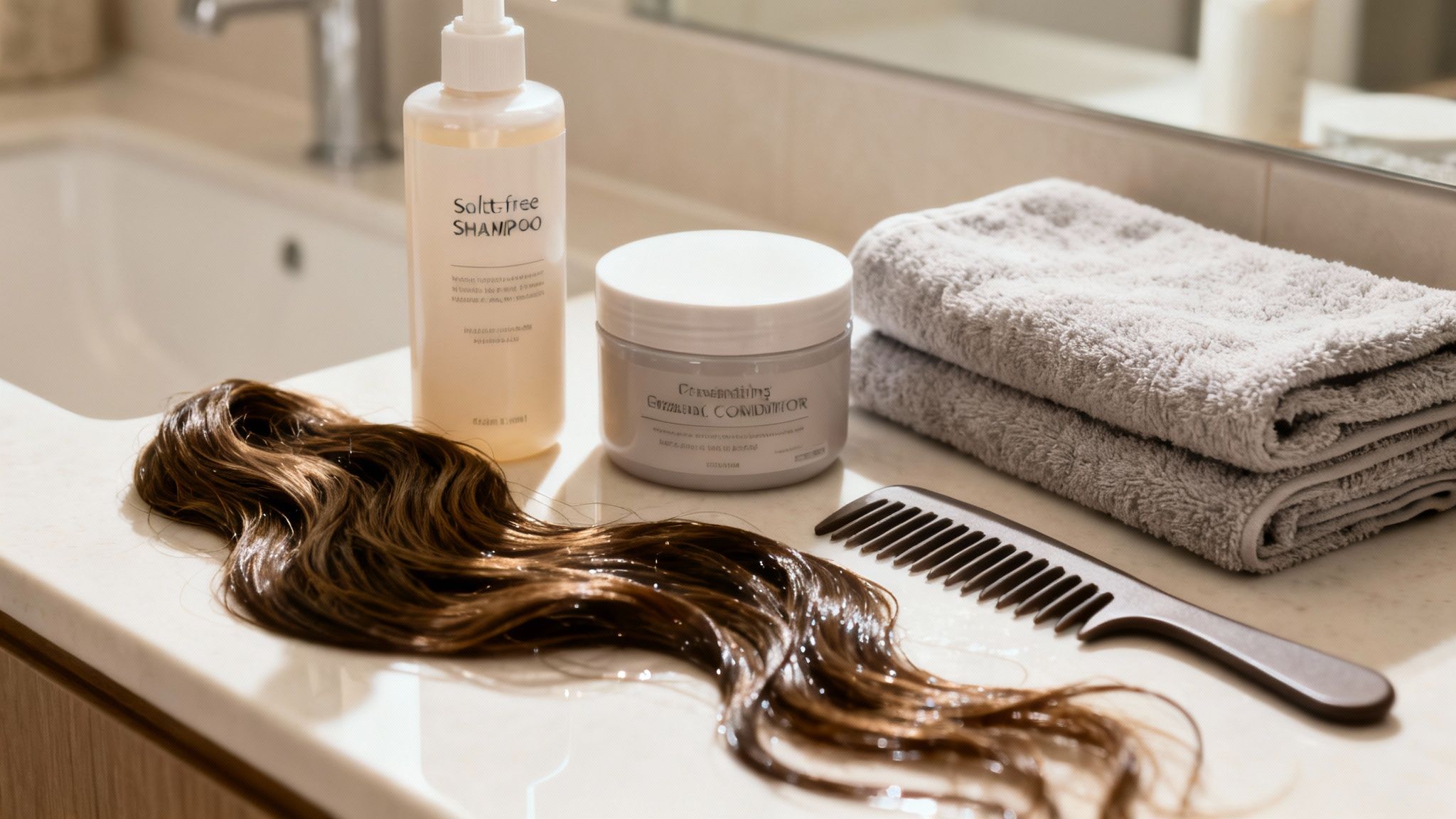
Think of it like painting a masterpiece. You wouldn't just slap color onto a raw canvas, right? You'd prime it first. Your hair is no different. Wavy hair has a natural tendency towards dryness and frizz, so your wash day routine isn't just about cleaning—it's about locking in moisture at every opportunity.
This is the make-or-break moment where you either support your natural wave pattern or accidentally sabotage it. The right approach leaves your hair hydrated, your cuticles smooth, and your waves prepped and ready to be defined.
Gentle Cleansing Is Non-Negotiable
First things first: ditch the harsh shampoos. So many common cleansers are packed with sulfates that give you that big, satisfying lather but also strip your hair of its natural oils. For wavies, that’s a direct flight to Frizz City, leaving your hair dry and your wave pattern looking limp and undefined.
Your best bet is a sulfate-free shampoo. Focus on massaging it directly into your scalp with your fingertips to lift away product buildup and oil. As you rinse, just let the suds run down the lengths of your hair. There's no need to scrub your ends—that just creates tangles and unnecessary friction.
The Power of Proper Conditioning
Conditioner is the holy grail for wavy hair. After you’ve rinsed out your shampoo, apply a generous amount from the mid-lengths to the ends. If your scalp gets greasy easily, keep the conditioner away from your roots. Now is the perfect time to detangle.
Pro Tip: Whatever you do, don't use a bristle brush on your wet waves. A wide-tooth comb is your best friend here, or you can simply use your fingers. Gently work through any knots while the conditioner is still in your hair. This helps keep your natural wave clumps together, which is the secret to getting those beautiful, chunky waves later.
Let that conditioner sit for at least a few minutes so it can really work its magic. This step is absolutely crucial for smoothing the hair cuticle and locking in moisture—your number one defense against frizz.
To give you a quick reference, here's a simple checklist to keep in mind for your prep routine.
| Wavy Hair Prep Checklist | ||
|---|---|---|
| Step | Action | Why It Matters |
| Cleansing | Use a sulfate-free shampoo focused on the scalp. | Prevents stripping natural oils, reducing dryness and frizz. |
| Conditioning | Apply a hydrating conditioner from mid-lengths to ends. | Restores moisture, smooths the cuticle, and prepares hair for styling. |
| Detangling | Detangle with a wide-tooth comb or fingers while conditioner is in. | Protects wave patterns and prevents breakage and frizz. |
| Deep Treatment | Use a hair mask once a week. | Provides an intense dose of hydration and nutrients for better elasticity. |
| Towel Drying | Squeeze excess water with a microfiber towel or t-shirt. | Avoids roughing up the hair cuticle, which is a major cause of frizz. |
Following these steps lays the perfect groundwork, making the actual styling process so much smoother.
Elevate Your Routine With Deep Treatments
About once a week, give your regular conditioner a day off and reach for a deep conditioner or a hair mask instead. Wavy hair can often be porous, which means it both absorbs and loses moisture really fast. A weekly mask is like a super-hydrating drink for your hair, replenishing lost moisture and nutrients to boost elasticity and shine. The way your hair handles moisture is also related to its internal structure; you can dive deeper into this by learning about low vs. high porosity hair.
Post-Shower Care Sets the Stage
How you treat your hair the moment you step out of the shower is just as important as how you wash it. One of the quickest ways to ruin your chances of good waves is by rubbing your head vigorously with a standard bath towel. Instant frizz.
Instead, a few small tweaks can make a huge difference:
- Swap Your Towel: Ditch that rough terry cloth towel. A soft microfiber towel or even an old cotton t-shirt will be much kinder to your waves.
- Gently Squeeze, Don't Rub: Rather than rubbing your hair back and forth, gently squeeze or scrunch the excess water out. This absorbs moisture without creating friction and messing up your wave pattern.
- Keep It Wet: Don't let your hair start to air-dry before you put in your styling products. Wavy hair styles best when it's still quite damp, or even soaking wet. This helps lock in every last drop of hydration and ensures your products are distributed evenly for perfectly defined waves.
Choosing the Right Products for Your Waves
Okay, so your hair is clean, conditioned, and ready to go. Now comes the part that can make or break your wavy hair day: picking the right products. This isn't about slapping on five different things and hoping for the best. It's about a strategic approach, choosing a few key players that will work with your natural texture, not against it.
Let's be real, the product aisle is overwhelming. It feels like a pop quiz you didn't study for. But once you understand what each type of product actually does, you can build a simple routine that gives your waves exactly what they need to look amazing.
Your Essential Wavy Hair Toolkit
Think of styling your waves like layering clothes for a tricky weather day. Each product has a specific job. You're building a small arsenal to cover all the bases: moisture, definition, and hold.
Here's a quick rundown of the core products that every wavy-haired person should have on their radar:
- Leave-In Conditioner: This is your first line of defense against frizz and tangles. You'll apply it to damp hair to lock in a layer of moisture that lasts all day. Exploring a quality collection of leave-in conditioners is a fantastic starting point for any wavy routine.
- Curl Cream: If you're after soft, touchable definition without that crunchy, stiff feeling, a curl cream is your new best friend. It encourages waves to clump together beautifully and offers a light hold—perfect for finer waves that get weighed down easily.
- Mousse: For waves that fall flat and need a serious volume boost, mousse is a total game-changer. Its airy, lightweight texture adds body and definition right at the root without the heaviness of some creams. The result? Bouncy, full-bodied waves.
- Gel: When you absolutely need your style to last and frizz to stay away, gel is the answer. It creates a protective "cast" around your waves as they dry, locking in your pattern. Don't worry, it's not permanent! Once your hair is 100% dry, you just scrunch out the cast for soft, defined waves that hold up.
Tailoring Products to Your Hair Type
Here’s the thing: not all waves are the same. A product that gives one person perfectly defined waves might leave another's looking limp or greasy. Your specific wave pattern (like 2A, 2B, or 2C) and even your hair's porosity will tell you what you need.
For instance, fine 2A waves usually do best with lighter products. Think mousse for volume and maybe a light-hold gel. Heavier creams will likely just weigh them down. On the flip side, coarser 2C waves can often handle richer curl creams and stronger hold gels to really tame frizz and define that deep S-shape.
This demand for personalized hair care is huge. The global hairstyling market, currently valued at billions, continues to grow as people seek out solutions made for their unique hair.
The most important thing you can do is understand your hair's needs. Is it dry and thirsty? Does it lack protein? Does it get weighed down easily? Your porosity, density, and wave pattern are your personal roadmap. Once you know what your hair is asking for, picking products becomes so much easier.
Don't Forget the Finishing Touches
Beyond those core stylers, there are a couple of other products that are non-negotiable for keeping your waves looking polished and, most importantly, healthy.
First up, a heat protectant. If you ever use a diffuser or any kind of heat tool, this is a must. It creates a shield that minimizes damage, preventing your waves from getting fried, dry, and brittle.
Second, an anti-frizz serum or a lightweight oil is the perfect final step. Once your hair is completely dry, smooth a tiny amount over the top layer of your hair. This will tame any last-minute flyaways, add a ton of shine, and help you gently break the cast from your gel for that soft, touchable finish. For those wanting to dive deeper into personalized recommendations, tools like an AI Beauty Assistant can offer incredibly specific advice for your hair type. Building out this complete toolkit is how you finally unlock your best waves.
Mastering Your Wet Styling Application
The real magic behind beautifully defined waves happens when your hair is still soaking wet. Seriously. This is your golden window of opportunity to coax out your natural patterns, lock in that gorgeous definition, and shut down frizz before it even thinks about starting. Getting your wet styling application down is what turns a "hope for the best" hair day into a reliably stunning one.
The absolute key is to apply your products while your hair is still dripping. This technique helps trap those precious water molecules inside the hair shaft, which is the secret sauce for moisture and frizz control. Once you’re out of the shower and have gently scrunched out the excess dripping water (a soft t-shirt is perfect for this), it’s go-time for your stylers.
Layering Products for Maximum Impact
Think of applying your styling products like building the perfect support system for your waves. Each product has a specific job to do, and applying them in the right sequence lets them all shine.
Generally, you'll want to layer from the lightest product to the heaviest. A good rule of thumb is:
- Leave-in Conditioner: This is your foundation for moisture.
- Curl Cream: Next up for soft definition and encouraging waves to clump together.
- Mousse or Gel: Your final layer for locking in the style, providing hold, and protecting against humidity.
A fantastic way to get even coverage without messing up your delicate wave clumps is the "praying hands" method. Just rub the product between your palms and glide them down your hair, sandwiching sections of hair between your hands. This smooths everything down and ensures every single strand gets coated.
For a deeper dive into the hows and whys, we've got more tips on applying styling products correctly.
This simple breakdown shows how each step builds on the last.
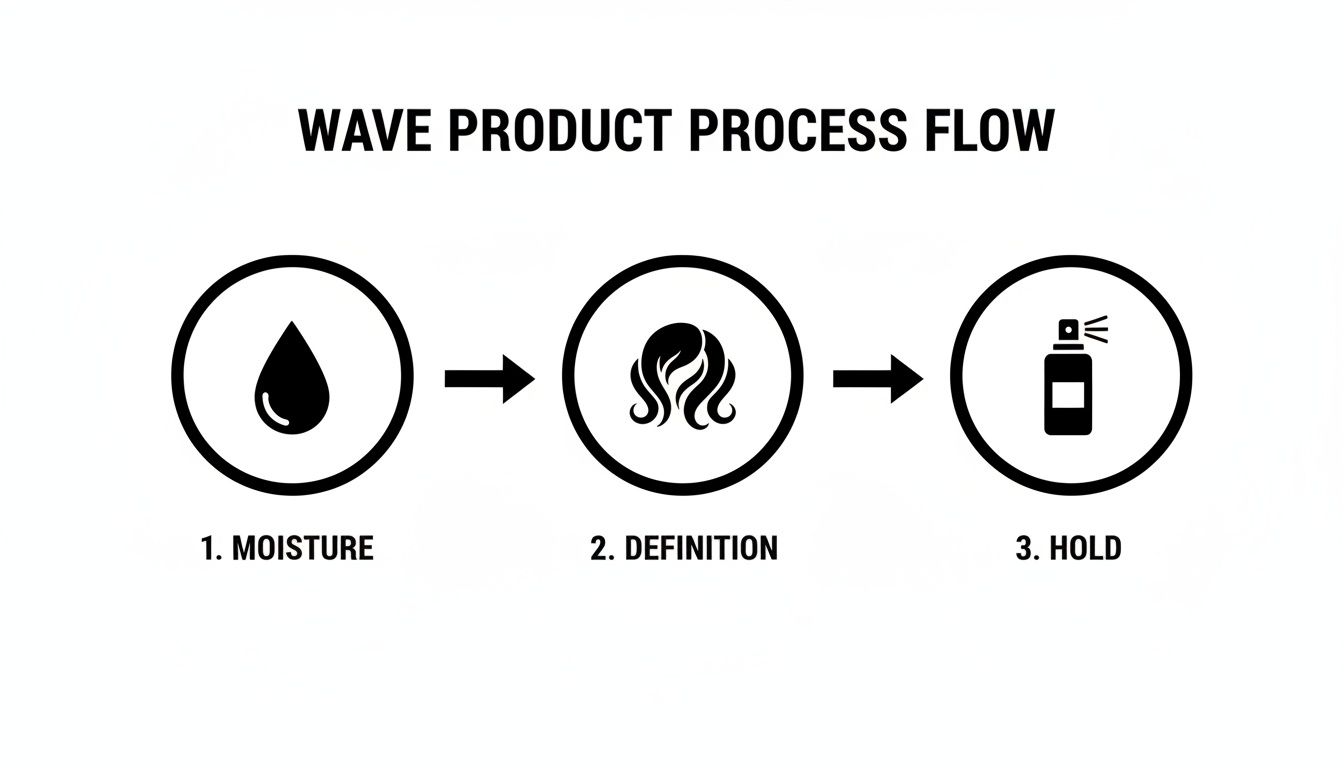
As you can see, it's a logical flow: start with moisture, build definition, and then seal it all in with hold.
Encouraging Waves with Scrunching
Okay, products are in. Now it’s time to give those waves some encouragement. Scrunching is by far the most popular and effective way to do this. For extra root lift, flip your head upside down, gently cup sections of your hair in your palm, and scrunch them upwards toward your scalp.
Listen for a "squishing" sound! That's the signal that your hair is perfectly hydrated and the products are mingling with the water to create beautiful, defined clumps. Remember to be gentle—the idea is to compress the waves into shape, not to rough them up and create tangles.
Key Takeaway: How much product you use really matters. Start small, emulsify it in your hands with a bit of water, and only add more if your hair feels like it needs it. It’s always easier to add a little more than to fix a style that’s been weighed down by too much product.
The Art of Plopping for Frizz-Free Drying
After scrunching, your waves are defined but still super fragile and heavy with water. Before you even think about grabbing a regular towel or firing up the diffuser, give plopping a try. This clever technique uses a cotton t-shirt or a microfiber towel to soak up extra water without letting gravity or harsh friction pull out your beautiful wave pattern.
Here’s the simple how-to:
- Lay a t-shirt or microfiber towel out flat on your bed or a chair.
- Flip your hair forward, letting it pile up accordion-style onto the center of the fabric.
- Grab the bottom edge of the t-shirt and pull it up over your hair to the nape of your neck.
- Take the sleeves and twist them on either side, then tie them securely at the back of your head to create a little turban.
Let your hair "plop" for about 10-20 minutes. This gives your waves a chance to set in their natural pattern while the excess water is gently wicked away. When you take it down, you'll be amazed at how much more defined, bouncy, and voluminous your hair is, especially at the roots.
Exploring the Bowl Method for Next-Level Hydration
If your waves are constantly thirsty or prone to frizz, the bowl method could be a total game-changer for you. It’s an intensive hydration technique that you do right after applying your leave-in conditioner and curl cream.
You just need a large bowl of water. After applying your products, dip your hair into the bowl, lift it out, and scrunch that watery product mixture back into your strands. You repeat this dip-and-scrunch cycle a few times. This method forces your hair to absorb an incredible amount of moisture and ensures your products are distributed perfectly, leading to ridiculously juicy, defined wave clumps. It might add a few extra minutes to your routine, but the frizz-fighting payoff is often well worth it.
Best Morfose Products to Use for Wavy Hair
Mastering the techniques for styling wavy hair is a huge win, but even the best methods can fall flat without the right products in your corner. Think of them as your secret weapon—the difference between a good hair day and an amazing one. That’s where Morfose comes in, with formulas designed to tackle the biggest challenges wavies face, from stubborn frizz to waves that just won't hold their shape.
When you bring these products into your routine, you’re not just styling your hair; you're elevating it. Instead of fighting your hair’s natural texture, you start working with it, using formulas that hydrate, define, and hold to bring out the best in your waves.
For Frizz Control and Brilliant Shine
At its core, frizz is just your hair’s cry for help—it's thirsty and trying to grab moisture from the air. A high-quality hair serum is the perfect solution. It seals the cuticle, locking in all that good hydration and creating a smooth surface that reflects light beautifully.
For this crucial finishing step, the Morfose Anti-Frizz Hair Serum is a must-have. It’s light enough not to grease up wavy hair, so it just tames flyaways and adds a gorgeous, healthy-looking sheen.
Pro Tip: Save this serum for the very last step. Once your hair is 100% dry, put one or two pumps into your palms, rub them together to warm it up, and gently glaze your hands over the surface of your hair. It’s also fantastic for "scrunching out the crunch" if you’ve used a gel with a strong hold.
It’s no surprise that people are investing in products that deliver. The global hairstyling market was valued at USD 27.30 billion in 2023 and is projected to reach USD 43.05 billion by 2030. With women making up over 57% of consumers, it’s clear that finding products for polished, healthy hair is a top priority. You can dig into these trends over at GrandViewResearch.com.
Drying Your Waves Without Creating Frizz
You’ve carefully washed, conditioned, and worked your styling products through your hair. Now comes the moment of truth: the drying process. This is where your beautiful wave clumps are at their most vulnerable, and one wrong move can instantly unravel all that hard work, leaving you with a halo of frizz.
Learning how to style wavy hair for lasting results really comes down to mastering a gentle drying technique. Whether you prefer a hands-off approach or need a speedier solution, the goal is always the same: get the moisture out while protecting your delicate wave pattern.
The Low-Maintenance Magic of Air-Drying
Air-drying is, without a doubt, the healthiest option for your waves since it involves zero heat damage. For many of us, it's the simplest path to a soft, natural finish. The real trick? Be completely hands-off while your hair is drying. I can't stress this enough—constant touching is a fast track to frizz.
After you've applied your products and plopped, just gently let your hair down and arrange it where you want it to fall. Then, leave it alone until it's 100% dry. This gives the "cast" from your gel or mousse time to fully form, creating a protective shell around your waves that locks in definition.
Want to add a little volume at the roots while you air-dry? Small metal clips are your secret weapon.
- Root Clipping for Lift: Take small sections of hair at your crown, lift them up, and slide a claw clip or duckbill clip in at the root, standing it on its side. This simple trick prevents the weight of your wet hair from pulling the roots flat.
- Remove When Dry: Once your hair is completely dry, gently take out the clips. A light shake at the roots with your fingertips is all you need to finish it off.
Using a Diffuser for Speed and Volume
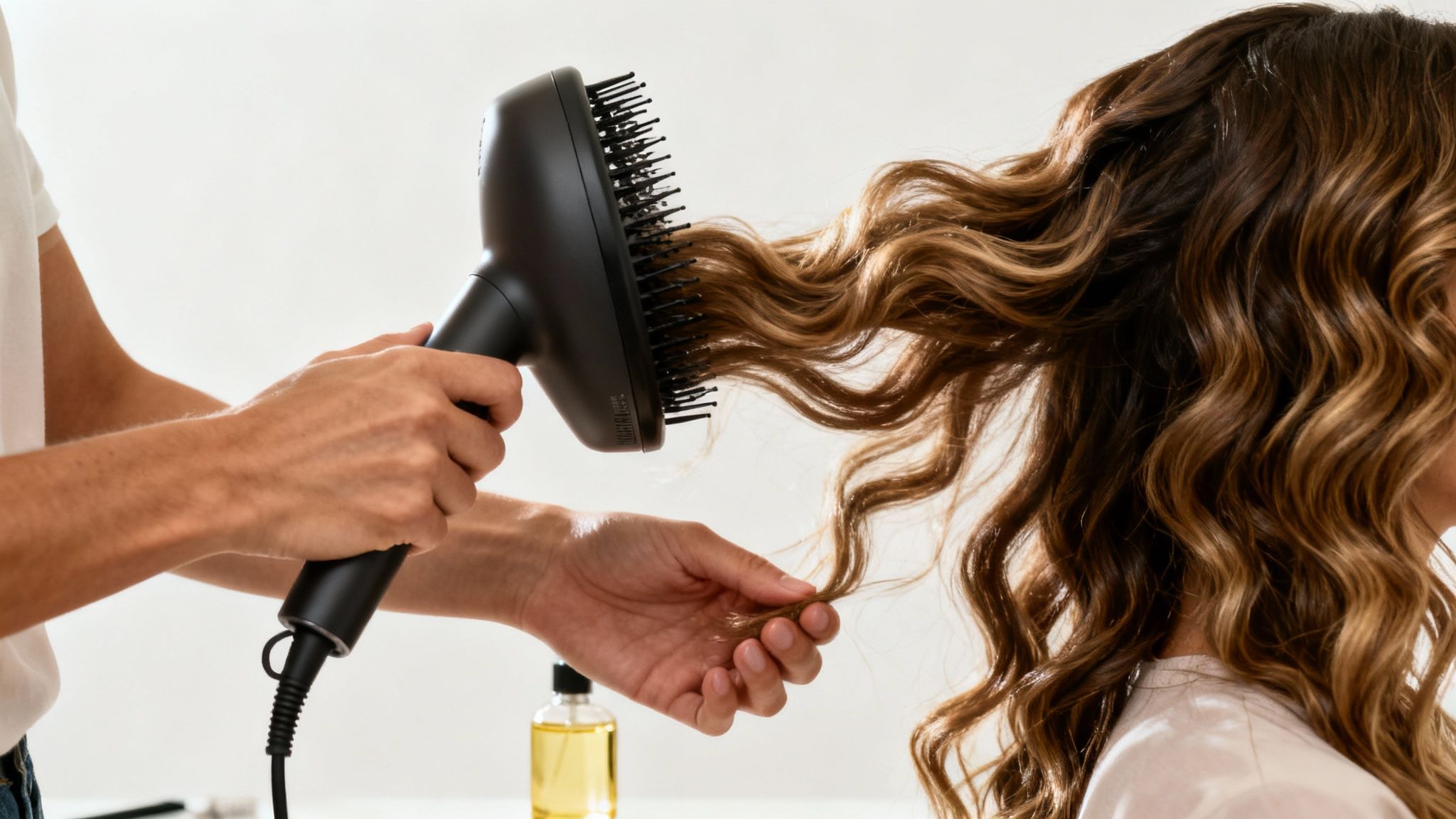
When you're short on time, a diffuser is your best friend. This attachment for your blow dryer spreads out the airflow so it doesn’t blast your wave pattern into oblivion. It’s a fantastic tool for boosting volume and encouraging your waves to really spring up. Just remember the golden rule: low speed and low-to-medium heat.
Crucial Tip: Never, ever use high heat or a high-speed setting when diffusing wavy hair. That’s like creating a mini windstorm in your hair, which causes friction, disrupts your wave clumps, and creates frizz. Slow and gentle is always the winning strategy here.
For a deeper dive into heat styling without the damage, check out our full guide on how to master the art of blow-drying your hair at home.
Effective Diffusing Techniques
Not all diffusing is created equal. Depending on what you're trying to achieve—be it volume, definition, or just a quick dry—you can pick the technique that works for you.
- Hover Diffusing: This is the most gentle method by far. Hold the diffuser several inches away from your hair and just move it around your head without actually touching your waves. It's perfect for setting the initial cast on your hair's outer layers before you move in closer.
- Pixie Diffusing: This technique is your ticket to maximum volume and curl enhancement. First, turn the dryer off. Gather a section of your hair into the diffuser bowl and lift it up toward your scalp. Now, turn the dryer on low speed/low heat and hold it there for 30-60 seconds. Turn it off again, release the hair, and move on to the next section. This "off-on" method works wonders to minimize frizz from blowing your hair all over the place.
The Final Touch: Scrunching Out the Crunch
Once your hair is completely, 100% bone dry—and I don't mean 80% or 95%—it’s time for the final, and most satisfying, step: scrunching out the crunch (SOTC).
If you used a gel or a mousse with some hold, your hair will probably feel a little stiff or crunchy. That’s the "cast," and it’s actually a good thing! It’s been protecting your waves from frizz while they dried.
Now, you just have to break it. Gently scrunch your hair upwards towards the scalp, just like you did when you applied your products. You'll feel the cast break, revealing soft, defined, and touchable waves underneath. For a little extra shine and to tame any last-minute flyaways, put a drop or two of a lightweight hair oil on your palms before you scrunch. This simple finishing move makes all the difference, taking your style from stiff to effortlessly polished.
Wavy Hair Questions? We've Got Answers.
Even when you think you've got your routine down, wavy hair can still throw a few curveballs. From battling sudden frizz to wondering where your volume went, let's tackle some of the most common questions that pop up on the wavy hair journey.
"Why Does My Wavy Hair Get So Frizzy and Puffy?"
If you're seeing frizz, your hair is sending out an S.O.S. for moisture. It's almost always a sign of dehydration.
Wavy hair is naturally drier than straight hair because of its shape. This makes the outer layer, the cuticle, a bit rough around the edges. When it's thirsty, that cuticle opens up and tries to grab moisture from the air around it—and that's when you see the puffiness. The fix? Give your hair the deep hydration it's desperately looking for.
A few things that make a world of difference:
- Start Hydrating in the Shower: Ditch stripping shampoos and always follow up with a rich, nourishing conditioner. Never skip it.
- Style on Soaking Wet Hair: This is a game-changer. Applying creams or gels when your hair is dripping wet helps lock that water into the hair shaft, creating your best defense against frizz.
- Cut Down on Friction: Those rough cotton towels are a major frizz trigger. The same goes for dry brushing. Swap your towel for a microfiber one or an old t-shirt to gently scrunch out the extra water.
Here's the takeaway: Think of frizz as your hair's way of telling you it's thirsty. Focus on giving it what it needs—deep hydration from weekly masks and the right product application—and you’ll keep that cuticle smooth, sealed, and frizz-free.
"How Can I Get More Volume at My Roots?"
Flat roots are the bane of many wavies, especially if you have finer hair. The weight of your hair, especially when it's wet, can pull everything down, but a few simple tricks can bring back that lift.
Start by flipping your head upside down when you apply your styling products. This encourages volume right from the start. Your diffuser is also your best friend here; hover it at your roots using a low heat and speed setting.
If you prefer to air-dry, grab a few small claw clips. While your hair is still damp, place them at the roots to lift the hair off your scalp as it dries. Once your hair is 100% dry, you can go in with your fingertips or a hair pick to gently fluff the roots for an extra boost.
"How Do I Keep My Waves Looking Good for More Than One Day?"
Making your style last is all about protecting it overnight. The biggest enemy to next-day waves is the friction from your pillowcase. The "pineapple" method is your simplest, most effective solution.
- Make a "Pineapple": Loosely gather all your hair into a high ponytail, right on the top of your head.
- Use a Gentle Hair Tie: Grab a soft scrunchie or an Invisibobble to secure it. You want to avoid creating any dents or creases.
- Sleep on Satin: A silk or satin pillowcase will also cut down on friction dramatically, preventing your waves from getting stretched out, tangled, or frizzy while you sleep.
When you wake up, just take your hair down and give the roots a gentle shake. If a few sections look a little sad, you can easily revive them. Just lightly mist them with water and scrunch in a tiny bit of mousse or curl cream to bring them right back to life.
Ready to give your waves the targeted care they deserve? Morfose offers salon-quality solutions designed to hydrate, define, and protect your unique texture. Explore the full collection and build your perfect wavy hair routine at https://themorfose.com.
