
How to Choose the Best Hair Color for Your Skin Tone
Picking a new hair color is one of the best ways to completely reinvent your look. But the real secret to a jaw-dropping result isn't just about grabbing the trendiest shade off the shelf. The magic happens when you find a color that works in harmony with your unique skin tone, making your best features pop and giving your complexion an incredible glow. If you've ever wondered how to choose the best hair color for your skin tone, you've come to the right place.
Finding Your Most Flattering Hair Color Starts Here
Your journey to the perfect hair color begins with one simple but game-changing step: figuring out your skin's undertone. This isn't about your surface skin color (like fair, medium, or deep), but the subtle, permanent hue just beneath it. Getting this right is the single most important factor in finding a shade that looks like it was made for you.
This guide is here to demystify the whole process. We’ll start with a few easy tricks to determine if your undertone is warm, cool, or neutral. Once you know that, choosing a hair color family that complements you becomes so much easier, and you can finally avoid those shades that wash you out or just look… off.
The Foundation of a Great Look
Think of it this way: your hair color and skin tone need to be on the same team. When they work together, the result is stunning. It’s a lot like learning about finding the perfect hairstyles for your face shape—when your cut and color are both aligned with your natural features, the impact is so much greater.
Key Takeaway: The goal is to create synergy between your hair, skin, and even your eye color. The right hair color can make your eyes look brighter, your skin clearer, and give you an effortless, natural radiance.
A Quick Cheat Sheet for Success
Before we dive deep, here’s a quick reference to get you started. The table below connects different skin undertones with the hair color families that are almost guaranteed to look amazing on them. It’s a great way to start visualizing the possibilities.
And for more pro tips, our other how-to articles are packed with guidance to help you keep your hair looking its absolute best.
| Skin Undertone | Key Characteristics | Best Hair Color Families | Colors to Approach with Caution |
|---|---|---|---|
| Cool | Skin has hints of pink, red, or blue. Veins look blue. Burns easily. | Ashy blondes, platinum, cool browns (like ash or mocha), jet black, rich reds with blue undertones (like burgundy or aubergine). | Golden blondes, coppery reds, caramel browns. |
| Warm | Skin has hints of yellow, peachy, or golden hues. Veins look greenish. Tans easily. | Golden blondes, honey, caramel, warm reds (like copper or auburn), rich chocolate browns. | Ashy or platinum blondes, colors with blue or violet undertones. |
| Neutral | A balanced mix of cool and warm tones. Veins may look blue-green. Skin can tan or burn. | Most shades work well! From strawberry blonde to rich espresso, you have a wide range of flattering options. | Extremely ashy or overly golden shades might lean too far in one direction. |
This first step is all about making sure you’re not just chasing trends, but making a smart, informed choice that truly enhances your natural beauty.
Ready? Let's figure out your undertone so you can choose your next hair color with total confidence.
How to Identify Your Skin's Undertone
Before you even think about picking up a color swatch, let's talk about the single most important step: figuring out your skin's undertone.
This isn’t about how light or dark your skin is—that’s your skin tone, and it can change with a tan. Your undertone is the subtle, permanent hue just beneath the surface. It never changes, and it’s the secret weapon to finding a hair color that makes you look incredible instead of washed out.
Think of it like the primer on a canvas. It sets the foundation for every color you put on top. Nailing this is the difference between a hair color that makes you glow and one that just feels… off. The good news? You don't need a professional to figure this out. A few simple, reliable tests right at home are all it takes to determine if you’re cool, warm, or neutral.

As you can see, understanding your skin tone and undertone is the starting point for discovering a hair color that will naturally complement your features.
The Vein Test: A Quick Look at Your Wrist
This is probably the fastest and most popular method, and for good reason—it’s super straightforward. Find a spot with good, natural lighting and just look at the veins on the inside of your wrist. The color you see is a direct clue.
- Cool Undertones: If your veins look blue or purple, you have a cool undertone. This means your skin has subtle pink, red, or bluish hues.
- Warm Undertones: See more of a greenish or olive tint? That’s a sign of a warm undertone, indicating your complexion has underlying golden, yellow, or peachy tones.
- Neutral Undertones: Can't really tell if they're blue or green? If they seem to be a mix of both, you likely have a neutral undertone. This is great news—it gives you the flexibility to pull off a much wider range of colors.
The Jewelry Test: Go for Gold or Silver
Believe it or not, your jewelry box holds some serious clues. Grab both silver and gold pieces and hold them up against your skin, preferably in natural daylight. Pay close attention to which metal makes your skin look more radiant and alive.
If silver or platinum jewelry makes your skin pop and look brighter, you're on the cool side.
On the other hand, if gold jewelry illuminates your complexion and gives you a healthy glow, you have warm undertones. And if you can wear both without one looking obviously better? You've hit the jackpot with a neutral undertone.
Pro Tip: This test works just as well with clothes. If you feel your absolute best in cool colors like royal blue, emerald, and crisp white, your undertone is likely cool. If you naturally gravitate toward earthy tones like olive green, burnt orange, and cream, you're probably warm.
The White Fabric Test: A Simple Contrast Check
For this last test, all you need is a piece of pure white fabric—a t-shirt, a towel, or even a sheet of paper will do the trick. Hold it up next to your clean, makeup-free face. The stark white creates a contrast that helps your skin's underlying tones come forward.
- If your skin appears pinkish or rosy against the white, you have cool undertones.
- If your face looks more yellow or golden in comparison, you have warm undertones.
- If you don't see a clear winner and can't detect an obvious yellow or pink cast, you’re most likely looking at neutral undertones.
Knowing your undertone is a game-changer. To get an even clearer picture of your beauty profile, you might also want to determine your overall skin type. These personal insights all work together. While you're at it, it's a great idea to learn more about your specific hair type, since texture plays a huge role in how your hair will process and hold color.
Flattering Hair Colors for Warm Skin Tones
So, you’ve done your homework and discovered you have warm undertones. Fantastic! Your skin's natural golden, peachy, or yellow cast is the perfect canvas for a whole world of rich, radiant hair colors. Picking the right shade won’t just complement your complexion—it will literally make your skin glow from within.
The trick is to lean into your skin’s natural warmth, not fight against it. Think of colors that feel sunny, earthy, and luxurious. These are the shades that will harmonize beautifully with your undertones, creating a look that’s both stunning and effortlessly natural.
Embrace That Golden Hour Glow
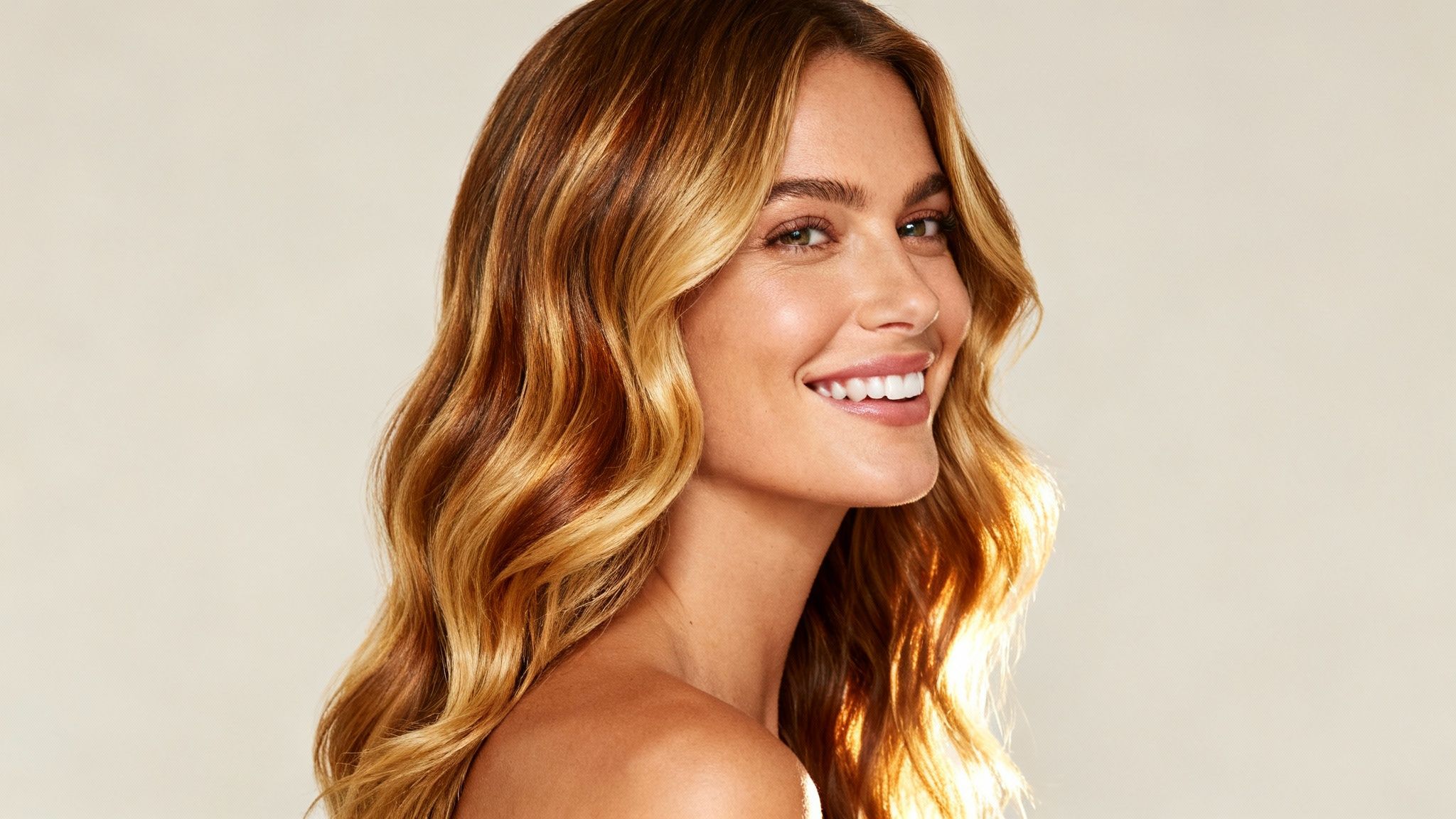
For anyone with warm undertones, the most flattering hair colors will have a golden, red, or yellow base. These tones echo the warmth in your skin, making you look vibrant and healthy. It's really no surprise that warm complexions pair best with equally warm hues like honey blondes, coppery reds, or rich chocolate browns.
When the tones match, they create harmony instead of clashing. In fact, beauty trend reports show that 76% of women prefer warm tones when they’re matched correctly to their skin. Post-color surveys even show a confidence boost of up to 40%! You can discover more insights on hair color market trends to see just how popular these shades are.
Here are some of the most stunning options to consider for warm skin:
- Golden & Honey Blondes: Think sun-kissed and radiant. Shades like pure honey, golden blonde, butterscotch, and warm champagne will bring out the peachy tones in your skin for a gorgeous, bright effect.
- Rich Caramel Browns: A little deeper than blonde but just as warm. Caramel, toffee, and golden brown shades are incredibly flattering, adding depth while still illuminating your complexion.
- Warm Reds & Auburns: This is where warm skin tones truly get to play. Fiery copper reds, delicate strawberry blonde, and rich auburns create a striking look that feels both natural and bold.
- Chocolate & Chestnut Browns: Prefer to go darker? Warm-based browns like milk chocolate, chestnut, or mahogany add a beautiful richness and dimension that won't wash you out.
The Power of Dimension and Highlights
A single, flat color can sometimes fall a little flat, especially with warmer shades. This is where highlights and lowlights become your secret weapon. Adding dimension breaks up the color and creates movement, giving your hair a much more dynamic and natural look.
Pro Tip: Ask your stylist for a balayage or some subtle "babylights." This hand-painting technique creates a soft, blended grow-out, which means way less maintenance for you down the road.
Consider weaving in some of these tones to create gorgeous depth:
- Toffee or butterscotch highlights painted onto a dark brown base.
- Strawberry blonde ribbons woven through a golden blonde canvas.
- Subtle copper glints to bring a rich auburn or chestnut shade to life.
These little additions stop the color from looking too heavy and truly enhance your skin's natural glow. Honestly, adding dimension is one of the best ways how to choose the best hair color for your skin tone and make it look like it was done by a top-tier professional.
Shades to Approach with Caution
Knowing what works is only half the battle; knowing what to avoid is just as crucial. For warm skin tones, colors with a cool blue, violet, or green base can clash with your natural undertones, making your skin appear sallow or dull.
Try to steer clear of these shades:
- Ashy or Platinum Blondes: These cool, icy tones can make warm skin look completely washed out.
- Blue- or Violet-Based Reds: Think burgundy, wine, or eggplant. These can bring out an unflattering yellow cast in your skin.
- Ashy Browns: Cool-toned browns can make your complexion look tired and drab.
- Jet Black with Blue Undertones: This often creates a harsh contrast that's difficult to pull off.
By sticking to the warm side of the color wheel, you’re setting yourself up for a beautiful, harmonious look that celebrates your natural beauty.
Stunning Hair Colors for Cool Skin Tones
So, your undertone tests pointed to pink, red, or even bluish hues. Welcome to the cool-toned club! Your complexion is the perfect canvas for a whole range of striking, sophisticated hair colors that create a gorgeous, natural harmony.
The right shade will do more than just complement your skin—it can instantly neutralize any redness, make your eye color stand out, and give you an incredibly polished look. The trick is to lean into your skin's natural coolness, not work against it. Think of colors with a blue, violet, or ashy base. These shades will look crisp and intentional next to your skin.
Embrace Icy Blondes and Ashy Hues
For those with cool skin, going blonde is all about avoiding warmth. Instead of golden or honey tones that can clash, you’ll want to gravitate toward shades that feel sharp, clean, and modern.
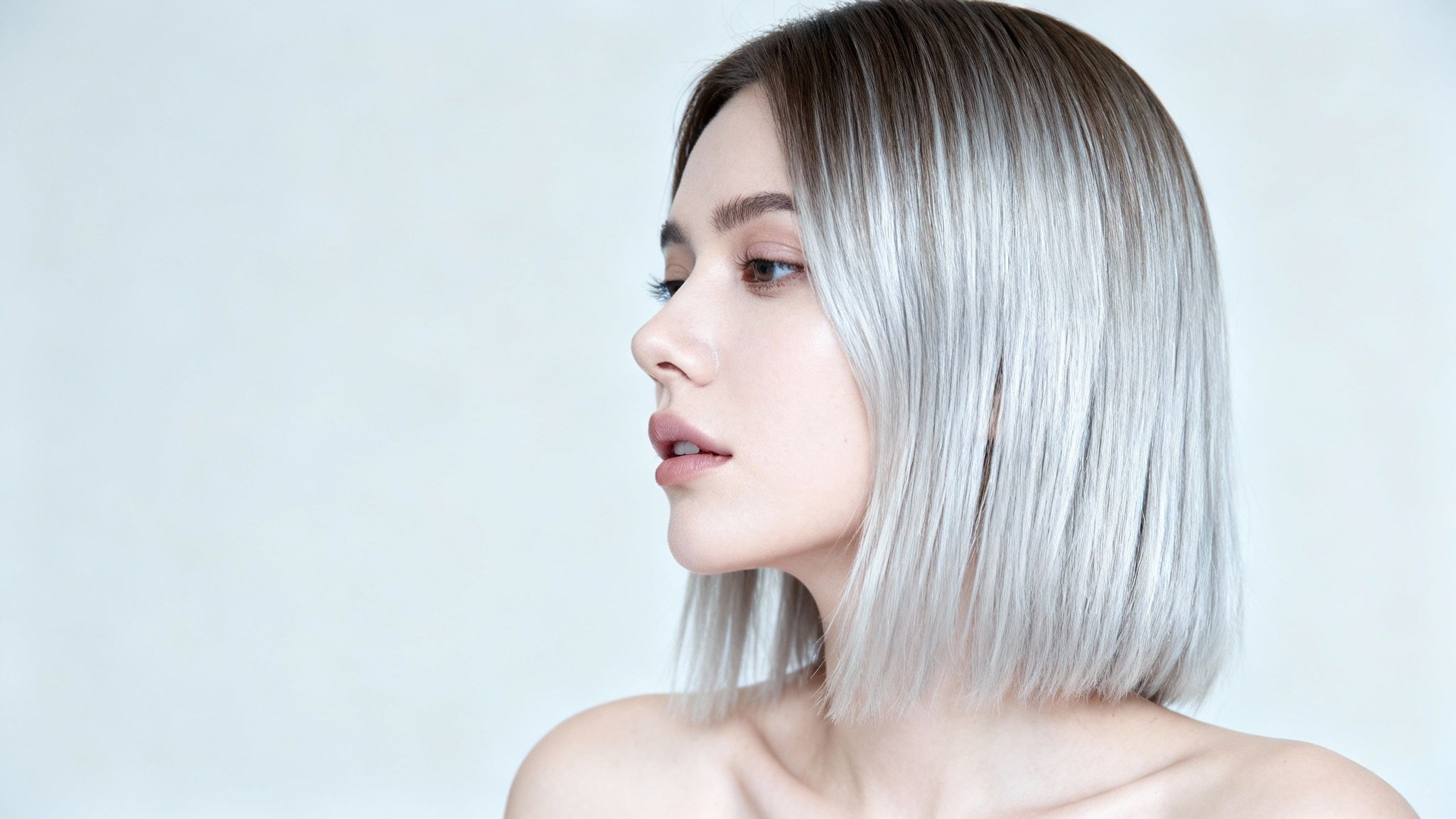
- Platinum & Icy Blonde: This is a classic, high-impact choice for cool undertones. The stark, almost-white shade creates a stunning contrast that looks incredibly chic.
- Ash Blonde: A smoky, grayish-blonde is a softer, more muted option that beautifully tones down any pinkness in the skin.
- Beige & Champagne Blondes: These shades have just a hint of neutral, sandy color, which keeps them from looking too harsh while still staying firmly in the cool family.
It’s no surprise that matching hair color to skin tone has become a huge focus. The hair color market is projected to grow from USD 28.33 billion in 2025 to USD 43.47 billion by 2033, and a big driver is the 90% of consumers who now want shades that truly suit their complexion. For fair skin with cool pink undertones, icy ash browns or soft pastels are amazing choices. They help avoid the brassy oranges that can wash out the 41% of fair-skinned women who go blonde—the world's most popular dye choice. You can read the full research on hair color market trends to learn more about the shift.
Explore Rich, Cool Browns and Blacks
If you’re thinking of going darker, the same rules apply. You'll want to pick browns and blacks that have a cool, ashy, or blue base instead of a red or golden one. These deeper shades create a gorgeous frame for cool-toned skin.
Some fantastic brunette options include:
- Ash Brown: Whether it’s light or dark, an ashy brown has a matte, smoky finish that’s incredibly flattering on cool skin.
- Mocha & Espresso: These deep, rich browns skip the red undertones, giving them a cool, sophisticated vibe.
- Blue-Black: For a truly dramatic look, a jet black with a subtle blue or violet sheen is a total showstopper. It creates a crisp, striking contrast.
Expert Tip: Getting that perfect ashy or platinum shade almost always requires toning to cancel out unwanted yellow or orange hues that pop up during lightening. Toning is a non-negotiable step that deposits cool pigments to create that clean, crisp finish. If you're curious, it helps to understand what a toner does to your hair and why it’s so essential for these shades.
Adding Dimension with Cool Highlights
To keep a cool-toned color from looking too flat or one-dimensional, adding highlights is a fantastic move. Just make sure the highlights are also in the cool color family to maintain that beautiful, seamless look.
You could ask your stylist for:
- Silvery or platinum babylights woven through an ash brown base.
- Mushroom brown lowlights to add depth to a beige blonde.
- Cool beige ribbons to break up a dark mocha color.
Colors to Avoid with Cool Skin Tones
Knowing what not to do is just as important when you're learning how to choose the best hair color for your skin tone. For cool complexions, overly warm colors can create a jarring contrast, making your skin appear flushed or ruddy.
Try to steer clear of colors with a strong golden, yellow, or red-orange base:
- Golden or Honey Blonde
- Caramel or Toffee Brown
- Coppery Reds or Auburns
By sticking with shades that mirror your skin's natural coolness, you'll ensure your new hair color looks fresh, intentional, and perfectly suited to you.
Color Options for Neutral and Olive Skin Tones
What happens when you don't fit neatly into the "warm" or "cool" boxes? You've landed in the sweet spot of neutral or olive skin tones, which gives you a unique advantage and a much wider playground of hair colors to explore.
Unlike purely warm or cool complexions, your balanced undertones mean you don't have to worry nearly as much about a shade clashing with your skin. This amazing flexibility lets you focus more on your personal preference and other factors, like your eye color, to find that perfect match.
The Best of Both Worlds for Neutral Skin
Having a neutral undertone is like holding a "universal donor" card for hair color—so many shades just work. Since your skin has a beautiful, balanced mix of pink and yellow hues, you can pull off both warm and cool colors without them looking harsh or out of place.
Honestly, your decision often comes down to the vibe you're going for. Do you want to bring out a warmer, sun-kissed glow, or lean into a cooler, more sophisticated look?
- To Lean Warmer: Think about soft caramel, golden beige, or even a lovely strawberry blonde. These shades will instantly pick up on the subtle warmth in your skin.
- To Lean Cooler: Shades like ash brown, muted mocha, or a cool-toned dark chocolate will look equally stunning and chic.
- For a True Neutral: Colors like beige-blonde or a rich, neutral brown offer that perfect middle ground that looks effortlessly right.
Enhancing Radiance for Olive Skin Tones
Olive skin is truly unique, with its characteristic mix of yellow, golden, and sometimes even greenish undertones. The biggest goal when choosing a hair color for olive skin is to boost radiance and counteract any potential for looking sallow or washed out.
Rich, warm-leaning shades are almost always your best bet, as they bring so much life and vibrancy to your complexion. You want colors that feel earthy and luxurious.
Insider Tip: Olive skin tones can sometimes appear dull under the wrong lighting or with the wrong hair color. Your best strategy is to select shades that add warmth and light around your face to create a healthy, vibrant glow.
Here are some standout choices that I've seen work beautifully time and time again:
- Rich Brunettes: Deep chocolate, chestnut, and mocha browns are incredibly flattering. They create a gorgeous, harmonious look that never fails.
- Golden & Beige Blondes: If you want to go lighter, aim for golden-honey or sandy beige blondes. Just be careful to avoid anything too ashy, which can sometimes emphasize the green undertones in your skin in an unflattering way.
- Subtle Reds: While bright, fiery reds can sometimes be a bit much, rich auburns and coppery browns with just a hint of red can look absolutely stunning.
Let Your Eyes Guide Your Choice
When your skin tone gives you this much freedom, your eye color can be the perfect tie-breaker. Creating a look that complements both your skin and your eyes is the ultimate goal. For instance, a caramel brown might beautifully pick up the golden flecks in hazel eyes, while a cooler espresso shade can make blue or gray eyes appear incredibly striking.
The rising consumer demand for personalized beauty has really shaken up the hair color industry. Global market insights show that this demand is powering the market from USD 30.09 billion in 2024 to an estimated USD 54.15 billion by 2033. In North America, a 7.5% CAGR reflects this quick adoption, especially as consumers seek shades tailored to unique tones like olive. Discover more insights about hair color market growth.
Of course, once you find that perfect shade, you'll want to protect it. That's exactly why we created a guide on how to take care of your hair color for long-lasting results.
How Morfose Helps Protect Your Perfect Shade
Finding that perfect hair color—the one that makes your skin glow and your eyes pop—is a huge win. But once you’ve nailed that shade, the real work begins. Protecting your investment is just as important as choosing the right color in the first place. Color-treated hair is more porous and vulnerable, so giving it specialized care is non-negotiable if you want to maintain its health and vibrancy.
This is where a dedicated color-safe routine comes in. Using the right products ensures your new look doesn’t literally go down the drain. It’s about more than just washing your hair; it’s a commitment to preserving the tone, shine, and integrity of your fresh color.
Best Morfose Products to Use
The coloring process, while it works wonders, can strip hair of its natural moisture, leaving the cuticle raised and open. This is exactly why your hair feels amazing right after leaving the salon but can quickly turn dull if you don't take care of it. An open cuticle is like an open door for color molecules to escape with every single wash, leading to that dreaded premature fading.
The Morfose color-safe collection is engineered specifically to combat this problem. Products like our Morfose Color Lock Shampoo are formulated to cleanse gently without stripping your color. They get to work sealing the hair cuticle, effectively trapping those precious color molecules inside the hair shaft where they belong.
This simple step is vital for keeping your shade true to tone. A rich auburn is far less likely to fade into a brassy orange, and an icy blonde can stay cool instead of turning yellow when the cuticle is properly sealed and protected.
A Routine to Extend Your Color's Life
You don't need a complicated, multi-hour routine to keep your hair looking brilliant between salon visits. All it takes is consistency and the right products targeted for your hair's needs.
Here's a simple but powerful routine to get you started:
- Gentle Cleansing: Always start with a sulfate-free, color-safe shampoo. Sulfates are notoriously harsh and can strip color incredibly fast, so avoiding them is the number one rule for any color-treated hair.
- Essential Conditioning: Follow up with a conditioner designed to replenish all that lost moisture. The Morfose Milk Therapy Two Phase Conditioner is a fantastic leave-in option that uses milk protein and amino acids to bring back softness and manageability without weighing your hair down.
- Weekly Treatment: Once a week, treat your hair to a deep conditioning mask. This gives it an intensive dose of hydration and repair, which is crucial for restoring the strength and elasticity that chemical processing can compromise.
Pro Tip: Protecting your hair color goes beyond the shower. Heat is a major color-fader. Always use a heat protectant spray before styling, as high temperatures from blow dryers and irons can accelerate fading and cause even more damage to fragile, color-treated strands.
Our color care bundles, fortified with biotin and collagen, are perfect for maintaining that perfect match you worked so hard to get. They help prevent the fade that affects 35% of color-treated hair within just a few weeks. Considering U.S. women spend an average of $3,756 a year on beauty, protecting your hair color is just a smart way to make that investment last. To learn more, you can read the full research on the hair color market.
Your Top Hair Color Questions, Answered
Deciding to change your hair color is exciting, but it definitely brings up a lot of questions. Let's walk through some of the most common things people ask when they're trying to land on that perfect new shade.
Can I Wear a Hair Color That Doesn't "Match" My Undertone?
Absolutely! Think of your undertone as a trusted guide, not a strict rule. It’s a fantastic starting point for finding colors that will look effortlessly flattering, but personal style always wins.
If you have cool undertones but you’re dreaming of a warm, golden blonde, a great colorist can make it happen. They have tricks up their sleeve, like weaving in some neutral or beige tones to bridge the gap between your skin and the hair color. It's all about creating a custom balance. Sometimes, a simple switch in your makeup or wardrobe is all it takes to tie the whole look together.
At the end of the day, the best hair color is always the one that makes you feel amazing.
How Does My Eye Color Factor In?
Your eye color is like the secret weapon for taking a good hair color and making it great. It’s a secondary detail that helps you fine-tune your choice for a truly striking result.
Imagine you have warm skin and bright blue eyes. A rich, golden or copper tone won't just complement your skin—it'll make your eyes pop like you wouldn't believe. Or, if you have cool-toned skin and dark brown eyes, a deep espresso brown can create this incredibly soft, elegant contrast. It's that extra touch that really elevates your whole look.
Key Insight: Using your eye color as a guide is a pro-level trick for refining your options. It ensures your new hair color enhances not just your skin, but all of your best features.
How Often Will I Be in the Salon for Touch-Ups?
This one really comes down to what color you choose and how different it is from your natural shade. The bigger the change, the more maintenance you can expect.
If you’re going much lighter or darker, your roots will start to show pretty quickly. For these kinds of transformations, you’re likely looking at a touch-up every 4 to 6 weeks.
But if you opt for something more blended, like balayage or soft highlights, you get a much more forgiving grow-out. These techniques can often be stretched for 8 to 12 weeks between appointments. Keep in mind that vibrant fashion colors (think reds, pinks, or blues) fade the fastest and might need a gloss or toner in between full color services to stay bright.
Is It Better to Color My Hair at Home or Go to a Salon?
For any big change—like going from dark to light, correcting a previous color, or if you're just new to this—I always recommend seeing a professional. A good colorist does more than just apply color; they assess your hair’s health, mix a completely custom formula for you, and use techniques that prevent damage and patchy spots.
At-home box dye has its place. It’s best for simple, one-color applications that are very close to your natural shade, or for a quick root touch-up to hold you over until your next salon visit. For anything complex or involving bleach, trusting a professional is the safest bet for your hair.
Your journey to the perfect hair color doesn’t stop when you leave the salon. To keep that new shade looking rich and feeling healthy, you need the right aftercare. Trust the expertly formulated color-safe products from Morfose. Explore our collection at https://themorfose.com to build the perfect routine to protect your investment.
